
I got lost in Kuala Lumpur on my first morning there, which is the best way I know to actually learn a city. I’d left my guesthouse near Petaling Street aiming for Kuala Lumpur’s top sights and landmarks. Decided to start at Merdeka Square, took a wrong turn under a flyover, and ended up in a back lane behind Central Market where a woman was frying curry puffs in a wok the size of a satellite dish.
I bought one for a ringgit fifty, burned my tongue, and got to the square forty minutes later than planned. It didn’t matter. That’s the thing about KL: it rewards the detour.
This is a city built on tin mining money, colonial ambition, and three major migrations — Malay, Chinese, and Indian — that never quite blended into one culture so much as they learned to stand next to each other, block by block, temple by mosque by shophouse. You can feel the seams. Walk fifteen minutes from a Hindu temple where the air is thick with jasmine and camphor smoke, and you’re in a mosque courtyard where the only sound is a fountain. Another fifteen minutes and you’re under two of the tallest buildings on Earth, in air conditioning so aggressive you’ll want a jacket.
I’m going to walk you through the landmarks that earn their reputation, tell you honestly which ones don’t, and hand you the specific numbers — prices, hours, train lines — that make the difference between a smooth day and a wasted afternoon standing at a locked gate. This is a guide for people who want to see the city on their own terms, whether that’s solo, as a couple, with kids in tow, or as a group splitting up and regrouping over dinner.
Getting Your Bearings First
Before the landmarks, a few things I wish someone had told me.
KL is more walkable than it looks on a map, and less walkable than it looks in real life. The city center is compact — you can cross from Merdeka Square to Chinatown in fifteen minutes on foot — but Kuala Lumpur was built for cars, not pedestrians, so you’ll hit stretches with no shade, no sidewalk, and a six-lane road to cross. Between 11 a.m. and 4 p.m., the heat and humidity (routinely 32–34°C / 90–93°F with 70%+ humidity) will slow you down more than distance will. Plan your outdoor, uphill, or uncovered walking — Batu Caves, Merdeka Square, KLCC Park — for early morning or after 4 p.m.
The rail network is your best friend. KL runs on a patchwork of lines that all connect at a few hub stations, and once you understand it, it’s genuinely efficient: the LRT (Light Rail Transit, two lines: Kelana Jaya and Ampang/Sri Petaling), the MRT (two lines, including the newer Putrajaya line that cuts through downtown), the KL Monorail (a single loop connecting Bukit Bintang to KL Sentral), and the KTM Komuter commuter rail, which is the line you need for Batu Caves. Get a Touch ‘n Go card (sold at any station, RM10 for the card plus whatever credit you load) and tap in and out of everything — it works across all four systems plus buses and most taxi tolls. Single-trip tokens exist too, but for more than three rides a day, the card saves you the queue.
Grab (the regional Uber equivalent) is cheap and reliable, and worth downloading before you land. A cross-town ride rarely exceeds RM25–35 (about US$5–7). Use it for Thean Hou Temple, for getting home after the 10 p.m. fountain show at KLCC, or any time the heat wins. Download the Grab app here.
Best time of year: June through August tends to run driest; April and November are the wettest months, with short, intense afternoon downpours rather than all-day rain. Either way, carry a compact umbrella year-round — locals do.
Kuala Lumpur Skyline Icons
Petronas Twin Towers
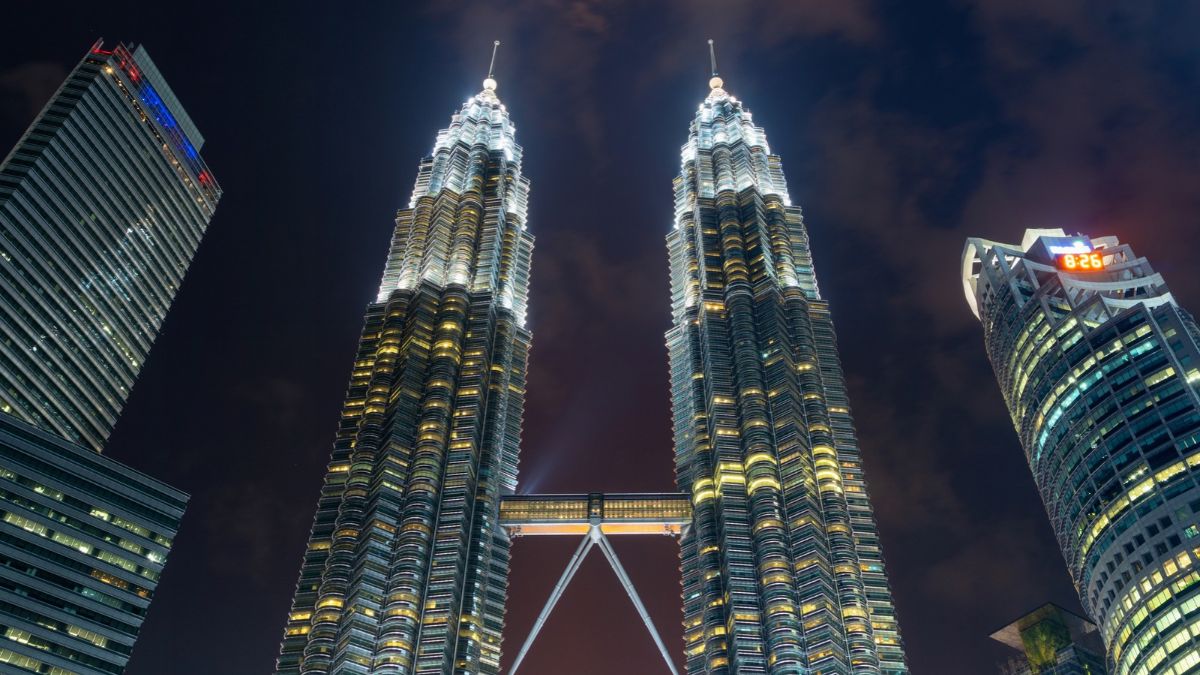
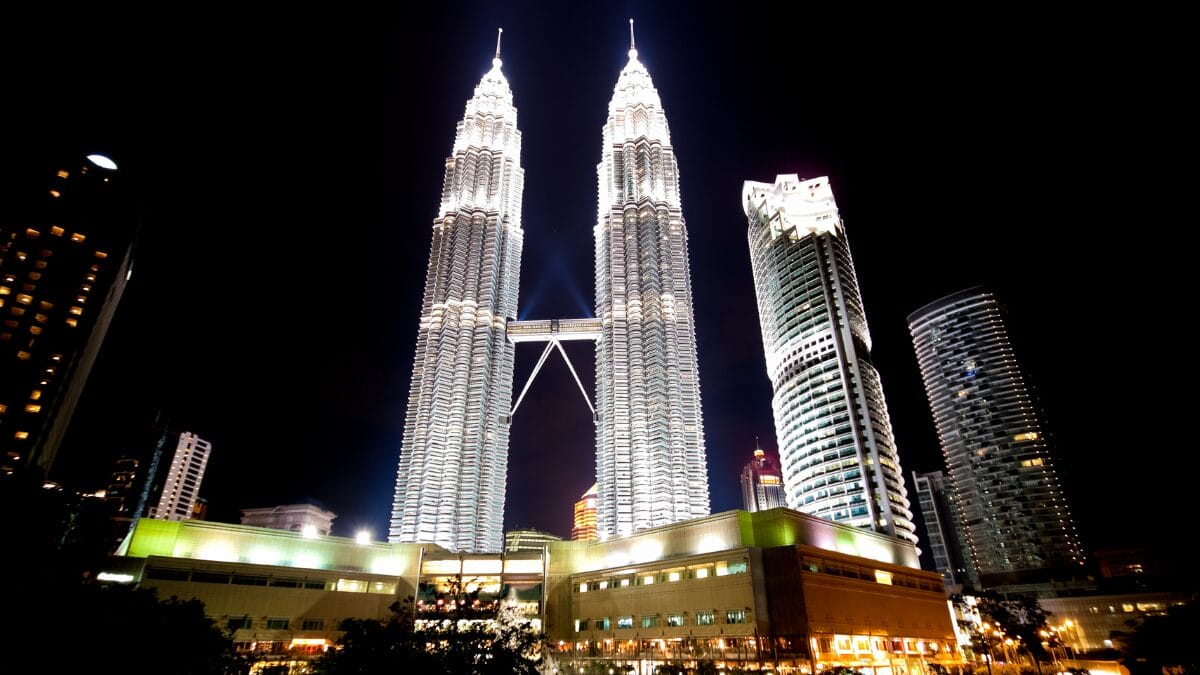
There’s a reason every KL postcard features the Petronas Twin Towers, and it isn’t just their height. Cesar Pelli’s design draws on Islamic geometric patterns — the floor plan is based on an eight-point star, the Rub el Hizb, layered and rotated — so the silhouette reads as ornamental rather than purely structural. At 451.9 meters, they were the tallest buildings in the world from 1998 to 2004, built in a race between two different contractors, one on each tower, working from opposite ends toward the middle.
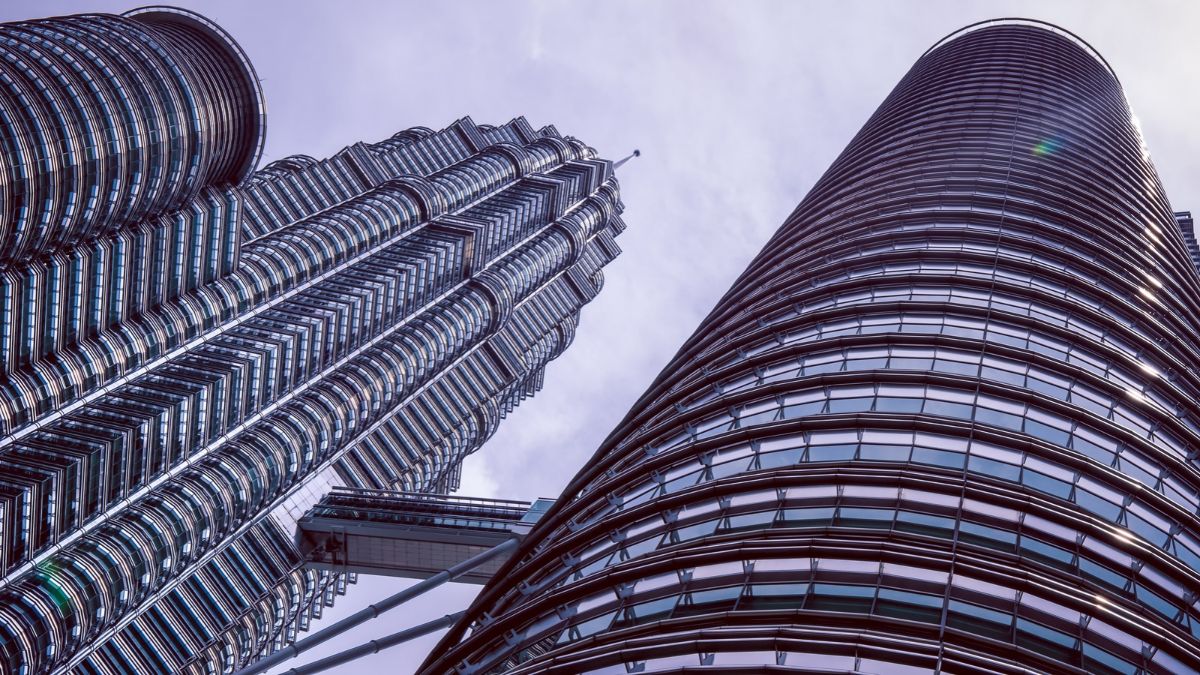
What you actually do here: a high-speed elevator takes you to the double-decker Skybridge on floors 41 and 42 — at 170 meters up, it’s the world’s tallest two-story connecting bridge — for a few minutes of standing between the two towers with the city spread out below. Then a second elevator continues to the Observation Deck on floor 86, 370 meters up, where the views run out toward the Titiwangsa mountain range on a clear day.
Admission (official rates): non-Malaysian passport holders pay RM98 for adults (13–60), RM50 for children (2–12) and seniors (61+); Malaysian MyKad holders pay RM35 adult, RM17 child/senior. Children under 2 enter free. This gets you both the Skybridge and the Observation Deck.
Hours: Tuesday to Sunday, 9 a.m. to 9 p.m., last admission 8:30 p.m. Closed Mondays, except the 2nd and 4th Monday of each month (9 a.m.–8 p.m., last admission 7 p.m.). Closed on Hari Raya Aidilfitri and Hari Raya Aidiladha.
The one thing that trips people up: tickets are timed and capped daily, and they sell out — especially sunset slots — days to weeks ahead in peak season. Book directly at eticket.petronastwintowers.com.my rather than through a reseller, and arrive 15 minutes before your slot; latecomers are turned away without refund. Dress smart-casual — collared shirts and long pants or knee-length skirts are safest; shorts, tank tops, and open sandals can get you refused entry, particularly for the Priority Access tier.
My honest take: the Skybridge is the more memorable ten minutes of the two — you’re eye-level with the towers’ own architecture, which the Observation Deck, being inside floor 86, doesn’t give you. If money’s tight, know that the fountain show at ground level (more on that below) delivers most of the postcard moment for free.
Merdeka 118
If you want the number that actually stops people mid-sentence: Merdeka 118 is 678.9 meters tall, the second-tallest building on the planet after the Burj Khalifa, and the tallest in Southeast Asia by a wide margin. It opened in January 2024 on the site of the old Stadium Merdeka, where Malaysia’s first prime minister raised his arm and shouted “Merdeka!” — “independence” — seven times in 1957. The building’s angular, faceted glass form is meant to echo that raised-arm gesture.
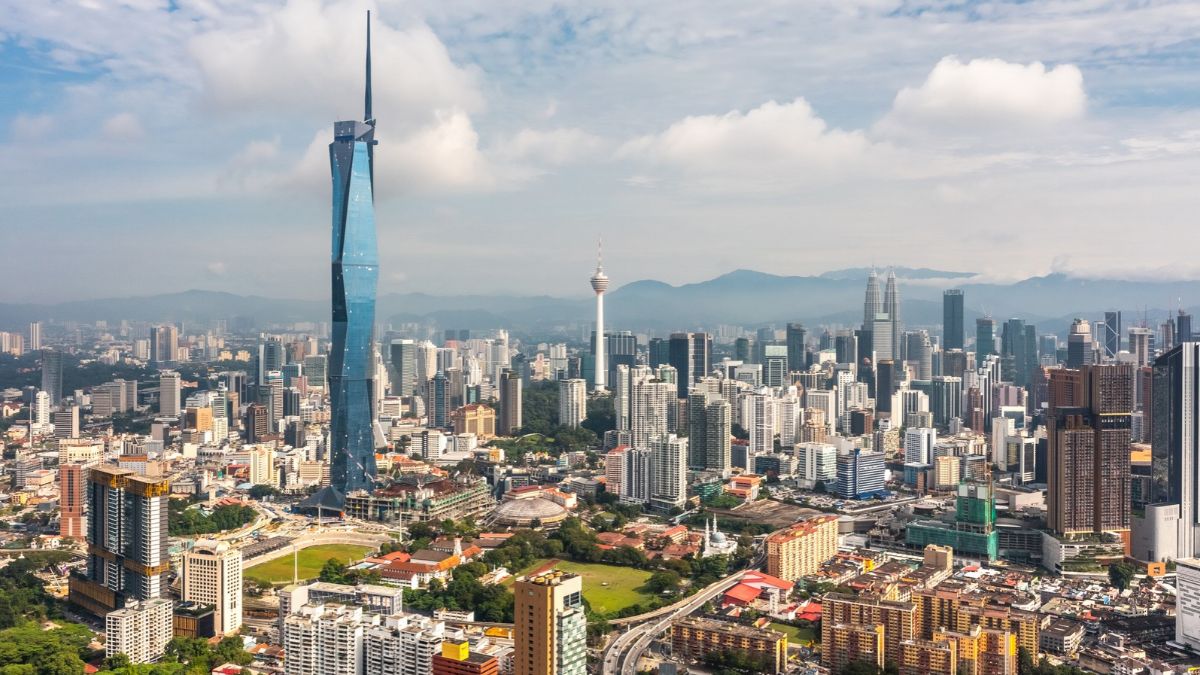
Here’s where I have to be straight with you: the public observation deck, called The View at 118 (levels 115–116, roughly 500 meters up — it would be the highest observation deck in Southeast Asia), has had a slow and inconsistent rollout. The tower and its Park Hyatt hotel are open and operating, but ticketing information for the observation deck itself has shifted repeatedly through 2025 and into 2026, and I found active listings both selling tickets and describing the deck as “not yet open to the public.” Check merdeka118.com directly before you build a day around it — don’t rely on third-party ticket sites, and don’t assume a listing means it’s actually running.
What you can do right now, with certainty: the 118 Mall at the tower’s base is open, and you can ride the elevator to level 75 for a coffee or high tea at the Park Hyatt, which gets you a genuine 360-degree view without needing observation-deck tickets to exist yet. It’s not cheap — expect resort pricing — but it’s a workaround worth knowing about.
KL Tower (Menara Kuala Lumpur)
Built on Bukit Nanas, a forested hill that gives it a head start in elevation, KL Tower stands 421 meters tall including its antenna, making it the world’s 7th-tallest freestanding tower. It’s often overshadowed by Petronas in conversation, which I think is a mistake — it’s genuinely less crowded, generally cheaper, and offers the better photograph, because it’s the vantage point from which the Twin Towers themselves become the subject.
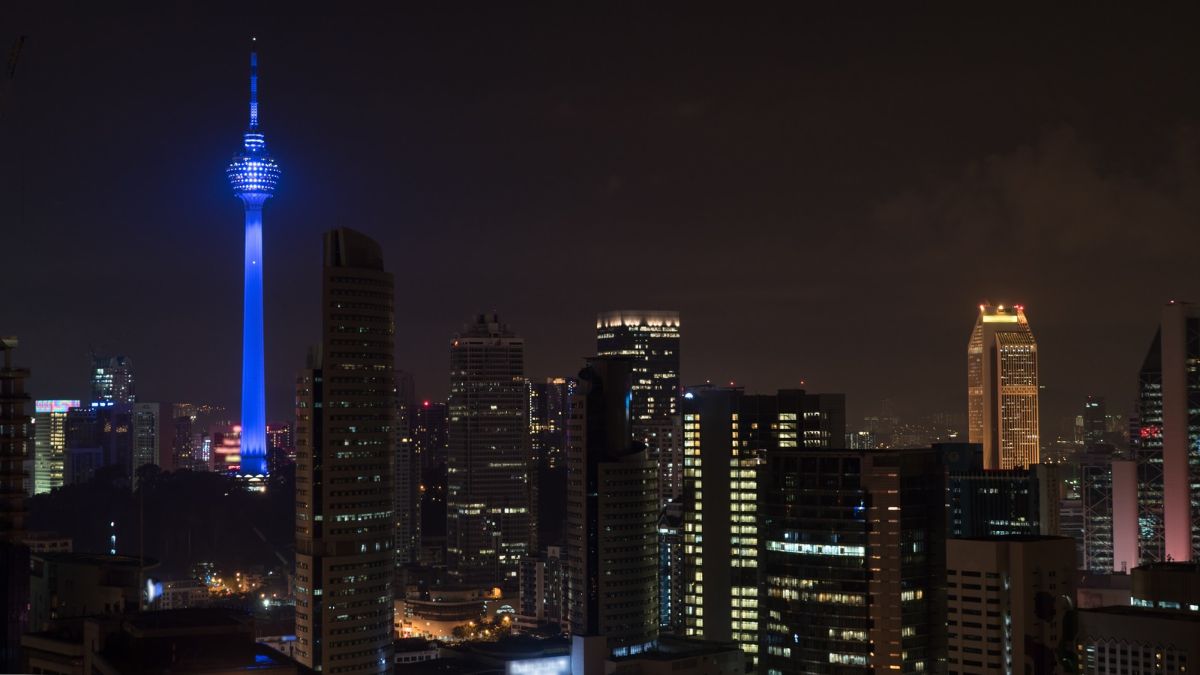
What’s there: an enclosed Observation Deck (276m), an open-air Sky Deck (300m), and the Sky Box — a glass cube that extends out from the Sky Deck ledge so you’re standing on transparent flooring with nothing but air below. There’s also Tower Walk 100, an open glass platform circling the building’s edge, though this and one of the two Sky Box glass panels have been intermittently closed for maintenance — confirm current status when booking.
Admission: roughly RM33 for the Observation Deck alone (non-Malaysian adult), RM20 for Malaysians; the Sky Deck + Sky Box combo runs closer to RM78 non-Malaysian, RM47.50 Malaysian. Prices shift by vendor and promotion, so compare the official kltower.com.my site against your booking platform before paying.
Hours: generally 9 a.m. to 10 p.m. daily.
Bonus you shouldn’t skip: the KL Forest Eco Park at the tower’s base is 10.5 hectares of genuine primary rainforest inside the city limits — one of the only remaining patches in an urban center anywhere in the world — with a canopy walkway. It’s a five-minute stop that most visitors rush past on their way to the elevator, and it’s worth the extra twenty minutes.
Sacred Ground: Temples, a Mosque, and a Different Kind of Quiet
Batu Caves
Batu Caves is the image everyone has of Kuala Lumpur before they’ve ever been: a 42.7-meter gold statue of Lord Murugan standing guard at the base of a 272-step rainbow-colored staircase, cut into limestone cliffs that are roughly 400 million years old. It’s a working Hindu temple complex, not a museum piece, and that distinction matters for how you experience it.

What’s actually here: the main Temple Cave (also called Cathedral Cave) is free, reached by climbing the full staircase, and opens into a cavern with a ceiling around 90 meters overhead, holding several shrines. It’s genuinely awe-inducing in scale, not just in photographs. Two smaller, separately ticketed attractions sit at ground level: the Ramayana Cave, with illuminated dioramas telling the Hindu epic (fees have crept from the RM5 many older guides quote to closer to RM15 in 2026 — bring cash, cards aren’t reliable here), and Cave Villa, around RM10–15, which I’d skip; it houses caged animals and the reviews on that front are consistently unhappy.
The Dark Cave, a genuine adventure/ecology tour through an unlit cave system with a resident trapdoor spider found nowhere else on Earth, has been closed since January 2019 with no confirmed reopening — ignore any listing that sells it as bookable.
Hours: the complex is open daily, roughly 6 a.m. to 9 p.m. (some sources cite an earlier 5:30 a.m. opening for the staircase itself). Ramayana Cave and Cave Villa keep tighter hours, generally 9 a.m. to 5:30–6 p.m.
Getting there: the KTM Komuter train from KL Sentral runs direct to Batu Caves station in 30–40 minutes for RM2.60 — the station exit faces the temple entrance, so you genuinely cannot get lost. Trains run every 30–60 minutes, so check the return schedule as soon as you arrive. Grab from central KL costs around RM20–30 and takes 15–25 minutes without traffic.
Practical notes that matter: dress modestly — shoulders and knees covered; sarongs are available near the entrance if you show up in shorts. Climb before 8 a.m. or after 4 p.m. to avoid both the crowds and the worst heat, since the staircase has zero shade. The macaques are not decorative — they will grab food, drinks, and anything that looks like a snack from an open bag, so keep things zipped and don’t make eye contact or gesture at them. If you’re there in late January or early February, you may catch Thaipusam, when over a million devotees make pilgrimage here in a single festival period — extraordinary to witness, but plan for serious crowds and altered transport if that’s not what you’re after.
National Mosque (Masjid Negara)
Built in 1965, a few years after independence, this is Malaysia’s national mosque and one of the more striking pieces of modernist religious architecture I’ve stood in front of anywhere. The main roof is an 18-point folded star, meant to evoke an open umbrella, in a shade of blue-green that’s become genuinely iconic on the KL skyline; the 73-meter minaret stands apart from the main building, a departure from more traditional mosque design.
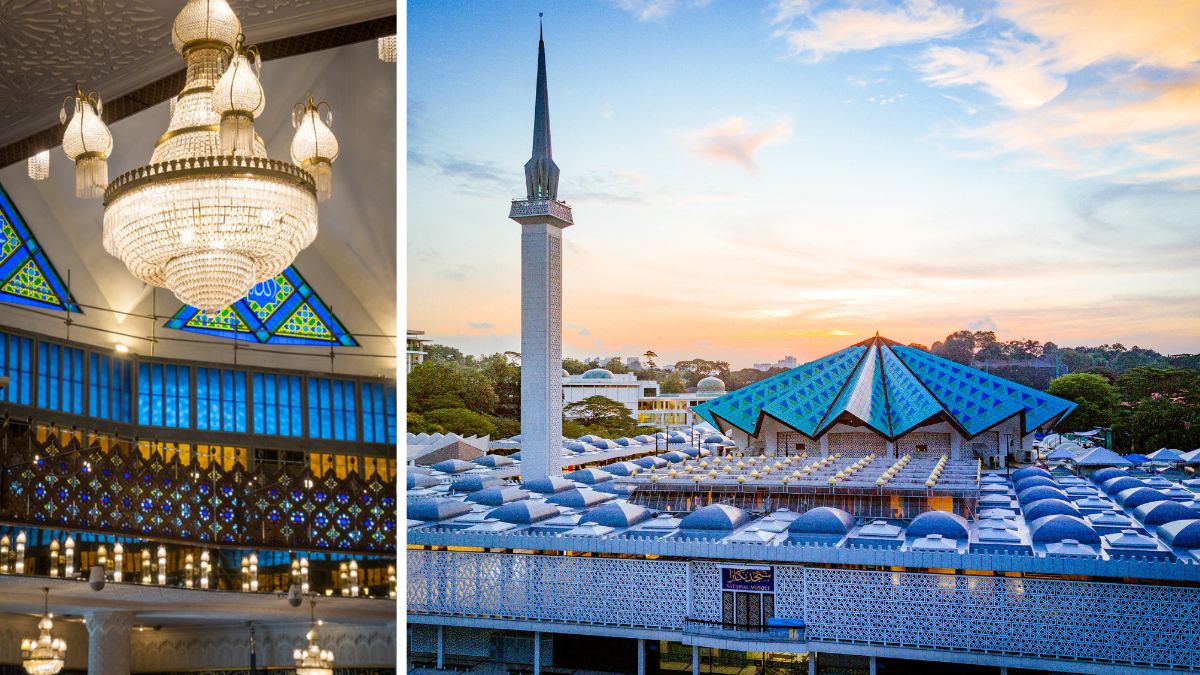
Visiting as a non-Muslim: the mosque is a functioning place of worship, so access is restricted to specific windows outside prayer times. As of current schedules: Saturday to Thursday, 9 a.m.–12 p.m., 3 p.m.–4 p.m., and 5:30 p.m.–6:30 p.m.; Friday, only 3 p.m.–4 p.m. and 5:30 p.m.–6:30 p.m. (Friday midday is reserved for congregational prayer). Entry is free. Robes and headscarves are provided at no cost for anyone dressed inappropriately — long pants or a skirt below the knee and sleeves are the baseline, and women will need a head covering.
Ask one of the volunteer guides if you see them; they’re genuinely knowledgeable and happy to explain the architecture and practice to visitors of any faith, and it costs nothing beyond a few minutes of your time.
Thean Hou Temple
Perched on Robson Heights, this six-tiered temple dedicated to Mazu, the Chinese sea goddess, was built by the local Hainanese community between 1981 and its 1989 opening, which makes it young by temple standards — and it shows in how well-maintained and photogenic it is. Come for the architecture (dragon-and-phoenix mosaics on the upper tiers, red pillars, a genuinely spectacular wall of hanging lanterns during festival season) and stay for the skyline view from the upper terrace, which looks back toward the city center.
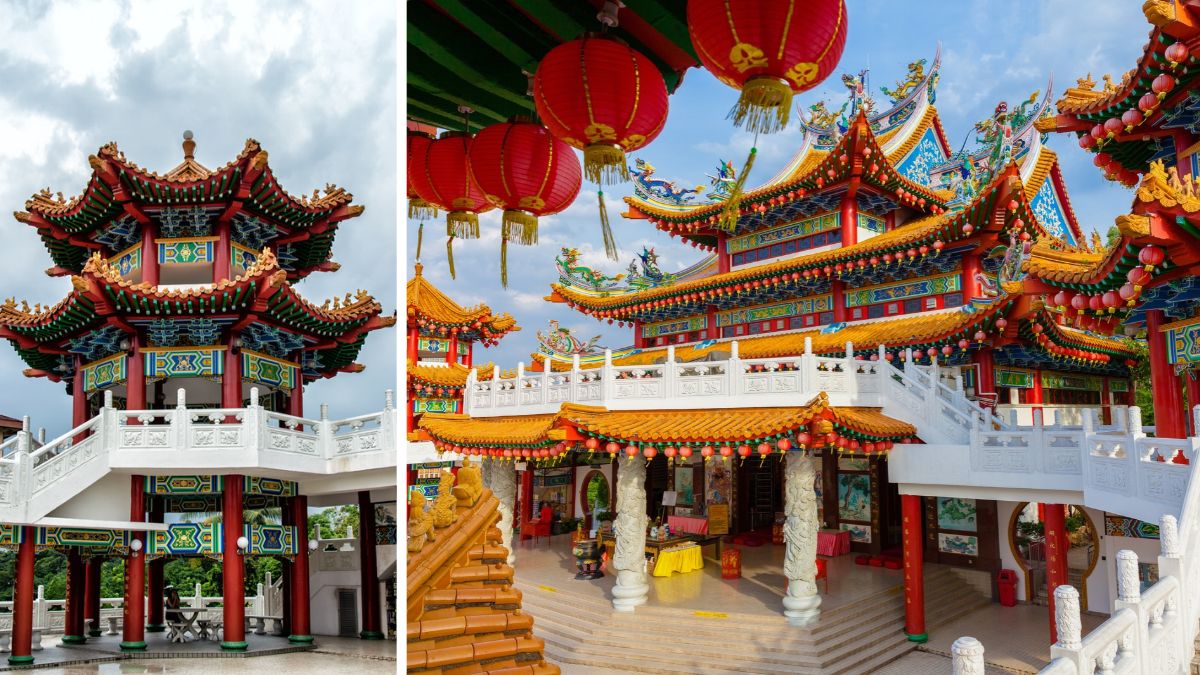
Practical details: free entry, open daily roughly 8 a.m. to 8 p.m. There’s a Chinese medicinal herb garden, a tortoise pond kids love, and a wishing well and Fortune Bridge on the grounds. It’s a working temple and a popular wedding venue, so you may find sections cordoned off for a ceremony — treat it the way you would any active place of worship. There’s no strict dress code, but I’d still cover knees and shoulders out of basic respect. It’s a bit removed from the center — Grab from KL Sentral runs about RM15–20 and 10–15 minutes — but I’d argue it rewards the trip more than several closer, more crowded attractions.
Sri Mahamariamman Temple
Tucked into a lane in Chinatown, this is Kuala Lumpur’s oldest Hindu temple, founded in 1873 by the Tamil community and dedicated to the goddess Mariamman, protector against disease. The gopuram — the tower over the entrance — is covered floor to peak in intricately carved and painted figures of Hindu deities, five tiers of them, and it’s genuinely worth standing across the street just to take in the whole thing before you go inside.
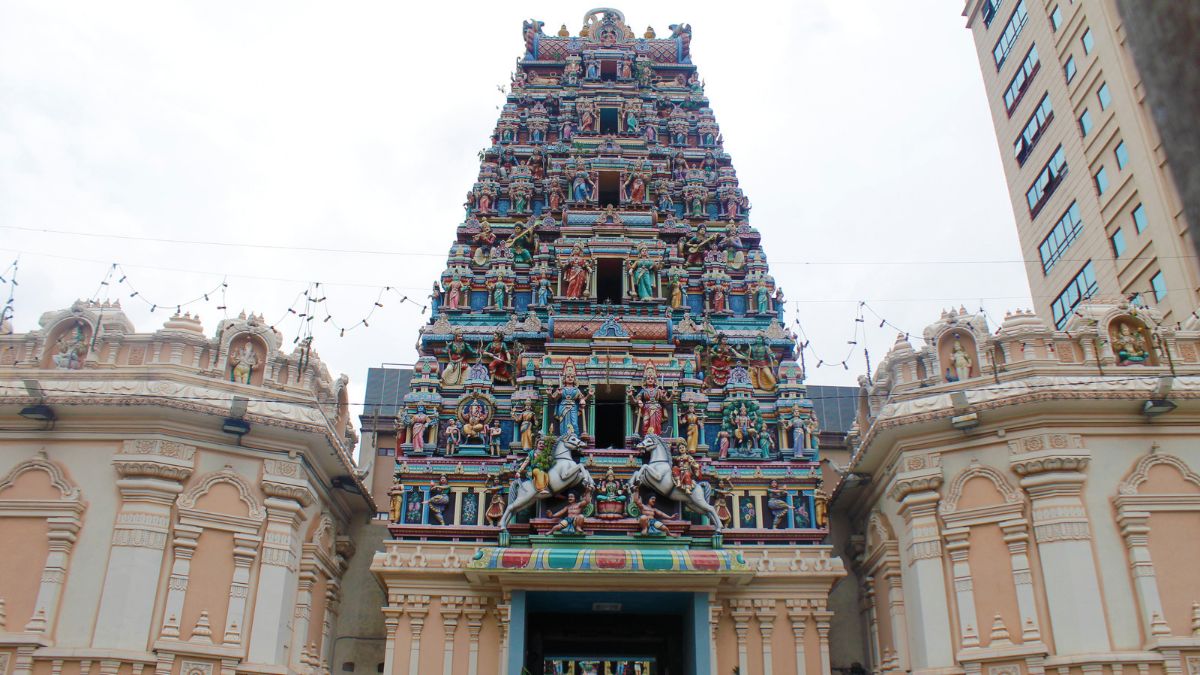
Details: free entry, open daily roughly 6 a.m. to 8:30 p.m. Expect a small charge (around RM2) to store your shoes and possibly a separate charge if you want to photograph or film inside — ask at the entrance, as policies here shift. Dress modestly, shoulders and knees covered. The temple plays a central role in Thaipusam, when its silver chariot procession to Batu Caves draws huge crowds — worth timing your Chinatown visit around if you’re here in late January.
The Colonial Heart: Merdeka Square and Around
Merdeka Square (Dataran Merdeka)
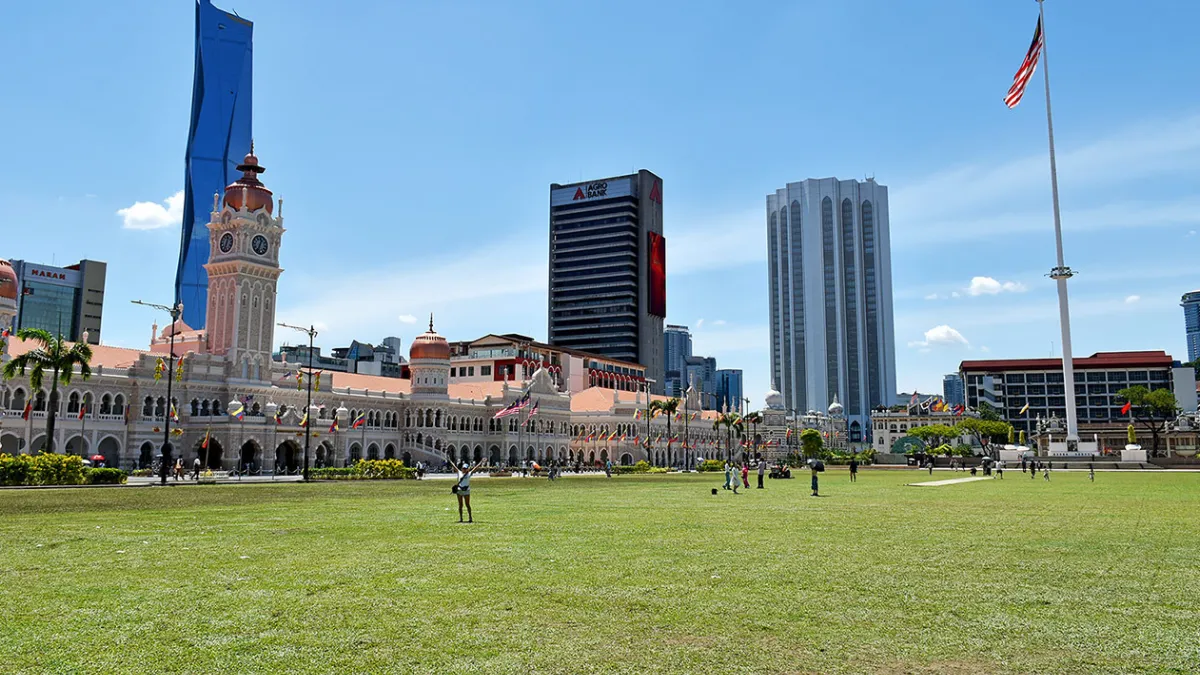
Merdeka Square is where, at midnight on August 31, 1957, the Union Jack came down and the Malaysian flag went up for the first time — the literal birthplace of independent Malaysia. It’s a broad green padang (field), originally a cricket ground for the British colonial administration, ringed by some of the city’s most striking heritage architecture: the Sultan Abdul Samad Building, a Moorish-Victorian confection of copper domes and horseshoe arches that once housed the colonial secretariat and now serves judicial functions; St. Mary’s Cathedral, a small 1894 Anglican church; and the Royal Selangor Club, a mock-Tudor building that’s still a private members’ club.
The square is free and open around the clock. Visit once during the day to appreciate the architecture in full light, and once after dark, when the buildings and the 100-foot flagpole are lit and the whole space takes on a different, quieter character. It costs nothing and takes fifteen minutes each way.
Kuala Lumpur City Gallery
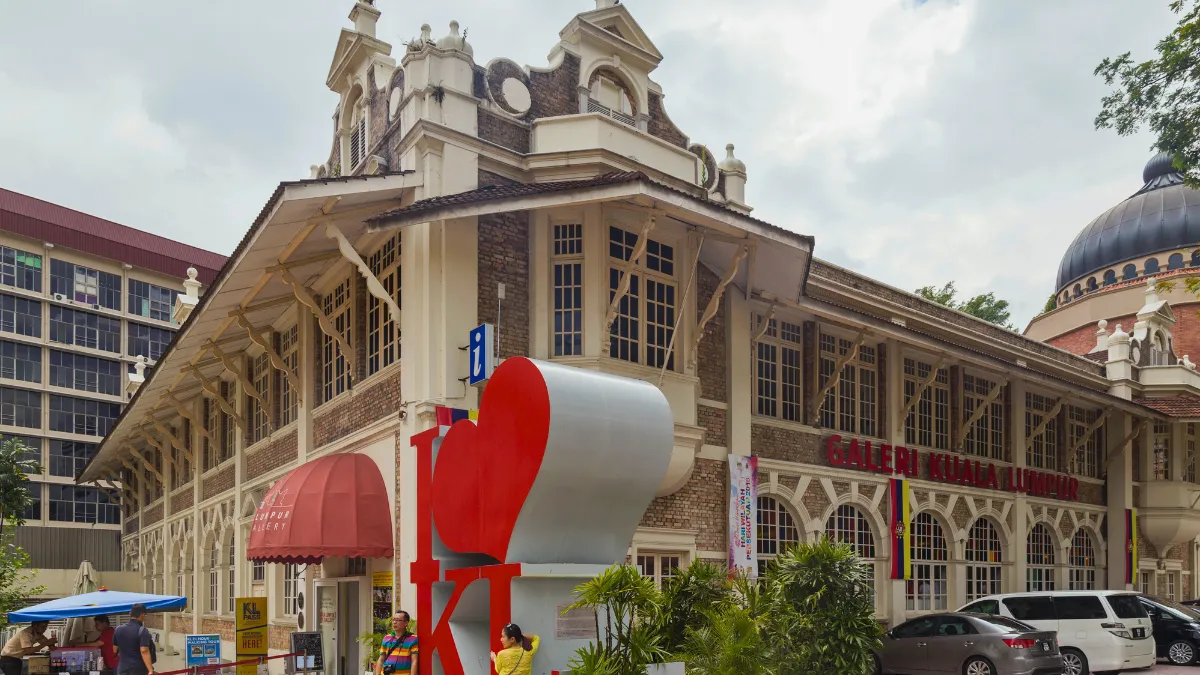
Facing the southern end of the square, in a red-brick 1899 former British government printing office, this doubles as a tourist information office and a small city museum. The centerpiece is a genuinely impressive scale model of central Kuala Lumpur — thousands of buildings rendered at 1:1000, with a lighting sequence that cycles the model from day to night. Out front is the “I ♥ KL” sign, one of the most photographed spots in the city and, frankly, worth five minutes even if you skip the gallery itself.
Entry is free (a small handful of older sources quote a nominal fee — current information from the gallery and city sources confirms free admission). Open daily, roughly 9 a.m. to 6:30 p.m. Budget an hour if you go inside; the model alone is worth the visit for anyone trying to mentally map the city.
Central Market (Pasar Seni)
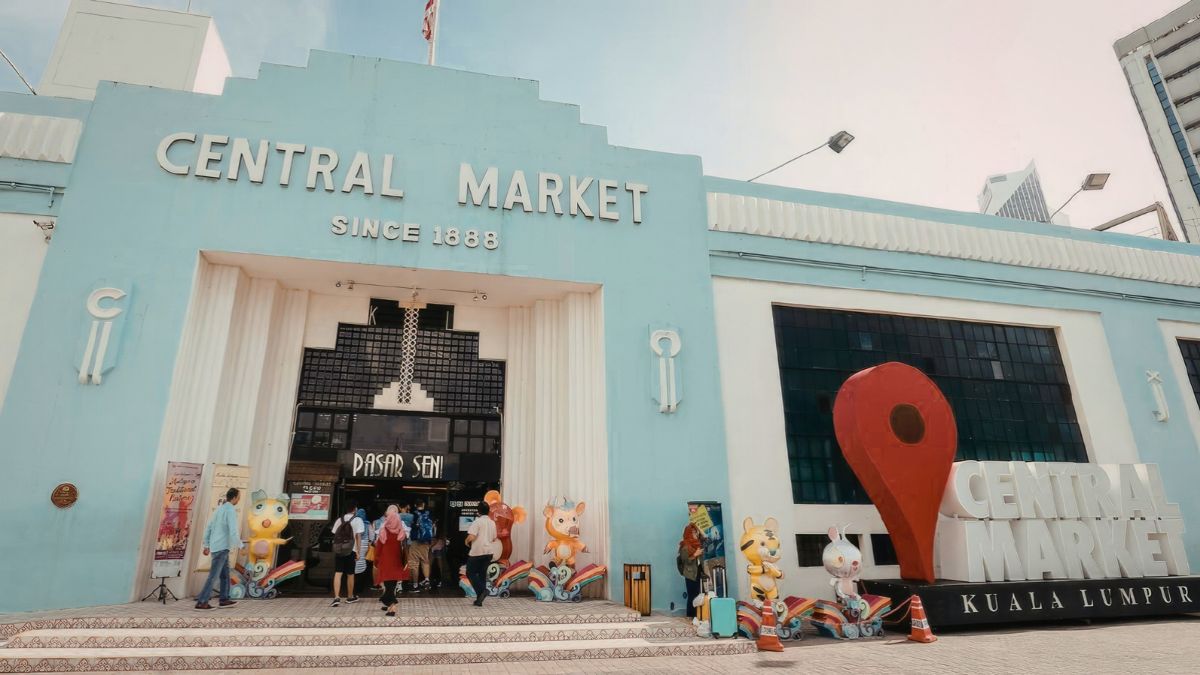
Originally a wet market from 1888, rebuilt in its current Art Deco form in 1937, Central Market has since been repurposed into a fixed-price crafts and souvenir bazaar — batik, pewter, woodcarving, and a genuinely wide range of Malaysian handicrafts under one roof with air conditioning, which after a morning of temple-hopping in the heat is its own kind of attraction. It’s touristy, and prices are fixed rather than bargained (unlike Petaling Street next door), but the quality tends to be more reliable if you’re after an actual souvenir rather than a knockoff. Open daily, roughly 10 a.m. to 10 p.m., free to enter.
Culture and Green Space
Islamic Arts Museum Malaysia
This is, without qualification, one of the best museums in Southeast Asia, and it gets skipped by a surprising number of visitors who spend the same afternoon queuing for a photo at Petronas. It’s the largest Islamic art museum in the region, with roughly 12,000 artifacts spanning 1,400 years across 12 themed galleries — Quran manuscripts, Ottoman ceramics, Mughal jewelry, and an entire gallery of architectural scale models, including the Taj Mahal and the Alhambra, that’s genuinely fun for kids as much as adults.
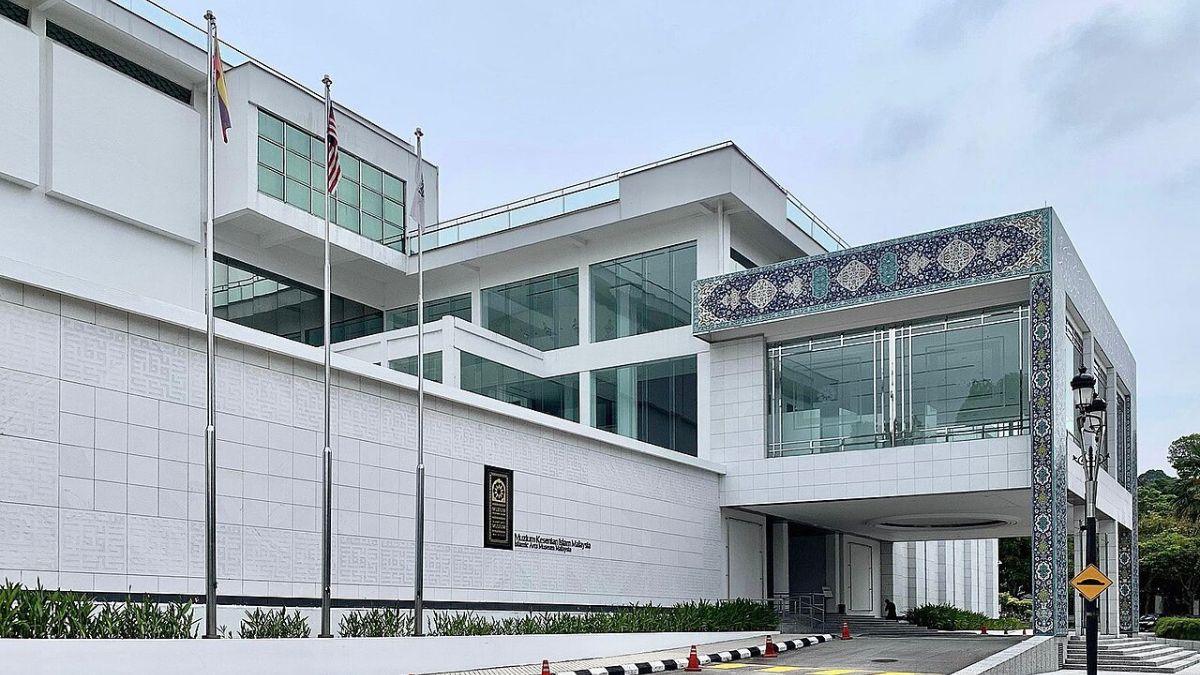
Admission (official rates): RM20 for adults, RM10 for students and Malaysian senior citizens, RM20 for non-Malaysian seniors, free for children under 6. Open daily, 9:30 a.m. to 6 p.m. (last admission 5:30 p.m.), reduced to 5 p.m. closing during Ramadan. It closes only on Hari Raya Aidilfitri and Hari Raya Aidiladha — meaning it’s open on days when almost everything else in the neighborhood shuts down, which makes it a useful fallback plan. There’s no dress code here, unlike the mosque next door.
Give yourself two to three hours minimum. It sits directly beside the National Mosque and Perdana Botanical Garden, so it slots naturally into a single half-day cultural loop through this part of the city.
Perdana Botanical Garden and KL Bird Park
The Perdana Botanical Garden (also called Lake Gardens) is KL’s largest green space, free to enter, and open roughly 7 a.m. to 8 p.m. daily. It’s genuinely restorative after a morning of pavement and traffic — a Sunken Garden, an Orchid Garden, a Hibiscus Garden showcasing Malaysia’s national flower, a small Deer Park, and a lake you can paddle across by rented boat.
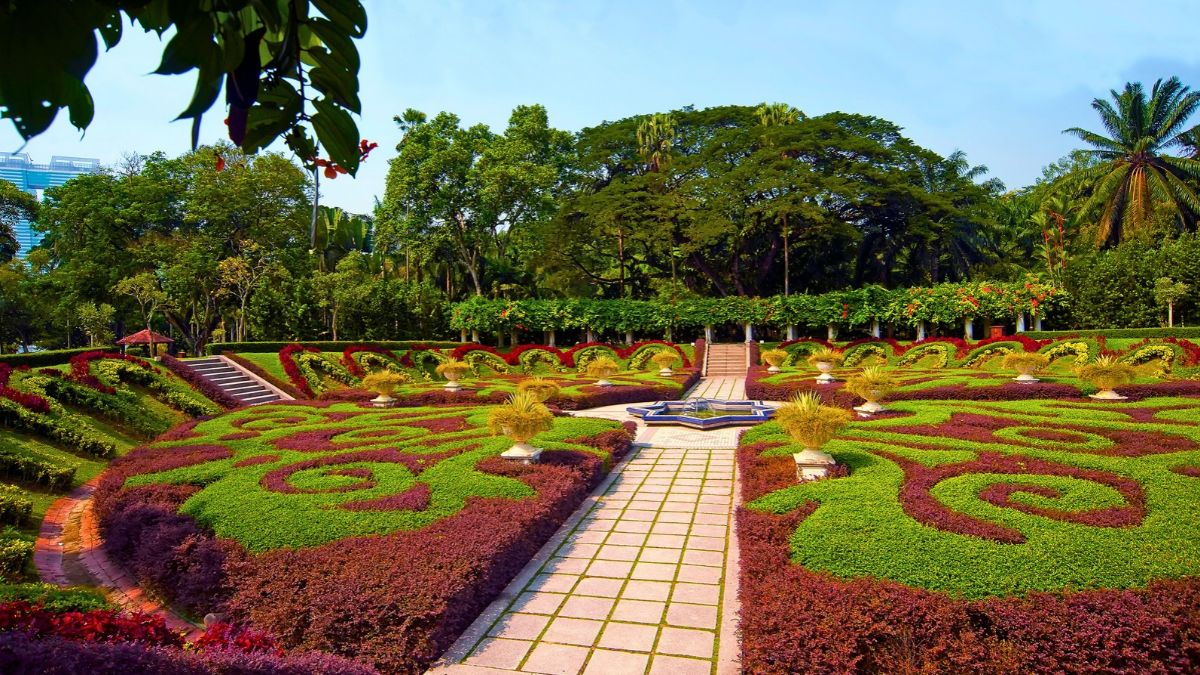
The Kuala Lumpur Butterfly Park is part of the botranical garden. It is an expansive plant and flower filled garden with over 5,000 butterflies, koi ponds & a gift shop. Great for the kids and families. Admission (official rates): non-Malaysian Prices – Adult : RM 30, Children (2-11 years) : RM 18. Malaysian citizens – RM 18 for Adults with Malaysian MyKad, RM 8 for Children with MyKid pass (2-11 years), RM 50 for the Family Package (2 Adults + 3 Children).
Inside the same green belt sits the KL Bird Park, one of the world’s largest free-flight walk-in aviaries — most of its roughly 3,000 birds across hundreds of species fly freely through open enclosures rather than being caged, which changes the whole feel of the visit. Admission (official rates): RM90 standard adult, RM70 standard child; RM50 with Malaysian MyKad, RM25 for MyKid holders or seniors with MyKad. It’s not cheap for a non-Malaysian family, so weigh it against your interest level — but the free-flight concept genuinely delivers something you won’t get at a conventional zoo.
Free Evening Spectacle: KLCC Park and the Lake Symphony
Most visitors see the Petronas Towers exactly once, from the observation deck, looking down. I’d argue the better view is from KLCC Park, looking up, at night, from ground level.
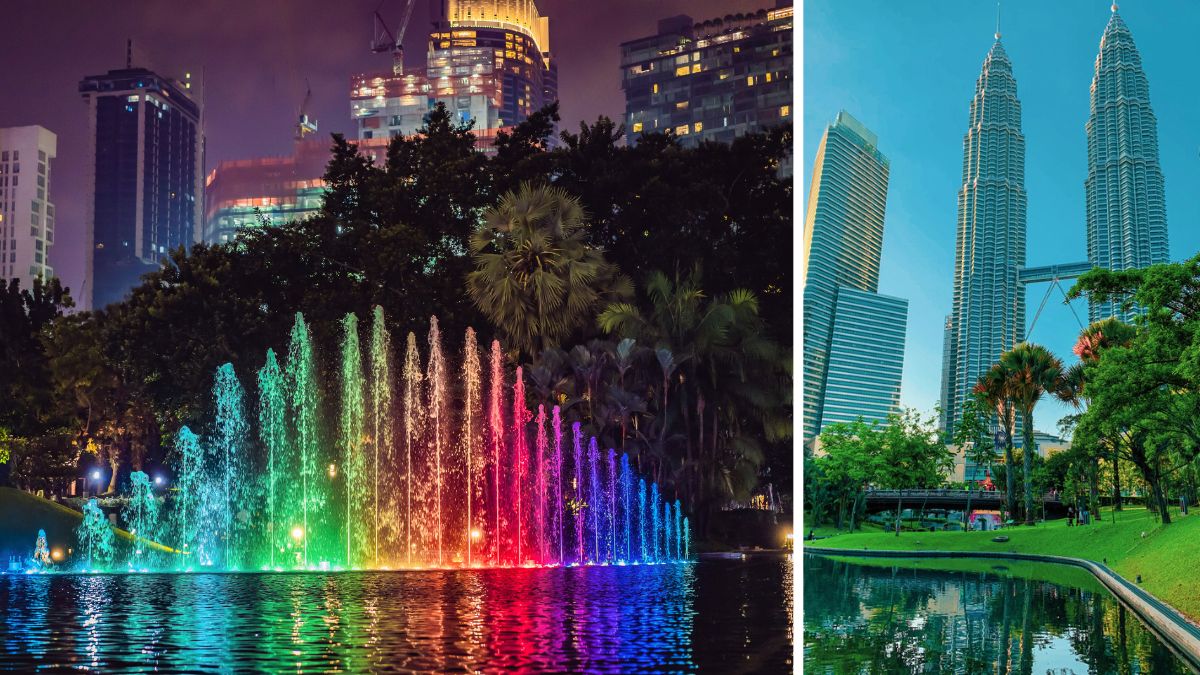
This is a free, 50-acre public park wedged between the towers and Jalan Ampang, designed by the Brazilian landscape architect Roberto Burle Marx, with a 1.3-kilometer rubberized jogging track that’s genuinely one of the few decent running surfaces in the city center. But the reason to be here after sunset is the Lake Symphony — twin fountains in a 10,000-square-foot man-made lake, choreographed to music and colored light, with the towers lit up directly behind them.
Showtimes run nightly: light-and-sound (full musical) shows at roughly 8, 9, and 10 p.m., each lasting about 10 minutes; light-only shows (no music) fill the gaps at 7:30, 8:30, and 9:30 p.m. Times shift slightly by source and season, so treat this as a solid planning estimate rather than gospel, and arrive 15–20 minutes early to claim a spot at the railing on the Esplanade directly outside Suria KLCC — that’s the angle that puts the towers dead-center behind the water. It costs nothing, and it’s the single best value-for-effort thing to do in the city after dark.
Beyond the Postcard: Neighborhoods for Independent Explorers
The landmarks above will fill a solid three days. But if you’ve got a fourth day, or you’re the kind of traveler who’d rather wander a neighborhood than check off another ticketed attraction, this is where KL gets genuinely interesting.
Kampung Baru
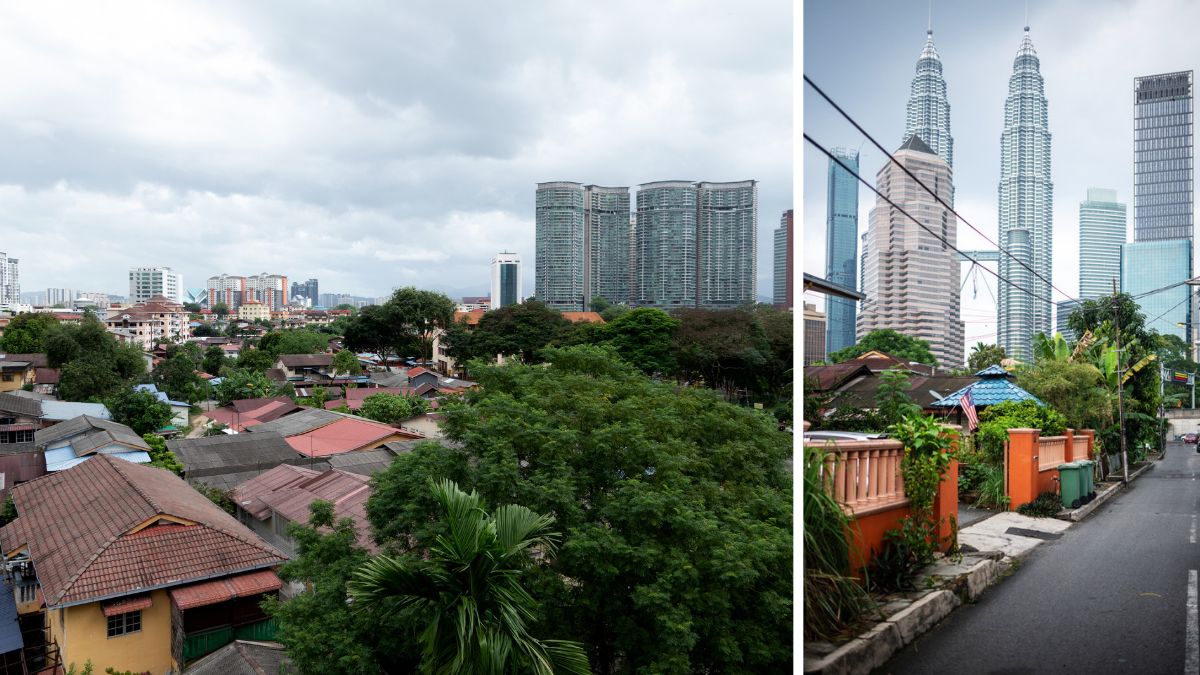
One LRT stop from KLCC, in the direct shadow of the Petronas Towers, sits a 110-year-old traditional Malay village of wooden stilt houses, chickens in front yards, and a population of around 35,000 that has resisted redevelopment for over a century despite sitting on some of the most valuable land in the country. Walk the side streets to see Rumah Limas-style houses with their carved eaves, visit the mosaic gateway of Masjid Jamek Kampung Baru, and eat breakfast the way locals do: Nasi Lemak Antarabangsa and Nasi Lemak Wanjo both open around 4 a.m. and serve enormous portions of coconut rice, sambal, fried anchovies, and egg for RM5–8. The contrast between kampung houses and glass towers, sometimes in the same frame, is the single most striking visual juxtaposition I found anywhere in the city.
Brickfields (Little India)
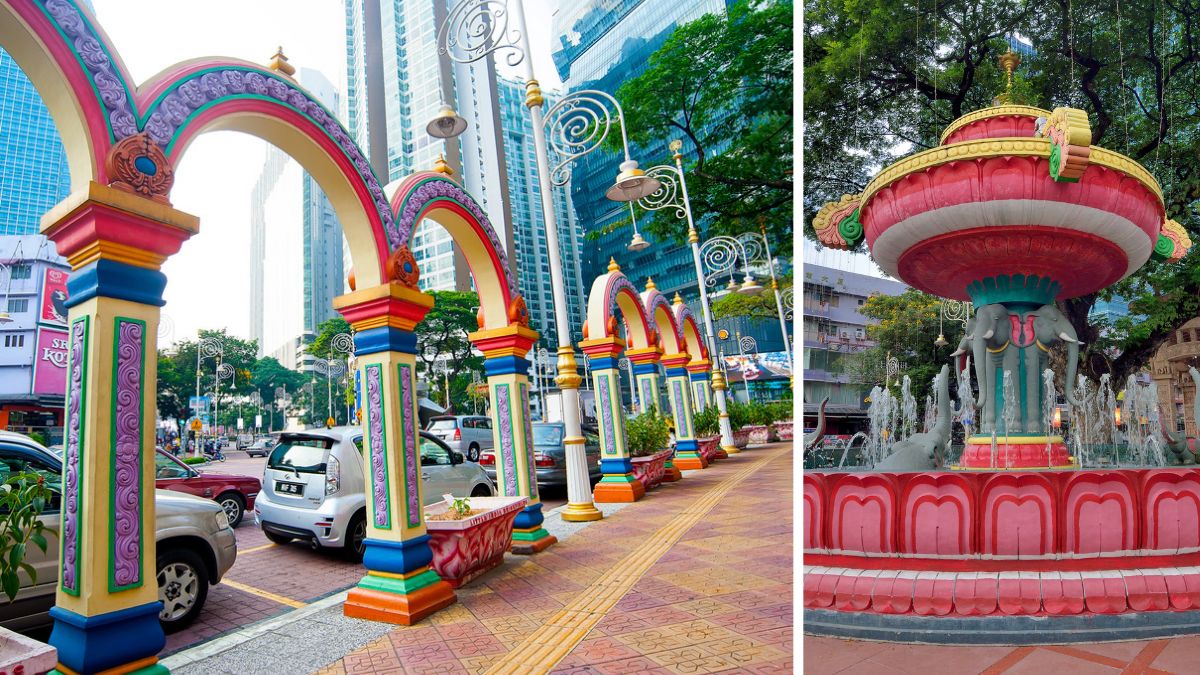
South of KL Sentral — Malaysia’s largest transit hub, worth a glance in its own right — Brickfields is the city’s Indian quarter: temples (Sri Kandaswamy Temple is a standout), sari shops in every shade you can imagine, and South Indian food that outclasses most of what you’ll find elsewhere in the city. Order banana leaf rice at a proper “refill” restaurant — you eat with your right hand off a banana leaf, and the curries and rice keep coming until you signal you’re done by folding the leaf toward you. It’s a genuinely communal, unhurried way to eat, and a meal here rarely runs more than RM15–20 per person.
Chow Kit
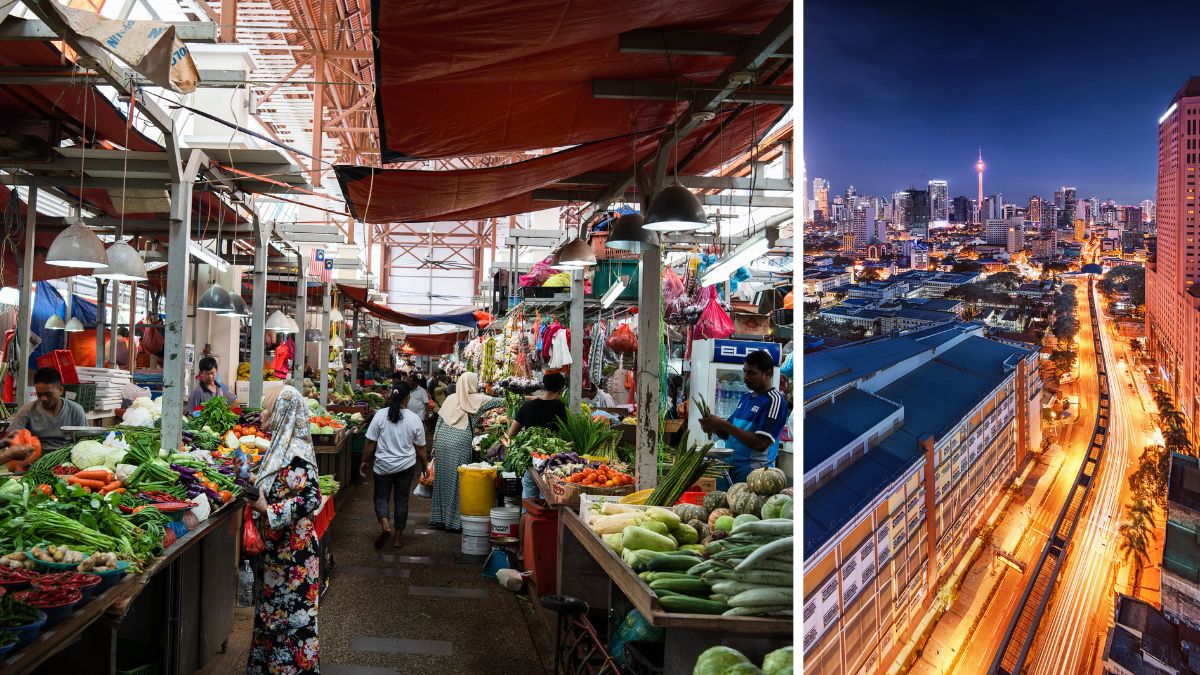
This is the neighborhood most guidebooks skip, and I think that’s a mistake if you actually want to see a working Malaysian city rather than its tourist face. Centered on Jalan Tuanku Abdul Rahman, Chow Kit’s wet market and night market sell durian, dried fish, textiles, and secondhand goods to a mostly local clientele — no one here is performing for a camera. It’s rougher around the edges than Bukit Bintang or KLCC, and I’d recommend visiting in daylight or early evening rather than late at night, but it’s a fifteen-minute rail ride from the tourist core and delivers a completely different register of the city.
Chinatown (Petaling Street) and REXKL
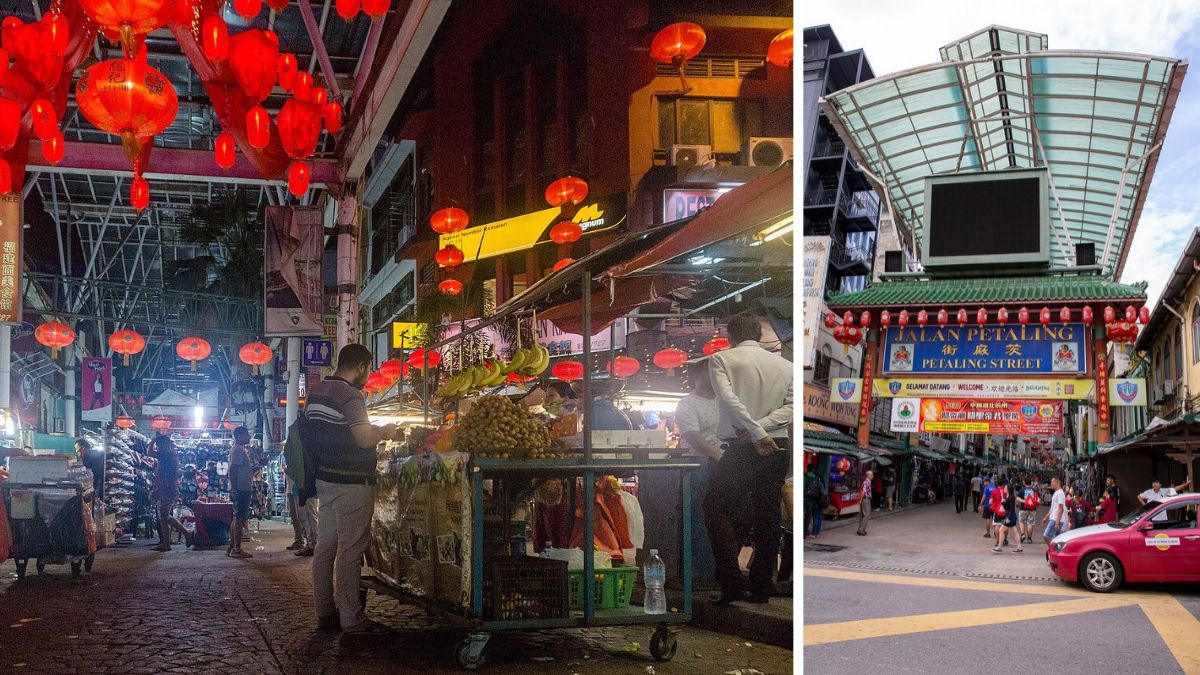
Petaling Street itself — a covered market street selling everything from counterfeit watches to genuinely good street food — is touristy enough now that I’d temper your expectations; bargaining is expected (start around half the asking price and work up), and the food stalls are hit or miss. What’s changed the neighborhood for the better is REXKL, a 1947 cinema converted into an arts and community hub, with a genuinely excellent independent bookstore on the upper floor, rotating exhibitions, and a basement of bars and small eateries that skew toward KL’s younger, design-conscious crowd rather than the tourist trade next door. It’s a useful late-afternoon or evening stop after you’ve done the more obligatory rounds of the neighborhood, and a good indicator of where KL’s culture is actually heading rather than where it’s been.
Practical Planning: Budget, a Loose Itinerary, and Etiquette
A realistic daily budget: Kuala Lumpur remains one of the more affordable major Asian capitals for independent travelers. Eating and moving around locally — hawker meals, rail transport, the free attractions — runs about MYR 80–120 (roughly US$17–25) per person per day. Add one or two paid attractions like Petronas or the Bird Park and a mid-range dinner, and MYR 150–220 (US$32–47) per day covers a comfortable independent trip without extravagance. Check out our page that is dedicated to providing up-to-date Malaysia travel costs and budgeting guidance.
A loose three-day skeleton, which you should feel free to break apart:
- Day 1 — Colonial core and towers: Merdeka Square and City Gallery in the cool of the morning, Central Market and a wander through Chinatown/Petaling Street/REXKL for lunch, Islamic Arts Museum and National Mosque in the early afternoon, KLCC Park and the Lake Symphony fountain show after dark.
- Day 2 — Batu Caves and the icons: early train to Batu Caves before the heat sets in, back to the city by early afternoon, Petronas Towers or KL Tower (pick one — doing both in a single day is a lot of queuing for diminishing returns) at sunset.
- Day 3 — Neighborhoods and temples: morning in Kampung Baru for breakfast and a walk, Thean Hou Temple and Brickfields in the afternoon, evening free for Chow Kit or a return trip up whichever tower you skipped on Day 2.
Dress code, summarized: cover shoulders and knees at any temple or the National Mosque; robes and headscarves are provided free where needed. Petronas Towers expects smart-casual (no shorts, tank tops, or open sandals, particularly for premium ticket tiers). Everywhere else, KL is relaxed about clothing — this isn’t a city where you’ll feel out of place in ordinary travel clothes.
A note on solo and family travel: Kuala Lumpur is genuinely one of the more comfortable Southeast Asian capitals to navigate alone, with women traveling solo commonly reporting few issues in the well-trafficked tourist areas covered in this guide. Standard city precautions apply — stay aware in Chow Kit and Chinatown after dark, keep bags zipped around Batu Caves’ macaques, and use Grab rather than hailing an unmarked taxi off the street. Families will find most of the major sights — KLCC Park, the Bird Park, Central Market, Kampung Baru — genuinely stroller- and kid-friendly, with the notable exception of the 272 uncovered steps at Batu Caves, which are a real undertaking with small children in the heat.
Kuala Lumpurs Top Sights and Landmarks FAQ
How many days do I need to see Kuala Lumpurs top sights?
Three full days covers the major landmarks — the towers, Batu Caves, the colonial core, and at least one temple and museum — at a comfortable, non-rushed pace. Add a fourth day if you want real time in the neighborhoods (Kampung Baru, Brickfields, Chow Kit) rather than just the ticketed attractions.
Do I need to book Petronas Twin Towers tickets in advance?
Yes, especially for sunset time slots and during school holidays. Tickets are timed, capped daily, and sell out days to weeks ahead in peak season. Book directly through the official site rather than a reseller.
Is Batu Caves free to visit?
The main Temple Cave — the one with the golden Murugan statue and the 272-step staircase — is free. The smaller Ramayana Cave and Cave Villa charge separate small entrance fees, and the Dark Cave has been closed since 2019.
What should I wear to visit the National Mosque or Batu Caves?
Shoulders and knees covered at minimum. Both sites provide free robes, sarongs, or headscarves at the entrance if you show up under-dressed, so it’s not a dealbreaker if you forget — just budget a few extra minutes.
Is the Merdeka 118 observation deck open to visitors?
Status has been inconsistent through 2025 and into 2026 — the tower and Park Hyatt hotel are open, but public ticketing for “The View at 118” observation deck has been delayed and reported differently across sources. Check merdeka118.com directly before planning around it; the level 75 Park Hyatt lounge is a reliable alternative for a high-altitude view in the meantime.
What’s the best free thing to do in Kuala Lumpur?
The Lake Symphony fountain show at KLCC Park, nightly at 8, 9, and 10 p.m., with the illuminated Petronas Towers as the backdrop. It costs nothing and, in my opinion, rivals the paid observation decks for atmosphere.
Prices accurate at 24th August 2026: Prices, hours, and ticket availability in Kuala Lumpur change without much notice — I’d recommend confirming current rates for any paid attraction on its official website within a day or two of your visit, particularly for Petronas Twin Towers and Merdeka 118, where things move fastest. Check out our latest guide on how to get around Malaysia and Kuala Lumpur.