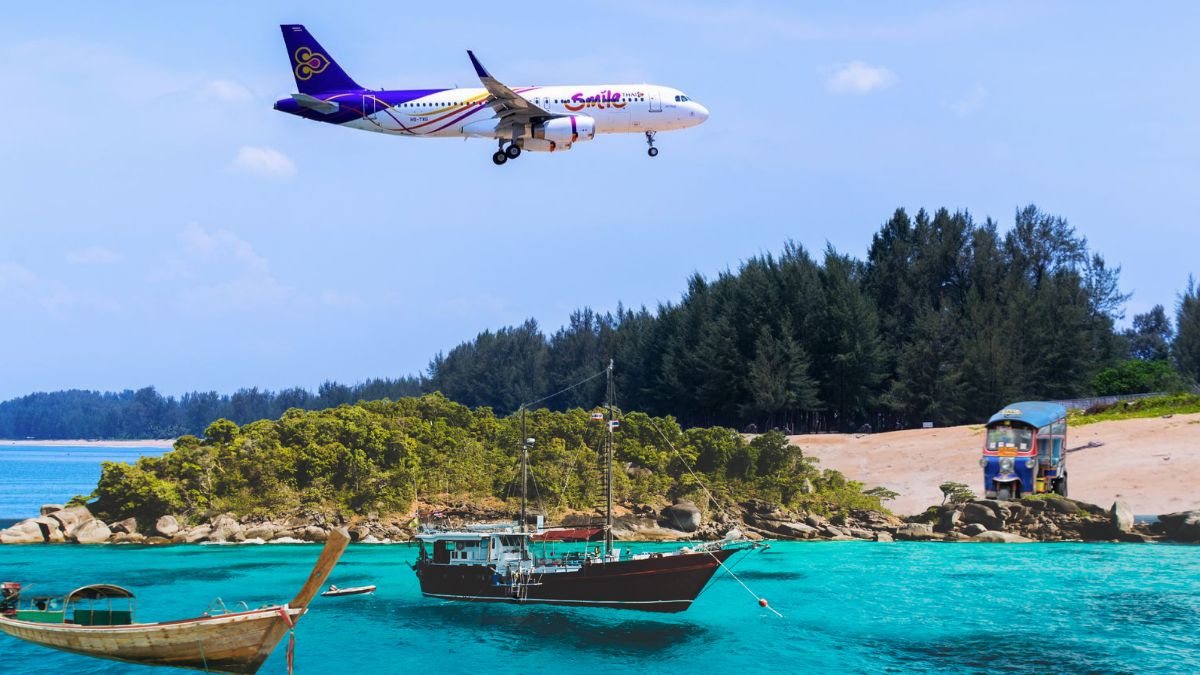


How to get around Thailand becomes easy for independent travelers once you stop looking for one “best” form of transport. The right choice changes with the route. Trains work brilliantly on selected long-distance corridors, buses reach places the railway misses, ferries connect the islands, and domestic flights prevent a short holiday disappearing into two days of overland travel.
The most effective Thailand itinerary usually combines several of them. I might take an overnight train from Bangkok to Chiang Mai, fly south when the distance becomes inefficient, use a coordinated bus-and-ferry ticket to reach an island, and rely on urban rail or a licensed ride-hailing service within a city. The important comparison is not simply the ticket price. It is the complete door-to-door cost, travel time, arrival point, luggage allowance, reliability, and consequence of a missed connection.
This guide explains how to get around Thailand by train, bus, minivan, ferry, flight, taxi, songthaew, rental car, and scooter. It includes realistic 2026 price ranges, the main transport hubs, route-specific recommendations, booking channels, seasonal disruption risks, safety considerations, and the mistakes that most often make a cheap ticket expensive.
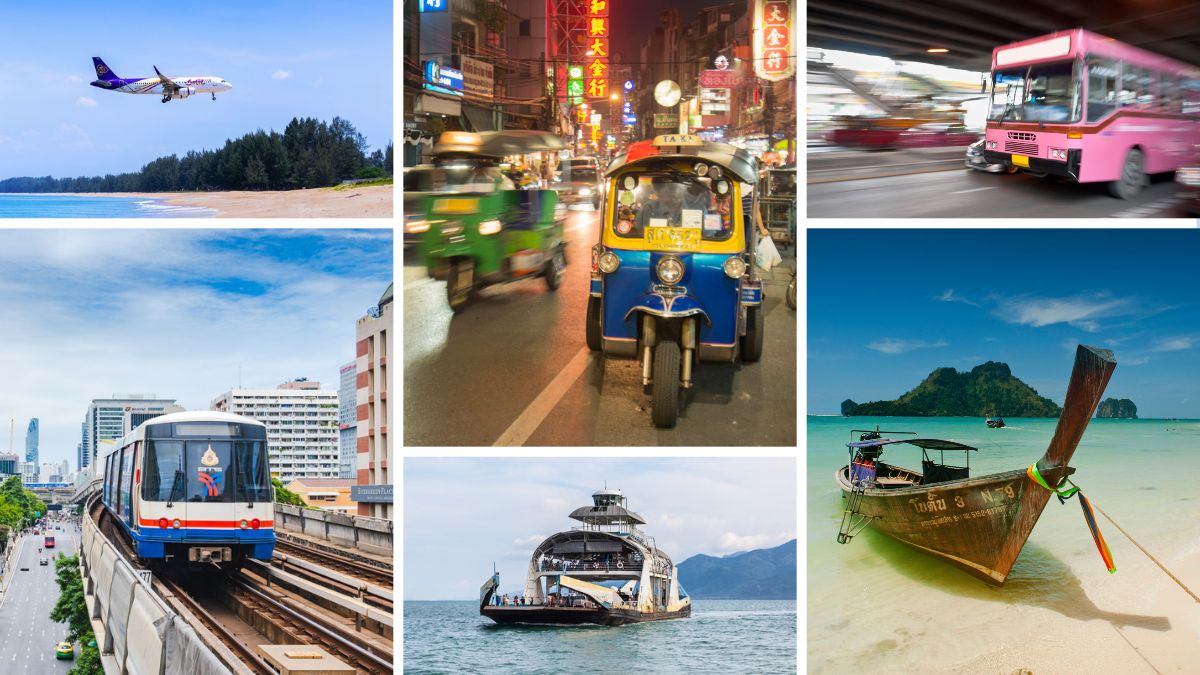
What is the best way to get around Thailand?
For most independent travelers, the best way to get around Thailand is to use trains for Bangkok–Chiang Mai and selected north, northeast, and southern routes; buses for destinations without convenient rail or air service; ferries for the islands; and domestic flights when moving between distant regions. Within Bangkok, BTS, MRT, the Airport Rail Link, river boats, and metered or app-based taxis are usually more practical than renting a vehicle.
A traveler with two weeks should normally fly at least one very long north-to-south leg rather than spending 20 hours changing buses. Someone with a month can use more overnight trains and buses because the journey itself becomes part of the experience. Island connections need the largest weather buffer, while separate domestic and international flight tickets need the largest delay buffer.
| Transport | Best used for | Typical planning price | Main advantage | Main limitation |
|---|---|---|---|---|
| Train | Scenic journeys, overnight travel, and routes along the SRT network | About 50–2,000 THB, depending on route and class | More space and the option of a sleeper berth | Limited network and possible delays |
| Bus or coach | Intercity routes not served directly by rail | About 200–1,200 THB | The broadest nationwide route coverage | Traffic, variable comfort, and remote terminals |
| Minivan | Shorter regional trips and frequent departures | About 100–500 THB | Direct service between many smaller towns | Little luggage space and cramped seating |
| Ferry or speedboat | Gulf and Andaman island connections | About 200–1,500 THB, including some combined transfers | Essential access to islands without airports or bridges | Weather, sea conditions, and seasonal schedules |
| Domestic flight | Bangkok–north, Bangkok–south, and north–south journeys | About 1,000–4,500 THB after realistic baggage | Protects destination time on a short trip | Airport transfers, baggage charges, and check-in time |
| Rental car | Rural loops, families, and destinations with weak public transport | About 900–2,500+ THB per day before fuel and tolls | Control over stops, luggage, and departure time | Licensing, insurance, traffic, and parking |
My practical rule for choosing transport
If an overland journey takes fewer than four hours, I normally start with a train, coach, or minivan. Between four and eight hours, I compare comfort, departure point, and the value of an overnight service. Beyond eight hours, I compare the full cost of flying unless the train journey is an experience I specifically want.
Traveling around Thailand by train
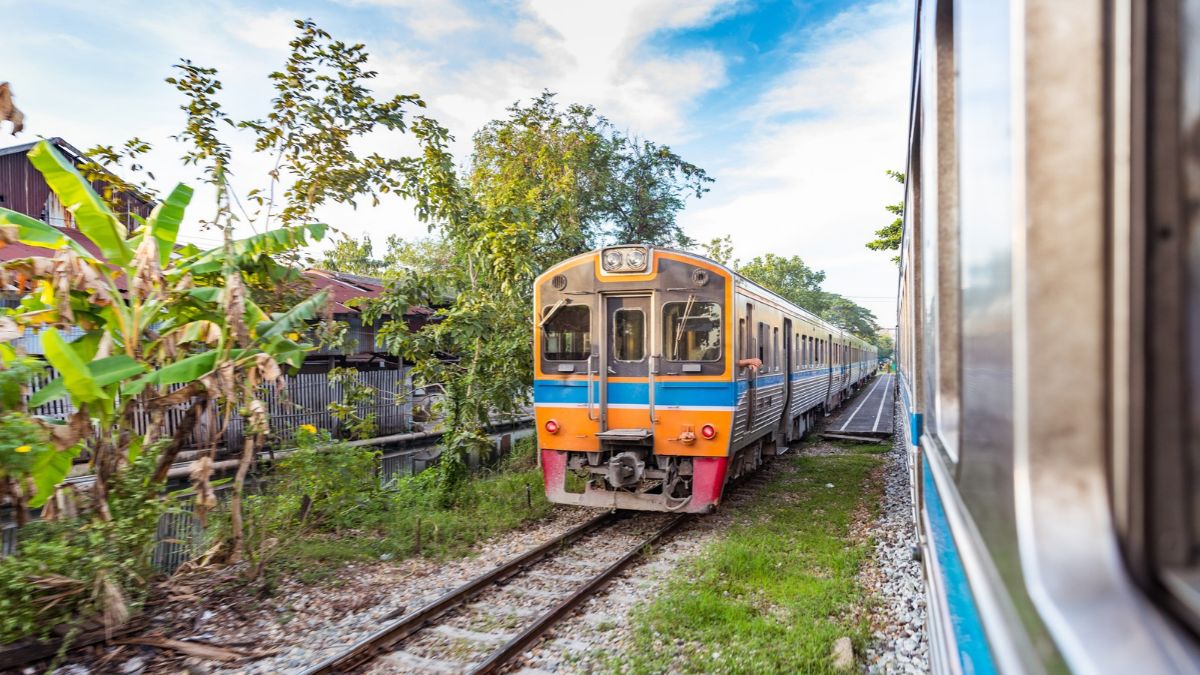
Thailand’s railways are atmospheric, affordable, and genuinely useful, but they do not form a complete national network. The State Railway of Thailand, usually shortened to SRT, operates northern, northeastern, eastern, and southern lines from Bangkok. Trains work best when the destination lies naturally on one of those corridors; they are less useful for Phuket, Krabi, Sukhothai Historical Park, and Chiang Rai because none has a central passenger railway station that solves the whole journey.
The classic traveler routes include Bangkok to Ayutthaya, Bangkok to Chiang Mai, Bangkok toward Nong Khai or Ubon Ratchathani, Bangkok to Hua Hin, Bangkok to Surat Thani for Gulf-island connections, and Thonburi to Kanchanaburi and Nam Tok. Rail is also useful for slower journeys through Phitsanulok, Lampang, Nakhon Ratchasima, and other provincial centers.
Which Bangkok railway station do you need?
Krung Thep Aphiwat Central Terminal, sometimes shown in older material as Bang Sue Grand Station, handles most long-distance northern, northeastern, and southern departures. It connects with Bangkok’s MRT Blue Line at Bang Sue and with the SRT Red Line. The building is large, so arrive with enough time to find the correct gate and platform.
Hua Lamphong still handles selected ordinary, commuter, excursion, and eastern services. It is no longer safe to assume that every long-distance train leaves from the historic terminal. Thonburi Station is used for ordinary services toward Kanchanaburi and Nam Tok.
Thailand train classes explained
Third class is the least expensive and most local experience. Seating is basic, carriages may use fans and open windows, and tickets are often sold close to departure. It can be enjoyable for a short daylight journey such as Bangkok to Ayutthaya, but a long third-class trip is tiring if you expect air-conditioning, generous luggage space, or quiet.
Second-class seated coaches provide more comfort, with air-conditioned and fan options depending on the train. Second-class sleepers are the sweet spot for many independent travelers. Facing seats are converted into upper and lower berths at night, curtains provide limited privacy, and the lower berth is generally wider and more popular.
First-class sleepers provide an enclosed cabin, commonly with two berths and a shared bathroom elsewhere in the carriage. They offer privacy but sell quickly and can approach the complete cost of a domestic flight, especially when one person must pay for exclusive use. Not every service has every class, and carriage age varies.
Bangkok to Chiang Mai by train
The Bangkok–Chiang Mai line remains Thailand’s signature long-distance rail journey. Day trains reveal more of the countryside; overnight trains exchange views for time efficiency and may replace a hotel night. Journey times vary by service but are commonly around 11 to 14 hours.
In 2026, SRT lists the Special Express fare between Krung Thep Aphiwat and Chiang Mai at approximately 310–1,946 THB, depending on class and accommodation. That wide range is why a single “Thailand train price” is misleading. A third-class seat, second-class sleeper, and first-class cabin are different products.
Pack a light layer because air-conditioned sleepers can feel cold, plus water, tissues, earplugs, and a small bag that stays with you. Food may be sold on board or at stations, but availability and quality vary. Keep passports, money, medication, and electronics in the berth rather than in a large bag at the end of the carriage.
Southern trains and island connections
Southern-line trains do not go directly to Phuket, Krabi, Koh Samui, Koh Phangan, or Koh Tao. The railway reaches transfer towns and stations. Surat Thani is the main rail gateway for bus-and-ferry connections to the Gulf islands, while Trang and Hat Yai can support journeys toward southern Andaman destinations and the Malaysian border.
Surat Thani Railway Station is in Phunphin, outside central Surat Thani. A ticket described as “Surat Thani” may therefore be only the rail component. Check whether a combined booking includes the onward bus to Donsak or another pier and the ferry itself.
Kanchanaburi and the Death Railway
Ordinary trains toward Kanchanaburi and Nam Tok usually depart from Thonburi rather than Krung Thep Aphiwat. The journey is slow but historically and scenically important, especially beyond Kanchanaburi toward the River Kwai bridge, the Wampo Viaduct, and Nam Tok. Travelers continuing to Hellfire Pass need road transport because the railway does not run to the memorial center.
How far in advance can you book Thailand trains?
SRT changed its advance-booking policy during 2026. Reserved-seat trains may now open up to 90 days before departure, after the earlier maximum of 180 days was reduced. The actual window can depend on the train, distance, and service category; shorter journeys, rapid services, ordinary trains, and local services may open later or be sold only at the station.
Use the official SRT D-Ticket system to see what is genuinely on sale for your date. Sleeper berths for New Year, Songkran, Loy Krathong, long weekends, and Friday or Sunday departures can sell quickly. SRT’s timetable and fare system is useful for schedules and prices, while the TTS train tracker helps passengers check running information.
Train-ticket mistakes to avoid
- Do not select “Bangkok” without checking whether the ticket means Krung Thep Aphiwat, Hua Lamphong, or Thonburi.
- Do not assume a route appearing in a map app is a direct train; many results combine rail with a bus or taxi.
- Do not book a lower-cost seat for a 12-hour overnight journey if you actually need a flat berth to function the next day.
- Do not connect a delayed long-distance train directly to a separately ticketed flight without a substantial buffer.
- Do not rely on a photo of a paper ticket. Carry the original ticket or the accepted D-Ticket and identification required for the journey.
Why choose the train?
- Overnight sleepers can combine transport and accommodation.
- Passengers have more freedom to move than on most buses.
- Rail journeys create a stronger sense of place than an airport transfer.
- Central stations can reduce road-transfer time at some destinations.
When is the train less suitable?
- The railway does not serve several major beach and mountain destinations directly.
- Delays can make tight onward connections risky.
- Popular berths sell out while less comfortable seats remain.
- First-class rail can cost as much as flying without saving time.
Buses and minivans in Thailand
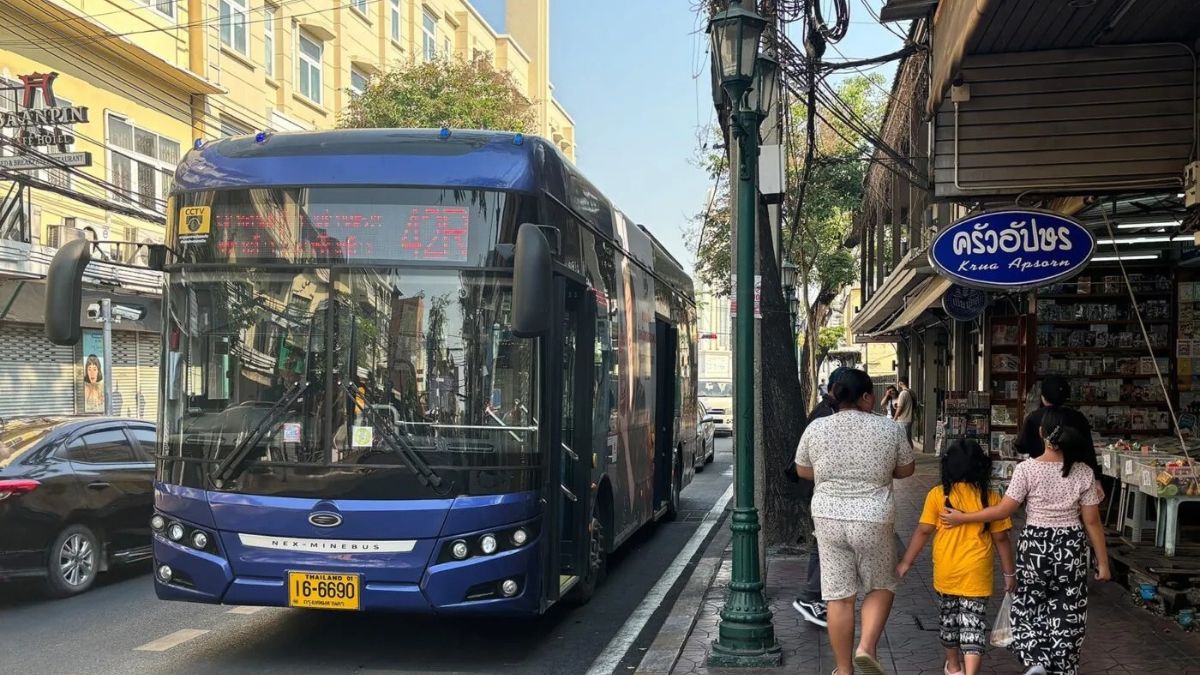
Buses provide the broadest public-transport coverage in Thailand. They connect Bangkok with provincial capitals, beach towns, border regions, islands’ mainland gateways, and places the railway bypasses. For Sukhothai, Chiang Rai, Pai, Mae Hong Son, Trat, Koh Chang’s ferry ports, and many Isan destinations, a coach or minivan may be the most direct practical option.
The category matters. A large intercity coach from an established operator is different from a commuter bus, a hotel minibus, or a 12-seat public van. Marketing labels such as VIP, first class, and express are not completely standardized, so compare seat layout, onboard toilet, stops, luggage, departure terminal, and operator reputation rather than relying on the name.
For the best prices to travel in Thailand use the search widget below. Not only can you have all your transport booked before you leave home, you will also pay the local Thai price. This means you make signficant savings compared to purchasing from travel agencies.
Bangkok’s main bus terminals
Mo Chit 2, officially Bangkok Bus Terminal Chatuchak, handles many northern and northeastern services. It is not beside the BTS station despite sharing the Mo Chit name, so allow time for the local connection. Ekkamai Bus Terminal serves many eastern routes, including Pattaya, Rayong, Chanthaburi, Trat, and mainland gateways for eastern islands. Bangkok Southern Bus Terminal, often called Sai Tai Mai, handles many southern and western routes and is well outside the main rail-tourist areas.
Temporary holiday departure arrangements are possible when demand is exceptionally high. The Transport Company has previously moved selected peak-period departures to reduce congestion. Always use the pickup point printed on the current ticket rather than assuming a familiar terminal.
Government and private bus booking
Thailand’s state intercity operator, The Transport Company or BorKorSor, sells tickets through its official BKS e-ticket website, app, station counters, and other official channels. Established private operators also run high-quality routes. A comparison platform can help when several companies, ferry combinations, or languages are involved, but it may add a service fee or use a different cancellation policy from the operator.
Before paying, record the operator, vehicle type, terminal, boarding bay, destination terminal, baggage terms, and phone number. A ticket to “Phuket” may end at Phuket Bus Terminal rather than at Patong or Kata. A ticket to “Krabi” may finish in Krabi Town while the hotel is in Ao Nang. The onward taxi or shared transfer belongs in the comparison.
Large coach or minivan?
Large coaches are normally better for long journeys, tall passengers, families, and travelers with substantial luggage. Air-conditioning can be extremely cold, so keep a layer in the cabin. Onboard toilets may be basic, and not every vehicle has functioning charging ports or Wi-Fi despite a booking-page icon.
Minivans offer frequent and sometimes direct departures on regional routes, but luggage space is limited. A large suitcase may require an extra seat or may be placed where it reduces comfort. Minivans can also feel more intense on winding routes such as Chiang Mai to Pai. Travelers prone to motion sickness may prefer a larger bus and a forward-facing seat.
Are overnight buses safe?
Overnight buses save time and a hotel night, but they are not automatically the best budget choice. Use a scheduled service from a recognized terminal and established operator. Avoid an informal street pickup with no clear company, vehicle number, or arrival terminal. Seat belts should be used whenever fitted, and essential belongings should remain in the cabin.
Keep your passport, cards, money, medication, phone, and one warm layer in a small personal bag. Locking a checked bag may discourage casual interference, but valuables should never go in the luggage hold. Set an alarm before the expected stop because some services continue far beyond the destination.
Typical bus journey times
| Route | Typical road time | Best use case | What to check |
|---|---|---|---|
| Bangkok to Pattaya | About 2–3 hours | A straightforward lower-cost alternative to a taxi | Bangkok terminal and Pattaya arrival point |
| Bangkok to Hua Hin | About 3–4 hours | Travelers whose schedule does not suit the train | Traffic and whether the service stops outside town |
| Chiang Mai to Chiang Rai | About 3–4 hours | The main public-transport connection between the cities | Arrival terminal and reserved seat |
| Bangkok to Sukhothai | About 6–8 hours | A direct route without a rail transfer | New City versus Historical Park connection |
| Bangkok to Chiang Mai | About 10–12 hours | When sleepers and affordable flights are unavailable | Coach layout, overnight comfort, and arrival time |
| Bangkok to Phuket | About 12–14 hours | Flexible travelers prioritizing price over time | No direct train exists; compare the full flight cost |
Compare the complete overland journey
Check the operator, exact terminal, seat type, luggage allowance, transfer requirements, and final arrival point before treating the lowest fare as the best option.
Compare Thailand transport routes
Ferries, speedboats, and island transfers
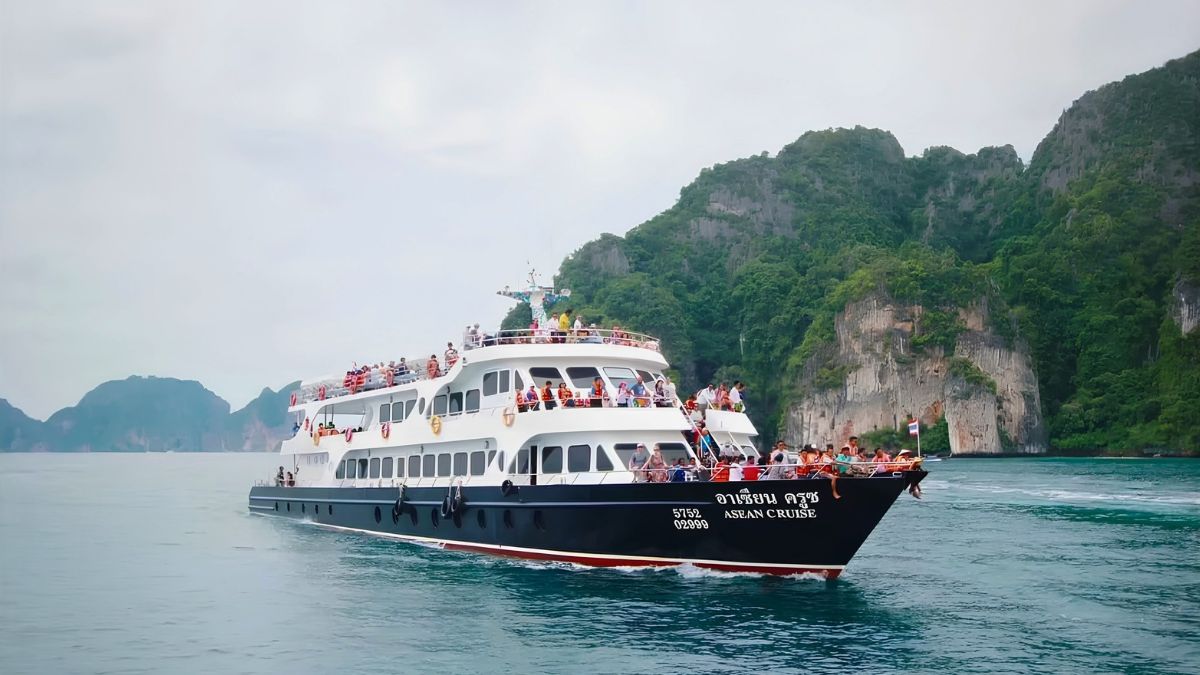
Thailand’s island transport makes more sense when divided into coasts. The Gulf of Thailand includes Koh Samui, Koh Phangan, Koh Tao, Koh Samet, Koh Chang, Koh Mak, and Koh Kood, although the eastern Gulf islands use different mainland ports from the Samui archipelago. The Andaman Sea includes Phuket, Phi Phi, Koh Lanta, Koh Yao, Koh Lipe, and the Trang islands.
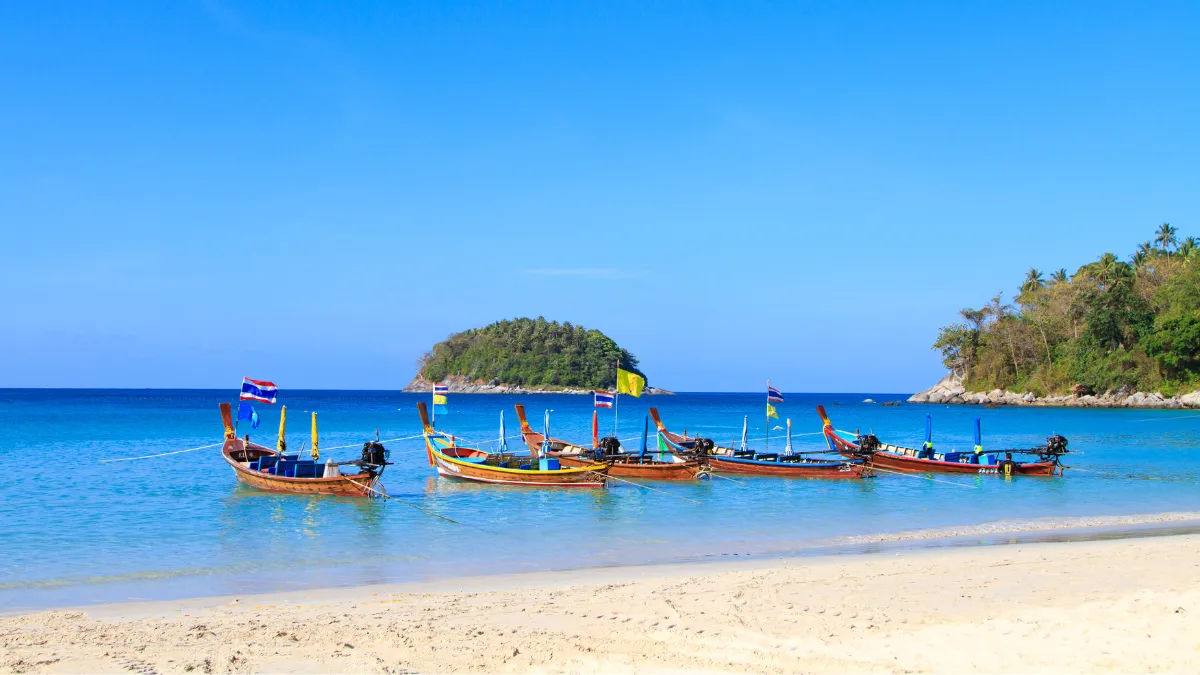
Phuket and Koh Samui are unusual because each has an airport, and Phuket is connected to the mainland by road bridges. You do not need a ferry merely to enter Phuket. Railay is the opposite: it is on the mainland but has no road access, so travelers normally arrive by longtail boat from Ao Nang or another local pier.
Common Gulf island gateways
- Koh Samui, Koh Phangan, and Koh Tao: combined services connect airports, Surat Thani town, Surat Thani Railway Station, and Chumphon with the relevant mainland piers and islands.
- Koh Samet: boats normally depart from Ban Phe near Rayong.
- Koh Chang: road transport reaches ferry piers in Trat province, followed by a short vehicle or passenger ferry.
- Koh Mak and Koh Kood: speedboats and ferries commonly operate from Trat-area piers, with schedules varying by season and operator.
Common Andaman island gateways
- Phi Phi: ferries and speedboats operate from Phuket and the Krabi area.
- Railay: longtail boats connect from Ao Nang and nearby piers; luggage may need to be carried through shallow water.
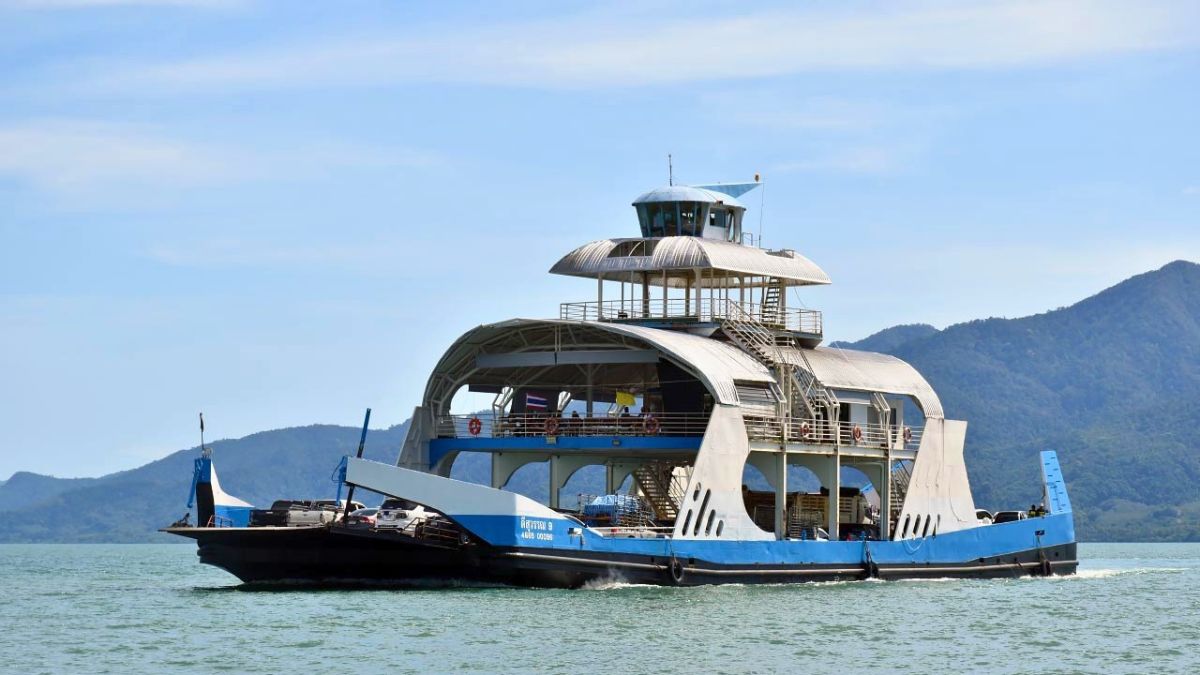
- Koh Lanta: access may use boats, road transfers, and vehicle ferries depending on origin and season.
- Koh Yao Noi and Koh Yao Yai: boats operate from Phuket and Phang Nga-area piers.
- Koh Lipe: Pak Bara is the principal mainland speedboat gateway, with seasonal island-hopping routes also operating from other Andaman destinations.
Ferry versus speedboat
A conventional ferry is usually larger, steadier, and more forgiving for luggage, children, and passengers prone to seasickness. It may take longer and can use a pier farther from the hotel. A speedboat reduces journey time and reaches smaller islands, but the ride can be loud, wet, cramped, and uncomfortable in choppy conditions.
Private longtail boats provide flexible local transport around places such as Krabi, Railay, and Phang Nga Bay. Agree whether the quoted price is per person or for the whole boat, which stops are included, how long the boat will wait, and what happens if weather changes.
How combined bus-and-ferry tickets work
A combined ticket can join several parts under one operator: a bus from an airport, railway station, or town; a transfer to the pier; the boat; and sometimes an island-side transfer. This is often simpler than constructing a tight connection from unrelated tickets. It does not always mean door-to-door hotel transport.
Read every segment on the voucher. “Surat Thani to Koh Samui” could begin at the airport, railway station, town office, or a pier more than an hour away. “Koh Tao to Bangkok” might include a ferry to Chumphon and an overnight coach. The departure label matters as much as the destination.
Weather and seasonal ferry schedules
Ferry timetables are not permanent. The Andaman coast is generally more exposed to the southwest monsoon from approximately May to October, when some smaller-island and island-hopping routes reduce or stop. The lower Gulf around Samui, Phangan, and Tao often sees its wettest and roughest period later, especially around October to December. Actual conditions do not obey a calendar exactly.
Check the operator and the Thai Meteorological Department before a weather-sensitive journey. Official marine warnings can instruct small boats to remain ashore when wind and waves become dangerous. A booking platform continuing to display a route is not proof that the boat will operate.

Ferry safety and luggage
- Use an established operator and avoid boarding an obviously overloaded or poorly maintained vessel.
- Identify the life-jacket location and wear one whenever instructed.
- Protect phones, passports, cameras, and medication in a waterproof pouch.
- Attach a visible luggage tag and keep valuables out of any exposed luggage pile.
- Take motion-sickness medication early enough to work after checking that it is safe for you.
- Wear shoes and clothing that tolerate spray, wet piers, and shallow-water landings.
Never build an irreplaceable flight connection around the last ferry
Stay on the mainland or on the international-departure island the night before an expensive long-haul flight whenever possible. Boats can be delayed or canceled by weather, mechanical problems, tides, and road disruption to the pier. Travel insurance may not cover a missed flight created by an itinerary with an inadequate connection.
Domestic flights and Thailand’s airports
Flying makes the most sense when it converts a full day or night of surface travel into a manageable transfer. Bangkok to Chiang Mai, Chiang Rai, Phuket, Krabi, Hat Yai, Surat Thani, and Udon Thani are typical examples. Direct flights between Chiang Mai and southern destinations can be especially valuable because returning through Bangkok wastes time.
A one-hour flight is not a one-hour journey. Add travel to the departure airport, check-in and security time, baggage collection, and the final transfer. A train can compete surprisingly well on shorter routes when both stations are central. Flying remains decisively faster when connecting northern and southern Thailand.
Get great priced domestic Thailand flights below.
Suvarnabhumi or Don Mueang?
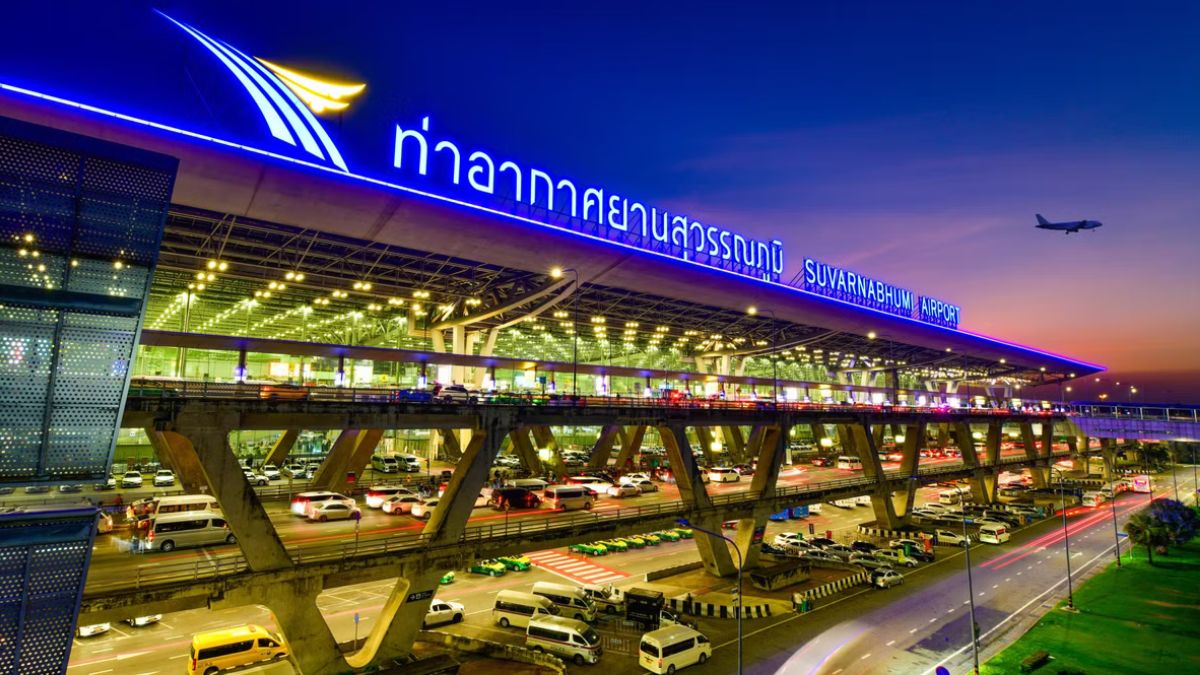
Bangkok has two major passenger airports. Suvarnabhumi (BKK) handles most long-haul international flights and a mixture of domestic and regional services. Don Mueang (DMK) is a major base for low-cost domestic and regional airlines. Two bookings that both say Bangkok may use different airports.
Airports of Thailand lists a free inter-airport shuttle for passengers with proof of onward travel. At the time of checking, it operated roughly every 30 minutes between 05:00 and midnight, but road traffic can make the journey lengthy. The shuttle is for connecting passengers rather than general sightseeing transport. Even with the free bus, I would not build a short self-transfer between unrelated tickets.
Understanding low-cost airline fares
Domestic base fares can look exceptionally cheap, but many include only a restricted cabin bag. Add checked baggage, seat selection, card fees, food, and the airport transfer before comparing the flight with a train or bus. Purchasing baggage during the original booking is normally less expensive than paying for excess weight at the airport.
Airlines may use different cabin and checked-bag limits from the long-haul airline that brought you to Thailand. Weigh luggage before every domestic flight, especially when carrying camera gear, diving equipment, or purchases. A traveler with 23 kilograms included internationally may receive no checked bag on the domestic fare.
Koh Samui versus Surat Thani
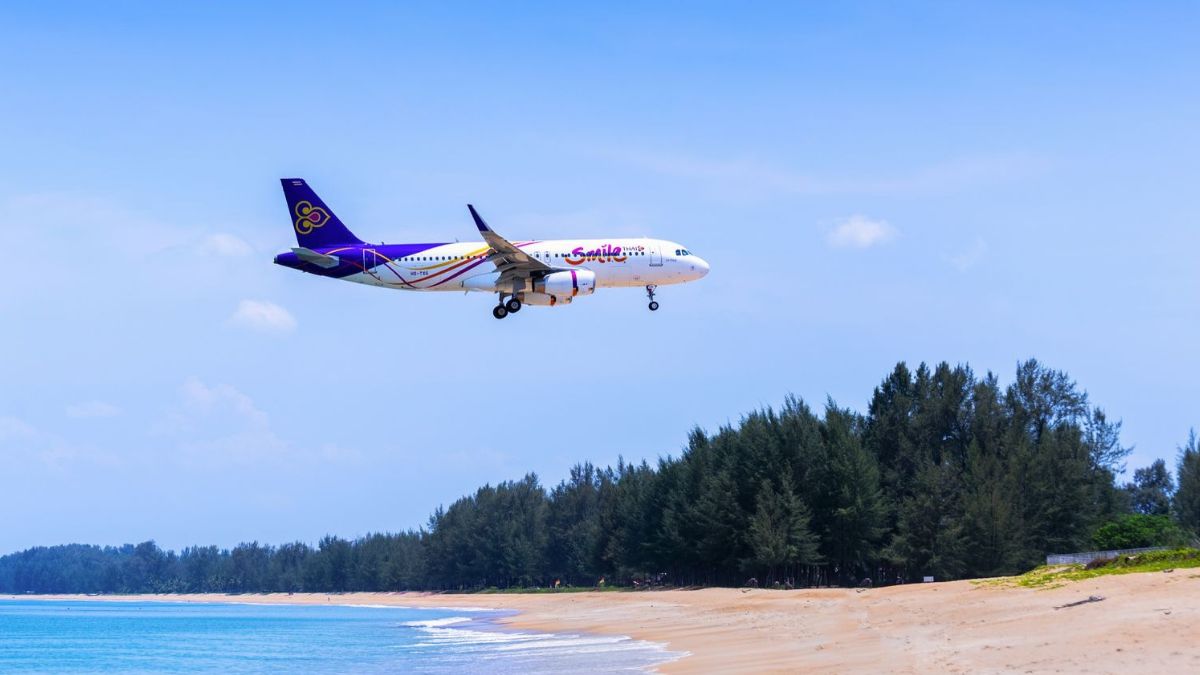
Flying directly to Koh Samui is the fastest route to Samui and can simplify connections to Koh Phangan and Koh Tao. The fare is often higher than flying to Surat Thani. A Surat Thani flight plus bus and ferry usually saves money but requires several additional hours and introduces more connection points.
Compare arrival time, not just airfare. A late flight to Surat Thani may miss the final useful ferry and create an unplanned hotel night. A more expensive morning flight or direct Samui service can then be better value.
Airport transfer essentials
At Suvarnabhumi, the Airport Rail Link operates from Level B1 and was scheduled from approximately 05:30 to midnight when this article was checked. Official taxis are available through a queue system, with the metered fare plus a 50 THB airport surcharge, regulated luggage charges where applicable, and expressway tolls paid by the passenger. Airports of Thailand also lists a designated licensed Grab pickup area.
Don Mueang connects with the SRT Red Line at Don Mueang station and has public airport buses to locations including Mo Chit, Victory Monument, central shopping areas, and Khao San. Service hours and pickup gates change, so use the official Don Mueang Airport information for the current option.
Separate tickets and missed-connection risk
When domestic and international flights are on separate tickets, the airlines generally treat them as unrelated journeys. A delay on the first ticket may not oblige the second airline to rebook you. Collecting luggage, changing terminals or airports, and checking in again all require time.
For a long-haul departure, an overnight stay in Bangkok or the departure city is often the most rational form of insurance. At minimum, use a substantial buffer and confirm the last check-in time rather than the scheduled takeoff time.
Getting around Thai cities and resort areas
National transport gets you to a destination; local transport determines whether the hotel is genuinely convenient. A low nightly rate can be erased by two taxi journeys every day. Before booking accommodation, map the station, airport, pier, beach, old town, and attractions you expect to use.

Getting around Bangkok
Bangkok’s transport network includes BTS Skytrain, MRT metro and monorail lines, the SRT Red Line, Airport Rail Link, buses, river and canal boats, metered taxis, motorcycle taxis, tuk-tuks, and licensed ride-hailing. Rail is normally the most predictable choice during peak traffic, but no single line reaches every neighborhood.
BTS and MRT are separate systems, and ticketing is not universally interchangeable. A stored-value or day product that works on one network may not cover another. Contactless EMV bank-card acceptance is available on selected MRT services, but travelers should not assume the same card can tap through every BTS, MRT, Red Line, and Airport Rail Link gate. Keep a small amount of cash and check the operator’s current payment information.
BTS single journeys on the core network have typically ranged from approximately 17 to 47 THB, with extension charges possible. MRT fares are distance-based and were updated on the Blue Line in 2026. Use the official BTS journey planner and official MRT fare calculator rather than an old screenshot.
Chao Phraya river boats can be both efficient and scenic for the old city, Grand Palace area, Wat Arun, and riverside districts. Route flags and stopping patterns differ. Canal boats can cross congested parts of the city quickly, although boarding is less accessible and splash is possible.
Metered taxis are good value when traffic is moving. Confirm the meter before departure and pay tolls separately when using expressways. Tuk-tuks do not use meters, so agree on the complete price before boarding. Motorcycle taxis are fast but carry more risk and are unsuitable for large luggage.

Getting around Chiang Mai
Central Chiang Mai is manageable by walking, songthaew, licensed ride-hailing, taxi, and bicycle, depending on heat and traffic. Red songthaews operate shared routes but may also be hired privately. State the destination, confirm the fare, and understand whether the driver is collecting other passengers.
Doi Suthep, mountain viewpoints, craft villages, and rural attractions require a vehicle or tour. A songthaew hired by a group can be economical, while a private driver gives more control over timing. Chiang Mai Airport is close to the central city, but fixed or app-based prices vary with destination and demand.
Getting around Phuket
Phuket is much larger than many first-time visitors expect. Patong, Phuket Old Town, Kata, Karon, Kamala, Bang Tao, Rawai, and the airport are not neighboring districts. Public buses and the Phuket Smart Bus serve useful routes, but frequency and walking distance may not suit every itinerary. Taxis and app-based rides cost more than in Chiang Mai.
Choose the base around the experience you want most. A cheaper room in Phuket Old Town does not save money if every day requires a return taxi to a west-coast beach. Similarly, a Patong hotel is not convenient for repeated early departures from a distant marina unless the tour includes pickup.

Getting around Krabi, Ao Nang, and Railay
Krabi Town, Ao Nang, the airport, Klong Muang, and the ferry piers are separate locations. Shared airport vans, songthaews, hotel transfers, and taxis connect them. Many island tours include pickup within a defined Ao Nang zone but charge extra or refuse pickup from remote beaches.
Railay has no road connection despite being attached to the mainland. Longtail boats are the normal access, and low tide can create a wet or uneven landing. Pack so you can manage your luggage without relying on a smooth airport-style pier.
Getting around Thailand’s islands
Island transport ranges from extensive roads and app-based rides on Phuket to fixed-price taxis, shared songthaews, longtail boats, and hotel pickups on smaller islands. Prices often rise after dark, at remote resorts, or when only one transport group serves the area. Ask the hotel for realistic transfer costs before booking.
Walking distance on a map can be deceptive when roads are steep, unlit, or lack sidewalks. A beautiful isolated resort may need a paid transfer for every meal and activity. Check the final ferry time, pier used by your operator, and whether the hotel provides pickup.
Getting around smaller cities
Provincial capitals may use songthaews, tuk-tuks, motorcycle taxis, local buses, and app-based services in different combinations. Availability can fall sharply late at night. Save the accommodation address in Thai script, download an offline map, and ask the hotel which app or local service actually operates in that city.
Rental cars and scooters in Thailand
A rental car can be valuable for rural northern loops, national parks, families, and areas where public transport would require repeated private transfers. It is rarely the best way to explore central Bangkok. Thailand drives on the left, traffic behavior may differ from home, and motorcycles can appear beside a vehicle from either side.
Legal documents for driving
Thailand’s Ministry of Transport states that eligible foreign visitors may drive with a valid International Driving Permit, while ASEAN-issued licenses have separate recognition. Carry the original home license and the correct IDP for your circumstances. The license and permit must cover the class of vehicle being driven.
A shop agreeing to rent a scooter does not prove the rider is legal. Many travel-insurance policies reject claims when the rider lacks the motorcycle entitlement required at home or in Thailand, exceeds an engine-size condition, does not wear a helmet, or rides under an excluded circumstance.
Car rental costs and practical checks
A small rental car may cost approximately 900–1,500 THB per day, while larger vehicles, one-way rentals, peak dates, and full insurance cost more. Add fuel, tolls, parking, child seats, an additional driver, and the security deposit. Confirm whether insurance includes a deductible and what happens after damage.
- Photograph every panel, wheel, window, and the fuel gauge before leaving.
- Check tires, lights, air-conditioning, spare-wheel arrangements, and emergency numbers.
- Do not sign an inspection sheet that fails to record existing damage.
- Use offline navigation as a backup in mountain and rural areas.
- Avoid long rural driving after dark when unfamiliar roads, animals, and limited lighting increase risk.
Scooter and motorbike rentals – How to get around Thailand
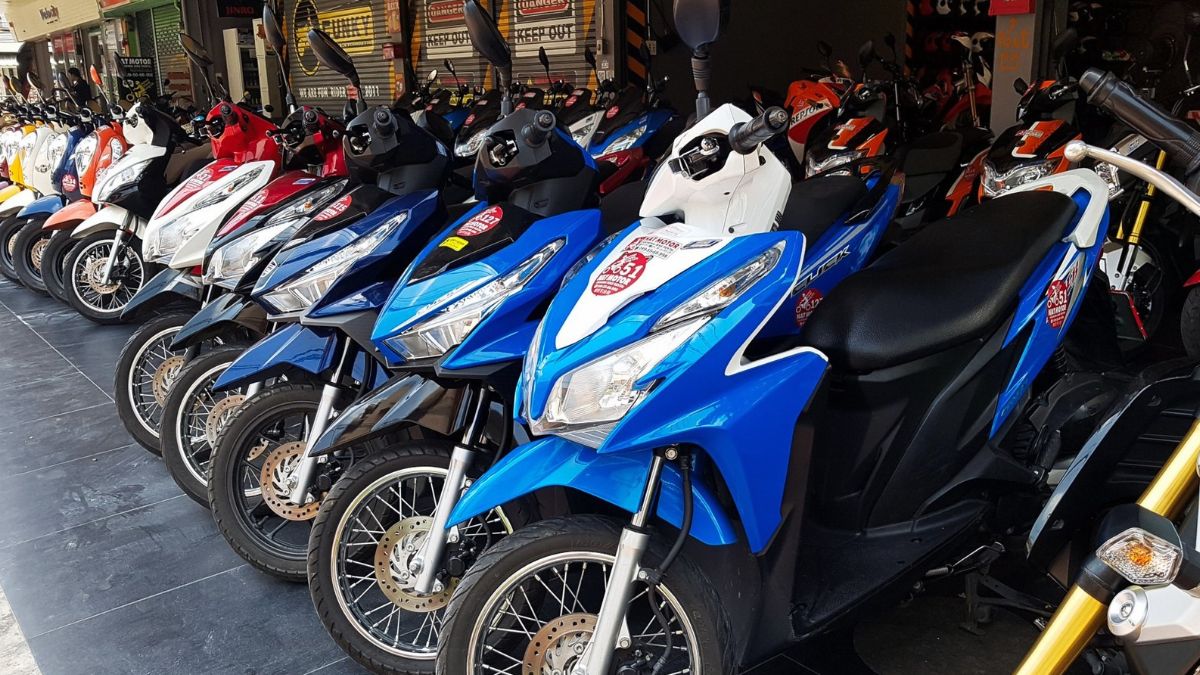
Scooters commonly cost approximately 200–450 THB per day, but that price does not include the potential cost of an injury, invalid insurance, or damage dispute. Only experienced and correctly licensed riders should consider one. Wear a properly fitting helmet, avoid riding after alcohol, and slow down for sand, rain, potholes, steep descents, and unfamiliar corners.
Phuket strengthened enforcement involving foreign riders in 2026, including checks for valid licenses and International Driving Permits. Similar checks can occur elsewhere. Never leave a passport as a deposit. Use a cash deposit or documented card arrangement from a reputable operator, keep a copy of the contract, and photograph the vehicle thoroughly.
Check out our recommeded scooter hire
The cheapest scooter is not cheap if insurance is invalid
Medical treatment, evacuation, vehicle damage, third-party liability, and a disrupted trip can dwarf every transport saving. If you cannot legally ride the same class of motorcycle at home or cannot obtain explicit insurance cover, use a songthaew, taxi, driver, or tour instead.
Best transport for Thailand’s most popular routes
Route-specific planning is more useful than a nationwide ranking. The times below are approximate vehicle or typical journey times rather than promises. Weather, traffic, maintenance, public holidays, and the exact service can change them.
| Journey | Usually fastest | Best experience or value | Key planning detail |
|---|---|---|---|
| Bangkok to Ayutthaya | Private car in light traffic | Train, roughly 1–2 hours | The historical sites spread beyond the railway station; add bicycle, tuk-tuk, or driver |
| Bangkok to Kanchanaburi | Private car or minivan | Train from Thonburi, roughly 2.5–3.5 hours | Hellfire Pass needs onward road transport |
| Bangkok to Chiang Mai | Flight, roughly 1 hour 15 minutes in the air | Overnight sleeper, roughly 11–14 hours | Book popular lower berths and first class early |
| Chiang Mai to Chiang Rai | Road transfer | Scheduled bus, roughly 3–4 hours | There is no direct passenger train |
| Chiang Mai to Pai | Private car | Minivan, roughly 3–4 hours | The winding road causes motion sickness for some passengers |
| Bangkok to Sukhothai | Flight plus local transfer | Direct bus, roughly 6–8 hours | Phitsanulok is the nearest useful rail gateway, followed by a bus |
| Bangkok to Pattaya | Private transfer | Bus from Ekkamai or another current terminal, roughly 2–3 hours | Check whether the arrival terminal is convenient for the hotel |
| Bangkok to Koh Chang | Flight to Trat plus transfer and ferry | Bus or minivan to the ferry, usually a full travel day | Do not confuse island travel with restricted Cambodia-border crossings |
| Bangkok to Koh Samui | Direct flight | Train or bus plus ferry, roughly 12–16 hours overall | Surat Thani Airport, town, and railway station are different pickup points |
| Bangkok to Koh Tao | Flight to Samui plus ferry when connections align | Train or bus to Chumphon/Surat area plus ferry | Weather and the final ferry determine whether one-day travel works |
| Bangkok to Phuket | Flight, roughly 1 hour 25 minutes in the air | Overnight coach for time-rich travelers | Phuket has no passenger railway but is connected to the mainland by road |
| Bangkok to Krabi | Flight, roughly 1 hour 20 minutes in the air | Overnight bus or train to Surat Thani plus road transfer | Krabi Airport, Krabi Town, Ao Nang, and Railay require different final transfers |
| Phuket to Phi Phi | Speedboat | Larger ferry, roughly 1–2 hours | Check Phuket pier, hotel transfer, and weather |
| Krabi or Ao Nang to Railay | Local longtail boat, often 15–30 minutes from the relevant beach/pier | The same boat service | There is no road; low-tide boarding may involve shallow water |
| Chiang Mai to Phuket or Krabi | Direct flight when operating | Flight avoids returning overland through Bangkok | Compare direct dates with a Bangkok connection |
Travel through eastern and border provinces
Domestic tourism in most of Thailand continues normally, but transport near international borders can change with security conditions. Thailand has maintained restrictions in selected Thailand–Cambodia border areas during 2026, including checkpoints and zones in parts of seven eastern and northeastern provinces. This does not mean that every trip to Trat, Chanthaburi, Buriram, or Ubon Ratchathani is closed.
It does mean travelers should not plan an overland border crossing from an old itinerary without checking its current status. Use the latest Tourism Authority of Thailand visitor updates, local authorities, and travel advice from your own government before traveling close to a controlled border zone.
How to book transport in Thailand
The best booking channel depends on the ticket. Official operator websites are normally best for live rules, direct support, and the lowest unbundled fare. Comparison platforms are useful when a route combines several operators or when the official site is difficult to use. Station and pier counters remain valuable for local services that are not reliably listed online.
When to use an official website
Use SRT D-Ticket for reservable trains, airline websites for flights, BKS for state intercity buses, and ferry operators for routes where the schedule and baggage conditions are clear. Official booking gives the most direct relationship with the company if a service changes.
When a comparison platform helps
A reputable comparison platform is useful for testing train, bus, van, ferry, and flight options on one screen. It can also sell coordinated bus-and-ferry journeys that are awkward to construct alone. Check whether the confirmation is an actual ticket or a voucher that must be exchanged at an office.
When to book in person
Short local trains, some minivans, songthaews, local boats, and rural services may be easiest to buy at the station or through accommodation staff. Ask for the operator name, face value, departure point, and receipt. A convenience commission can be reasonable when it includes hotel pickup or solves a difficult connection, but the traveler should know what is being purchased.
Booking checklist
- Use the exact origin, including airport, station, town office, terminal, or pier.
- Confirm the exact final stop and calculate the transfer to the accommodation.
- Check whether the time shown is departure, check-in, boarding, or pickup time.
- Add baggage, seat selection, transfer, service, and payment charges before comparing prices.
- Read cancellation, refund, missed-connection, and weather policies.
- Enter every passenger name exactly as required by the passport or identification.
- Save the ticket, voucher, operator contact, and map offline.
- Recheck the service and departure point the day before travel.
How to recognize a weak transport listing
Be cautious when a seller cannot name the operator, vehicle, pier, terminal, luggage allowance, or refund policy. A heavily discounted “VIP” ticket with only a street-corner pickup and no company contact deserves scrutiny. Pay through a method that produces a record, and never allow a stranger to rush you away from an official counter to a “special” alternative.
Thailand transport prices and the true cost of a journey
Transport prices change by route, season, operator, class, and booking date. The ranges below are for planning rather than quotes. The decisive travel calculation is the total from one hotel door to the next, including the expense created by departure and arrival locations.
| Cost component | Typical planning range | Often overlooked |
|---|---|---|
| Short local rail or bus ride | About 10–60 THB | Separate tickets when changing networks |
| City taxi or ride-hailing trip | About 80–500+ THB | Traffic, demand pricing, tolls, and airport surcharges |
| Songthaew or tuk-tuk | About 30–300+ THB | Shared route versus private hire |
| Long-distance train | About 200–2,000 THB | Station transfer, meals, and berth class |
| Long-distance coach | About 300–1,200 THB | Remote arrival terminal and hotel transfer |
| Ferry or combined ticket | About 200–1,500 THB | Pier transfers, marine fees, and island taxi |
| Domestic flight | About 1,000–4,500 THB | Checked baggage, airport transport, food, and time |
| Rental car | About 900–2,500+ THB per day | Insurance excess, fuel, tolls, parking, and one-way fee |
Door-to-door comparison example
A Bangkok–Chiang Mai flight may spend only 75 minutes in the air, yet the complete journey can require five or six hours after two airport transfers, early check-in, and baggage collection. An overnight sleeper takes much longer but replaces a hotel night and arrives close to central Chiang Mai. The right answer depends on the flight time, baggage, room cost, and whether the traveler can sleep on a train.
A 700 THB bus-and-ferry ticket may look more expensive than a 350 THB ferry, but it can be cheaper when the standalone boat also needs a 500 THB taxi to a distant pier. Compare equivalent endpoints before comparing the numbers.
Weather, holidays, and transport disruption
Thailand’s transport network becomes much busier around New Year, Songkran in April, long weekends, major festivals like Loy Krathong, and school holidays. Trains, overnight coaches, affordable flights, and island accommodation can sell out. Road crashes and congestion also rise during peak holiday travel, making extra time and reputable operators particularly important.
Rain affects roads as well as boats. Flooding can suspend southern buses and trains, landslides can affect northern roads, and thunderstorms delay flights. Smoke and poor visibility in the north can disrupt the experience even when transport operates. Keep one flexible element in a complicated route rather than making every hotel and transfer nonrefundable.
How much buffer should you leave?
- For two independently booked city trains or buses, leave enough time to find the new terminal and recover from normal delay.
- For an overnight train connecting to a domestic flight, use several hours rather than the theoretical minimum.
- For a ferry connecting to a domestic flight, use a substantial same-day buffer and verify the seasonal timetable.
- For an island ferry connecting to a long-haul international flight, stay near the departure airport the previous night whenever possible.
- For a transfer between BKK and DMK on separate tickets, treat Bangkok traffic and new check-in as major journey components.
Transport advice for families, solo travelers, and travelers with access needs
Families with children
Families benefit from reserved seats, lower-change itineraries, and accommodation near the arrival point. Confirm child fares and whether a child receives a separate seat or berth. Car seats are not automatic in taxis, tours, or transfers; request one in advance and verify the type provided.
An overnight sleeper can be memorable, but book berths that keep the family together. On ferries, bring snacks, dry clothing, sun protection, and any child-safe motion-sickness plan approved by a clinician. Allow more time for toilet stops and pier boarding.

Solo travelers
Public trains, coaches, and shared transfers reduce the solo premium for independent travelers. Private taxis and boats become expensive when no one shares the fare. Tell accommodation staff when arriving very late, use a licensed service, and share trip details when taking a long private transfer.
Keep essential valuables in one small bag that remains under your control, but do not display all cash and backup cards together. A lower sleeper berth may be easier to access and monitor than an upper berth, though it usually costs more.
Travelers with reduced mobility or heavy luggage
Accessibility varies widely. New airports and urban-rail stations may have lifts, but outages, platform gaps, stairs, crowded interchanges, and uneven sidewalks create barriers. Older trains, local buses, longtail boats, beach landings, and small-island piers can require high steps and physical assistance.
Contact the operator and accommodation before booking, describe the exact mobility aid, and ask about every stage rather than only the main vehicle. A “wheelchair accessible” ferry may still depart from a pier reached by steps. A hotel pickup can be worth the cost when it removes an uncertain local transfer.
Traveling with large or specialist luggage
Golf clubs, surfboards, dive gear, bicycles, strollers, and large suitcases need operator approval. Airlines charge specialist-equipment fees, minivans may refuse oversized bags, and speedboats have limited dry storage. Ask before purchase and retain written confirmation.
Transport safety, scams, and emergency planning
Thailand receives millions of independent visitors and most journeys are uneventful, but transport standards are not uniform. A reputable operator, legal driver, functional seat belt or life jacket, realistic connection, and appropriate insurance matter more than saving the final 100 baht.
Taxi and tuk-tuk precautions
- Use official airport queues, established taxi ranks, hotel-arranged cars, or licensed app-based services.
- Confirm the meter or complete agreed fare before the journey begins.
- Do not accept an unsolicited claim that an attraction, station, pier, or ticket office is closed without verifying it.
- Follow the general direction on a map without confronting a driver over every harmless route variation.
- Do not allow an unknown driver to replace the planned destination with a gem shop, tailor, tour desk, or “better” pier.
Boat precautions
Official travel guidance notes that passenger-boat incidents can involve overloading, poor maintenance, and rough seas. If a boat appears overloaded, lacks visible safety equipment, or operates despite an official small-craft warning, do not board simply because the ticket is nonrefundable. Contact the operator and insurer.

Driving and motorcycle precautions
Wear seat belts and helmets, use only legal and insured vehicles, and never ride after alcohol. Road traffic is one of the most serious risks faced by travelers. An app showing a vehicle and price does not eliminate the need to check the driver and registration displayed at pickup.
Emergency numbers
Thailand’s Tourist Police can be reached on 1155, police on 191, emergency medical services on 1669, and the Tourism Authority of Thailand call center on 1672. Save the insurer’s assistance number, accommodation contact, ticket operator, and a trusted contact offline as well as in the phone.
Insurance and document backup
Keep secure digital copies of the passport, insurance policy, tickets, rental contract, and essential phone numbers. Insurance should cover the actual transport and activities planned, including the correct motorcycle class if relevant. A policy may not cover a knowingly inadequate connection, unlicensed riding, or travel against official advice.
How to combine transport on a Thailand itinerary
Two weeks: Bangkok, Chiang Mai, Krabi, and an island
Arrive in Bangkok and use rail, river boats, and taxis within the city. Take an overnight sleeper or flight to Chiang Mai. Fly directly south to Krabi or Phuket if a suitable service operates, avoiding a return overland journey through Bangkok. Continue to Railay, Koh Lanta, or Phi Phi by the appropriate seasonal boat and spend the final night near the international departure airport.
This route uses expensive transport only where it saves a large amount of time. It also avoids connecting a ferry directly to the long-haul departure.

Two weeks: Bangkok, Kanchanaburi, Ayutthaya, and Chiang Mai
Use a train or minivan from Bangkok to Kanchanaburi and road transport for Hellfire Pass or more remote waterfalls. Return toward Bangkok before continuing by train to Ayutthaya. After exploring the historical park, board a reserved northern train toward Chiang Mai or return to Krung Thep Aphiwat for the preferred sleeper.
The railway adds experience and keeps costs moderate, but the traveler must pay attention to Bangkok’s different stations and the local transport needed around Kanchanaburi and Ayutthaya.
Gulf island route: Bangkok, Samui, Phangan, and Tao
Choose between a direct Samui flight and a lower-cost flight, train, or bus to Surat Thani followed by a coordinated ferry. Travel between the islands in a logical sequence and confirm which pier each boat uses. Return to the mainland or Samui at least one day before the long-haul flight connection.
Slow-travel route for a month
With more time, use trains and buses through Ayutthaya, Phitsanulok or Sukhothai, Chiang Mai, and Chiang Rai. Fly one north-to-south leg rather than repeating Bangkok, then use a slower bus-and-ferry connection to the chosen coast. Fewer destination changes reduce both cost and the number of days spent checking out, waiting, and transferring luggage.
A simple Thailand transport planning method
Build the route before booking individual tickets. A cheap ticket is useless when it arrives after the only onward ferry or at a terminal that requires an expensive private transfer.
- List destinations in geographic order and remove unnecessary backtracking.
- Write the exact hotel checkout and check-in dates beside every travel leg.
- Find the complete origin and destination for each option, including airport, station, pier, and town office.
- Calculate door-to-door time rather than scheduled vehicle time.
- Add baggage, transfers, meals, tolls, and a possible hotel night to the price.
- Mark ferries, mountain roads, border areas, and separate flight tickets as higher-risk connections.
- Choose which journeys are experiences and which are simply transfers.
- Book the least flexible high-demand segments first, then fit local transport around them.
- Save every booking and backup option offline.
- Recheck weather, service status, and pickup details before departure.
Questions to answer for every transport leg
- What is the exact pickup location, and how will I reach it?
- How early must I arrive?
- Is luggage included, and where will it be stored?
- Does the ticket include every transfer?
- What is the final stop, and how will I reach the hotel?
- What happens if the service is delayed or canceled?
- Is there a later departure or safe place to stay?
- Would a more expensive ticket remove enough risk or wasted time to be better value?
Final checklist for getting around Thailand
- Match the transport to the specific route rather than choosing one mode for the entire country.
- Use Bangkok’s correct airport, railway station, bus terminal, or pier name in every search.
- Compare the full fare after luggage, tolls, transfers, and booking charges.
- Reserve sleeper trains, holiday coaches, affordable flights, and limited ferries early.
- Check whether a boat route operates in the planned season.
- Use reputable, licensed operators and avoid informal sellers who cannot explain the service.
- Carry essential documents, medication, money, and electronics in a personal bag.
- Leave substantial time before flights, especially after ferries and separate tickets.
- Carry the correct license and insurance before renting any vehicle.
- Recheck current official schedules, weather, border restrictions, and pickup instructions.
How to get around Thailand: frequently asked questions
Is it easy to get around Thailand without a tour?
Yes. Independent travelers can reach most popular destinations using trains, coaches, minivans, domestic flights, ferries, taxis, songthaews, and local boats. The main planning challenge is not finding transport but coordinating exact stations, piers, terminals, and arrival times. Book the long-distance and island legs first, then arrange local transfers.
What is the cheapest way to travel around Thailand?
Third-class trains, scheduled buses, public minivans, and shared ferry combinations are usually the cheapest choices. The lowest ticket is not always the lowest total cost. Add the taxi to a remote terminal, baggage, food, extra hotel nights, and the time lost before deciding whether it beats a sleeper train or low-cost flight.
Are trains or buses better in Thailand?
Trains are generally better for comfort, scenery, and overnight travel when the destination lies on the rail network. Buses are better for route coverage and direct access to destinations such as Chiang Rai, Sukhothai, Pai, Trat, Phuket, and Krabi. Compare the actual route rather than ranking the modes nationally.
How far ahead should I book Thailand trains?
Reserved-seat trains may open up to 90 days ahead under the 2026 SRT policy, but the available window varies by service and distance. Shorter routes and ordinary trains may open later or sell only at the station. Check SRT D-Ticket for the exact journey and reserve popular sleeper berths promptly for holidays and weekends.
Is it better to fly or take the train from Bangkok to Chiang Mai?
Fly when the itinerary is short and the priority is maximizing time in Chiang Mai. Take an overnight sleeper when the rail journey is part of the experience, the schedule suits you, and replacing a hotel night improves value. Compare the flight after baggage and two airport transfers with the exact sleeper berth, not with the cheapest third-class seat.
Can I travel from Bangkok to a Thai island in one day?
Yes on several routes, particularly with an early flight or coordinated bus-and-ferry ticket. Whether it is sensible depends on the island, season, arrival airport, and final ferry. Do not use a weather-sensitive same-day island connection immediately before an international flight.
Do ferries run all year in Thailand?
Major lifeline routes generally operate for much of the year, but smaller-island, speedboat, and island-hopping services can be seasonal. Rough weather can cancel even a normally year-round route. Check the operator and Thai Meteorological Department close to departure instead of relying on an annual timetable copied into a blog.
Can one travel card be used on every Bangkok train?
No. Bangkok’s BTS, MRT, Red Line, and Airport Rail Link are not fully unified under one universally accepted tourist card. Contactless bank-card acceptance and stored-value products vary by operator and line. Check the current payment rule and keep cash for ticket machines or services that do not accept your card.
How do I transfer between Bangkok’s BKK and DMK airports?
Eligible connecting passengers can use the official free airport shuttle with proof of onward travel, or take a taxi or licensed ride-hailing service. The shuttle was operating between roughly 05:00 and midnight when checked, but traffic can be severe. Leave a large buffer because separate-ticket airlines may not protect a missed connection.
Is renting a scooter a good way to get around Thailand?
A scooter can suit an experienced rider who holds the correct home motorcycle license, valid International Driving Permit, and explicit insurance cover. It is not a safe economy measure for an inexperienced or unlicensed traveler. Rental availability does not prove legality, and an invalid insurance claim can create costs far greater than every taxi fare saved.
Is public transport safe at night in Thailand?
Established trains, scheduled coaches, urban rail, official taxis, and licensed app-based rides are widely used after dark, but standards and availability vary. Use recognized operators, wear a seat belt when provided, keep valuables with you, avoid an isolated informal pickup, and arrange the final transfer when arriving after local services stop.
How much should I budget for transport in Thailand?
Local city transport may average 150–500 THB per day, while each long-distance leg can range from a few hundred baht for a basic train or bus to several thousand baht for a flight with luggage. Island-heavy and fast-paced itineraries cost more. Price every major route separately and keep a reserve for transfers and disruption.
Choose transport that protects the trip, not only the budget
There is no single best way to get around Thailand. Trains bring space, scenery, and memorable overnight journeys. Buses provide the route coverage that rail cannot. Ferries turn the islands into a connected itinerary. Flights make a short holiday possible across a long country. Local rail, boats, songthaews, and taxis complete the journey.
The smartest choice is the one that fits the route, season, luggage, comfort needs, and consequence of delay. Compare equivalent door-to-door journeys, use current official information, and leave breathing room before expensive connections. With that preparation, traveling independently around Thailand is not merely manageable; it becomes one of the most rewarding parts of the trip.
Official transport information and live checks
- State Railway of Thailand D-Ticket
- SRT timetable and fare checker
- SRT train tracking system
- The Transport Company BKS e-ticket system
- Suvarnabhumi Airport official transportation guide
- Don Mueang Airport official information
- BTS Skytrain official website
- Bangkok MRT official website
- Thai Meteorological Department forecasts and warnings
- Tourism Authority of Thailand visitor information
5 Works Cited
Airports of Thailand. SUVARNABHUMI AIRPORT. 2026, suvarnabhumi.airportthai.co.th/.
Don Mueang Airport (DMK) Bangkok. Don Mueang Airport Guide. 2026, www.donmueangairport.com/.
Petpailin, P. SRT shortens train booking period to 90 days to reduce unused seats. 2026, thethaiger.com/news/national/srt-shortens-train-ticket-booking-period-from-180-days-to-90-days.
Thailand Government Public Relations Department. Thailand Clarifies Eligibility for Foreigners Driving in the Kingdom. 2026, thailand.prd.go.th/en/content/category/detail/id/2874/iid/341038.
Tourism Authority of Thailand. Visitor Information. 2026, www.tatnews.org/category/thailand-visitor-info/.