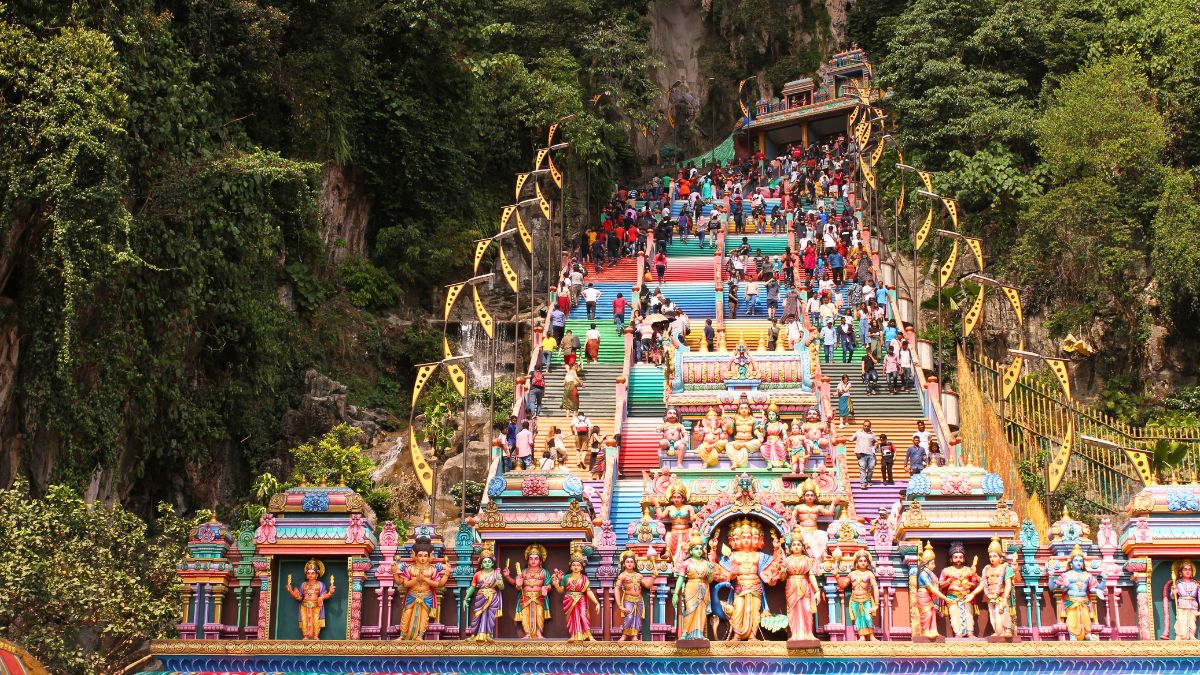
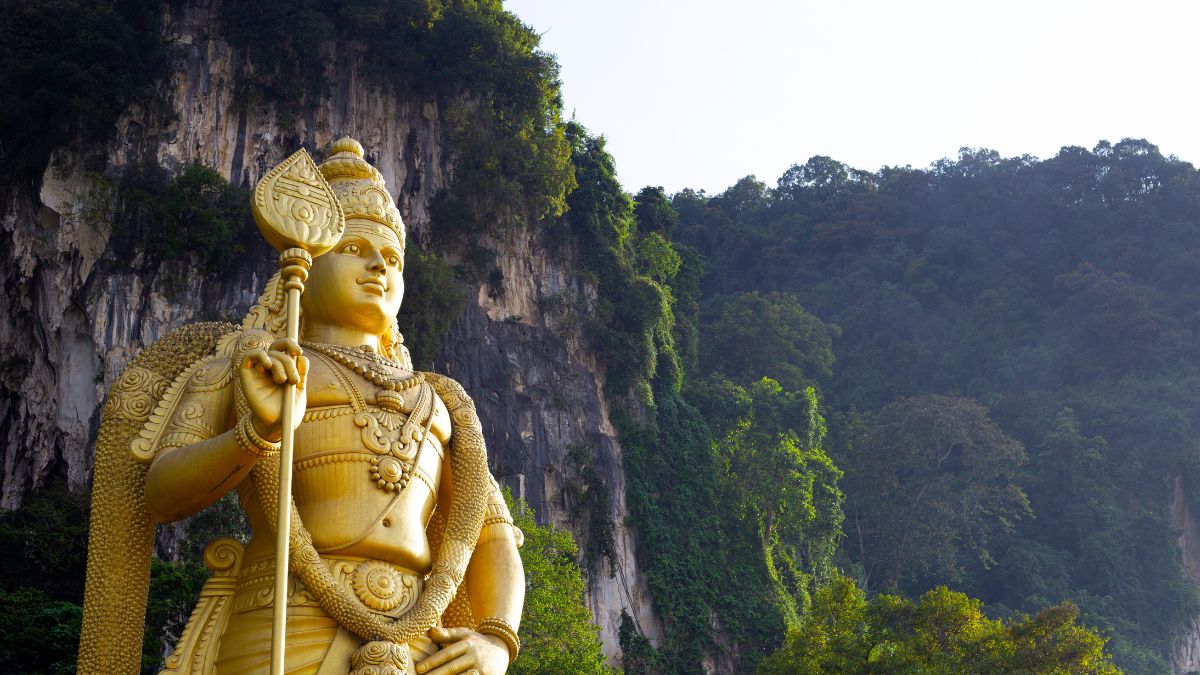
This guide shows you how to experience Batu Caves in peace—without the tour-bus crush. Batu Caves is a working Hindu temple complex and one of Malaysia’s most visited sites. The famous 272 rainbow steps and the towering golden Murugan statue draw day-trippers, tour groups, and weekend families. Crowds typically peak mid-morning to early afternoon when buses and ride-hails converge at the plaza. The fix is simple: arrive early, choose the right entrance path, and move against typical tour flow. With a little timing, you can hear birds, not megaphones.
Best Time To Visit – The Real World Version
Weekdays at sunrise are reliably quiet. If you can, be at the base before the first big tour buses—ideally 6:45–7:15 a.m. By 8:30–9:00 a.m., you’ll still have space to breathe. Aim to be descending by 9:30–10:00 a.m., before the heat builds and the plaza fills.
Late afternoons (after 4:30 p.m.) can also work, especially on weekdays. Light is softer, and many groups have left. Watch for tropical rain after 3:00 p.m., and note temple activities may increase after 6:00 p.m.
Timings for Batu Caves
Key Reminders
- Avoid Saturdays, Sundays, and school holidays if possible.
- Thaipusam (Jan/Feb, date varies) is extraordinary but extremely crowded. Visit for the festival only if you want that experience.
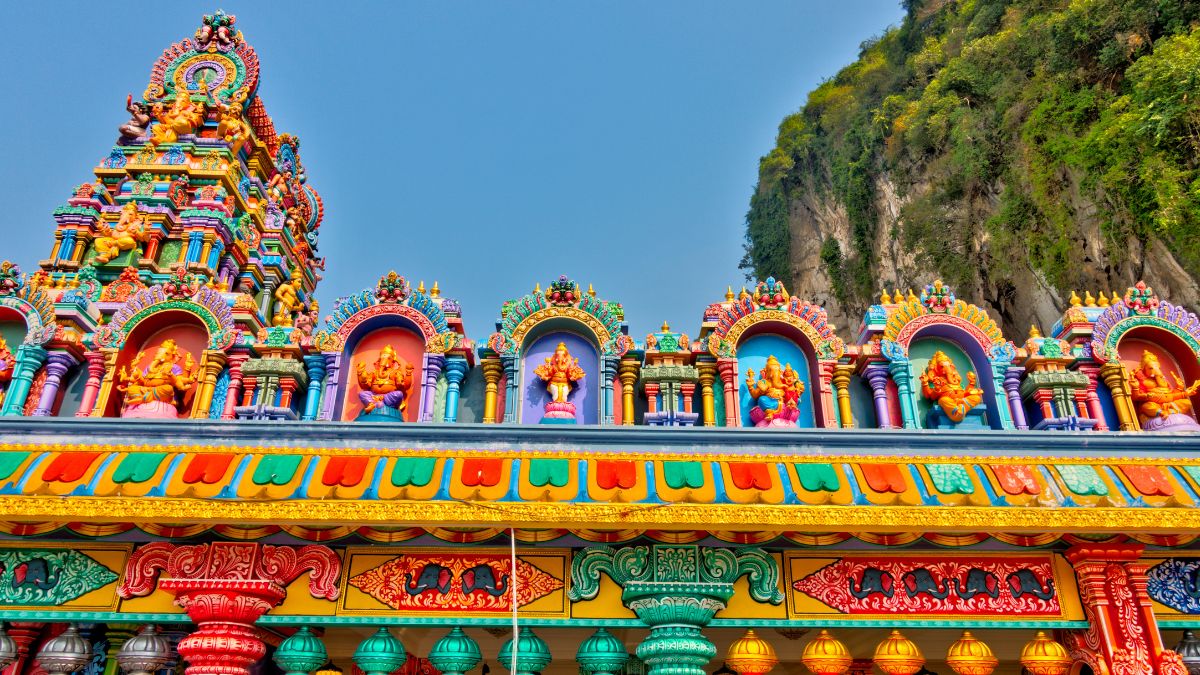
- Cloudy mornings are cooler and better for photos of the staircase’s colors.
- Start early – 6.30-7.30am is best
- 4,40pm – 6pm works well too (but is hot)
Getting there without the headache
The KTM Komuter train is the cleanest solution. It avoids parking hassles and surge pricing. Batu Caves is the end-of-line station, so you can’t miss it. From KL Sentral, the ride is roughly 30 minutes. Check schedules and platform info before you go.
KTM Komuter from KL Sentral
Step-by-Step
- At KL Sentral, follow signs for KTM Komuter (not LRT or MRT).
- Buy a Komuter ticket to Batu Caves (cashless cards accepted at many machines).
- Board the train toward Batu Caves (end station). Doors and station announcements are clear.
- Exit at Batu Caves and follow the crowd to the Hanuman statue and walkway leading to the main plaza.
- Check routes and any service notices on the official site: KTM Komuter information.
- If you’re interchanging from the LRT/MRT, the Rapid KL maps are useful: Rapid KL rail route maps.
Grab and Taxi Tactics
- Go early. Demand is low before 7:00 a.m., and drop-off is quick.
- For pickup when leaving, walk slightly away from the main temple gate to a quieter spot so your driver can stop safely.
- Avoid weekday peak (4:30–7:00 p.m.) with Grab, you’ll be stuck in traffic—take KTM back to KL Sentral, then connect.
- Official tourism pages can help you align opening hours and etiquette: Tourism Malaysia: Batu Caves.
What to See At Batu Caves (With Space to Breathe)
Know the Flow: Where Crowds Bunch Up
- Photo choke points: The first 20 steps and the central landing are selfie magnets. Move steadily to a side lane and pause at upper landings instead.
- Temple threshold: The top of the staircase can bottleneck; step to the side and let groups pass before entering the cavern.
- Plaza vendors: The middle walkway slows when pigeons gather. Use the perimeter paths to move faster.
- Inside the main cavern, keep right and loop clockwise. It flows better and gives you natural breaks for photos without blocking worshippers.
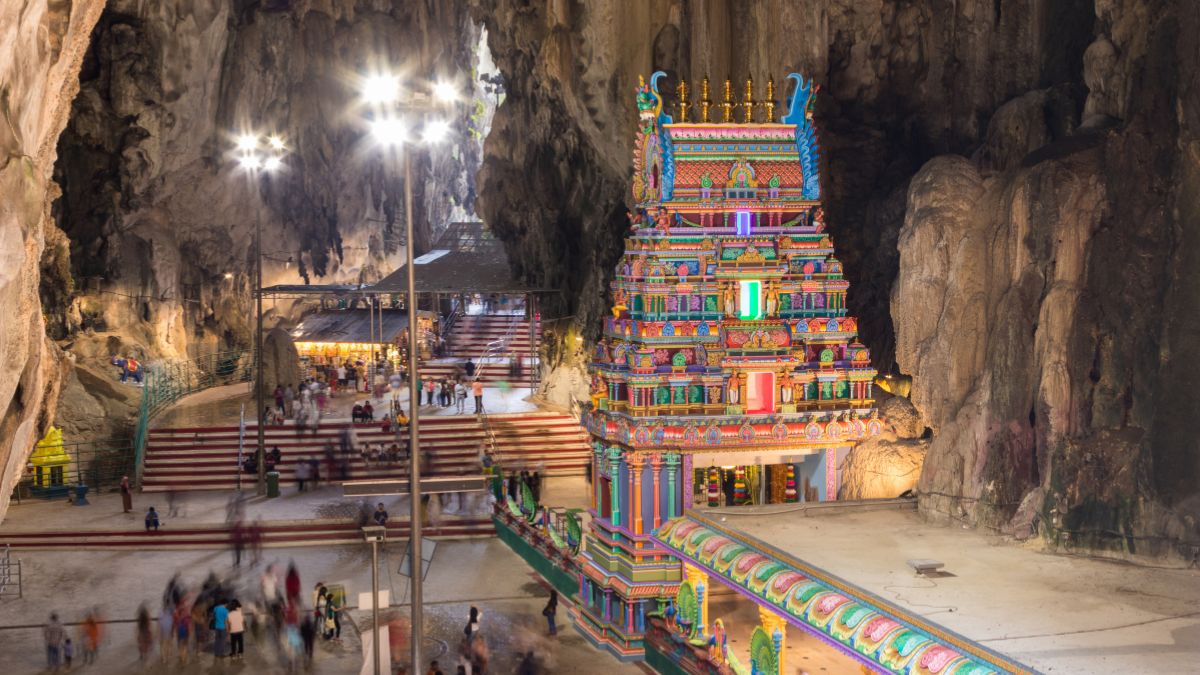
Main Temple Cave (Cathedral Cave)
The payoff for the 272 steps is a vast limestone chamber with shrines and a roof opening that funnels beams of light. Early morning, you can often hear your footsteps. Look for soft side light on the rock textures—shoot from the far right wall for depth without capturing large crowds. The Temple Cave, also known as the Cathedral Cave, is the largest and most notable cave in the complex. This vast space reaches an impressive height of 100 meters and is adorned with a series of intricate Hindu shrines and temples.
As you make your way around the complex you need to navigate carefully around the monkeys. These devious Macaques are cute but be warned they can smell the tiniest amount of food and if your bag is filled with treats, I guarantee you will leave with no snacks and a lot of very happy, chubby monkeys.
Inside, the main cave showcases beautiful stalactite formations, shafts of sunlight streaming through the ceiling, and colorful Hindu statues and shrines. The majestic beauty and peaceful atmosphere make it feel like you’ve entered another world.
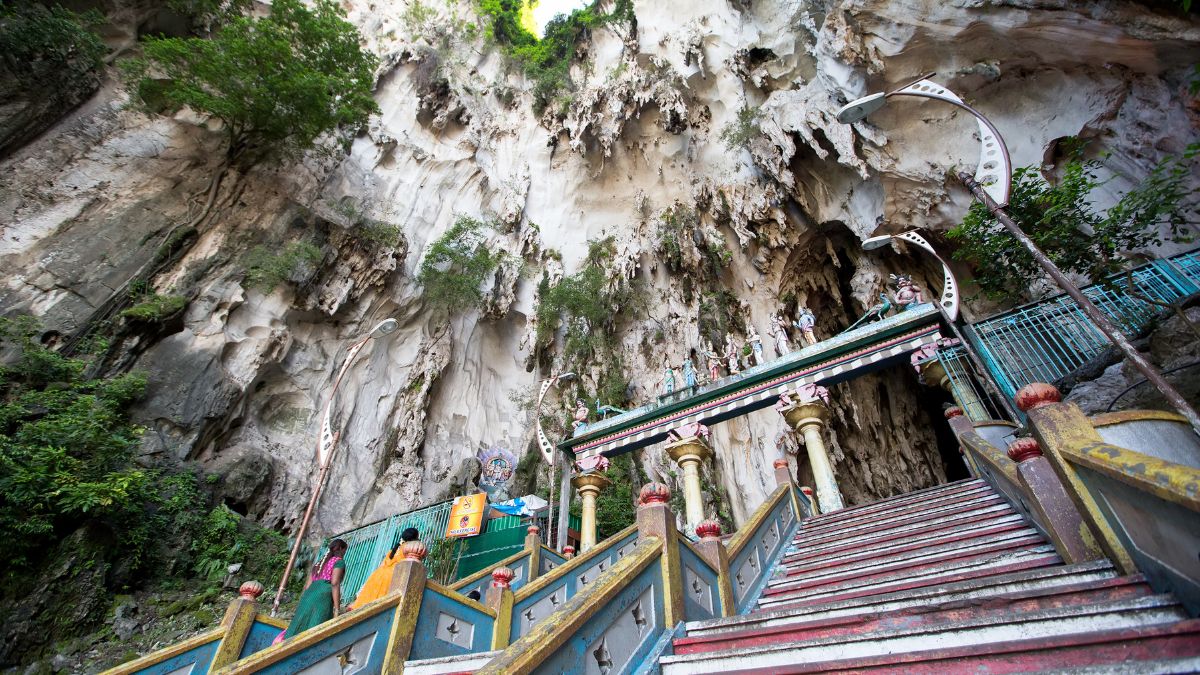
Ramayana Cave (Paid, Usually Quieter)
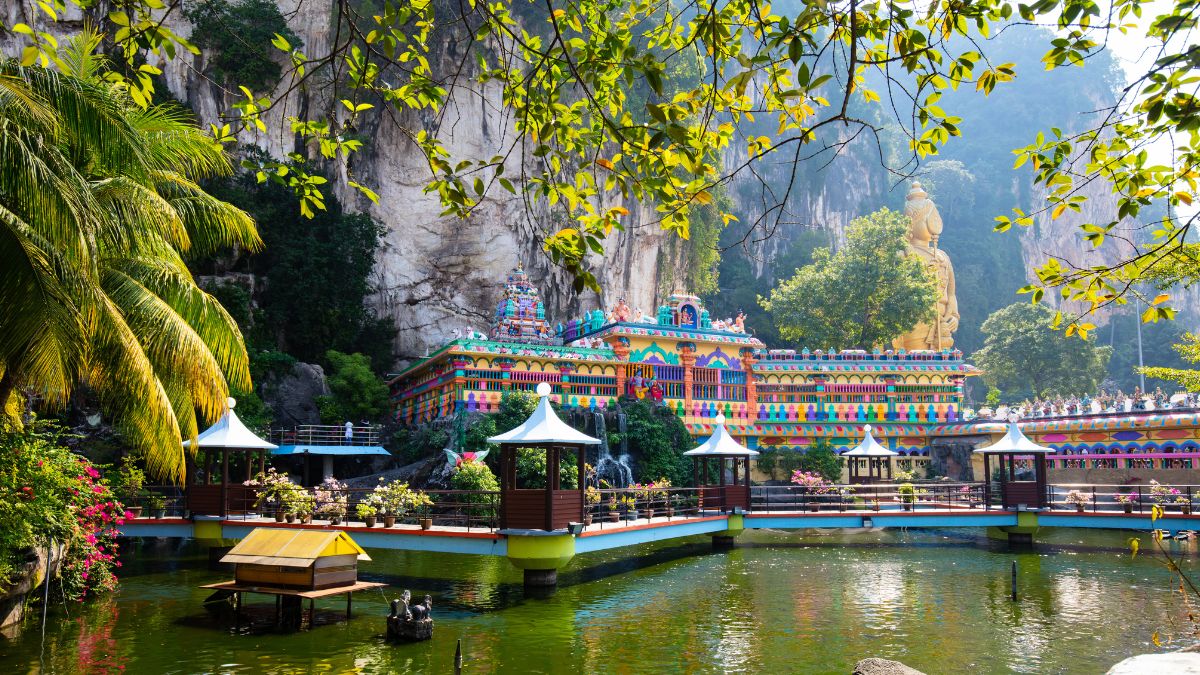
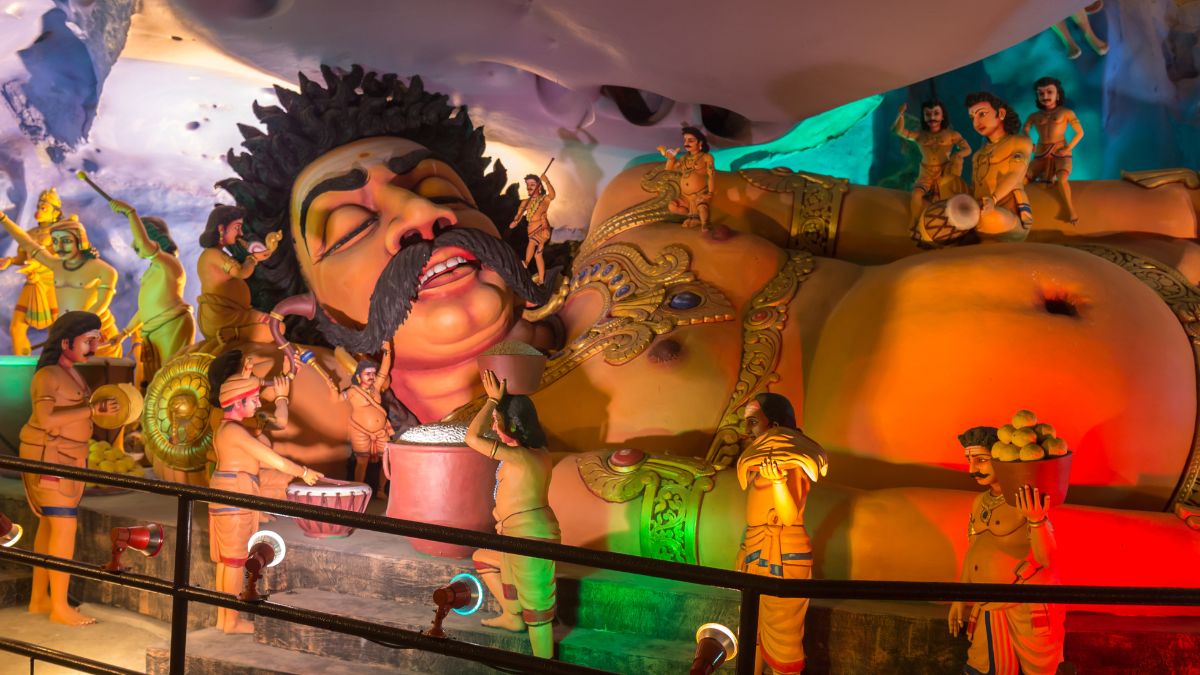
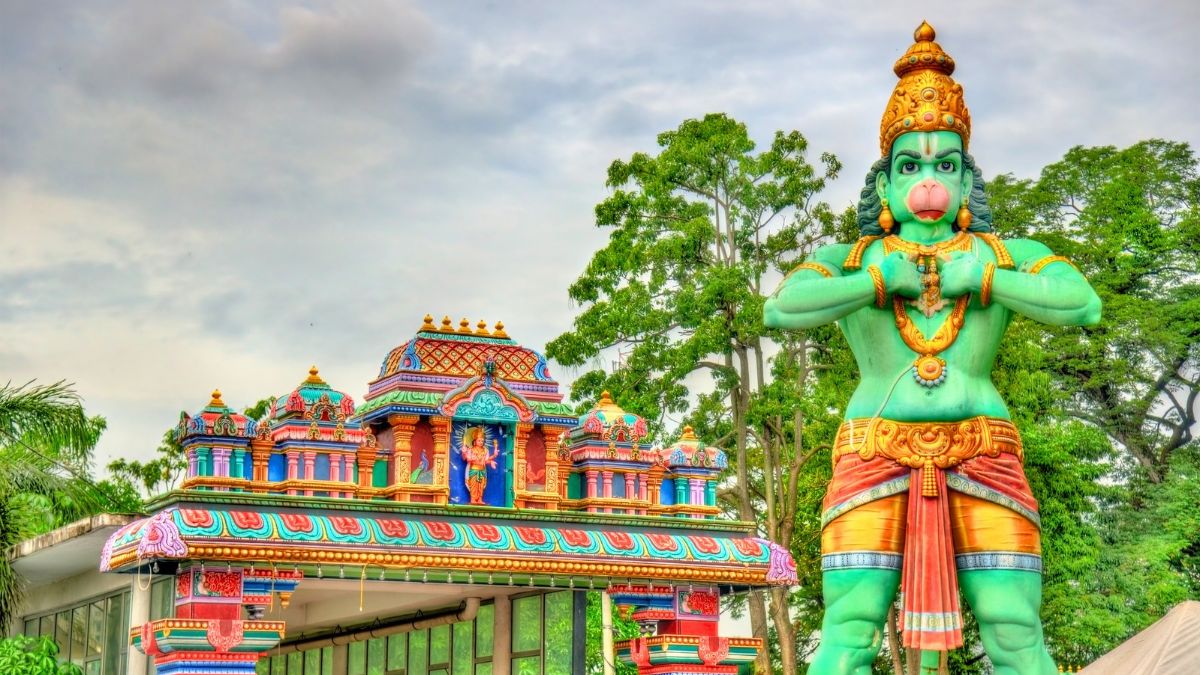
Near the green Hanuman statue, Ramayana Cave typically has a small entry fee and far fewer visitors. No cave at Batu is more impressively decorated than Ramayana Cave, which features vivid dioramas depicting the Indian epic ‘Ramayana.’
Walk past the green, 15-meter-tall statue of Hanuman and cross the bridge to enter. Inside, you’ll find the enormous statue of Kumbhakarna, Ravana’s brother and a heavy sleeper (notice the arrows and cymbals trying to wake him). Climb the stairs to reach a shrine with a naturally formed lingam, a stalagmite symbolizing Shiva .
Ramayana Cave offers a peaceful atmosphere compared to the busier Temple Cave; take your time to explore the beautifully lit and richly painted dioramas.. It’s sheltered, so consider it a backup if a sudden storm rolls through.
Dark Cave (Check Status)
Dark Cave is the longest cave system in the 156 hectare Batu Caves tower karst. The total length of the Dark Cave is more than 2 km of accessible passages with 6 large caverns. However, only 450 meters are open regularly to the public and one kilometer is accessible upon request for adventure tour. Conservation zone (restricted access) is only open for permitted scientific research. Dark Cave has attracted many scientific researchers in various fields since the 1880’s. Biologically it is one of the best examples of a Southeast Asian cave.
No lights are installed in Dark Cave and visitors are given torchlight to experience the natural scenery of the cave ecosystem. Many fauna can be seen in Dark Cave such as various species of Bats, Cave Crickets, Cave Cockroaches, Long-legged Centipedes, Cave Racers and many others. Dark Cave is home to an ancient animal community including troglobitic fauna such as the very rare Liphistius batuensis (Spider), Dugesia batuensis (Flatworm), and Ascetophacus macclurei (Spiny Millipede). Dark Cave also has various types of secondary formations including Stals, Cave Columns, Flowstones, Rimstone, Gour Pool, Cave Curtains, Cave Straws, Cave Flower and also Helictites.
The temperature range about 24 – 30.8 °C and the relative humidity is above 78%. Guided conservation tours have historically run here but may be paused or limited. If re-opened during your visit, small-group tours can be wonderfully quiet. Confirm availability locally or via tourism sites before planning around it.
For extra context and updates on attractions around Selangor, see the state portal: Selangor Tourism: Batu Caves.
Solo Traveler?
Get Our Solo Travelers Guide To Malaysia
Where to Go and stay, What to see, eat and do
Get The Solo Travel Guide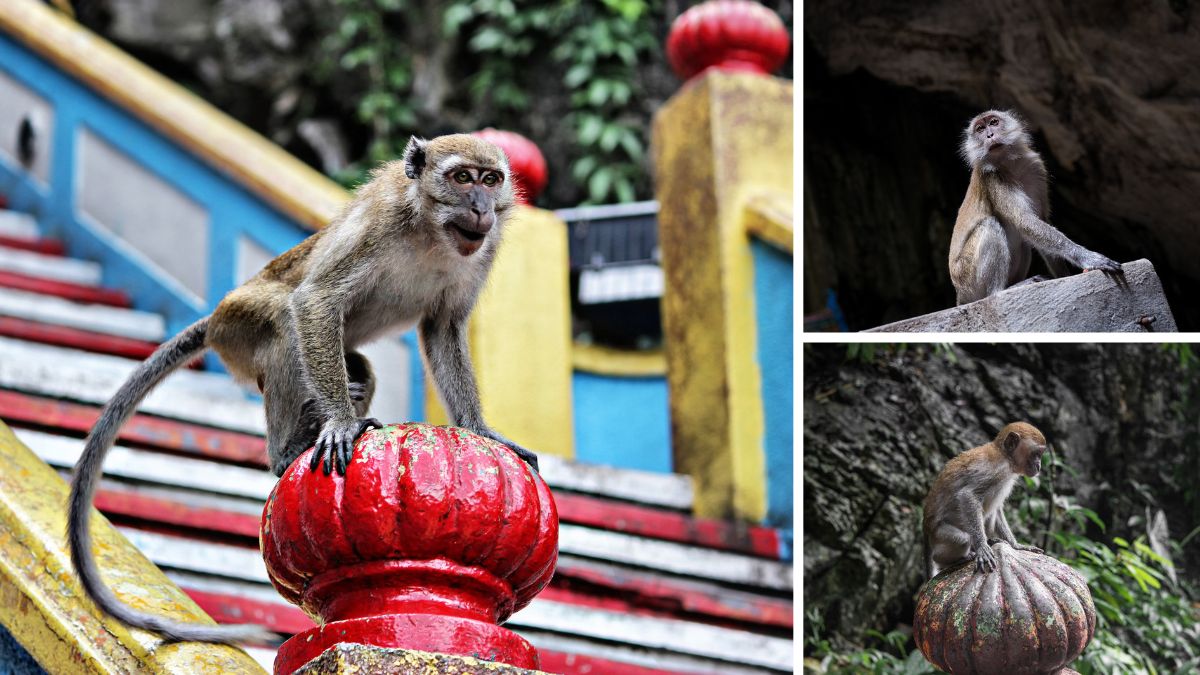
Dress Code, Etiquette, and Monkeys
- Dress respectfully: Shoulders and knees covered is the safe rule. Sarongs may be rentable near the base, but bring your own light layer.
- Shoes off inside shrines: You can wear shoes on the steps and in the cavern, but remove them at shrine thresholds.
- Photography: Avoid flash near ceremonies. Ask before photographing people at worship.
- Don’t feed monkeys: They may snatch bags or bottles. Keep snacks sealed and out of sight. No plastic bags dangling from your hands.
Photography Without People in Every Frame
- Golden minutes: 7:15–8:00 a.m., when side light kisses the steps and the plaza is still thin.
- Angles: Shoot diagonally across the staircase from the plaza’s far corners to compress lines and avoid clusters.
- Inside the cave: Wait for gaps in foot traffic; pre-focus on the beam of light or a shrine, then shoot when the background clears.
- Lenses: 24–35mm for context; 50–85mm for portraits that exclude crowds.
- Tripods: Generally allowed in the plaza; be discreet inside. Yield space if a ceremony begins.
Smart Routing: How to Move Like a Local
- From the station: Follow the Hanuman statue path to the left-side approach. It’s calmer than the center aisle early on.
- Climb strategy: Keep a steady pace on the far right; pause at landings to let faster climbers pass.
- Descent: Take the opposite rail from your ascent for fresh angles and fewer oncoming selfies.
Health, Heat, and Safety
- Hydration: Bring a reusable bottle. Refill before you arrive; vendors are pricier near the plaza.
- Footwear: Grippy shoes; steps can be slick after rain.
- Weather: Rain bursts are common after 3:00 p.m.; the staircase becomes slippery. Delay your descent if lightning is near.
- Belongings: Cross-body bag that zips. Keep phones tucked between shots—monkeys learn fast.
Packing List for a Quiet, Comfortable Visit
Batu Caves Essentials
- Light scarf or sarong for shoulders/knees
- Reusable water bottle
- Microfiber towel for sweat
- Small dry bag or zip pouch for electronics if rain hits
- Compact umbrella or packable rain jacket
- Hand sanitizer and tissues (toilets are basic)
- Wide-brim hat or cap for the plaza

Two Crowd Free Batu Caves Itineraries for Visitors
Fast and Focused (90–120 minutes)
Early Start 6:45am
KTM to Batu Caves; arrive ~7:15 a.m.
Walk straight to the staircase
Steady climb in 10–15 minutes with photo pauses on landings.
Temple / Cathedral Cave
Explore the main cavern clockwise; 25–35 minutes.
Plaza Shrines
Descend by 8:30–8:45 a.m., to explore the plaza shrines.
Jalan Batu Caves Breakfast
Grab a vegetarian breakfast along Jalan Batu Caves; return by KTM before 10:00 a.m.
Deeper Dive (3–4 hours)
Arrive Early
Arrive 7:00 a.m.; slow climb with golden light photos.
Temple Cave and Cathedral Lights
Spend extra time in the main cavern, then break at the top opening to watch the light move.
Ramayana Cave
Visit Ramayana Cave around 9:00 a.m. Spend time at the psychedelic dioramas, photo ops with the green, 15m-tall statue of Hanuman and giant statue of Kumbhakarna, brother of Ravana.
Idli or Dosa Breakfast
Coffee and idli/dosa at one of the nearby Indian eateries.
Pasar Borong Kuala Lumpur (Selayang)
Visit Pasar Borong Kuala Lumpur (Selayang) a local wet market. One of the largest wholesale markets, offering fresh seafood, produce, and meats.
Where to Eat Nearby (Early and After)
Most stalls open later in the morning, so early birds should plan a simple pre-visit snack. After your climb, look for vegetarian Indian eateries along Jalan Batu Caves for dosa, idli, and teh tarik. Keep food sealed near the plaza—monkeys associate rustling bags with snacks.
If You’re Combining Batu Caves with the Rest of KL
After a dawn visit, use KTM back to KL Sentral, then hop on LRT/MRT for city sights. You’ll be ahead of the crowds at popular stops later in the morning. For updated transport connections and planning, refer to Rapid KL and KTM Komuter.
A Note on Festivals
During Thaipusam, crowds swell to the tens of thousands. If your goal is solitude, choose a different date. If cultural immersion is your priority, plan carefully: arrive by train, expect tight security and long walks, and follow temple staff instructions at all times.
If you’re building a broader Kuala Lumpur plan around quiet experiences, you can pair this early Batu Caves visit with green spaces, lesser-known neighborhoods, or heritage streets later in the day. Save your high-traffic icons for late afternoon light when the heat breaks and casual visitors trickle out.
Common Mistakes That Create Crowds (For You)
- Arriving at 10:00 a.m.: You’ve hit peak buses and peak heat.
- Stopping at step one: Move up 30–40 steps for cleaner frames and fewer people.
- Plastic bags out: It’s a monkey magnet. Use a zip-top daypack.
- No plan for rain: A pocket umbrella saves your camera and your mood.
- Ignoring dress code: You’ll waste time fixing it at the base and risk being turned away from shrines.
Quick Reference Links
- KTM Komuter official info (train schedules, notices)
- Rapid KL rail maps (for LRT/MRT connections)
- Tourism Malaysia: Batu Caves (orientation and tips)
Wrap up – Your Crowd Free Formula
Weekday dawn arrival plus KTM Komuter plus clockwise cave loop plus respectful dress plus sealed snacks equals a calm Batu Caves visit.
Use this rhythm and you’ll leave with photos and memories, not elbow marks.
Batu Caves FAQ
What time should I arrive to avoid crowds?
Be there by 6:45–7:15 a.m. on a weekday. You’ll climb with soft light and thin foot traffic, explore the cavern in relative quiet, and be descending before buses arrive.
Is the train better than taking Grab or a taxi?
Usually, yes. KTM Komuter avoids traffic, parking, and surge pricing. It’s direct to Batu Caves station. Use Grab if traveling very early from a location far from rail or for flexibility on the return.
What should I wear at Batu Caves?
Dress modestly—cover shoulders and knees. Wear grippy shoes for the steps. Bring a light scarf or sarong and remove shoes at shrine thresholds inside the cavern.
Are there entry fees?
The main Temple Cave is free. Ramayana Cave typically charges a small fee. Special exhibitions or guided tours (such as Dark Cave when available) may have separate charges.
Can I bring food or drinks?
Bring water, ideally in a reusable bottle. Keep all food sealed and out of sight. Do not feed monkeys—store snacks deep in your bag to avoid unwanted attention.
Is Batu Caves suitable for kids or older travelers?
Yes, with pacing. The 272 steps are a workout, especially in humidity. Start early, take breaks on landings, and bring water. Those skipping the climb can explore the plaza and Ramayana Cave.
What if it rains while I’m on the steps?
Pause at the nearest landing and hold the handrail—steps get slick fast. If there’s lightning or heavy downpour, wait it out inside the main cavern or return to the base once it eases.