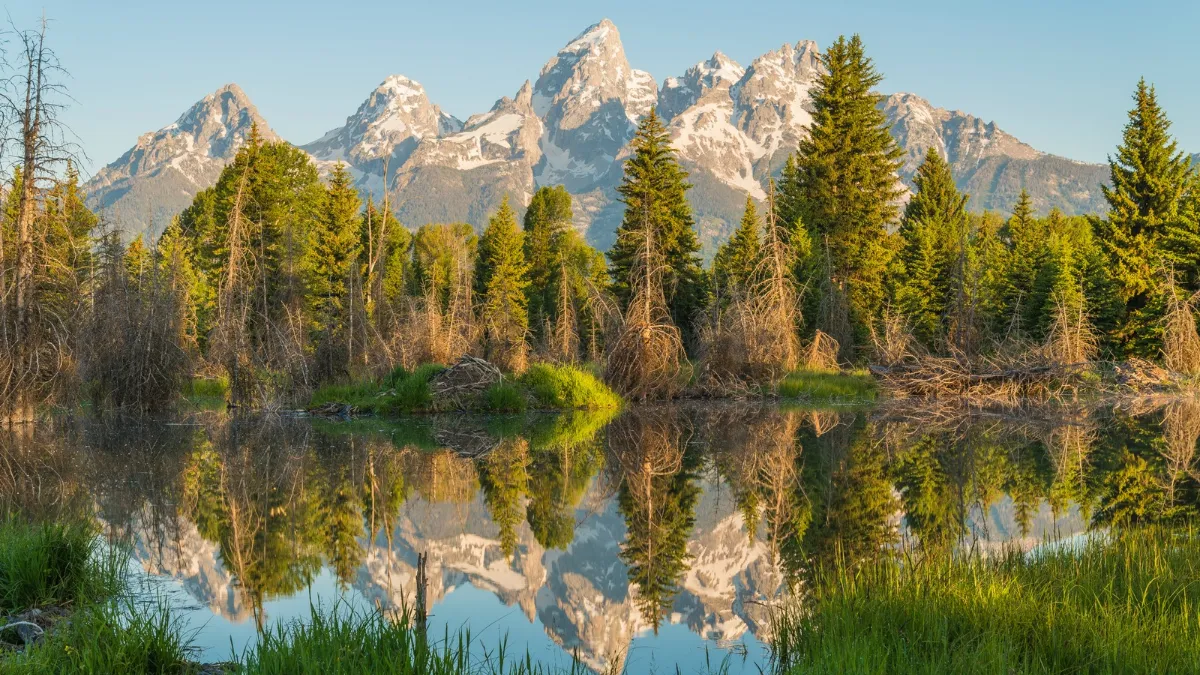

The best hikes in Grand Teton National Park deliver some of the most dramatic hiking in the United States. Trails leave the sagebrush flats of Jackson Hole, pass reflective glacial lakes and enter steep canyons beneath a skyline of jagged granite peaks. The scenery arrives quickly, but so do the realities of hiking at altitude: strong sun, sudden thunderstorms, lingering snow, wildlife and far more elevation gain than a short mileage figure may suggest.
The Grand Teton itself reaches 13,775 feet (4,199 metres). It is the highest summit in the Teton Range and the second-highest mountain in Wyoming, behind Gannett Peak. Most visitors do not climb the summit; mountaineering routes require technical skills. The park’s maintained hiking network, however, includes more than 250 miles of trails, ranging from paved lakeside paths to multi-day backcountry routes.
For a first visit, the best hikes in Grand Teton National Park are Taggart Lake for an accessible mountain-and-lake experience, Jenny Lake to Hidden Falls and Inspiration Point for iconic scenery, Cascade Canyon for wildlife and high peaks, and Lake Solitude for a demanding full-day alpine adventure. Delta Lake is spectacular, but it follows an unmaintained route and should be reserved for well-prepared hikers who can navigate loose, steep terrain.
Quick answer: If you have only one day and want a moderate hike, take the Jenny Lake shuttle boat and walk to Hidden Falls, Inspiration Point and into Cascade Canyon. Families and first-time hikers should consider Taggart Lake, String Lake or the Colter Bay Lakeshore Trail. Strong hikers seeking a full-day challenge should choose Lake Solitude or Surprise and Amphitheater Lakes. Always check the National Park Service trail conditions before setting out.
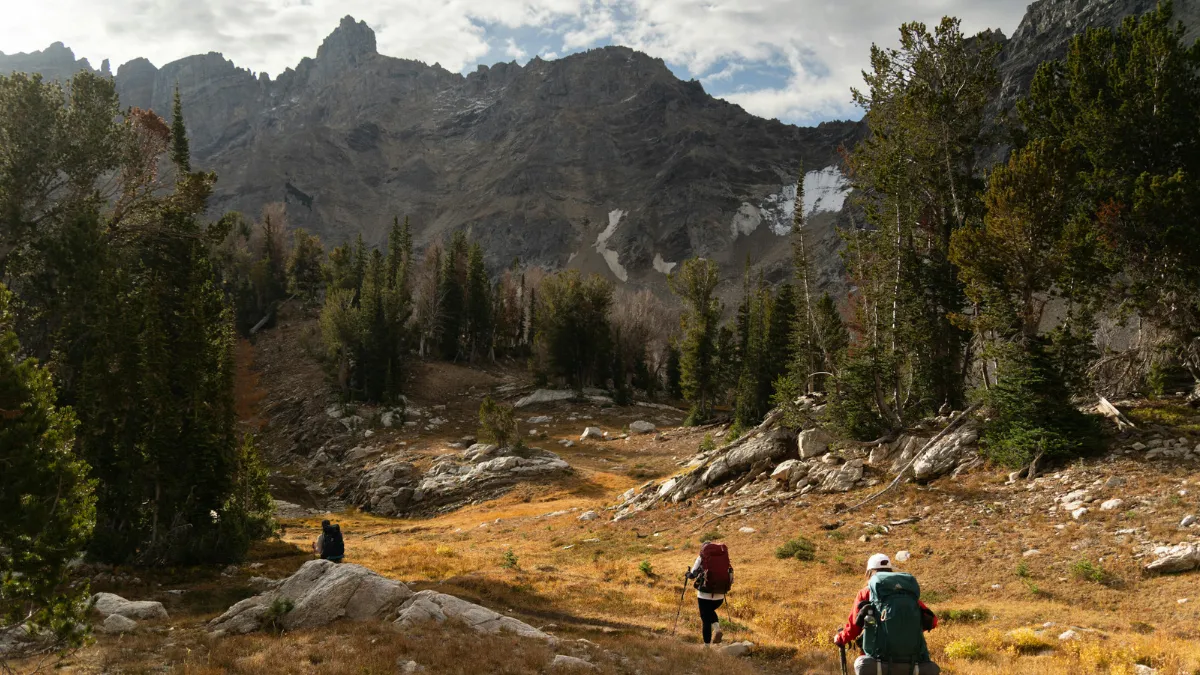
Best Hikes in Grand Teton National Park at a Glance
Distances and elevation figures vary slightly between maps and tracking apps, particularly when a hike can be started from more than one trailhead or shortened with the Jenny Lake boat. Treat the figures below as planning estimates, not substitutes for a current topographic map or official trail information.
| Hike | Approximate distance | Approximate elevation gain | Typical time | Difficulty | Best for |
|---|---|---|---|---|---|
| Discovery Trail at Jenny Lake | 0.7 miles return | Minimal | 30–45 minutes | Easy and accessible | A short lakeshore introduction |
| Colter Bay Lakeshore Trail | 2 miles loop | Minimal | 1–1.5 hours | Easy | Families and Jackson Lake views |
| String Lake Loop | 3.7 miles | About 250 feet | 1.5–2.5 hours | Easy | Swimming, picnics and families |
| Moose Ponds | About 3.2 miles loop | About 200 feet | 1.5–2 hours | Easy | A quieter walk and wildlife habitat |
| Taggart Lake | About 3.8–4.1 miles | About 400 feet | 2–3 hours | Easy to moderate | Classic Teton reflections |
| Leigh Lake | About 3.7 miles one way to the north end | Minimal | 2–4 hours depending on turnaround | Easy to moderate | A flexible, mostly level lakeshore hike |
| Hidden Falls and Inspiration Point | 1–2 miles from the west boat dock; 5–6 miles from the visitor centre | About 200–500 feet | 1–3 hours | Easy to moderate | First-time visitors |
| Taggart and Bradley Lakes Loop | About 5.5–6 miles | About 700–800 feet | 3–4 hours | Moderate | Two lakes in one hike |
| Signal Mountain Trail | 6.8 miles return | About 1,000 feet | 3–4 hours | Moderate | Wide views across Jackson Hole |
| Cascade Canyon to the Forks | About 9 miles with the boat; longer without it | About 1,100 feet | 4–6 hours | Moderate | Wildlife and canyon scenery |
| Surprise and Amphitheater Lakes | About 10 miles | About 3,000 feet | 6–8 hours | Strenuous | A maintained alpine-lake challenge |
| Delta Lake | Roughly 8–9 miles | Roughly 2,300 feet | 6–8 hours | Strenuous, unmaintained route | Experienced hikers and turquoise water |
| Paintbrush Canyon to Holly Lake | About 13 miles | About 2,700 feet | 7–9 hours | Strenuous | A quieter alpine objective |
| Lake Solitude | Roughly 14–15 miles with the boat; about 18–19 miles without it | Roughly 2,300–2,700 feet | 8–12 hours | Strenuous | A premier full-day hike |
| Paintbrush–Cascade Canyon Loop | About 19–21 miles | About 4,000 feet | 10–14 hours or an overnight trip | Very strenuous | Expert hikers and backpackers |
How to Choose the Right Grand Teton Hike
The best trail is not necessarily the one with the biggest summit view or the most social-media photographs. Choose according to your available time, acclimatisation, route-finding ability, weather and willingness to climb. Grand Teton’s valley floor is already around 6,400 to 6,800 feet above sea level, and many popular trails rise above 9,000 feet. A hiker arriving from sea level may feel the altitude even on a moderate route.
For an easy half-day, look at Colter Bay, String Lake, Moose Ponds or the shorter version of Taggart Lake. For a moderate half- or full-day, choose Jenny Lake, Signal Mountain, Bradley Lake or Cascade Canyon. For a strenuous alpine day, consider Amphitheater Lake, Lake Solitude or Holly Lake. Delta Lake and Lake of the Crags require an additional level of judgment because they are not standard maintained hiking trails.
Mileage alone can be deceptive. A five-mile route gaining almost 3,000 feet over loose rock is considerably harder than a level seven-mile lakeshore walk. Snowfields, stream crossings, exposed slopes, heat and afternoon lightning can all turn an otherwise manageable day into a serious undertaking.
1. Taggart Lake: Best First Hike in Grand Teton
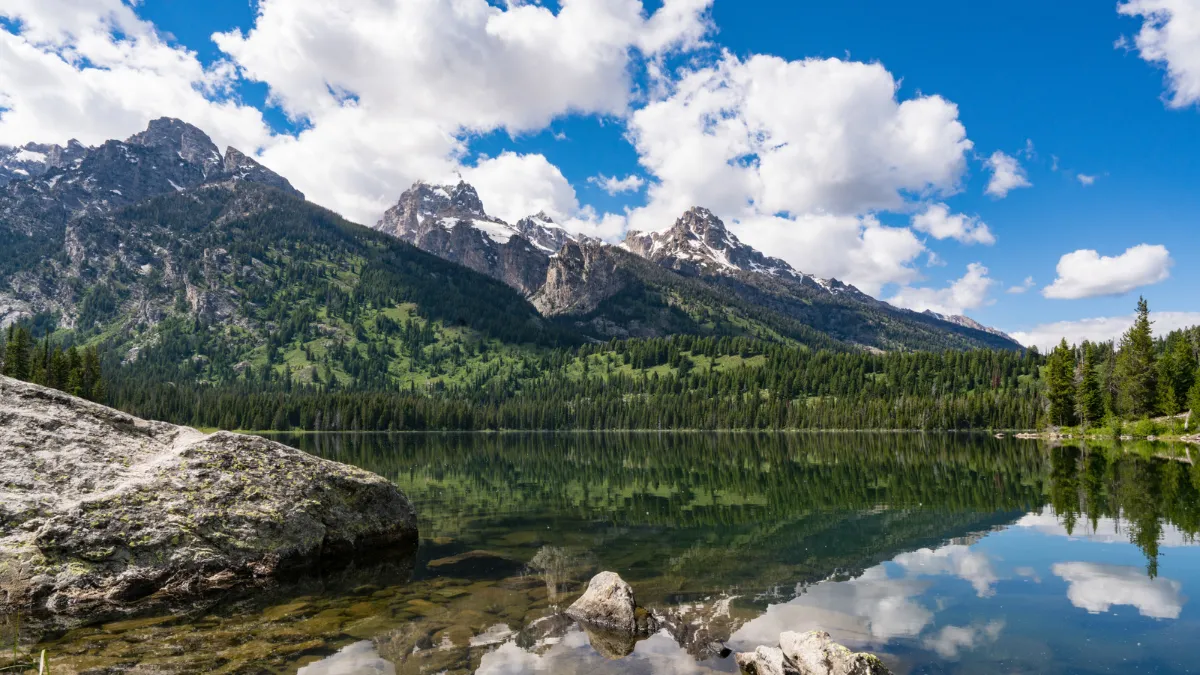
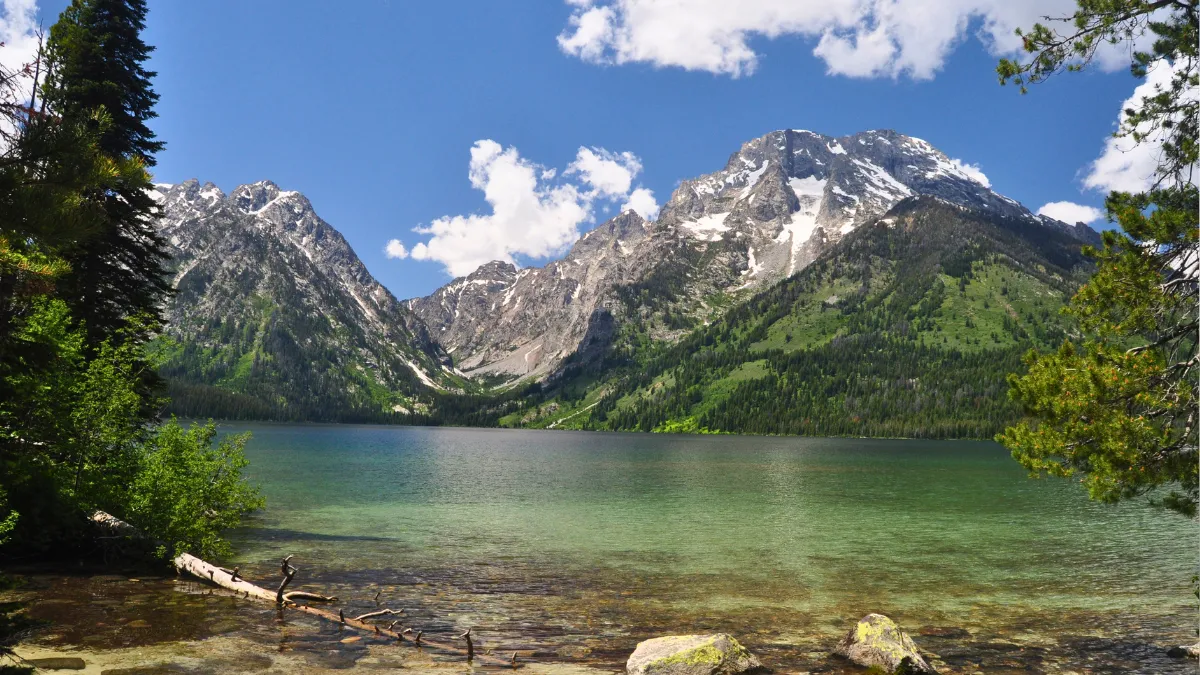
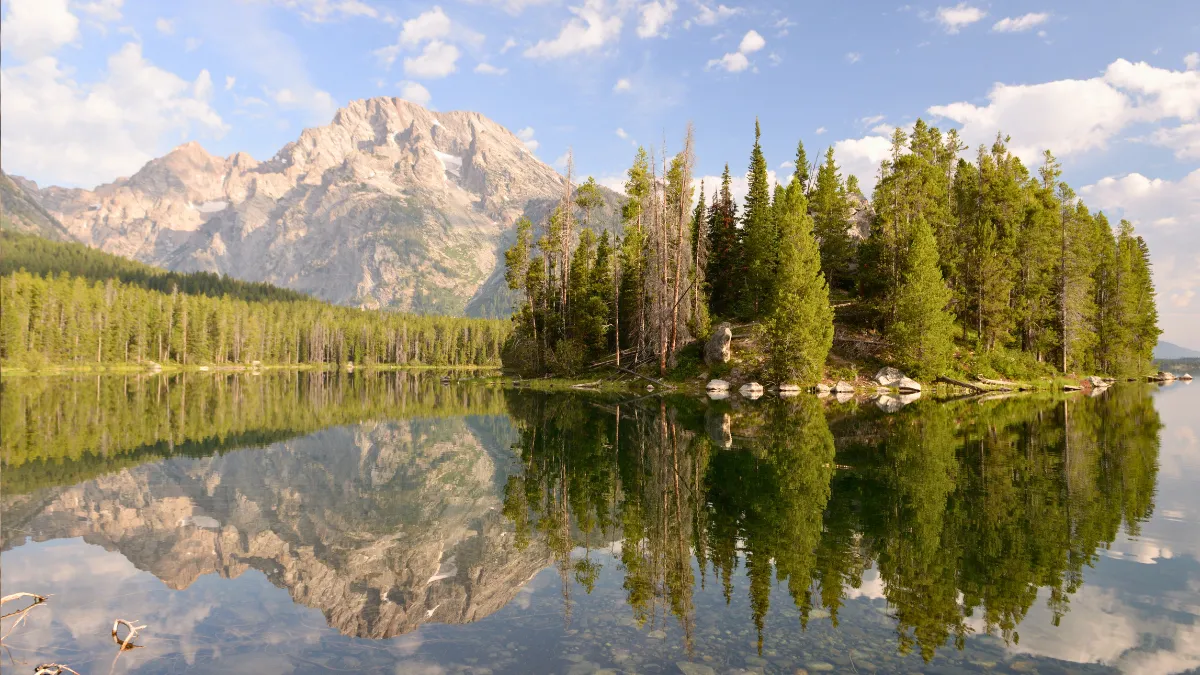
Taggart Lake is one of the best introductions to hiking in Grand Teton National Park. The trail climbs gradually through forest and open areas to a glacial lake directly beneath the central Teton skyline. When the water is calm, the peaks reflect across the lake, creating one of the park’s signature views.
The exact distance depends on the open route and whether you create a loop, but most hikers cover approximately four miles. The hike is commonly described as easy to moderate rather than completely flat: the elevation gain is manageable, yet the altitude, sun and occasional rough surfaces still matter. Families with children who already enjoy walking often find it achievable with time for breaks.
Taggart Lake is especially attractive early in the morning, when parking is easier, the light is softer and the lake may be still. The trailhead is popular, so arriving before the busiest part of the day makes a noticeable difference.
Important 2026 update:
Trail reconstruction has closed the north side of the Taggart Trail between the trailhead and lake. The Taggart Lake Trailhead and south-side access remain open, but the usual loop may not be possible.
Check the official Grand Teton hiking page immediately before your visit because construction impacts can change.
2. Taggart Lake and Bradley Lake Loop: Best Two-Lake Hike
Adding Bradley Lake turns the Taggart outing into a more substantial half-day walk. This route combines two peaceful lakes, changing angles on the Tetons and a little more climbing. Plan on roughly 5.5 to 6 miles and about 700 to 800 feet of total elevation gain, although the precise route may vary during construction.
Bradley Lake generally feels quieter than Taggart because some visitors turn around at the first lake. The connecting trail is more undulating and can retain mud or snow early in the season. This is a good progression for hikers who want more than an easy stroll but are not ready to commit to the steeper alpine basins above Lupine Meadows.
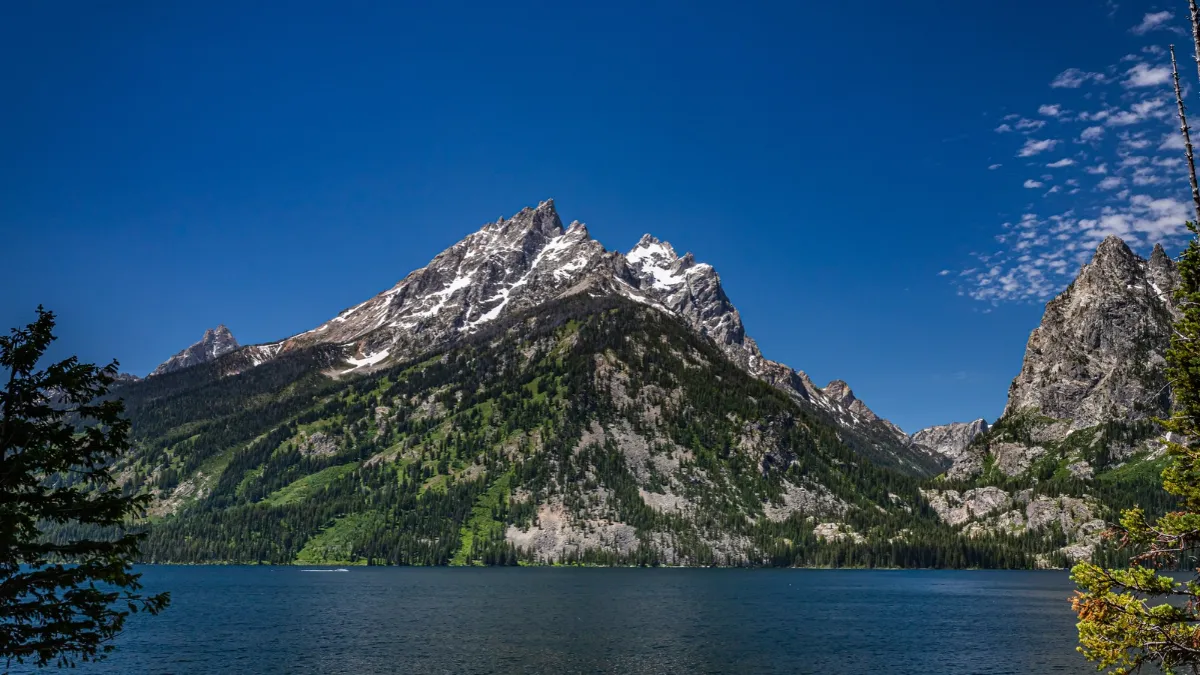
3. Jenny Lake, Hidden Falls and Inspiration Point: Best Iconic Hike
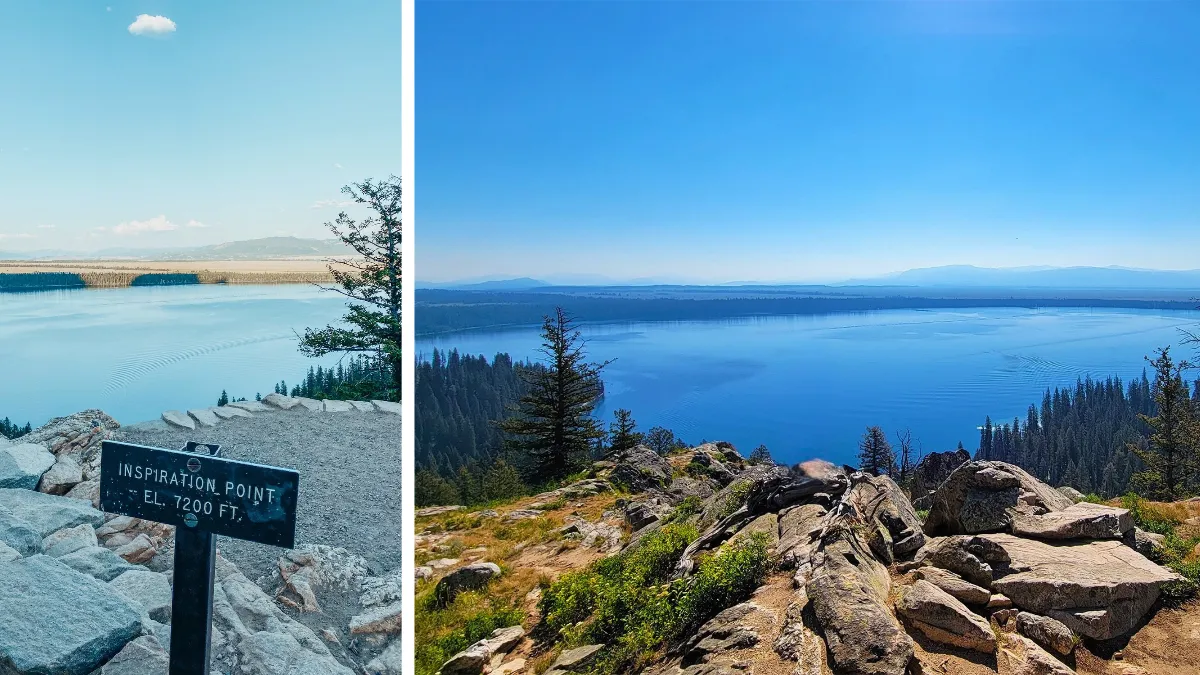
Jenny Lake is the park’s most recognisable hiking hub. From the visitor centre, you can walk around either side of the lake or use the passenger boat to cross to the west dock. Hidden Falls lies about one mile round trip from that dock, while Inspiration Point is about two miles round trip. Without the boat, the National Park Service lists approximate return distances of five miles to Hidden Falls and six miles to Inspiration Point from the visitor centre.
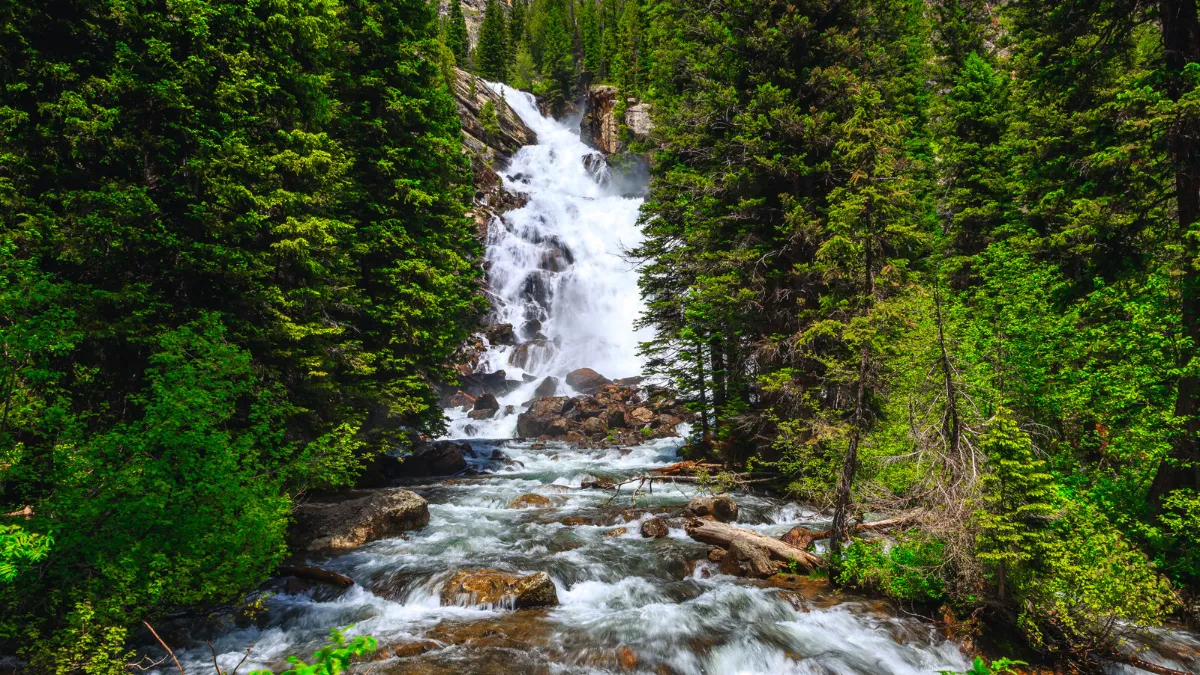
Hidden Falls is a powerful 100-foot cascade reached through forest. Inspiration Point adds a steeper, rockier climb to a viewpoint above Jenny Lake and Jackson Hole. The ledges near the viewpoint can feel exposed, so supervise children carefully and allow descending hikers room to pass.
The boat does not operate like a discounted early-morning ferry. In 2026, the shuttle runs continuously every 10 to 15 minutes during operating hours, weather and water conditions permitting; it does not take reservations. Adult round-trip tickets are listed at $20, with different prices for children, seniors and one-way journeys. Confirm the latest Jenny Lake shuttle schedule and fares before relying on it, and remember that queues can form during peak periods.
4. Cascade Canyon to the Forks: Best Canyon Hike
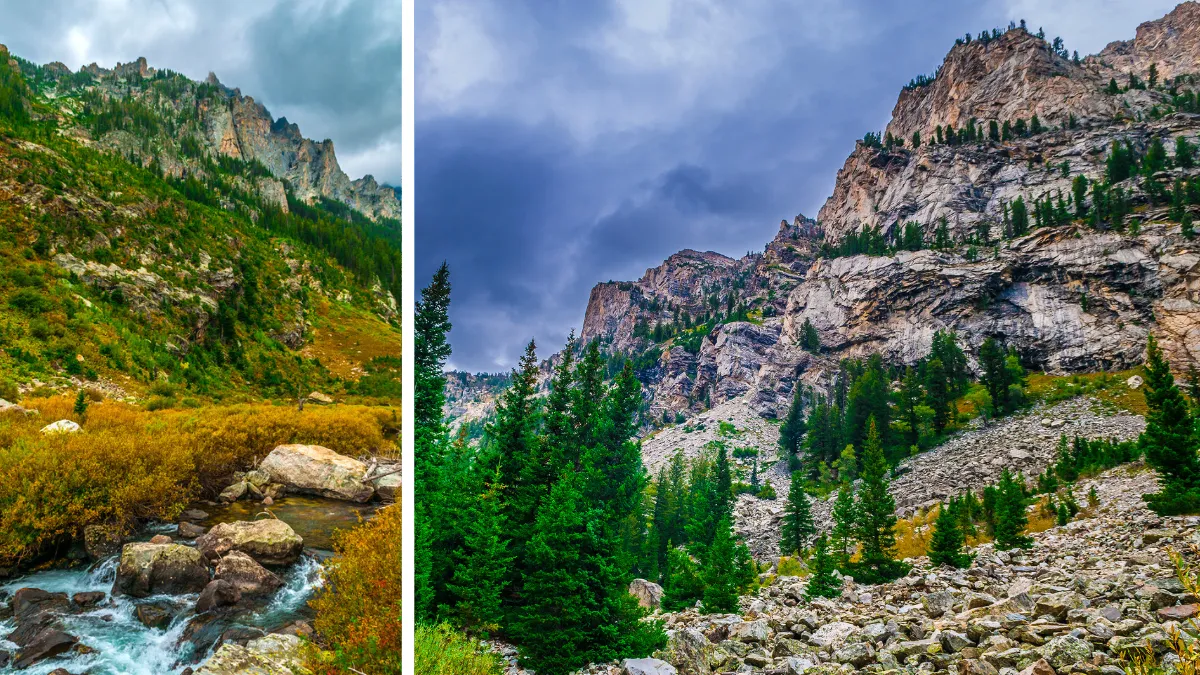
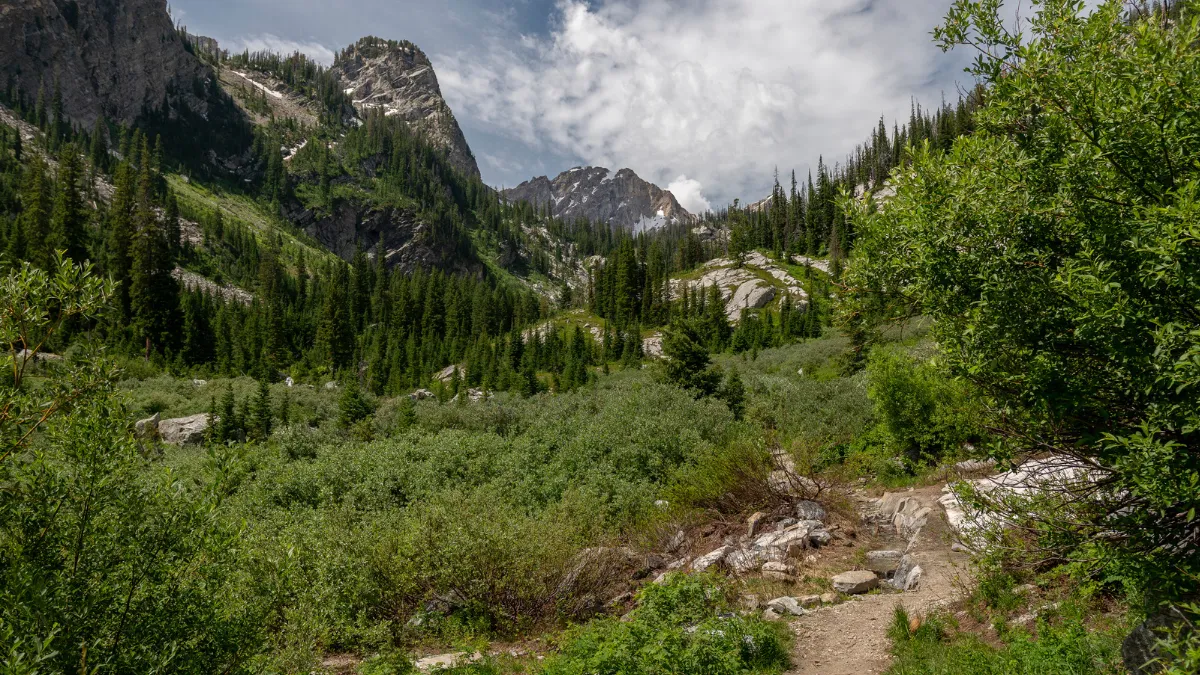
Cascade Canyon is one of the finest moderate hikes in the Tetons because the effort-to-scenery ratio is exceptional. After Hidden Falls and Inspiration Point, the trail enters a broad glacial canyon between Teewinot Mountain and Mount St. John. Forest, boulder fields, streams and open slopes create excellent habitat for moose, marmots, pikas and bears.
Using the Jenny Lake boat, the return journey to the fork of North and South Cascade Canyon is approximately nine miles with around 1,100 feet of elevation gain. Walking around the lake adds several miles. The first climb to Inspiration Point is often the steepest-feeling section; beyond it, the trail becomes more gradual as it follows the canyon.
Do not treat wildlife sightings as an invitation to approach. Moose can be aggressive when stressed, particularly around calves or if a hiker blocks their escape route. Give every animal space and be prepared to turn around or wait if one occupies the trail.
5. Lake Solitude: Best Strenuous Day Hike
Lake Solitude occupies a spectacular alpine basin at the head of the North Fork of Cascade Canyon. The journey combines Jenny Lake, Hidden Falls, Inspiration Point, the full length of Cascade Canyon and a final ascent through meadows and rocky terrain. Wildflowers can be superb in midsummer, while the view back toward the Cathedral Group makes the long climb worthwhile.
Depending on the starting point and whether you use the boat, expect roughly 14 to 15 miles with the shuttle or approximately 18 to 19 miles if you walk around Jenny Lake. Published elevation figures vary with the route, but a gain of roughly 2,300 to 2,700 feet is a realistic planning range. This is a long, high-altitude day, not simply an extension of the casual Jenny Lake walk.
Snow can remain near Lake Solitude well into summer. The National Park Service notes that valley trails may not become snow-free until mid-June and that mountain trails and passes can retain snow until late July. Start early, establish a firm turnaround time and carry enough food and water for delays. If the return boat is part of your plan, leave a generous margin before the final departure; missing it means walking additional miles around the lake.
6. String Lake Loop: Best Easy Hike for Families
String Lake is a shallow, scenic lake north of Jenny Lake. The approximately 3.7-mile loop has relatively little elevation gain and offers a relaxed blend of forest, water and mountain views. It is one of the best family hikes in Grand Teton, particularly when combined with a picnic or swim on a warm afternoon.
The easy terrain does not remove the need for bear awareness. String Lake is active bear habitat, and food should never be left unattended. The car park can fill early in summer, and roadside parking is prohibited when the designated spaces are full. A quieter alternative is to arrive at breakfast time or visit later, after the first wave of day hikers has departed.
7. Leigh Lake Trail: Best Flexible Lakeshore Walk
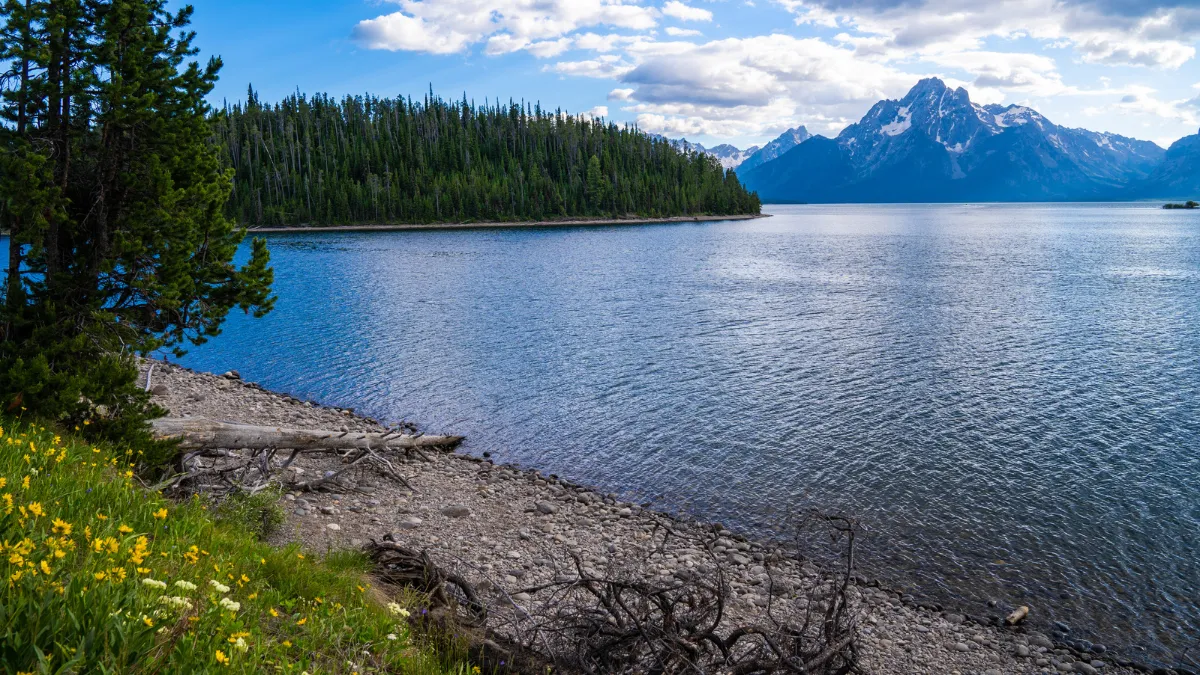
The Leigh Lake Trail begins near String Lake and follows mostly gentle terrain along the eastern shore. Hikers can turn around whenever time or energy dictates, making it an adaptable choice for mixed-ability groups. Reaching the north end is roughly 3.7 miles one way, so the complete out-and-back is closer to 7.4 miles—not a three-mile hike unless you intentionally choose a shorter turnaround point.
Views open across the water toward Mount Moran, and the trail often feels less hurried once you move beyond the busiest String Lake area. Although the elevation change is small, bring water and sun protection. Lakeshore distance accumulates quickly, and afternoon winds can change conditions for anyone combining the walk with paddling.
8. Moose Ponds: Best Quiet Nature Walk
Moose Ponds is a gentle loop near Jenny Lake that receives less attention than Hidden Falls or Inspiration Point. The route passes ponds, woodland and wet habitat where wildlife may be present. It is a worthwhile option when the main Jenny Lake trails feel too busy or when weather makes a higher route unwise.
The name is not a guarantee that a moose will appear. Wildlife viewing is unpredictable, and dawn or dusk can increase both opportunities and the need for caution. Make noise where vegetation limits visibility, keep bear spray accessible and never push through brush to obtain a photograph.
9. Colter Bay Lakeshore Trail: Best Short Hike near Jackson Lake
The Colter Bay Lakeshore Trail forms an easy loop of approximately two miles around a wooded peninsula on Jackson Lake. It provides views across the water to Mount Moran and the northern Teton Range without a long climb. This is an excellent arrival-day walk, family option or active-recovery outing after a demanding alpine hike.
Colter Bay also has a visitor centre, marina, food, camping and other services during the main season, making the hike straightforward to combine with a wider exploration of northern Grand Teton. Conditions and business hours remain seasonal, so verify what is open if visiting in spring or autumn.
10. Signal Mountain Trail: Best Panoramic Valley View
Signal Mountain rises from the valley floor rather than from the main Teton crest. Its position creates broad views over Jackson Hole, Jackson Lake and the distant peaks. The National Park Service describes the maintained trail as a moderate 6.8-mile out-and-back route from the Signal Mountain parking area.
Much of the climb is forested, so this hike is less continuously dramatic than an alpine-lake trail. The summit panorama, however, reveals the scale of the valley and can be particularly rewarding in clear weather. A seasonal road also reaches the summit area, which is useful for travellers who want the view without the walk, but drivers should check road openings before visiting.
11. Surprise and Amphitheater Lakes: Best Maintained Alpine Challenge
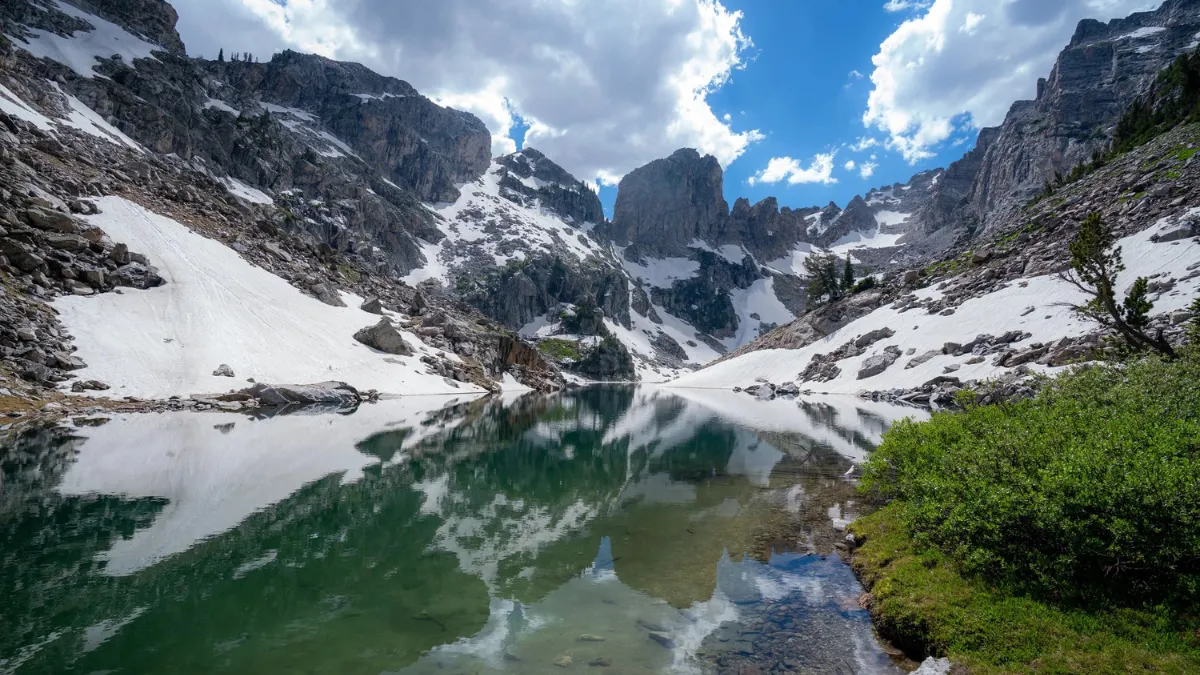
The trail from Lupine Meadows to Surprise and Amphitheater Lakes is a sustained climb through forest and Garnet Canyon switchbacks. Expect approximately 10 miles return and close to 3,000 feet of elevation gain. Amphitheater Lake sits in a steep granite basin beneath Disappointment Peak, while Surprise Lake provides an appealing stop just below it.
This is one of the best choices for fit hikers who want a strenuous alpine lake without deliberately leaving the maintained trail. Begin early to avoid heat and afternoon storms, and do not underestimate the descent. Trekking poles can reduce strain on the long switchbacks, but they are not a substitute for pacing and adequate water.
12. Delta Lake: Best Unmaintained Alpine Route for Experienced Hikers
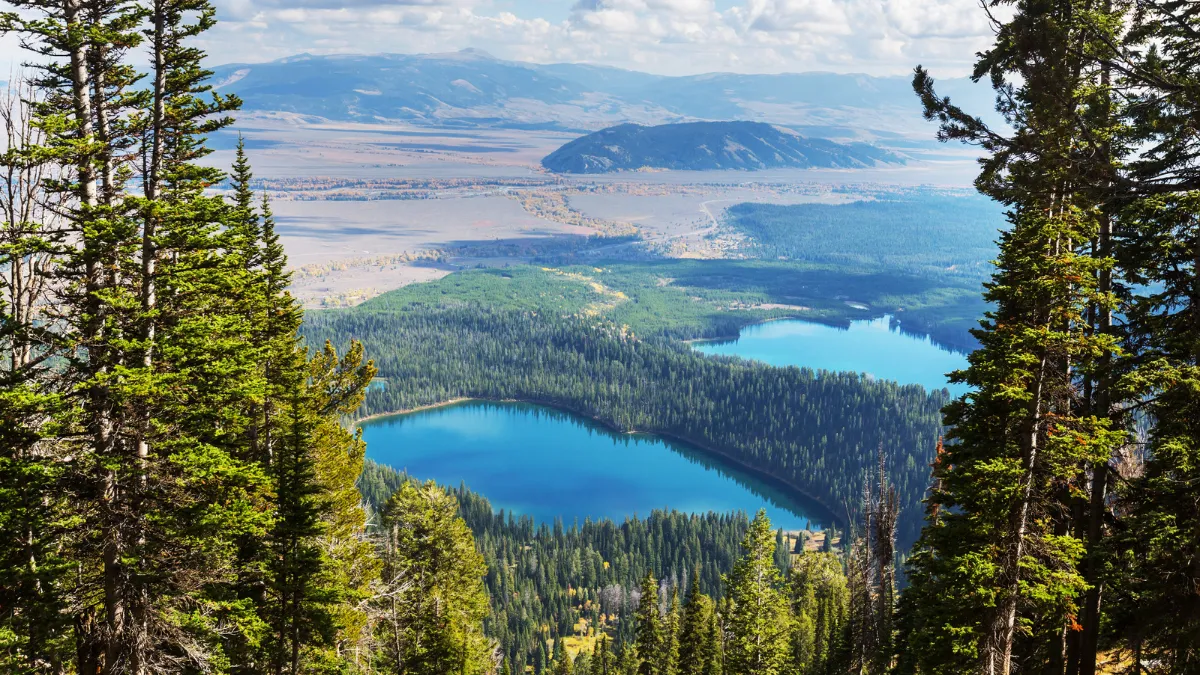
Delta Lake has become famous for its opaque turquoise water beneath the Grand Teton. Its beauty has also encouraged many visitors to treat it like an ordinary park trail. It is not. Delta Lake is reached by leaving the maintained Amphitheater Lake Trail and following an unmaintained route across steep, loose boulder fields. Navigation can be confusing, and erosion or rockfall can affect the route.
Depending on tracking method, hikers commonly record roughly 8 to 9 miles return and around 2,300 feet of elevation gain. Those figures do not convey the difficulty of scrambling over unstable talus or finding the safest line. Snow and ice increase the consequences considerably.
Only attempt Delta Lake if your group is comfortable with off-trail navigation, loose rock, exposure and changing mountain conditions. Download an offline map, but do not rely on a phone track as proof that a route is safe. If visibility deteriorates or the terrain exceeds your ability, turn around. Hikers seeking a maintained alternative should choose Amphitheater Lake.
13. Paintbrush Canyon to Holly Lake: Best Quieter Alpine Hike
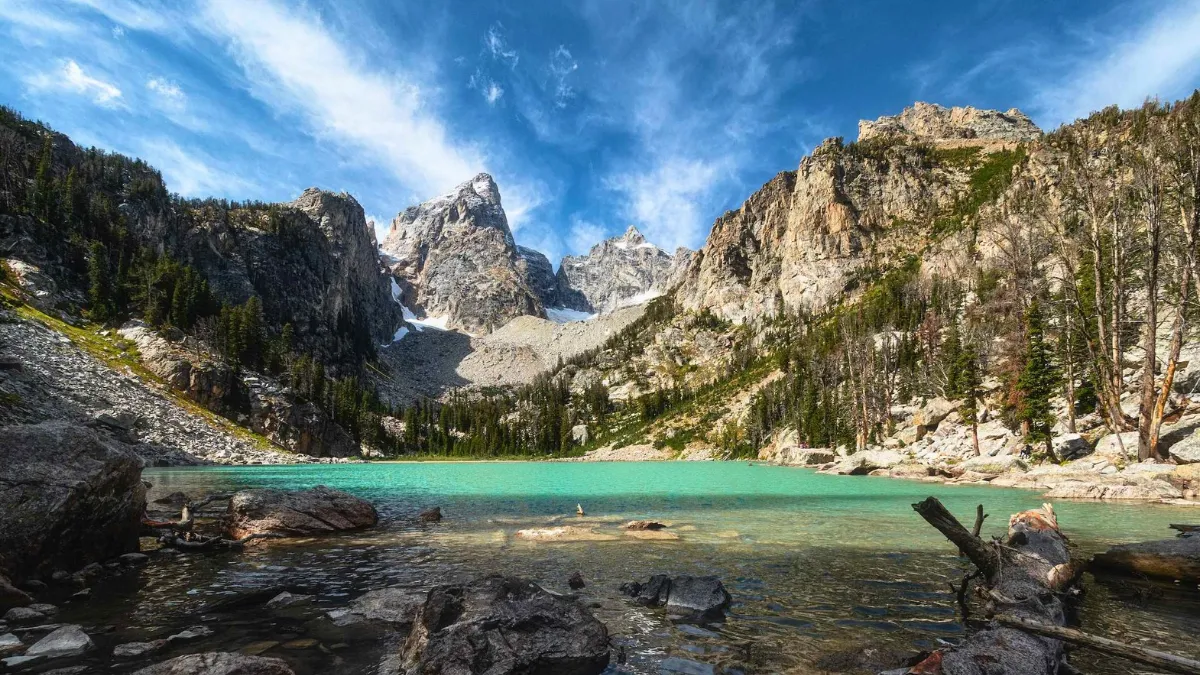
Paintbrush Canyon offers a wilder-feeling alternative to the busiest Jenny Lake routes. A return hike to Holly Lake is approximately 13 miles with around 2,700 feet of elevation gain. The route progresses from forest to open canyon scenery before reaching the lake beneath Paintbrush Divide.
Snow conditions can change dramatically through early and midsummer. Above Holly Lake, the route toward Paintbrush Divide becomes more serious and may require an ice axe, crampons and the knowledge to use them. Do not carry technical equipment merely as reassurance; without training, it can create false confidence.
Holly Lake works well as a long day for experienced hikers or as part of a permitted overnight itinerary. The Paintbrush Canyon trailhead area can still be busy, so an early start remains valuable even when the canyon itself feels quieter.
14. Paintbrush–Cascade Canyon Loop: Best Epic Day or Overnight Route
The Paintbrush–Cascade Canyon Loop links String Lake, Paintbrush Canyon, Paintbrush Divide, Lake Solitude and Cascade Canyon. Depending on trailhead choices and mapping, the circuit is approximately 19 to 21 miles with roughly 4,000 feet of climbing. It is one of the most complete hiking experiences in the park and one of the most demanding established day routes.
Strong, acclimatised hikers sometimes complete the loop in a single long day, but an overnight itinerary allows more time to appreciate the landscape. Overnight travel requires a backcountry camping permit and camping only in the location or zone shown on that permit. Paintbrush Divide may hold steep snow after lower trails have cleared, making early-season attempts particularly hazardous.
Many hikers travel the loop counter-clockwise so that they ascend Paintbrush Canyon and deal with the steep side of the divide while climbing rather than descending. Conditions, snow competency and personal preference matter more than convention. Ask a ranger about the current route before committing.
15. Teton Crest Trail: Best Multi-Day Backpacking Trip
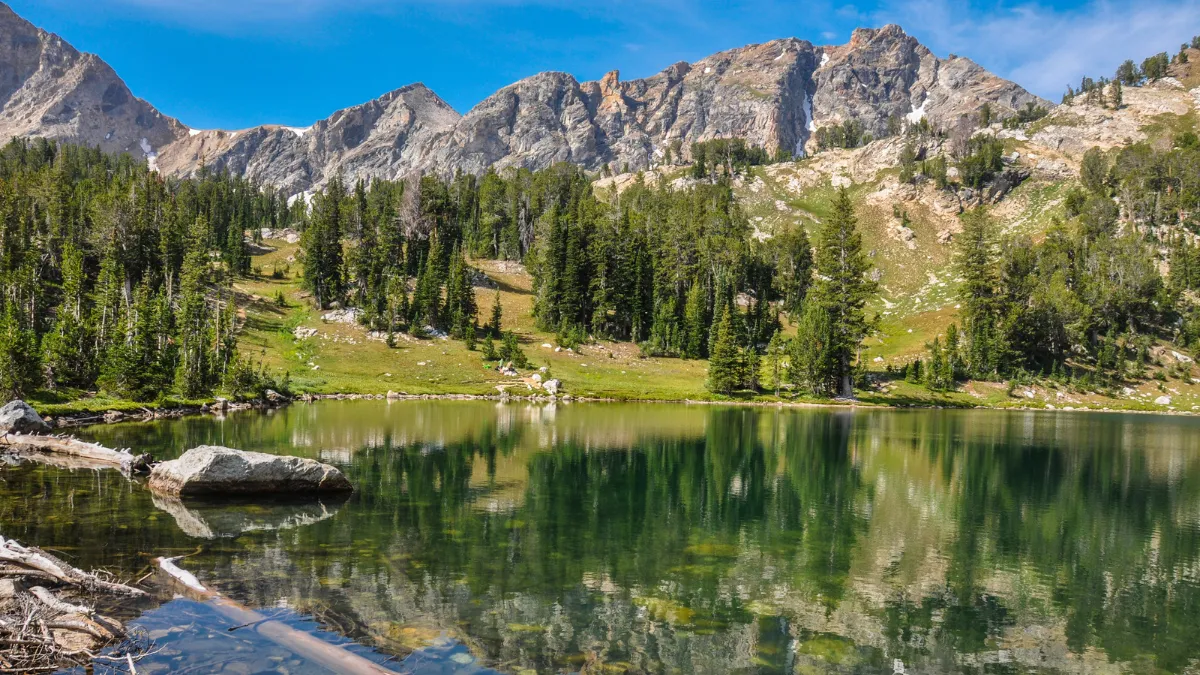
The Teton Crest Trail is the park’s signature backpacking journey. The National Park Service describes a 39-mile point-to-point version beginning outside the park at Phillips Pass and ending at String Lake, with more than 9,000 feet of total ascent. Variations can change the mileage significantly, and taking the Jackson Hole Aerial Tram can remove roughly four miles and 2,400 feet of climbing from some itineraries.
The route crosses high passes, alpine meadows and major canyon systems over several days. It requires backcountry permits, careful campsite planning, approved food storage, strong weather judgment and the ability to respond to lingering snow. Permits are competitive during the peak season, but obtaining one is only the beginning; a safe itinerary must also match the slowest member of the group.
What About Lake of the Crags?
Lake of the Crags is sometimes included in lists of Grand Teton hikes, but it should not be presented as a normal short trail. The route is extremely steep, unmaintained and closer to a climber’s approach than a conventional day hike. It gains roughly 2,800 to 3,000 feet in a little over two miles one way, with loose rock, route-finding and consequential terrain.
Its short distance therefore does not make it accessible. Hikers without strong off-trail experience should choose a maintained alpine route such as Surprise and Amphitheater Lakes. Anyone considering Lake of the Crags should seek current ranger advice and recognise that online tracks may represent different, potentially unsafe lines.
Best Time to Hike in Grand Teton National Park
Grand Teton National Park is open year-round, but the main hiking season depends on elevation rather than a single calendar date. May through September are the most popular months, yet “popular” does not mean every trail is clear.
May to mid-June
Valley-level walks may begin to open, but expect snow, standing water, mud, swollen creeks and downed trees. Many mountain trails remain winter routes rather than summer hikes. This can be a peaceful time to visit lower areas, provided you check conditions and accept that an ambitious alpine itinerary may not be realistic.
Mid-June to July
Lower trails usually become more reliable, while high basins and passes may retain steep snow. Wildflowers emerge as the snowline retreats. Stream crossings can be stronger during runoff, and afternoon thunderstorms become an important planning factor. Microspikes may help on firm, low-angle snow, but they are not sufficient for every steep snowfield.
August to early September
This is often the most dependable period for high routes, although storms, smoke, heat and early snowfall remain possible. Popular trailheads fill quickly. Start early both for parking and to reduce exposure to afternoon lightning.
Mid-September to October
Autumn can bring golden aspens, fewer visitors and crisp air. It can also bring hard freezes and significant snow with little warning. Lodges, campgrounds, visitor centres, boat services and roads operate on different seasonal schedules, so do not assume summer services remain available.
| Season | Likely conditions | Best strategy |
|---|---|---|
| Spring | Mud, snow, runoff and limited services | Choose lower trails and check closures daily |
| Early summer | Clearer valley trails but lingering alpine snow | Start early and avoid steep snow without training |
| Late summer | Broadest trail access, crowds and thunderstorms | Arrive early, carry layers and set a turnaround time |
| Autumn | Cooler weather, colour and possible early winter storms | Verify roads, boats, lodging and trail conditions |
Essential Hiking Gear for Grand Teton
Even a clear morning can become cold, wet or windy. Carry equipment appropriate to the route rather than packing according to the weather in Jackson.
- Water and a reliable treatment method: Carry enough for the planned distance and know where water is actually available. Treat water collected from lakes and streams.
- Food and extra energy: Long climbs consume more time and calories than mileage estimates imply. Bring an additional snack in case the day runs late.
- Bear spray: Carry EPA-approved bear spray in an accessible belt or chest holster, not buried inside a backpack. Know how to remove the safety clip and deploy it. Bear spray is prohibited on commercial aircraft, including checked luggage.
- Offline navigation: Carry an official map or downloaded offline map and a backup power source. Mobile coverage is inconsistent and a GPS line does not replace route judgment.
- Weather layers: Pack a waterproof shell, insulating layer, hat and gloves on alpine outings, even in summer.
- Sun protection: At altitude, sunglasses, sunscreen, a brimmed hat and protective clothing are essential.
- First-aid and emergency equipment: Bring blister care, necessary medication, a headlamp, fire-starting equipment where appropriate and an emergency shelter for longer routes.
- Footwear: Supportive trail shoes may be adequate on maintained, dry trails. Boots can provide more protection in snow, mud and rough talus. Choose footwear you have already tested.
- Trekking poles: These can help with balance, stream crossings and long descents.
- Season-specific traction: Microspikes, crampons and an ice axe serve different purposes. Use only equipment suited to the terrain and within your training.
Bear and Wildlife Safety
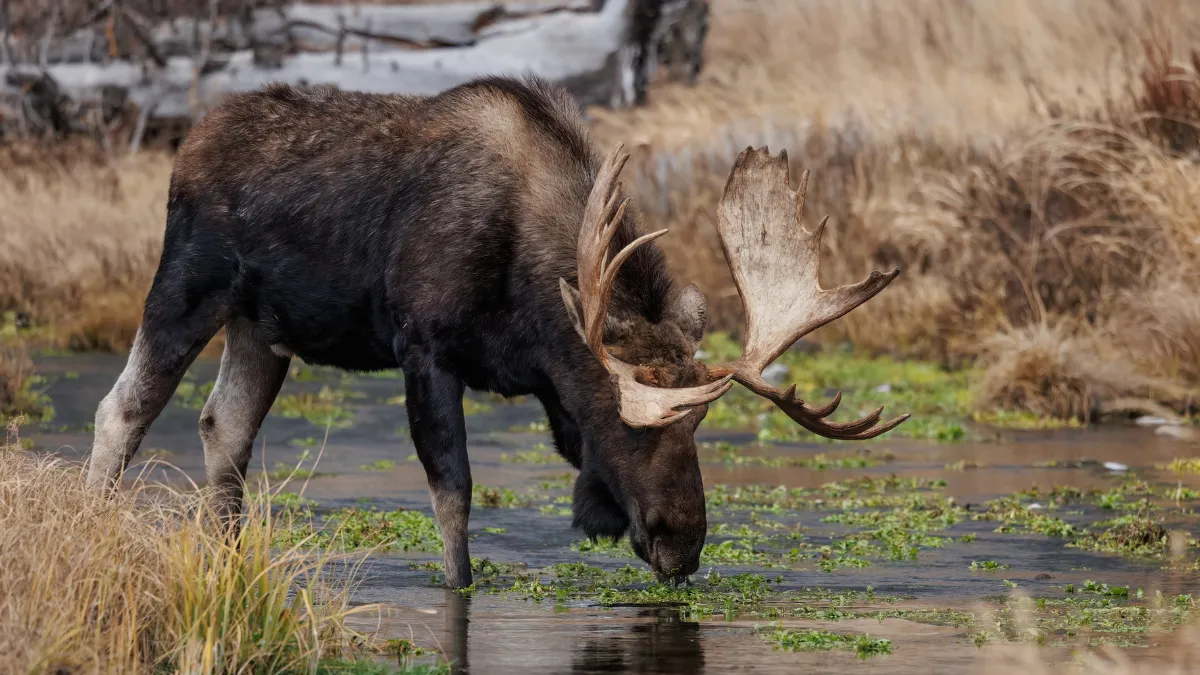
Grand Teton is home to grizzly bears, black bears, moose, elk, bison and other large wildlife. Carrying bear spray is only one part of safe behaviour. Hike in a close group where possible, make human noise in brush or near running water, stay alert and avoid headphones that prevent you from hearing your surroundings.
The National Park Service requires visitors to remain at least 100 yards (91 metres) from bears and wolves and at least 25 yards (23 metres) from other wildlife. If an animal reacts to your presence, you are already too close. Use a telephoto lens rather than approaching for a photograph.
If you encounter a bear, do not run. Group together, speak calmly, make yourself identifiable as human and slowly increase your distance while following current park guidance. Bear behaviour and the correct response can differ between a defensive encounter and a persistent or predatory approach, so review the official Grand Teton bear-safety guidance before hiking.
Moose deserve equal respect. They may charge if surprised, crowded or separated from an escape route. If a moose displays agitation—such as pinned ears, raised hair or repeated licking—back away and place a substantial object such as a tree between you and the animal.
Food, rubbish, toiletries and other scented items must be managed correctly. Never leave food unattended at a picnic area or in an open pack. Overnight hikers must follow the park’s current food-storage regulations for their permitted zone.
Thunderstorms, Altitude and Other Trail Hazards
Afternoon thunderstorms are common in summer. Lightning is particularly dangerous above the tree line, on passes, ridges, summits and exposed lakeshores. Check the hourly forecast, start high-elevation hikes early and turn around if clouds build rapidly or thunder is audible. A summit or lake is never worth being trapped on exposed terrain.

- Temperature
- Precipitation
- Rain Chance
- Wind
- Humidity
- Pressure





Altitude can cause headache, nausea, unusual fatigue, poor sleep and shortness of breath. Build in an easier first day, hydrate normally and ascend gradually. Worsening symptoms, confusion or loss of coordination require descent and medical attention.
Snow is another major source of accidents. A short traverse can end in rocks or a creek if a hiker slips. Do not cross a steep snowfield simply because footprints continue across it. Turn around if you lack the equipment and skills for a safe arrest.
Streams rise during snowmelt and after storms. Unbuckle a backpack waist belt before a necessary crossing, assess downstream hazards and do not enter fast water above your ability. Often the safest decision is to wait, find an established alternative or retreat.
Getting to and Around Grand Teton National Park
Jackson Hole Airport lies inside Grand Teton National Park and is usually around 20 to 30 minutes by car from the town of Jackson, depending on traffic. Driving times to individual trailheads are longer. Salt Lake City International Airport is approximately five hours away by car in good conditions, but weather, roadworks and seasonal traffic can extend the journey.
A rental car remains the most flexible way to reach trailheads. Grand Teton has four road approaches or entrances, and access from Yellowstone, Moran, Moose and the Granite Canyon area is affected differently by winter closures and construction. The park is large enough that driving between northern and southern areas can take considerable time.
The free START town shuttle serves Jackson itself. Public transport within the national park is limited. Some private operators provide seasonal transportation, while the Jenny Lake boat crosses only the lake. Confirm every connection rather than planning a hiking day around an assumed park bus.
Parking at Jenny Lake, String Lake, Lupine Meadows and Taggart Lake can fill early in summer. Use designated spaces only; roadside parking is not automatically permitted when a lot is full. The National Park Service publishes parking information and busy-time estimates, which are useful when choosing between an early start and an alternative trailhead.
2026 construction planning
Grand Teton has significant construction impacts in 2026. Death Canyon Road and its trailhead are closed, the north side of the Taggart Trail is closed for reconstruction, and delays affect other roads. Because project schedules can change, consult the park’s current alerts and conditions shortly before driving to a trailhead.
Entrance Fees, Reservations and Backcountry Permits for the best hikes in Grand Teton national park
Grand Teton does not require a timed-entry reservation for ordinary park access. Standard entrance passes are valid for seven days and, as of 2026, cost $35 for a private vehicle, $30 for a motorcycle and $20 per person aged 16 or older entering without a vehicle. The Grand Teton annual pass is $70. Yellowstone and Grand Teton charge separate entrance fees.
The park operates cashlessly. A significant 2026 consideration for international travellers is that the National Park Service lists an additional $100-per-person fee for non-US residents aged 16 and over unless they enter using a qualifying Annual or America the Beautiful Pass. Rules and pass eligibility can change, so check the official Grand Teton fees page before purchasing.
Day hikes on standard trails generally do not require a separate hiking permit. A backcountry camping permit is required for every overnight stay in the park backcountry and the John D. Rockefeller, Jr. Memorial Parkway. The current summer fee structure is $20 per permit plus $7 per person per night. Advance reservations are handled through Recreation.gov, while walk-in permits may be issued no more than one day before the trip, subject to availability.
Where to Stay for Hiking in Grand Teton
The best base depends on the trails you prioritise. Staying inside the park reduces early-morning driving, but rooms and campsites can book months ahead.
- Jenny Lake and central park: Best for Jenny Lake, Cascade Canyon, Lake Solitude, Lupine Meadows, Taggart Lake and String Lake. Jenny Lake Lodge and campground are exceptionally convenient but highly competitive.
- Moose and Dornans: Useful for the southern and central trailheads, with access to visitor services and the park road network.
- Signal Mountain: A practical central-to-northern base with lodging, camping, dining and Jackson Lake access.
- Colter Bay and Jackson Lake Lodge: Best for Colter Bay, Hermitage Point, northern park scenery and trips toward Yellowstone.
- Jackson: Offers the widest choice of hotels, restaurants and shops, but requires an early drive to popular trailheads.
- Teton Village: Useful for the aerial tram and southern access, although 2026 Moose-Wilson Road restrictions and construction can affect travel times.
- Grand Teton Climber’s Ranch: A rustic American Alpine Club property suited to climbers and self-sufficient outdoor travellers; it is not a conventional full-service resort.
Reserve accommodation as early as practical and check cancellation terms. “Near Grand Teton” can still mean a long drive, especially when roadworks, wildlife jams or seasonal closures intervene.
A Three-Day Grand Teton Hiking Itinerary
Three days provide enough time for an easy introduction, one iconic canyon and one higher objective, while retaining some flexibility for weather.
Day 1: Taggart Lake and park orientation
Begin with the open route to Taggart Lake, adjusting for the 2026 trail closure. Visit the Craig Thomas Discovery and Visitor Center in Moose, confirm trail conditions and use the remainder of the day for scenic viewpoints. This gentler first day helps visitors arriving from low elevation begin acclimatising.
Day 2: Jenny Lake, Inspiration Point and Cascade Canyon
Arrive before peak parking hours and take the boat across Jenny Lake if it is operating. Visit Hidden Falls and Inspiration Point, then continue into Cascade Canyon according to your time and energy. Strong hikers can reach the forks; others can turn around at any scenic point. Carry enough supplies to walk around the lake if boat operations stop because of weather.
Day 3: Choose an alpine or recovery day
Fit, acclimatised hikers can tackle Surprise and Amphitheater Lakes. Those wanting a less strenuous day can combine String Lake, Leigh Lake and Colter Bay. Lake Solitude is possible for highly conditioned hikers, but it requires a very early start and should not be scheduled after two exhausting days without considering recovery.
A four- or five-day stay is better if you want to attempt multiple strenuous hikes. Extra time also creates a weather buffer—one of the most valuable luxuries in the mountains.
Less-Crowded Hikes and Responsible Alternatives
There are no guaranteed “secret” trails in a heavily visited national park, and promoting fragile unmaintained routes as hidden gems can cause erosion and rescues. A better strategy is to distribute your visit across robust, established trails and less-congested times.
Moose Ponds, the longer stretches of Leigh Lake, Colter Bay Lakeshore, Hermitage Point, Signal Mountain and parts of Paintbrush Canyon can feel calmer than the busiest Jenny Lake corridor. Begin early, walk farther than the first viewpoint when appropriate and visit on weekdays outside holiday periods.
Follow Leave No Trace practices: remain on durable surfaces, pack out all waste, do not cut switchbacks, keep noise low around wildlife and never create new social trails. Swimming is permitted in many park lakes, but cold water can incapacitate quickly and sunscreen, food residue and trampling can affect sensitive shorelines. Enter only where access is durable and safe.
Other Outdoor Adventures Beyond Hiking
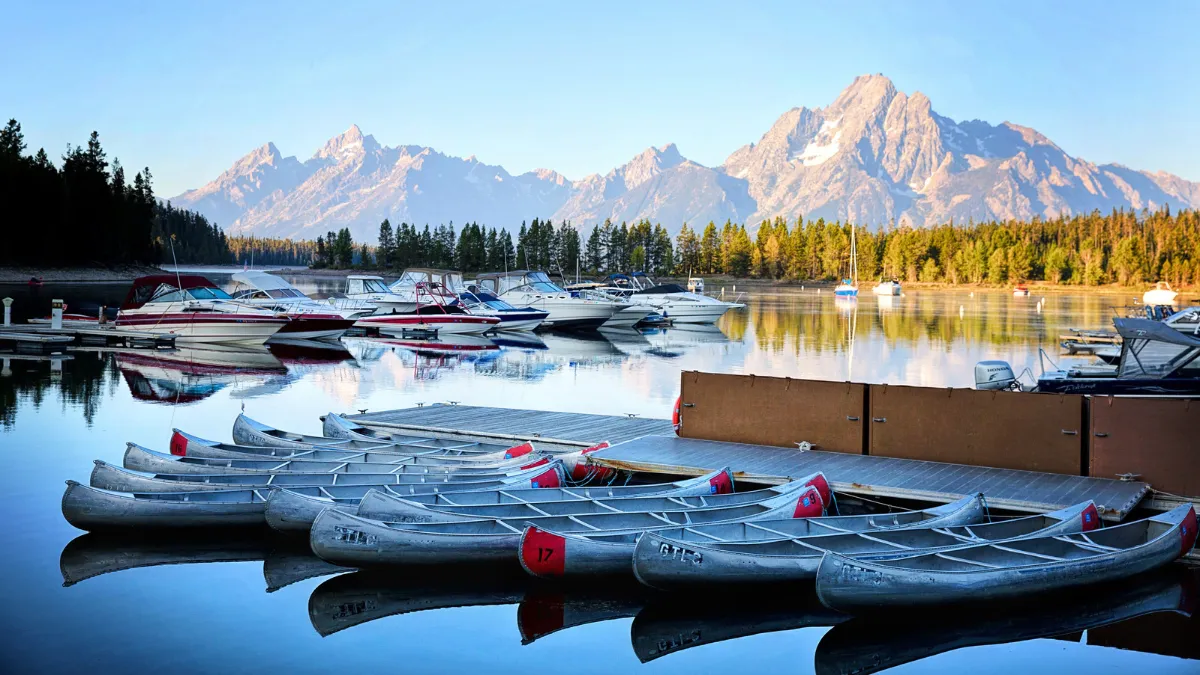
Paddling Jenny, String, Leigh or Jackson Lake reveals the mountains from a different perspective. All watercraft, including canoes, kayaks and stand-up paddleboards, require a Grand Teton boat permit. In 2026, the park lists a $25 permit for non-motorised craft and $75 for motorised craft. Privately owned vessels may also need a Wyoming Aquatic Invasive Species decal, and watercraft must comply with inspection rules. Rentals may include some requirements, but ask the operator rather than assuming.
Scenic rafting and float trips on the Snake River, wildlife-viewing tours, fishing, horseback riding and cycling on the Grand Teton Pathway can all provide an active rest day. Regulations differ by activity. Cyclists should note that pathways and roads do not grant access to ordinary hiking trails, and anglers need the appropriate licence and current fishing regulations.
After dark, open areas around Jackson Lake can provide superb stargazing when skies are clear. Choose a safe, legal parking area, use a red light to protect night vision and remain alert for wildlife on roads and near the shoreline.
Common Grand Teton Hiking Mistakes to Avoid
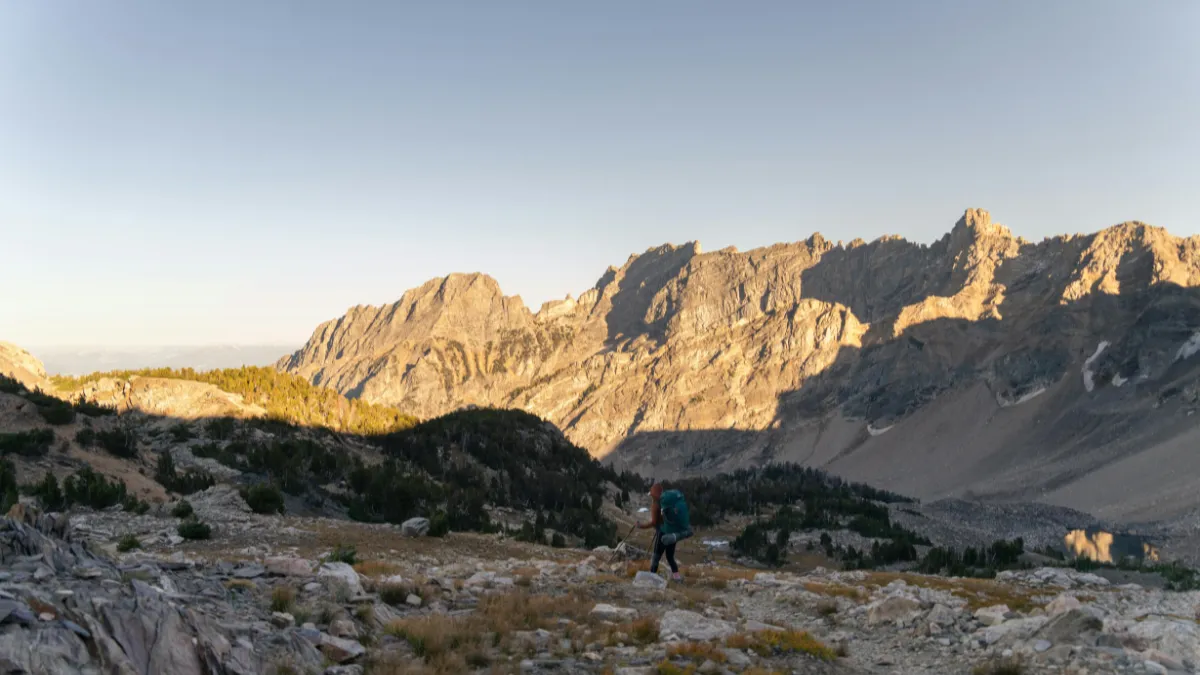
The most common mistake is planning from an attractive photograph rather than the complete route. Delta Lake’s colour, for example, does not show its loose boulder fields. Lake Solitude photographs rarely communicate the length of the return journey.
Other avoidable errors include arriving at a popular trailhead late, carrying bear spray inside a pack, depending on mobile reception, starting a high route beneath a developing thunderstorm, crossing steep snow without the correct skills, and assuming a short route is easy. Visitors also underestimate the effect of altitude during their first 24 hours.
Do not build an itinerary that requires the final Jenny Lake boat. Weather or operational changes can stop service, and queues may delay boarding. Likewise, do not assume every facility opens in May or remains open through October. Trails, roads, lodges, campgrounds and concessions all follow different schedules.
Finally, avoid treating wildlife jams as roadside entertainment. Stop only where it is legal and safe, keep traffic moving when directed and never crowd an animal for a closer image.
Frequently Asked Questions About Hiking in Grand Teton
What are the best hikes in Grand Teton National Park?
The best all-round hikes are Taggart Lake, Jenny Lake to Hidden Falls and Inspiration Point, Cascade Canyon, Surprise and Amphitheater Lakes, and Lake Solitude. String Lake and Colter Bay are excellent easy options. Delta Lake is visually spectacular but follows a strenuous, unmaintained route suitable only for experienced hikers.
What is the best easy hike in Grand Teton?
Taggart Lake is the classic easy-to-moderate choice for close mountain views, although its 2026 partial trail closure changes the usual route. For an easier and more predictable walk, consider the paved Jenny Lake Discovery Trail, Colter Bay Lakeshore Trail or String Lake Loop.
What is the best hike if I have only one day?
For most active first-time visitors, the best single-day experience is the Jenny Lake boat, Hidden Falls, Inspiration Point and a partial or full walk into Cascade Canyon. It combines a lake, waterfall, viewpoint, wildlife habitat and classic canyon scenery, while allowing several turnaround points.
When is the best time to hike in Grand Teton National Park?
Late July through early September usually provides the most reliable access to high-elevation trails. Lower valley routes may be available earlier, but alpine lakes and passes can retain snow into late July. September offers cooler weather and fewer crowds, together with a rising chance of early snow and reduced services.
Do I need a reservation to enter Grand Teton National Park?
No timed-entry reservation is currently required for ordinary park admission. You need an entrance pass, and reservations are strongly recommended or required for lodging, campgrounds and some activities. Overnight backcountry travel requires a permit.
Do I need a permit for a day hike?
Standard day hikes generally do not require a separate hiking permit. Permits are required for overnight backcountry camping and for activities such as boating. Special-use rules may apply to commercial, organised or unusual activities.
How difficult is the hike to Lake Solitude?
Lake Solitude is strenuous because it requires approximately 14 to 15 miles with the Jenny Lake boat or 18 to 19 miles without it, plus more than 2,000 feet of climbing at altitude. Strong day hikers should allow 8 to 12 hours, begin early and verify snow and weather conditions.
Is Delta Lake an official maintained trail?
No. The approach uses maintained trail initially but then follows an unmaintained route over steep, loose terrain. It requires navigation, scrambling judgment and an honest assessment of conditions. Amphitheater Lake is the safer maintained alternative for many visitors.
Can beginners hike to Hidden Falls?
Many beginners can reach Hidden Falls, especially by taking the boat to the west dock. The walk is about one mile round trip from the dock and uses an established trail, although it can be busy and uneven. Inspiration Point adds a steeper climb and some exposed-feeling sections.
How early should I arrive at a Grand Teton trailhead?
In July, August and holiday periods, arriving before 7 or 8 a.m. is sensible for Jenny Lake, Lupine Meadows, String Lake and Taggart Lake. Very long alpine hikes may require an earlier start for weather and daylight, not just parking. Never start before dawn without a headlamp, navigation and bear awareness.
Should I carry bear spray on popular trails?
Yes. Bears can appear on busy trails and in developed areas. Carry bear spray where it can be reached immediately and learn to use it before hiking. Maintain at least 100 yards from bears and wolves and 25 yards from other wildlife.
Can I bring my dog on Grand Teton hiking trails?
No. Pets are generally not allowed on park trails or in the backcountry. Where pets are permitted, they must be physically restrained and remain within the areas specified by park rules. Travellers with dogs should investigate appropriate trails on nearby national forest land and confirm local regulations.
Can I hike and kayak on the same day?
Yes. String Lake and Jenny Lake work particularly well for a combined hiking and paddling day. Rentals may be available seasonally. Anyone bringing a private craft must meet park permit and inspection requirements, and cold water, wind and storms must be treated seriously.
Are guided hiking tours available?
Commercial guiding inside national parks is regulated and authorised activities can change. Several regional businesses offer naturalist, wildlife and hiking-oriented experiences, but confirm that the operator is authorised for the exact activity and location. Ranger-led programmes can also provide valuable interpretation without being a private guided hike.
How many days do I need in Grand Teton National Park?
Three days allow time for an easy lake walk, a major Jenny Lake or Cascade Canyon day and one flexible alpine or northern-park day. Four to five days are better for keen hikers because they provide recovery time and a buffer for storms, smoke, snow or trail closures.
Final Thoughts
The best hikes in Grand Teton National Park are memorable not because they are items on a checklist, but because each reveals a different layer of the landscape. Taggart Lake places the peaks above reflective water. Cascade Canyon carries you between the mountains. Amphitheater Lake and Lake Solitude reveal the scale and severity of the alpine environment. Even a short walk at Colter Bay can change your understanding of Jackson Lake and Mount Moran.
Choose a route that fits the least-experienced member of your group, check official conditions on the morning of the hike and remain willing to change plans. Carry water, food, navigation, warm and waterproof layers, sun protection and accessible bear spray. An early turnaround is good mountain judgment, not a failed day.
Most importantly, travel in a way that protects the place: give wildlife generous space, stay on established durable routes, pack out everything you carry in and resist the pressure to reach a viewpoint when weather or terrain says otherwise. The Tetons will still be there for another attempt.
5 Works Cited
Arnold K. 5 Best Day Hikes in Grand Teton National Park. 2021, www.vankookz.com/usa/2020/12/15/5-best-day-hikes-in-grand-teton-national-park.
leavenotrace. Leave no TRace 7 principals. 2026, lnt.org/why/7-principles/.
nps.gov. Alerts & Current Conditions. 2026, www.nps.gov/grte/planyourvisit/conditions.htm.
—. Wildlife Viewing. 2026, www.nps.gov/grte/planyourvisit/wildview.htm.
US Park Pass. Permits for Grand Teton. 2026, explore.usparkpass.com/parks/grand-teton/.