
Any trip to Aoraki/Mount Cook needs to be planned for spending time outside. You’ll need to plan for valley walks where the mountains fill the horizon, a climb to tiny alpine tarns, an evening watching the last light move across the peaks, and a glacier lake with actual icebergs. Then add a dark sky project where the night is full of stars and the extraordinary blue of Lake Pukaki. In this Aoraki Mount Cook Travel Guide we will cover much more than places to stop for a quick photo stop. What appeals to me most is the sheer choice.
Unusual for New Zealand, you can make this a reasonably affordable holiday. I’ll show you how to explore the Aoraki Mount Cook national park and it’s hikes. Most experienced independently, costing you nothing but park fees. Then I recommend spending what you’ve saved on one extravagance, a flight taking you into the glacier world above the valley floor.
This guide stays close to the mountain. I’ll give you the details on Aoraki/Mount Cook Village, Hooker Valley, the Tasman Valley, the Sealy Range and the Lake Pukaki approach. For the wider Canterbury region, I’ve covered in another destination guide separately, You can find the details in my Christchurch and Canterbury travel guide.
Planning details checked in October 2026. All prices are in New Zealand dollars. Published admission and activity prices are accurate at this date. We update monthly. Prices for accommodation, food and car hire costs are planning allowances rather than quotes for specific dates.

Aoraki/Mount Cook travel guide at a glance.
| Key Questions | Short Answers |
|---|---|
| Where is Aoraki Mount Cook? | At the end of State Highway 80, on the eastern side of the Southern Alps in Canterbury, in the South Island of New Zealand. |
| How long do I need in Aoraki Mount Cook? | You can see and experience it in one day if needed. But I personally think a minimum of two nights gets you the full experience. You’ll need three or more nights if you intend doing several substantial hikes using the parks hut accommodation. |
| What is the best hike in Aoraki Mount Cook national park? | Hooker Valley is the gold standard and gives you the classic mountain and lake experience. If you are there for only one day then Kea Point is a great half day experience. |
| Is it worth visiting Mount Cook Aoraki if we don’t want to hike? | Yes, you’ll still get amazing roadside views plus can experience the visitors center, alpine center, scenic flights, and lake boat trips. If you spend the night you can add stargazing. |
| Do I need to hire a car? | Yes in my opinion. Having a car gives you the most freedom, especially for the Tasman Valley and other remote regional travel. You can get prearranged bus and tour transfers to and from the village, so that can also work but restricts your time. |
| Is the Aoraki Mount Cook national park free? | Yes, there is no general entry fee. However, your accommodation, some activities and some parking areas will be costs. |
| Is the full Hooker Valley Track open? | Yes, as at October 2026: DOC records the new second swing bridge opening in July 2026. |
A mountain with a deeper story
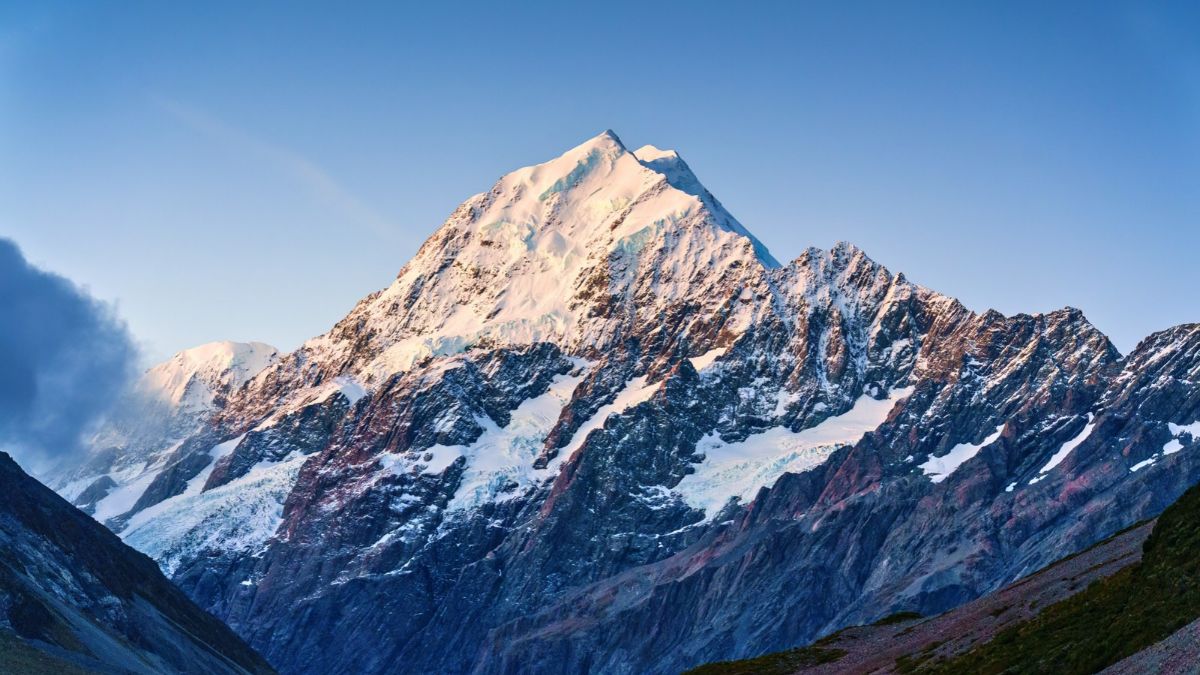
Aoraki/Mount Cook reaches 3,724 metres, making it New Zealand’s highest mountain. But its significance reaches far beyond height. To Ngāi Tahu, Aoraki is an ancestor, central to identity and whakapapa. I think understanding that relationship adds something important to a visit: you’re entering a place with a living cultural story, as well as a remarkable landscape.
For that story, I’d start with Ngāi Tahu’s account of Aoraki and the interpretation in the village visitor centre. The park also belongs to the wider Te Wāhipounamu World Heritage landscape.
What are the top Aoraki Mount Cook experiences?
1. Walk the Hooker Valley to Hooker Lake
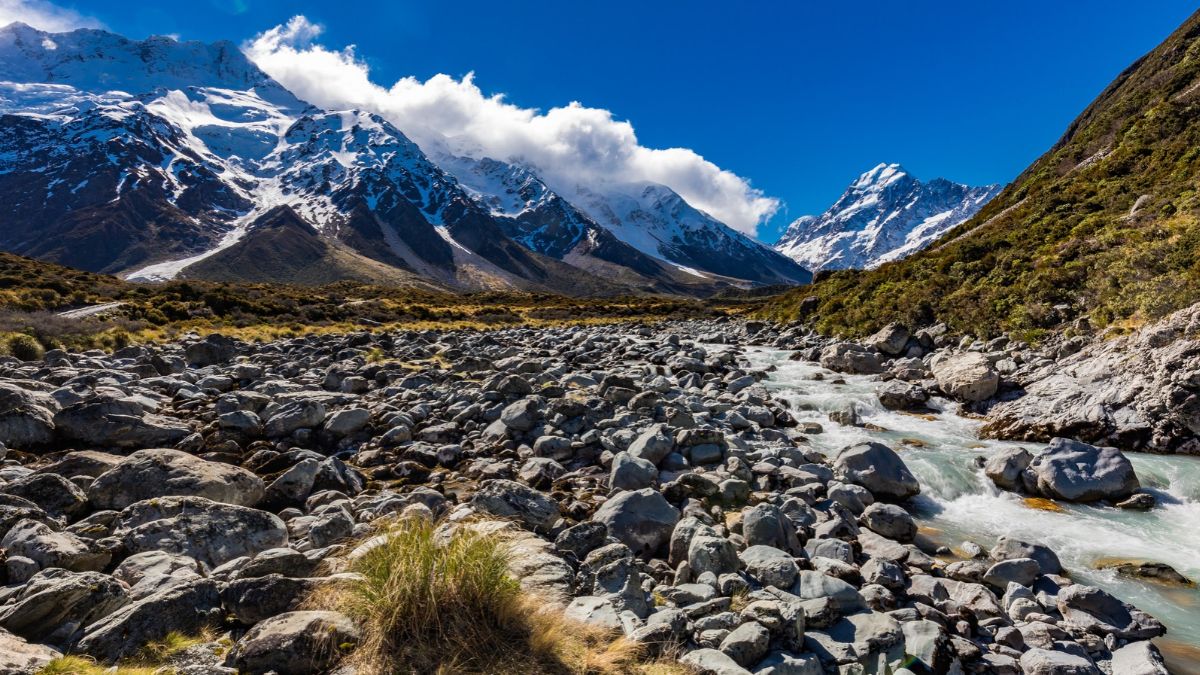
If you want the signature Aoraki/Mount Cook experience, you have to begin here. Hooker Valley brings together the elements people picture before they arrive. The suspension bridges, glacial water, tussock, rock and the mountain at the head of the valley.

The full walk is approximately 10 kilometers return, with DOC’s walking stages adding up to about three hours return from White Horse Hill. I’d give it closer to four hours if you enjoy photography and a leisurely stop at the lake. This is a walk you want to have time for. Yes, you could squeeze it in between a long drive and a dinner reservation, but do you really want to?
The unfolding views are its great strength. You pass Mueller Lake, move between moraine ridges, and reach a wider valley before the final approach to Hooker Lake. Aoraki Mount Cook then becomes the focus of the scene. The mountain is magnificent but remember to make sure to look down and around as well! The changing plant life and alpine foreground makes the journey interesting in its own right.
Latest Hooker Valley News: The new second swing bridge opened in July 2026. Its 189-metre span is an attraction itself. The old closure information repeated in many guides no longer describes the full route at the time of this update.
At the lake, I’d allow time simply to sit. During the summer months you’re likely to see floating icebergs. Due to heat these chunks of glacier break off into the lake. The amount changes and no particular iceberg display is guaranteed. However, the lake and mountain create an extraordinary sense of scale in their own right.

My recommendation is on the day you head for the Hooker Valley Track opt for an early departure for a less hurried experience. If you’re staying in the village, having the morning available means a 5 minute car ride. This makes the day feel more generous. You can enjoy the Hooker Valley Track in the morning, eat lunch afterwards, and still have an afternoon for something different.
Hooker Valley Facts Broken Down
Travel Times by Car to White Horse Hill car park:
- Aoraki/Mount Cook Village (5 min)
- Twizel (50 min)
- Tekapo (1 hr 30 min)
Car Parking
- The track starts near the White Horse Hill car park. DOC parking fees apply, and cost $2.50 per half-hour or $25 per day. Parking is free if you arrive and leave within 20 minutes (enough time for a cuppa, bathroom and photo).
- Payment machines are clearly marked and accept debit and credit cards. Cash payments are not accepted.
- If you are staying for 2 or more days, an annual permit will be more economical. Annual permits cost $10 locals, $60 for visitors and need to be purchased before you arrive. Purchase online at https://vpermit.com.au/doc/
1) Car park to the first swing bridge
20-25 min / 1 km
Starting at White Horse Hill car park, the track passes clearly signposted side tracks leading to Freda’s Rock, named after mountaineer Freda Du Faur, and the Alpine Memorial. Both spots offer great photo opportunities.
Mueller Lookout is located just before the first swing bridge across the Hooker River.
2) First swing bridge to second swing bridge
35-45 min / 1.5 km
Cross the swing bridge and continue along the track through rocky glacial deposits known as moraine until you reach the Kakīroa/Mount Sefton View Lookout.
From the lookout, you can see Mueller Lake, Mueller Glacier and Kakīroa/Mount Sefton.
A second swing bridge across the Hooker River opened in July 2026. Measuring 189 metres, it is New Zealand’s longest suspension bridge.
3) Second swing bridge to Hooker Lake
60 – 90 min / 2.5 km
Beyond the second swing bridge, the valley opens out and tussocks become the main vegetation. Toilets are located 15 minutes beyond the bridge.
Cross the third and final swing bridge to reach the end of the track at Hooker Lake. Here, you’ll have spectacular views of Aoraki/Mount Cook and the Southern Alps/Kā Tiritiri o te Moana. During summer, icebergs can often be seen floating on the lake.


2. Kea Point for a shorter mountain immersion
Kea Point is the walk I’d suggest when you want a strong mountain experience without committing to Hooker Valley’s distance. It also deserves a place alongside Hooker Valley, because the perspective is different.
The walk starts at Aoraki Mount Cook village. For a longer walk, start from Terrace Road near the Aoraki Mount Cook Visitor Centre; for a shorter walk, start from White Horse Hill Campground at the end of Hooker Valley Road. The path leads through subalpine vegetation to a viewing deck overlooking Mueller Lake, with Mount Sefton, The Footstool and Aoraki among the surrounding features.


I like this choice for an afternoon arrival. It gives you a proper introduction to the landscape without using up the whole day, and the viewpoint has enough going on to hold your attention: the moraine wall, the pale water below, and the ice and rock rising behind it.
If you’re deciding between Kea Point and adding another rushed stop elsewhere, I’d choose Kea Point. A short walk that you have time to enjoy is better than a rushed one. This is a great option if you only have a day in Aoraki Mount Cook.


3. Explore the Tasman Glacier viewpoint and lake
The Tasman Valley feels different from Hooker Valley. It’s broader and more visibly shaped by the Haupapa/Tasman Glacier. Especially with the huge lake occupying the landscape below it.
There are two outings leaving from the Blue Lakes car park. The Blue Lakes and Tasman Glacier View Track takes about 40 minutes return and climbs about 100 meters to the viewpoint. The Tasman Lake Track takes around an hour and provides a low level view towards the terminal lake.
To do both I’d allow two and a half hours for a relaxed visit combining viewpoints and photos. You can access the DOC walking track information guide here.

An important point is what the end of the glacier looks like from this hike. You’re seeing the lower glacier which is pushing it way through the surrounding so is covered in rock debris. This is the working end of a glacier landscape and not the pristine wall of blue ice. For that you’ll need to catch a flight, which we cover soon. Understanding that now when you’re planning will set expectations. I think it makes the scene much more interesting.
I enjoyed these walks as you get the high viewpoint of the lake and the wider valley shape. Then taking the lake walk you get first hand sense of its scale. If you are looking for the iceberg photos the lower Tasman lake track is where you’ll be rewarded.
The Blue Lakes, which are in reality green, are a side trip and optional add on. Don’t expect turquoise blue water on the basis of it’s name. I’d treat it as another small part of the valley’s evolving landscape.


So why are the Blue Lakes green?
In the mid-1800s when the Blue Lakes were named, they were fed by the turquoise glacial meltwater filtering through the moraine. The icy blue water was a popular swimming spot in summer and skating rink in winter.
Today, the Tasman Glacier has shrunk in length and height, and water no longer flows from the glacier into the Blue Lakes. The warmer rainwater that now feeds the lakes supports green algae, making the Blue Lakes green.

Aoraki Mt. Cook National Park Small-Group Tour from Queenstown
Get ready for an adventure or a relaxing day in the mountains! Explore Mt Cook on a fully guided, small-group tour from Queenstown, with…

The Adventurer: Tasman Glacier Heli-hike
Combining two scenic flights this is a low fitness Tasman Glacier exploration for up to 2 hours ice time at approximately 1300 metres. Following your knowledgeable,…

Glentanner High Country Heli Hike
Soar over the Southern Alps, take in breathtaking views during an 8 minute scenic helicopter flight and walk a trail of High Country history…
4. Climb Sealy Tarns for the view down into the valleys
Sealy Tarns is where I’d put my effort if I wanted one substantial climb with a big visual reward. Sealy Tarns is known for a famous staircase with roughly 2,200 steps, climbing 600 meters, and taking three to four hours return.
The appeal is how the landscape changes. From below, the mountains loom above you. Higher up, the valley floor starts to spread out. From the viewpoint you really appreciate the arrangement of lakes, ridges and mountain faces. The tarns themselves are small mountain ponds. In still conditions, the reflections give an almost mirror composition of the surrounding peaks. Alpine flowers add detail in summer.
I’d make this the main event of it’s own day. You’ll get a proper stop at the tarns and then a gentle wander about Aoraki Mount Cook village afterwards. Leaving yourself time to enjoy the achievement of reaching the summit is part of the pleasure. Keen photographers will love the tarn mountain reflections, the staircase, tussock, and valley curves.


5. Make Mueller Hut an adventure of its own
Mueller Hut is the bright red building you may have seen in many Aoraki Mount Cook photographs. A small red hut perched on the edge of a valley of rock, glaciers and high peaks. It’s an awesome destination. My recommendation is to make a place in your itinerary to overnight, rather than treating it as an added walk from Sealy Tarns. Don’t treat these as two separate visits. You want to visit Mueller Hut at the same time you visit Sealy Tarns as it’s the same track, but just going a little further along.
It’s about four and a half hours up and three hours down, well it was for me. Individual times will depend on your level of fitness. I reckon a lot will do the uphill faster than me. An overnight stay is the best way to tackle this track if you have the time. It gives you and evening and the following morning to explore the mountains as well as settling into the hut experience. A day return is a doable, but substantial, outing.
The Mueller Hut route continues above Sealy Tarns to a ridge and then towards the hut. What you experience are wide panoramic views of the glaciers and ice cliffs. The current hut opened in 2003, with Sir Edmund Hillary in attendance.


The attraction of Mueller’s Hut to me is the overnight rhythm. Arriving, making a hot drink, chatting with other hikers, and allowing the evening to develop. The simplicity is part of the appeal. The hut has communal bunks, so this is a shared mountain stay rather than a private retreat. Choose it for the location and experience, and keep the following day relatively unstructured.
Mueller Hut Facts Broken Down
From Sealy Tarns:
- follow the orange markers through the tussock, they are placed about 200 meters apart.
- Take extra care in poor visibility, making sure you can always see the next marker.
- This is an unmaintained alpine route not a formed track, with rocky sections along the way.
- The route winds through alpine scrub, herb fields, and tussock before reaching a broad rock field which then climbs a loose gravel slope to the ridge.
- At some times of year the scree slope is covered by snow. Only proceed if you have suitable avalanche knowledge and equipment.
- At the ridge take in the views of Mueller Glacier, smaller hanging glaciers, and the impressive ice shelf on Mount Sefton.
- The route then heads south towards the hut. Continue following the orange markers across the basin until Mueller Hut comes into view, about 20 minutes along the ridge.
Experience and Times of the Year
- Summer (December–February): The route to Mueller Hut offers a mountain experience for those with moderate tramping experience – as long as care is taken.
- Winter (June–August): The route requires good level of mountaineering experience, including walking on ice and snow with ice axe and crampons, route finding and using an avalanche transceiver, probe and shovel.
- Spring (September–November) / Autumn (March–May): Follow winter conditions, as they can be present during spring and autumn. Check with the Aoraki/Mount Cook Visitor Centre for the current conditions.
Car parking and Hut Pricing
- Car Parking is the same cost as Hooker Track. Accommodation rates for adults range from NZ$50 to NZ$62, depending on season and day.
- Register intentions at the Aoraki/Mount Cook National Park Visitor Centre on the day you start. This is a formal process that operates in the national park for your safety. Failure to sign in or sign out may result in a formal search being initiated.


6. Find a different angle at Red Tarns
Red Tarns is another suggestion if you have the time and are looking for an uphill walk from Aoraki Mount Cook village. You’ll get an entirely different view. Allow about two hours return. The tarns take their name from the red pondweed growing in them. The viewpoint looks across the village and surrounding valleys towards Aoraki.
I haven’t done this track but definitely want to the next time I visit the area. Friends recommend it as a great option for anyone wanting another half day walk without having to scramble up more difficult terrain. It’s also a great choice for anyone staying in the village as the track starts straight outside the accommodation.
Don’t want to tarns experiences? Choose Red Tarns for a shorter climb with no parking fees (if you’re staying in the village). Choose Sealy Tarns for the longer staircase and the more expansive valley views.

7. Slow down in Governors Bush and Bowen Bush
The forest walks add a nice change of scale. After the broad valleys and mountain faces, you now get to look closely at leaves, tree trunks and birds moving through the canopy. Governors Bush is around an hour’s loop. It starts near the public shelter on Bowen Drive and climbs to a viewpoint.

It can be joined with Bowen Bush, a much shorter forest loop. These walks are beautiful. Perfect if you have an hour or two with nothing planned. That’s not implying they shouldn’t be part of your itinerary, as they most definitely should. For those who don’t enjoy the more difficult and lengthy options, they offer a quiet forest experience. Follow them with by a coffee and a long lunch.

8. Cruise among the icebergs on Tasman Lake
Of the paid activities, Glacier Explorers is one to place on your shortlist. Being on the boat gives you an entirely different viewpoint from the walking tracks. It places you within the glacial lake landscape rather than above it.
Exploring Tasman Glacier Lake by boat allows you to take in the scale of New Zealand’s largest glacier, offering a rare glimpse into alpine glacier environments. The Tasman Glacier runs approximately 23 km in length and is 600 meters at it deepest point. As the glacier melts and calves, chunks of ice break away and drift into the lake, forming a landscape that is always changing. These icebergs can vary from small pieces to enormous blocks of ice, compressed over hundreds of years.
Glacier Explorers provides one of the most accessible ways to experience the glacier and it’s lake. Each cruise lasts around 2 hours 45 minutes. Adult prices start at NZ$219. Children (ages 4-14) from $99. The walking component is 1.5 kilometers each way, so it isn’t a boat you step onto directly outside the hotel.
The glacier cruise complements the Hooker Valley particularly well. One experience on foot, another on the water, with neither repeating the other. If you are looking to narrow pricey options down to one splurge, this is a strong contender.
9. Take a scenic flight into the glacier landscape
The ground-level walks show you the mountain fronts and valleys. A flight reveals the terrain behind them. You gain an amazing view of the full length of the glacier systems, snowfields and the incredible background of the Southern Alps.
There are a few options to choose from so compare the flights by route, total duration and any glacier landing time. You’ll find options that are short scenic circuits without stops on the ice. There are also longer trip options that include with a glacier landing. Both are memorable, but they deliver different experiences.
For current price references, Mount Cook Ski Planes & Helicopters’ Glacier Highlights is listed at NZ$699 per adult for 45 minutes, including a 10–15-minute glacier landing. The operator offers a ski-plane or helicopter version.
The ski-plane option particularly appeals to me because it brings the character of alpine aviation into the experience. A helicopter has its own excitement, especially as the landscape rises around you. Both are amazing experiences.
A flight is a significant addition to your budget. And while you can build an entire visit around the free walks, if flying over glaciers has been on your wish list for years, this is a compelling place to make it happen.

10. Spend time on the ice with a Tasman Glacier heli-hike
For a more immersive glacier experience, a heli-hike gives you time exploring on foot after the flight. That’s the key distinction from a scenic landing: the guided walk on the glacier is the main event.
Mt Cook Glacier Guiding offers an experience called The Adventurer. This lasts three hours, of which two of those hours are spent on the glacier ice plus the helicopter flight there and back. The current published price is NZ$995 per person with a minimum age of nine. Specialist glacier equipment is included.
I loved this experience. The helicopter trip is exhilarating, but the walk on the ice provides the close detail you can’t appreciate from the air or a mountain viewpoint. While on the ice you see the shapes layered inside the ice and it’s changing light and textures. The feeling of walking within the glacier environment is one you won’t soon forget. The guide chooses the day’s route, and bases the experience on conditions of the glacier itself. This makes it a truly personalized once in a lifetime experience.
If walking on the glacier ice interests you more than simply seeing it from the mountains or above from the air, this is a great option. It’s not a cheap one. For a couple, it’s a NZ$1,990.
11. Give the night sky an evening of its own
Aoraki/Mount Cook sits within the Aoraki Mackenzie International Dark Sky Reserve, the world’s largest Gold Tier Dark Sky Reserve. Stargazing is an activity that you can enjoy independently. Many of the hotels and motels provide outdoor places to sit and watch the skies. However, to make the most of it, I recommend taking a drive well away from all light sources. It is simply stunning. I spent about 3 hours on my back speechless, freezing cold, but filled with awe and wonder.
If you’d like telescope viewing and someone to explain what you’re looking at, Big Sky Stargazing operates from the Hermitage. It lists 75–90 minutes, adult prices from NZ$165, and a minimum outdoor-tour age of eight.
The paid option is great if you enjoy learning the names of stars and constellations, as well as the stories about what you see. An independent evening makes sense if you mainly want the atmosphere and a little time under the stars. Both are valid ways to enjoy this part of the park.

12. Discover the stories behind the scenery at the visitors center.
Give the Aoraki Mount Cook DOC visitor center a proper visit. Its artwork and interpretation help explain the mountain landscape, wildlife and human connections to the area. That context makes the hikes and experiences much more rewarding.
The Sir Edmund Hillary Alpine Centre, inside the Hermitage, is a separate attraction. It covers climbing, transport, Hillary’s connection with the area and the hotel’s history, with movie-theatre admission included in the ticket. Adult entry is listed from NZ$30. The Alpine Centre is a great choice if New Zealand’s mountaineering history interests you.
Seeing the equipment and stories adds another dimension to the peaks outside: they become personal, places that people have trained, explored and built their lives around. Both centers give your visit background and variety.

13. Make the Lake Pukaki approach part of the experience
Don’t race along State Highway 80 simply to reach the village. The Lake Pukaki area is part of the attraction. The lakes extraordinary milky turquoise water and long views towards the mountains are stunning and not to be missed! The color of the water comes from fine glacial sediment suspended in the water. Its appearance changes with the light, so the drive out can look surprisingly different from the drive in. Plan time to make the lake a proper stop on your itinerary rather just a photo opportunity.
The roadside viewpoint is commonly called Peter’s Lookout. It is a great place to frame the lake and mountain together. Farther towards the village, the braided river flats and widening mountain views change the composition again. For photography, you can get an amazing sequence. The lake and distant summit, the broad valley, then the close mountain faces nearing the village.

With so much choice, which experiences should you choose?
You don’t need to turn Aoraki Mount Cook into an endurance challenge or an expensive activity marathon. Start with the experience you most want to do, then build the rest of the visit around it. If you love walking but prefer gentler outings, I’d combine Hooker Valley with Kea Point and the Tasman viewpoint across two days. You get three different perspectives without needing a high-level route. Between them, I’d spend time in the village and leave an evening completely free for the sky.
If you enjoy a substantial climb, I’d give Sealy Tarns a morning of its own. Hooker Valley on the other day offers a very satisfying contrast. One looks up towards the peaks, the other looks down over the valleys. That pairing is a great visit for those wanting to focus on day hiking.
If you’re travelling with mixed interests basing yourself in the village gives you the option to split activities on the day. Some people can head for a longer walk while others visit the Alpine Centre or take a shorter walk. Reunite for dinner and the stars rather than negotiating competing expectations.
If glaciers are the main attraction, I’d choose between Glacier Explorers and a heli-hike based on what fascinates you. The boat is about the lake, floating ice and that water based perspective on the glacier environment. The heli-hike is about spending time on the glacier itself with the scenic flight giving a sense of scale of the mountains from above.
If you mainly want to photograph the landscape, reduce the number of activities and revisit a couple of favored places. Returning to Lake Pukaki or a Hooker Valley viewpoint in different light may be more rewarding for a photographer. Once you know the composition, you have more freedom to capture what changes.

What should you do with two nights in Aoraki Mount Cook?
My recommendation for a two night visit works on the basis of 2 full days and a morning on the day of departure.
| Time | My suggested plan |
|---|---|
| Day 1 morning | Lake Pukaki |
| Day 1 afternoon | Village accommodation check-in, Kea Point track, Governors and Bowen Bush |
| Day 1 Evening | Dinner and an unhurried look at the changing light; stargazing later if the sky suits. |
| Day 2 morning | Hooker Valley track, with time at the lake. |
| Day 2 afternoon | Tasman Glacier viewpoints, or Glacier Explorers as your main paid experience. |
| Day 2 evening | Dinner and stargazing |
| Day 3 morning | Visitors center, Sir Edmund Hillary center and scenic flight. |
If you only have a day choose Hooker Valley and the Tasman Glacier viewpoint (as the walk, the lake cruise or the flight).
Where Should you stay in Aoraki Mount Cook?
In Aoraki/Mount Cook Village
The village is my first choice for making the most of the setting. You get the evening and morning here, and you can begin several outings on foot.
- The Hermitage: the full-service choice for mountain-facing rooms, dining and convenient activity departures. Check the room category: the view is a major part of the appeal, and rooms differ.
- Haka House Aoraki/Mt Cook: dorms and private rooms, with a communal kitchen and shared spaces. This would be high on my list for a solo trip or a visit focused on walking. Haka House facilities.
- Mt Cook Lodge and Mt Cook Motels: additional village options within the Hermitage accommodation collection. Compare the specific room’s facilities rather than assuming all units have the same cooking setup. Hermitage accommodation.
White Horse Hill Campsite
- For camping, White Horse Hill puts you close to the walking-track starts. The published adult fee is NZ$20 a night.
- Book online: DOC keeps no spaces aside for unbooked arrivals. There are basic toilets and a cooking shelter, but no powered sites or on-site showers. Source: White Horse Hill Campsite.
Glentanner or Twizel
- Glentanner Park Centre, on the approach beside Lake Pukaki, offers units, backpacker accommodation and camping options. Glentanner accommodation.
- Twizel is practical with access to supermarkets and a wider choice of accommodation. Allow around an hour each way to the park’s main trailhead area.
What a visit to Aoraki Mount Cook actually costs in 2026
The walks are inexpensive; accommodation and optional glacier activities are the most expensive. Keep activities fees aside from your day to day flexible allowance and you’ll be able to track where your money goes. Use our digital travel planning tools and they will track the costs for you!
Published fees and activity prices
| Item | Price checked in October 2026 |
|---|---|
| Aoraki Mount Cook national park | No cost |
| White Horse Hill parking | NZ$2.50 per half-hour; NZ$25 daily maximum Overnight parking across two calendar days will cost NZ$50 Annual permits cost $10 for locals and $60 for visitors |
| White Horse Hill campsite | NZ$20 per adult per night |
| Mueller Hut | NZ$50–62 per adult per night, depending on season and day |
| Sir Edmund Hillary Alpine Centre | Adults from NZ$30 |
| Big Sky Stargazing | Adults from NZ$165 |
| Glacier Explorers | Adults from NZ$219 |
| Glacier Highlights flight | Adults NZ$699 |
| The Adventurer heli-hike | NZ$995 per person |
Flexible Aoraki Mount Cook planning allowances 2026
These are the amounts I’d put aside for planning, not verified room offers or menu quotations. Summer weekends and holiday dates can exceed them.
| Expense | Planning allowances |
|---|---|
| Village hostel dorm | NZ$60–110 per person per night |
| Lodge or motel room | NZ$220–400 per room per night |
| Hermitage room | NZ$350–650+ per room per night |
| Self-catered food | NZ$25–40 per person per day |
| Café breakfast or lunch | NZ$20–35 per person |
| Casual dinner | NZ$35–60 per person, before drinks |
| Small rental car | NZ$70–150 per vehicle per day before fuel and optional cover |
There is no full supermarket in the village. If looking to save on spending, do your shopping in Twizel and book accommodation with a kitchen. You do have dining choices, such as the Hermitage’s Alpine Restaurant and the Chamois Bar & Grill at Mt Cook Lodge. Opening days and menus vary seasonally and prices are higher than other areas.

My suggested Aoraki Mount Cook daily budgets 2026
These illustrative per-person budgets assume two adults share a rental car and, where relevant, a room. They exclude international flights, insurance, visa-related costs, campervan rental and paid experiences.
| Style | What I’d allow per person per day | Assumptions |
|---|---|---|
| Camping with your own gear | NZ$105–150 | NZ$20 campsite, self-catering, shared car and local fuel, modest incidentals/parking |
| Hostel | NZ$145–235 | Dorm bed, mostly self-catering, shared car and local transport costs |
| Comfortable private room | NZ$220–370 | Half a room, mixed dining, shared car and local transport costs |
Example Day costs – Solo traveler: NZ$85 dorm + NZ$35 food + NZ$50 share of a car + NZ$35 local fuel + NZ$12.50 share of day parking = NZ$217.50 per person. Add Glacier Explorers and that day becomes NZ$416.50.
Example Day costs – Independent traveler couple: For two people sharing a NZ$320 room, with NZ$70 food, a NZ$100 car, NZ$35 local fuel and NZ$25 parking, the total is NZ$550 for two, or NZ$275.00 each.
Petrol is expensive in New Zealand so make sure to compare flights or coach prices before booking your vehicle. Driving to and from Aoraki Mount Cook from other areas will cost approximately:
| Route (one way) | Approximate cost (average October 2026 national pump price) |
|---|---|
| Nelson to Mount Cook Village | Between NZ$200 and NZ$295, depending on your vehicle’s fuel efficiency. This is based on a direct driving distance of ~734 km via State Highway 7 and current average New Zealand regular fuel pump prices, which sit between NZ$3.52 and NZ$3.89 per litre. |
| Picton to Aoraki Mount Cook Village | Between NZ$174 and NZ$299, depending on your vehicle’s fuel efficiency. This calculation is based on ~670 km driving route via State Highway 1 and State Highway 8, and current average New Zealand regular fuel pump prices which sit between $3.52 to $3.89) |
| Wānaka | At ~206 km, based on a consumption of 18.5 liters you can expect to spend approximately $68 NZD |
| Queenstown | At ~263 km, based on a fuel consumption of 23.7 liters you can expect to spend approximately $87 NZD |
| Dunedin | At ~309 km, based on a fuel consumption of 27.8 liters you can expect to spend approximately $101.50 |
| Christchurch | At ~328 km, based on a fuel consumption of 29.5 liters you can expect to spend approximately $108 NZD |
| Hokitika, West Coast | At ~474 km, based on a fuel consumption of 42.7 liters you can expect to spend approximately $156 NZD |
| Milford Sound | At ~538 km, based on a fuel consumption of 48.4 liters you can expect to spend approximately $177 NZD |
If you’re travelling solo, the biggest change is carrying the full car cost and possibly a private room alone. I’d use our travel budget calculator to compare that with a dorm and a prebooked transfer.

Aoraki Mount Cook Travel Guide Cost Saving
- Buy groceries before arriving. Breakfast, packed lunches and one cooked dinner can make a noticeable difference.
- Choose a main splurge. The glacial lake boat trip, scenic glacier flight and glacier heli-hike are great experiences, but do you need to do all three?
- Compare total base costs. A Twizel room may be much cheaper than a Mount Cook room but it comes with an extra hours driving each way plus petrol cost. When comparing costs also consider useable time.
- Book accommodation with a kitchen. Self catering is a practical way to keep longer stays affordable.
- Group your activities from the same starting area. Activities start at the village or White Horse Hill. Planning them together avoids double paying parking fees and lowers petrol costs.
- Give the free experiences priority. The mountains, forest walks and changing light provide great coverage of the Aoraki Mount Cook experiences.
Getting to Aoraki Mount Cook and moving between the valleys

With a car:
- State Highway 80 is the road into the village, branching from SH8 near Lake Pukaki. It’s an out-and-back approach, so it fits naturally into a South Island road trip with a return to the main highway afterwards.
- For itinerary planning, I’d allow roughly 4–4½ hours from Christchurch, 3½–4 hours from Queenstown, around three hours from Wānaka, and about an hour from Twizel, before longer sightseeing stops.
- If you’re linking the mountain with a southern base, my Queenstown travel guide and independent Wānaka guide cover those stays separately.
- Within the park, a car makes the Tasman Valley straightforward. It has a separate access road and car park from White Horse Hill. Aoraki Mount Cook village itself is compact, and several walks start there.
Bus or Coach
- InterCity & GreatSights provide regular long-distance coach services that operate daily to Aoraki/Mount Cook Village. They stop at key locations like the Hermitage Hotel and Haka House Mt Cook.
- FlexiPass Options: You can use a multi-leg bus pass (like an InterCity FlexiPass) to stay a night or two in the village before catching an onward coach to Queenstown or Christchurch.
Aoraki Mount Cook Travel Guide Day Tours
- Guided Day Trips: Operators such as GreatSights run structured day tours from Christchurch, Queenstown, and Lake Tekapo.
- What to expect: These typically include scenic photo stops at Lake Pukaki and Peter’s Lookout, though they follow a strict schedule rather than allowing flexible independent hiking time

When to visit Aoraki Mount Cook
If this is your first visit I recommend focusing on the most important aspect, and that’s the hiking and views. That makes late February or March my pick. You get the lovely end of summer temperature and good daylight, but you’re not going to pay summer school holiday pricing! Whatever month you choose, make sure you have at least two nights.
| Season | Why I’d consider it |
|---|---|
| December–February | Long daylight, alpine flowers and plenty of time for outings; the busiest accommodation period. |
| March–April | Cooler days and a slightly slower pace outside holiday peaks. |
| May–August | Snowy mountain scenery, quieter evenings and a visit focused more on the village, views and selected outings. |
| September–November | Spring contrast between snow-covered peaks and the valleys, with increasing daylight. |
Safety: Aoraki Mount Cook practical advice in one place
Aoraki/Mount Cook is an alpine environment. The useful preparation is specific to the route and conditions; a short valley walk and a high mountain outing require different decisions.
- Conditions and closures: check DOC’s park information and the individual hikes page, plus the mountain forecast, before setting out. The visitor center can advise on current conditions.
- Day-walk equipment: carry a waterproof jacket, insulating layer, food, water, sun protection and a headlamp. Choose footwear for the surface and season. My travel packing list generator can help organise your list, alongside DOC’s route-specific advice.
- Higher routes: snow and ice can affect Sealy Tarns and Mueller Hut outside winter too. Mueller Hut may require mountaineering, navigation and avalanche skills, with specialist equipment.
- Communication: share your route and return time with someone. Phone reception is patchy; a personal locator beacon is a good idea when traveling to remote or higher altitudes.
- Lakes, rivers and ice: I wouldn’t recommend swimming in the glacial terminal lakes, climbing icebergs or walking on frozen lakes. Keep to the marked routes even if a shortcut across riverbeds or moraine slopes look tempting.
- Driving: check NZTA Journey Planner for SH80 conditions. Snow can close the road; chain requirements depend on conditions and your rental agreement.
Aoraki Mount Cook Travel Guide FAQs
Is Aoraki Mount Cook worth visiting if I don’t want a long hike?
Yes. I’d combine Lake Pukaki viewpoints, the village visitor center, the Tasman Glacier viewpoint and time enjoying the mountain setting. The Alpine Centre, scenic flights and stargazing add further options.
Can I see the Tasman Glacier without a tour?
Yes. The public viewpoint walk gives you a view of the glacier’s lower landscape and terminal lake. A boat trip or guided glacier outing offers a different, paid experience; neither is required to visit the viewpoint.
Should I stay one night or two?
I’d choose two. One night works for a shorter visit, but two gives you a full day between travel days and a much more relaxed choice of walks. Add time if Mueller Hut or several substantial hikes are priorities.
Do the walks all start in the same place?
No. Hooker Valley and the shorter start for Kea Point are at White Horse Hill. The Tasman walks begin at Blue Lakes car park in the Tasman Valley. Governors Bush and Red Tarns begin near the public shelter in the village.
Can I visit independently but book a guided activity?
Absolutely. You can arrange your own transport and accommodation, walk independently and book a boat trip or glacier guide for one part of your stay. That flexibility is one of the pleasures of travelling here on your own terms.
Is parking included in national park entry?
There is no general park-entry ticket at the time of checking, but White Horse Hill parking is charged separately. Campsite and hut fees are separate again, with specific parking arrangements for campsite guests.
21 Works Cited
“Aoraki.” Te Rūnanga o Ngāi Tahu, 2024, ngaitahu.iwi.nz/ngai-tahu/creation-stories/the-settlement/settlement-offer/aoraki/.
DOC. “A step-by-step guide to the Mueller Hut Route |.” Conservation blog, 22 Mar. 2015, blog.doc.govt.nz/2015/03/23/mueller-hut-route/.
—. Aoraki/Mount Cook National Park. 2026, www.doc.govt.nz/parks-and-recreation/places-to-go/canterbury/places/aoraki-mount-cook-national-park/.
—. Aoraki/Mount Cook National Park Visitor Centre. 2026, www.doc.govt.nz/footer-links/contact-us/visitor-centres/aoraki-mount-cook-national-park-visitor-centre/.
—. Bowen Bush Walk. 2026, www.doc.govt.nz/parks-and-recreation/places-to-go/canterbury/places/aoraki-mount-cook-national-park/things-to-do/tracks/bowen-bush-walk/.
—. Governors Bush Walk. 2026, www.doc.govt.nz/parks-and-recreation/places-to-go/canterbury/places/aoraki-mount-cook-national-park/things-to-do/tracks/governors-bush-walk/.
—. Hooker Valley Track. 2026, www.doc.govt.nz/parks-and-recreation/places-to-go/canterbury/places/aoraki-mount-cook-national-park/things-to-do/tracks/hooker-valley-track/.
—. Kea Point Track. 2026, www.doc.govt.nz/parks-and-recreation/places-to-go/canterbury/places/aoraki-mount-cook-national-park/things-to-do/tracks/kea-point-track/.
—. Lake Pukaki area. 2026, www.doc.govt.nz/parks-and-recreation/places-to-go/canterbury/places/lake-pukaki-area/.
—. Mueller Hut Route. 2026, www.doc.govt.nz/parks-and-recreation/places-to-go/canterbury/places/aoraki-mount-cook-national-park/things-to-do/tracks/mueller-hut-route/.
—. Red Tarns Track. 2026, www.doc.govt.nz/parks-and-recreation/places-to-go/canterbury/places/aoraki-mount-cook-national-park/things-to-do/tracks/red-tarns-track/.
—. Sealy Tarns Track. 2026, www.doc.govt.nz/parks-and-recreation/places-to-go/canterbury/places/aoraki-mount-cook-national-park/things-to-do/tracks/sealy-tarns-track/.
—. Tasman Glacier View Track. 2026, www.doc.govt.nz/parks-and-recreation/places-to-go/canterbury/places/aoraki-mount-cook-national-park/things-to-do/tracks/tasman-glacier-view-track/.
—. Tasman Lake and River Track. 2026, www.doc.govt.nz/parks-and-recreation/places-to-go/canterbury/places/aoraki-mount-cook-national-park/things-to-do/tracks/tasman-lake-and-river-track/.
Hermitage. Glacier Explorers. Cruise Among Icebergs on the Tasman Glacier. 2026, www.hermitage.co.nz/experience/glacier-explorers.
“Home | Aoraki Mackenzie International Dark Sky Reserve.” Dark Sky Reserve, 2026, www.darkskyreserve.org.nz.
mackenzienz.com. “Hooker Valley Track.” Mackenzie Region, New Zealand, 28 July 2022, www.mackenzienz.com/52-reasons/hooker-valley-track/.
Mount Cook Guides. “The Adventurer.” Mt. Cook Glacier Guiding, 2 Apr. 2023, www.mtcookguides.co.nz/experiences/the-adventurer/.
Mount Cook Ski Planes. “Glacier Highlights.” Mount Cook Ski Planes and Helicopters by INFLITE, 2026, www.mtcookskiplanes.com/flights-and-tours/glacier-highlights/.
The Hermitage. Explore the night sky in the World's largest Gold Tier Dark Sky Reserve. 2026, www.hermitage.co.nz/experience/big-sky-stargazing.
—. The Sir Edmund Hillary Alpine Center. Discover the history of this iconic region. 2026, www.hermitage.co.nz/experience/the-sir-edmund-hillary-alpine-centre.