Dunedin rewards travelers who enjoy cities with a strong sense of place. Grand stone buildings and lively student neighborhoods sit beside windswept beaches, volcanic hills and one of New Zealand’s richest wildlife areas. In the same day, you can explore Māori and migration stories, drink coffee in a converted warehouse, watch a northern royal albatross ride the wind and wait for tiny kororā—little blue penguins—to come ashore after dark.
The honest version is that the best places are spread out. Central Dunedin is easy without a car, but the Otago Peninsula, northern coast and wider Otago region require more planning. The weather is changeable, wildlife sightings are never automatic, and several “nearby” places are too far away for a relaxed day trip.
This independent Dunedin Otago travel guide explains what is genuinely worth doing, how long to stay, where to base yourself, what travel really costs in 2026 and when a rental car or organized tour is the better choice. All prices are in New Zealand dollars (NZD) unless stated otherwise.
Quick answer: Allow three to four days for Dunedin city and the Otago Peninsula. Add a night for Oamaru and Moeraki, two or more for the Catlins, or at least three to five days for Central Otago. A realistic daily budget is about NZ$140–210 for a careful backpacker, NZ$290–460 for a solo mid-range traveler, or NZ$470–700 for two people sharing a comfortable room and rental car.
Dunedin and Otago at a glance
| Planning question | Practical answer for 2026 |
|---|---|
| How many days in Dunedin? | Three full days is the sweet spot; four allows a slower peninsula day and weather backup |
| Do you need a car? | No for the central city; usually yes—or a tour—for the far end of the Otago Peninsula and regional trips |
| Best overall months | February–April for a useful balance of daylight, generally settled spells and fewer peak-holiday crowds |
| Best for albatross chicks | Roughly late January to September; October is the least predictable period for sightings |
| Best base without a car | Central Dunedin, close to the Octagon, Moray Place and Princes Street |
| Currency and payment | New Zealand dollar; cards are widely accepted, but carry some cash for buses and small rural businesses |
| Airport location | At Momona, roughly 30 minutes from central Dunedin; there is no regular public airport bus |
| Main visitor surprise | Distances and winding roads make peninsula journeys slower than they look on a map |
The official Dunedin visitor website is the best starting point for event listings, current openings and local maps.
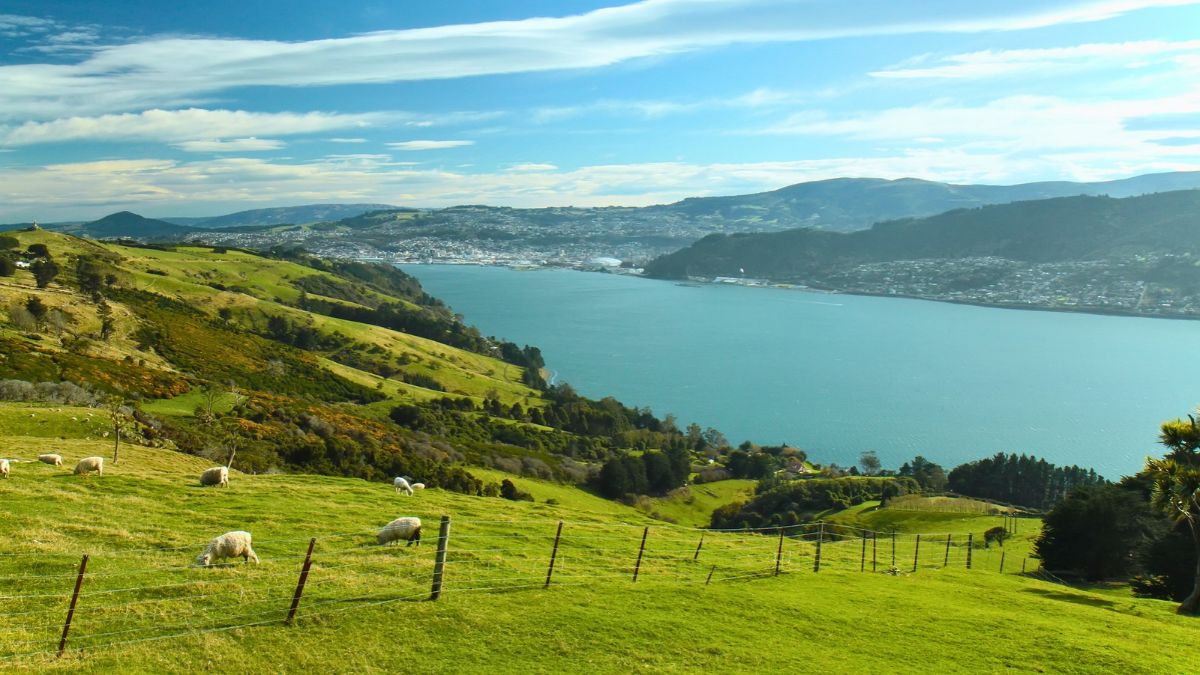
How much time should you spend in Dunedin and Otago?
Two full days can cover central Dunedin and one peninsula experience, but it will feel selective rather than complete. Three days works well for a first visit: one city day, one Otago Peninsula day and one flexible day for beaches, the Taieri Gorge train, Orokonui Ecosanctuary or Port Chalmers. Four days gives you breathing room when coastal weather changes.
The wider Otago region needs a separate time allowance. Oamaru works as a one-night extension. The Catlins deserves at least one night and is better with two. Clyde, Alexandra, Naseby and the Maniototo should be treated as a road trip, not squeezed into a return day from Dunedin. Queenstown and Wānaka are also onward destinations, not sensible Dunedin day trips.
1) Things to See and Do
Explore the Octagon and Dunedin’s historic center
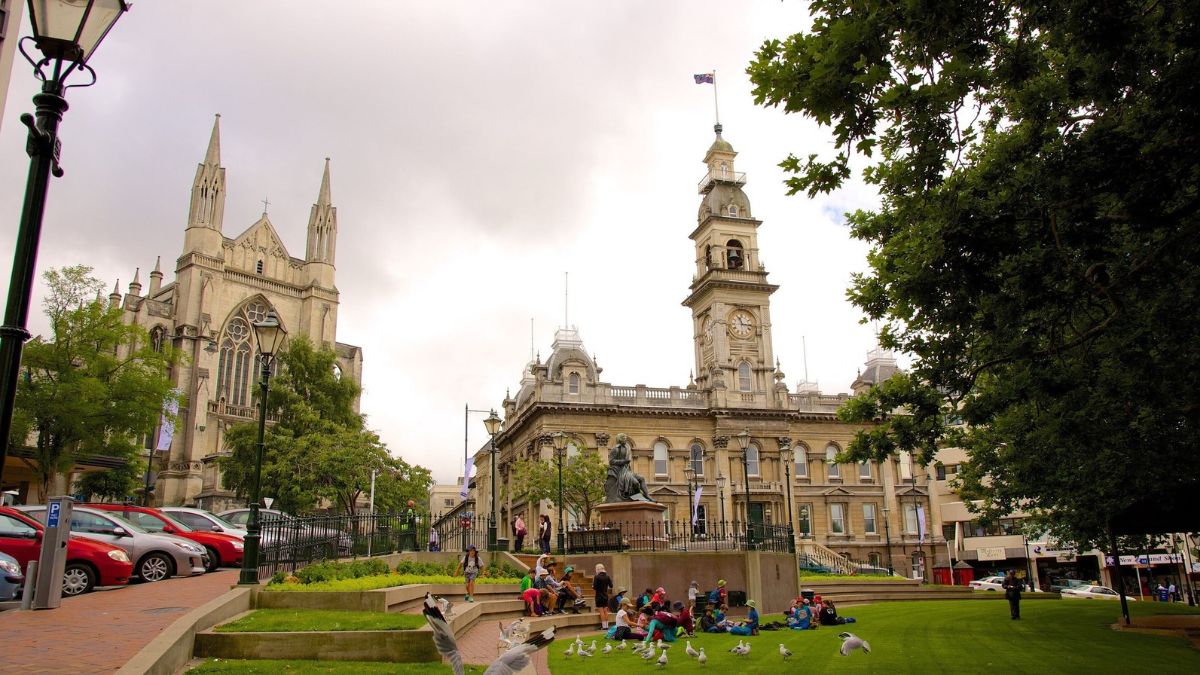
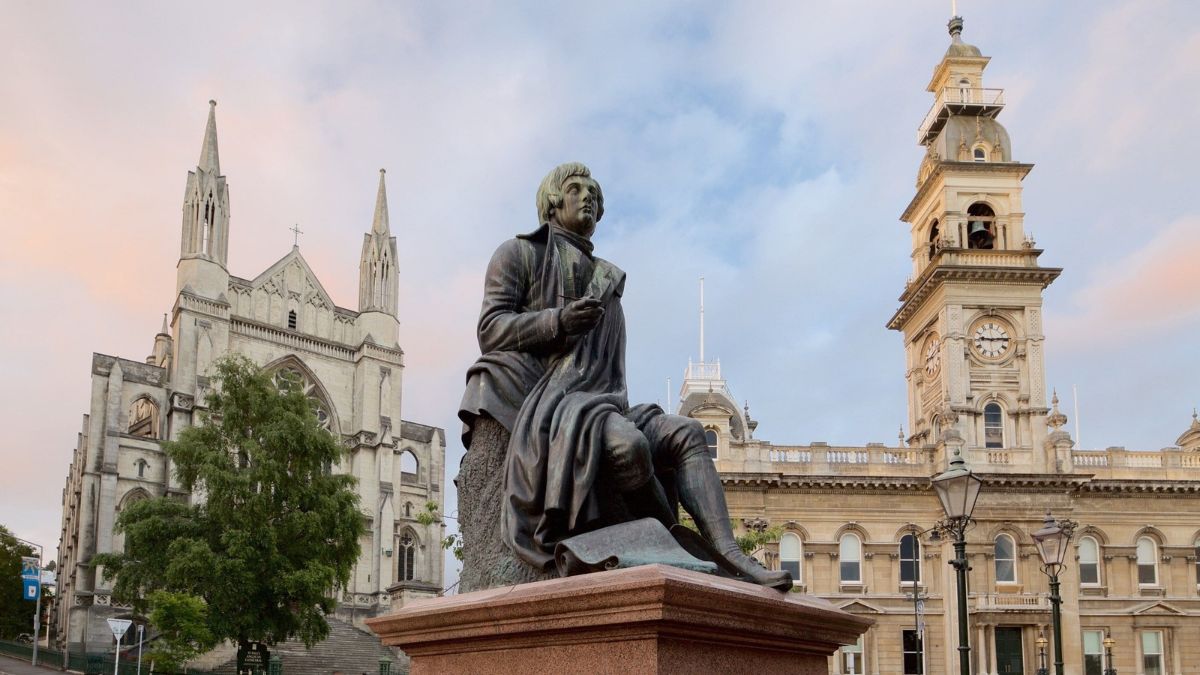
Start your journey in the city’s unique eight-sided central plaza, the Octagon. Walk around the upper terrace to view the bronze Robert Burns Statue (erected 1887) and admire the towering Dunedin Municipal Chambers, an impressive example of Victorian architecture completed in 1880. Step inside St Paul’s Cathedral, a grand Gothic-style Anglican cathedral famed for its 20-metre-high vaulted stone nave completed in 1919.
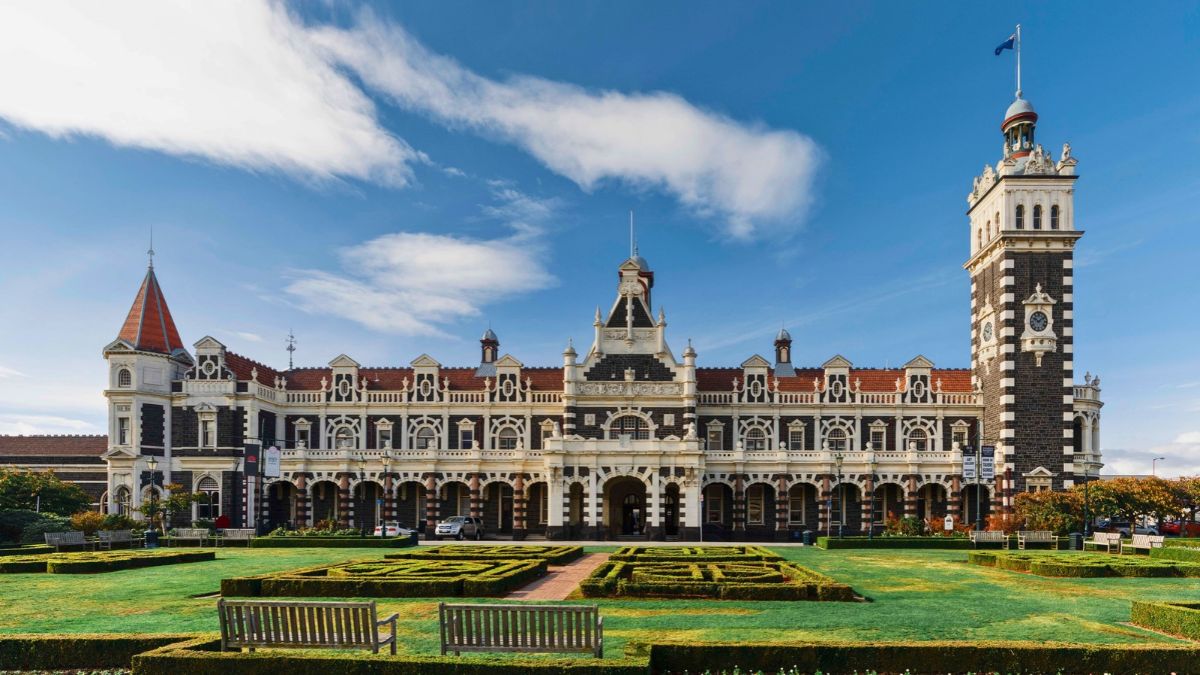
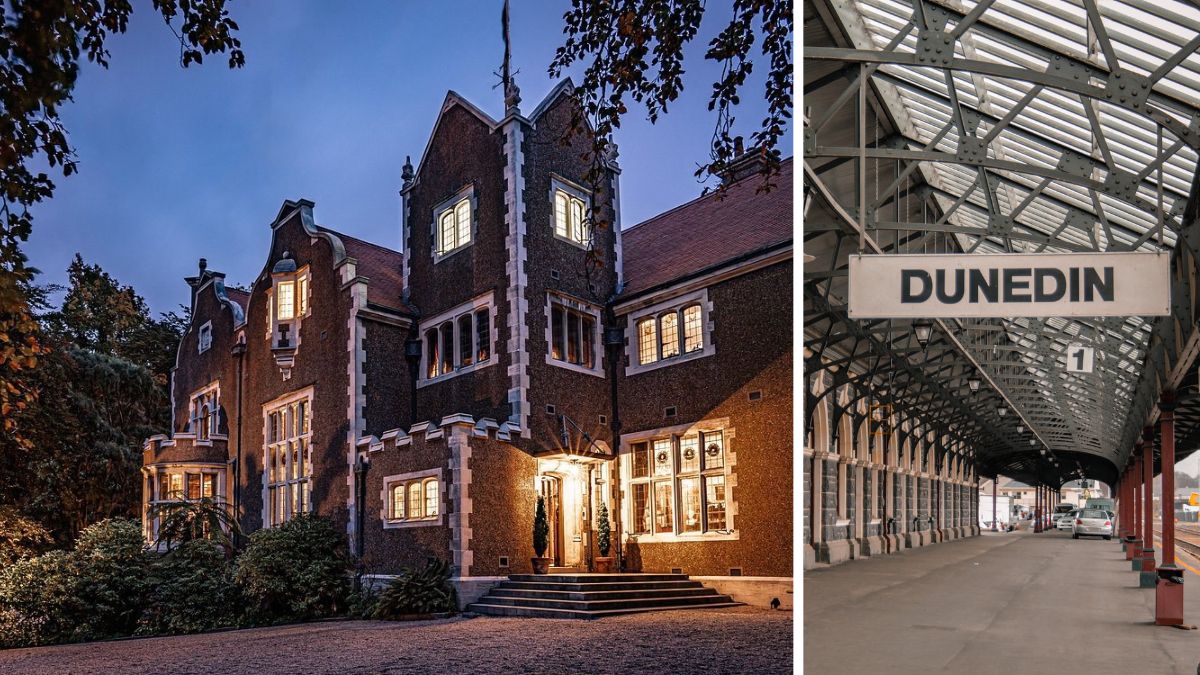
Head down Lower Stuart Street to the iconic Dunedin Railway Station. Designed by George Troup (nicknamed “Gingerbread George”), this Flemish Renaissance-style landmark features dark basalt rock contrasted with white Oamaru limestone and a booking hall floor made of 750,000 Royal Doulton porcelain tiles. The station’s patterned floors, stained glass and dark basalt-and-Oamaru-stone exterior make it one of the city’s most memorable buildings. It is still an operating departure point for scenic trains, so access to particular spaces can change around departures and events.
Spend the rest of the afternoon tracking down vibrant murals along the Dunedin Street Art Trail in the nearby Warehouse Precinct. Allow half a day for this central loop, longer if you enter the museums. The route is walkable, but Dunedin becomes steep quickly when you leave the central blocks. To end your city center time end the day with a unique dinner inside the original heritage vaults of the former Chief Post Office, now beautifully preserved as the Distinction Dunedin Hotel.
Visit Toitū Otago Settlers Museum
Toitū is one of Dunedin’s best free attractions and much more substantial than its name may suggest. Its galleries cover Kāi Tahu history, migration, transport, technology, work, domestic life and the development of the city and wider Otago province. The preserved vehicles and Josephine steam locomotive are especially popular, but the museum is strongest when you give the social-history galleries time rather than rushing through for photographs. You’ll need 2 to 3 hours in Toitū Otago Settlers Museum. And spend time with the interactive displays tracking the social history of the region from early Māori arrivals and Scottish pioneers to modern times.
General admission is free, although donations help. Check the official Toitū website for current hours and temporary exhibitions.
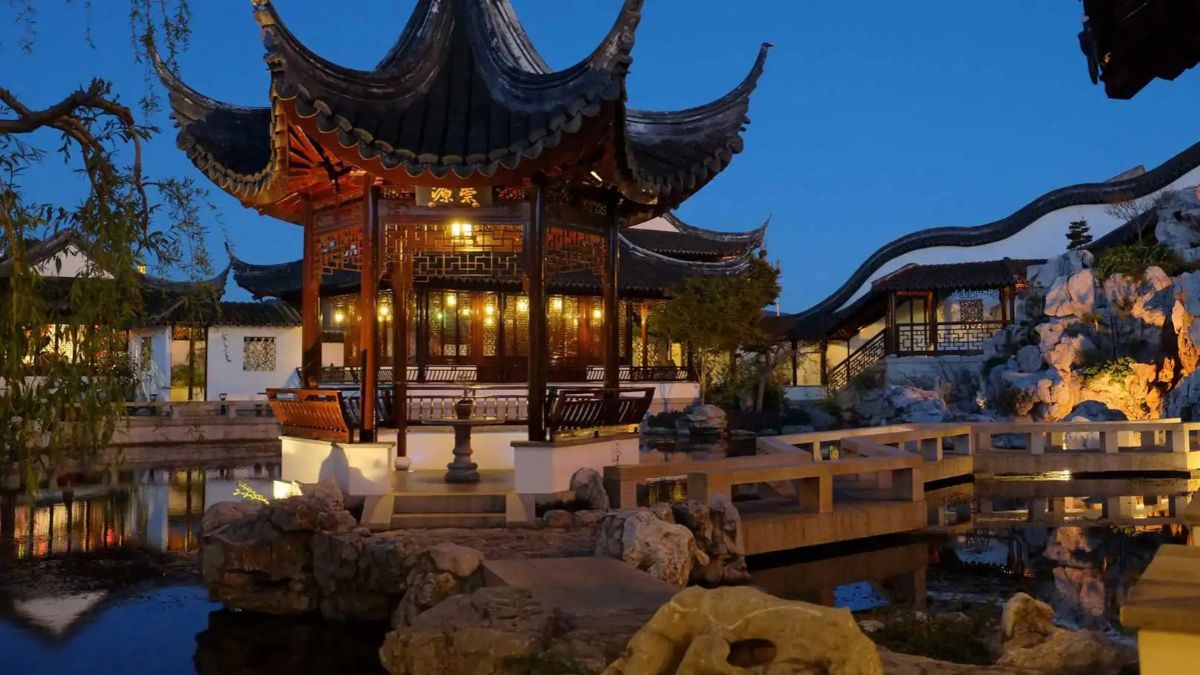
Slow down in Lan Yuan Dunedin Chinese Garden
Lan Yuan sits beside Toitū and offers a calm contrast to the city streets. Lan Yuan is a traditional Dunedin Chinese Garden. As the only authentic Scholar’s Garden in the Southern Hemisphere, it was pre-fabricated in Shanghai using hand-carved granite, wood, and tiles before being reassembled here. Even when reconstructed on site it was done using traditional techniques. The garden reflects the long, sometimes difficult history of Chinese communities in Otago, including the miners who came during the nineteenth-century gold rushes.
Adult admission was NZ$13.50 when checked in September 2026; children under 13 enter free with an adult. The teahouse adds to the experience but is an extra cost. The garden is relatively compact, so most visitors need 45–75 minutes. Current admission and hours are listed by Lan Yuan.
Choose between Tūhura Otago Museum and the Dunedin Public Art Gallery
Tūhura Otago Museum, beside the University of Otago, is the stronger choice for natural history, southern Māori taoka, Pacific cultures and families. General museum admission is free for New Zealand residents; international visitor pricing and paid experiences apply to some areas. The interactive science center, tropical forest and planetarium are ticketed, with options starting from about NZ$13–18. Check the current Tūhura ticket categories because resident and international prices differ.
The Dunedin Public Art Gallery in the Octagon is easier to add to a central walk. Entry is normally free. Its mix of historical and contemporary work makes it particularly useful on a cold or wet afternoon.
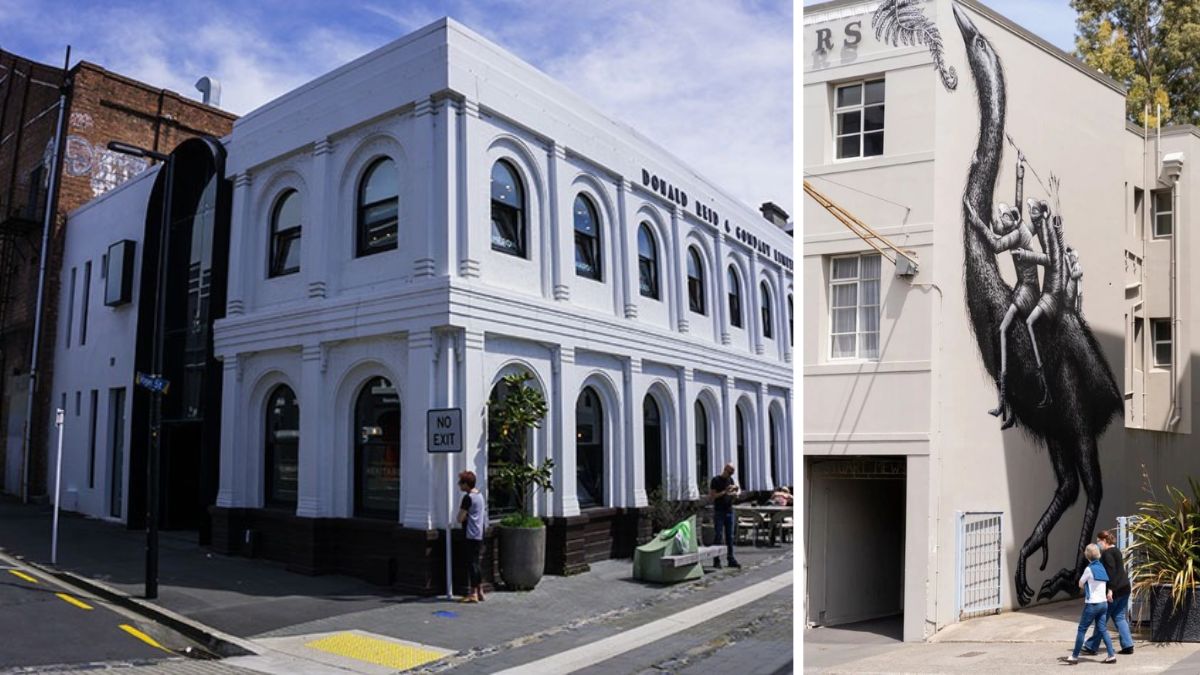
Walk the warehouse precinct and street-art trail
South of the Octagon, the warehouse precinct around Vogel, Crawford and Bond Streets has cafés, creative businesses, restored industrial buildings and large murals. It shows a more contemporary side of Dunedin than the formal Victorian center.
Download or collect the current street-art map rather than relying on an old blog route: murals change, and new work appears. The walk is free and combines naturally with the railway station, Queens Gardens and the waterfront area. You can view the street art trail digitially at Dunedin Street Art Trail.
Tour Olveston Historic Home
Olveston is a preserved early-twentieth-century family home rather than a reconstructed period set. Its furniture, art, domestic technology and service spaces provide an unusually complete view of wealthy Edwardian life in Dunedin. Entry to the house is by timed guided tour; the garden and gift shop can be visited separately.
General adult admission was NZ$26.50 in September 2026. Advance booking is wise on cruise-ship days and during summer. See Olveston’s official tour information.
Walk through the University of Otago and North Dunedin
The University of Otago gives North Dunedin its distinctive energy. The Water of Leith, stone university buildings, mature trees and nearby museum make a pleasant walk. This is a working campus, not an attraction staged for visitors, so respect teaching spaces and student accommodation.
North Dunedin is also one of the better areas for inexpensive lunches. Student-oriented cafés, food courts and takeaway shops often cost less than restaurants around the Octagon.
Climb Baldwin Street—but do not drive it
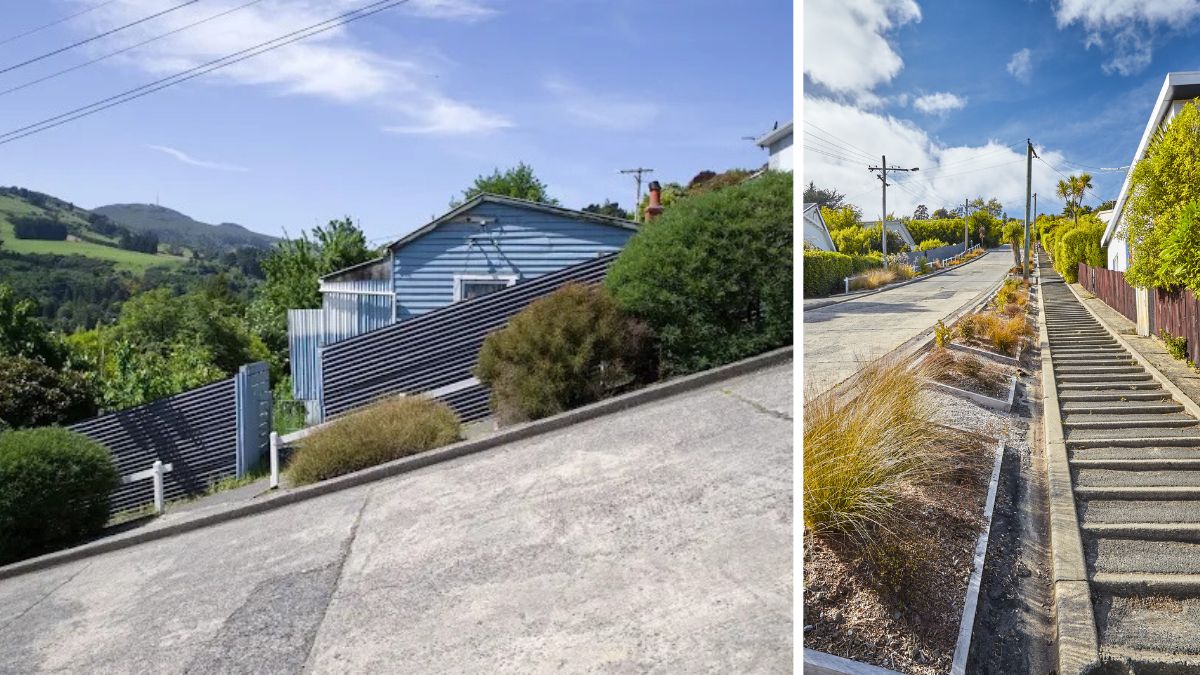
Baldwin Street is officially recognized for its extreme gradient. It is the Guiness world record holder for steepest street in the world and is a fun, short challenge. It’s an unusual tourist attraction in suburban Dunedin. Walking up isn’t too difficult if you take a few breaks, and the climb is worthwhile for the chance to see this quirky world record. From the top, you can also enjoy lovely views of Dunedin’s green surroundings. In the varsity student season when new university students arrive you’ll find them here, often with a bag of “jaffas”, think small chocolate balls with crispy candy shell. Jaffa rolling was made famous by Cadbury here in Baldwin street.
P.s., take it from someone who has tried and vowed never to do it again. If you have a car don’t drive up this street. It has very limited turning space at the top and its not fun having to reverse down the hill. And although it may be fun to think about, I would advise that you don’t drive your campervan up the street. Dunedin City Council explicitly warns freedom campers not to do so because there is no through exit and turning is difficult.
Visit the Dunedin Botanic Garden and Signal Hill
The Dunedin Botanic Garden is free and works well with North Dunedin, Baldwin Street or the university. It includes hillside paths, native and exotic collections and seasonal displays. Some sections are steep, although there are more accessible lower-garden areas. You can download the botanic garden map that shows positions of all the good stuff!
Signal Hill offers a broad view over the city and harbor. Drivers can reach a lookout, while walkers and mountain bikers can use the surrounding track network. Do not underestimate the temperature difference between the sheltered center and an exposed hilltop.
Eat and stroll at St Clair
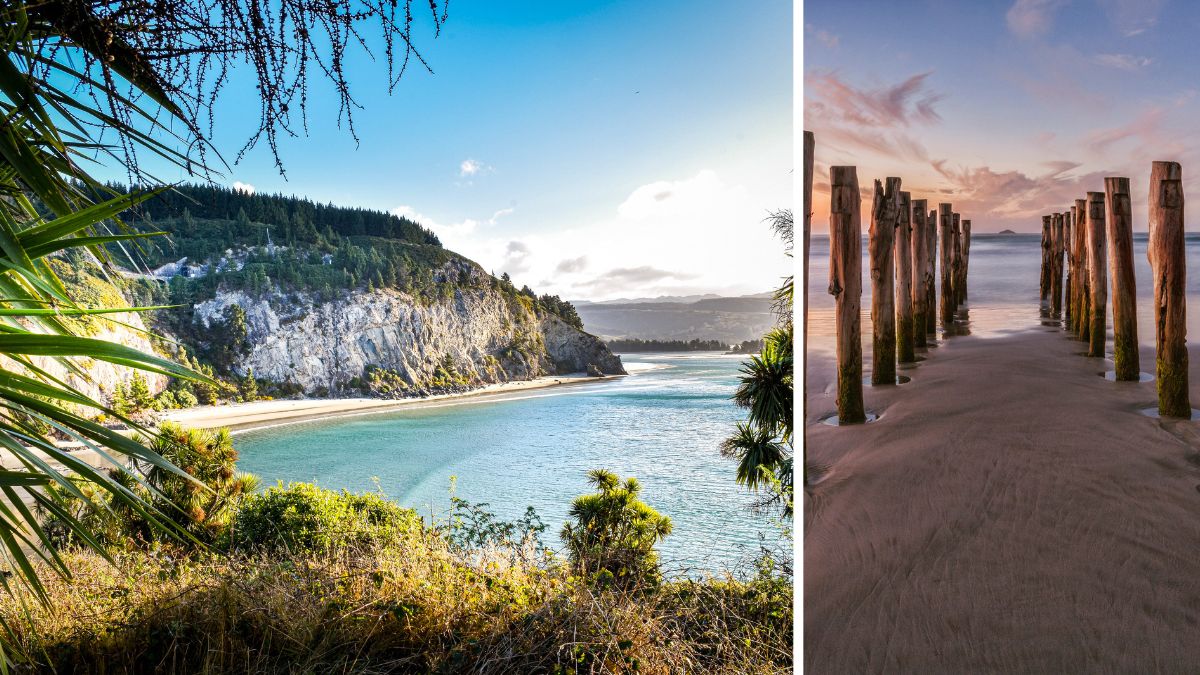
St Clair is the easiest coastal experience to combine with a city stay. The esplanade has cafés and restaurants facing the beach, and the outdoor salt-water pool operates seasonally. It is an excellent place for a stormy-ocean walk or sunset meal. St Clair Beach is the focal point of Dunedin’s surf culture. Walking along the seaside esplanade will alllow you to admire the weathered remnants of the historic wooden beach pilings, and grab a hot flat white at a waterfront café while watching surfers tackle the consistent breaks.
The surf can be powerful and cold. Swim only when conditions suit and, when lifeguards are operating, between the flags. Get too cold, don’t stress. Just head to the end of the beach to the St Clair Hot Salt Water Pool, which dates back to 1884. It is the only heated seawater pool in NZ. St Kilda, immediately east, has a longer beach but fewer reasons to choose it for an evening meal.
Consider a Speight’s Brewery tour
Speight’s has brewed in central Dunedin since the nineteenth century. A guided brewery visit can be enjoyable even if you already know the beer, because the site connects industrial heritage with the city’s identity. Tours are timed, include stairs and machinery environments, and tastings have age restrictions. Check what is actually included before booking; a brewery tour and a meal at the nearby ale house are separate purchases.
And, of course if you have not tried Speight’s then consider it your divine duty to crack open a can or two. One of my favorite beers, and well worth those 18+ giving it a go, especially as the signature beer is only 4% full strength and you can get no-alcohol and no-carb versions.
Ride the Taieri Gorge train
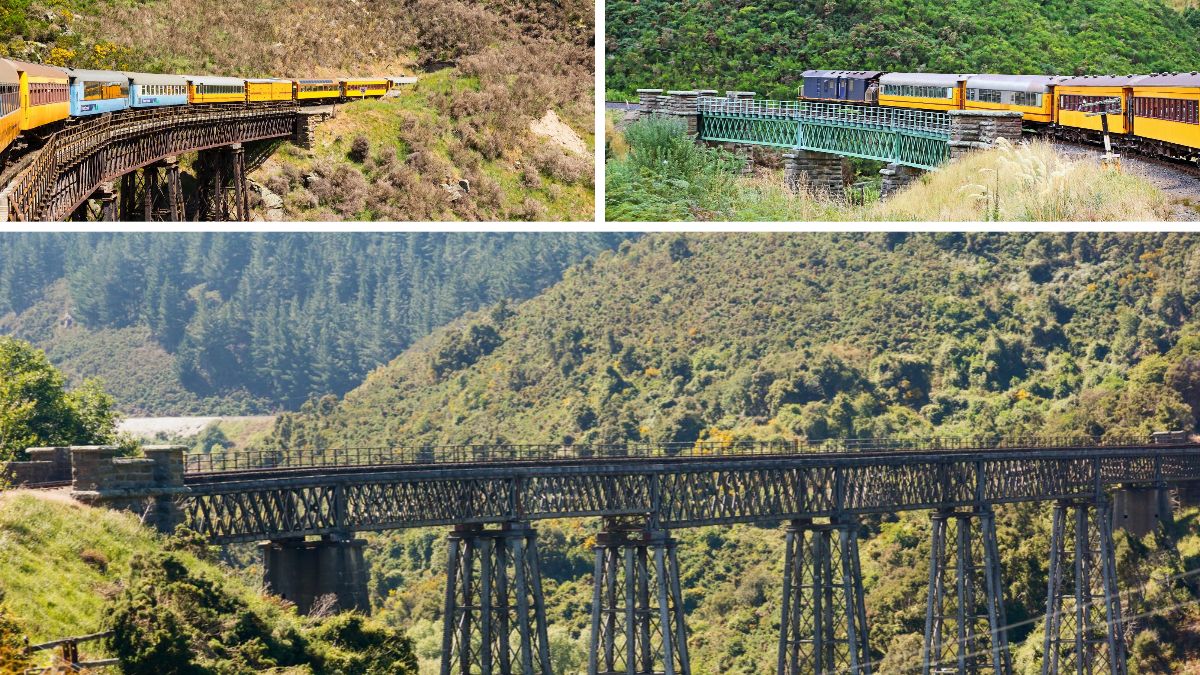
The Taieri Gorge journey is one of the easiest ways to see inland landscapes without driving. Board the historic Taieri Gorge Railway departing directly from the Dunedin Railway Station. This exceptional rail journey winds into the wild, rugged hinterland of the Taieri River gorge—a spectacular landscape entirely inaccessible by ordinary roads. The train navigates narrow tracks carved into mountain walls, traveling across century-old iron viaducts and through hand-hewn stone tunnels while onboard commentary tells the grueling engineering tales of its construction. Relax in vintage wooden carriages, enjoy a drink from the cafe bar, and take in a totally unique perspective of Otago’s green valleys.
The standard return journey takes about five hours. An adult return was NZ$169 in September 2026, with some third-party sites advertising limited discounted seats. Treat those cheaper prices as date-specific inventory, not the normal fare. Schedules are not necessarily daily throughout the year, so build your itinerary around a confirmed departure. See Dunedin Railways’ current schedule and fares.
Make the Otago Peninsula a full-day priority
The Otago Peninsula is not a single attraction. It is a long, scenic landscape of harbor settlements, farms, ridges, beaches and wildlife reserves. Taiaroa Head/Pukekura is 32 kilometers from central Dunedin, and the Royal Albatross Centre advises allowing 50–60 minutes to drive there. Trying to combine every castle, beach, cruise and penguin tour in one day produces more driving than enjoyment.
Choose two main paid experiences and leave time for the road, a meal and viewpoints. If you do not want to drive narrow, winding roads—especially after a penguin tour ending in darkness—book a city pickup tour.
Highcliff Road Drive
Take the breathtaking Highcliff Road along the ridge of the Otago Peninsula. This winding drive follows the crater wall of a long-extinct volcano, serving up sweeping clifftop vistas over the Pacific Ocean on one side and the calm Otago Harbour on the other.
Visit Larnach Castle and gardens
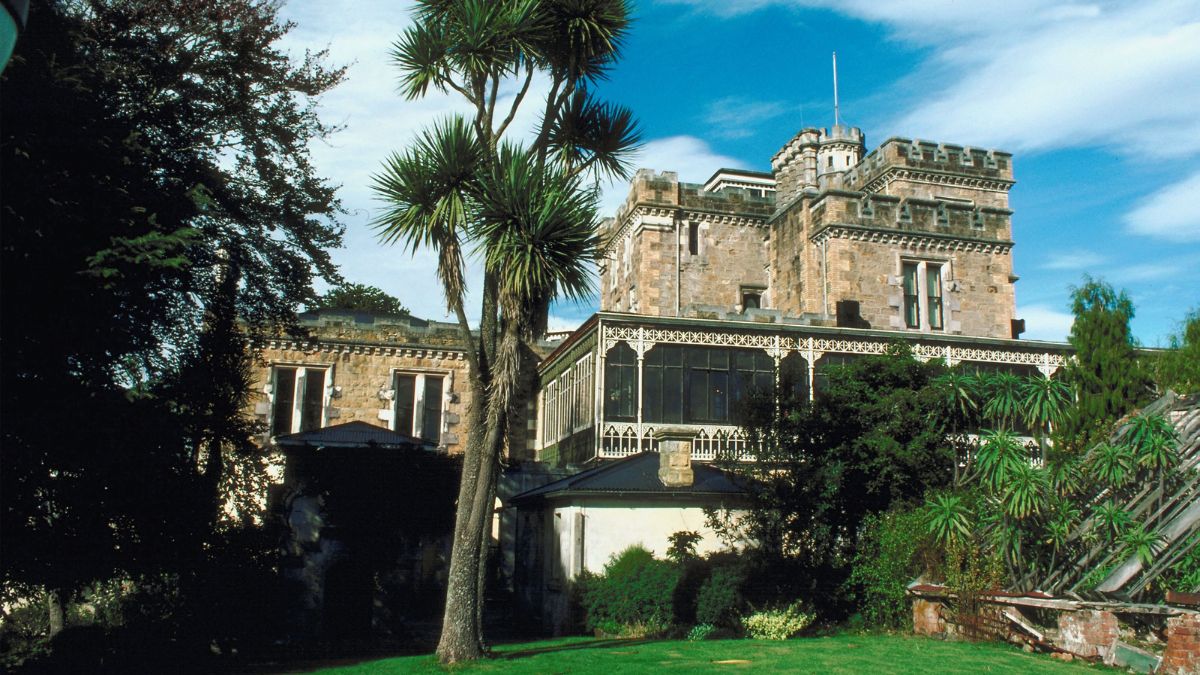
Larnach Castle is New Zealand’s only castle, though travelers expecting a European medieval fortress should reset their expectations. It is a grand nineteenth-century house built during Otago’s colonial era, with restored interiors, gardens, harbor views and a complicated family story. Built in 1871 by financier William Larnach, this mock-Gothic mansion showcases exquisite master craftsmanship, a regular high tea experience in the grand Ballroom Cafe, and is said to be one of the most haunted buildings in New Zealand. Spend time strolling through the expansive shrubberies and rock gardens, rated as a “Garden of International Significance”.
Self-guided castle-and-gardens admission was NZ$48 per adult and NZ$16.50 per child aged 5–14, valid through 30 September 2026. Gardens-only entry was NZ$24 per adult. Prices may change from October, so check Larnach Castle’s official price page. Allow two to three hours, especially if you stop at the Ballroom Café.
See northern royal albatross at Pukekura/Taiaroa Head
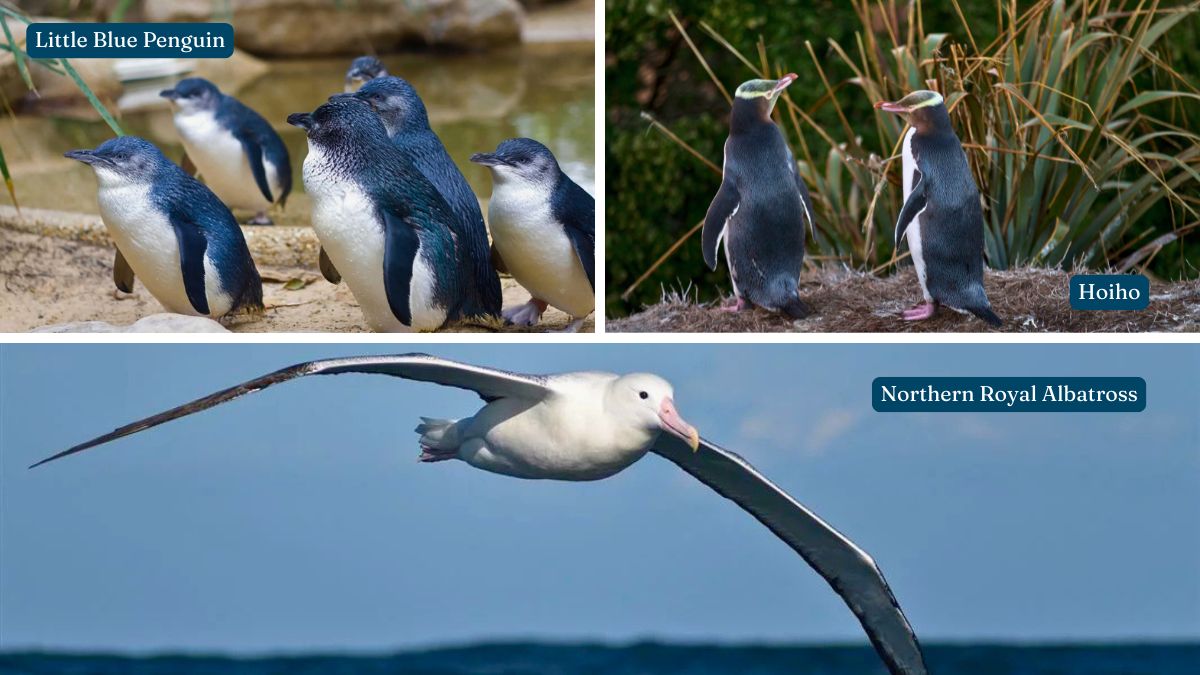
Drive to Taiaroa Head at the tip of the peninsula to visit Dunedin’s northern royal albatross colony. This is famously the world’s only mainland breeding colony for northern royal albatrosses. The headland is a protected nature reserve, and there is no general public access into the nesting area. The guided tour with access to the observatory allows you the chance to witness these massive seabirds with 3-metre wingspans soaring past. There is also the free cliff-viewing platform outside the restricted area. This also gives you a chance—but like the observatory, no guarantee—of seeing birds in flight.
In September 2026, the one-hour Albatross Classic starts at NZ$68.39 and the 90-minute Unique Taiaroa tour, combining albatross and Fort Taiaroa history, starts at NZ$78.91. Prices and capacity can change, and advance booking is strongly recommended. See the Royal Albatross Centre’s current tours.
Timing affects what you see:
- September is fledging time for chicks.
- Breeding adults return and prepare nests in October, but no albatross may be sitting in view; October is the least reliable month.
- Eggs are generally laid in the first three weeks of November.
- Chicks hatch from late January into early February.
- From autumn through winter, growing chicks remain on the headland while parents return to feed them.
Windy weather may improve the chance of seeing adults fly, but wildlife is not choreographed. The center’s breeding-cycle guide explains what is normally happening each month.
Watch kororā return at dusk
Blue Penguins Pukekura operates evening viewing at Takiharuru/Pilots Beach. Sit on tiered boardwalks and watch the world’s smallest penguins return from the sea in noisy rafts, waddling across the sand to their nests. The 90-minute experience runs after dark and requires advance booking; popular nights can sell out days or weeks ahead. The standard experience requires your own transport, although longer tours from Dunedin may include transfers.
Dress much more warmly than you think you need to. The headland can be cold and windy even after a pleasant afternoon in the city. Follow rules on lights and photography, and never use flash. Current details are available from Blue Penguins Pukekura.
Look for hoiho responsibly
Hoiho/yellow-eyed penguins are rare, nationally threatened and vulnerable to disturbance. Seeing one is never guaranteed. The OPERA—Otago Peninsula Eco Restoration Alliance—offers controlled visits within a private conservation reserve, where tourism income supports habitat restoration and wildlife rehabilitation. This is safer for the birds and more informative than wandering onto beaches at dusk hoping to find them.
Choose operators that use hides, maintain distance and state clearly that wildlife is wild. Review current tours directly with The OPERA.
Take a wildlife cruise
A harbor cruise changes the angle completely: instead of looking from the cliffs, you can observe seabirds, fur seals and the headland from the water. Monarch’s one-hour cruise from Wellers Rock cost NZ$70 per adult and NZ$28 per child aged 5–14 in September 2026. The departure point is 45–60 minutes from central Dunedin, so this is not a city-center boat trip. Summer and winter departure times differ. Check Monarch Wildlife Cruises before building the day.
Sit back and enjoy the scenery as you explore the stunning, rugged coastline near the entrance to Otago Harbour. Cruise past beautiful Aramoana Beach and its tidal sandflats, where you can spot sea lions sprawled out and basking in the sun. These impressive animals can weigh nearly half a tonne. On the opposite side of the harbour channel, you’ll see remnants of the area’s military history. Several lookout posts and gun emplacements were built into the rocky hillside and linked by tunnels. Today, this area is a popular spot for local fishermen.
You’ll also get uninterrupted views of the royal albatross colony and then get postcard-perfect views of the historic lighthouse perched high above the volcanic cliffs of Taiaroa Head. Built in 1864, it was the first lighthouse constructed on the South Island. You’ll also get close to the rocky outcrops that extend into the ocean, home to a large colony of New Zealand fur seals. Watch them swim, sleep, fight, and play.
Then you’ll head a little distance out into the Pacific Ocean, where you could see smaller albatross species, cormorants, and petrels. Keep your fingers crossed, as sometimes you’ll spot blue penguins, dusky dolphins, Hector’s dolphins, and other marine mammals.
Travelers without a vehicle should compare a city-to-sea package with the cost of taxis or a rental car. A cheap cruise ticket is not cheap if reaching the wharf costs more than the activity.
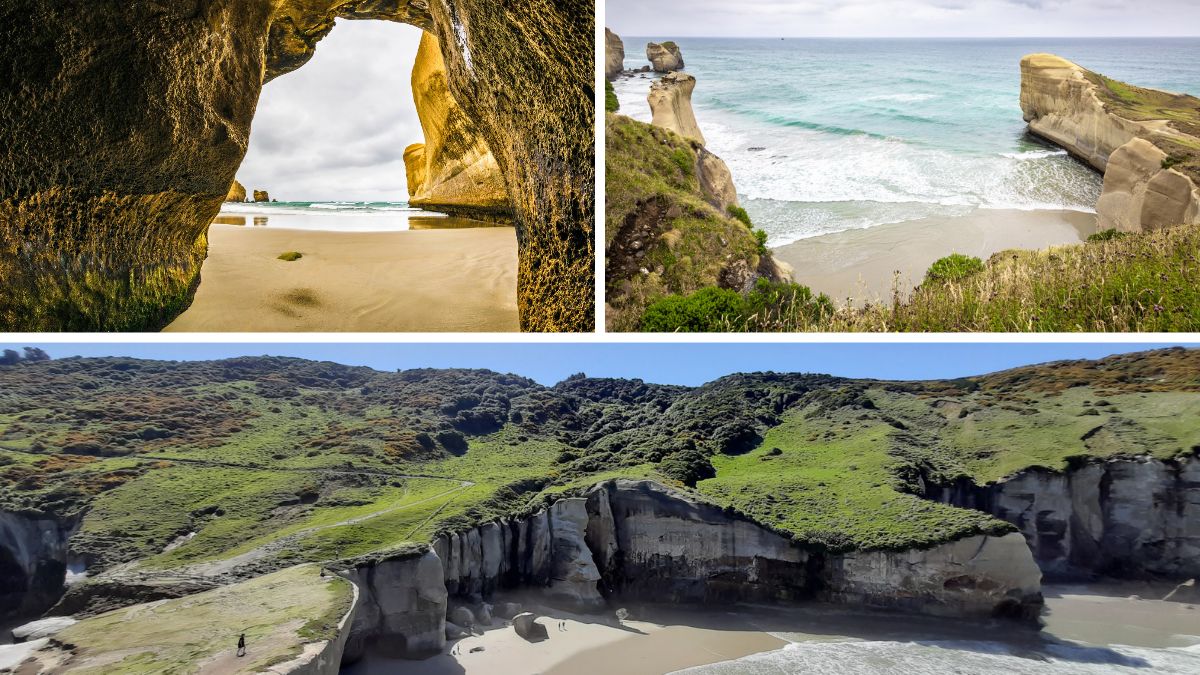
Walk Tunnel Beach at low tide
Tunnel Beach reopened after major repairs and is again one of Dunedin’s standout short walks. The full return walk is 2.6 kilometers and takes about an hour, with a long, steep descent and the same climb back. A shorter 600-meter viewpoint return takes about ten minutes.
This is a wild coast, not a swimming beach. DOC warns of high unfenced cliffs, unstable edges, dangerous currents, waves and unsafe access at high tide. Head south of the city center to the dramatic cliffs of Tunnel Beach. Follow the track down past massive sandstone sea arches jutting into the wild Pacific Ocean. At the bottom, pass through the historic, dark passageway hand-carved into the rock in the 1870s by John Cargill to give his family private access to a secluded, fossil-strewn beach. (Note: Check local tide charts to time your walk during low tide).
Parking is free but the gate is locked outside posted hours. It operates 8am–9pm from September to March and 9am–5pm from April to August. Summer parking fills quickly. Full current advice is on the DOC Tunnel Beach page.
Be cautious at Sandfly Bay and other wildlife beaches
Despite the name, Sandfly Bay is known for dunes, a steep approach and the possibility of sea lions rather than clouds of biting sandflies. The walk back up soft sand is strenuous. New Zealand fur seals/kekeno and New Zealand sea lions/pakake haul out on the rocks and beach and wallow in the sand. Seals and sea lions may look placid but they are powerful, wild predators and can be very dangerous if they are approached too closely. Stay at least 20 meters away, give them an obvious escape route and remember that they can move surprisingly quickly.
Track sections and neighboring beaches may close to protect nesting penguins. Do not use an old map or assume a viewing hide remains open. Check DOC alerts and local signs on the day. If penguin viewing matters, a conservation-led guided tour is the more reliable and responsible option.
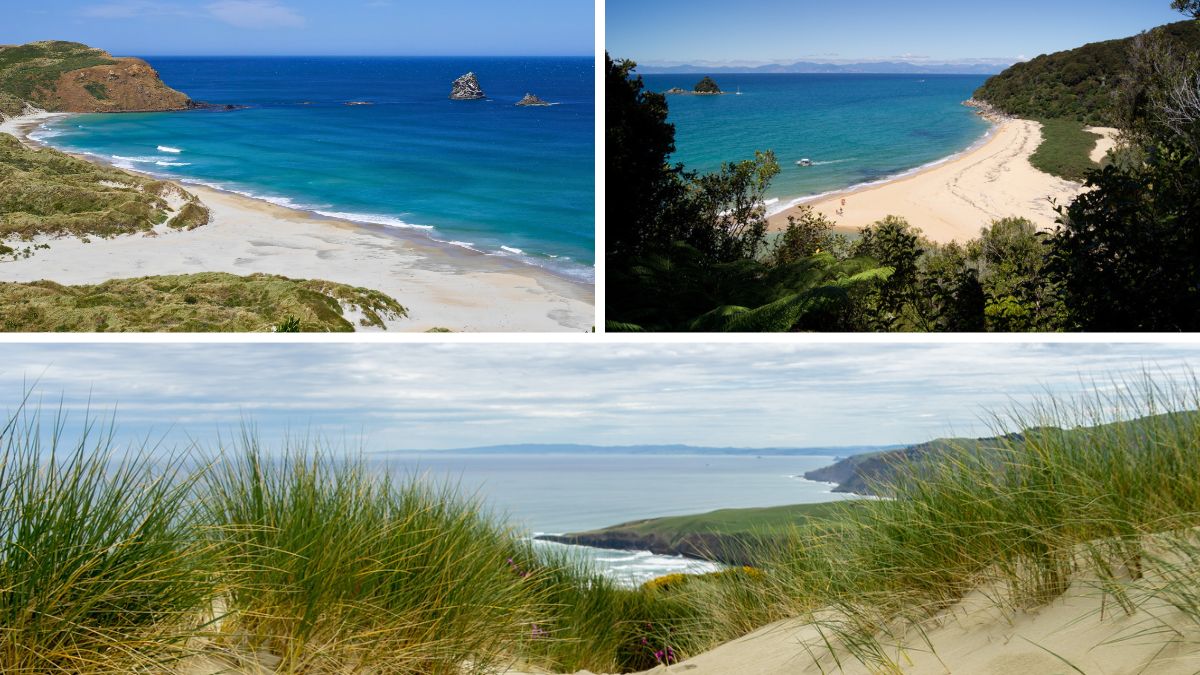
Explore north of the city
Port Chalmers
Port Chalmers has galleries, secondhand shops, cafés, maritime history and harbor views. Local buses make it one of the easiest independent half-day trips from Dunedin. Cruise-ship days change the atmosphere and can make transport busier.
Port Chalmers is on the opposite side of Otago Harbour from the Royal Albatross Centre. You cannot continue along the same road to Taiaroa Head. A seasonal harbor ferry can connect Port Chalmers and Portobello on selected schedules, but do not build a tight itinerary around it until the crossing is confirmed.
Orokonui Ecosanctuary
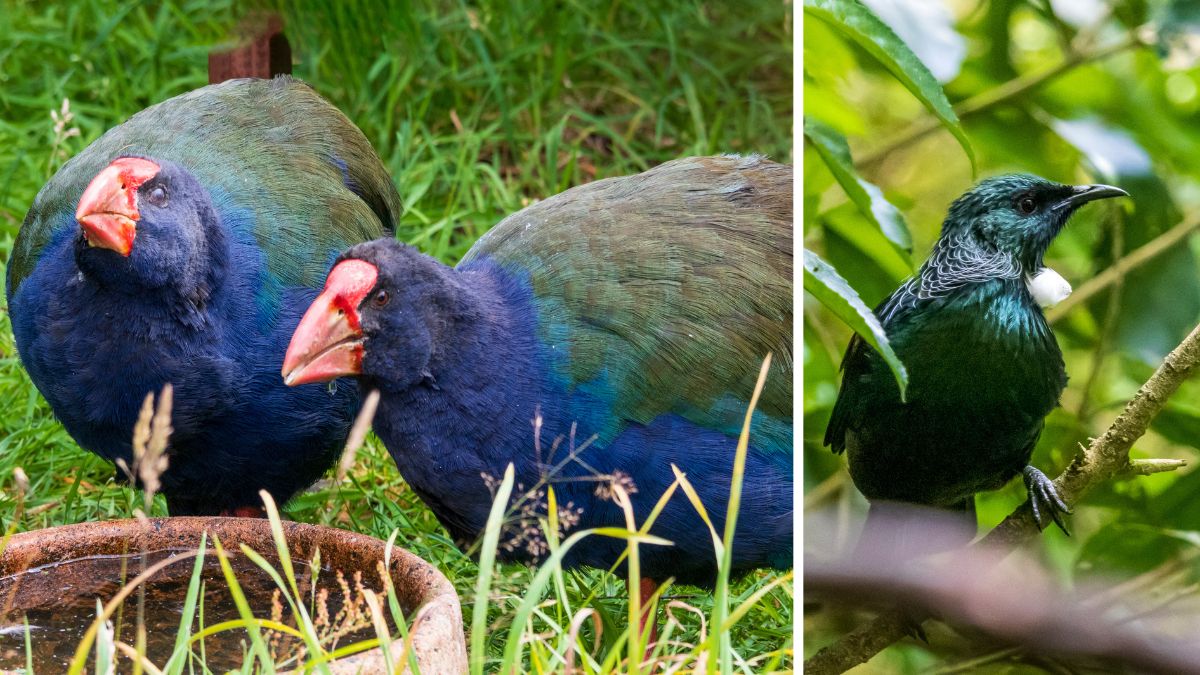
Orokonui/Te Korowai o Mihiwaka is a predator-fenced forest sanctuary around 20 kilometers north of central Dunedin. It is a strong alternative for travelers more interested in native forest birds, tuatara and restoration work than coastal wildlife. Orokonui Ecosanctuary is home to least 20 native birds, including some of the rarest found in Aotearoa/New Zealand. They also have six species of lizard, two species of frog and the iconic Tuatara. General adult entry has recently been around NZ$26, with guided experiences costing more. Opening days and café hours can vary, so check Orokonui’s official website before setting out.
Karitāne and the northern beaches
Karitāne adds an attractive river mouth, coastline and strong Kāi Tahu history to a north-coast drive. It combines well with Orokonui, Doctors Point or a meal in Waitati. Tides affect some beach and cave walks, and public transport is limited. Park legally, keep gateways clear and respect wāhi tapu and private land.
Go beyond Dunedin: the best Otago extensions
Moeraki Boulders and Oamaru
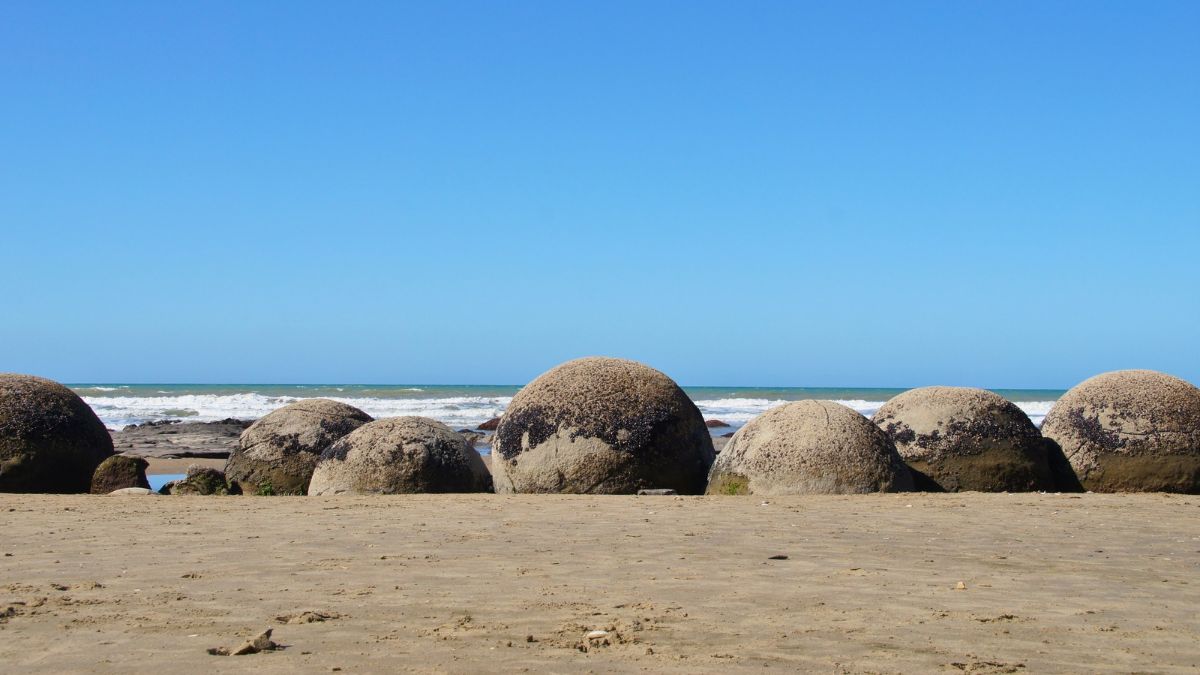
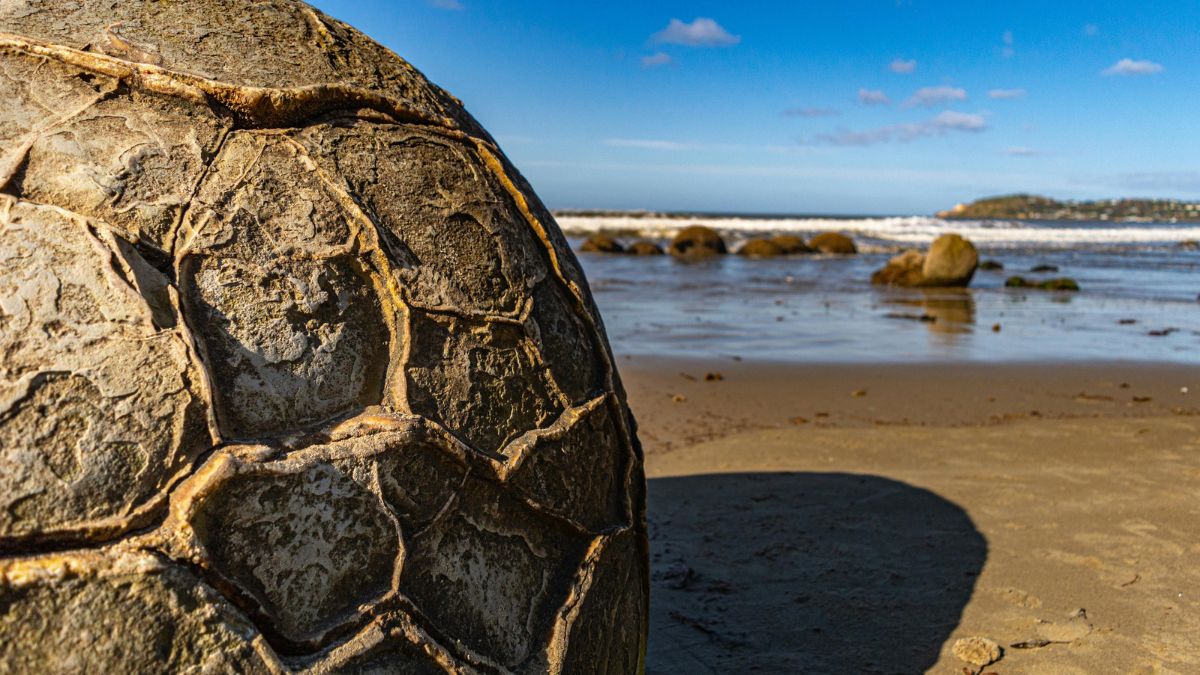
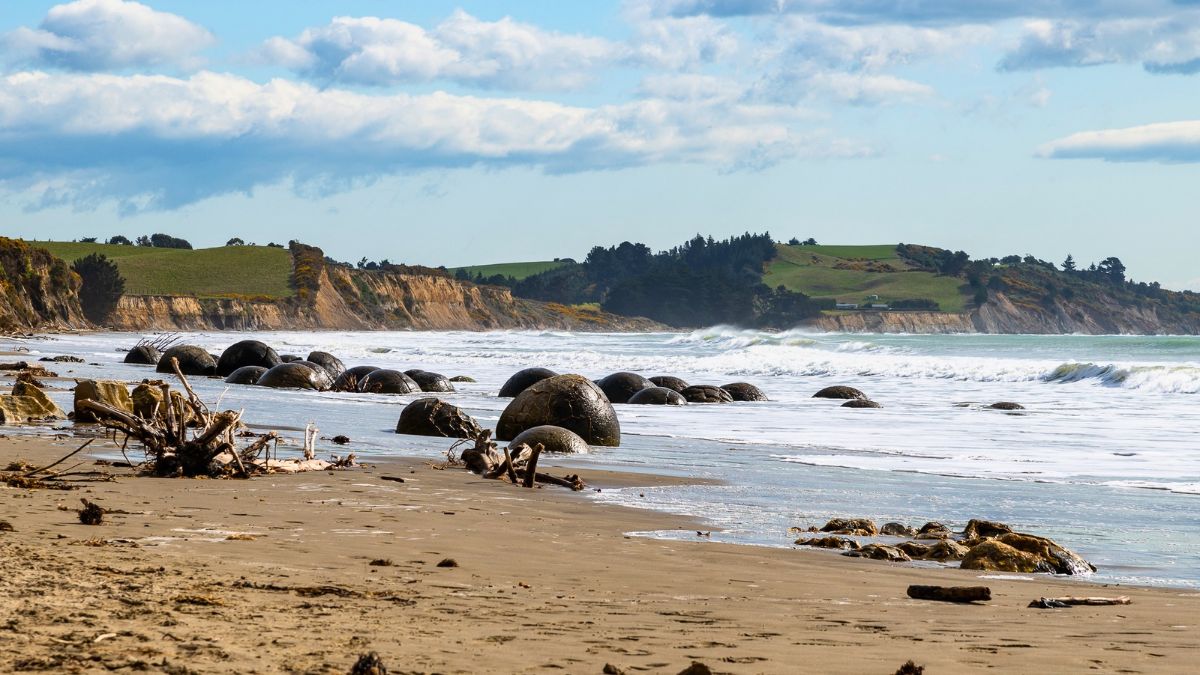
Moeraki Boulders/Kaihinaki are about an hour north of Dunedin by car, with Oamaru roughly another 35–40 minutes beyond. Low tide exposes more of the spherical concretions and makes beach access easier. The popular café-side route may involve a private access charge, while the public DOC approach is longer. Do not climb on wet boulders or turn a culturally and geologically significant place into an obstacle course.
Oamaru deserves more than a rushed lunch. The Victorian Precinct, harbor area, galleries and evening blue-penguin colony make an overnight stop worthwhile. A sensible route is Dunedin–Moeraki–Oamaru, sleep in Oamaru after penguin viewing, then continue north or return the next day.
The Catlins
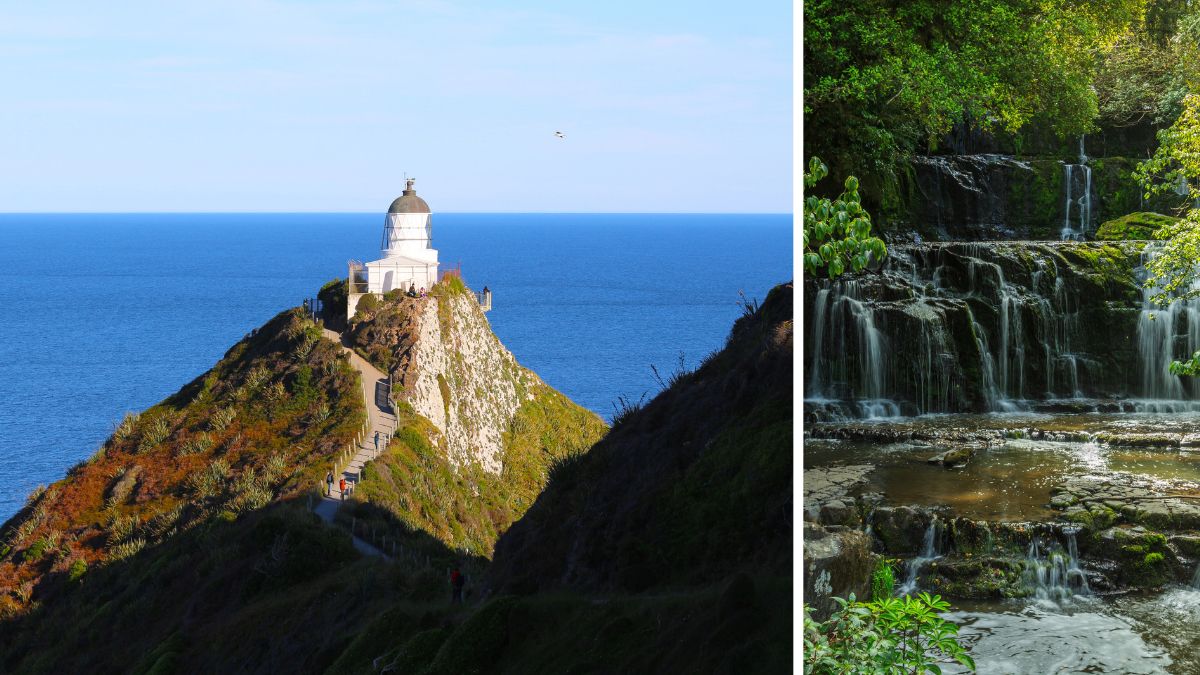
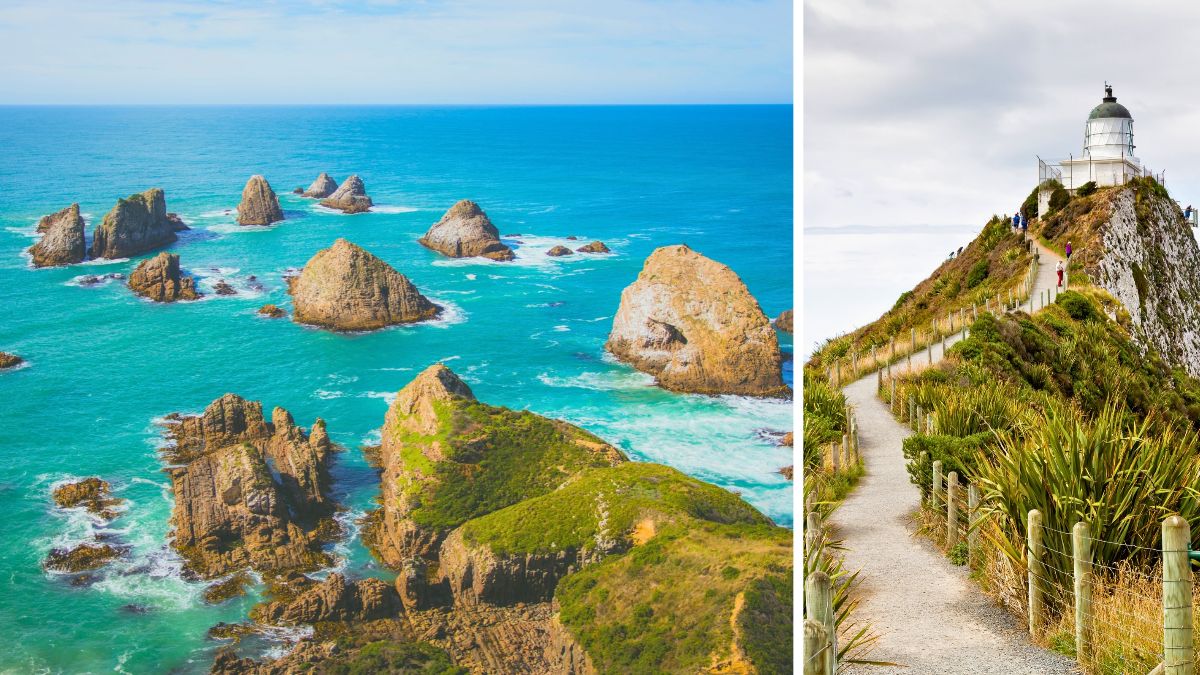
The Catlins begins south of Dunedin and straddles Otago and Southland. Nugget Point/Tokatā, Purakaunui Falls, forests, beaches and wildlife make it a spectacular road trip, but the roads and stops take time. Nugget Point alone is around two hours from central Dunedin in normal conditions. A same-day return is possible, yet it leaves little room for side roads, tides or weather.
Stay one or two nights around Kaka Point, Owaka or farther south. Cathedral Caves operates only around suitable low tides and may close for the season or because of conditions. Fuel stations, food and mobile coverage become less frequent, so top up early.
Oamaru Victorian Precinct
Continue north to Oamaru, a town built entirely from creamy local limestone. Explore the wonderfully intact Victorian Precinct, where old grain stores and warehouses have been transformed into artisan bakeries, bookshops, and the quirky Steampunk HQ art gallery.
Central Otago and the Maniototo
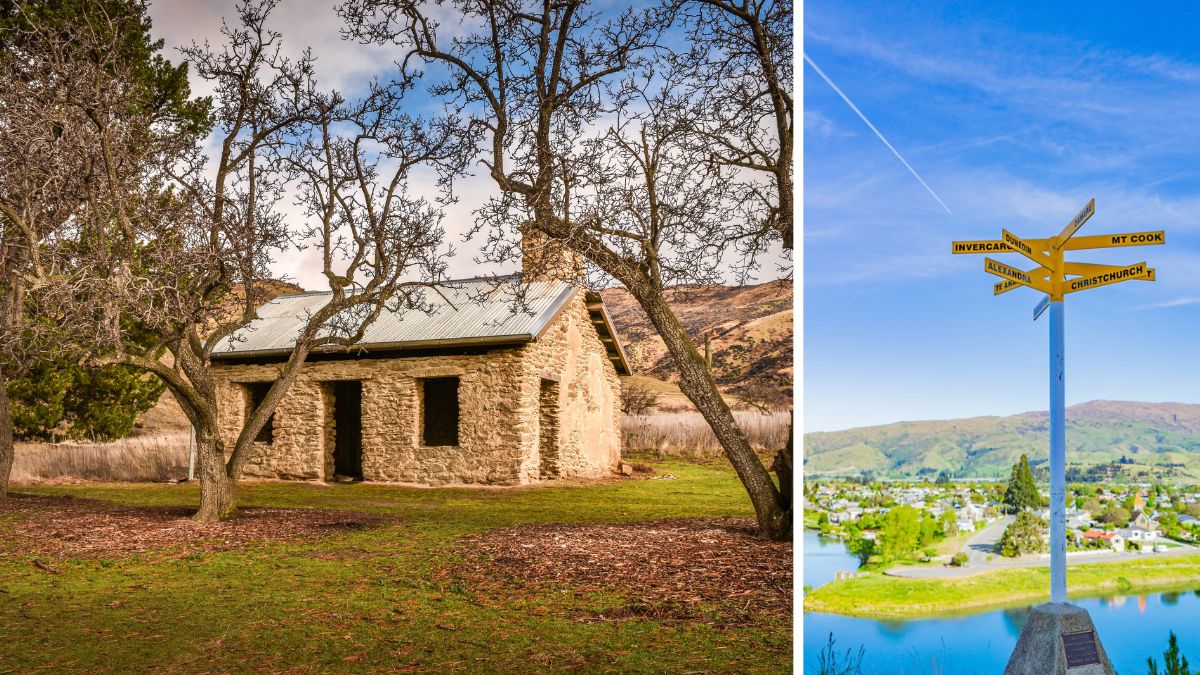
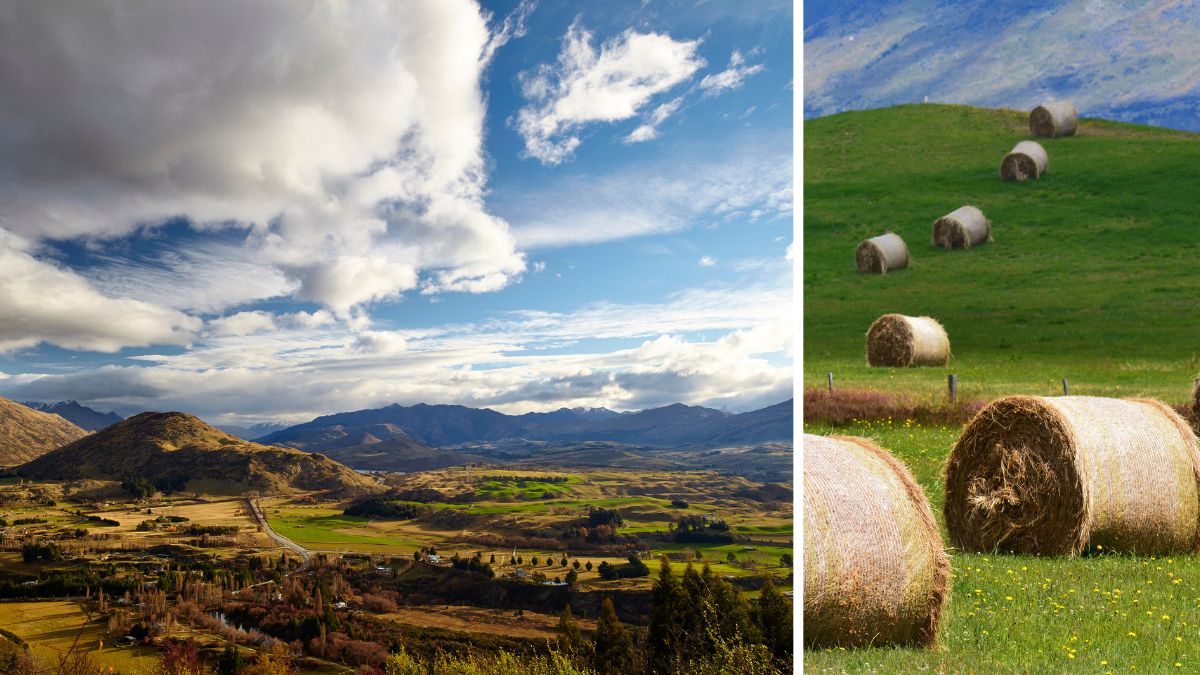
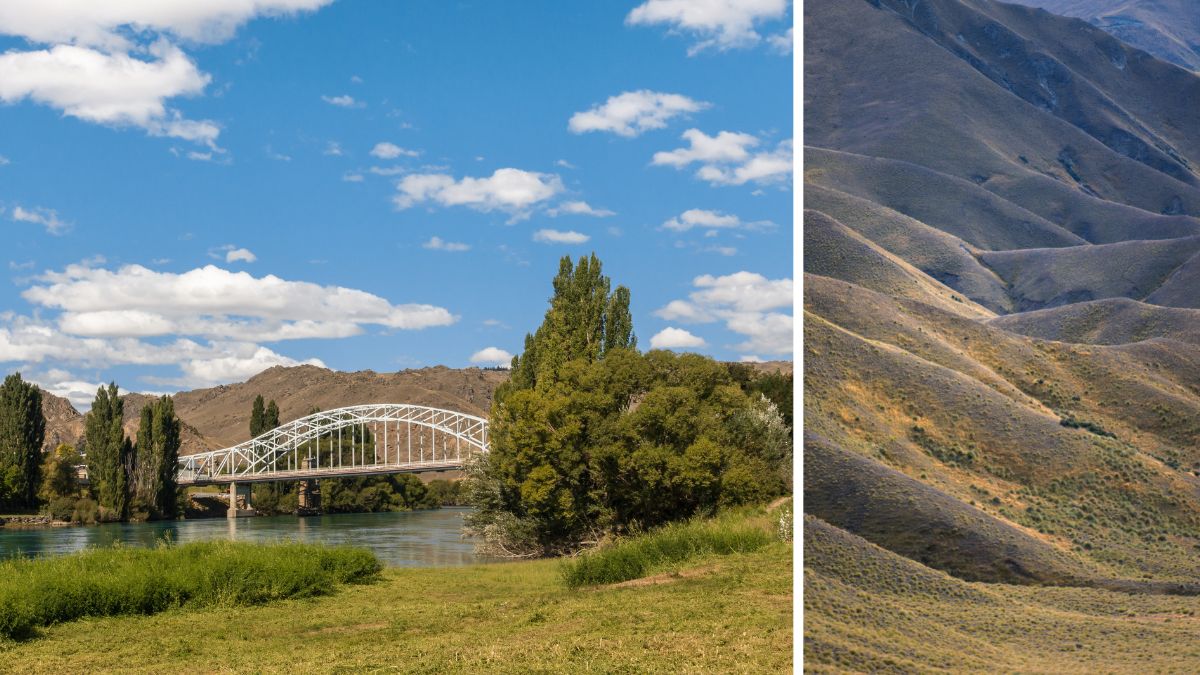
Central Otago feels dramatically different from coastal Dunedin: drier air, open tussock country, schist landscapes, orchards, vineyards and former gold towns. Good independent bases include Clyde, Alexandra, Cromwell, Naseby, Ranfurly and, for a smaller historic stop, St Bathans.
The Otago Central Rail Trail runs 152 kilometers between Middlemarch and Clyde. Most cyclists take three to five days, while half-day and one-day sections are possible. The easy gradient does not mean effortless conditions: heat, frost, headwinds and long gaps between services can matter. Independent riders still need bicycle hire or transport, luggage arrangements, accommodation and an emergency plan. Use the official Rail Trail planner and check trail conditions before leaving.
Central Otago is an overnight extension. Alexandra is roughly 190 kilometers from Dunedin by the direct road; stops and winter conditions lengthen the trip.
Queenstown and Wānaka
Both Queenstown and Wānaka are in the Otago region, but neither is a practical day trip from Dunedin. The official tourism estimate is about 3.5 hours by car to Queenstown without substantial stops, while the InterCity bus takes approximately 4 hours 20 minutes. Wānaka is similarly an onward journey. Give either destination its own accommodation and itinerary rather than spending seven or eight hours returning to Dunedin in one day. If you are intending to visit either destination make sure to read our Queenstown travel guide and our guide to independent travel in Wānaka. If you are planning a Queenstown visit always try to factor an extra day or two so you can fit Milford Sound into your planning, Especially if visiting from the northen hemisphere, Milford Sound should not be missed.
Suggested Dunedin and Otago itineraries
Two days: the essentials
Day 1: Octagon, railway station, Toitū, Lan Yuan and the warehouse precinct; finish at St Clair.
Day 2: Otago Peninsula with Larnach Castle plus one wildlife experience. Travelers without a car should choose a tour with central pickup.
Three days: the best first visit
Day 1: Central heritage, Toitū, street art and St Clair.
Day 2: Full Otago Peninsula day: Larnach Castle or a harbor cruise, Taiaroa Head and an evening penguin experience.
Day 3: Choose Tūhura and the Botanic Garden, Orokonui and Port Chalmers, or the Taieri Gorge train.
Five days: city, peninsula and coast
Spend three days as above, then drive to Moeraki and stay in Oamaru for the blue penguin evening. Use the fifth day for Oamaru’s historic precinct and coastal stops before returning or continuing north.
Seven days or more: add a true Otago road trip
Combine three Dunedin days with either two Catlins nights or three to four Central Otago nights. Trying to include both creates a driving itinerary rather than a satisfying holiday. If the Rail Trail is the focus, add three to five riding days plus arrival and departure time.
2) How to Stay Safe
Dunedin is generally straightforward for independent travelers. The more realistic risks are changeable weather, cold water, cliffs, remote roads, wildlife encounters and theft from unattended vehicles—not a need to fear the city.
City safety and valuables
- Use normal city awareness at night, particularly around busy student bars and during major events.
- Keep phones and wallets secure and use a licensed taxi or pre-booked ride if you are out late.
- Do not leave passports, bags, cameras or electronics visible in a parked car. At remote tracks, take valuables with you rather than hiding them after arrival.
- Store a digital copy of your passport and insurance documents separately from the originals.
For an emergency requiring Police, Fire or Ambulance, call 111. For a non-emergency police report, call 105 or use the New Zealand Police online service.
Coastal and track safety
Dunedin’s beaches face the Southern Ocean. You won’t find south island beaches like Abel Tasman, Nelson Bays, or Marlborough. Here the water is cold, surf can be powerful and some beautiful coves are unsafe for swimming. Swim between flags when lifeguards are present.
Before Tunnel Beach, the Catlins or a longer track:
- Check MetService weather and tide times.
- Read current DOC alerts.
- Carry water, food, sun protection, a waterproof layer and warm clothing.
- Download an offline map; mobile coverage is weak in parts of the peninsula and rural Otago.
- Tell someone your route and expected return for longer walks.
If an earthquake is long or strong near the coast, do not wait for an official warning. Move inland or to higher ground and follow marked tsunami evacuation guidance.
Wildlife safety and ethics
Wildlife encounters are a privilege, but getting close for a photograph can block an animal’s route, alter its behavior or put you at risk.
- Stay at least 20 meters from seals and sea lions.
- Never stand between a marine mammal and the sea.
- Give penguins a wide, dark path ashore; no flash, bright lights or pursuit.
- Never feed wildlife.
- Keep off closed tracks, dunes and nesting areas.
- Do not fly a drone in restricted reserves or near marine mammals.
Report sick, injured or dead protected wildlife to DOC HOT on 0800 362 468; do not handle it yourself.
Driving safely
New Zealand drives on the left. Otago Peninsula roads can be narrow and winding, with cyclists, farm vehicles, wildlife and limited shoulders. Inland roads can have ice, snow, fog and grit in winter.
Allow more time than the distance suggests, pull over safely when traffic builds behind you and never drive after a long-haul flight if you are exhausted. Check NZTA Journey Planner for closures and road conditions. Rental-company permission may be required for unsealed roads.
Health and travel insurance
Visitors should not assume New Zealand public healthcare is free. ACC generally contributes to treatment for accidental injuries in New Zealand, but it does not replace travel insurance and does not cover ordinary illness, disrupted travel, evacuation home or every treatment cost.
Choose insurance that covers medical care, rental-vehicle excess, missed connections, weather disruption and the activities you plan to do. For non-urgent health advice, Healthline is available on 0800 611 116. Call 111 for a medical emergency. Our recommended Travel Insurance is EKTA.
Campervan and freedom-camping rules
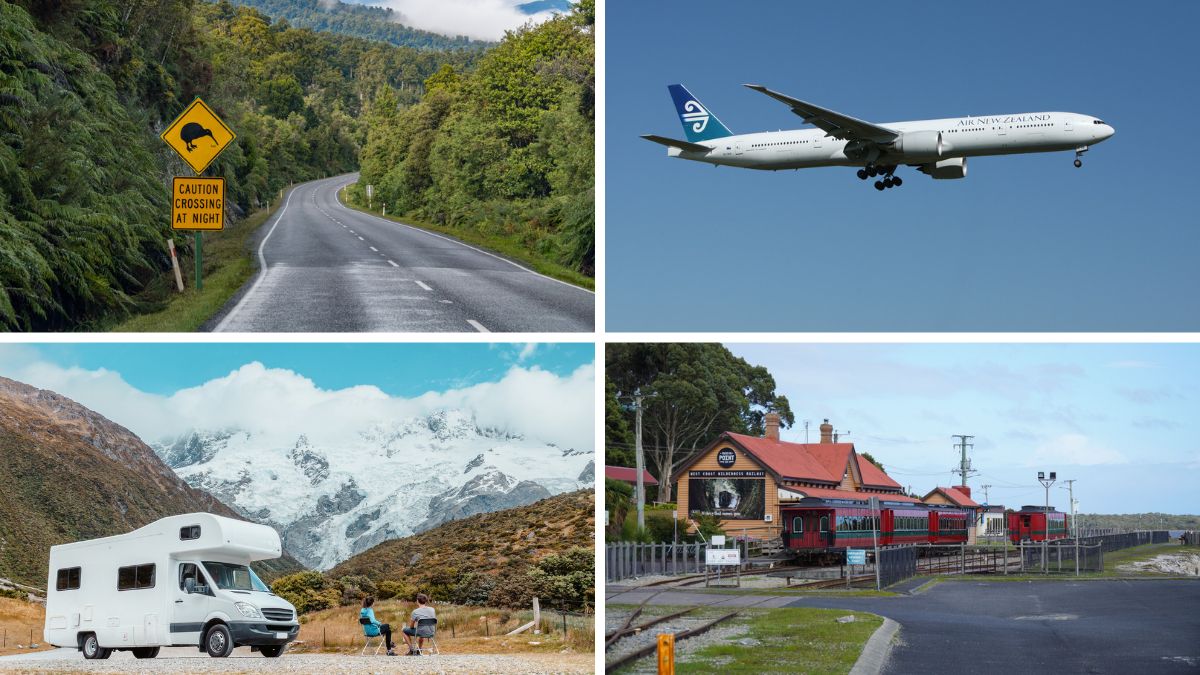
Freedom camping is regulated, not a right to sleep anywhere. Dunedin limits tents and non-self-contained vehicles to specific sites and imposes a maximum stay of two consecutive nights at one location. Taiaroa Head, Portobello, Macandrew Bay/Broad Bay, the Ocean Grove zone, cemeteries and scenic reserves are among prohibited areas. Fines can be substantial.
Rules and certification requirements continue to change, so read the Dunedin City Council freedom-camping page immediately before your trip. A paid holiday park is often better value once showers, laundry, power, legal certainty and a good night’s sleep are considered.
3) Where to Stay
Where you stay should follow your transport plan. A cheaper room on the edge of the city can cost more overall if you need taxis for meals, tours and early departures.
Central Dunedin and the Octagon
Best for: first visits, short stays, travelers without a car and evening dining.
Central accommodation puts the Octagon, railway station, Toitū, galleries and many restaurants within walking distance. Moray Place is also the main InterCity departure area. The trade-offs are paid parking, one-way streets, weekend noise around nightlife and higher prices during events.
Look closely at the slope between the property and the center. A listing described as “ten minutes from the Octagon” may involve a serious uphill return.
The Exchange and warehouse precinct
Best for: design-conscious stays, apartment hotels, cafés and a slightly quieter central base.
This southern part of the center is convenient for Princes Street, street art, Toitū and the railway station. It is a good compromise for travelers with a car because some properties offer easier parking than those around the Octagon, although parking is never automatic.
Where to Stay in Central Dunedin
These are some of our favorite accommodation recommednations in Dunedi.
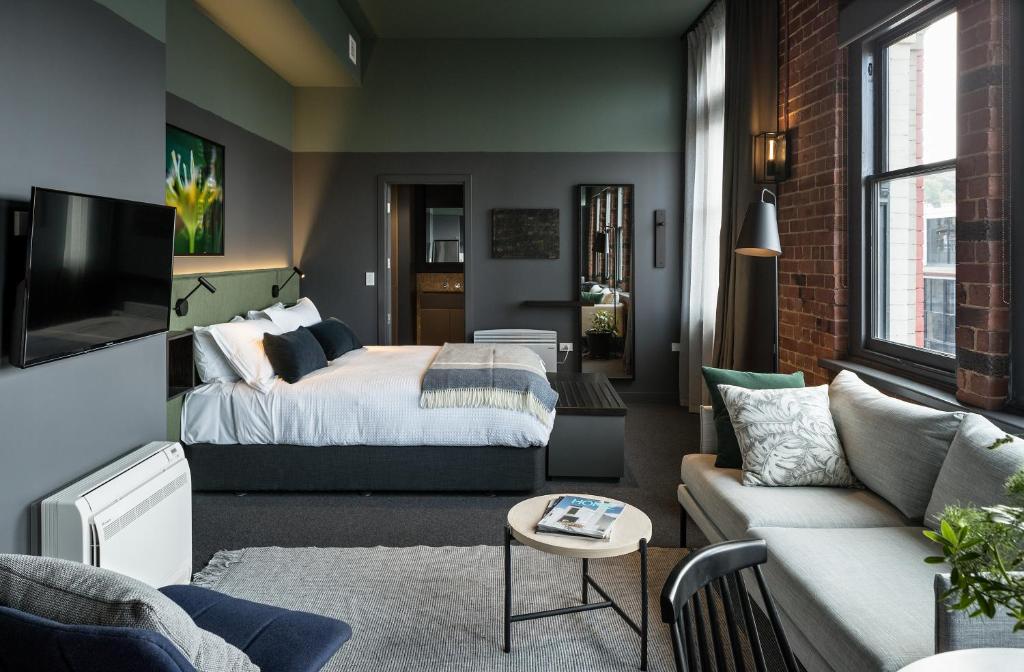
The Chamberson
Get the celebrity treatment with world-class service at The Chamberson. This hotel enjoys a central location in Dunedin, just 27 km from Dunedin Airport. Guests can also easily access nearby scuba-diving sites. The hotel offers free WiFi in public areas, a lift, daily housekeeping, 24-hour security, bicycle parking, express check-in and check-out, bike hire, and luggage storage.
Each room features a private bathroom with free toiletries and a shower, as well as a TV and soundproofing. Additional amenities include air conditioning, terraces, kitchenettes, balconies, and mountain views. Highly rated for its convenient location and suitability for city-centre trips, The Chamberson offers a comfortable stay for every guest. Couples especially appreciate the location, rating it 9.6 for a two-person trip.
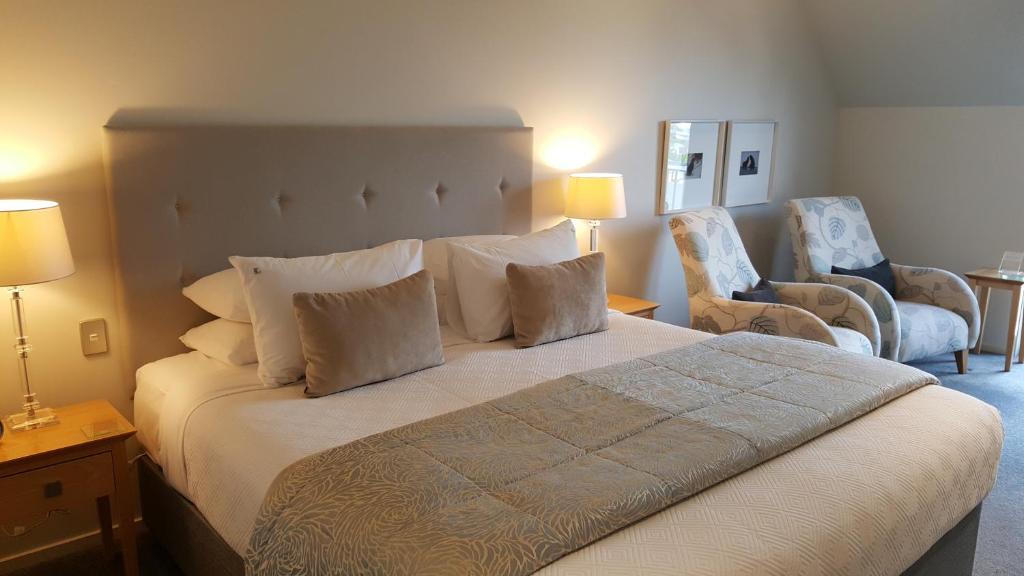
Bluestone On George
Bluestone on George is a stylish property in the heart of Dunedin, offering beautiful views across the city towards the surrounding hills and Otago Peninsula. The soundproofed studios are fully self-contained and feature electric blankets, LED Smart TVs and complimentary Wi-Fi. Bathrooms include underfloor heating and luxurious amenities, while selected rooms also offer spa baths.
Guests can relax in the guest lounge, where wine, chilled beer and platters are available to purchase. A light room-service menu, including breakfast and platters, is also offered. Free off-street parking is available. Shops, restaurants and cafés are just 200 metres away. Couples particularly enjoy the location, rating it 9.7 out of 10 for a two-person stay.
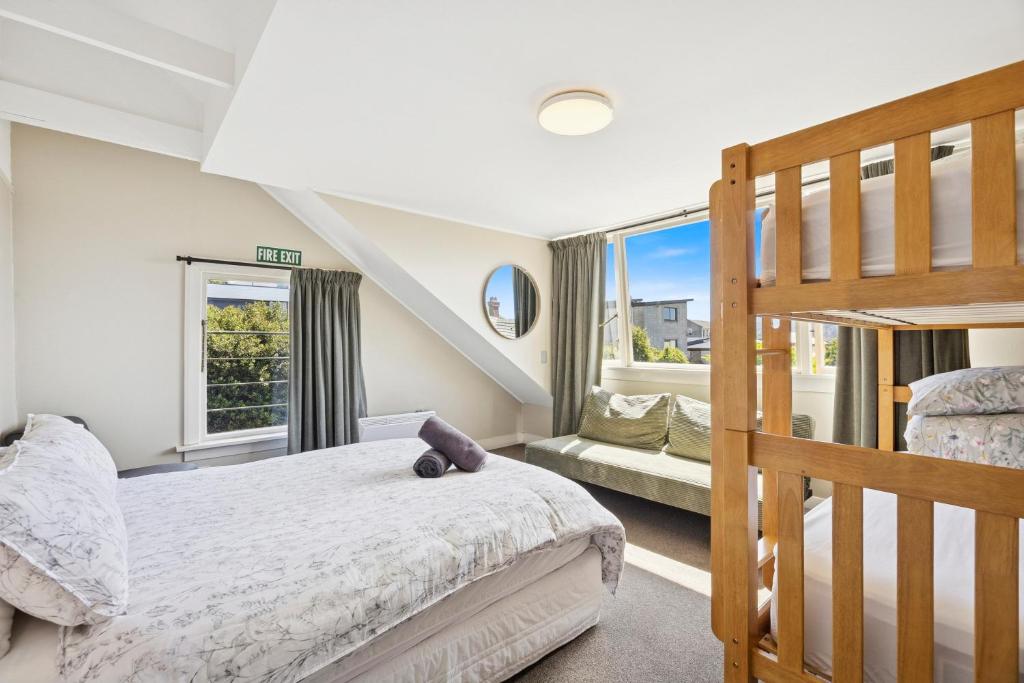
Manor on the Park Backpackers
Manor on the Park Backpackers in Dunedin provides hostel rooms, twin rooms and family rooms with garden or city views. Every room features a sofa bed, carpeted floors, and access to a shared bathroom with a shower. Guests can enjoy a garden, outdoor fireplace, and free WiFi. The hostel also has a lounge, outdoor seating area, and shared kitchen, along with amenities such as a hairdryer and luggage storage.
The hostel hosts film nights and offers scuba diving in the surrounding area. Express check-in and check-out make arrivals and departures convenient. Situated 27 km from Dunedin Airport, the property offers full-day security and is close to attractions including Dunedin Botanic Garden. Couples especially appreciate the location, rating it 9.2 for a two-person stay.
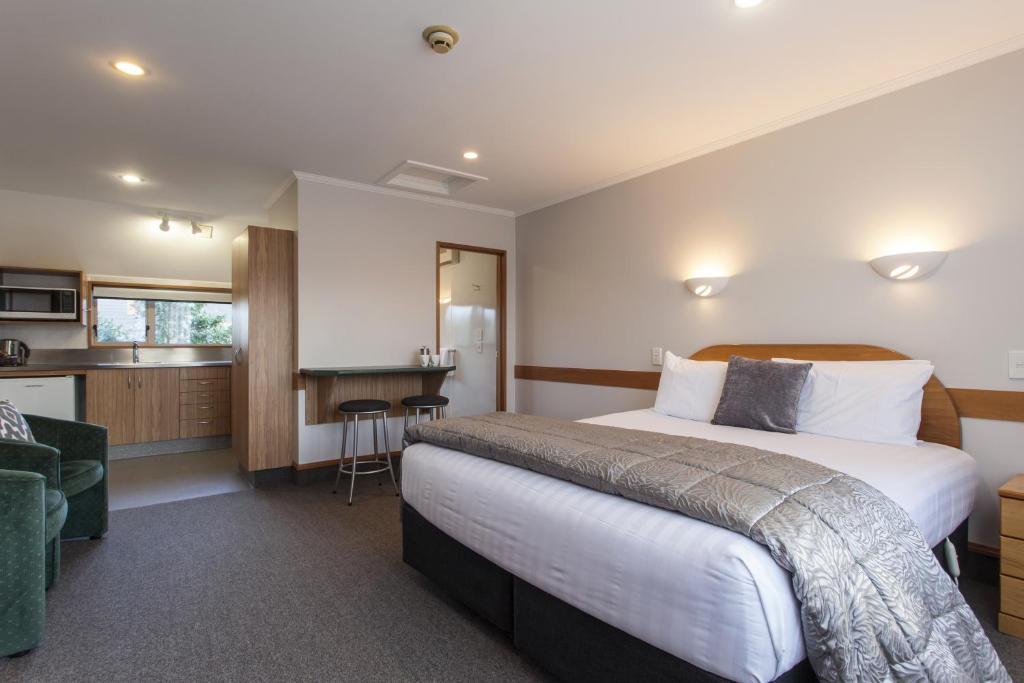
Amross Motel
Lovely welcoming owners, rooms are very clean and rooms arev close to town and restaurants. Centrally located in Dunedin, Amross Motel is just 400 m from Otago Museum. Guests enjoy free unlimited fibre-speed WiFi on multiple devices, over 50 satellite channels, and complimentary Netflix. These self-contained apartments feature a kitchenette with a microwave, luxurious bedding, electric blankets, and ironing facilities. The en suite bathrooms include free toiletries and hairdryers.
Apartments with accessible facilities are available. The motel also offers self-service laundry facilities and luggage storage. All rooms feature a 50-inch smart LED TV with a wireless keyboard, as well as unlimited high-speed fibre-optic internet on multiple devices. Motel Amross is a 30-minute drive from Larnach Castle and a 35-minute drive from Dunedin Airport. The University of Otago and Dunedin Hospital are within walking distance. Couples especially appreciate the location, rating it 9.5 for a two-person stay.
North Dunedin
Best for: Tūhura Otago Museum, the university, hospital visits and budget food.
North Dunedin has hostels, motels and student-oriented services. It can be excellent value, but noise varies by street and by the university calendar. Read recent reviews rather than assuming every property in the area is quiet or lively.
St Clair
Best for: ocean views, beach walks, cafés and a neighborhood feel.
St Clair is more atmospheric than central for a longer stay, especially if you have a car. Buses connect it with the city, but late-evening frequency needs checking. Sea-facing rooms can be memorable; they can also be exposed to wind and road or esplanade activity.
Otago Peninsula: Macandrew Bay, Portobello and beyond
Best for: slow travel, scenery, wildlife and self-catering stays.
Peninsula accommodation reduces the journey to wildlife sites and creates a peaceful base, but it limits spontaneous city dining and makes a vehicle much more useful. Portobello has the most practical cluster of food and services. Farther out, confirm dinner options, heating, Wi-Fi and whether breakfast is included.
Do not choose a remote peninsula room simply because it looks close to Dunedin on a map. The road is winding, and late-night driving after penguin viewing requires concentration.
Some of our favorite stays!
These are some recommended accomodation options if you find yourself in the Otago Peninsula
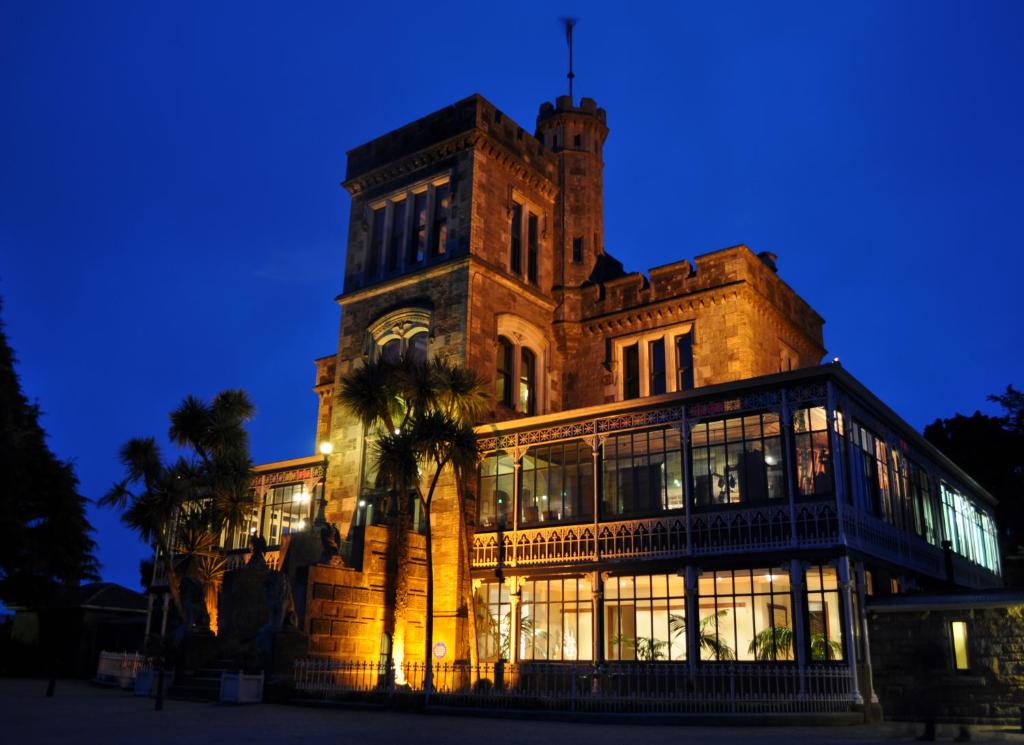
Larnach Lodge & Stable Stay
Set amidst the grounds of the magnificent Larnach Castle and surrounded by beautiful gardens, Larnach Lodge and The Stables offer a truly unique accommodation experience. Larnach Lodge features individually styled rooms, each with an ensuite bathroom and panoramic views of Otago Harbour and the Otago Peninsula. For a more budget-friendly option, The Stables offers comfortable accommodation in the castle’s original historic stables, with shared bathroom facilities.
All room rates include a delicious cooked breakfast, complimentary Wi-Fi, and unlimited access to the Castle and Gardens. Guests can also enjoy a four-course dinner in the Larnach Castle dining room for an additional charge. High teas and guided tours are available as well. Situated on the world-famous Otago Peninsula, Larnach Castle is just a 25-minute drive from Dunedin city centre. Couples particularly love the location, rating it 9.5 out of 10 for a two-person stay.
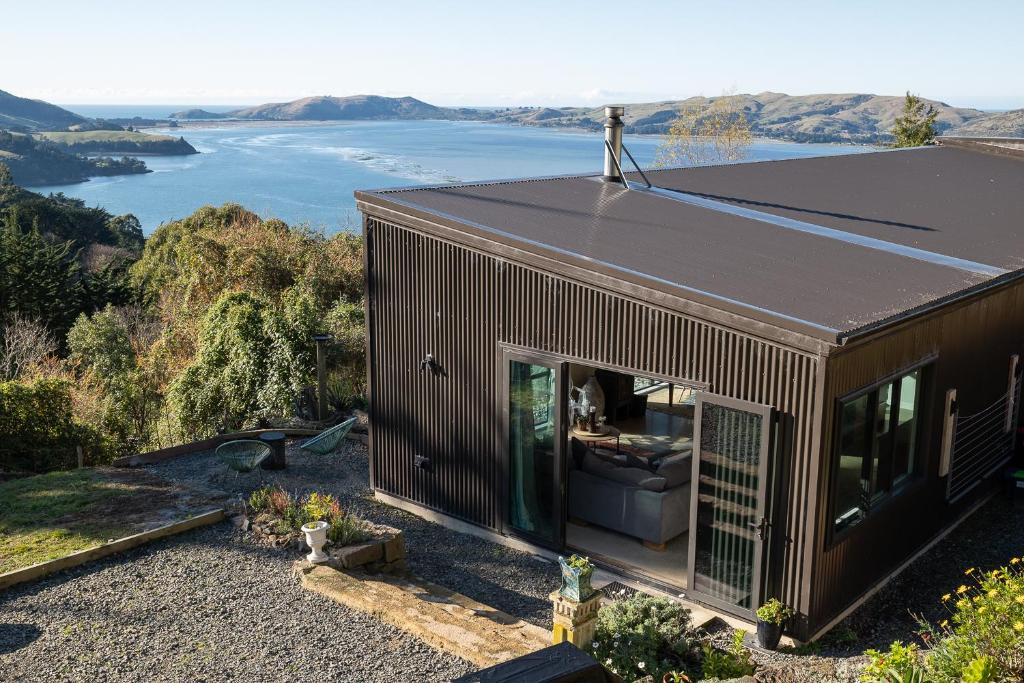
Manu Heights Retreat
Manu Heights Retreat offers a spacious and comfortable stay in Dunedin, New Zealand. The property features a garden, terrace, and free WiFi, providing a relaxing setting for every guest. The home includes a fully equipped kitchen with a refrigerator, dishwasher, oven, stovetop, and toaster. Guests can enjoy beautiful sea views from the terrace and outdoor seating area, as well as the privacy of a private entrance.
Private check-in and check-out, family rooms, and free private parking on-site ensure a hassle-free stay. Additional amenities include a washing machine, dining area, and cosy fireplace. Located 43 km from Dunedin Airport, the property offers convenient access to the city and surrounding attractions. Couples particularly appreciate the location, rating it 9.8 out of 10 for a two-person stay.
Port Chalmers and the northern coast
Best for: harbor character, artists, cruise connections and Orokonui.
Port Chalmers can work without a car during bus operating hours. Waitati, Warrington and Karitāne are more car-dependent but suit a quiet coastal stay. Supply is limited, so cancellation terms and minimum-night rules matter.
Oamaru, the Catlins and Central Otago
For wider-region travel, move bases instead of commuting from Dunedin:
- Stay near Oamaru Harbour if an evening penguin visit is central to the plan.
- Use Kaka Point or Owaka for the northern Catlins.
- Choose Clyde or Alexandra for the western end of the Otago Central Rail Trail.
- Use Ranfurly, Naseby or another Maniototo town for dark skies and heritage.
- Treat Queenstown and Wānaka as separate destinations with their own higher-demand accommodation markets.
What to check before booking any room
In Otago, a low headline rate can hide practical costs. Confirm:
- whether the price includes GST and all booking fees;
- free cancellation deadline and prepayment terms;
- heating, especially in older houses and rural cottages;
- on-site parking and height limits for vans;
- kitchen or breakfast access;
- laundry for road trips and cycle journeys;
- late check-in after wildlife tours;
- distance to food, not just distance to an attraction;
- whether the bed and room type match the photographs.
4) Typical and True Costs in 2026
Dunedin is often less expensive than Queenstown, but it is New Zealand so it’s not a low-cost destination by global standards. Accommodation spikes around university events, concerts, festivals, cruise days and summer weekends. Regional trips add fuel or tour transfers, while wildlife activities are priced to support specialist guides and conservation work.
The ranges below are realistic planning figures compiled from official 2026 attraction prices, current transport fares and accommodation, food and vehicle spot checks. They are deliberately rounded because a fake “exact average” would be less useful than a defensible range.
Accommodation costs per night
| Accommodation | Typical 2026 price | What changes the total |
|---|---|---|
| Hostel dorm bed | NZ$40–70 per person | Weekends, events, room size and booking lead time |
| Basic private hostel room or simple cabin | NZ$100–180 | Shared bathroom, linen and heating |
| Motel or budget hotel room | NZ$140–240 | Parking, kitchen facilities and location |
| Comfortable mid-range hotel/apartment | NZ$190–340 | Central location, breakfast, parking and cancellation |
| Boutique or upscale stay | NZ$320–600+ | View, room type, demand and inclusions |
| Rural/peninsula cottage | NZ$180–380 | Minimum stays, cleaning fees and remoteness |
| Holiday-park powered site | About NZ$50–95 for two | Extra adults/children, power and season |
Solo travelers bear the full private-room cost. Two people sharing often spend far less per person, although some rural stays add cleaning or booking fees that make one-night stays poor value.
Food and drink costs
| Item | Realistic 2026 range |
|---|---|
| Self-catered food for one day | NZ$25–45 |
| Coffee | NZ$5.50–7.50 |
| Bakery breakfast or takeaway snack | NZ$8–18 |
| Café breakfast/brunch | NZ$20–35 |
| Casual lunch or takeaway meal | NZ$18–30 |
| Pub meal or restaurant main | NZ$28–52 |
| Two-course dinner | NZ$50–85 per person |
| Tap beer or glass of wine | NZ$11–18 |
Add more in small tourist towns, where competition and opening hours are limited. A kitchen is most valuable for breakfast and simple dinners; buying an entire pantry for a two-night stay can cost more than expected.
Local transport and vehicle costs
| Transport | Typical 2026 cost | Honest planning note |
|---|---|---|
| Dunedin Orbus adult fare with Bee Card | NZ$2.50 per trip | Bee Card costs NZ$5 plus a minimum NZ$5 top-up |
| Dunedin Orbus adult cash fare | NZ$4 per trip | Cash or Bee Card only; bank cards are not accepted on board |
| Airport shared shuttle | Quote for date and address | Usually cheaper than a taxi but may take longer with several stops |
| Airport taxi/private transfer | Roughly NZ$90–120 | The airport lists one operator at a NZ$100 fixed city rate |
| Small rental car headline rate | NZ$50–120 per day | Lowest rates may exclude useful excess reduction |
| Small rental car realistic total | NZ$90–190 per day | Allows for better cover and common fees, before petrol |
| Petrol, 91 octane | Budget NZ$3.00–3.80 per liter | Fuel was exceptionally volatile in 2026; check locally on the day |
| Central-city parking | NZ$10–35 per day | Hotel parking may cost more; some street periods are free |
Current Orbus fares and payment rules are published by the Otago Regional Council. Dunedin Airport lists its authorized taxi and shuttle operators. Use the Gaspy app or website to compare current petrol prices rather than trusting an old national average.
Real rental-car example: A two-day advertised rental at NZ$65 per day is not a NZ$130 transport plan. Add NZ$35–50 per day for lower excess, perhaps NZ$40–80 of petrol for a peninsula and coastal itinerary, parking and any airport or one-way fee. The realistic total may be NZ$240–350.
Attractions and tours
| Experience | Adult price checked in September 2026 |
|---|---|
| Toitū Otago Settlers Museum | Free; donation welcome |
| Dunedin Public Art Gallery | Free general admission |
| Dunedin Botanic Garden | Free |
| Lan Yuan Chinese Garden | NZ$13.50 |
| Olveston guided tour | NZ$26.50 |
| Larnach Castle and gardens | NZ$48 through 30 September 2026 |
| Larnach gardens only | NZ$24 through 30 September 2026 |
| Royal Albatross Classic | From NZ$68.39 |
| Unique Taiaroa albatross and fort tour | From NZ$78.91 |
| Monarch one-hour wildlife cruise | NZ$70 |
| Taieri Gorge return train | NZ$169 |
| Guided peninsula or wildlife tour from the city | Commonly NZ$140–300+ |
“From” means exactly that. Booking fees, premium time slots, transport, food and combined attractions can raise the final price. Always compare like with like: a NZ$70 self-drive cruise is not equivalent to a NZ$200 tour that includes city pickup, a guide and several stops.
Hidden and commonly missed costs
- Airport transfers: Dunedin Airport is outside the city and has no normal public bus.
- Rental excess reduction: the basic excess can be several thousand dollars.
- Hotel parking: central parking is not always included.
- One-way vehicle fees: important on Dunedin–Queenstown or Dunedin–Christchurch itineraries.
- Rural meals: limited choice can remove cheap options.
- Penguin-tour transport: evening finish times can make a taxi impractical.
- Weather changes: a flexible booking may be worth more than the cheapest non-refundable price.
- Campervan facilities: paid campgrounds, dump stations, LPG and laundry belong in the budget.
- Cycle-trail logistics: bike hire, transfers and luggage moves can exceed accommodation costs.
- Foreign-card and currency conversion: choose NZD at the payment screen when your bank’s rate is better than dynamic currency conversion.
5) Suggested Budget
These daily budgets exclude flights to New Zealand and long-distance transport into Dunedin. They assume one adult unless the table says otherwise.
Daily budget by travel style
| Travel style | Realistic daily budget | What it covers |
|---|---|---|
| Careful backpacker, no car | NZ$140–210 | Dorm, groceries plus one cheap meal, buses, mostly free sights and a small activity allowance |
| Budget traveler with shared car | NZ$190–290 per person | Dorm/basic room, shared rental and petrol, simple food and selected paid sights |
| Solo mid-range traveler | NZ$290–460 | Motel or hotel, café and casual restaurant meals, transport and one paid experience |
| Mid-range couple sharing | NZ$470–700 total | Comfortable room, rental car, meals and one paid activity each |
| Comfortable/high-end couple | NZ$800–1,300+ total | Upscale room, restaurants, flexible transport and premium or multiple tours |
The original draft’s NZ$110 lower-end figure is no longer comfortable for most travelers in 2026. It is achievable only with a cheap dorm, self-catering, walking and free attractions—and leaves almost no room for the experiences that make the peninsula special.
Three-day Dunedin budget
For a three-day, three-night first visit:
| Trip type | Solo total | Two-person total |
|---|---|---|
| Backpacker city trip, one modest paid sight | NZ$440–650 | NZ$800–1,150 |
| Mid-range city and peninsula trip | NZ$950–1,450 | NZ$1,550–2,250 |
| Comfortable trip with premium wildlife experiences | NZ$1,650–2,600+ | NZ$2,500–4,000+ |
Add airport transfers or a rental-car pickup separately if not already included. A 10–15% contingency remains sensible because weather can change the order of activities and 2026 fuel prices have been unusually volatile.
Wider Otago add-on budget
A self-drive night in Oamaru typically adds NZ$300–550 for a solo traveler or NZ$450–750 for a couple once the car, petrol, room, meals and evening penguin experience are included. A multi-day Central Otago cycle trip is a different category: even self-guided packages can be expensive because they combine bicycles, accommodation, luggage transfers and shuttles. Price the entire route before committing to dates.
6) Money-Saving Tips
Stay central when you do not have a car
A NZ$20 saving on a suburban room disappears after two taxi rides. Central Dunedin lets you walk to museums, food, InterCity departures and some tour pickups.
Buy a Bee Card only if the numbers work
An adult Bee Card fare is NZ$1.50 cheaper than cash, but the card itself costs NZ$5 and requires at least a NZ$5 top-up. It normally pays off after four adult trips. One or two bus journeys are cheaper and simpler with cash. Carry small notes or coins because bank and credit cards cannot be used to pay on board.
Choose one major wildlife experience
You do not need an albatross observatory tour, harbor cruise, blue-penguin evening and full wildlife van tour on the same trip. Pick the species and style that excite you most, then use free coastal walks and viewpoints for the rest.
Compare transport-inclusive and self-drive prices
For one traveler, a NZ$180 peninsula tour with city pickup may be cheaper than a rental car, insurance, petrol and parking. For two to four people, a car often wins—but only after you calculate the full insured price.
Use free attractions strategically
Toitū, the Dunedin Public Art Gallery, Botanic Garden, street art, beaches, the railway-station exterior, the Octagon and many viewpoints can fill a rich city day for very little. Save paid spending for the experiences that cannot be replicated independently, particularly conservation-led wildlife access.
Visit the Otago Farmers Market
If you are in Dunedin on Saturday morning, the market beside the railway station is useful for local produce, baked food and picnic supplies. Arrive earlier for the broadest choice and bring a reusable bag.
Book accommodation early around events
University graduations, major concerts, sports fixtures, festivals and cruise days can raise room rates sharply. Reserve a cancellable option early, then recheck prices before the free-cancellation deadline.
Compare Klook.com with the property’s direct rate
Klook.com compares rates from multiple travel sites and sometimes offers its own price. It is useful for seeing whether the same hotel is being sold through different channels. Match the exact room, payment timing, taxes, breakfast, cancellation and booking provider before deciding. A lower number is not a saving if it is non-refundable or excludes parking.
Search Klook and Viator—but check the operator
Klook and Viator can surface discounts, bundles and tours with transport. Before paying, identify the actual local operator, meeting point, cancellation deadline and inclusions. Compare the same tour directly. Platform inventory can also be thin on quieter dates, so an empty search does not mean an attraction is closed.
Avoid false savings
Do not save money by skipping travel insurance, driving tired, ignoring tides or booking an unsuitable non-refundable wildlife tour. The cheapest trip is the one that still works when weather and logistics are considered.
7) How to Get Around
Walking
Central Dunedin is compact and best explored on foot. The Octagon, railway station, Toitū, Chinese Garden and warehouse precinct sit within a manageable loop. North Dunedin and the Botanic Garden are also walkable for fit travelers.
The catch is topography. Streets rise steeply from the center, surfaces can be slippery in wet weather and an apparently short route may be tiring with luggage. Accessible travelers should check gradients rather than distance alone.
Orbus local buses
Orbus connects the center with St Clair, St Kilda, North Dunedin, Port Chalmers, Mosgiel and several peninsula settlements. It is excellent value for urban trips but does not reach every wildlife site.
Adult fares are NZ$2.50 with a Bee Card and NZ$4 cash. A registered Bee Card also allows qualifying free transfers within a 45-minute window. Tag on and off; forgetting to tag off can trigger the higher default fare. Use the Orbus journey planner for the actual day and time, especially evenings, Sundays and public holidays.
Public transport is not a practical way to reach the Royal Albatross Centre. The nearest bus endpoint leaves a roughly 40-minute walk along a road without a footpath.
Airport transfers
Dunedin Airport is at Momona, outside the urban bus network. Pre-booked shared shuttles are usually the least expensive door-to-door option. Taxis and private transfers are quicker for groups, and rental companies operate at the terminal.
Allow around 30 minutes by direct car in ordinary conditions and longer for shared shuttle stops. Confirm early-morning pickup times rather than assuming 24-hour frequency. Uber cannot normally collect from the airport, according to the official Dunedin access guide.
Rental car
A car is most useful for:
- Larnach Castle, Taiaroa Head and multiple peninsula stops;
- Orokonui plus northern beaches;
- Moeraki, Oamaru and the Catlins;
- Central Otago road trips;
- remote cottages and holiday parks.
It is unnecessary for a museum-focused central stay. Consider renting only for the regional days rather than paying for a vehicle and hotel parking throughout.
Before accepting the keys, confirm the insurance excess, underbody and windscreen cover, additional-driver fee, unsealed-road rules, fuel policy, security deposit and after-hours return procedure. Photograph all sides, wheels and windscreen.
Guided tours
A tour is not a failure of independent travel. On the Otago Peninsula, a good small-group tour solves transport, narrow-road driving, wildlife access and evening fatigue while adding a guide who understands animal behavior. It is particularly rational for solo travelers and short stays.
Compare city pickup with cruise-port pickup carefully. Shore excursions can be timed and priced for ships rather than hotel guests.
Some great guided tours are:
- Taieri Gorge Scenic Railway Journey from Dunedin
- Iconic Shore Excursion: Dunedin City Highlights Tour
- Iconic Shore Excursion: Iconic Larnach Castle Tour
- Otago Peninsula Wildlife Tour & Cruise
Taxis and rideshare
Taxis are useful for late nights and one-off suburban trips. App-based availability is more limited than in Auckland or Wellington and airport rules differ from city rules. Pre-book important journeys, especially early flights and evening wildlife connections.
Cycling and e-bikes
Dunedin’s hills, wind and traffic make city cycling better suited to confident riders. The harbor-side route toward Portobello is much more appealing as separated sections have improved, but check where the shared path ends and whether your rental company allows one-way arrangements.
For Central Otago, book the correct bike for the surface and distance. An e-bike reduces effort but does not remove the need for fitness, warm layers, water or a battery-range plan.
Intercity bus
InterCity links Dunedin with Christchurch, Oamaru, Queenstown and Invercargill. The Dunedin–Christchurch journey takes about six hours, while Dunedin–Queenstown takes about four hours 20 minutes. Fares vary by date and flexibility. Book directly through InterCity and check luggage rules for bicycles and oversized gear.
Driving times that travelers often underestimate
| Route | Sensible planning time without long stops |
|---|---|
| Dunedin Airport to central city | About 30 minutes |
| Central Dunedin to Taiaroa Head | 50–60 minutes |
| Dunedin to Moeraki Boulders | About 1 hour |
| Dunedin to Oamaru | About 1 hour 30 minutes |
| Dunedin to Nugget Point | About 2 hours |
| Dunedin to Alexandra | About 2 hours 45 minutes–3 hours |
| Dunedin to Queenstown | About 3 hours 30 minutes by car; 4 hours 20 minutes by bus |
| Dunedin to Christchurch | About 4 hours 30 minutes by car; about 6 hours by bus |
These are planning estimates, not promises. Add time for roadworks, photos, food, weather and fatigue.
8) When to Go
Dunedin has a cool maritime climate; Central Otago has greater temperature extremes. The rainfall is considerably less than on the West Coast. There is no month when a waterproof layer and warm mid-layer are a bad idea.
Summer: December to February
Summer offers the longest daylight, the broadest tour schedule and the best conditions for combining city, coast and evening wildlife. It is also the busiest period, particularly from late December through January. Accommodation, rental cars and popular penguin tours need early booking.
Dunedin’s summer is mild rather than tropical. A warm, still afternoon can become a cold, windy evening at Taiaroa Head. Inland Central Otago can be much hotter and drier, so prepare for sun and heat on cycle trails.
Best for: first visits, road trips, long daylight, gardens and families.
Watch for: peak prices, cruise crowds, sold-out wildlife tours and sun exposure.
Autumn: March to May
March and April are arguably the best all-round months. Daylight remains useful, summer holiday demand eases and Central Otago’s autumn color can be spectacular. Albatross chicks are growing on the headland, while adult visits to feed them continue.
By May, evenings are colder and some seasonal schedules reduce. Central Otago can experience hard frosts.
Best for: photography, food and wine, lighter crowds, Otago road trips.
Watch for: shorter days, cool nights and reduced rural hours.
Winter: June to August
Winter gives Dunedin moody coastal light, uncrowded museums and atmospheric dining. It can also bring cold rain, wind and occasional snow on hills. Central Otago is substantially colder, with frost, ice, fog and possible road disruption.
The upside for wildlife is that large albatross chicks remain on the headland through winter. The Taieri Gorge and other attractions may run fewer departures, so confirm before booking flights around a single activity.
Best for: indoor culture, quiet stays, albatross chicks and travelers comfortable with cold weather.
Watch for: ice, limited daylight, schedule reductions and exposed coastal conditions.
Spring: September to November
Spring is dynamic. September can offer active albatross chicks preparing to fledge. October is the awkward gap after chicks leave and before new nests are established, so albatross viewing is less predictable. In November, breeding activity builds and daylight becomes much longer.
Weather may deliver sun, wind, rain and cold in quick succession. Spring flowers and low-season value can still make it rewarding.
Best for: gardens, shoulder-season travel and longer days from November.
Watch for: changeable weather and the October albatross viewing gap.
Events and cruise days
Dunedin’s accommodation market is small enough that one graduation weekend, concert or major sports fixture can affect prices. Cruise ships also make the railway station, peninsula roads and central attractions busier for part of the day. Check the local events calendar and port schedule before assuming a surprising hotel price is normal.
9) Best Places to Book Your Trip
No single booking site is best for every part of a Dunedin and Otago trip. Use comparison platforms to discover options, then choose the channel with the best total price, conditions and support.
Accommodation: Klook.com plus a direct check
Klook.com is useful for comparing hotel prices from several booking providers on one screen. It may send you to another travel site or offer a booking itself. Its value is comparison, not a guarantee that the first price shown is best.
Before paying, match:
- exact room and bed type;
- total in NZD, including taxes and fees;
- whether payment is now or at the property;
- free-cancellation deadline in New Zealand time;
- breakfast, parking and cleaning fees;
- the company that will actually hold and service the reservation.
Then check the accommodation’s own website. Direct booking can make late arrival, room requests and changes easier, while Klook or its listed partner may still have the lower total.
Activities and transport: Klook
Klook can be useful for attraction tickets, selected tours and transport products. Its Dunedin inventory is generally smaller than its Queenstown inventory, so search both “Dunedin” and the exact attraction name.
Klook is most useful when it offers a genuine mobile ticket, a discount or a clear package. Check whether transport begins in central Dunedin, Port Chalmers or at the attraction itself. “Otago Peninsula tour” does not automatically mean hotel pickup or admission to the albatross observatory.
Tours and wildlife: Viator
Viator’s Dunedin and Otago Peninsula page has a broad selection of city, wildlife, railway and shore excursions. It is particularly useful for comparing duration, recent review patterns, group size and cancellation options.
Prices may display in your selected currency rather than NZD, and similar tour names can hide different inclusions. Identify the operator, read the most recent low as well as high reviews, and check whether wildlife claims are framed as a chance rather than a promise. Viator listed dozens of Dunedin options in September 2026, but revenue can influence listing order; “featured” is not the same as “best.”
Book conservation experiences directly
For limited-capacity or weather-sensitive experiences, direct booking gives the clearest source of current information:
- Royal Albatross Centre for albatross and Fort Taiaroa tours;
- Blue Penguins Pukekura for evening kororā viewing;
- The OPERA for conservation-led hoiho experiences;
- Monarch Wildlife Cruises for harbor and peninsula cruises;
- Larnach Castle for current entry and opening times;
- Dunedin Railways for confirmed train dates and standard fares;
- Orokonui Ecosanctuary for opening days and guided options.
Third-party discounts can still be worthwhile. The direct page simply gives you the baseline schedule, standard price and weather policy against which to compare.
Flights
Dunedin Airport has regular domestic links with New Zealand’s main centers, operated principally by Air New Zealand and Jetstar. Compare the fare after checked bags, seat selection and change conditions—not before.
Leave a sensible buffer before a separate international ticket. Weather or domestic operational delays can make a self-connection expensive if the tickets are unrelated.
Rental cars- Dunedin Otago travel guide
Compare airport and city locations. Airport pickup saves a transfer but may include location-related charges; city pickup can be cheaper if you spend the first day walking. Book with a supplier that clearly explains excess, bond and roadside assistance.
For one-way itineraries, compare Dunedin–Queenstown and the reverse direction. Repositioning demand can make one direction considerably cheaper.
Intercity buses and local help
Book long-distance coaches through InterCity. For complicated local combinations, the Dunedin i-SITE Visitor Centre can book transport, tours and accommodation and is especially useful when online listings are unclear or a wildlife tour is sold out.
The best booking order
- Check events, cruise days, seasonal openings and road conditions.
- Reserve flexible accommodation in the right area.
- Book flights or intercity transport.
- Decide whether peninsula days use a car or city-pickup tour.
- Reserve limited wildlife experiences and the Taieri Gorge train.
- Add airport transport and restaurants with restricted hours.
- Recheck every booking one week before arrival and again after major weather changes.
Dunedin Otago Travel Guide Frequently Asked Questions
Is Dunedin worth visiting?
Yes—especially for travelers interested in wildlife, architecture, museums, beaches and places with a strong local identity. It offers a more compact, less commercial experience than Queenstown, but you need realistic time for the peninsula.
Is Dunedin expensive in 2026?
Dunedin is usually cheaper than Queenstown for accommodation, but food, fuel, rental cars and specialist wildlife tours are still expensive. A solo mid-range traveler should plan around NZ$290–460 per day, excluding flights into the city.
Can you visit the Otago Peninsula without a car?
Yes, but not every site is practical by public bus. Local buses reach peninsula settlements, while Taiaroa Head remains a long unsafe walk from the nearest useful stop. A guided tour with city pickup is the simplest no-car option.
What is the best wildlife experience in Dunedin?
There is no universal best. Choose the Royal Albatross Centre for the breeding colony, Blue Penguins Pukekura for a reliable evening kororā experience, The OPERA for conservation-led hoiho viewing or a harbor cruise for seabirds, seals and scenery from the water.
Are penguin sightings guaranteed?
Blue Penguins Pukekura advertises guaranteed penguin viewing on its standard experience, subject to its terms. Hoiho sightings are not guaranteed because the birds are extremely rare and wild. Albatross flight is also never guaranteed.
Can you see albatross for free?
You may see an albatross flying from the free cliff-viewing platform at Taiaroa Head, particularly in favorable wind, but the nesting observatory is accessible only on a paid guided tour.
Is Tunnel Beach open in 2026?
Yes, it reopened after repair work. Check DOC alerts before visiting. Go near low tide, stay on the track, keep away from cliff edges and do not swim there.
Can you use a credit card on Dunedin buses?
No. Orbus accepts a Bee Card or cash for the onboard fare. In September 2026, an adult trip cost NZ$2.50 with a Bee Card or NZ$4 cash.
Is there a public bus from Dunedin Airport?
No regular urban bus serves the airport. Use a pre-booked shuttle, taxi, private transfer or rental car.
Can you visit Queenstown as a day trip from Dunedin?
Technically possible by a very long drive, but not enjoyable or sensible. Allow about 3.5 hours each way by car in good conditions and stay overnight.
What should you pack for Dunedin?
Bring a waterproof outer layer, warm mid-layer, sturdy footwear, sun protection, reusable water bottle and a small daypack in every season. Add gloves and a warm hat for winter or evening wildlife tours.
Is three days enough for Dunedin?
Three days is enough for a rewarding first visit: one central-city day, one peninsula day and one flexible day. Four is better if the Taieri Gorge train, several wildlife experiences or uncertain weather are involved.
Final thoughts
Dunedin is at its best when you resist the urge to turn it into a checklist. Walk the city slowly enough to notice its stonework and creative edges. Give the Otago Peninsula a full day instead of racing between wildlife appointments. Choose conservation experiences that put the animals first, and treat Central Otago, Oamaru and the Catlins as true journeys rather than map pins.
With warm layers, a realistic budget and space for the weather to change, independent travel in Dunedin and Otago can be one of the South Island’s most rewarding experiences: cultured without being polished smooth, wild without being inaccessible, and memorable precisely because it still feels unmistakably itself.
22 Works Cited
albatross.org.nz. Royal Albatross Colony. 2026, albatross.org.nz/.
beecard.co.nz/. Bus, Train, and Ferry better with Bee Card. 2026, beecard.co.nz/.
BluePenguins.co.nz. Discover Kororā — The Little Blue Penguin. 2026, www.bluepenguins.co.nz/.
BusinessSouth. Your starting point for support and growth. 2026, business-south.org.nz/.
catlins.org.nz. Let The Catlins captivate you. 2026, www.catlins.org.nz/.
DOC. Sandfy Bay Track. 2026, www.doc.govt.nz/parks-and-recreation/places-to-go/otago/places/otago-peninsula-area/things-to-do/sandfly-bay-track/.
—. Tunnel Beach Walk. 2026, www.doc.govt.nz/parks-and-recreation/places-to-go/otago/places/dunedin-area/things-to-do/tunnel-beach-walk/.
—. Yellow-eyed penguin/hoiho. 2026, www.doc.govt.nz/nature/native-animals/birds/birds-a-z/penguins/yellow-eyed-penguin-hoiho/.
Dunedin. Taieri Gorge Train. 2026, www.dunedinnz.com/insiders/taieri-gorge-train.
LinYuan. Opening Hours. www.dunedinchinesegarden.com/visit/opening-hours.
newzealand.com. Moeraki Boulders. 2026, www.newzealand.com/nz/feature/moeraki-boulders/.
—. Oamaru. 2026, www.newzealand.com/nz/oamaru/.
NZ.com. St Clair Beach. 2026, www.newzealand.com/au/feature/st-clair-beach/.
Olivia. The world's steepest street. 2026, www.dunedinnz.com/insiders/baldwin-street.
Olveston. Olveston Historic Home and Gardens. 2026, www.olveston.co.nz/.
orokonui.nz. Orokonui Ecosanctuary Te Korowai o Mihiwaka. 2026, orokonui.nz/.
otagocentralrailtrail.co.nz. Otago Central Rail Trail – MORE THAN A BIKE RIDE. 2026, www.otagocentralrailtrail.co.nz/.
Pauls, St. Tēnā koutou katoa! Welcome to St Paul’s Cathedral! 2026, stpaulsnz.net/.
Speights. brewing Speight’s in Dunedin since 1876. 2026, www.speights.co.nz/the-brewery/.
Toitu. Toitu Otago Settlers Museum. 2026, www.toituosm.com/.
UniversityofOtago. Discover your path. 2026, www.otago.ac.nz/.
wildlife.co.nz. ONE HOUR WILDLIFE CRUISE. 2026, www.wildlife.co.nz/wildlife-cruise.