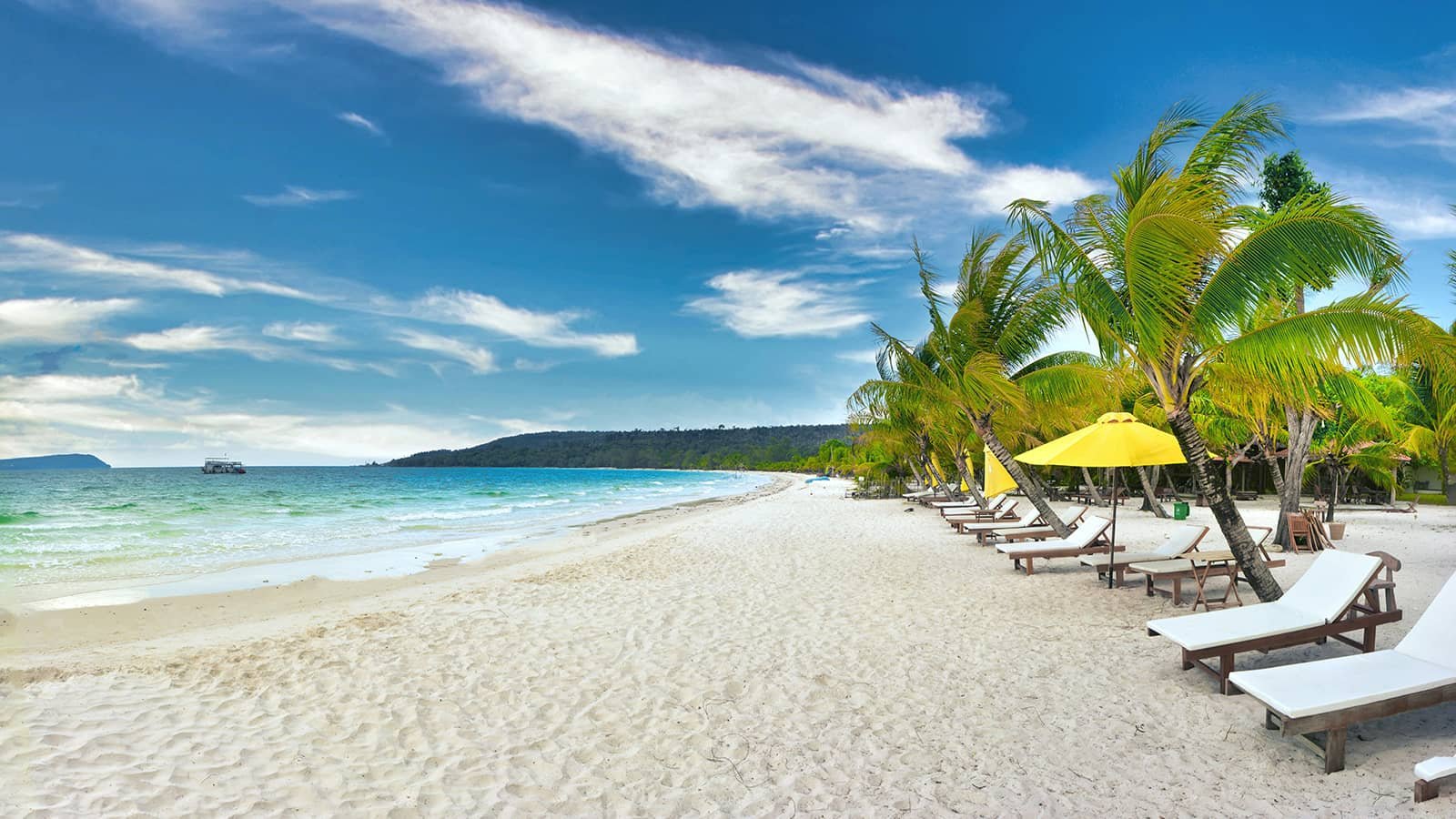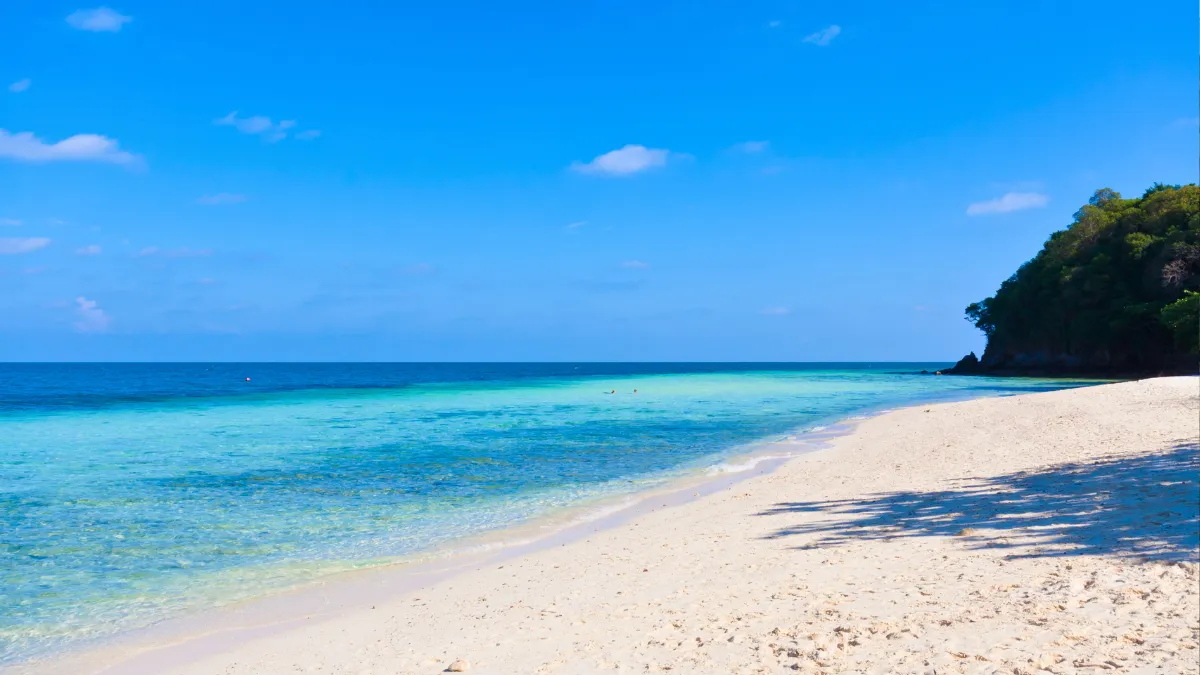
There’s a particular quality of light in the Nelson Bays New Zealand that I’ve never quite managed to photograph properly. It’s the kind of light that locals take for granted, shrug and say “Yeah, we get about 2,400 sunshine hours a year” as if that’s a normal thing to be able to say about where you live. And while the rest of the world stands there in awe of how golden everything looks at four in the afternoon.
I was lucky enough to grow up here, so this post is a guide to help those of you who decide to explore this corner of the South Island’s north-west — from the studios and cafés of Nelson city, out along the coast to the Abel Tasman, up into the strange, sun-drunk world of Golden Bay. The top of the South, as it’s known locally, is a place that will send you home with sand in every bag you own but with a genuine ache to return.
I recently had friends stay with me who were visiting from London, so we decided on a 2 week vacay in Nelson Bays. Here’s what we did and everything we saw, the bits that still blow us away, and the couple of things I would probably skip… unless you have oodles of time.
Nelson City: Small, Sunny, and Surprisingly Arty
What are the best things to do in Nelson and the Tasman region?
Top activities in Nelson and the Tasman region include exploring stunning national parks, pristine beaches, and unique natural springs. Highlights are Abel Tasman National Park for water activities, Nelson Lakes National Park for alpine scenery, Wharariki Beach for coastal walks, and Te Waikoropupū Springs for clear freshwater views.
Here’s the starting point — and don’t be tempted as many are, to treat Nelson city as a stopover. A place to pick up a rental car and a coffee before heading for the “real” scenery. That would be a mistake.
Founded in 1841, Nelson city is a testament to both history and creativity. With a population of about 50,800, it has transformed into a vibrant hub for people who appreciate art and culture. The location at the top of the South Island makes it a prime starting point for exploring the stunning landscapes of New Zealand.
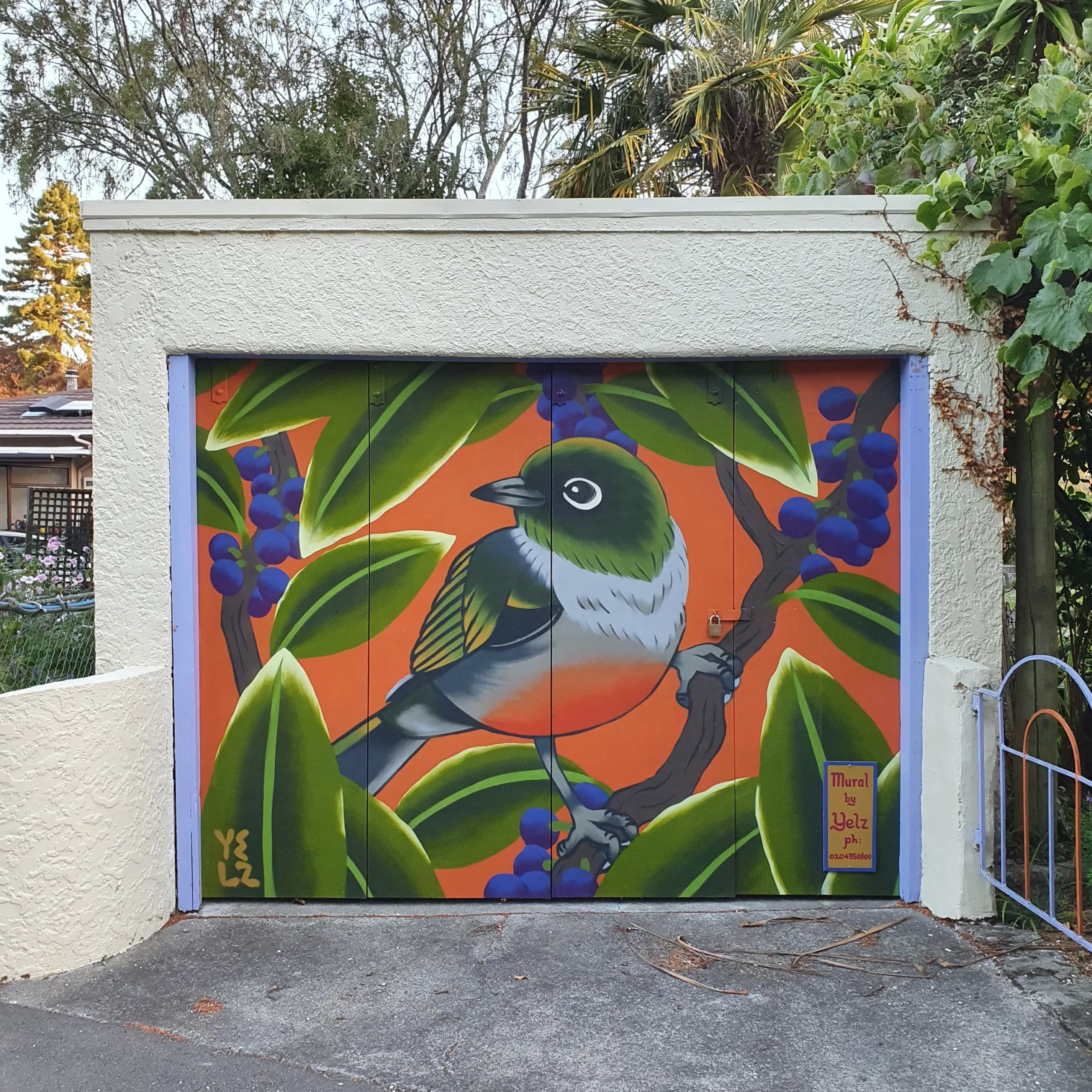
Nelson has a compact, walkable center that somehow punches well above its weight for creativity. I spent a happy, slightly footsore afternoon following the City Mural Trail, hopping between building-sized artworks tucked down side streets you’d otherwise walk straight past, and then wandering through the Suter Art Gallery, which houses a genuinely impressive collection of local and international work — ceramics in particular were a highlight, given how many working potters call this region home. The City Mural Trail route and map is attached here for your use.
Select images to open as larger lightbox version.
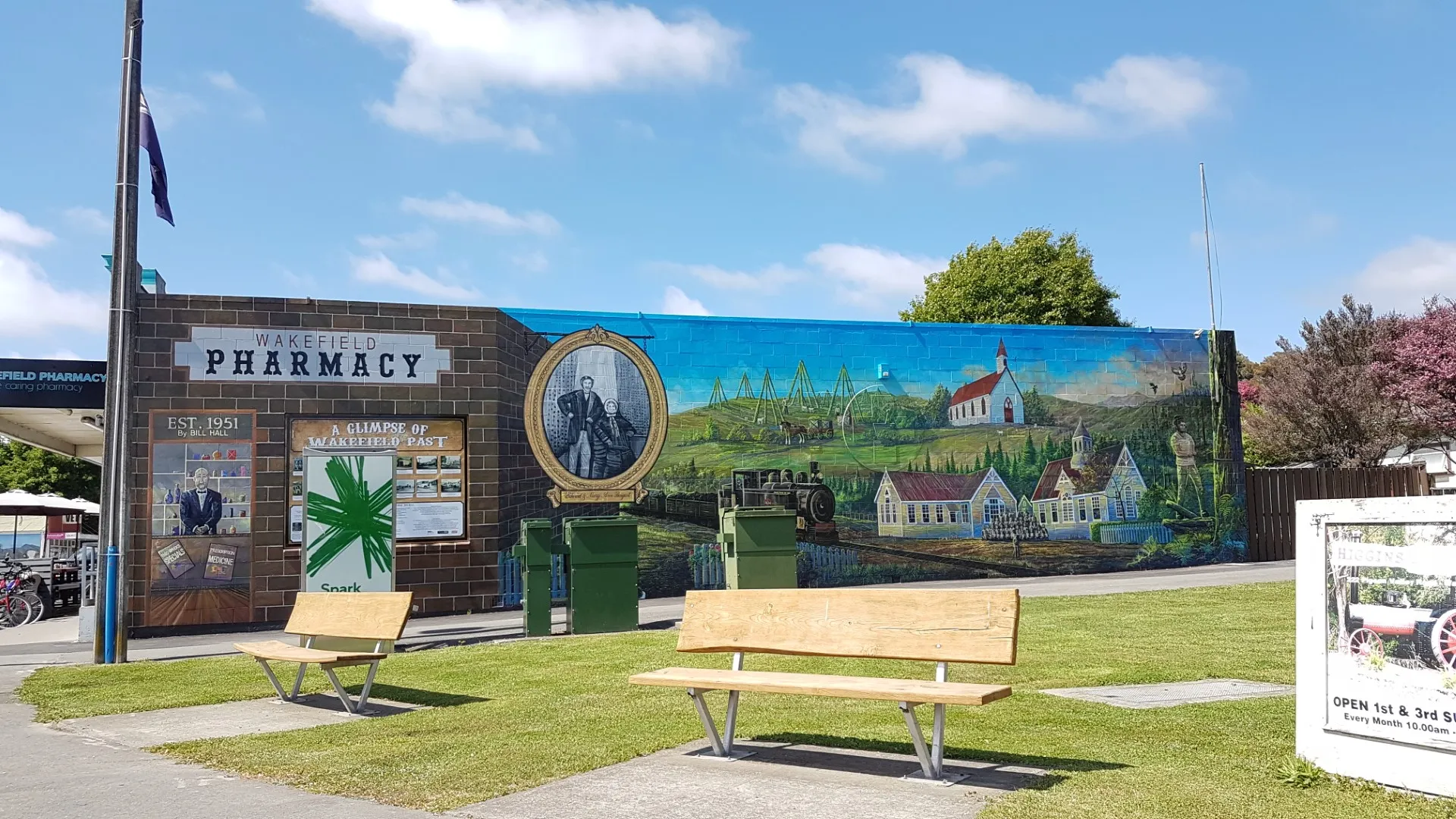
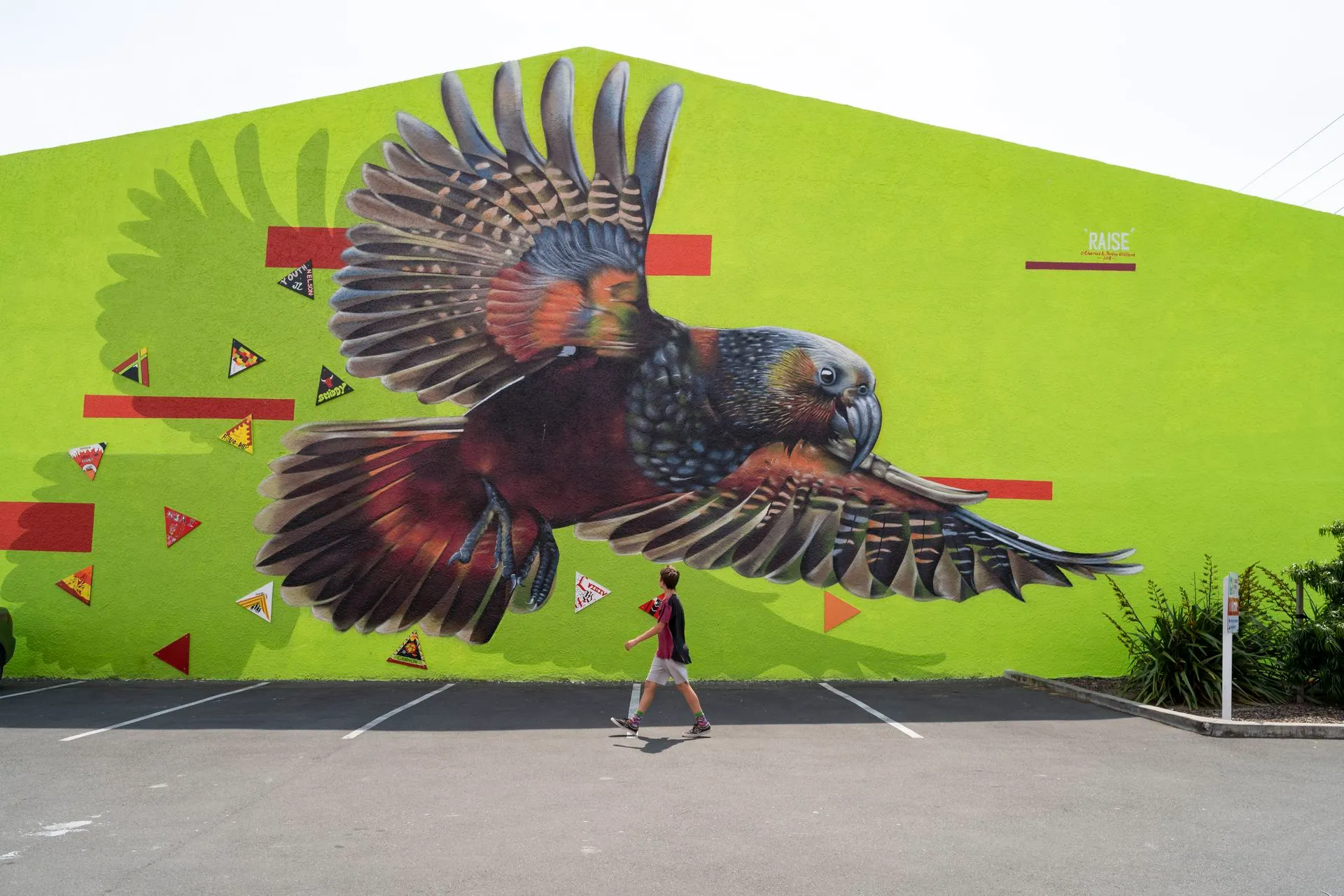
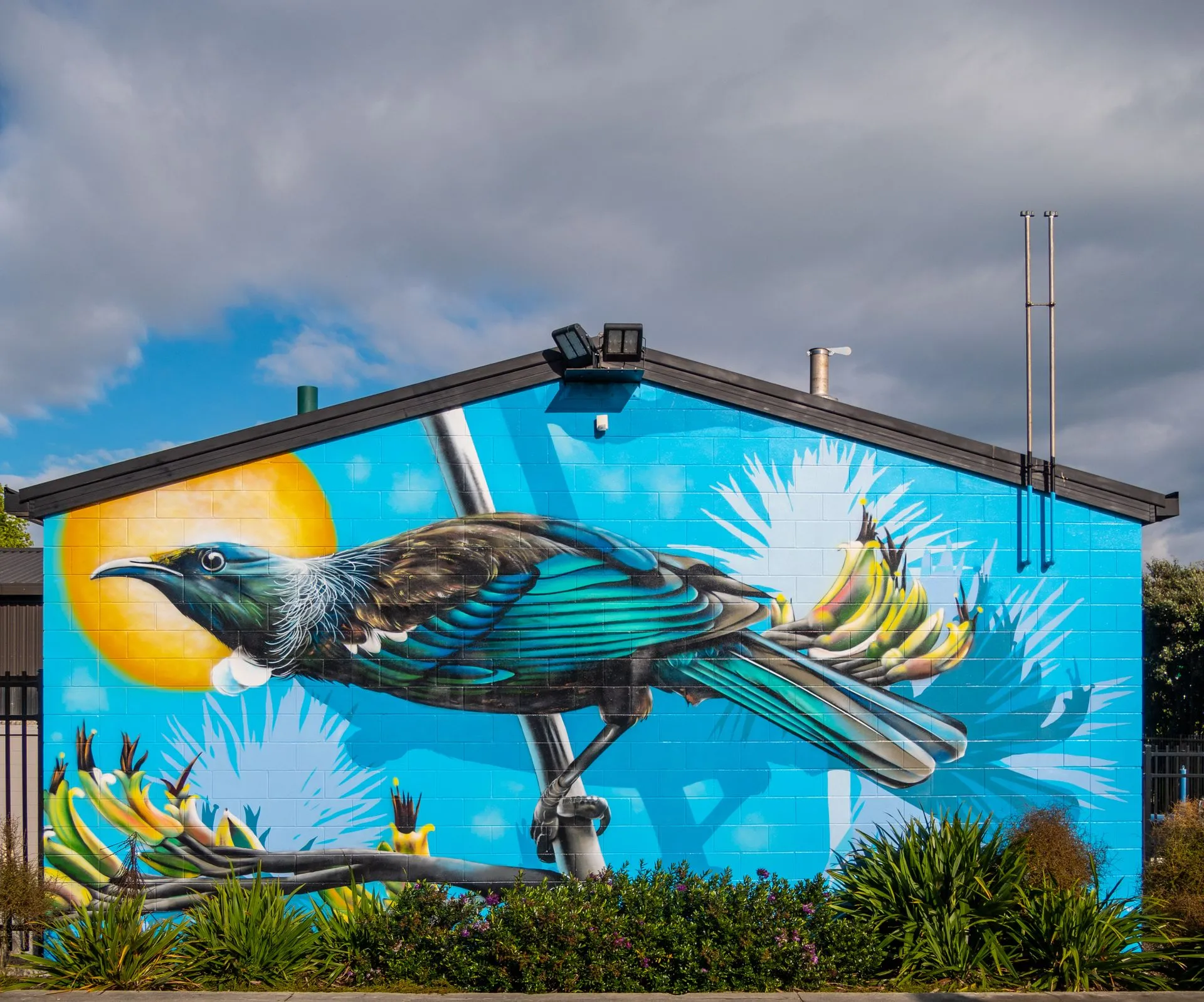
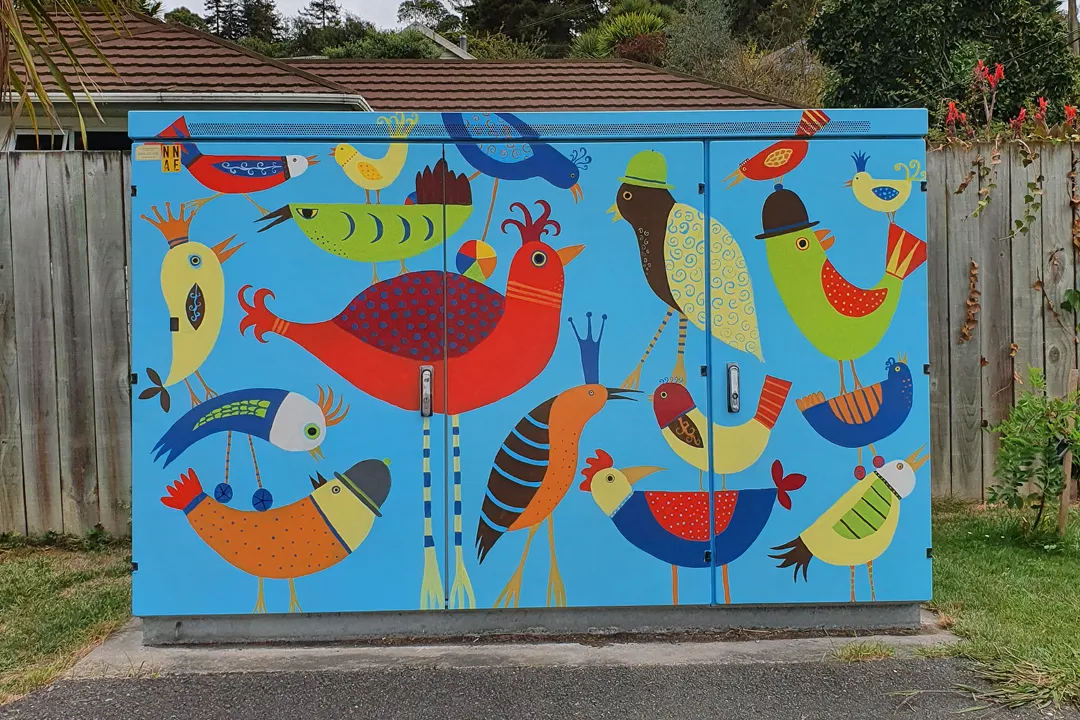
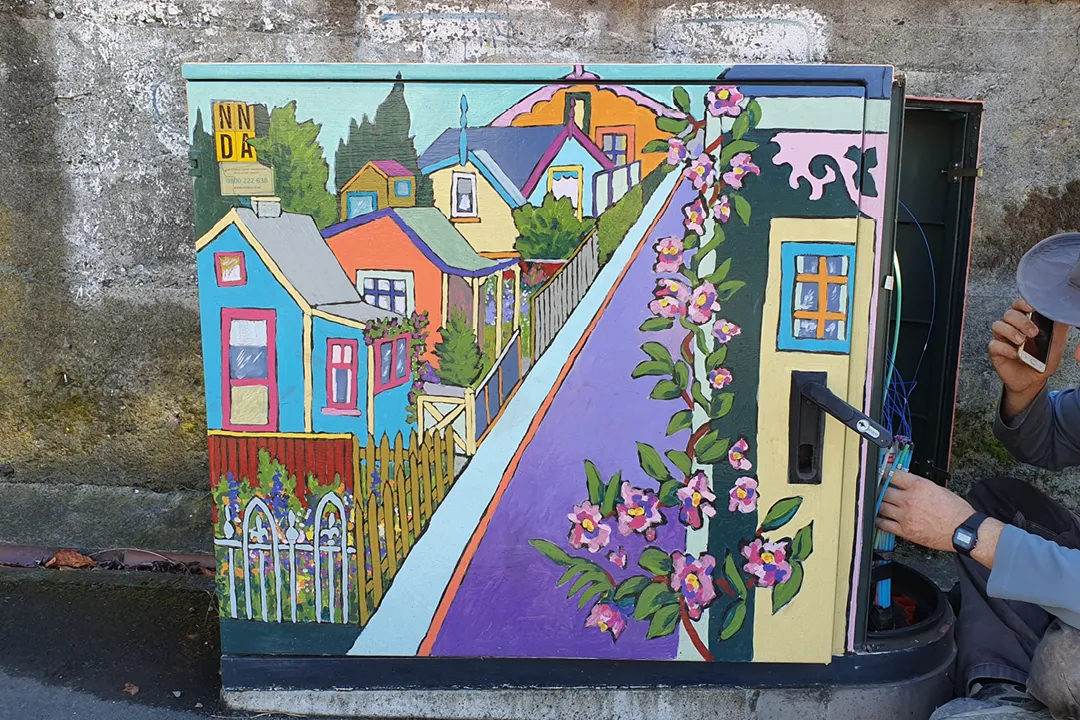
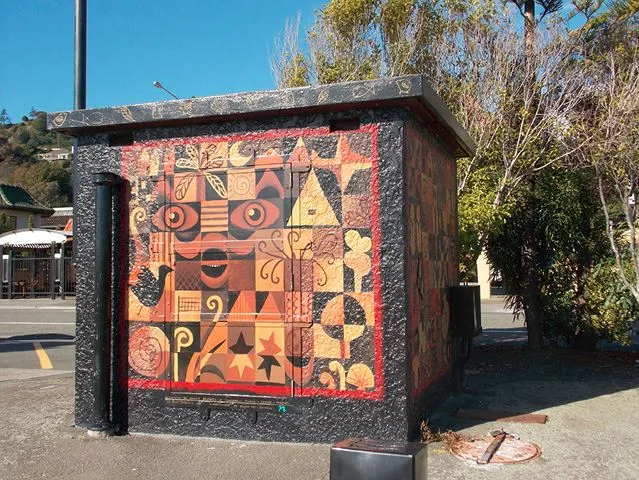
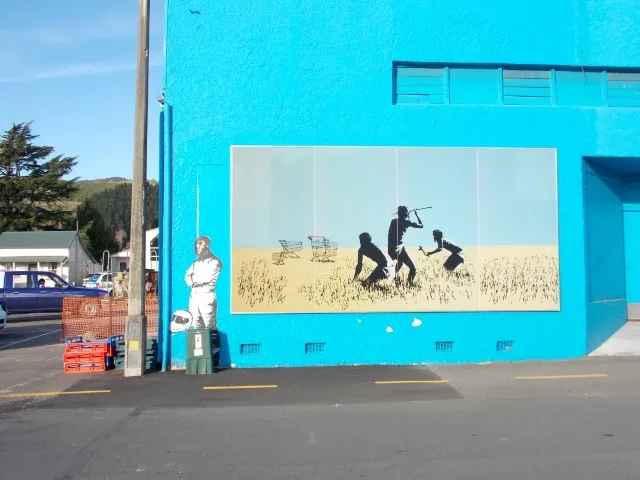
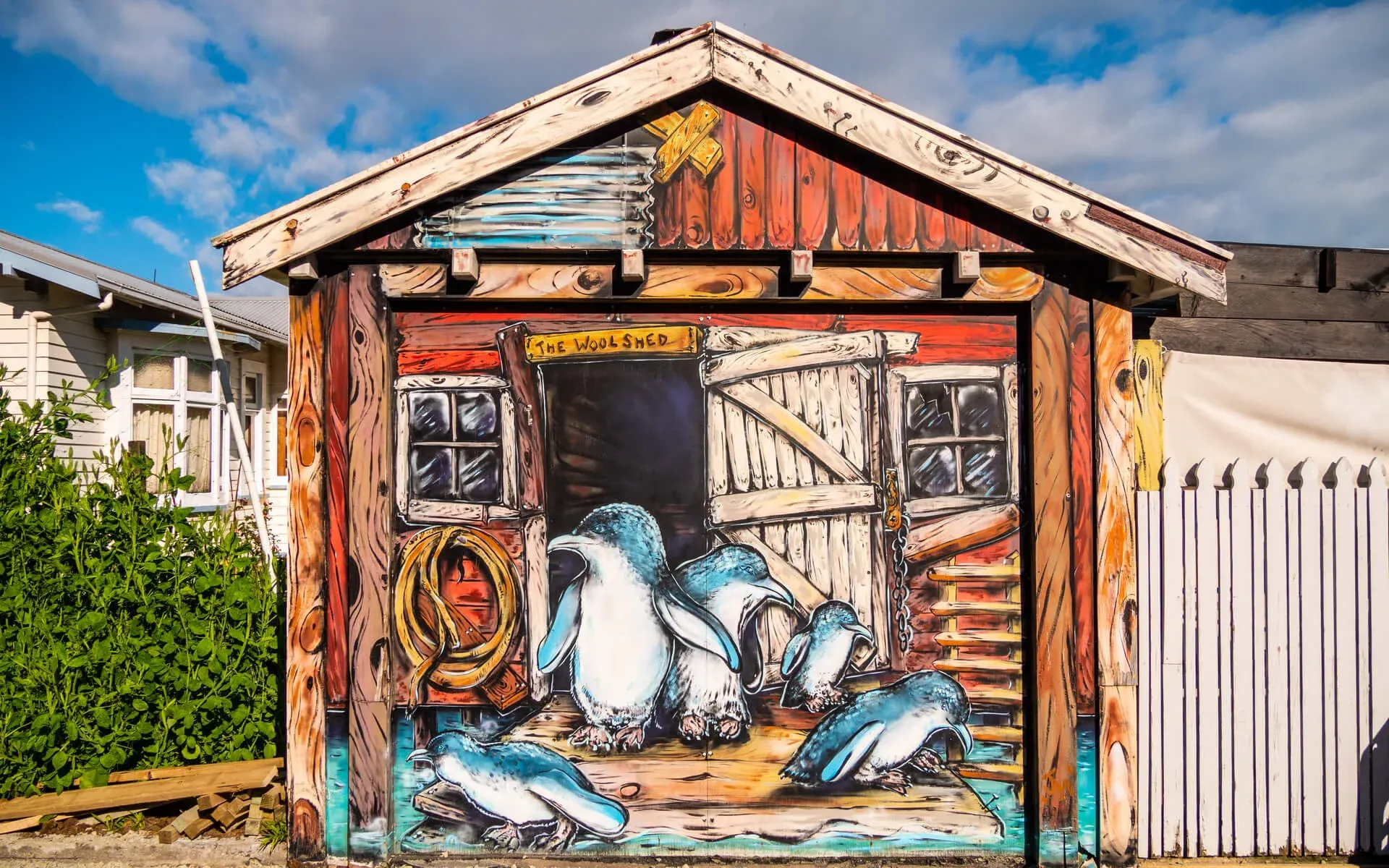
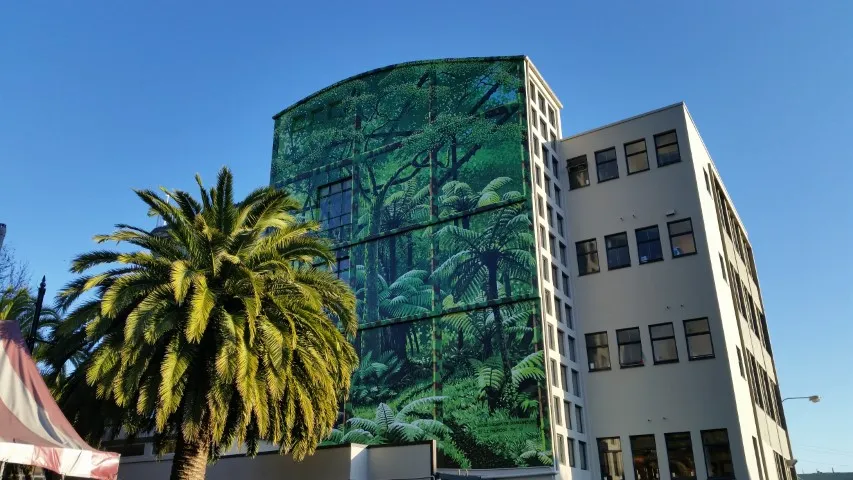
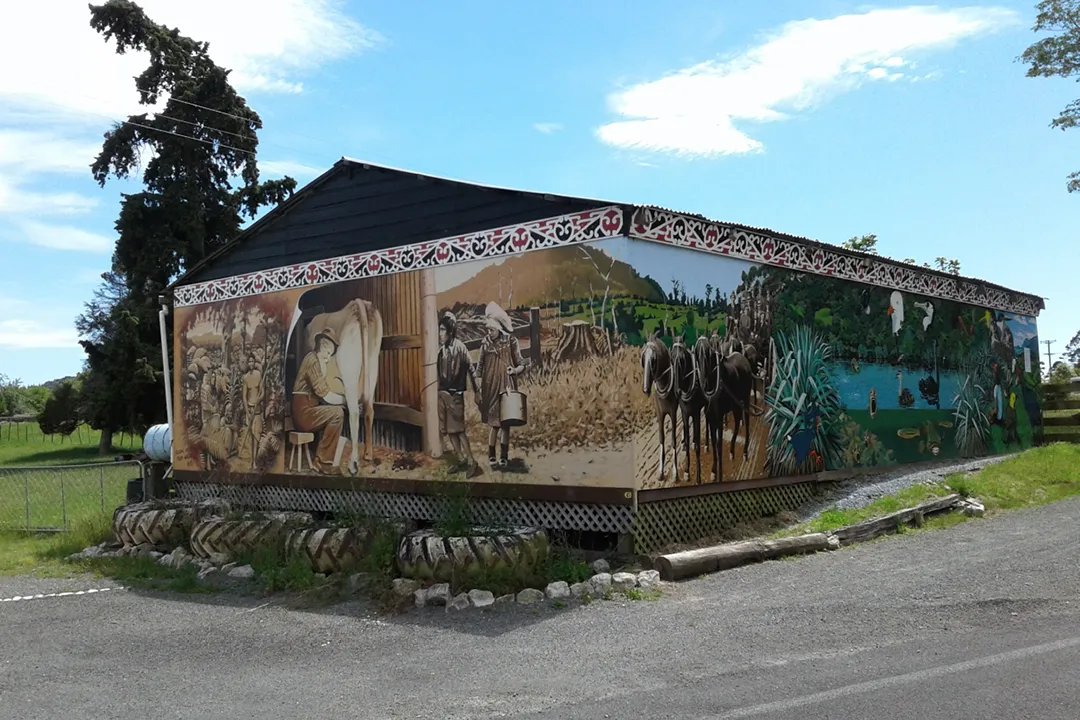
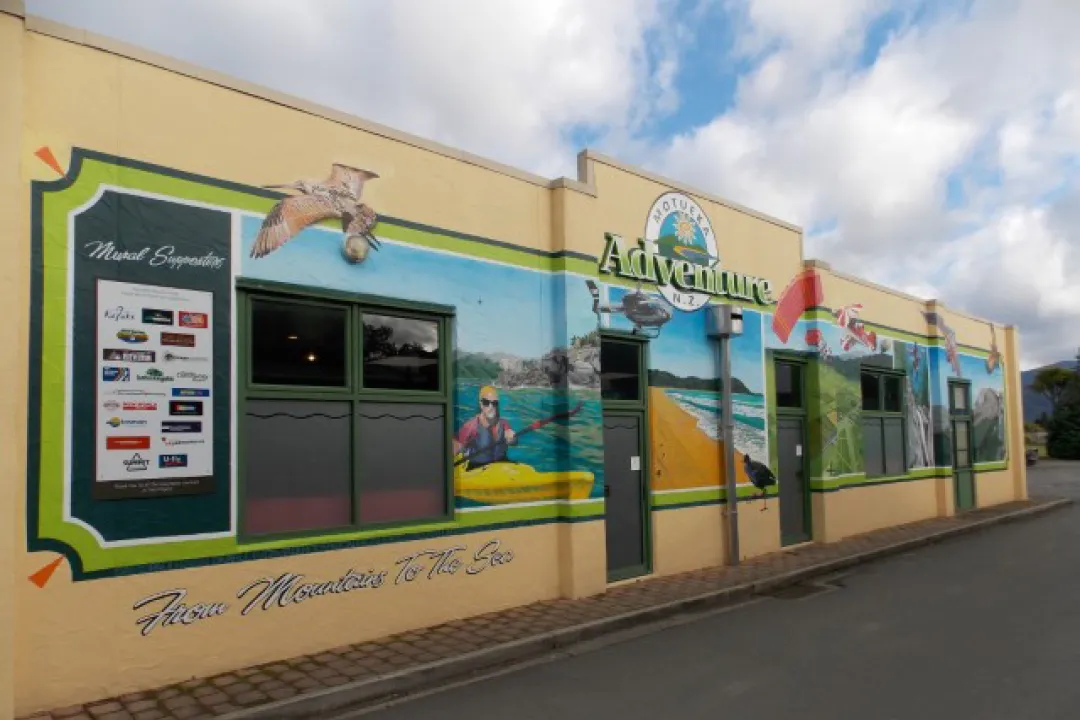
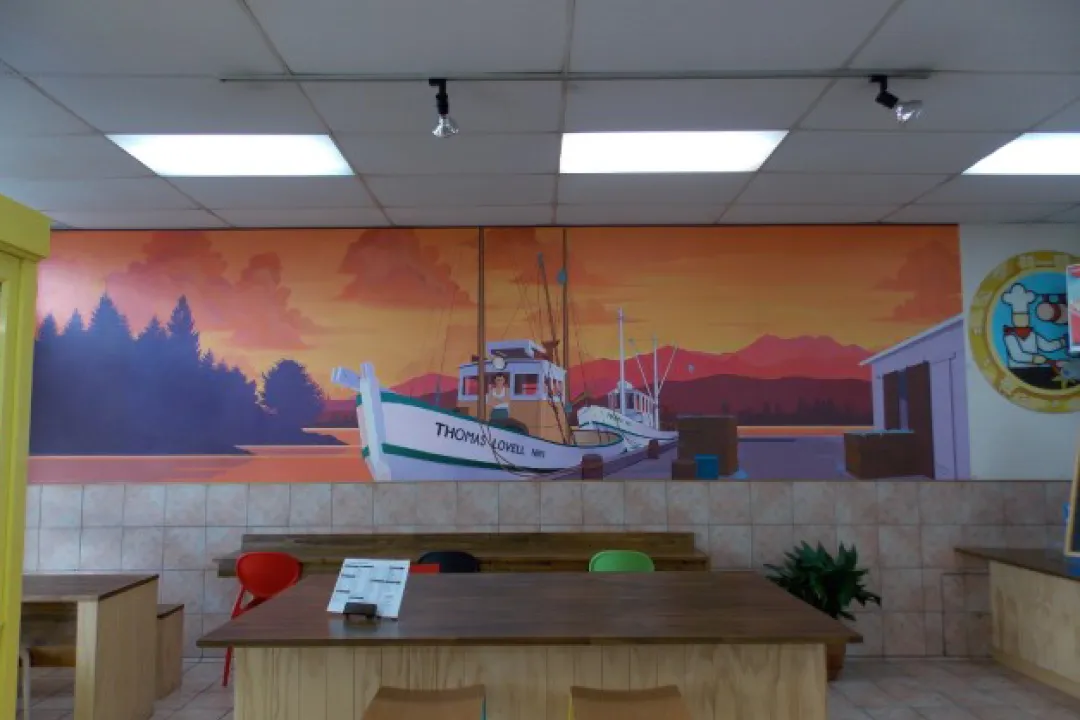
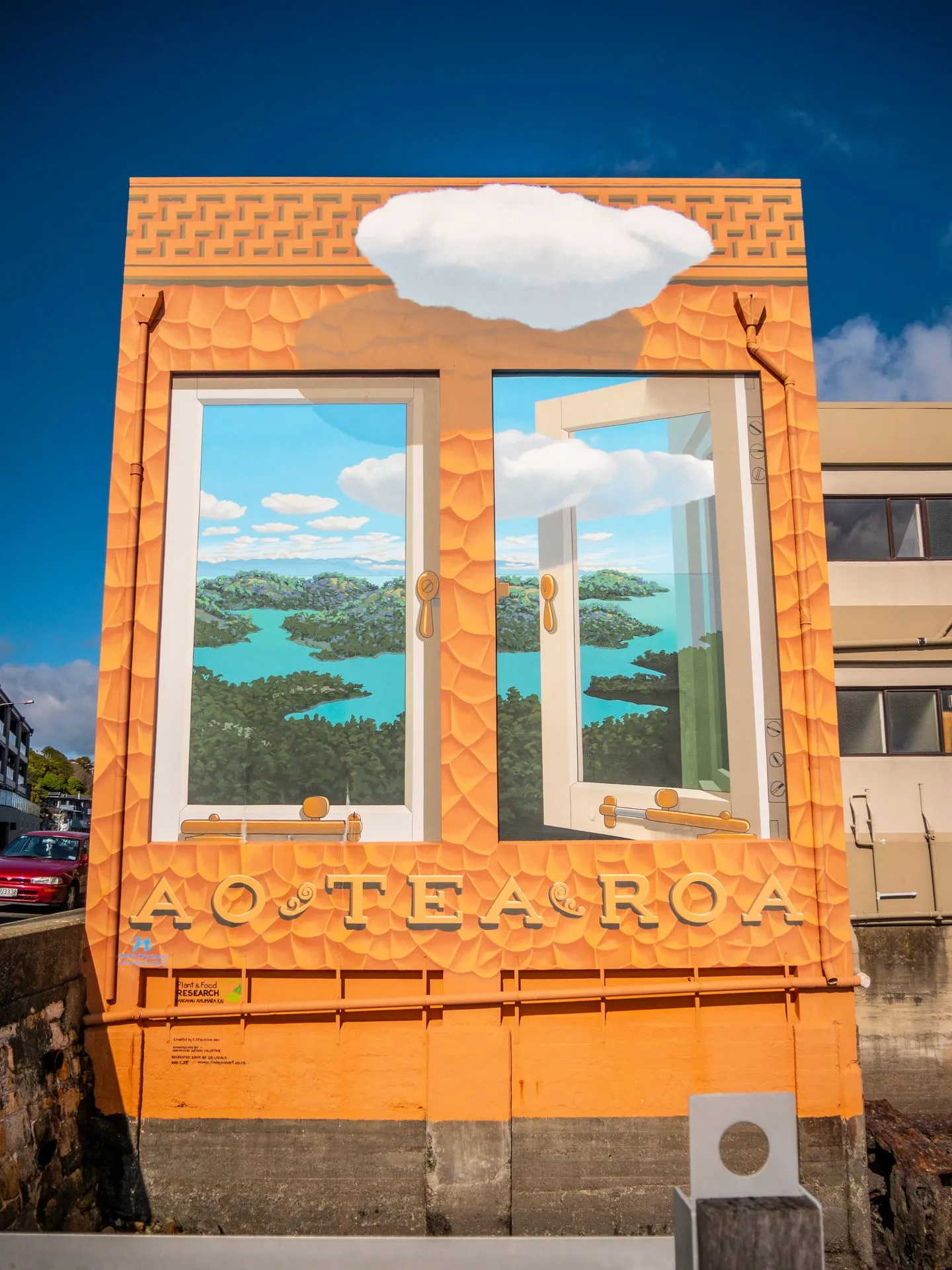
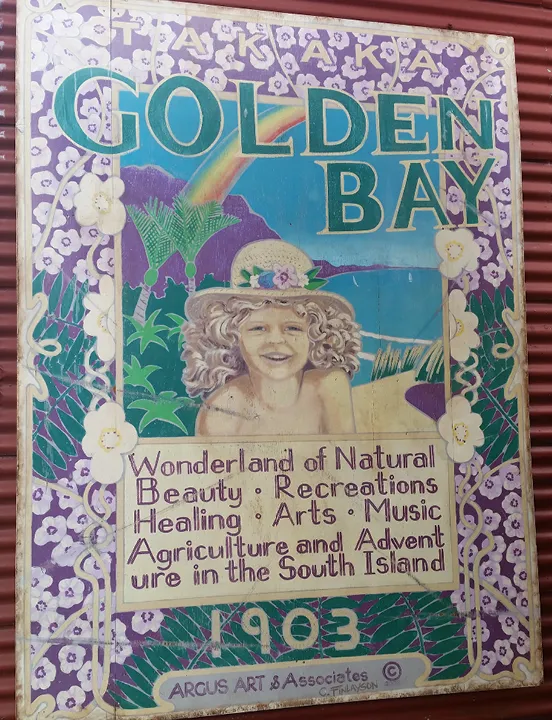
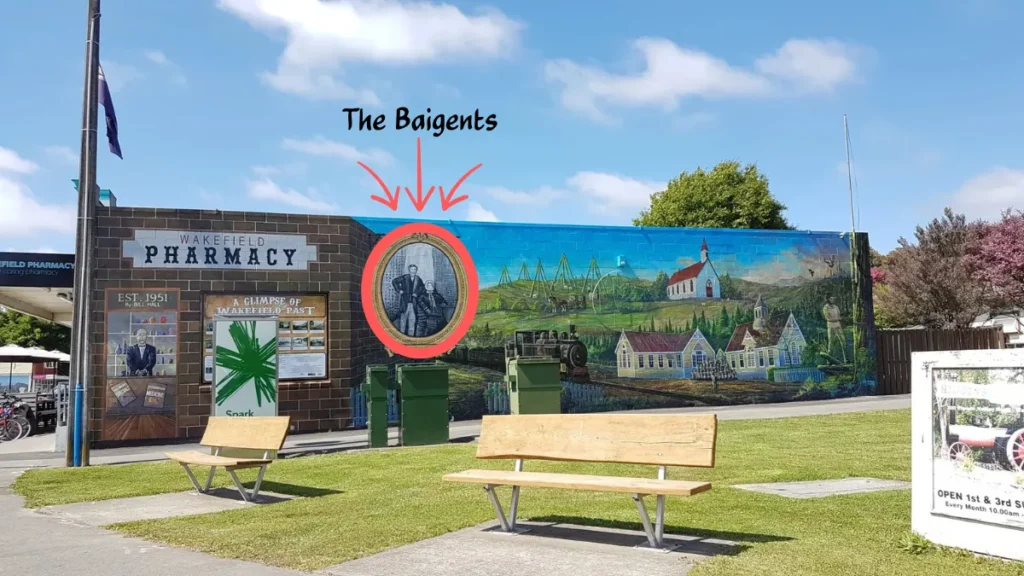
As an aside – did you notice the Wakefield Mural by Pete Madsen? Wakefield is my home village, went to school there and my folks and family all live there still. If you look at the mural (added to the right) you’ll see two stern looking settlers, they are Baigent’s. We have been rattling about in Wakefield since its inception, arrived on the first boat and built the first church.
If you’re in Nelson City on a Saturday, do not skip the Nelson Market in Montgomery Square. It’s the kind of market where you go in for a coffee and come out forty minutes later having bought a wood-turned bowl, a jar of manuka honey, and a slightly too-large hat. The region has one of the highest concentrations of working artists in the country, and it shows — everywhere you look, someone’s selling something they made with their own hands, and they’re usually happy to tell you exactly how.
Other Nelson activities on offer:
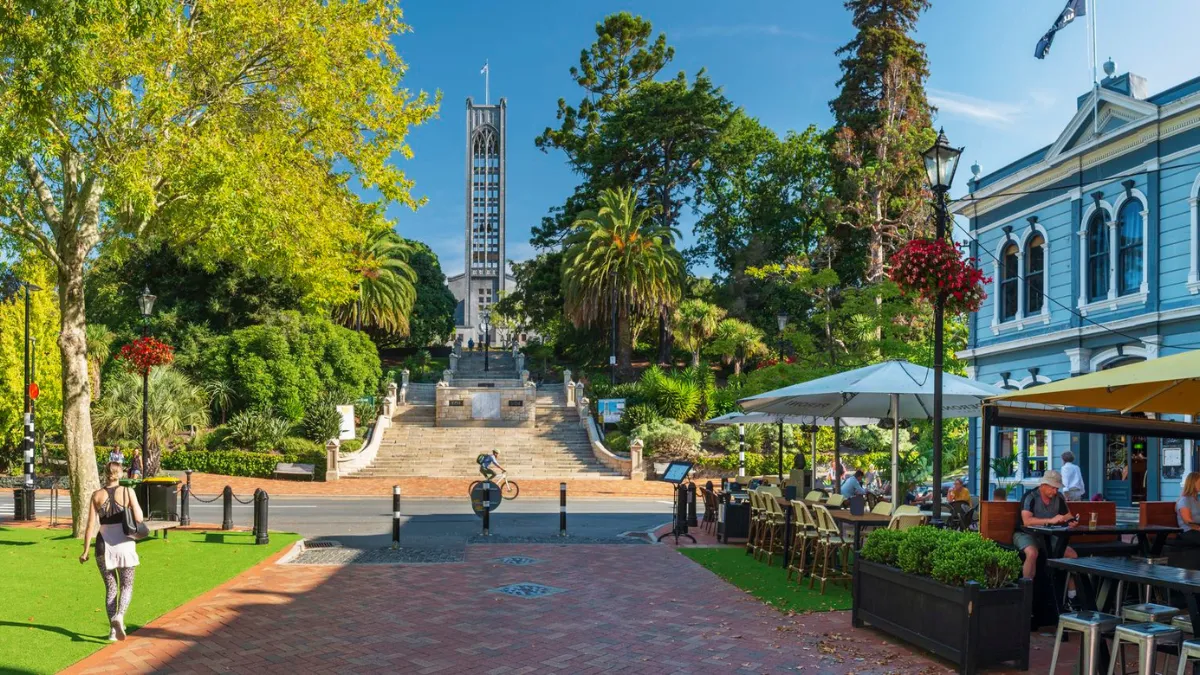
- Explore central Nelson on foot. Walk up the cathedral steps. Christ Church Cathedral stands dramatically above Trafalgar Street on Piki Mai Church Hill. Visitors can explore the interior or simply enjoy the view back down the city’s main street. The cathedral is normally open daily.
- Discover Historic South Street. Just behind the cathedral, this narrow heritage precinct is lined with beautifully restored workers’ cottages dating from 1863. It is a short visit, but one of central Nelson’s most photogenic corners.
- Learn about Te Tauihu at Nelson Provincial Museum. The museum introduces visitors to the people, cultures, natural environment and history of the top of the South Island. Its compact central location also makes it an easy addition to a walking tour.
- Combine the Suter Art Gallery with Queen’s Gardens. The Suter presents changing exhibitions alongside art from its regional collection. Afterwards, visitors can have lunch overlooking the water or walk through the neighboring Victorian-style gardens.
- Climb to the Centre of New Zealand. This short but fairly steep walk up Botanical Hill rewards visitors with panoramic views across Nelson, Tasman Bay and the surrounding ranges. Despite its name, the marker represents an important historic survey point rather than the precise geographical center of the country. Allow around 30–60 minutes.
- Walk or cycle beside the Maitai River. The Maitai Walkway provides an easy green route from the city center towards Botanical Hill and the Maitai Valley. In summer, locals also gather around the river’s swimming holes.
- Spend time at Tāhunanui Beach. Nelson’s main urban beach is a good place for swimming, paddleboarding, walking or watching the sunset over Tasman Bay. Its broad reserve and generally sheltered swimming area make it particularly popular with families.
- Explore Founders Heritage Park. This open-air heritage attraction recreates aspects of Nelson’s early streets, businesses and transport history using historic buildings and displays. It is especially worthwhile for families and visitors interested in local history.
- Slow down in Miyazu Japanese Garden. The landscaped garden celebrates Nelson’s sister-city relationship with Miyazu in Japan. Ponds, bridges, stone lanterns and carefully composed plantings make it a peaceful stop near Founders Heritage Park.
- Experience native wildlife at Brook Waimārama Sanctuary. Less than ten minutes from the centre, this predator-fenced forest sanctuary offers walking tracks and opportunities to encounter native flora and birdlife. It is an excellent choice for visitors who want a nature experience without leaving Nelson city.

We only had one-day in the city, so we prioritized the Nelson Market (it was a Saturday), the cathedral and South Street, the museum, the Suter and Queen’s Gardens, then finished with the Centre of New Zealand walk. Tahunanui is a lovely beach but as we would be heading to more idyllic beaches over the next few days the hill won.
My one gentle warning about Nelson city itself: don’t expect big-city nightlife or a huge range of restaurants. It’s a lovely base, and has terrific dining options but its magic is really in what it opens the door to, not in the town itself. Treat it as your launchpad, not your destination, and you’ll love it for what it is.

The Great Taste Trail: Wine, Hops, and Very Flat Cycling
One of the smartest things to do is to hire a bike for two days and ride sections of the Great Taste Trail, a mostly flat, multi-day cycle route looping through the wider Nelson Tasman area. It’s genuinely one of the best ways to see this region — you drift past hop gardens (Nelson is a serious player in New Zealand’s craft beer supply chain, if Marlborough is wine, Nelson is beer), orchards, coastal inlets, and boutique vineyards, stopping wherever takes your fancy.
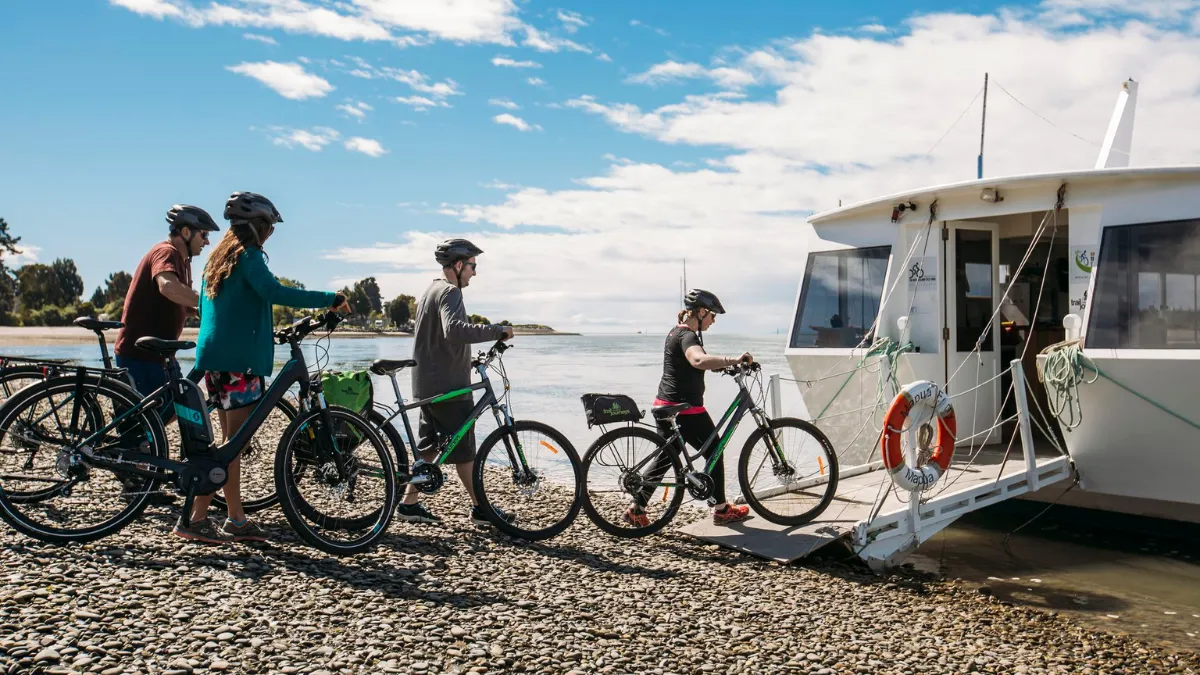
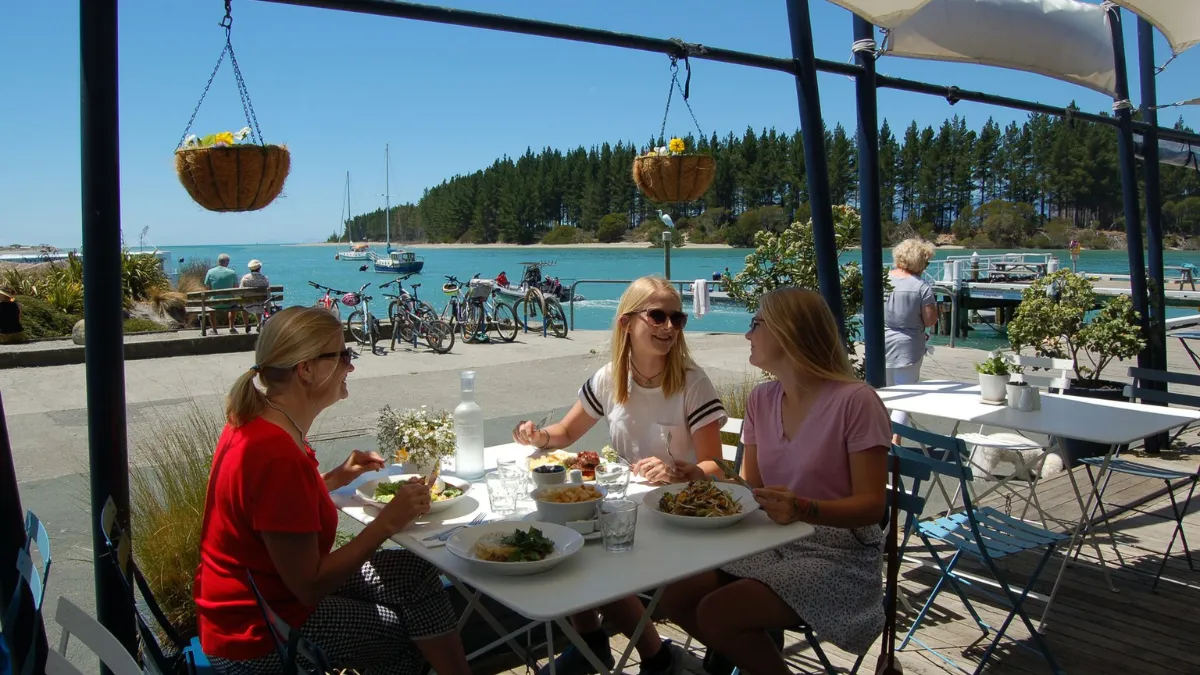
We pedaled out toward Māpua Wharf, which might be my single favorite lunch stop of the entire trip — a little cluster of galleries, a smokehouse, and a wine bar right on the water, all connected by a genuinely pleasant ride along Rabbit Island.
If you have even one spare day when traveling through New Zealands Mapua and a moderate tolerance for a bicycle seat, do this. You don’t need to be a serious cyclist; the trail is graded gentle and family-friendly, and there are shuttle and bike-hire operators all along it if you only want to bite off a section.
Abel Tasman National Park: As Good As Everyone Says
I want to be careful here, because “as good as everyone says” is a strange thing to write about a place, but genuinely — the Abel Tasman lives up to its reputation, and then some. Often travelers go straight from Auckland to Christchurch or Queenstown and miss the Abel Tasman altogether. And that is a shame as i genuinely believe it is one of the most beautiful destinations in New Zealand.
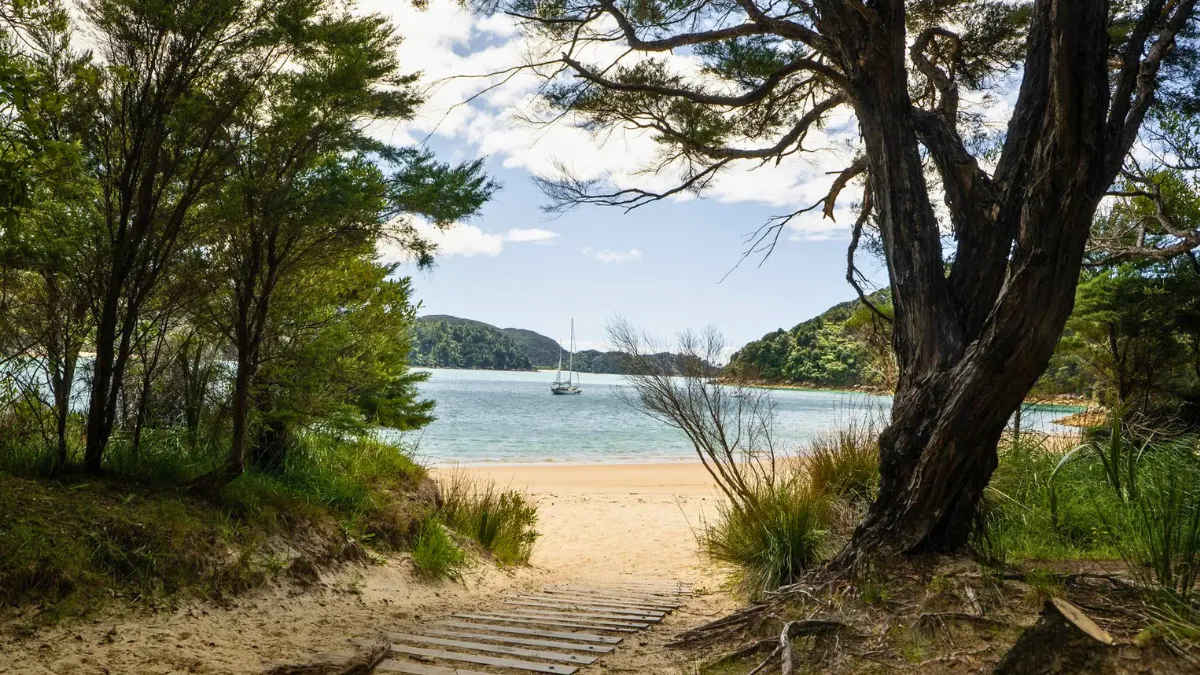
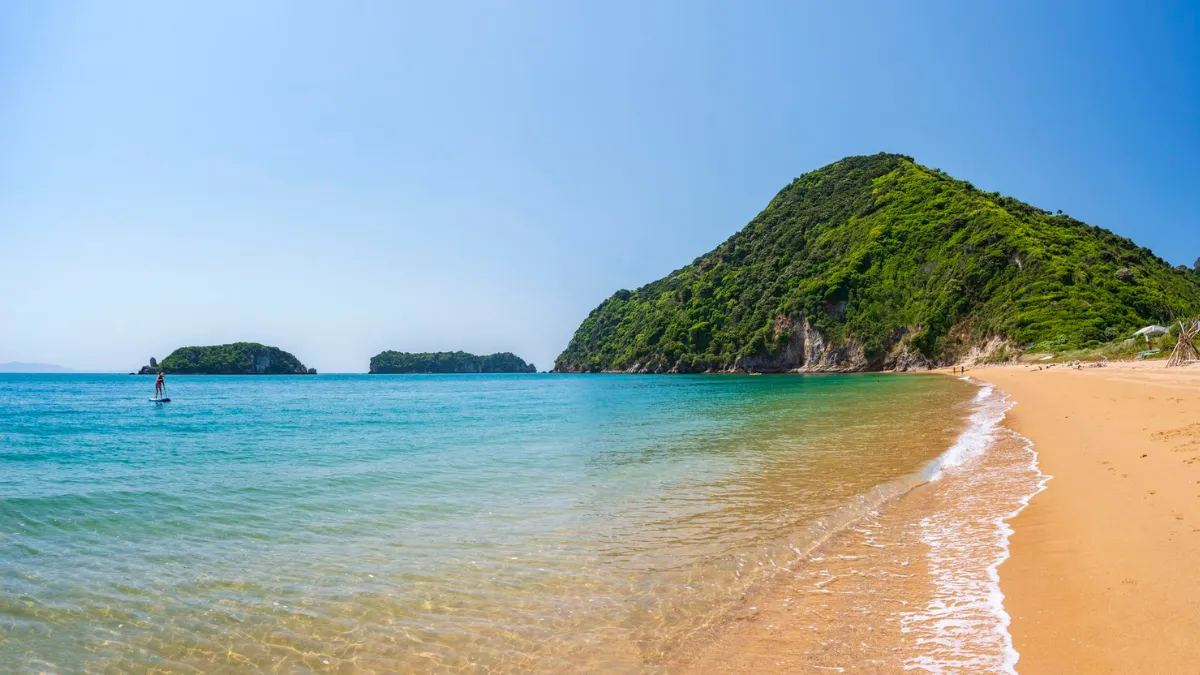
We based ourselves in Kaiteriteri for three nights, which turned out to be the right call: gorgeous beach on its own merits, and an easy launch point into the park by water taxi.
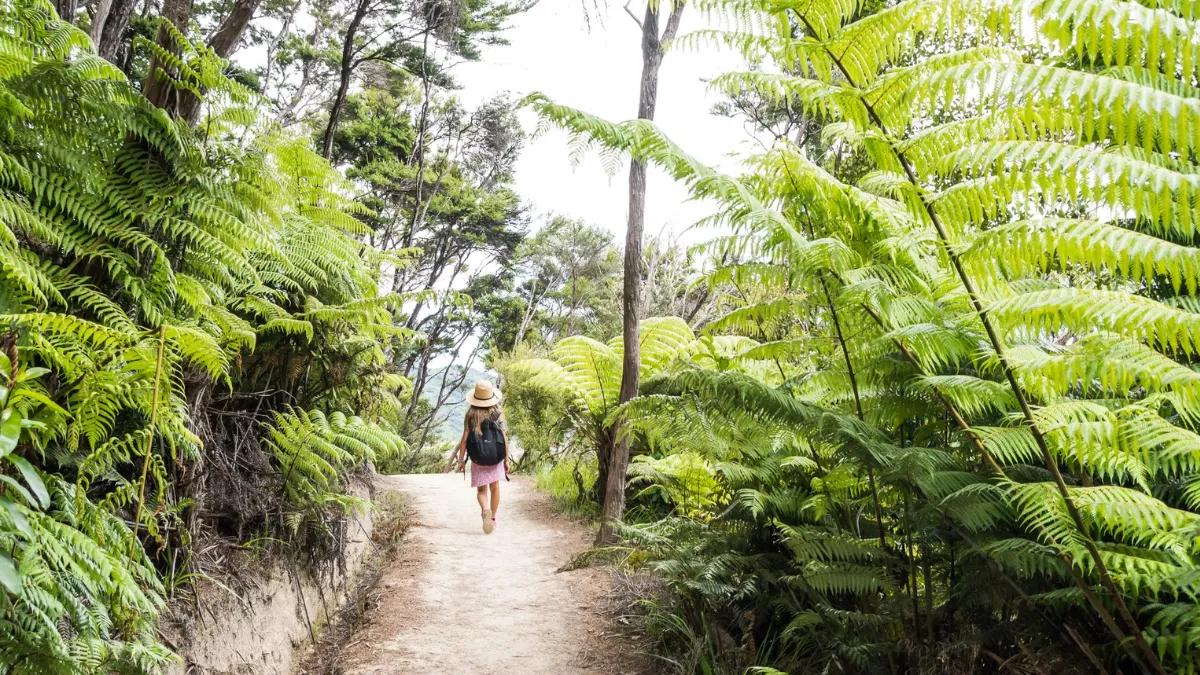
From there we did a day walk on the Abel Tasman Coast Track (the full track is around 60 kilometers and takes three to five days if you’re doing it properly as one of New Zealand’s Great Walks, but plenty of people, us included, sample it in bite-sized day sections with a boat pickup at the other end). Download a Abel Tasman coast track trip sheet.
Winding from one beach to another, the Abel Tasman Coast Track is the most frequented of the Great Walks. Beginning at Marahau, a boardwalk crosses the estuary to the headland, where the gentle trail continues to Anchorage, featuring a beachside hut and campsite. The path then follows the coastline to Torrent Bay and its campsite, before reaching Bark Bay Hut and Campsite.
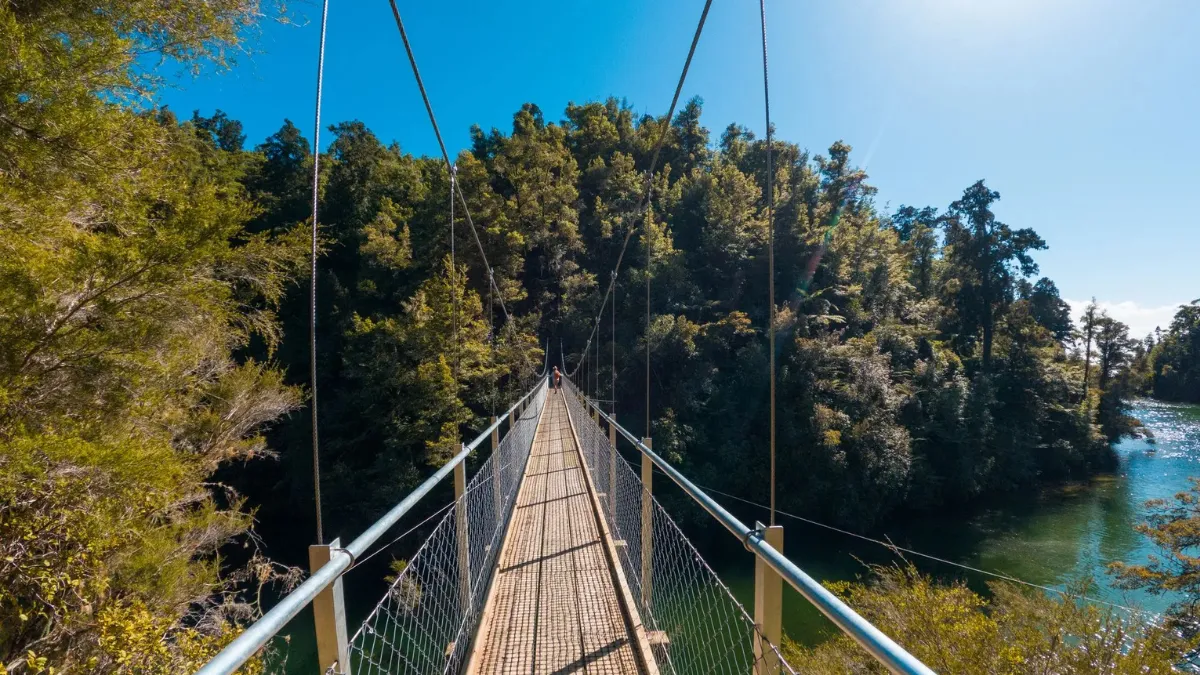
Along the route, a high, airy swingbridge spans Falls River. From Torrent Bay, a side trail leads to unique cascades and swimming spots along Falls River. Bark Bay offers a perfect snapshot of everything special about Abel Tasman National Park’s seascape—an ideal beach, sandspit, lush forest, excellent hut, boat access, and breathtaking views.
The hiking track goes on to Tonga Quarry. With its canopy of manuka-kanuka forest, soft sands, and tranquil ocean views, it remains a memorable spot worth pausing at. The trail continues along the remote and picturesque Onetahuti Beach to the sheltered Richardson Inlet, where a footbridge and a short climb lead to Awaroa Inlet. Awaroa Inlet holds plenty of adventure.
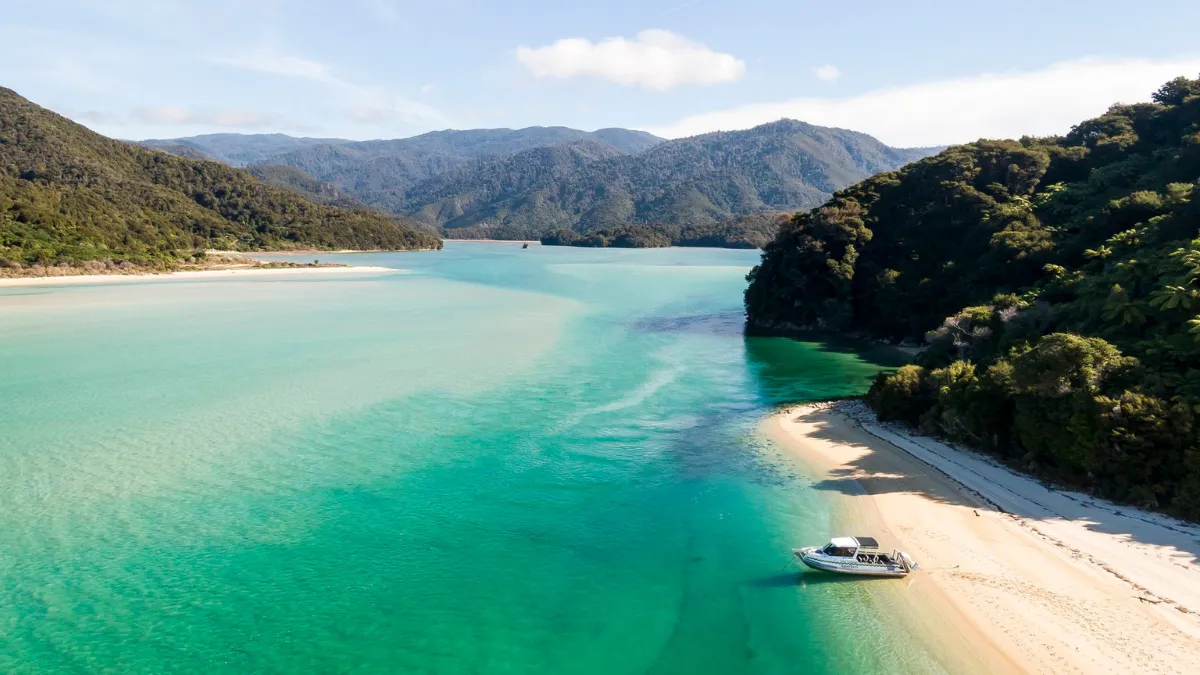
The wide tidal inlet can only be crossed at low to mid-tide, with low tide recommended due to varying heights. Crossing the sands and mudflats takes 30-40 minutes, so timing is crucial. I very nearly mistimed — a good reminder to actually check the tide tables the Department of Conservation posts, rather than assuming you’ll “just wing it.” We didn’t get soaked, or washed away, but it was closer than I’d like to admit.
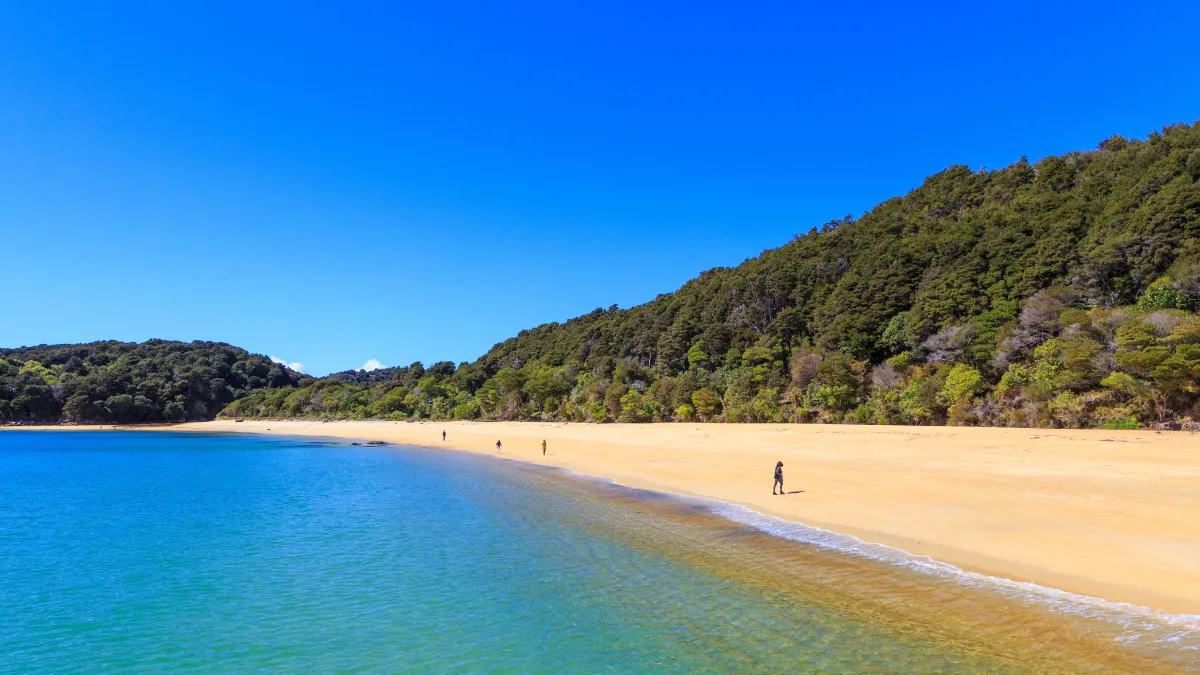
After crossing, the path leads to Totaranui, where many hikers finish or start their journey. It features a stunning 2km stretch of golden beach, road access, ample camping, family-friendly facilities, and regular ferry service—making it a great spot to camp and enjoy the beautiful surroundings. The Coastal Track then heads to the steep and striking Separation Point, passing several idyllic beaches along the way.
The northern section is just as stunning as the southern parts but is more secluded with fewer visitors. The final leg to Wainui Inlet goes via Whariwharangi Hut, a historic refuge nestled in a remote valley near the sea, where the sounds of waves, salty air, and peaceful atmosphere envelop you. Get your Abel Tasman Guide and Maps here.
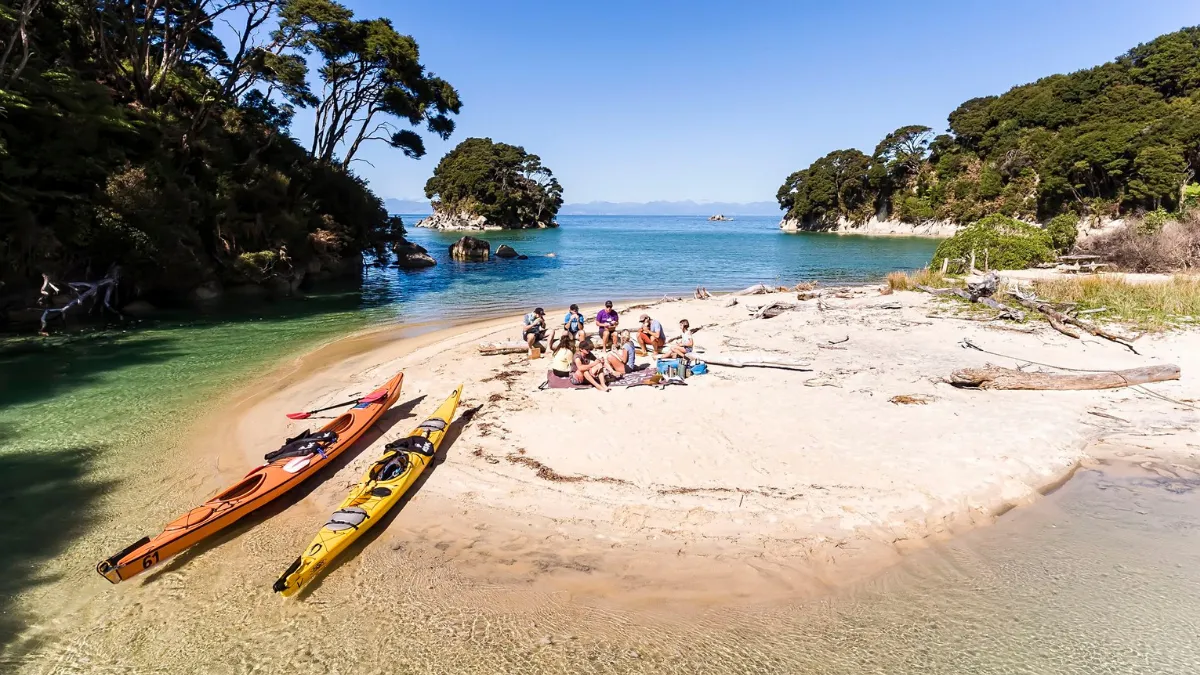
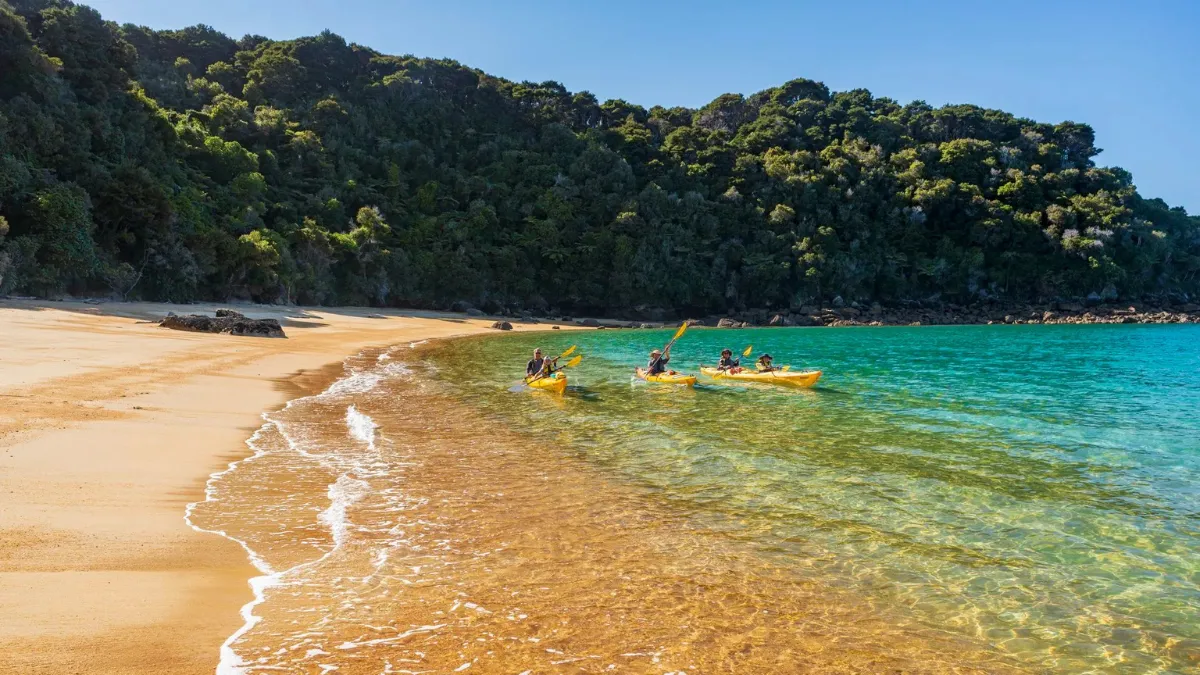
Kayak around Split Apple Rock
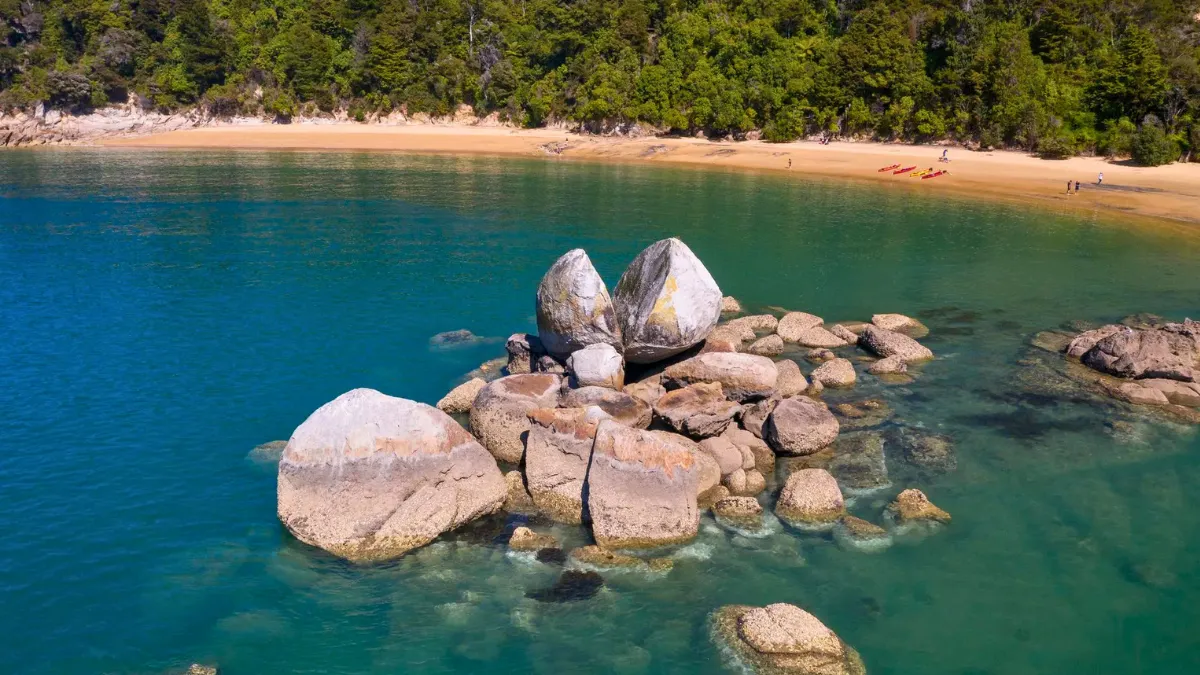
We also kayaked out to Split Apple Rock, a huge granite boulder sitting just offshore and around the corner from our Kaiteriteri campsite, that looks, almost too on-the-nose, like an apple cleaved perfectly in two. The water out there is the kind of clear turquoise that looks fake in photos.
Along the way our guide pointed out fur seals hauled up on the rocks and a little blue penguin bobbing near the surface, which felt like an unreasonable amount of wildlife for one paddle.
Recommendation: if you can only do one active thing in the entire Nelson Bays and Tasman region, make it a half-day or full-day guided kayak trip into the Abel Tasman. It’s not cheap, but it is worth every dollar.
One thing I’d skip: the scenic flights are beautiful, no doubt, but on a clear day I genuinely think the view from a boat or kayak, at sea level, watching the coastline unfold slowly, will give you more than a fifteen-minute aerial buzz would. If budget’s tight, spend it on the water instead of the air. That’s what we did and we were very happy with our day,
Golden Bay: Where the Vibe Shifts Entirely
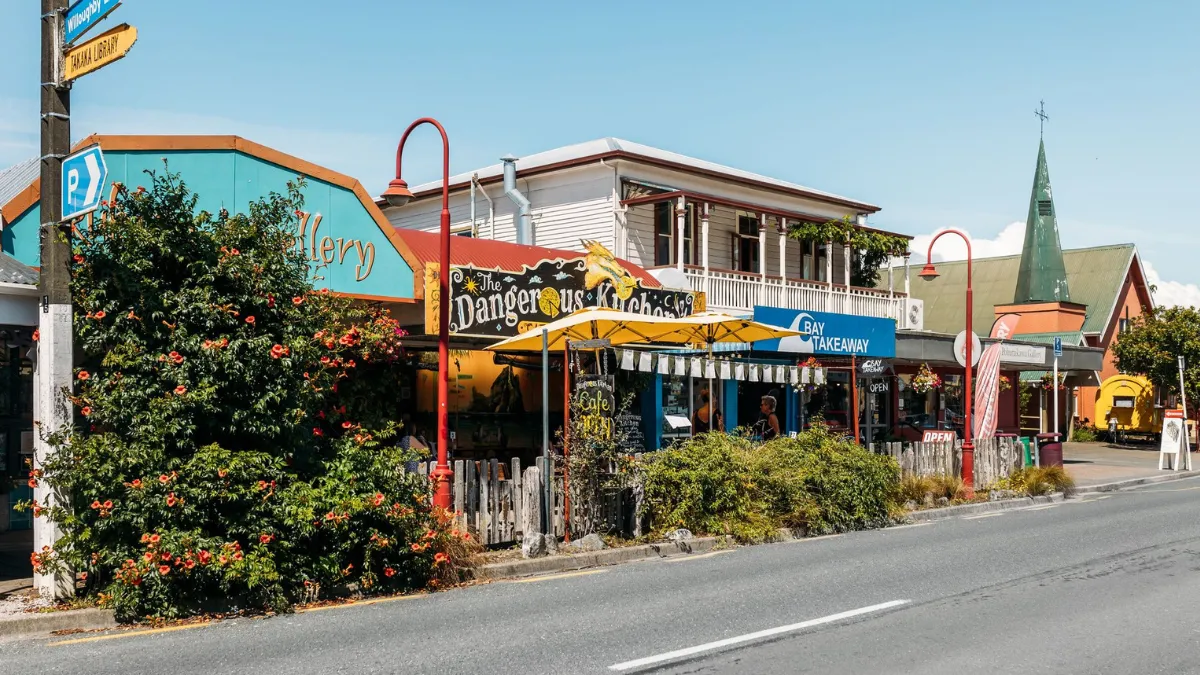
Driving over Tākaka Hill — a genuinely hairy, switchbacking road that climbs up out of the Nelson side and drops you into Golden Bay — felt like crossing into a slightly different country. The pace slows. The cafés get quirkier. There’s a low-key, bohemian energy in Tākaka township itself that I wasn’t expecting, all tie-dye and live music and locally roasted coffee.
A few things in Golden Bay genuinely stopped us in our tracks:
Te Waikoropupū Springs
Te Waikoropupū Springs, just outside Tākaka, are worth the short walk in on their own. They’re the largest freshwater springs in New Zealand and among the clearest ever measured anywhere in the world.
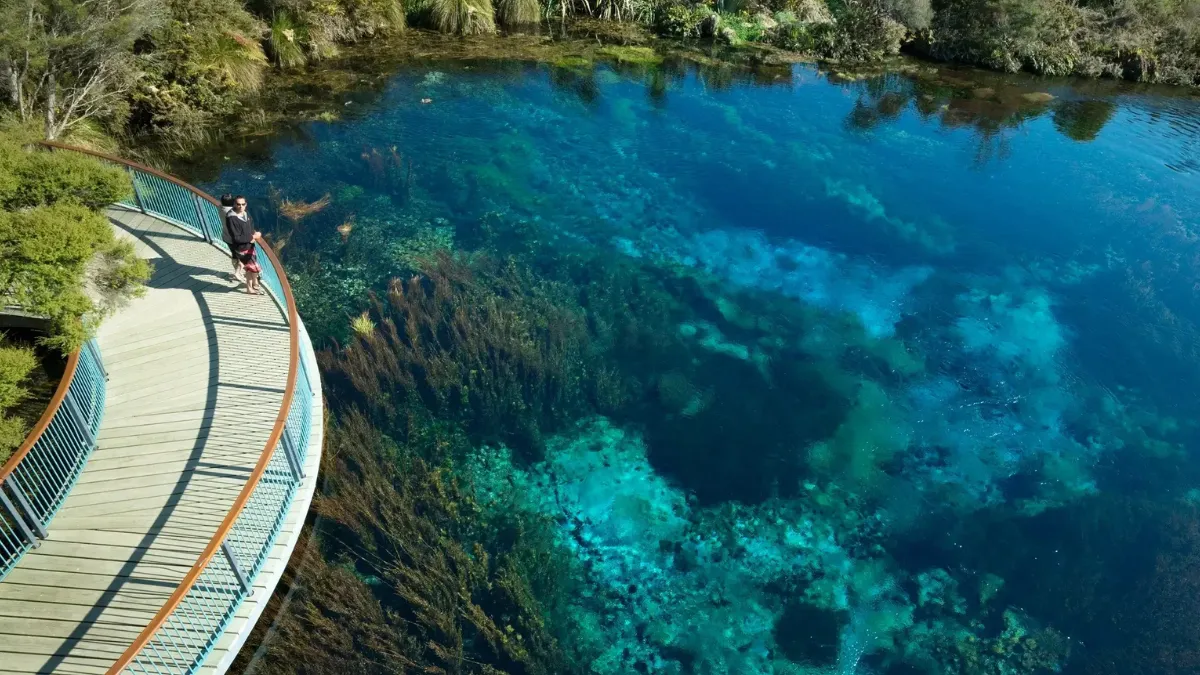
They are sacred to Māori, and you’re asked not to touch or swim in them, which after seeing how impossibly clear the water is, feels less like a rule and more like common sense.
You just stand at the viewing platforms and watch native fish drift through water so clean it barely seems to be there.
Wharariki Beach
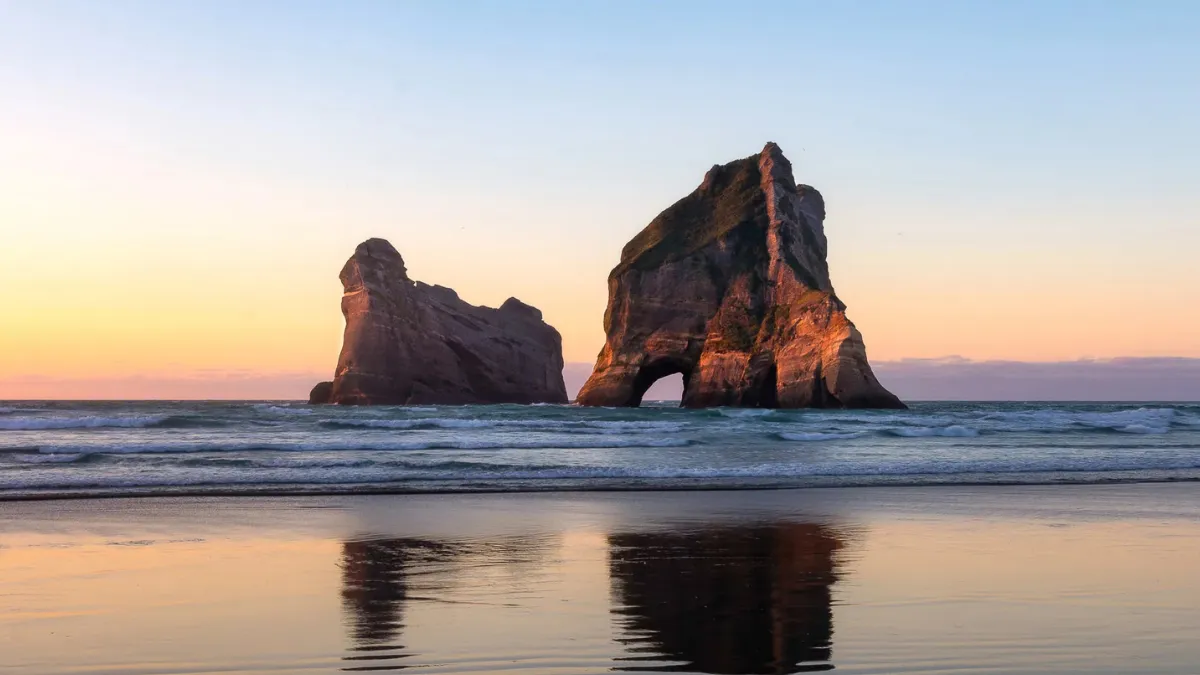
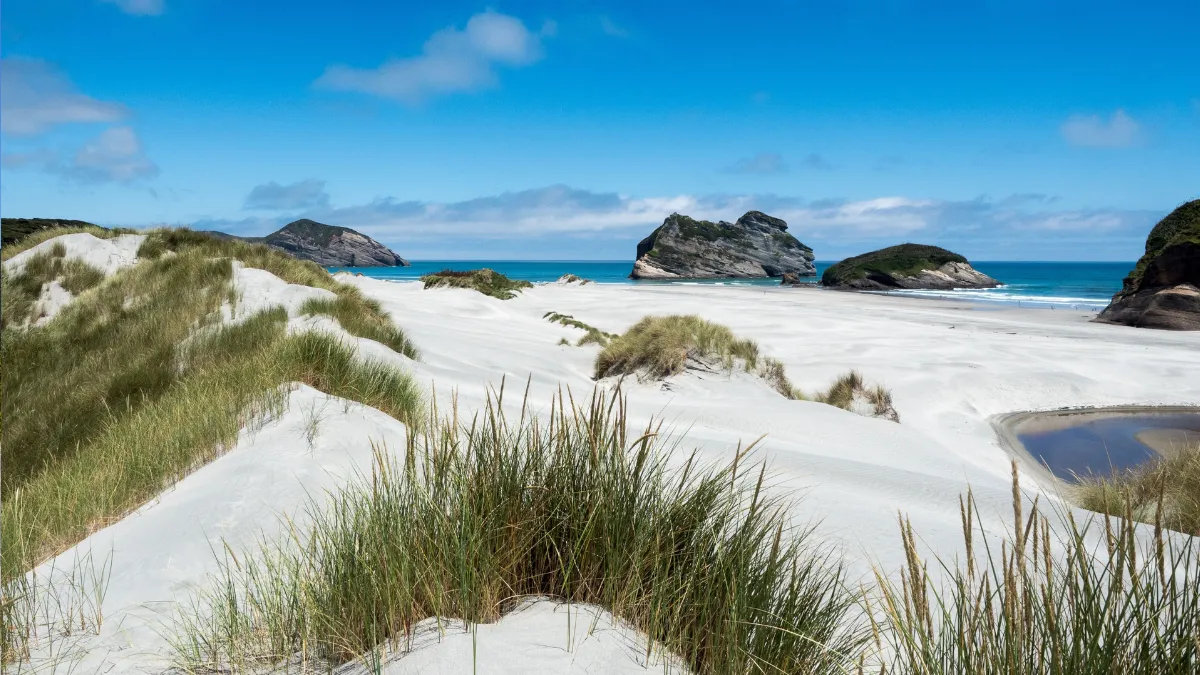
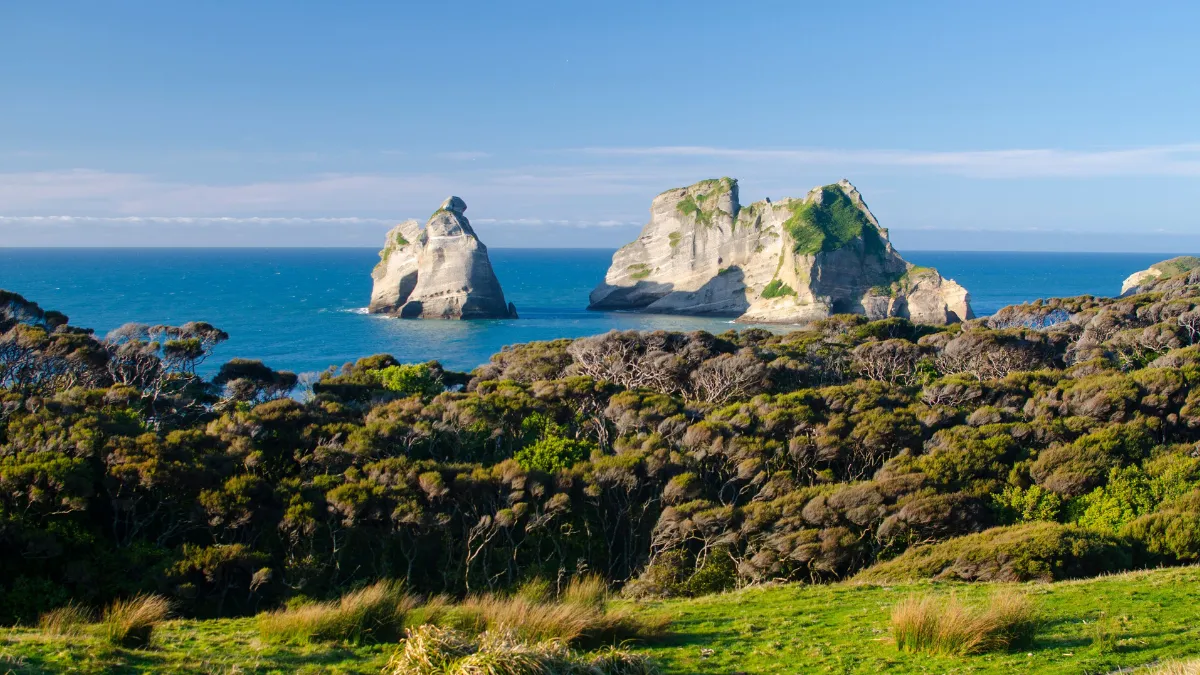
Wharariki Beach was, without question, the single most beautiful beach we saw on this trip, and that’s against very stiff competition. It’s a twenty-minute walk in across farmland from the car park, which filters out the crowds nicely.
Then it just opens up — wind-carved dunes, sea arches, rock stacks standing out in the surf, and, if you’re lucky, a colony of fur seal pups playing in the rock pools near the eastern end.
Go at low tide if you can, and go for sunset if your schedule allows it. I sat on the dunes for an hour longer than planned and don’t regret a minute of it.
Farewell Spit
Farewell Spit, the extraordinary 26-kilometre sandspit curling out into the Tasman Sea at the top of the bay — it’s a protected wetland reserve and home to enormous numbers of migratory birds, plus a historic lighthouse at the far end that you can only reach with a licensed operator. It’s a strange, vast, slightly otherworldly landscape, more like a desert than a beach in places. We took a guided tour that began from Wharariki beach.
Our first stop was at the beginning of Cape Farewell, evidently named by Captain James Cook as he caught a last glimpse of the South Island before continuing his voyage to Australia. The Cape marks the northernmost tip of the South Island and offers breathtaking cliff-top vistas. These striking coastal cliffs are cut by fault lines—huge vertical cracks—where the streams curiously flow inland instead of toward the sea.
Our next stop was Fossil Point, which is located at the base of the Spit, and a favored resting spot for New Zealand fur seals. Fossilized shells and wormcasts emerge from mudstone blocks at the cliff base, and nearby rock pools teem with marine life.
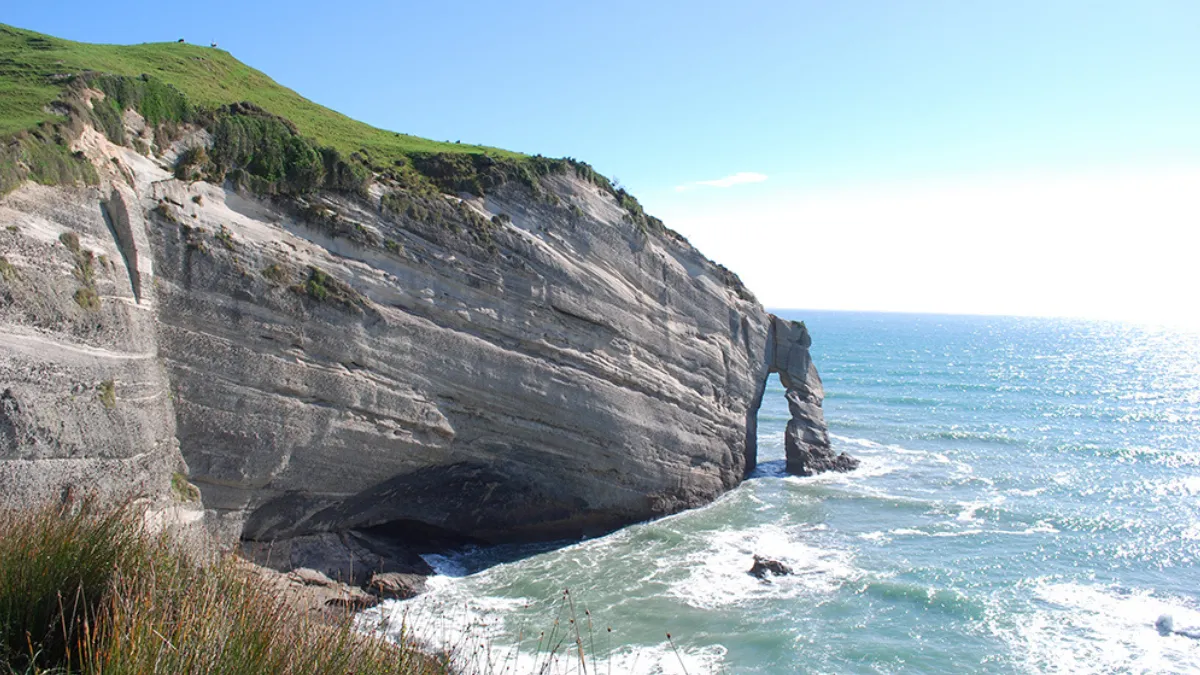
We then had the most incredulous 30 kilometer drive along the beach, right beside the ocean to the very tip of the cape – Farewell spit. Seriously, 30 km along some of the most pristine beach I’ve ever seen until we arrived at the Lighthouse Reserve. Refreshments were served in the lighthouse keeper’s cottage and could explore the lighthouse. Over coffee we were told about the local Iwi’s (Māori tribal affiliation) connection to Onetahua (Farewell Spit) and some of the local history.
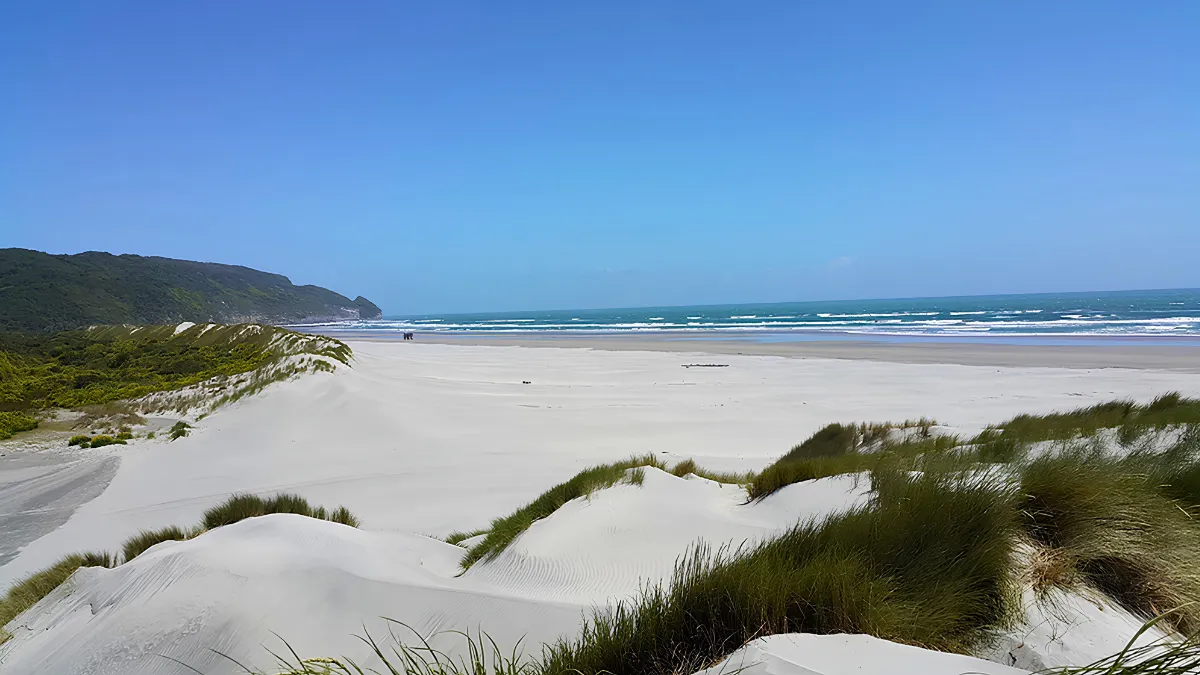
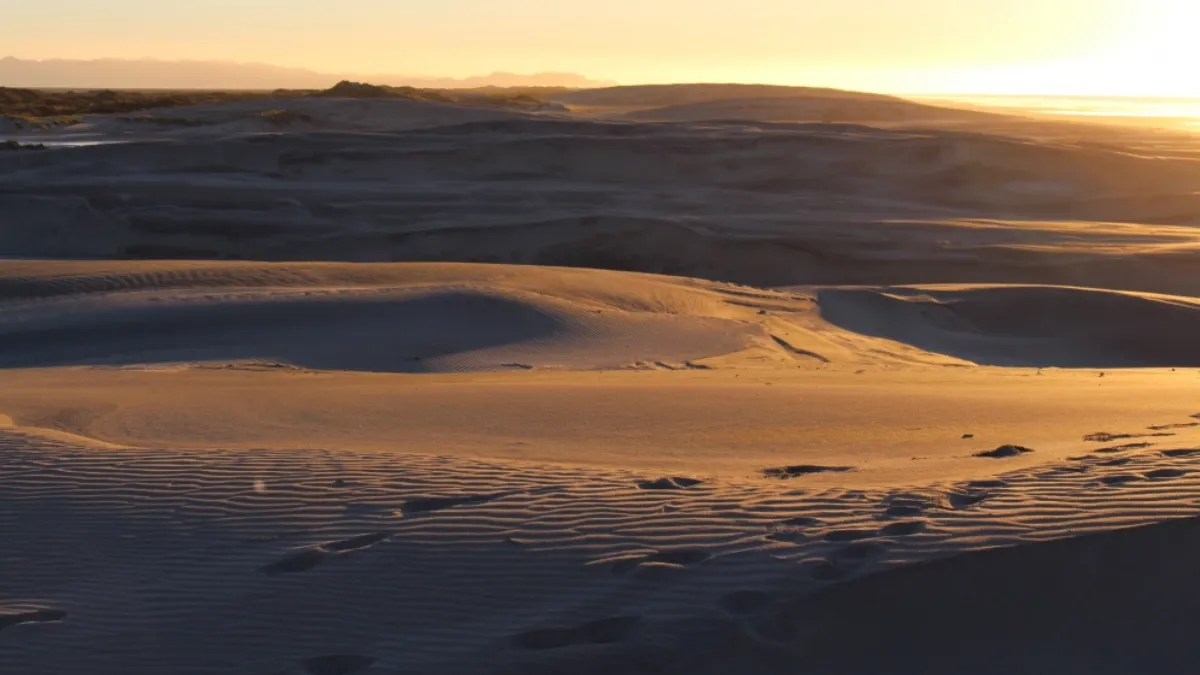
On the return journey you’ll get to climb a sand dune at Mullet Channel, harder than it sounds believe me, but you are rewarded with sweeping views of the ocean beach. It’s a stunning sight—looking across the dunes that run through the center of the spit to the intertidal plain where Arctic migrant wading birds feed during New Zealand’s spring, summer, and autumn. The wind shapes beautiful patterns in the sand along the dunes, their colors shifting with the rising or setting sun depending on the time of day.
The guides here are passionate about the Spit’s history, ecology, and wildlife, and ensure you get the most out of your visit. You’ll be shown the place on the spit where where whales often strand themselves and learn about the migratory wader birds. In summer, Farewell Spit hosts up to 20,000 godwits and 30,000 knots, along with other northern migratory birds, native New Zealand species, and introduced birds.
For something a little different, we also detoured to Labyrinth Rocks Park, a quirky, family-run maze of limestone formations in the Grove Scenic Reserve — not a headline attraction by any means, but a fun, low-effort hour if you’re passing through with kids or just fancy something odd.
Food note: the Mussel Inn near Onekaka is an institution for a reason — steamed mussels, homemade beer, a roaring fire, and a genuinely local crowd. Don’t expect fine dining; expect a proper, unpretentious good time. Not too far away is Oparara Basin on the South Islands West Coast. Well worth a visit if you have the time.
How to Get to Nelson Bays New Zealand: Transportation Options and Travel Tips
Reaching this stunning destination is easier than you might think. There are various transportation options to consider, whether you prefer driving or flying.
- The main route, State Highway 6, leads you through picturesque landscapes from Blenheim, or from the North Island Ferry drop off in Picton, and is a truly scenic drive across the Whangamoas.
- Flying into Nelson Airport (NSN) is a popular choice for those who want to save time. While compact, Nelson airport is one of the busiest in the country, providing quick access to the city. I recommend checking flight schedules early to ensure you can get a flight and start your adventure without hassle
- If you’re planning to explore the West Coast or Golden Bay, the road network connects you seamlessly to every major centre.
- For those heading to the Abel Tasman or the Nelson Lakes area, shuttle services operate throughout the summer, making travel convenient.
- Renting a car allows you the freedom to explore the water and mountain landscapes at your own pace.
- Make sure to allocate enough time to navigate the winding roads leading to Kahurangi National Park.
Whether you choose to drive or fly, your journey will be filled with breathtaking views and memorable experiences.

Places we didn’t get to visit in Nelson Bays and Tasman
As my guests only had a short window for our trip we didn’t get to visit the other 2 national parks that Nelson Bays and Tasman has on offer! But they are worth knowing when planning a Nelson Bays and Tasman getaway!
Kahurangi National Park
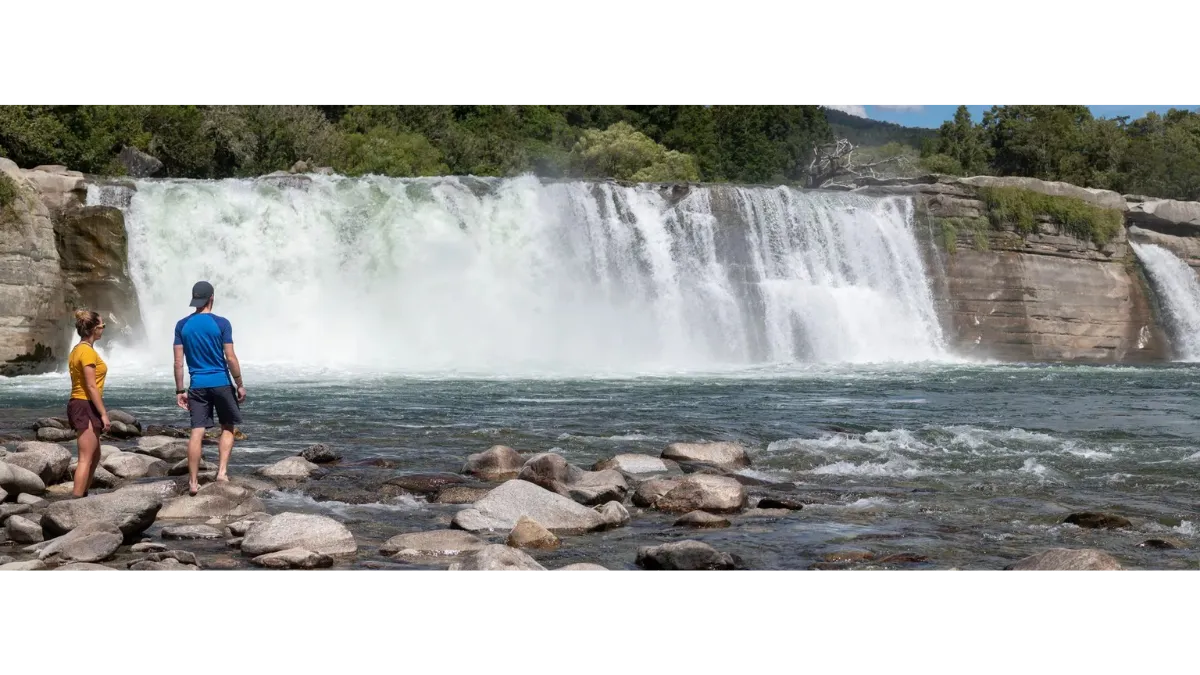
Key spots and activities in Kahurangi National Park include walking the Heaphy Track, exploring the Oparara Basin, and hiking Mount Arthur. Spanning nearly 500,000 hectares in the northwest of the South Island, it features lush rainforests, marble mountains, and underground cave systems.
Top Places to Visit in Kahurangi
- Oparara Basin (Karamea): Home to massive limestone arches like the Oparara Arch and Moria Gate Arch, plus self-guided walking loops through lush rainforest.
- Mount Arthur (Flora Saddle): Offers panoramic alpine views, unique marble rock formations, and day hikes starting from the Flora Car Park near Motueka.
- Riuwaka Resurgence: An easy, family-friendly 10-minute walk near Motueka where crystal-clear river water gushes straight out of the marble hills.
- Cobb Valley: A remote inland glacial valley featuring tussock fields, alpine tarns, and access to rugged peaks.
Best Things to Do In Kahurangi
- Trekking the Heaphy Track: New Zealand’s longest Great Walk, a 78–82 km 3-to-5-day journey stretching from Golden Bay (Brown Hut) to the wild West Coast (Kohaihai), open to mountain biking in the off-season (May 1 to Nov 30).
- Caving & Spelunking: Discover deep vertical shafts and complex cave networks carved into the marble of Mount Owen and Mount Arthur.
- Whitewater Rafting: Run multi-day or single-day rapids through steep gorges on the wild Karamea River.
- Wildlife Spotting: Look for rare Great Spotted Kiwis, Whio (blue ducks), and the giant native carnivorous Powelliphanta snails.
Nelson Lakes National Park
Nelson Lakes National Park offers stunning alpine scenery, glacial lakes, and forest walks, with key places to visit including Lake Rotoiti, Lake Rotoroa, and the alpine Angelus Hut. Top activities feature scenic lakeside strolls, multi-day alpine hikes like the Travers-Sabine Circuit, swimming or boating on the lakes, and visiting the alpine village of St Arnaud.
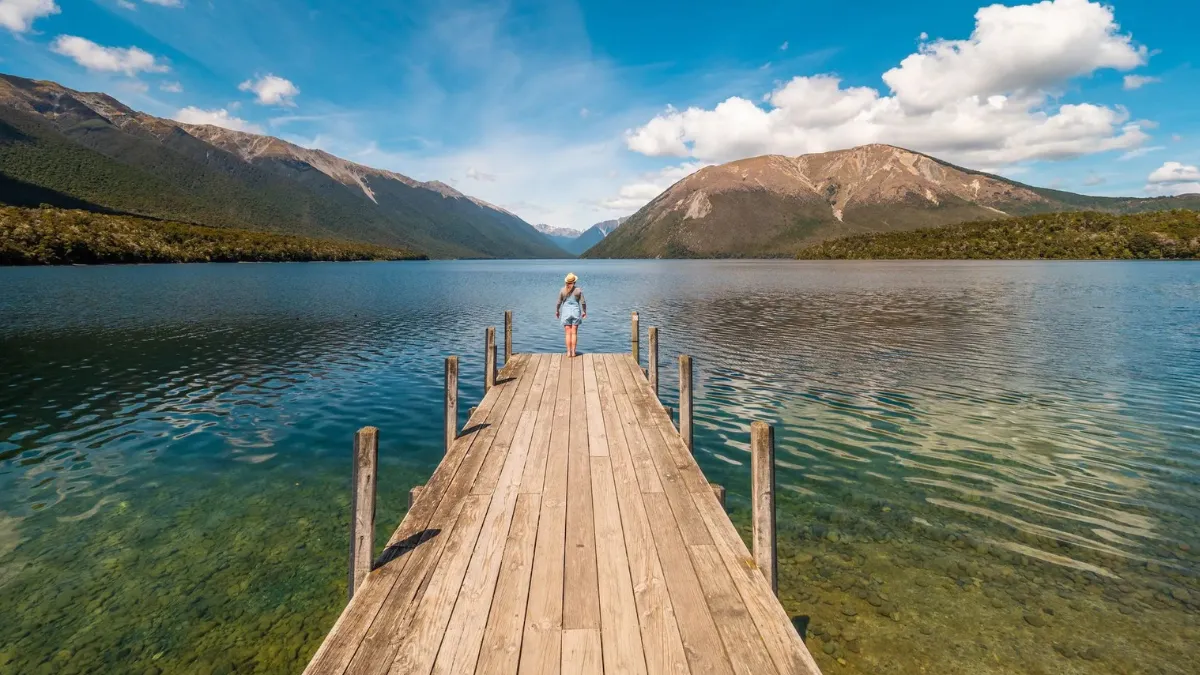
Key Places to Visit:
- Lake Rotoiti: Features the iconic jetty at Kerr Bay, water taxis, and picnic spots right next to the main alpine village of St Arnaud.
- Lake Rotoroa: A quieter, wilderness-style lake on the park’s western side ideal for peaceful reflection and remote track access.
- Blue Lake (Rotomairewhenua): Home to some of the clearest fresh water in the world, accessible via advanced backcountry hiking tracks.
- St Arnaud Alpine Village: The primary base camp offering local Nelson Lakes National Park Visitor Centre details, accommodations, and gear hire.
Things to Do
- Day Walks and Hikes: Walk the easy lakeside tracks or climb up to Bushline Hut via the Mount Robert Circuit for panoramic valley views.
- Overnight Trekking: Tackle the popular 3-day loop to Angelus Hut or the 5-day Travers-Sabine Circuit.
- Water Activities: Hire a kayak or catch a scenic boat ride with local water taxis, or swim off the jetties and rafts during summer.
- Mountain Biking and Skiing: Ride the trails at the Teetotal Recreation Area or ski the slopes at the nearby Rainbow Ski Area during winter

Destinations Uncovered
Jason Baigent
Travel writer, researcher and publisher
“I’ve found that the best travel experiences happen when you venture beyond the standard circuit. My detailed Dunedin and Otago travel guides reveals lesser-known routes, secret beaches, and authentic cultural experiences that will transform your understanding of this incredible region.”
Insider Tips for a Memorable Nelson Bays Adventure
Preparing for your adventure in this stunning region can make all the difference. With its breathtaking landscapes and vibrant culture, a little planning goes a long way. I discovered that taking some essential precautions enhances the overall experience. Here are some key tips to ensure your trip is both enjoyable and safe:
- Pack sunscreen: The sun can be intense, especially during those long summer days. Protect your skin from sunburn and sunstroke.
- Beach safety: Even on cloudy days, UV levels can be high. Be mindful when spending time on the beaches.
- Hiking gear: If you’re planning to explore any of the national parks, ensure you have appropriate gear for varying weather conditions. Most important decent well fitting hiking boots.
- Book in advance: Secure your flights and accommodation early, particularly during the busy summer season.
- Allow ample time: With so many beautiful places to see, give yourself enough days to explore the region fully.
- Allow even more time: New Zealand destinations may look close on a map, but they often involve winding roads through mountain passes, so driving can take much longer than anticipated, teamed with the fact that many open roads have an 80km/h maximum speed.
- Stay informed: Always check the weather forecast and trail conditions before heading out for a day of adventure.
With the right preparation, your journey to this breathtaking part of the country will be unforgettable.
The Bottom Line
Nelson Bays New Zealand doesn’t try particularly hard to impress you, and that’s exactly why it does. It’s not flashy. There’s no single iconic must-see landmark plastered on every postcard rack. What it has instead is a kind of cumulative, sun-warmed magic — a market stall here, a hidden beach there, a spring so clear it looks photoshopped, a mussel dinner by a fire — that adds up to something I found myself missing within about a week of getting home.
If you’re weighing up where to spend your South Island time, my honest advice: give Nelson Tasman at least five or six days, split roughly between the city, the Abel Tasman coast, and Golden Bay. Bring a reusable coffee cup, a decent pair of walking shoes, and absolutely no plans for the afternoons. The light will take care of the rest.
Founder Destinations Uncovered
Jason Baigent
Travel Writer, Researcher and Publisher
“I’ve found that the best travel experiences happen when you venture beyond the standard circuit. My detailed Milford Sound travel guide reveals lesser-known routes, hidden gems, and top Fiordland experiences that will transform your understanding of this incredible place on the globe.”