Queenstown is almost unfairly beautiful. Mountains rise straight behind a deep blue lake, trails begin near the center of town, and a quiet waterfront morning can turn into a jet-boat ride, a wine-country cycle or a high-alpine hike by afternoon. It is also one of New Zealand’s most expensive and heavily promoted destinations. This Queenstown travel guide provides you with the honest low down on what to do and see, and sets some realistic budgets for this alpine destination.
A room that looks affordable in May may cost twice as much during ski season or New Year. An activity advertised from NZ$100 can become a NZ$300 day after transport, photographs and food. The famous Milford Sound excursion is magnificent, but it means roughly 12–13 hours on the road and water from Queenstown.
None of that makes Queenstown a poor choice. It simply makes independent planning valuable. The destination is at its best when you choose a few experiences that genuinely excite you, use the excellent free landscape between them, and leave enough flexibility for mountain weather.
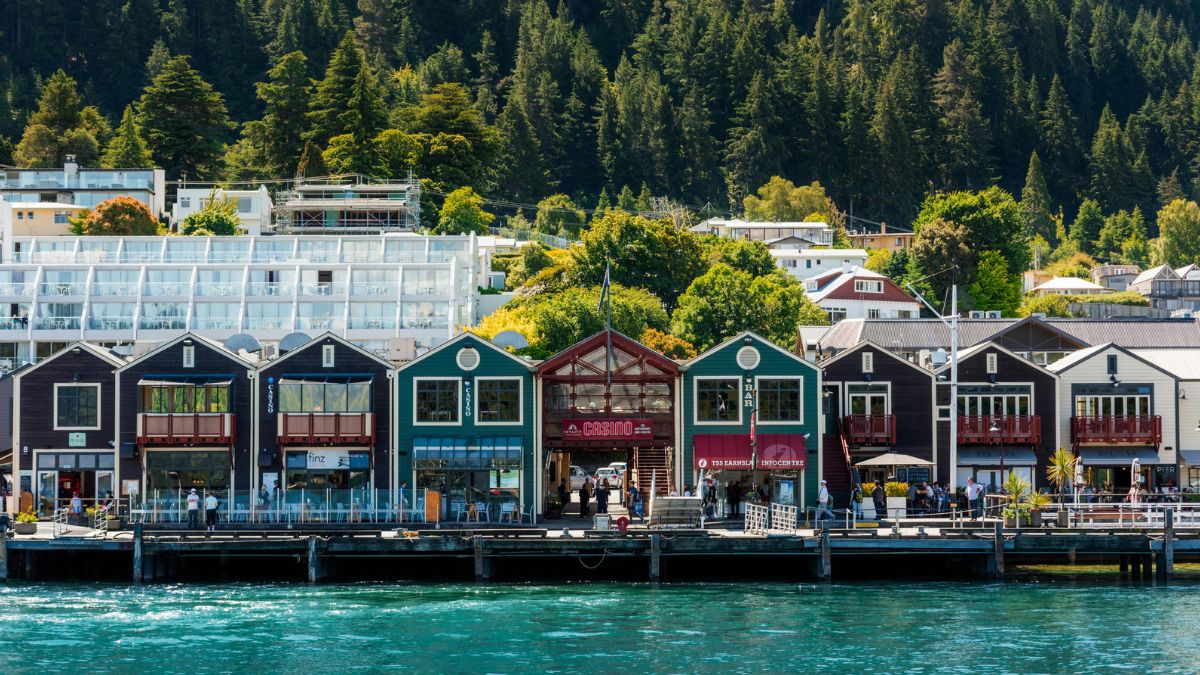
This guide covers Queenstown, Frankton, Arthurs Point, Arrowtown, Gibbston, Glenorchy and the Lake Whakatipu basin, with practical extensions to Wānaka and Milford Sound / Piopiotahi. Every price is in New Zealand dollars and was checked in September 2026. I will keep this blog post updated regularly – keep an eye out for any updates and ensure you check live rates, operating days and road conditions before booking and making payment. Where possible I have included the link to each attractions live site where you can quickly check for any cost or schedule changes.
Last updated: 13 October 2026
Queenstown at a glance
| Question | Honest answer |
|---|---|
| How long do you need? | Three full days gives you Queenstown plus one nearby excursion. Five days is much better if you want hiking, a major activity and Arrowtown or Glenorchy. Allow six or seven days if Milford Sound and weather flexibility both matter. |
| Is Queenstown expensive? | Yes. Accommodation and commercial activities are the main pressure points. Free walks, low bus fares and supermarket meals make a controlled budget possible. |
| Do you need a car? | No for downtown, Frankton and many booked activities. A car is useful for Moke Lake, Glenorchy, Gibbston, trailheads and a wider road trip, but parking and winter driving reduce the benefit. |
| Best time for hiking? | Usually January to March for long daylight and a lower chance of lingering alpine snow, although conditions can change in every month. |
| Best time for skiing? | July and August generally offer the most dependable midwinter conditions. June and September can be excellent but are less predictable. |
| Best value months? | Often May, late September, October and November outside school holidays and major events. Some seasonal services run less frequently. |
| What should you book first? | Peak-period accommodation first; then fixed-date activities, ski lessons, Milford transport and small-group tours. Keep at least one weather-flexible day. |
| Is Milford Sound a Queenstown attraction? | It is in Fiordland, not Queenstown. It is sold as a Queenstown day trip because transport is available, but the journey is long enough that an overnight in Te Anau may be the better trip. |
What is the best way to shape an independent trip to Queenstown?
A rewarding first visit usually has four parts:
- one free Queenstown day for the waterfront, gardens and a hill walk;
- one or two paid signature experiences, such as a lake cruise, jet boat, bungy, ski day or scenic flight;
- one or two regional days in Arrowtown, Gibbston or Glenorchy; and
- one flexible day for weather, Milford Sound or a longer hike.
Queenstown can fill a week, but it should not automatically fill every hour. The slow moments beside Lake Whakatipu are not gaps between the “real” attractions; they are part of the reason to come.
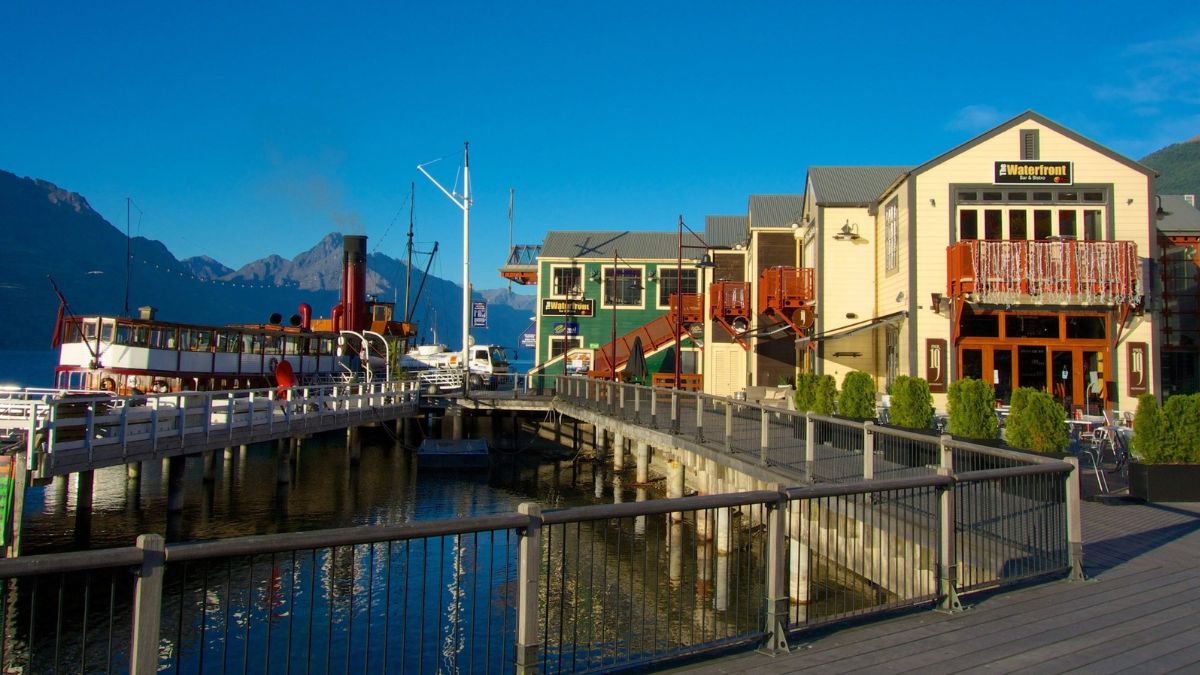
1) Things to See and Do in Queenstown and the Surrounding Region
Queenstown has two parallel personalities. One is the commercial adventure capital: polished, energetic and very good at persuading you to book. The other is a compact lakeside town surrounded by public trails, beaches, reserves and roads into extraordinary country. Combine both and the destination makes more sense.
Walk the Queenstown waterfront and Queenstown Gardens
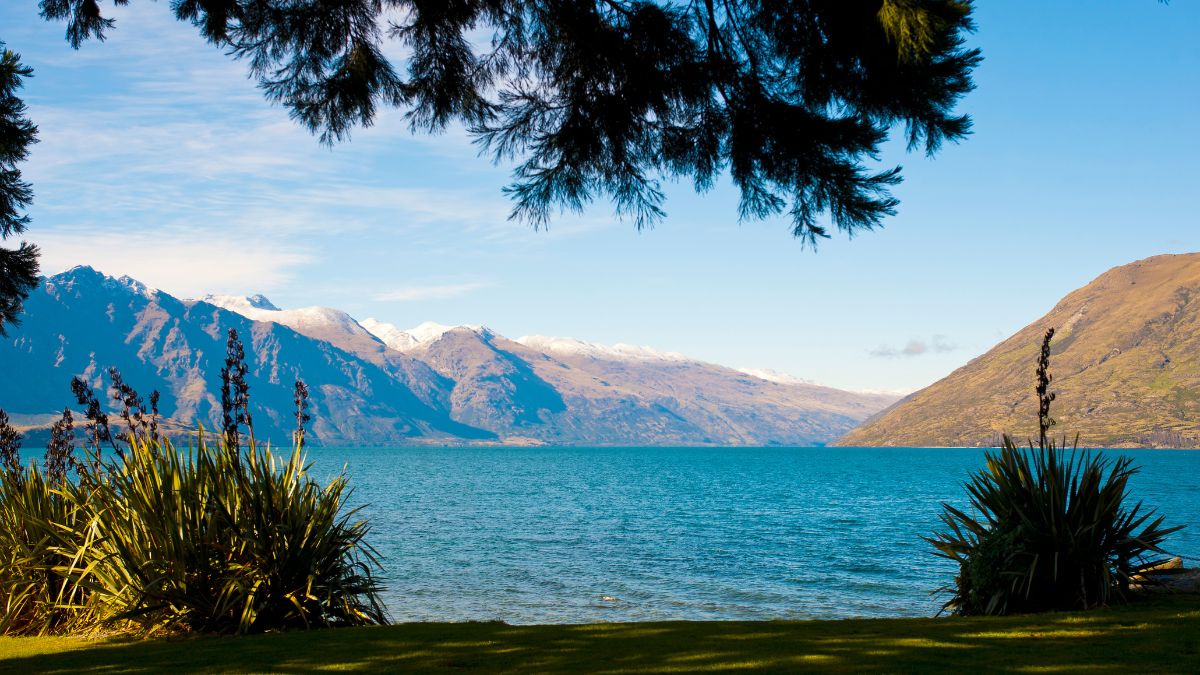
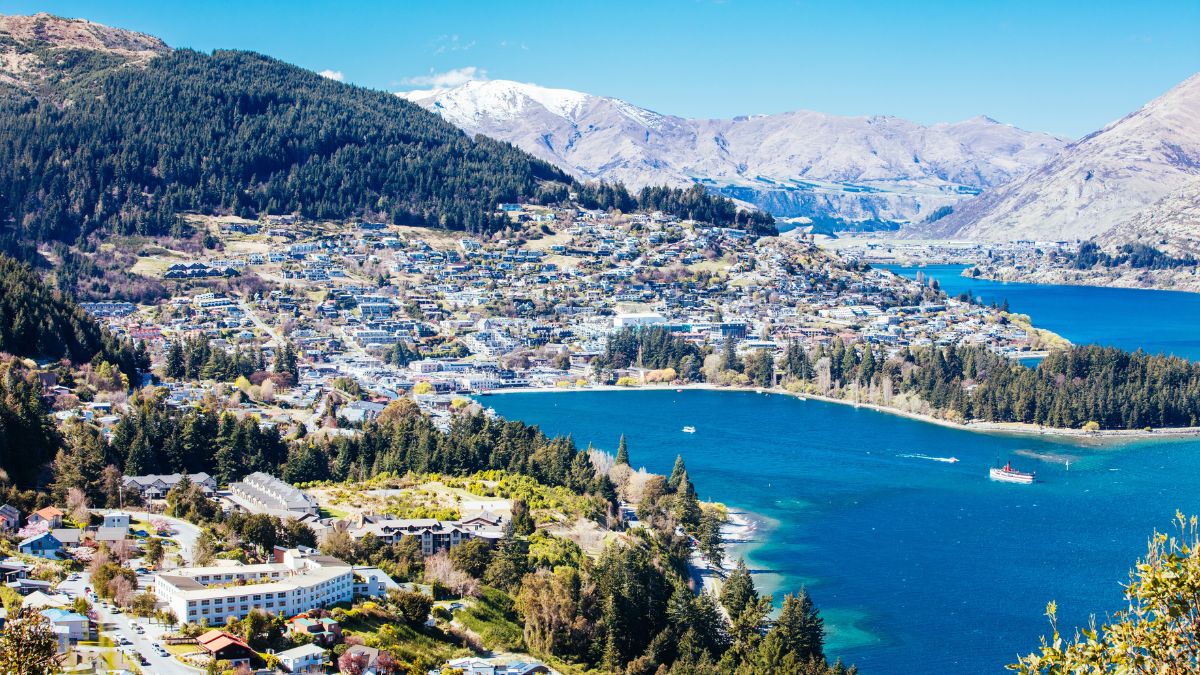
I spent quite a while trying to decide which beach in Queenstown has the best view, it is hard to choose… because there are heaps. This may surprise those who think Queenstown is just a winter destination. One of my favourite ways to enjoy a summer evening in Queenstown is with a couple of beers and “fish ‘n chips” while watching the sunset from Queenstown Bay Beach, the town’s main beach. Since the sun sets on the far side of the lake, you can sit in the warmth for a long time.
Yes, Queenstown Bay offers those picture postcard views winter or summer! Head down to the shore at Queenstown Bay Beach and follow the trail into the Queenstown Gardens. Established in 1866, the gardens offer a peaceful lakeside retreat with shady lawns and benches, a children’s playground, memorials to Robert Falcon Scott and William Gilbert Rees—the area’s first European settler—and opportunities to play Frisbee golf, bowls, or tennis.
The Queenstown Garden Trail will take a couple of hours if you have the time. The garden paths, shoreline, mature trees and mountain views are free, easy to reach and a great way to stretch the legs after a long drive or flight. A relaxed loop takes about one to two hours; add more time if you continue along the Frankton Track.
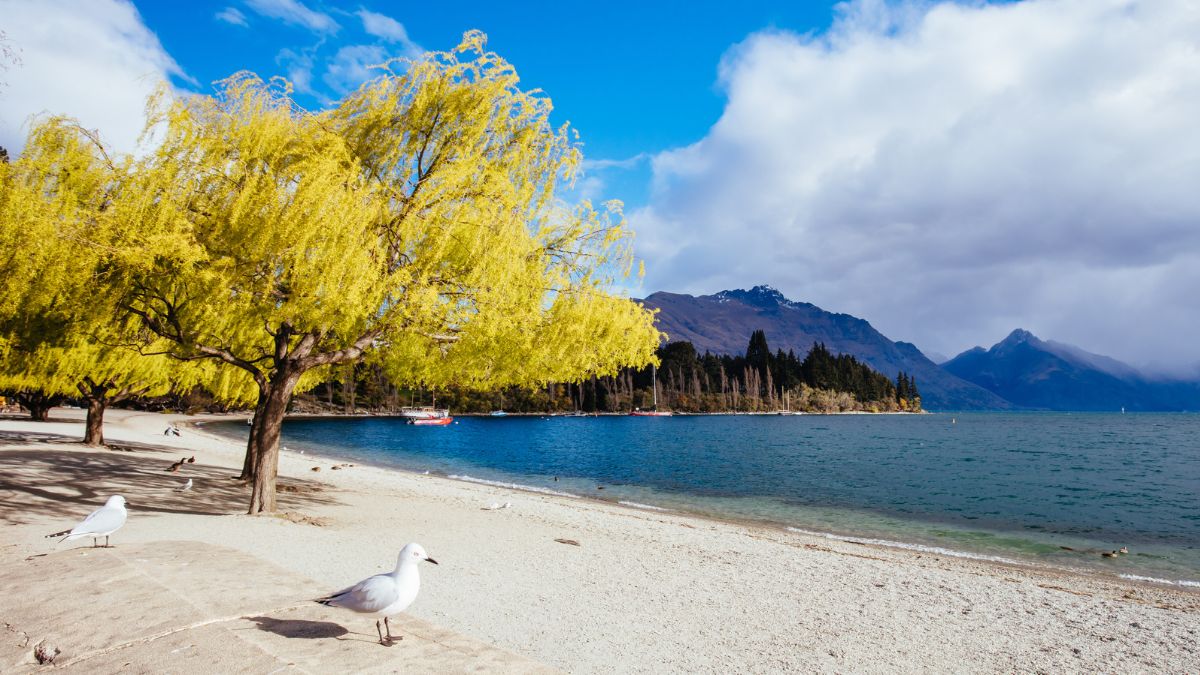
The waterfront becomes crowded from late morning into the evening. Go early for quieter photographs, then return at sunset when the Remarkables catch the last light. Wind can make the lake edge feel much colder than the town-center temperature suggests.
Cost: Free. Disc golf is also free if you bring discs; local rentals or purchases cost extra.
Follow the Frankton Track
Linking Queenstown with Frankton, the Frankton Track winds along Frankton Arm on a broad, easy trail that is ideal for families. The track runs beside the lake and connects into the wider Queenstown Trail network. From Frankton Beach, it continues to Kawarau Falls Bridge, where the Twin Rivers and Kelvin Peninsula Trails begin. Popular with commuters, the Frankton Track also offers a safe, off-road route between Queenstown Airport and Queenstown for people travelling on foot or by bike.
Walk a section, cycle it, or use it as a low-cost day linking beaches, cafés and views across the basin. It is shared by walkers and cyclists, so keep left, control your speed and expect commuters as well as visitors.
This is one of the best options when the mountaintops are cloudy but conditions at lake level remain pleasant.
Cost: Free on foot. Standard bike hire commonly falls around NZ$60–100 a day and e-bikes around NZ$100–160, depending on duration, battery, shuttle and insurance.
Climb Queenstown Hill
The Queenstown Hill Time Walk is a rewarding half-day hike from town. Expect a sustained climb through forest and open tussock to broad views over Queenstown, Lake Whakatipu, Cecil Peak, the Remarkables and the Kawarau basin. Allow roughly 2½–3½ hours return, more if you continue beyond the Basket of Dreams viewpoint or stop often.
It is accessible rather than easy: there is roughly 500 meters of climbing, exposed upper ground and little shelter once you leave the trees. Take water, sun protection and a windproof layer. In snow or ice, the character of the walk changes completely.
Cost: Free.
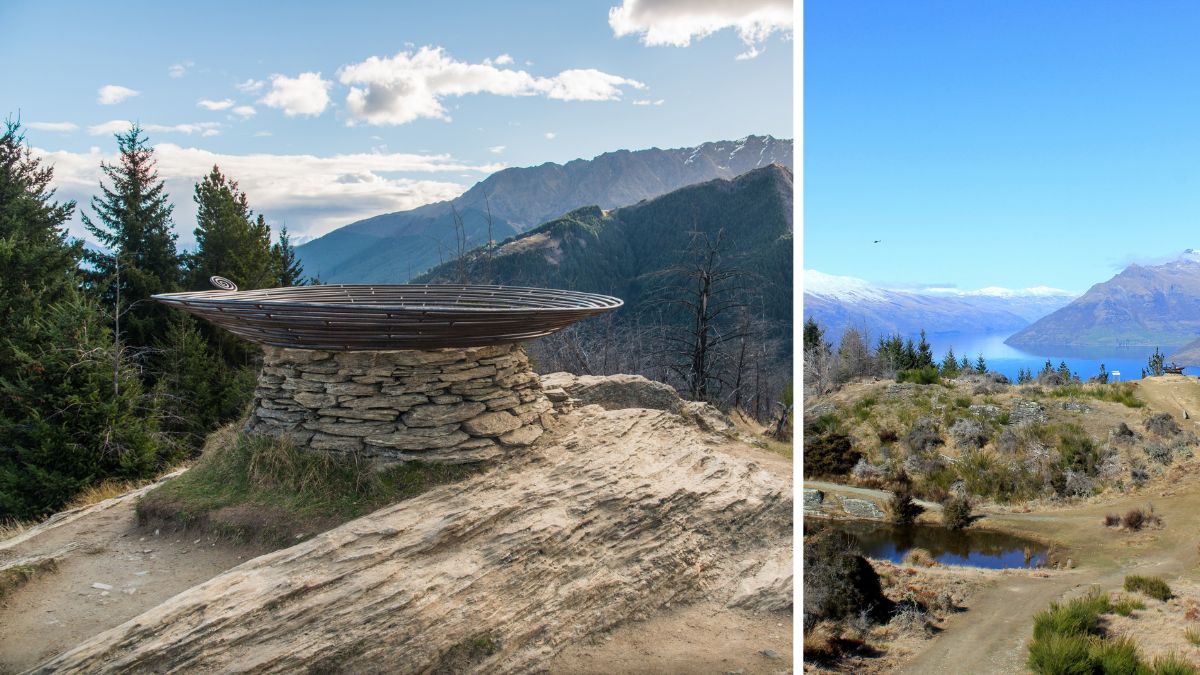
Ride the Skyline Gondola—or hike the Tiki Trail
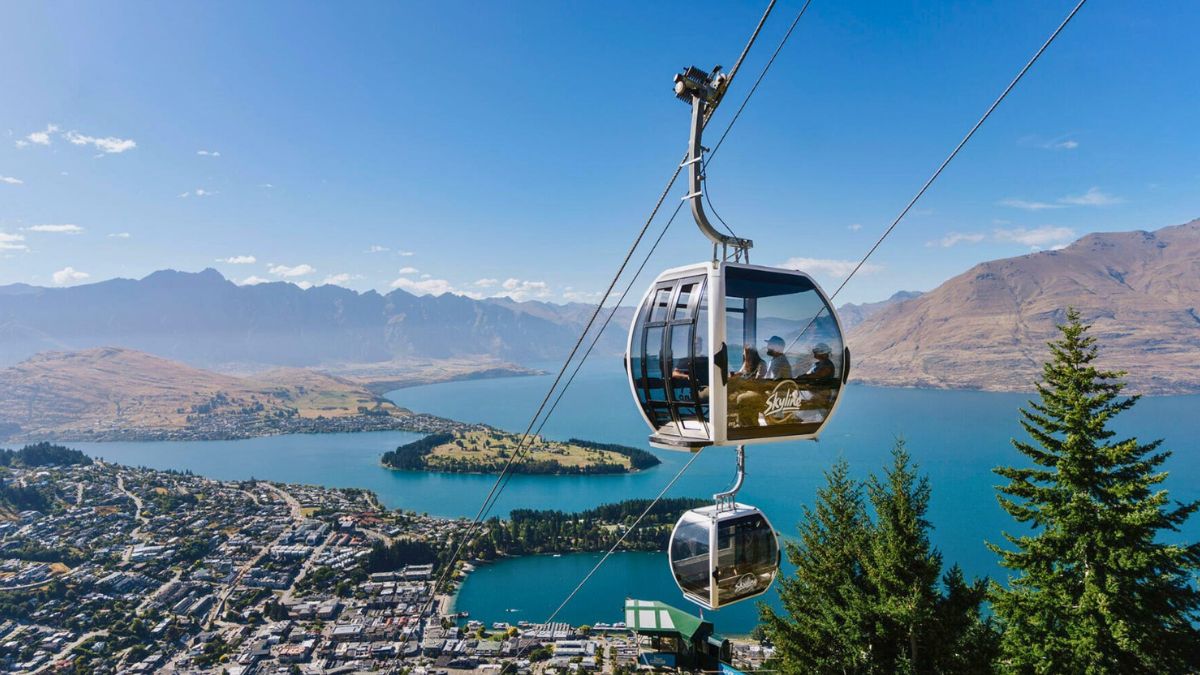
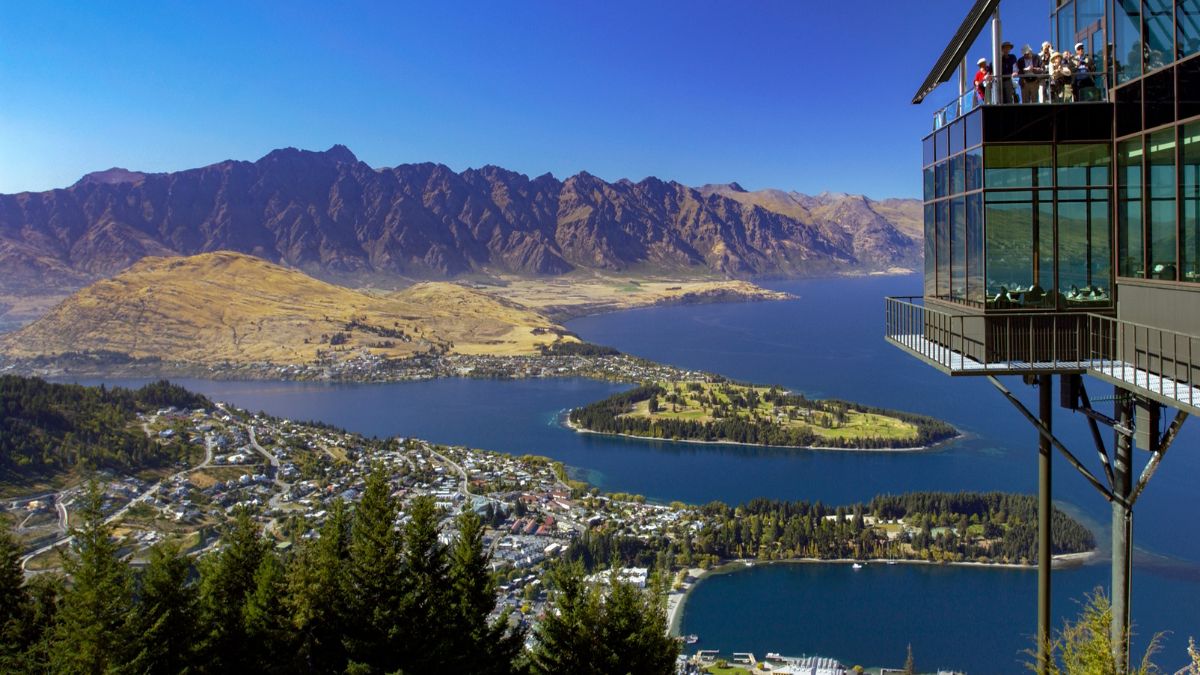
Skyline Queenstown is the gondola that rises 480 meters to Bob’s Peak. It is the simplest way to get the classic high view without a long climb, and the upper complex has a café, restaurant, luge and other paid activities. In 2026, an adult gondola return is NZ$69 and a child ticket is NZ$48; family and gondola-plus-luge packages cost more. Check live hours and packages on Skyline Queenstown’s official price page.
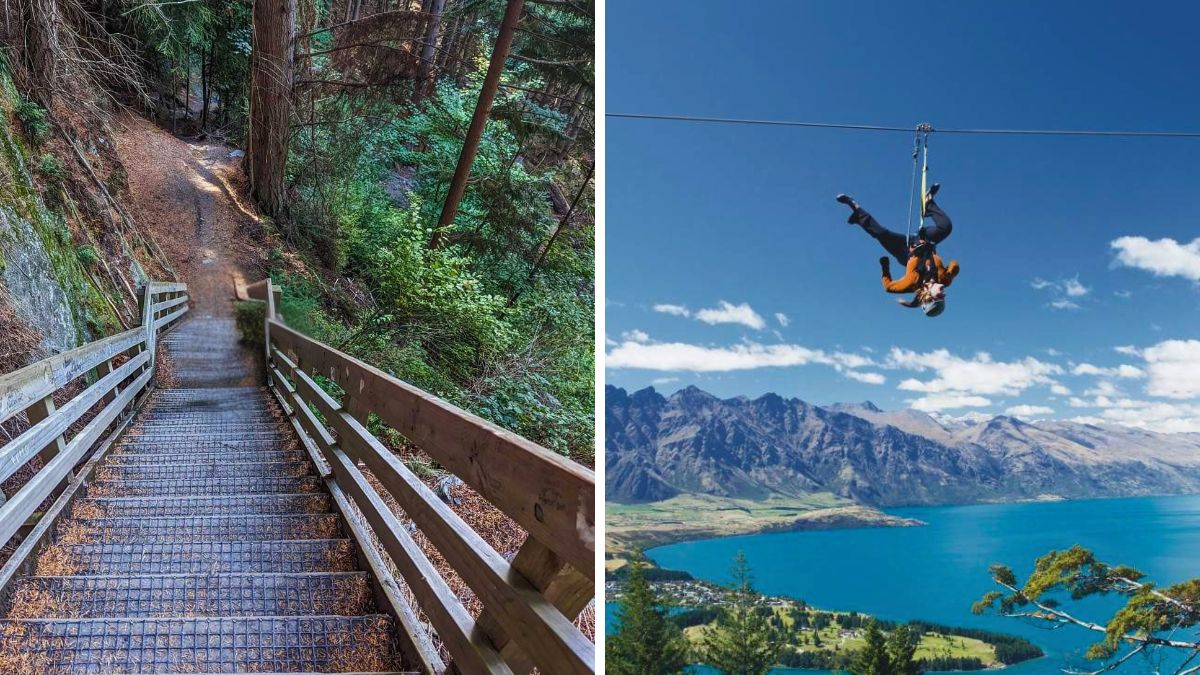
The Tiki Trail reaches the same general summit area on foot. It is free, steep, rooty and slippery after rain. Beginning at the end of Cemetery Road, just off Brecon Street, the Tiki Trail climbs through the trees towards the lookout at the summit of Bob’s Peak. It’s a short but steep hike through forest with limited views, followed by a dramatic scenic reveal at the top. The trail crosses mountain bike tracks, so keep an eye out for riders speeding downhill.
Honest verdict: The gondola view is excellent, but NZ$69 is a lot for transport to a viewpoint. It offers the most value to travelers who cannot or do not want to hike, or who will combine it with a meal or luge ride. Fit walkers can save the fare and earn the view.
Zip Trek Kea 6-Line Tour
Descend 30 storeys at speeds of up to 70 km/h on the world’s steepest zipline from ZipTrek Ecotours! Longer and faster than other tours, this spectacular guided journey through native beech forest features six incredible ziplines, ending back in town on an unforgettable high.
The Kea Tour offers a truly unique way to descend the mountain and is perfect for those seeking an extra adrenaline rush. Your adventure begins at the Treehouse and ends at the bottom of the Skyline gondola. For the adrenaline junkies – this one makes jumping of a bridge with a rubber band round your ankles look like childs play. 3 hours of dangling, falling and finishing with the utmost terror… never again! I loved it and hated it in the same breath. And was never so pleased to have feet on terra-firma.
Cost: From $209 adults and $169 kids 6-14 years. 3 hour tour including 6 different zip lines. Terror is free.
Hike Ben Lomond—only with suitable conditions
Ben Lomond Track is Queenstown’s big walk. From town via the Tiki Trail, the full outing is roughly 14 kilometers return with about 1,400 meters of ascent and commonly takes 6–8 hours. Starting from the top of the gondola removes part of the climb, but it does not make the exposed route beyond the saddle casual.
The saddle alone is a worthwhile objective. The summit section is steeper and more exposed, and snow, ice, wind and cloud can make it alpine terrain. In winter and spring, avalanche risk is possible. Start early, carry more layers and water than you think you will need, download a map, and turn around while you still have a safe margin. Review local track information and alerts through DOC and Plan My Walk before leaving.
Cost: Free on foot; add NZ$69 if using the gondola for the first ascent and confirm whether a one-way ticket is available.
Visit Kiwi Park
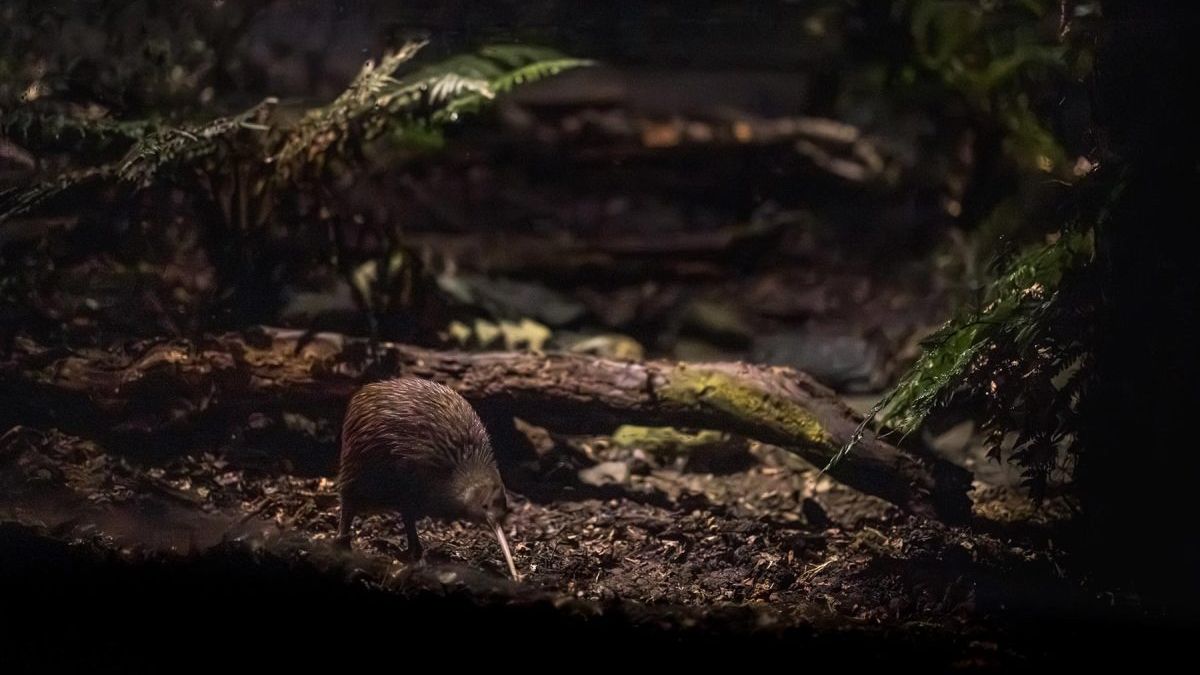
Kiwi Park is a five-acre wildlife sanctuary beside the gondola base. It provides a realistic chance to see kiwi in a managed nocturnal setting and learn about native birds, reptiles and conservation. It is especially useful for families, wildlife-minded travelers and wet-weather days.
Current admission is NZ$64 per adult, NZ$32 per child or NZ$150 per family. Kiwi encounter and conservation-show times matter, so plan the visit around the day’s schedule rather than arriving just before closing. See the current listing on Tourism New Zealand.
Honest verdict: It is not a wilderness wildlife encounter, and the ticket is not cheap. The value lies in close viewing and getting up cvlose to a Kiwi, interpretation and conservation support. If your wider New Zealand trip already includes several wildlife centers, compare the programs before booking.
Cruise Lake Whakatipu
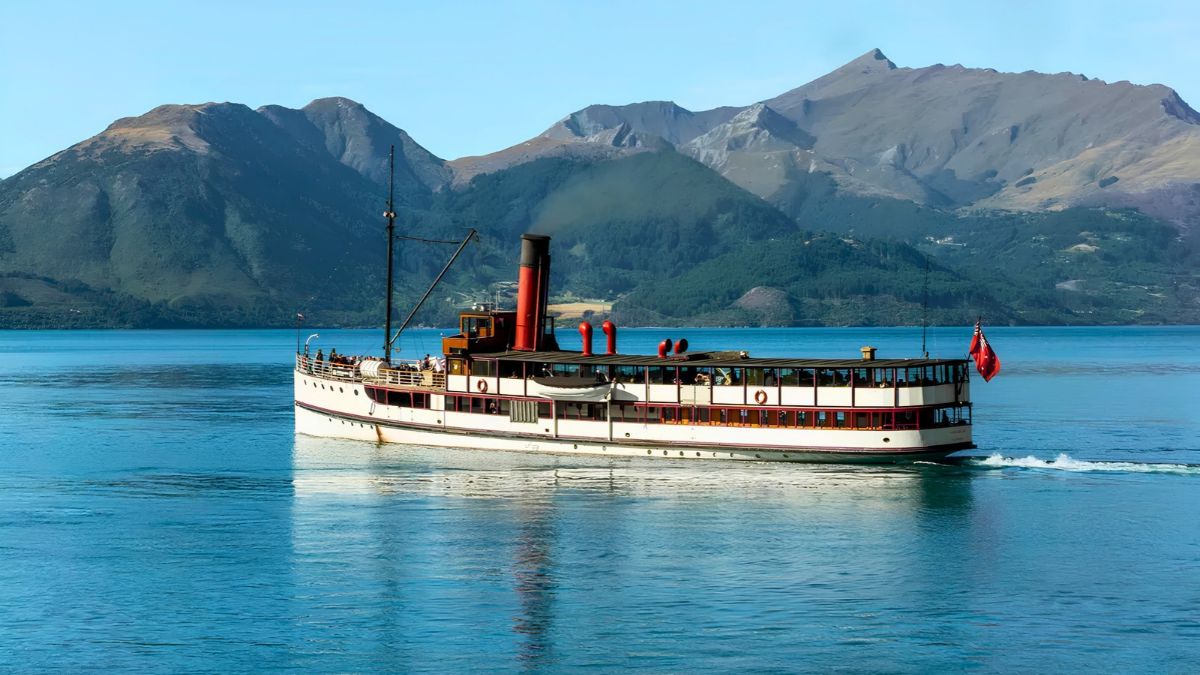
The historic coal-fired TSS Earnslaw is one of Queenstown’s most recognizable experiences. You can take a 1½-hour cruise, or combine the crossing with Walter Peak High Country Farm, afternoon tea or a barbecue meal. In September 2026, RealNZ currently lists the 90-minute TSS Earnslaw cruise from NZ$129. Walter Peak Farm Tours start from NZ$139 and Gourmet BBQ Dining from NZ$175.
Modern 90-minute lake cruises generally start around NZ$79, so use approximately NZ$79–129 as a realistic cruise-only planning range. These are published starting prices and can vary by date, vessel and package. Verify the vessel and inclusions on RealNZ because the Earnslaw has maintenance periods and another boat may operate. Compare time on the lake, route, outdoor deck space, onboard purchases and whether a farm visit or meal is genuinely important to you.
Honest verdict: The steamship is atmospheric and the engine room is part of the fun. If your priority is simply lake scenery, compare other operators before paying a premium for the heritage vessel.
Experience a jet boat
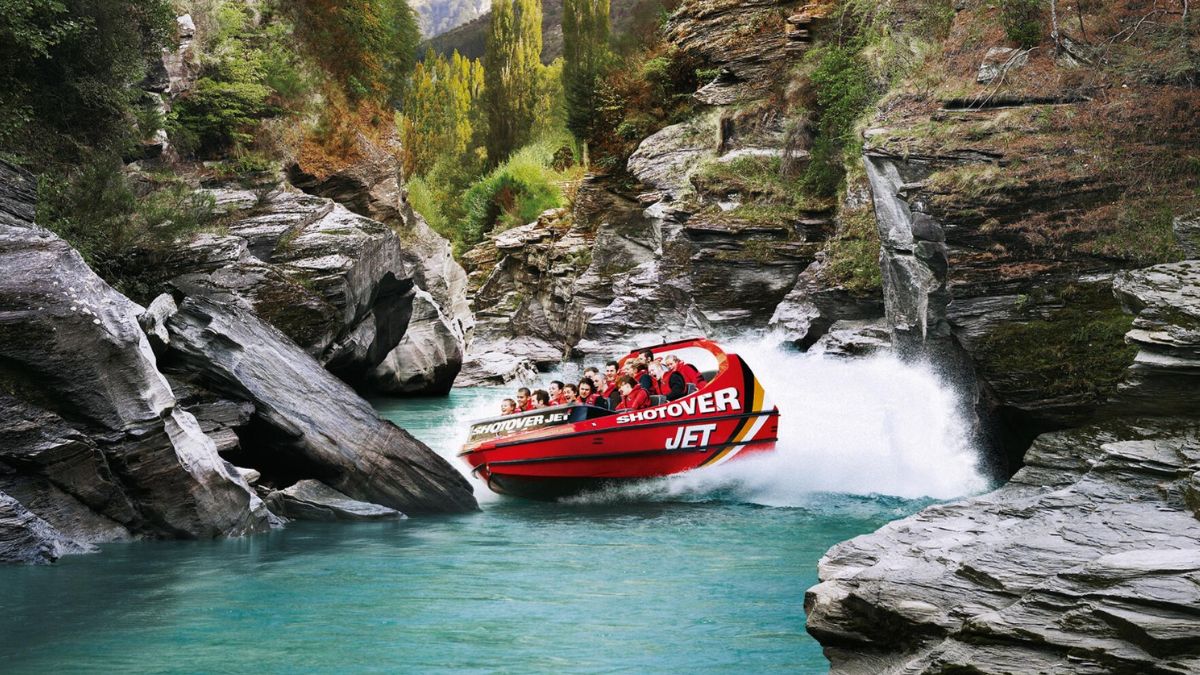
Shotover Jet runs fast boats through the narrow Shotover River canyons. Its 2026 individual pass is NZ$199 per adult and NZ$109 per child, with a family ticket of NZ$507 for two adults and two children. The ride itself is short—roughly 25 minutes—although transfers and check-in make the outing longer. Prices and operating conditions are on the official Shotover Jet page.
Other Queenstown jet boats use different stretches of river and lake, and some have longer wilderness components. Do not compare on price alone: compare ride time, canyon access, transfers, photographs and the age or height rules.
Honest verdict and Cost: NZ$199 for a short ride is undeniably expensive. But the Shotover, to me, is one of the best attractions in Queenstown and well worth the price. It provides a truly memorable and highly polished experience. Think high speed, narrow canyons and speedboats that seem to spend more time out of the water than in it. Travelers mainly interested in scenery may get more hours of enjoyment from a cruise, guided walk or regional tour for similar money.
Bungy jump, swing, zipline or skydive
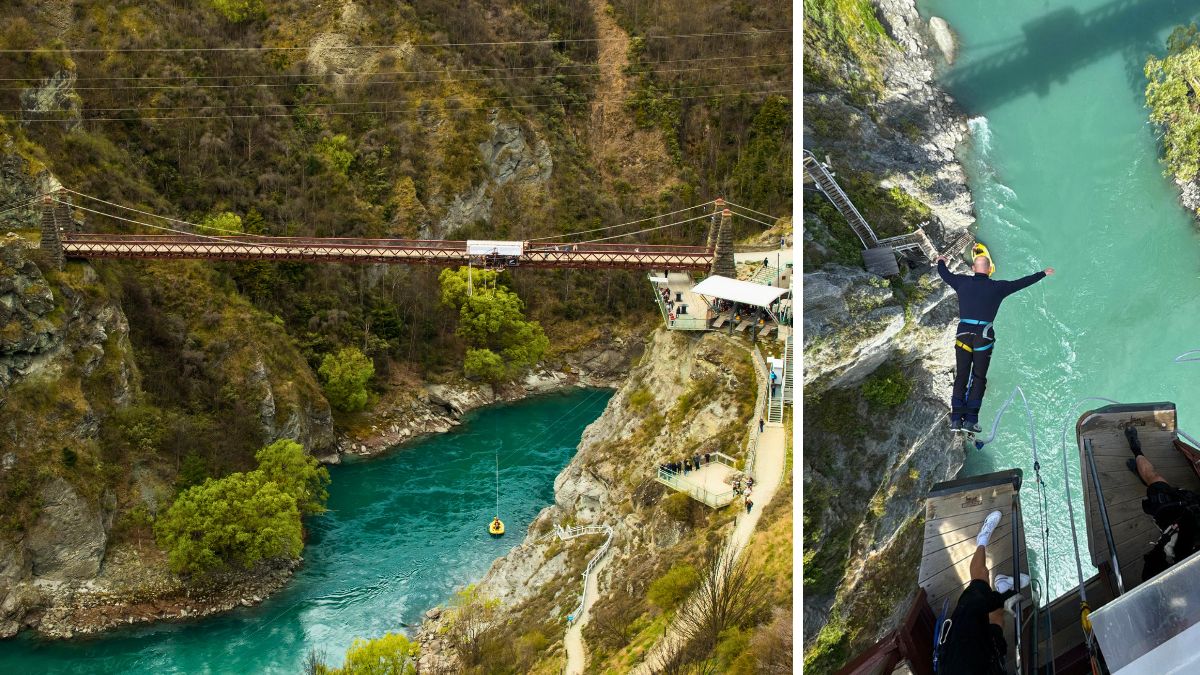
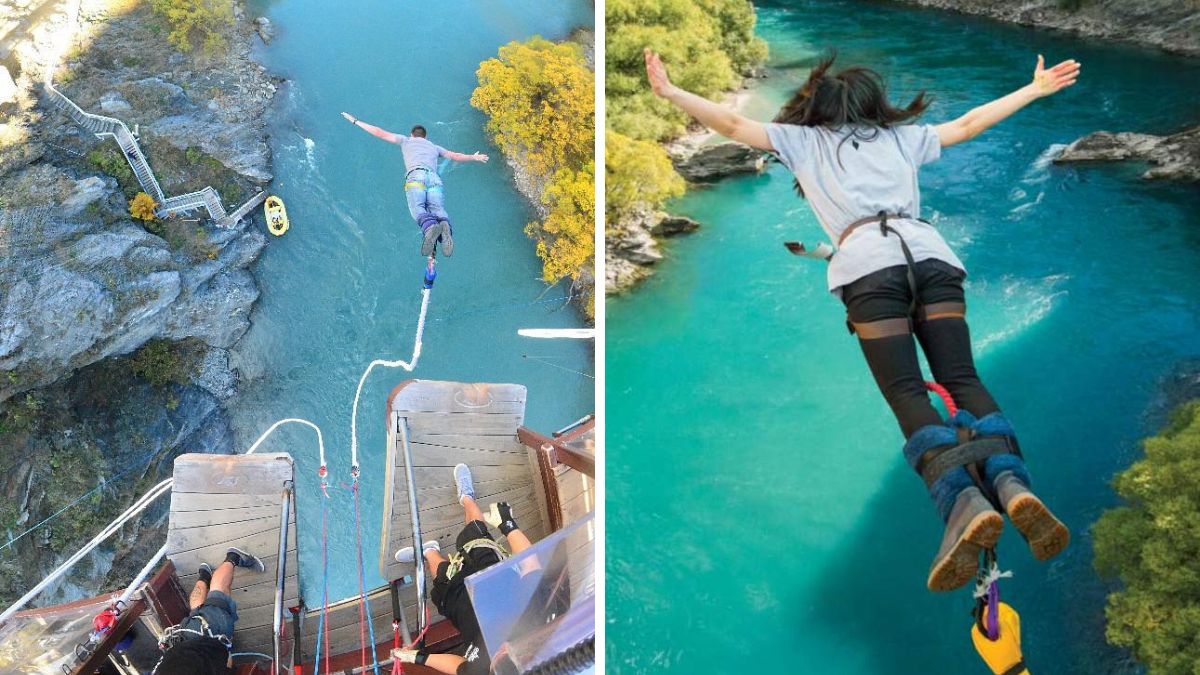
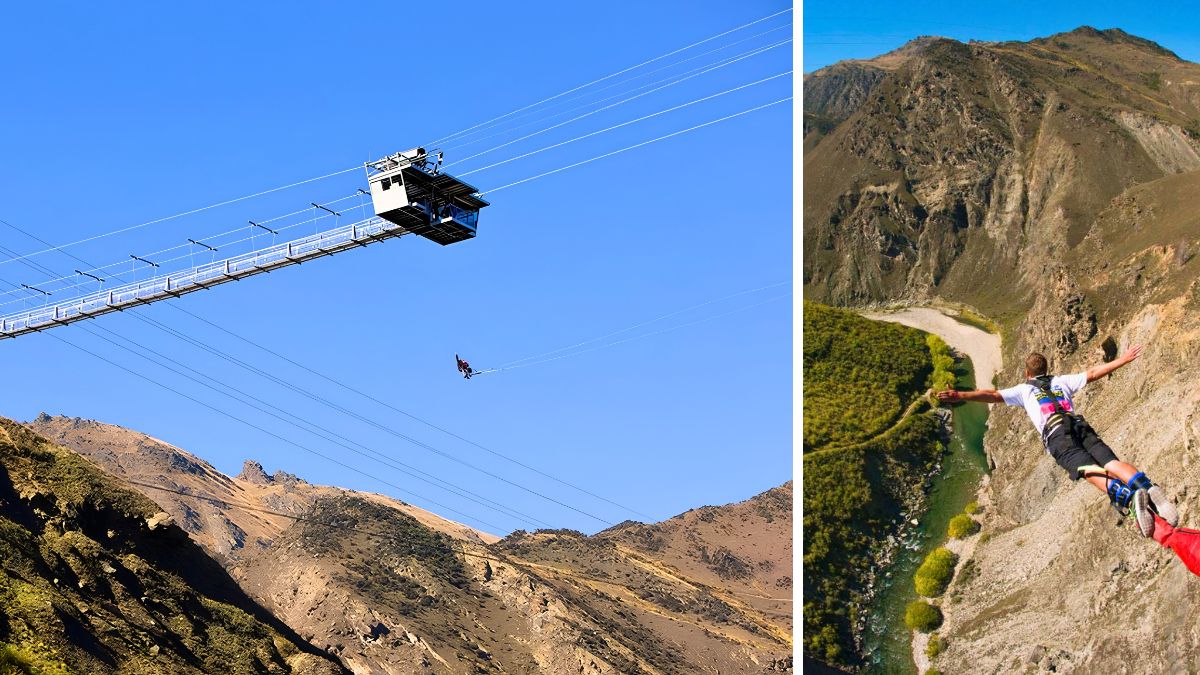
Queenstown’s reputation was built partly on commercial adventure. The Kawarau Bridge is the home of the original commercial bungy operation at 43 metres (141 feet) above the Kawarau River, while the Nevis Bungy is New Zealand’s highest bungy jump at 134 metres (440 feet), a much higher, more remote commitment.
Indicative 2026 adult prices include:
| Experience | 2026 starting price | Practical note |
|---|---|---|
| Kawarau Bridge Bungy | NZ$320 | 43-meter jump; allow about 1½ hours self-drive or 2½ hours using operator transport. |
| Nevis Bungy | NZ$395 | 134-meter jump; allow about four hours and use the operator’s 4WD transport. |
| Shotover Canyon Swing / similar canyon swings | Roughly NZ$250–350 | Check whether photos, repeat jumps and town transfers are included. |
| Zipline | Roughly NZ$120–230 | Course length, gondola access and age/weight rules vary. |
| Tandem skydive | Roughly NZ$350–600+ | Price rises with altitude; video packages can add significantly. |
Cost: AJ Hackett lists the Kawarau Bungy from NZ$320 and the Nevis Bungy from NZ$395. Minimum ages, weight limits and medical rules are not flexible marketing details; read them before paying.
Honest verdict: Pick one adventure because you want that exact experience, not because Queenstown tells you that you should be fearless. Watching at Kawarau is free, and saying no at check-in is better than forcing yourself through an activity you do not want. There is no way in this world anyone could get me to leap off a bridge with an elastic band around my ankles. But hey, you do you!
Soak at Onsen Hot Pools
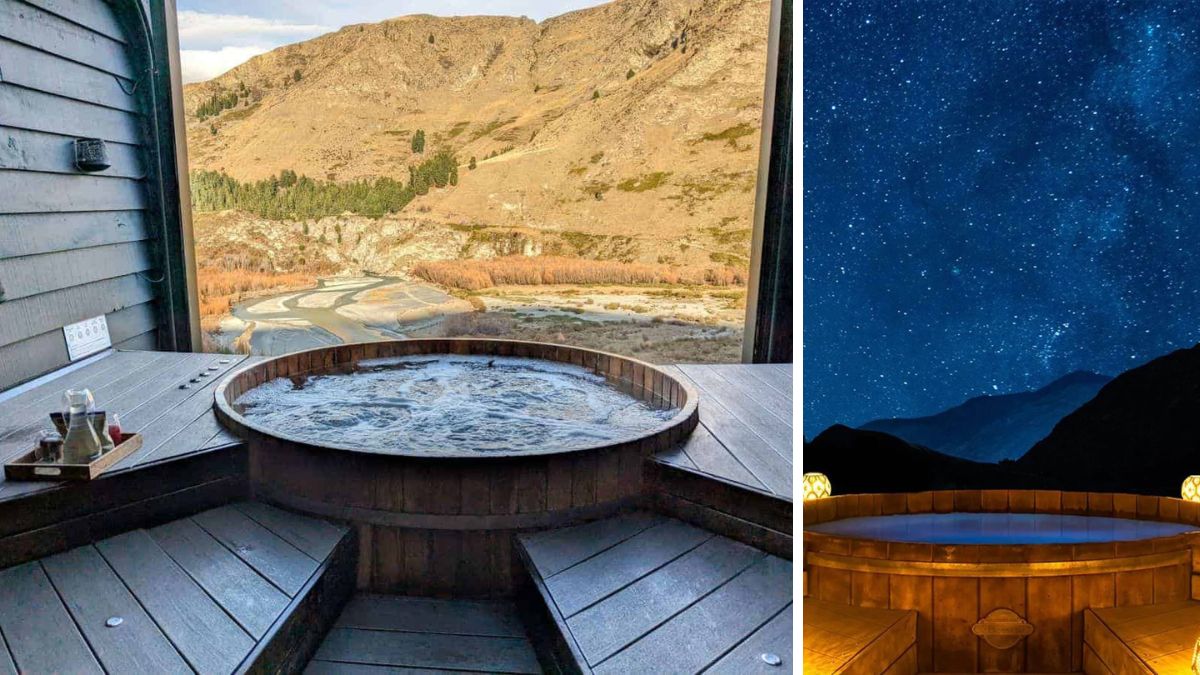
Onsen Hot Pools at Arthurs Point offers private cedar-lined rooms overlooking the Shotover River. In 2026, the Original Onsen is NZ$117 for one adult, NZ$175 for two, NZ$225 for three or NZ$260 for four per pool; treatment packages cost more. The official attraction offers a complimentary shuttle on eligible bookings. See current session details on Onsen’s website.
Honest verdict: It is a premium private experience, not a public thermal pool, and the water is heated rather than naturally geothermal. Splitting the room between two to four adults improves the per-person value. Sunset and evening sessions book quickly.
Ski or snowboard at Coronet Peak and the Remarkables
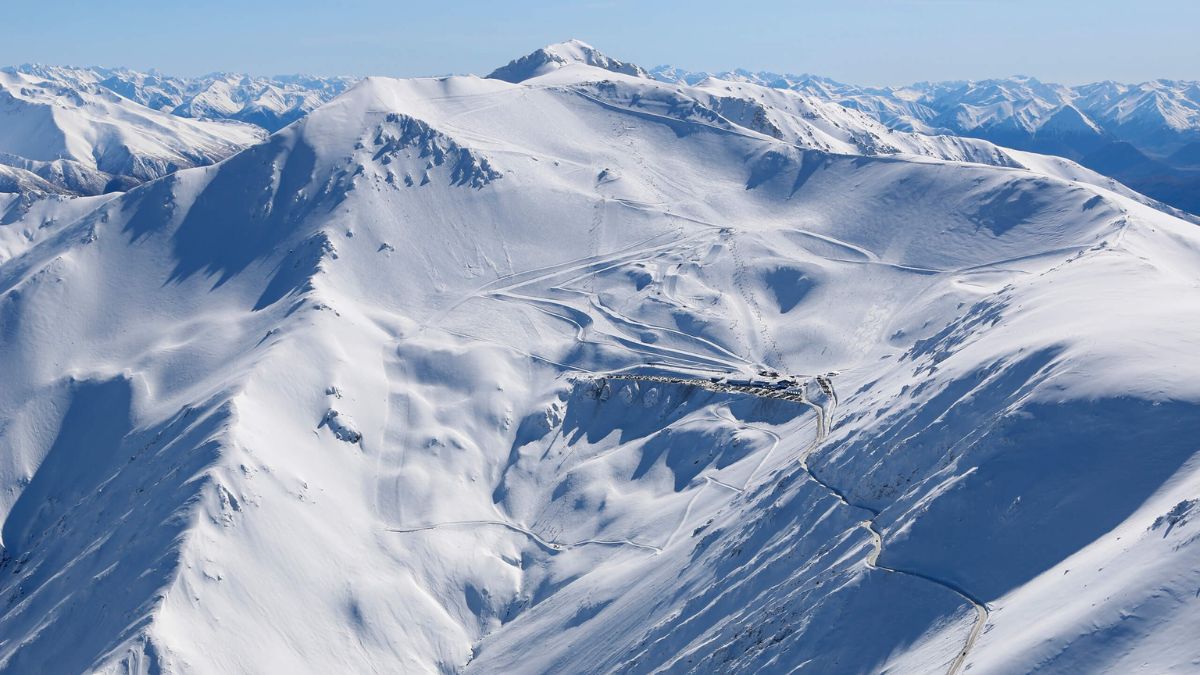
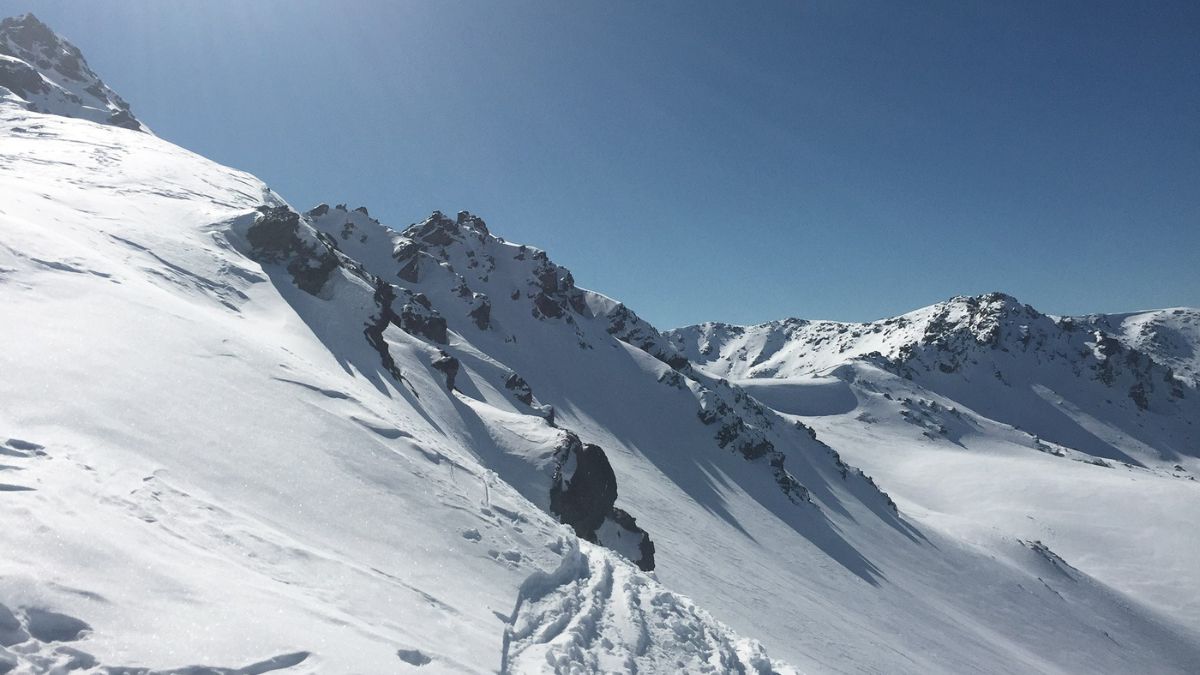
Coronet Peak is the closer mountain and is known for groomed terrain and, on selected dates, night skiing. The Remarkables has a higher alpine setting and varied terrain. Cardrona and Treble Cone are also marketed from Queenstown but involve longer transfers and will be covered in our Wanaka travel guide (which is where they belong).
Cost: For the 2026 season, a flexible full-day adult Superpass for Coronet Peak or the Remarkables is NZ$180. A first-timer package with beginner lift access, group lesson and equipment was listed at NZ$270. A realistic independent ski day often reaches NZ$300–500 per person after lift access, equipment, clothing, mountain transport, food and optional lessons. Check live products and operating status with NZSki.
Honest verdict: A single ski day is possible, but first-timers get more from a lesson than from simply buying a full-mountain pass. Mountain roads can require chains, and rental-car agreements may restrict their use. A ski bus is often the calmer choice. And you can spend more money jumping off a bridge which is done and dusted in around 3 minutes. Makes a whole day for $180 to $270 sound reasonable to me.
Ride the Queenstown Trail to Arrowtown or Gibbston
The Queenstown Trail network connects the lakefront, Frankton, Lake Hayes, Arrowtown and Gibbston through a mixture of lakeside paths, river bridges and country trail. A popular independent day uses the Wineries bike shuttle to Arrowtown, then cycle the Arrow and Kawarau river sections, and finish among Gibbston wineries for a return shuttle.
Cost: The trail itself is free. The Queenstown Wineries shuttle leaves Queenstown at 9.30am dropping you at Arrowtown. Then it departs Gibbston Valley at 4.30pm to return to Queenstown and will cost you $80 per person. A standard bike-and-shuttle package commonly costs NZ$95; e-bike packages are often NZ$140–220 before tastings, lunch or purchases. Confirm distance, elevation, pickup deadline, mechanical support and alcohol rules. An e-bike helps with hills but does not replace bike-handling confidence, especially after an afternoon in the vines!
Explore Arrowtown
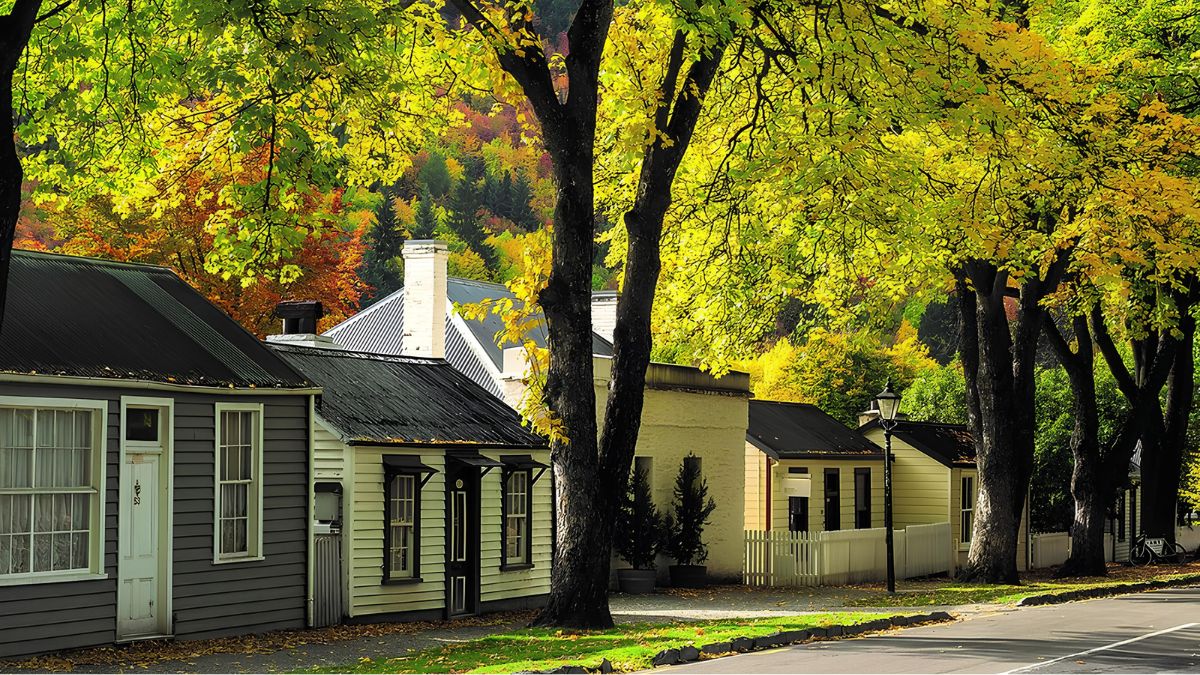
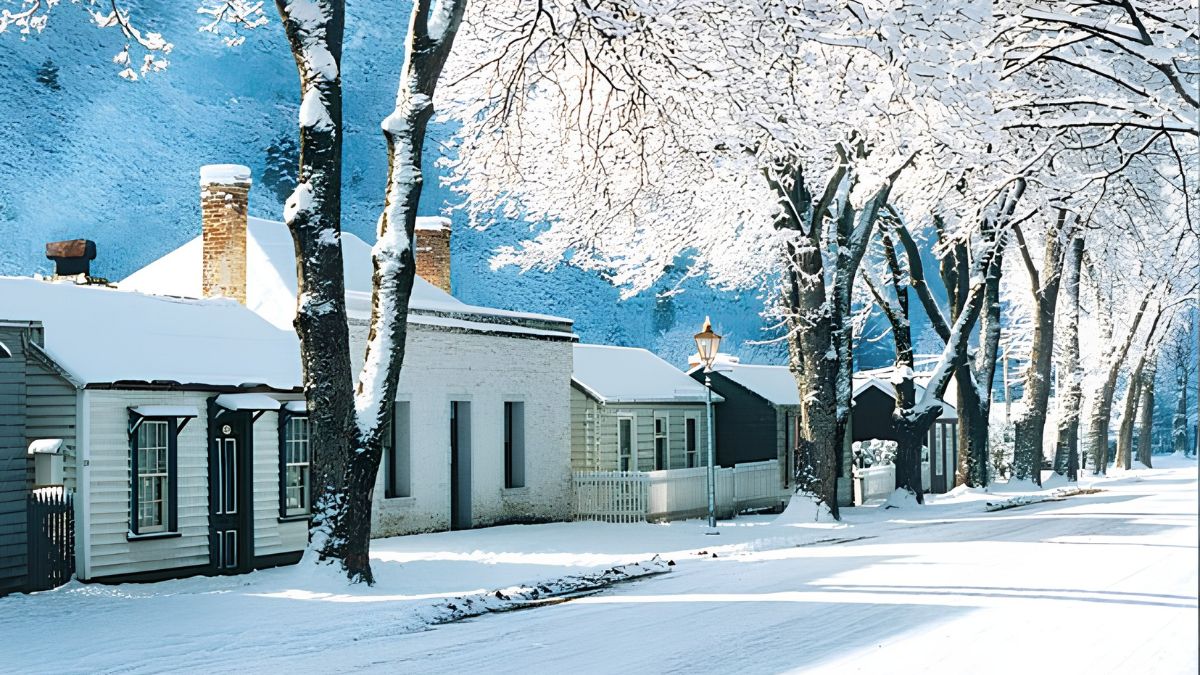
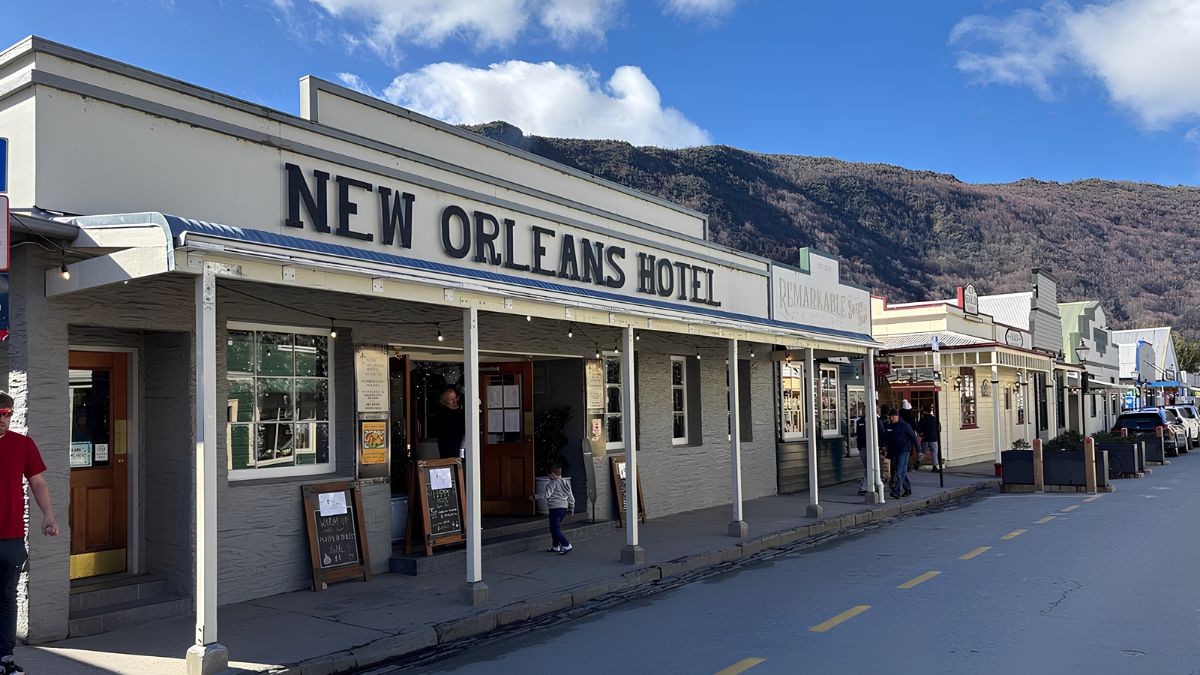
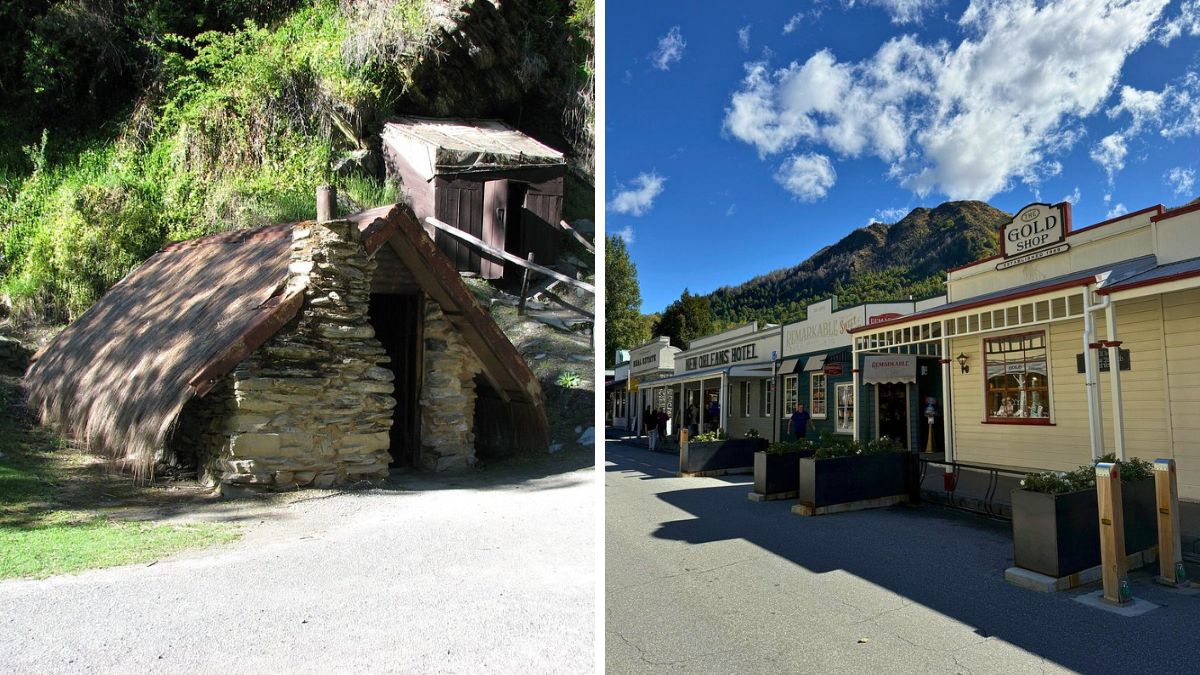
Arrowtown is about 20 kilometers from central Queenstown and feels different enough to justify at least half a day. Walk Buckingham Street, look beyond the most polished storefronts to the preserved miners’ cottages, follow the Arrow River trail and learn about the Chinese settlement associated with the Otago gold rush.
The village is busiest in the middle of the day, particularly during autumn color season. Arrive early or stay into the evening for a calmer atmosphere. Public buses reach Arrowtown from Frankton, and Route 4 also links it with Queenstown on its way to and from Jack’s Point; the best route and any transfer should be checked in the Orbus journey planner.
Cost: Walking the village, river trail and historic precinct is free. Allow NZ$15–30 for a casual lunch or more for Arrowtown’s destination restaurants and cinema.
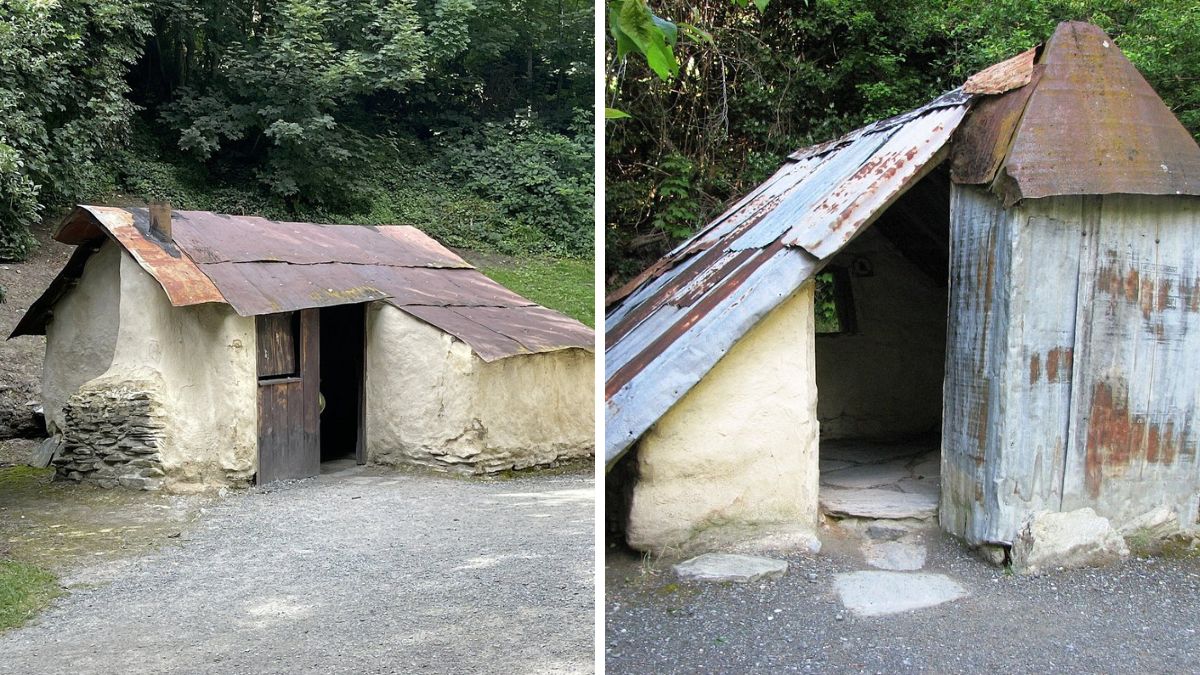
Cycle or taste wine in Gibbston
Gibbston is the closest major wine subregion, known especially for Central Otago pinot noir. Independent travelers can drive with a designated driver, cycle with a shuttle, or join a guided tour. A cellar-door tasting commonly costs NZ$10–30, sometimes waived with a qualifying purchase. Guided half- or full-day wine trips generally sit around NZ$180–350, depending on lunch and the number of tastings.
The honest caution is simple: Gibbston is spread out, the main highway carries fast traffic, and wine plus an e-bike or rental car is still a safety issue. Use the off-road trail where available, know the shuttle cutoff, and do not plan “just one more” tasting after your transport window.
Drive to Glenorchy and Paradise
Glenorchy is roughly 45–55 minutes from Queenstown without long stops, but the road deserves half a day because the views along Lake Whakatipu are the experience. Pull off only at safe, designated areas. Bob’s Cove, Bennett’s Bluff and the Glenorchy lagoon are natural places to slow down.
Beyond Glenorchy, roads toward Paradise and several trailheads become narrower and may be unsealed. Rental-car restrictions can apply, and there is no petrol station to rely on for every itinerary. Carry what you need and do not trespass onto private land in pursuit of a film location.
There is no regular public bus comparable to Orbus between Queenstown and Glenorchy. A rental car, scheduled shuttle or guided half-day tour is required.
Cost: Free with your own vehicle apart from fuel. Shared tours commonly cost roughly NZ$90–220; specialist four-wheel-drive and film-location tours cost more.
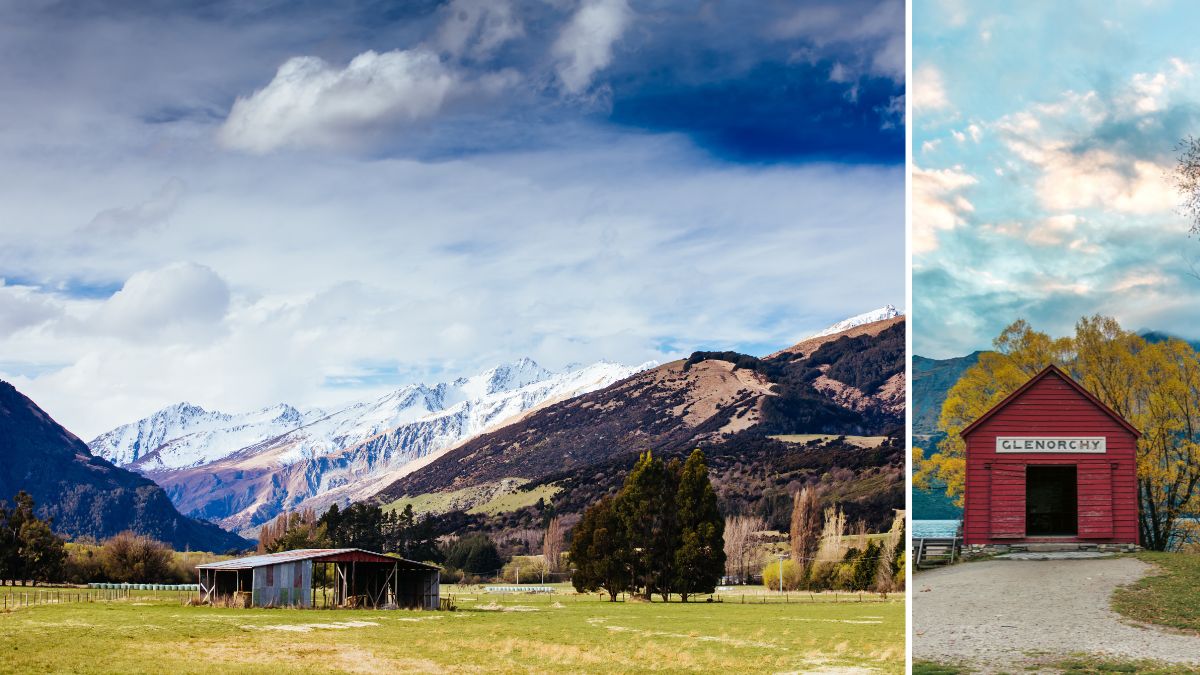
Walk at Bob’s Cove or Moke Lake
Bob’s Cove is a short, attractive stop on the Glenorchy road. A gentle nature track reaches the historic lime-kiln area and lake edge; a steeper loop adds a high viewpoint. Allow 30 minutes to two hours depending on the route.
Moke Lake has a peaceful mountain basin and a roughly 6-kilometer loop that usually takes 2–3 hours. The access road includes unsealed sections and can be unsuitable in poor winter conditions. The DOC campsite is basic, scenic and bookable; camping fees and availability change by season. Current pricing (Oct 2026) is $18 per night for adults, $9 pr night for kids aged 5-17, Free for under 5’s. Prior booking required. Walk up’s additional $10 service fee with no guarantee of space.
Both places have limited facilities and mobile coverage. Pack out rubbish, keep drones and dogs within the posted rules, and never block a road shoulder because the small car park is full.
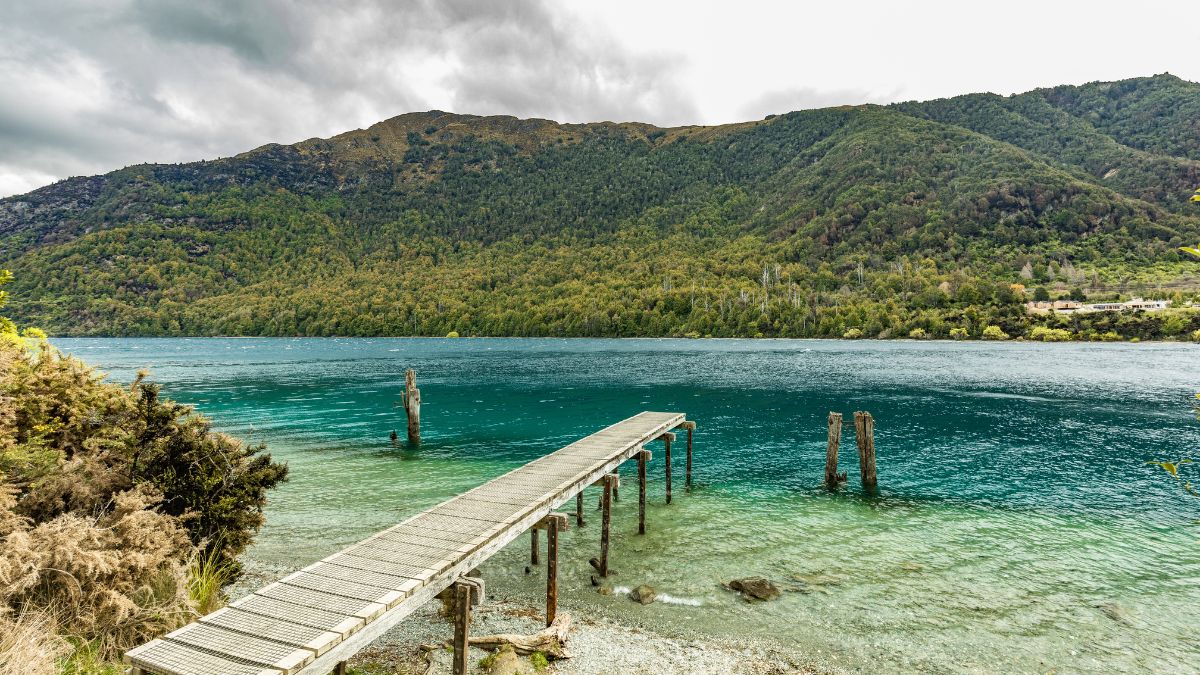
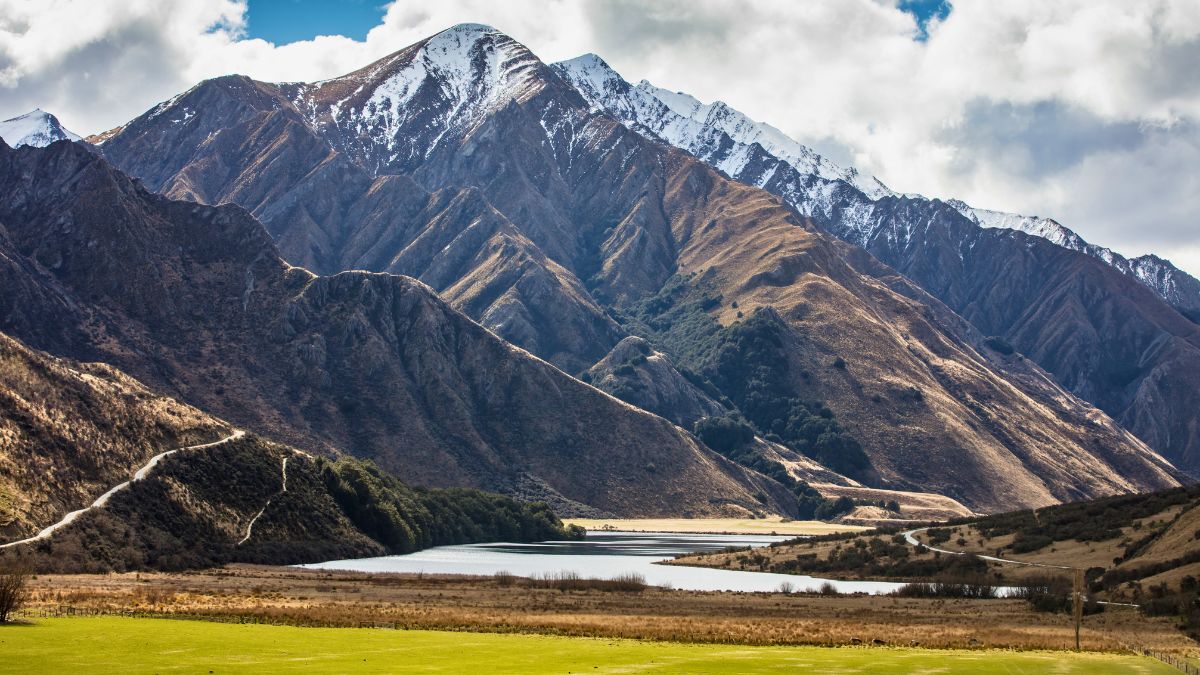
Sample the Routeburn Track as a day walk
From the Routeburn Shelter beyond Glenorchy, the walk to Routeburn Flats Hut is approximately 6.5 kilometers each way and takes about 2–3 hours one way. It offers beech forest, clear river water and an accessible taste of a Great Walk without committing to the full crossing.
This is still a full 4–6-hour return walk, plus the drive from Queenstown. The road endpoint for the Routeburn and the Divide endpoint near Milford Road are separated by more than 300 road kilometers, so the full Great Walk is not a simple out-and-back car trip. Hut and campsite bookings go through DOC’s booking system.
Outside the Great Walk season, bridges may be removed, facilities are reduced and avalanche hazards can be serious. A summer reputation does not make it an all-season stroll. Here you can download a plan and prepare for the Routeburn Track booklet.
Visit Milford Sound / Piopiotahi—then decide whether Queenstown is the right base
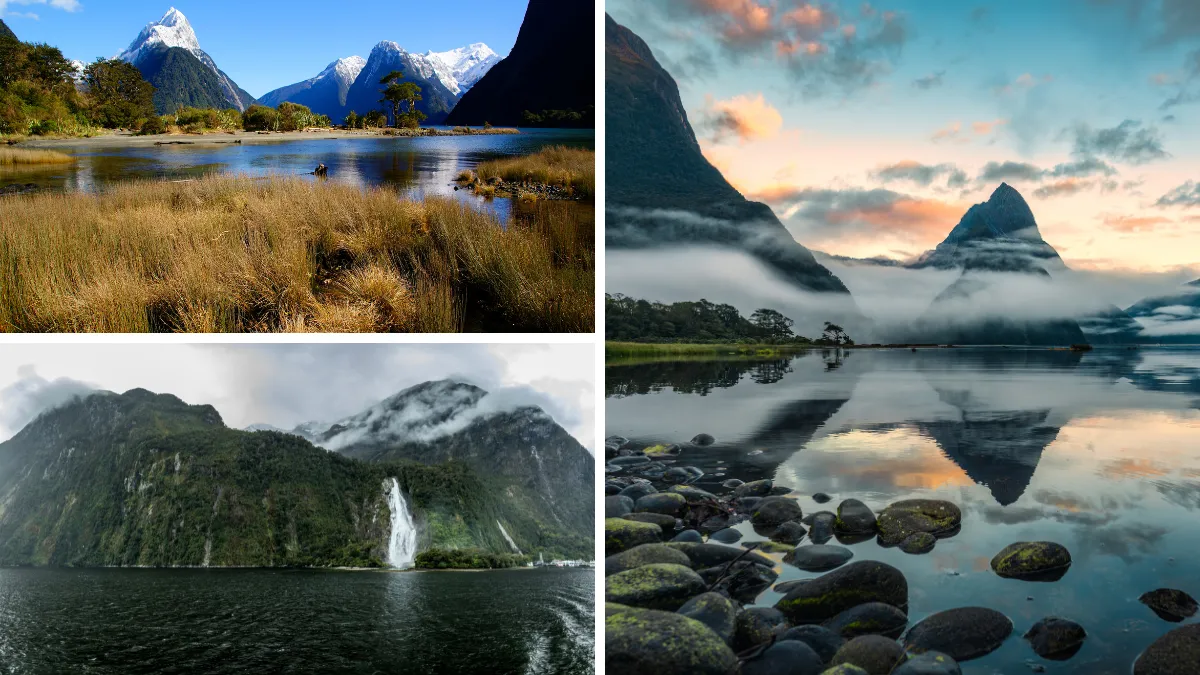
Milford Sound is spectacular in rain as well as sun: rainfall creates temporary waterfalls, while clearer weather reveals more of the peaks. From Queenstown, however, the return road journey is roughly 570 kilometers and most coach-cruise days last 12–13 hours. We highly recommend Milford Sound as an extra 2 or 3 days added to your journey. I have done it once in 2 days and that felt rushed and like i was driving for 2 full days (which I was) and ended up with 2 hours of daylight and then an expensive overnight stay in Milford Sound. It’s really worth doing another trip or extending your current one by a few days. You can read about it here in our ultimate guide to Milford Sound.
In 2026, large-coach cruise packages from Queenstown started around NZ$243, while small-group trips commonly cost NZ$280–400. Fly-cruise-fly packages start around NZ$730 and save many hours, but flights are weather-dependent. A self-drive cruise alone can start around NZ$100–175, before fuel and parking. Compare current options through Milford Sound’s operator portal and direct cruise companies.
Choose a coach if: you have only one available day, do not want eight hours of demanding driving, or are traveling in winter.
Choose self-drive if: you are experienced with New Zealand roads, can stay in Te Anau, and want more control over stops.
Choose to stay in Te Anau if: the journey matters as much as the cruise. Breaking the trip creates time for the Milford Road, reduces fatigue and makes a second Fiordland experience possible.
Take a Wānaka day trip selectively
Wānaka is around 70–90 minutes from Queenstown in good conditions via the Crown Range, longer via Cromwell. It has a beautiful lakefront, its own hikes and a calmer center, but a rushed out-and-back visit reduces it to a photograph.
If you have only three days in Queenstown, choose Arrowtown or Glenorchy instead. If you have five to seven days, Wānaka works well as a long day or, better, a one- or two-night second base. In winter, use the longer Cromwell route if the Crown Range does not suit your vehicle or confidence; check road status rather than treating a navigation app as a safety authority. Check out our dedicated Wānaka travel guide.
2) How to Stay Safe in Queenstown
Queenstown town center is generally straightforward for independent travelers. The more important risks come from the landscape: fast-changing alpine weather, cold water, long driving days, winter roads and outdoor plans that look easier online than they feel on the ground.
Save the essential numbers
- 111: Police, fire or ambulance when life, health or property is in immediate danger.
- 105: Police non-emergency reporting and advice.
- 0800 611 116: Healthline, New Zealand’s free 24-hour health advice line.
- Queenstown Medical Centre / local urgent care: Check current hours and charges; international visitors should expect to pay unless covered.
Travel insurance should include overseas medical care, evacuation, disruption and every adventure activity you intend to do. Skiing, off-piste riding, bungy jumping, high-altitude hiking and rental-vehicle excess may be separate options or exclusions.
Treat mountain weather as a decision, not background information
Lake-level sunshine does not describe conditions on Ben Lomond, the Crown Range or a ski field. Before a significant walk:
- read the latest track alerts from DOC or the land manager;
- check an alpine forecast, not only a Queenstown town forecast;
- tell a reliable person your route, turnaround time and expected return;
- download the route for offline use;
- take insulating and waterproof layers, food, water, sun protection and a charged phone;
- carry a personal locator beacon for remote trips where mobile coverage cannot be trusted; and
- turn back when the safe choice is still easy.
The New Zealand Land Safety Code is built around planning the trip, telling someone, being aware of the weather, knowing your limits and taking sufficient supplies. Plan My Walk brings those checks together for many local routes. You can also complete an outdoor intentions form which you leave with a trusted contact and has all necessary information.
Know when a walk becomes alpine
Ben Lomond, the Routeburn and high-country routes can hold snow well beyond midwinter. Snow hides the trail and introduces slips, exposure and avalanche terrain. If a track description uses words such as “advanced,” “alpine,” “unmarked” or “avalanche,” ordinary walking shoes and a phone map are not adequate preparation.
Guided hiking can be worthwhile when you lack local alpine experience. A guide does not make all conditions safe, but a responsible one will change or cancel the plan when conditions demand it.
Respect Lake Whakatipu and river water
The lake remains cold even on a hot-looking day, and wind can build waves quickly. Swim at established beaches, enter gradually and stay close to shore unless you are properly equipped and experienced. Children need direct supervision; inflatable toys can move away from land fast.
For paddleboards, kayaks, rafting and jet boats, wear the equipment provided and listen to the briefing. Alcohol and cold water are a particularly poor combination.
Drive for the road you are on
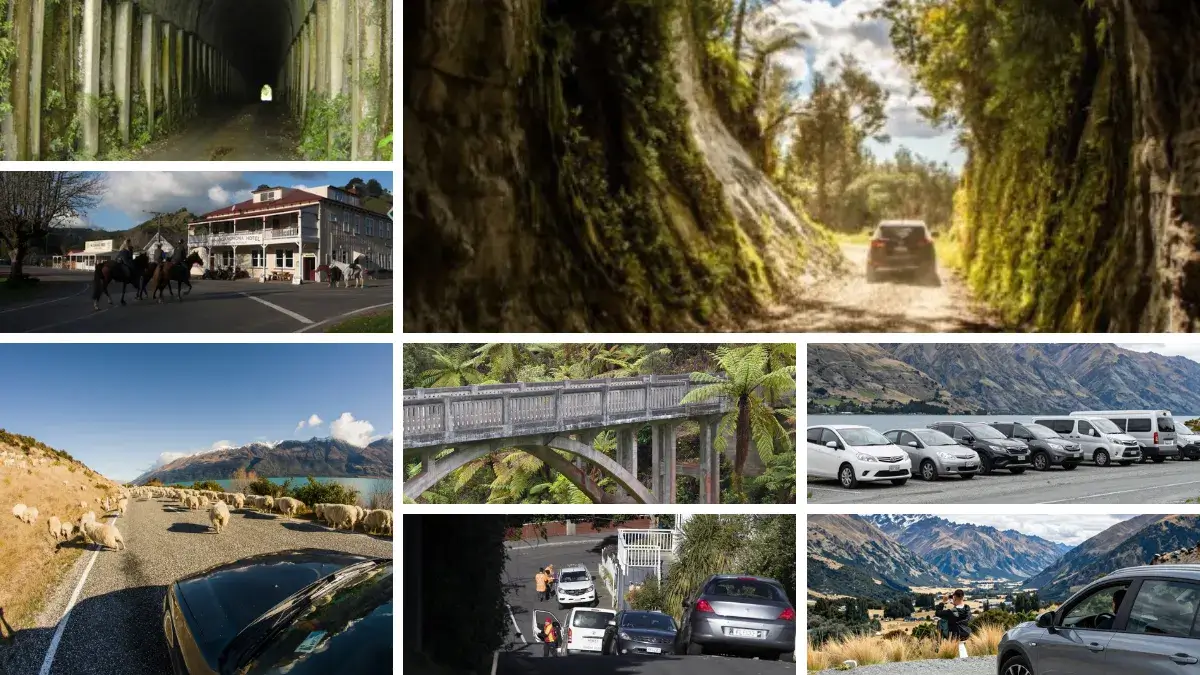
New Zealand drives on the left. Visitors should allow time to adjust before tackling mountain roads, especially after a long-haul flight. The routes to Glenorchy, Moke Lake, the ski fields, Wānaka and Milford Sound include bends, narrow shoulders, one-lane bridges, gravel, ice, rockfall areas and drivers distracted by scenery.
- Rest before collecting a vehicle after an overnight flight.
- Pull over only where it is safe and legal; never stop in a traffic lane for a photograph.
- Let faster traffic pass at a designated opportunity or passing lane.
- Check NZTA Journey Planner and the weather before a long drive.
- For Milford, also use the Milford Road conditions service.
- In winter, make sure your rental car has a set of chains, and you understand chain-fitting requirements before reaching the mountain road. QLDC now warns that a driver who fails to fit chains when required on a Council-managed snowy or icy road may receive a NZ$750 fine
- Confirm that your rental agreement permits unsealed roads and ski-field access.
- Never drive Queenstown–Milford–Queenstown after a sleepless night or a full day of flying.
The Crown Range is New Zealand’s highest sealed main road. It is beautiful, but the Cromwell route to Wānaka is a sensible alternative in snow, ice or low confidence.
Choose adventure operators thoughtfully
Commercial does not mean risk-free. Before booking, check:
- minimum age, height, weight and swimming requirements;
- medical restrictions and whether a doctor’s clearance is required;
- what happens when wind, river flow, visibility or snow closes the activity;
- whether transport and safety equipment are included;
- the operator’s cancellation and no-show policy; and
- whether your insurance covers the exact activity.
Answer medical questions honestly. A non-refundable ticket is never a reason to conceal a condition or continue when you feel unwell.
Use ordinary city awareness at night
Queenstown has a lively late-night economy. Crowds, alcohol and steep streets create more everyday risk than serious crime.
- Keep your drink with you and stay with friends.
- Use a confirmed taxi, rideshare or night bus rather than walking an unfamiliar lakeside route alone while intoxicated.
- Secure passports and spare cards in your accommodation.
- Do not leave luggage, cameras or hiking gear visible in a parked vehicle.
- Confirm the license plate before entering a rideshare.
- Know your accommodation address before your phone battery runs out.
Solo travelers often find Queenstown sociable and manageable. The key distinction is between being alone in a busy town and being alone beyond coverage on an exposed trail.
Prepare for sun, sandflies and sudden cold
New Zealand UV is very strong even when the air feels cool. You may not get the direct burning sun like Nelson or Marlborough but you still need to use sunscreen, sunglasses and a hat, and reapply protection during long lake or snow days. Sandflies are more noticeable in damp areas toward Glenorchy and Fiordland; repellent and long sleeves help. Bring a warm layer in every season—the temperature can drop quickly after sunset or when a southerly change arrives.
3) Where to Stay in Queenstown
In Queenstown, the cheapest room is not always the cheapest stay. A remote bargain can require taxis, parking and daily travel through Frankton Road congestion. A more expensive downtown bed may remove the need for a car entirely.
Compare the final price with parking, breakfast, cleaning fees, transport, cancellation terms and the actual room description. “Lake view” may mean a narrow side glimpse, and “close to town” can involve a steep uphill walk.
Downtown Queenstown and Queenstown Bay
Best for: First visits, short stays, nightlife, car-free travelers and early tour departures.
The waterfront, restaurants, tour desks, Skyline base and Stanley Street bus hub are walkable. You can arrive by airport bus and avoid paying for a car on town days.
Trade-offs: This is usually the most expensive area. Street noise, bar noise, delivery vehicles and late-night pedestrians can matter. Parking is limited and often paid. Rooms may be compact.
Booking check: Read recent comments about noise, heating or air-conditioning, elevator access and the climb from the lakefront. Do not assume parking is included.
Fernhill and Sunshine Bay
Best for: Lake views, apartments, quieter evenings and travelers happy to use the bus.
These neighborhoods sit west of the center on rising ground. Some apartments have outstanding views and kitchens, making them attractive for longer stays.
Trade-offs: The hill is real. Walking home with groceries or after dinner can be tiring, and road traffic narrows some pedestrian choices. Confirm the nearest bus stop and service hours.
Frankton, Remarkables Park and Five Mile
Best for: Airport access, supermarkets, practical longer stays, families and onward road trips.
Frankton has major grocery stores, retail parks, the Events Centre and frequent bus connections. Staying here can reduce the cost of a larger apartment and make airport mornings easier. The lake trail provides an enjoyable non-road connection to the center for active travelers.
Trade-offs: It feels more like a functional local hub than a mountain resort center. Peak traffic between Frankton and Queenstown can delay buses, taxis and cars. Check whether your property is near the airport route or requires a change.
Arthurs Point
Best for: Shotover activities, Onsen Hot Pools, Coronet Peak access and a quieter base.
Arthurs Point sits north of town in the Shotover valley. It can be a smart winter location for Coronet Peak and offers a handful of restaurants and lodging options.
Trade-offs: It is not walkable to central Queenstown, and the 2026 Orbus network does not provide a simple regular Arthurs Point route. Operator shuttles, taxis and a car fill the gap, but their cost adds up. A scenic valley room may face road or river-activity noise.
Kelvin Heights
Best for: Golf, lake trails, resort stays, space and low-key evenings.
Kelvin Heights occupies the peninsula across the lake. It works beautifully if the accommodation and surroundings are the destination.
Trade-offs: The road journey into town is much longer than the straight-line distance suggests. Ferry and bus options can help, but timetables control your day. This is not the easiest location for spontaneous nightlife.
Accommodation Options We Know and Recommend
The accommodation listed below is intended to act as a guide to the types and styles of accommodation available to you in and around Queenstown. However, all are real venues offering accommodation. All of them are places I have personally stayed and I recommend them highly. So if you are in Queenstown and need a bed make sure to check them out first!
The Olde Whiskey Room
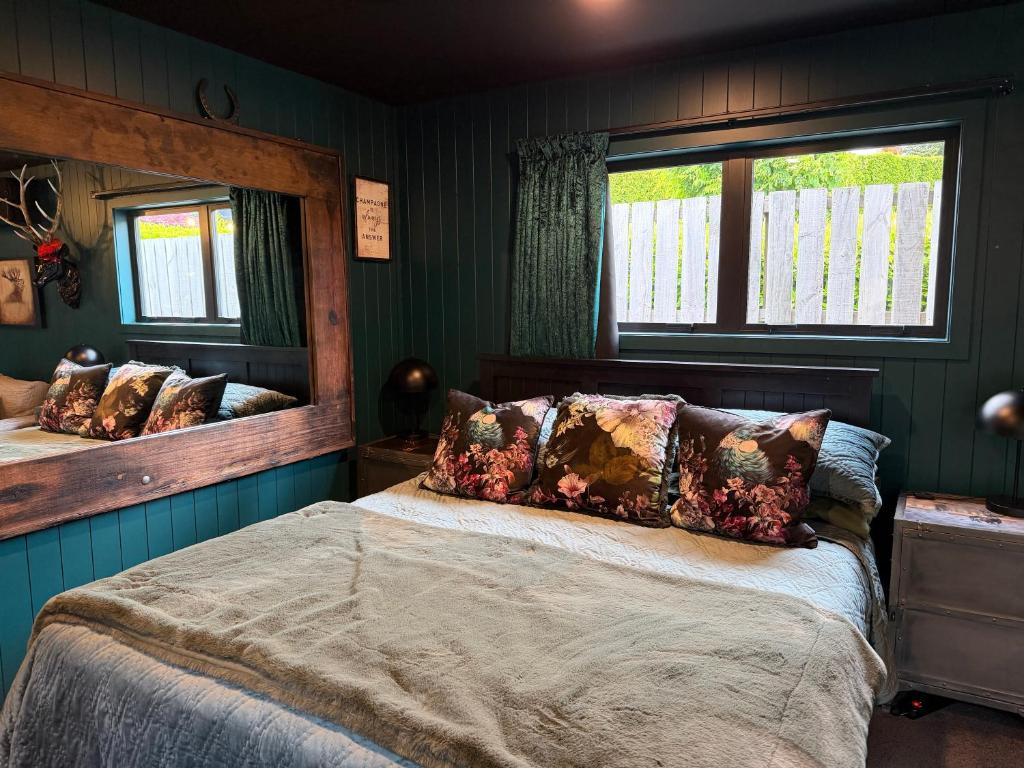
This accommodation type is an Apartment. So as well as the bed you’re getting the entire property and this ones a beauty.
Beachfront Location: The Olde Whiskey Room in Queenstown provides direct beach access, a sun terrace, and a beautifully landscaped garden. Guests can unwind by the water or relax in the outdoor seating area.
Comfortable Accommodations: This one-bedroom, one-bathroom apartment includes air-conditioning, a kitchenette, and a private entrance. Complimentary WiFi is available throughout the property.
Leisure Facilities: Guests can enjoy the on-site bar, barbecue facilities, and games room. The property also offers private check-in and check-out, free parking, and bicycle parking.
Activities and Attractions: Visitors can take part in skiing, hiking, cycling, and snorkeling. Queenstown Airport is 4.3 mi away, offering convenient access for travelers.
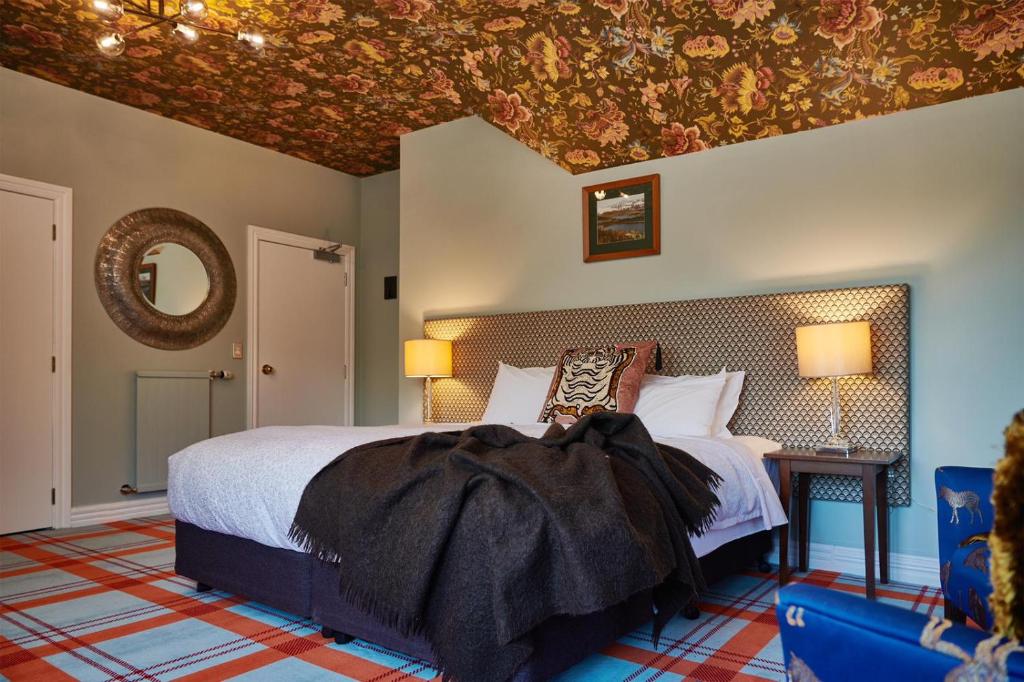
The Dairy Hotel Queenstown, A Naumi Chapter
This is a boutique hotel and the Habitat room in central Queenstown.
Immerse yourself in alpine style and laid-back glamour at The Dairy Hotel Queenstown, A Naumi Chapter. This distinctive property is built around Queenstown’s original dairy and corner store, which dates back to the 1920s. Ideally located just a 2-minute walk from the lively town center and Skyline Gondola, the hotel is the perfect base for exploring Queenstown.
Some rooms offer stunning views of the surrounding landscape, including the Remarkables mountain range, Lake Wakatipu, and other alpine scenery. Room amenities include air conditioning, luxurious wallpaper, and stylish interior décor.
Guests can also enjoy free WiFi, happy hour drinks, and hotel facilities such as a fireplace lounge, guest library, outdoor spa pool, and luggage storage. Couples especially appreciate the location, rating it 9.8 for a two-person stay.
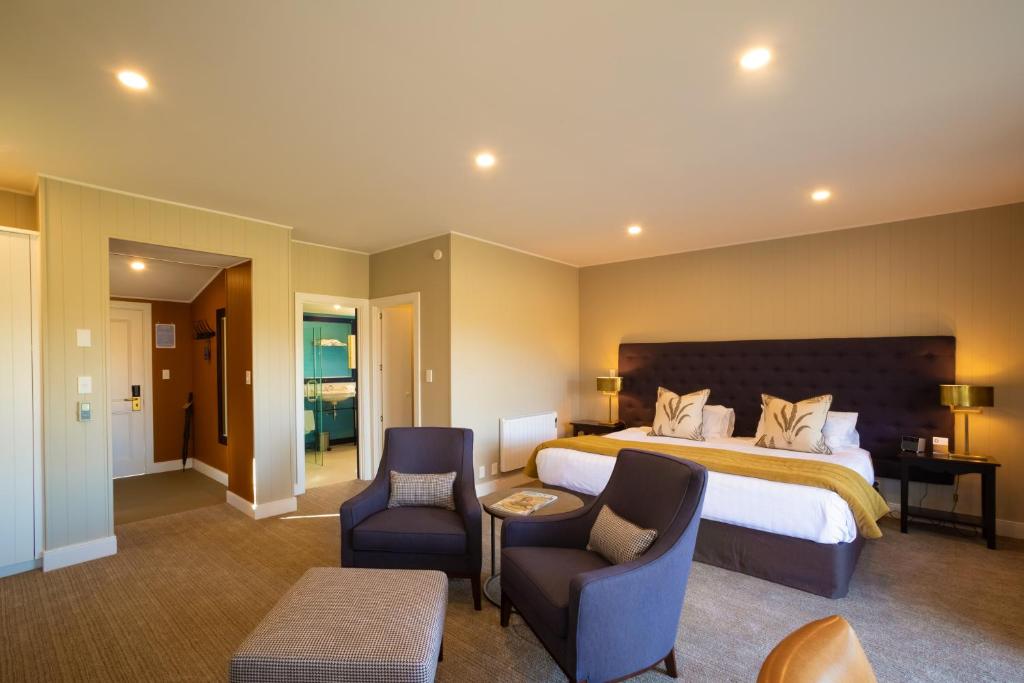
Millbrook Resort
This accommodation type is in Arrowtown and an example of a resort with deluxe suite.
Set across 650 acres of stunning Central Otago countryside, Millbrook Resort is a five-star retreat where luxury, relaxation and adventure meet. The award-winning resort combines elegant accommodation and each suite is fitted with full kitchen and designed to showcase views of the surrounding mountains, golf fairways or landscaped grounds. Full access to the Health & Fitness Center and award-winning day spa provides a variety of rejuvenating treatments, while golfers can enjoy two championship 18-hole courses or practice at the covered driving range. Complimentary parking and resort-wide Wi-Fi are also provided.
The historic Millhouse Restaurant serves seasonal contemporary New Zealand cuisine, alongside a signature Japanese restaurant, a relaxed café and a lively bar offering local and international wines and craft beers. Just 20 minutes from Queenstown and Queenstown International Airport. Whether you are visiting to relax, seek adventure or celebrate a special occasion, Millbrook is a destination where every detail is designed to make your stay exceptional. Couples especially appreciate the location, rating it 9.6 for a two-person trip.
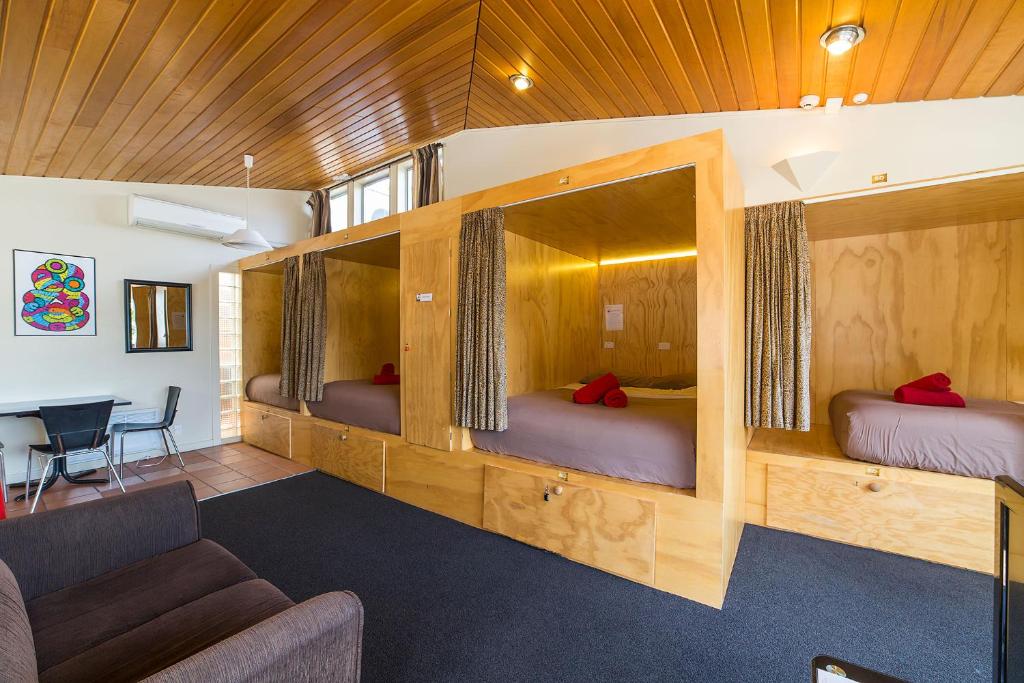
Tahuna Pod Hostel
This accommodation is a hostel with spacious pod style sleeping arrangements in a 4 person dorm.
Tahuna Pod Hostel is centrally located in Queenstown and offers a large balcony with stunning views of the city. Limited on-site parking is available for an additional fee. The property is just a short walk from many of Queenstown’s bars and restaurants.
We offer a range of budget accommodation, including king-single and queen pods, as well as several private rooms for couples. Guests have access to shared bathroom facilities, with multiple facilities available on each floor.
Tahuna Pod Hostel incorporates Māori heritage and traditional values into its design, sharing local culture with guests through art, music, movies, food, and entertainment. Couples especially enjoy the location, rating it 9.7 for a two-person stay.
Arrowtown and Lake Hayes
Best for: Historic atmosphere, autumn color, couples, families and travelers with a car or patient bus plan.
Arrowtown has an appealing small center, river trails and good restaurants. Lake Hayes and nearby residential areas offer space and access to the trail network.
Trade-offs: Queenstown activities may not collect from your property. A “Queenstown area” listing can be 20–30 minutes from downtown before traffic. Arrowtown is busy during the day and very quiet later at night.
Gibbston
Best for: Wine-focused trips, retreats and one or two special nights.
Vineyard cottages and lodges turn Gibbston into an experience rather than simply somewhere to sleep.
Trade-offs: Dining choices are limited after cellar doors close, and a car, transfer or arranged meal is usually necessary. It is not a practical everyday Queenstown base for most first-time visitors.
Glenorchy
Best for: Trail access, landscape, quiet mornings and a slower regional stay.
One night in Glenorchy transforms a rushed scenic drive into time for the lagoon, Routeburn side, guided wilderness activities and uncrowded evenings.
Trade-offs: Accommodation, restaurants, groceries and fuel choices are limited compared with Queenstown. Book meals and transport deliberately, especially outside summer.
Hostel, hotel, apartment or holiday park?
| Stay type | Why choose it | What to verify |
|---|---|---|
| Hostel dorm | Lowest solo price, kitchens and a social base | Bed curtains, lockers, quiet hours, luggage storage and mixed vs. single-gender rooms |
| Private hostel room / simple motel | Privacy without full hotel pricing | Shared bathroom, steep access, heating and parking |
| Hotel | Reception, housekeeping and central convenience | Room size, breakfast, parking, resort fees and cancellation rules |
| Apartment | Kitchen, laundry and value for two or more people | Cleaning fee, key collection, number of real beds and cooking equipment |
| Holiday park | Powered sites, cabins and useful shared facilities | Per-person charges, campervan size, minimum stays and distance from town |
| Luxury lodge or resort | Privacy, views and service | Transfers, included meals, remote location and whether the view is guaranteed |
Accessibility and mobility questions to ask
Queenstown’s slopes make map distance misleading. Before booking, ask the property:
- Is there step-free access from the street to reception and the exact room category?
- Does the building have an elevator, and does it reach every floor?
- Is the bathroom a true roll-in design or simply described as “accessible”?
- How steep is the route to the nearest bus stop or waterfront?
- Can a shuttle collect at the entrance?
- Is accessible parking guaranteed or first-come, first-served?
4) Typical and True Queenstown Costs in 2026

These are realistic planning ranges, not promised prices. They reflect September 2026 checks and common public rates across low, normal and peak demand. Christmas–New Year, school holidays, major events and strong ski weekends can sit above them.
Accommodation per night
| Accommodation | Typical 2026 price | High-demand reality |
|---|---|---|
| Hostel dorm bed | NZ$40–90 per person | NZ$80–120 for limited late inventory |
| Basic private hostel room or older motel | NZ$150–260 per room | NZ$250–380 |
| Powered holiday-park site for two | NZ$70–150 | Minimum stays or extra-person charges may apply |
| Mid-range hotel or apartment | NZ$230–450 per room | NZ$400–650+ |
| Upper-mid-range or strong-view property | NZ$400–700 per room | NZ$650–1,000+ |
| Luxury lodge, premium suite or villa | NZ$700–1,500+ | NZ$1,500–3,000+ is possible |
Our recommended accommodation providers are:
The unpleasant surprise is not that luxury is expensive; it is that an ordinary room can exceed NZ$400 when demand is tight. Price-comparison data in 2026 showed December Queenstown averages approaching NZ$500 on some hotel searches. Book early for inflexible peak dates, but retain free cancellation while you compare.
Food and drink
| Item | Realistic 2026 range |
|---|---|
| Supermarket breakfast | NZ$5–12 per person |
| Bakery pie, filled roll or simple snack | NZ$7–14 |
| Coffee | NZ$5–7 |
| Casual takeaway meal | NZ$15–30 |
| Café breakfast or brunch | NZ$20–35 |
| Pub or casual restaurant main | NZ$28–48 |
| Higher-end restaurant main | NZ$42–60+ |
| Tasting menu | About NZ$120–180 before drinks |
| Beer or glass of wine | NZ$12–20 |
| Cocktail | NZ$20–28 |
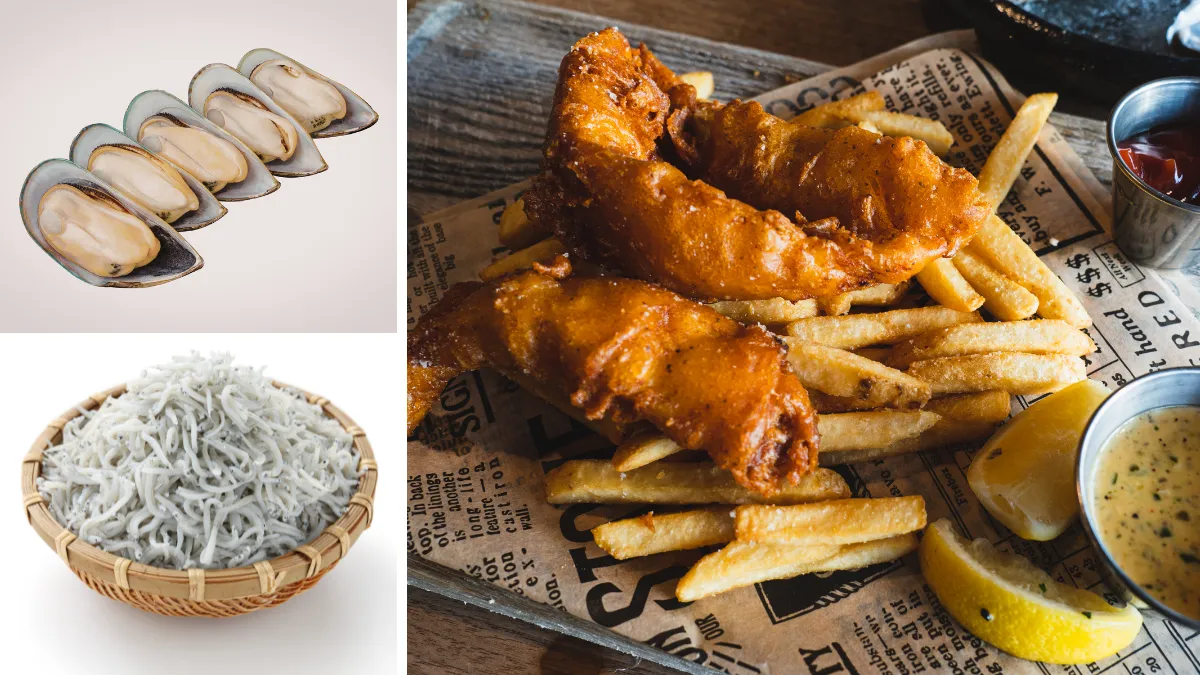
These are not theoretical city averages. Current examples include an NZ$8.50 bakery pie and NZ$17.20 classic burger at Ferg, a NZ$15 hoki-and-chips meal at Erik’s, and main courses of NZ$42–56 at Rātā, where the tasting menu was NZ$155. See the current Ferg menu, Erik’s menu and Rātā menu.
A traveler buying breakfast supplies, making a packed lunch and eating one casual dinner can manage NZ$35–60 a day. Three café or restaurant meals plus drinks is more realistically NZ$100–180+.
Local transport and driving
| Transport cost | Typical 2026 price |
|---|---|
| Orbus adult fare with Bee Card | NZ$2.50 per trip |
| Orbus adult cash fare | NZ$4 per trip |
| Airport bus adult cash fare | NZ$10 |
| Bee Card purchase | NZ$5, then add stored value |
| Airport shared shuttle | Roughly NZ$20–35 per person |
| Airport taxi or rideshare | Roughly NZ$45–80 per vehicle; demand can push it higher |
| Compact rental car | Roughly NZ$60–160 per day; NZ$180+ in peaks |
| Rental excess reduction | Often NZ$30–70 per day |
| Petrol | Around NZ$3.38 per liter nationally in early October 2026; Queenstown pumps can be higher |
| Central paid parking | Commonly about NZ$2–6 per hour, depending on site and time |
| Standard bike / e-bike hire | NZ$60–100 / NZ$100–160 per day |
The official Orbus fare table lists the adult Bee Card fare at NZ$2.50 and the airport cash fare at NZ$10. Queenstown Airport is only about 7 kilometers from the center, but traffic can turn a 10–15-minute drive into a longer transfer. Bank and credit cards cannot be tapped on buses: use a Bee Card or cash.
Fuel is an important Queenstown road-trip cost. MBIE’s national regular-91 benchmark reached NZ$3.38 per litre for 27 September 2026, up from about NZ$2.97 in early September. Queenstown pump prices can be higher, so check a live fuel-price service before calculating a Glenorchy, Wānaka, Te Anau or Milford itinerary. Use MBIE’s weekly fuel monitoring or a live fuel app before estimating a long road trip.
Queenstown Travel Guide Activities
| Activity | 2026 adult cost |
|---|---|
| Waterfront, gardens, Queenstown Hill, Frankton Track | Free |
| Skyline Gondola | NZ$69 |
| Kiwi Park | NZ$64 |
| Lake cruise | Roughly NZ$65–115 |
| TSS Earnslaw cruise | From NZ$129 |
| Onsen private pool | NZ$117 for one; NZ$175 for two |
| Shotover Jet | NZ$199 |
| Wine tasting | Usually NZ$10–30 per cellar door |
| Bike-and-shuttle day | Roughly NZ$90–220 |
| Guided wine tour | Roughly NZ$180–350 |
| Kawarau Bungy | From NZ$320 |
| Nevis Bungy | From NZ$395 |
| Coronet Peak / Remarkables day lift pass | NZ$180 |
| Full ski day with rental and transport | Roughly NZ$300–500 |
| Milford coach and cruise from Queenstown | Roughly NZ$265–439 |
| Milford fly-cruise-fly | Glenorchy Air NZ$789 Air Milford $795 (with $59 surcharge)= $854 |
| Scenic helicopter flight with alpine landing | Roughly NZ$300–600+ |
Queenstown costs that are easy to miss
- Car-rental excess reduction, young-driver charges, additional drivers and one-way fees
- Hotel parking, often NZ$20–50 a night
- Apartment cleaning fees and card surcharges
- Activity photographs or video, which can add NZ$30–100+
- Ski clothing, helmet, rental, shuttle, locker and mountain food
- Wine-tour lunch and bottle purchases
- Luggage storage before check-in or after checkout
- Campervan per-person fees, power and dump-station costs
- Last-minute taxis after buses finish or plans change
- Currency conversion charged by a card or booking platform
- A second night caused by road or flight disruption
For an outdoors-focused trip, keep a 10–15% contingency outside the planned activity budget. Queenstown weather can create a replacement transport day or an unplanned indoor afternoon without anyone doing anything wrong.
5) Suggested Budget Queenstown Travel Guide
The daily budgets below are per adult, excluding flights to New Zealand, visa costs and major shopping. Mid-range and comfortable figures assume two people share a room and vehicle where relevant. A solo traveler who wants a private room should add roughly NZ$100–250 per day, depending on season.
| Travel style | Daily budget per person | What it realistically includes |
|---|---|---|
| Lean independent | NZ$130–210 | Dorm bed, supermarket food, Orbus, free walks and one modest paid experience spread across several days |
| Budget-plus | NZ$200–300 | Dorm or shared basic room, mixed supermarket/takeaway food, buses and one or two significant activities |
| Mid-range | NZ$320–520 | Shared private hotel/apartment, café plus casual dining, buses or some car use and a paid activity most days |
| Comfortable | NZ$550–900 | Shared quality hotel, restaurant meals, rental car/transfers and premium activities |
| Luxury | NZ$1,000+ | Premium room or lodge, fine dining, private transport and high-cost flights or bespoke tours |
A realistic four-day budget
| Four-day trip, per person | Lean | Mid-range | Comfortable |
|---|---|---|---|
| Accommodation | NZ$200–360 | NZ$500–900 | NZ$900–1,600 |
| Food and drink | NZ$160–240 | NZ$320–520 | NZ$520–800 |
| Local/regional transport | NZ$20–80 | NZ$120–300 | NZ$300–600 |
| Activities | NZ$70–250 | NZ$300–700 | NZ$700–1,500 |
| Contingency | NZ$50–100 | NZ$120–240 | NZ$250–450 |
| Total | NZ$500–1,030 | NZ$1,360–2,660 | NZ$2,670–4,950 |
The lean total works only with a dorm, some self-catering, buses and free landscapes. It is not a private-room budget wearing a hopeful label. At the other end, a Milford scenic flight or luxury lodge can push the comfortable total higher in a single booking.
Example: a genuinely enjoyable budget day
- Dorm bed: NZ$55
- Supermarket breakfast and packed lunch: NZ$18
- Two Orbus trips: NZ$5 with Bee Card
- Queenstown Hill and waterfront: Free
- Fish-and-chips dinner: NZ$15–25
- Coffee or treat: NZ$7
- Share of contingency: NZ$10
Day total: about NZ$110–120, before averaging in the cost of your Bee Card or any major activity. Add a NZ$69 gondola or NZ$115 cruise and the same day becomes roughly NZ$180–235.
Example: a mid-range activity day for a couple
- Shared NZ$320 hotel room: NZ$160 per person
- Café breakfast: NZ$28
- Shotover Jet: NZ$199
- Casual lunch: NZ$25
- Bus or shared transfer: NZ$10
- Restaurant dinner and one drink: NZ$65
- Contingency: NZ$35
Per-person total: about NZ$520. This illustrates why averaging paid activities over several free days produces a more sustainable trip budget.
Add-on budget for a ski day
Allow roughly:
- lift pass: NZ$180;
- ski or snowboard rental: NZ$60–100;
- clothing rental if needed: NZ$30–60;
- mountain shuttle: NZ$35–60;
- food and drink: NZ$25–50; and
- lesson: NZ$90–250+, depending on type and package.
A first-time package can bundle several elements more cheaply, but a normal ski day can add NZ$300–500 before accommodation.
6) Money-Saving Tips for Queenstown

Saving money in Queenstown is mainly about four big decisions: dates, bed, vehicle and number of commercial activities. Skipping one coffee matters far less than avoiding four unused rental-car days.
Visit outside the sharpest peaks
Christmas–New Year, New Zealand and Australian school holidays, major event weekends and the core ski season create the toughest accommodation market. If your interests are walking, food and scenery rather than skiing, May or spring can deliver lower room rates and a calmer center.
Shoulder season is not a guarantee of summer services. Confirm gondola maintenance, cruise schedules, trail access and restaurant opening days before booking a cheap non-refundable room.
Stay on the bus network and skip the car on town days
An adult Bee Card trip costs NZ$2.50. If you are staying downtown, use the airport bus and collect a rental car only for the regional portion of the trip. This avoids daily hire, hotel parking and insurance while the vehicle sits unused during booked tours.
For two people, the Bee Card purchase pays for itself after only a few normal cash trips, but check top-up and refund rules. Tag on and off correctly.
Compare the total accommodation cost
A NZ$250 Frankton apartment with kitchen and free parking may beat a NZ$220 downtown hotel after breakfast and parking. Equally, a NZ$180 room far from a useful bus can lose its advantage after two taxi trips.
Use a map, then price:
room + mandatory fees + parking + daily transport + likely breakfast
Do not compare only the first nightly price on the search screen. Look fir bargains. Agoda is always worth a look and often have much lower rates compared to others hotel room apps. Download the Agoda app and see for yourself.
Use a kitchen strategically
You do not need to cook every dinner. The high-value pattern is simple: prepare breakfast, carry lunch on excursion days, and choose one meal out that you will enjoy. Shop in Frankton’s larger supermarkets if convenient; small central stores can cost more.
Bakery pies, filled rolls and fish-and-chips are useful middle ground between self-catering and a NZ$60 restaurant main.
Build days around one paid anchor
Pair the Skyline Gondola with Queenstown Gardens, or a jet boat with the Frankton Track. Pair an Arrowtown lunch with the free Chinese settlement and river walk. Pair a paid Gibbston shuttle with free trail time rather than adding several cellar-door packages by default.
Queenstown’s sales desks make it easy to buy three experiences for tomorrow. Pause and ask whether you would choose each one independently.
Compare direct prices with Klook, Viator and Bookme
Activity platforms can show discounts, bundles and useful review volume. Bookme is particularly good for restricted-date or last-minute New Zealand inventory. Klook and Viator can help compare Milford tours, cruises and transfers.
Before paying, match the exact product line by line:
- duration and departure time;
- pickup location;
- lunch, equipment and photos;
- child definition;
- cancellation deadline;
- platform currency and card fee; and
- who handles a weather cancellation.
A discounted ticket with an inflexible time may be poor value if your entire week depends on weather.
Ask whether transport is already included
Many adventure companies collect from central Queenstown. Onsen has a complimentary shuttle for eligible sessions, AJ Hackett uses its Bungy Bus for relevant products, and coach excursions include their own transport. Do not rent a car merely to reach an activity that already moves you.
Treat Milford as an itinerary choice, not an automatic add-on
If you are already driving to Te Anau, take the cruise from there and avoid paying for Queenstown coach mileage. If Queenstown is your only base, the coach may cost more than self-drive on paper but removes a punishing day behind the wheel.
The cheapest safe option depends on the whole route, not the cruise ticket alone.
Book refundable accommodation early, then recheck
For fixed winter or holiday dates, reserve a sensible refundable room when inventory is strong. Recheck direct and comparison rates later, including identical room type, taxes, breakfast and cancellation. Do not cancel the first booking until the replacement is confirmed.
Share expensive fixed costs carefully
A two-bedroom apartment, rental car, Onsen room or taxi becomes far better value across three or four people. Confirm the real bed configuration and vehicle luggage space. Saving money is not worth four adults discovering that “sleeps four” means one bed and a small sofa.
Bring the gear that attracts premium prices
A refillable bottle, daypack, waterproof shell, warm mid-layer, sunscreen and comfortable shoes prevent convenience purchases. Ski equipment may still be better rented, but compare off-mountain rental shops with resort packages and include transport between the shop and your accommodation.
7) How to Get Around Queenstown
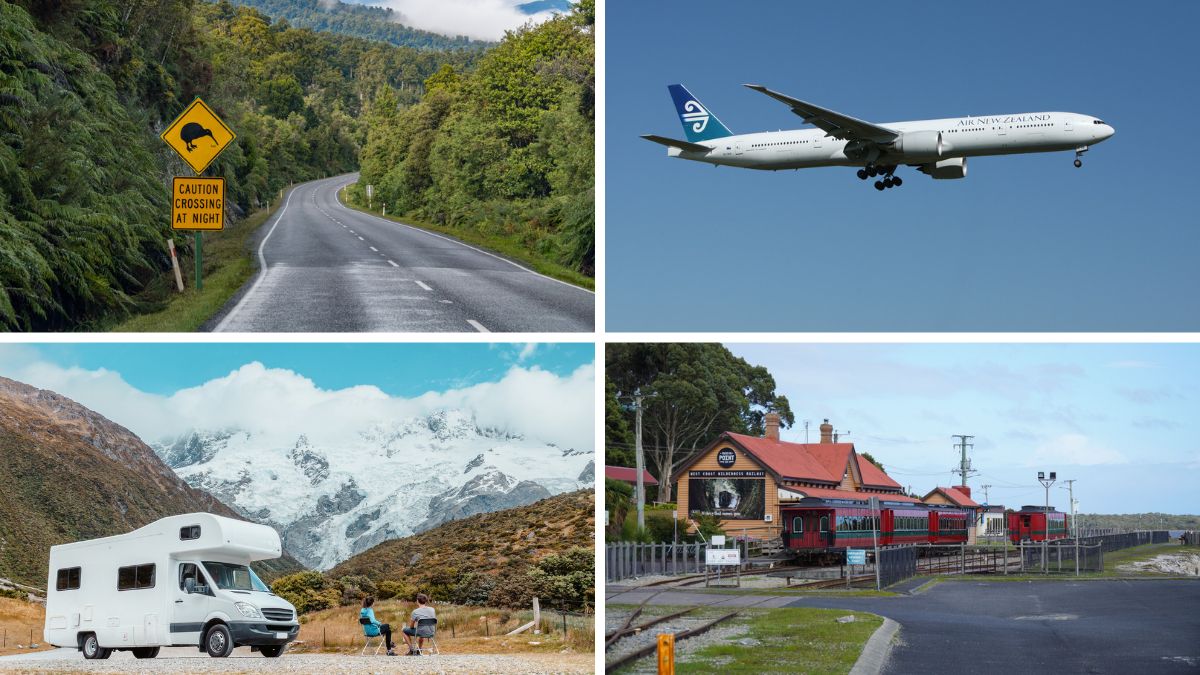
Queenstown is easy without a car until your plan becomes regional. The most efficient trip often uses three modes: walking and buses in town, an operator coach for one long excursion, then a short car rental for Glenorchy or onward travel.
Arriving at Queenstown Airport
Queenstown Airport is in Frankton, roughly 7 kilometers from downtown.
| Option | Time in normal traffic | Typical cost | Best for |
|---|---|---|---|
| Orbus | About 20–30 minutes | NZ$2.50 with Bee Card; NZ$10 airport cash fare | Budget and light luggage |
| Shared shuttle | About 20–40 minutes | Roughly NZ$20–35 per person | Door-to-door convenience |
| Taxi/rideshare | About 15–25 minutes | Roughly NZ$45–80 per vehicle | Groups, late arrival, heavy luggage |
| Rental car | About 15–25 minutes plus collection | Daily hire, insurance, fuel and parking | Immediate regional road trip |
| Airport Parking Park & Ride | NZ $20 first 24 hours, $10 additional days, including the return airport shuttle | ||
| Airport Terminal parking | Free first 20 mins NZ$30 per day, NZ$28 per day after 7 days NZ$25 per day after 10 days |
The public bus is the standout bargain. A Bee Card costs NZ$5 with a NZ$5 minimum top-up and preloaded cards are sold at the airport, subject to availability. If you will take only one bus, the NZ$10 cash fare may be simpler than buying and loading a card. See Queenstown Airport’s transport information and live Orbus fares and timetables.
Allow extra time during peak Frankton Road traffic and before morning flights. A ten-minute drive is not a promise. Make sure to check international connections as many international travelers will arrive into Auckland or Christchurch.
Walking
Downtown, the gardens and the lakefront are compact. Walking is often faster than finding parking. The limitations are hills, winter ice, road crossings and the distance between the center and accommodation marketed as “Queenstown.”
Check topography as well as map distance. A property 900 meters from the lake may be far above it.
Orbus public buses
Orbus connects the center with the airport, Frankton, Sunshine Bay, Lake Hayes Estate, Jack’s Point and several residential areas. Arrowtown is served from Frankton on Route 2 and via Queenstown on Route 4. Arthurs Point is not on a straightforward regular 2026 route, so check accommodation transport carefully. The adult network fare is NZ$2.50 with Bee Card or NZ$4 cash; the adult airport cash fare is NZ$10. Child and youth concessions require a registered card loaded with the concession.
Routes do not reach every trailhead, winery or Glenorchy. Some trips require a transfer at Frankton or the town hub. Bee Card users can receive a free bus transfer when they tag on to the second bus within 45 minutes of tagging off the first, subject to Orbus conditions. Use the live journey planner rather than an old blog diagram, and check the final return before an evening meal.
Scheduled lake ferries
Passenger ferries connect selected stops around Frankton, Bayview and central Queenstown. They are a beautiful way to avoid road traffic when the timetable aligns, but they are not a frequent metro service. In September 2026, a single trip was NZ$10 with Bee Card or NZ$14 by bank card, with no concession fares. Check weather, luggage/bike rules, the exact wharf and the current ferry timetable.
Rental car
A car is most useful for:
- Glenorchy, Bob’s Cove and Moke Lake;
- flexible Arrowtown, Lake Hayes and Gibbston days;
- Wānaka, Cromwell, Te Anau and a wider South Island route; and
- accommodation outside useful bus corridors.
A car is least useful when you stay downtown and have booked full-day tours. Add insurance, petrol, parking and the time spent collecting it before deciding.
We recommend rental car hire from the following:
Read exclusions for gravel roads, river crossings, ski-field roads, roof/underbody damage and tire or windscreen damage. Photograph the vehicle at pickup and keep the fuel receipt required by the contract.
Looking for travel insurance? You need to to check out EKTA. Great prices, great coverage, great trip!
Parking
Central parking is a cost and a planning constraint. Council-managed spaces have different rates and time limits; private garages use their own prices. QLDC states that its managed spaces are free after 6pm until 8am and on public holidays, but restrictions and signs still apply. Use the official QLDC parking map on the day.
PayMyPark can extend eligible sessions remotely, but casual app users pay a transaction fee. Large campervans are prohibited from parking in the central business district except at designated areas such as Boundary Street or Ballarat Street. A normal-looking roadside gap is not automatically legal overnight parking.
Campervans and freedom camping
A campervan is not a loophole around Queenstown accommodation prices. Hire, fuel, powered sites, insurance, parking and dumping can exceed a small car plus hostel bed.
QLDC’s Freedom Camping Bylaw 2025 took effect on December 1, 2025. In 2026, freedom camping in certified self-contained vehicles is limited to designated sites and subject to local rules, stay limits and capacity. Council information listed 15 designated sites across the district, with 141 spaces in total. Check the current map and QLDC responsible camping rules immediately before stopping. If a site is full, move to a legal campground.
Cycling
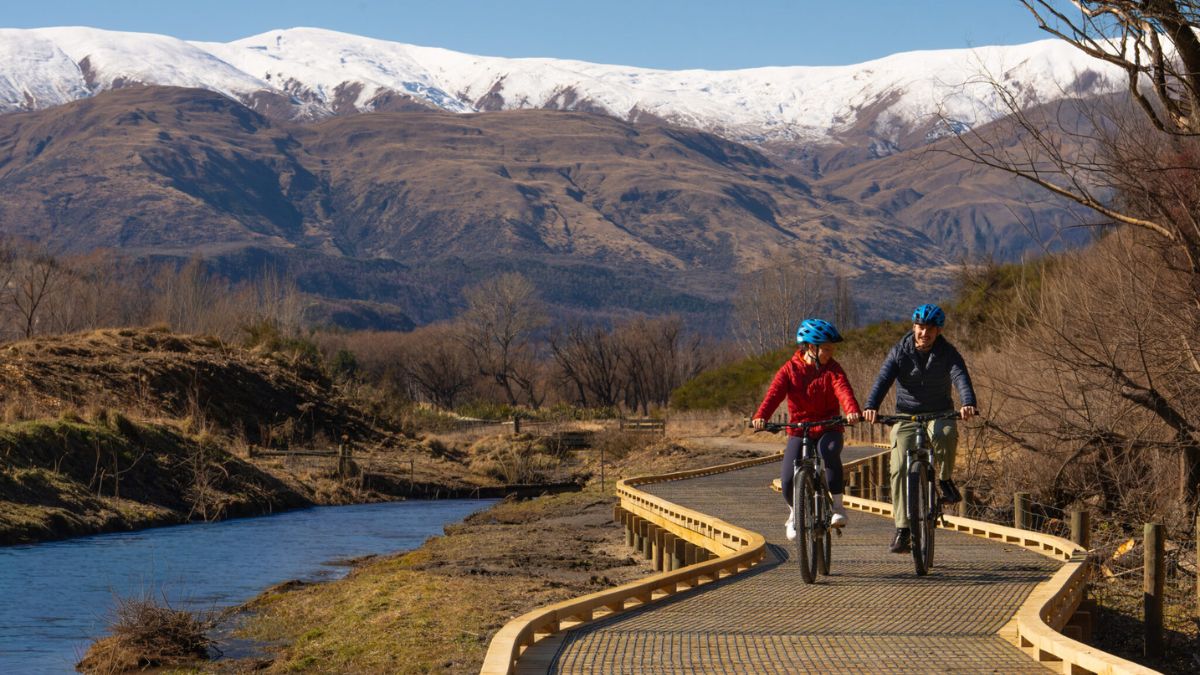
Cycling is practical on the Queenstown Trail and around Frankton, but not every road shoulder is comfortable. Wear a helmet—it is legally required in New Zealand—use lights in low visibility and moderate speed on shared paths. For a Gibbston wine day, prebook the bike return or shuttle and keep alcohol intake compatible with riding.
Getting to the ski fields
The main choices are an official/commercial ski bus, rental car or private transfer. Coronet Peak is roughly 20–30 minutes from town in clear traffic; the Remarkables is about 40–50 minutes. Weather, chain controls and queues can make both longer.
For one or two ski days, a bus removes parking and chain stress. For a group with equipment and winter-driving experience, a car may cost less per person. Confirm the resort transport schedule before buying a non-refundable lift product.
Intercity and regional travel
Coaches and shared shuttles link Queenstown with Wānaka, Cromwell, Te Anau, Dunedin, Invercargill and Christchurch on selected schedules. Service may be once daily rather than turn-up-and-go. Book long-distance transport with the operator, verify luggage allowances and do not build a tight flight connection around an arrival from across the island.
Approximate self-drive times in good conditions, before sightseeing stops:
| Route | Allow at least |
|---|---|
| Queenstown–Arrowtown | 20–30 minutes |
| Queenstown–Glenorchy | 45–55 minutes |
| Queenstown–Kingston | About 45 minutes |
| Queenstown–Cromwell | 50–65 minutes |
| Queenstown–Wānaka via Crown Range | 70–90 minutes |
| Queenstown–Te Anau | 2–2½ hours |
| Queenstown–Milford Sound | 4–5 hours one way |
| Queenstown–Dunedin | 3½–4 hours |
| Queenstown–Christchurch | 6–7 hours |
Navigation estimates do not include chain fitting, roadworks, campervan pace, food, photographs or fatigue.
8) When to Go to Queenstown
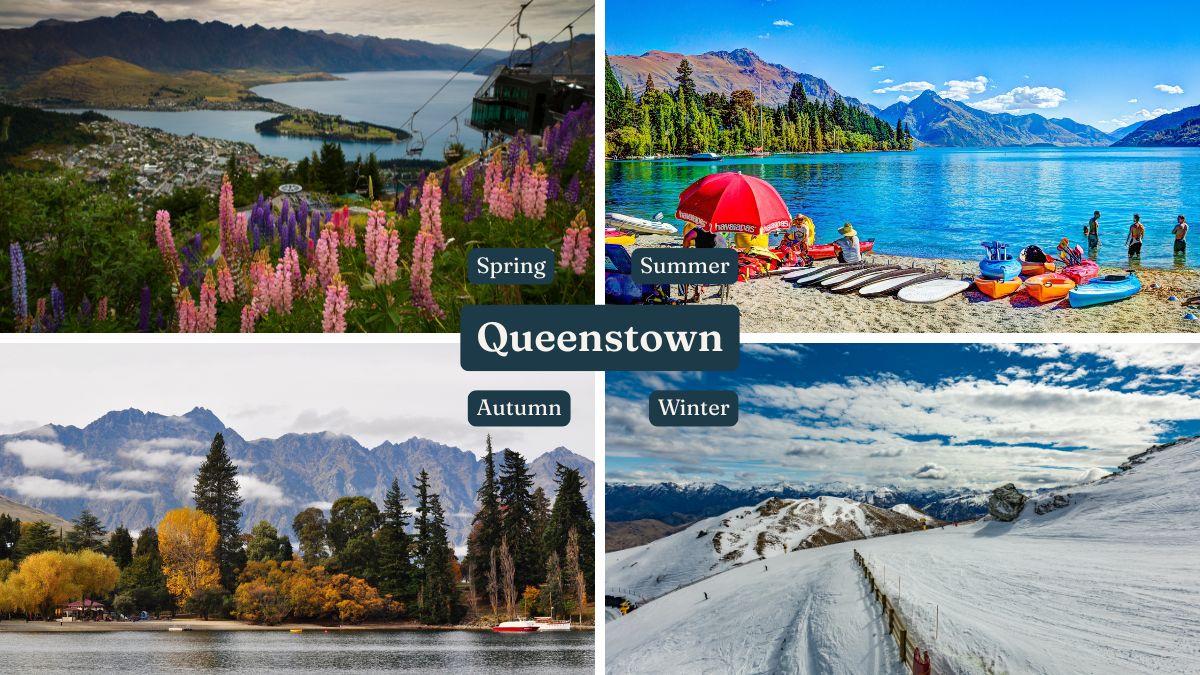
Queenstown is a true four-season destination, but “year-round” does not mean every trail, road and activity behaves the same way all year. Choose the season for your main purpose, then build backup days around it.
Summer: December to February
Best for: Long daylight, hiking, cycling, lake days, camping and road trips.
Daytime temperatures are often comfortable to warm, but cold rain, wind and strong UV are still possible. Alpine routes are generally most accessible, although snow can linger and thunderstorms or heat can change plans.
The honest downside: Christmas–New Year and school-holiday dates bring high room rates, busy trails, crowded roads and limited rental cars. Book accommodation and Milford products early. Start popular walks in the morning and carry more water than a lakeside forecast might suggest.
Autumn: March to May
Best for: Arrowtown color, calmer roads, photography, wine and crisp walking days.
March often retains good hiking conditions with less holiday pressure. By April, cold nights return and deciduous color builds around Arrowtown, usually peaking at different times according to weather and elevation. May can offer strong value and snow-dusted peaks.
The honest downside: Daylight shortens quickly. Frost and early snow can affect high tracks, and some seasonal operators reduce schedules after Easter or before winter.
Winter: June to August
Best for: Skiing, snowboarding, mountain atmosphere, fireplaces and clear cold views.
July and August are the core snow months. The town is lively, ski buses run, and the mountains provide the winter scenery many visitors imagine.
The honest downside: Ski demand can make winter as expensive as summer. Snow in downtown Queenstown is not guaranteed; most dependable snow is at altitude. Ice, fog, chain requirements and weather holds affect roads and flights. Book lessons, rentals and a suitably heated room early, then keep one rest or weather day.
Spring: September to November
Best for: Mixed-season scenery, lower accommodation pressure, cycling, gardens and flexible travelers.
September can combine spring conditions in town with skiing at altitude. October and November bring longer light, green valleys and improving hiking access.
The honest downside: It may feel like three seasons in one day. Wind is common, high routes can retain snow, thaw creates mud, and some ski or summer operations sit between seasons. Check the exact service calendar.
Best month by interest
| Priority | Strongest period | Why |
|---|---|---|
| Long hikes | January–March | Long light and generally less lingering alpine snow |
| Skiing | July–August | Core winter operations and more reliable coverage |
| Autumn color | Mid-April to early May | Arrowtown and Lake Hayes deciduous color, varying by year |
| Lower prices | May and parts of spring | Demand often softens outside holidays and events |
| Wine and cycling | March–April or October–November | Cooler riding temperatures and attractive vineyard scenery |
| Milford waterfalls | Any wet period | Rain creates dramatic falls; road disruption remains possible |
| Photography | March–May and winter | Low-angle light, color or snow, with shorter days |
| Families | Summer or school-holiday winter | Broad activity choice, but higher prices and advance booking |
Dates that can change prices
Check New Zealand and Australian school holidays, Easter, Christmas–New Year, long weekends, ski-opening weekends and the Queenstown event calendar. Large races, festivals and weddings can tighten room supply even outside the obvious peak. A Tuesday–Thursday stay can be cheaper than a Friday–Sunday stay in shoulder season.
9) Best Places to Book Your Queenstown Trip
There is no single best booking site for every part of a Queenstown trip. Use comparison platforms to see the market, then use official sources to verify the product and conditions. The best price is the lowest final price for the same room or activity under terms you can accept.
For accommodation: Major hotel platforms and direct properties
Agoda.com compares hotel offers from sites such as Expedia and Booking.com and may let you complete a reservation with hotels.com or another provider. It is useful for finding price differences across the same property.
Before booking, compare:
- exact room name and bed type;
- taxes and mandatory fees;
- payment currency and card conversion;
- breakfast, parking and cleaning;
- cancellation deadline in New Zealand time;
- who holds and services the reservation; and
- whether the property itself can match the rate.
Also check the property’s direct website. Hostelworld is useful for dorm inventory and solo-traveler reviews. A direct hotel booking can simplify changes, but it is not automatically cheaper; a platform can be better when the final terms are genuinely stronger.
For activities: Klook, Viator, Bookme and direct operators
Klook and Viator are useful for comparing a large range of cruises, Milford day trips, transfers and adventure products. Bookme specializes in New Zealand and often discounts selected departure times or near-term availability.
Use them when:
- a platform price is lower for the identical product;
- its cancellation terms suit your trip;
- reviews clarify meeting points or actual duration; or
- a bundle includes something you already intended to buy.
Book direct when:
- the activity is weather-sensitive and you want the shortest communication chain;
- the operator offers a useful time, transfer or package unavailable elsewhere;
- medical, accessibility or equipment questions need a precise answer; or
- the prices are equal and direct support matters more than platform credit.
For the best-known experiences, final-check Skyline Queenstown, Shotover Jet, AJ Hackett Bungy, RealNZ, Kiwi Park and Onsen Hot Pools.
For flights: airline websites plus a metasearch check
Use Destinations Uncovered Flights or Skyscanner to compare schedules, then price the same fare on Air New Zealand, Jetstar, Qantas or Virgin Australia where relevant. Compare our Destinations Uncovered flights fare after checked baggage, seat selection and change rights. Queenstown flights can be disrupted by wind, snow or visibility, so a protected through-ticket is valuable when connecting from a long-haul service.
Do not build an unprotected same-day international connection with the minimum possible gap. A night in Auckland, Christchurch or Queenstown can be cheaper than replacing a missed long-haul ticket.
For rental cars and campervans
Comparison sites show availability, but open the supplier’s terms before payment. Check:
- security deposit and card requirements;
- standard excess and cost to reduce it;
- tire, windscreen, roof and underbody exclusions;
- gravel-road and ski-field rules;
- snow-chain supply and fitting;
- after-hours airport charges;
- additional-driver and young-driver fees; and
- one-way relocation charges.
The cheapest rate with a NZ$5,000 excess may not suit your risk tolerance. If using third-party excess insurance, understand whether you must pay the rental company first and claim later.
For buses, ferries and regional transport
- Use Orbus / Otago Regional Council for local fares, routes and disruptions.
- Use Queenstown Airport for official arrival transport information.
- Use InterCity and established regional shuttle companies for Wānaka, Te Anau, Dunedin and Christchurch.
- Book ski buses and activity transfers with the operator named on your voucher.
- Reconfirm pickup location; “Queenstown” may mean the Station building, Stanley Street, a hotel list or the airport.
For tracks, huts and campsites
Use DOC for public-conservation-land track alerts, hut details and campsites, and DOC Bookings for reservable facilities and Great Walks. Use QLDC for council reserves and freedom-camping rules. A commercial campsite reseller does not override a closure, fire restriction or local bylaw.
For travel insurance
Buy insurance from a regulated provider available in your home country and read the policy wording. Search specifically for:
- New Zealand medical care and evacuation;
- hiking altitude or track-grade limits;
- skiing and snowboarding, including off-piste definitions;
- bungy, rafting, mountain biking and skydiving;
- rental-vehicle excess;
- missed connections and weather disruption; and
- pre-existing medical condition rules.
“Adventure cover” is a marketing label, not a list of insured activities. The policy schedule and exclusions control the claim.
The booking order that reduces risk
- Confirm passport, entry requirements and international flight framework.
- Reserve refundable Queenstown accommodation for peak dates.
- Book any fixed ski lesson, limited small-group tour or Milford transport.
- Arrange regional transport or the shortest necessary car-rental window.
- Add flexible, weather-dependent activities with workable cancellation terms.
- Recheck every pickup point, operating notice and road condition 24–48 hours before use.
Suggested Queenstown Itineraries
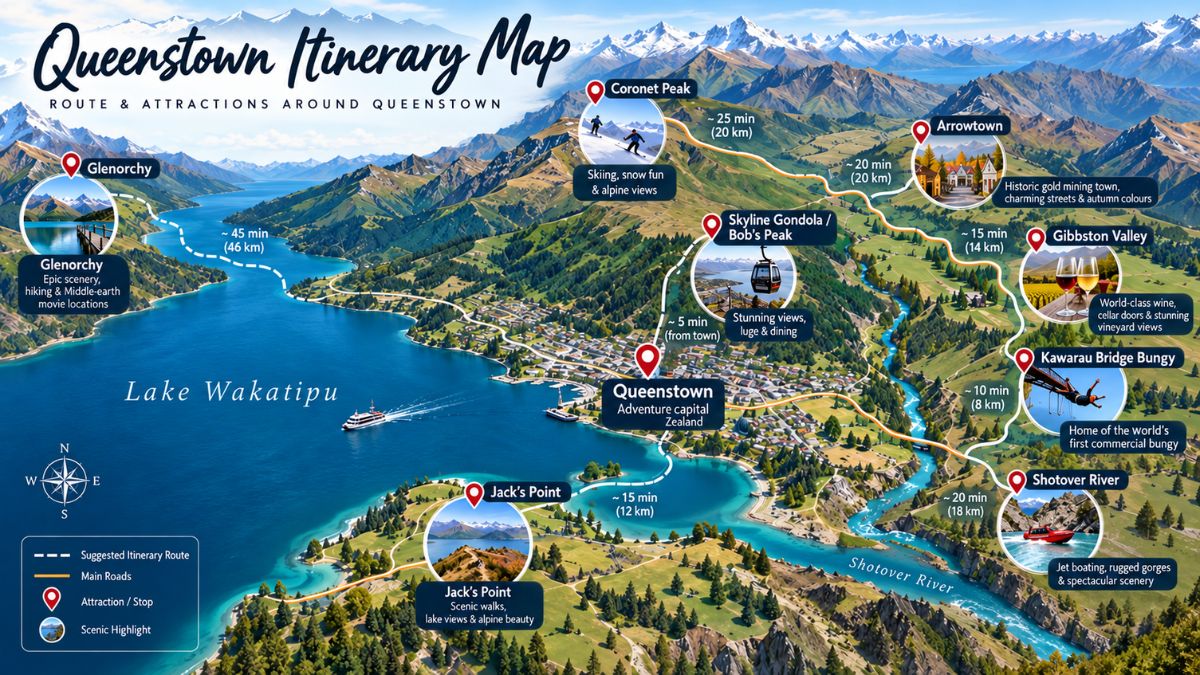
Two days: a compact first look
Day 1: Walk the waterfront and Queenstown Gardens. Choose Queenstown Hill or the gondola for the high view, then have one good dinner.
Day 2: Pick one: Shotover Jet and Arrowtown, a Glenorchy tour, a ski day, or a lake cruise and Frankton Track. Do not attempt Milford Sound unless you are comfortable making almost the whole visit a coach journey.
Three days: the balanced short visit
Day 1: Downtown, gardens, waterfront and Queenstown Hill.
Day 2: One signature paid experience—skiing, jet boat, bungy, cruise, wine cycle or scenic flight.
Day 3: Arrowtown and Gibbston, or Glenorchy with Bob’s Cove. Choose according to weather.
Five days: the sweet spot
Day 1: Arrive, buy groceries, learn the bus route and walk the lakefront.
Day 2: Queenstown Hill or Ben Lomond in suitable conditions; Kiwi Park or Onsen as the wet-weather alternative.
Day 3: Arrowtown and Gibbston by bus, bike shuttle or car.
Day 4: Glenorchy, Bob’s Cove and a short local walk.
Day 5: Milford coach-cruise, ski day or a flexible activity day. If Milford is essential, protect this day and keep an earlier day swappable.
Seven days: Queenstown without rushing
Use the five-day plan, then add two of the following:
- overnight in Glenorchy with a Routeburn day walk;
- one or two nights in Wānaka;
- overnight in Te Anau before Milford Sound;
- a second ski day;
- Moke Lake and a slower lake afternoon; or
- a complete rest day with a long meal, spa or easy ferry trip.
Queenstown is more enjoyable when the itinerary has room to move an outdoor day by 24 hours. For other regional New Zealand travel guides that would link to Queenstown you should read our Nelson Bays and Tasman guide or our South Island West Coast.
Queenstown Travel Guide FAQ
Is Queenstown worth visiting if I do not like adrenaline activities?
Yes. The lakefront, gardens, Queenstown Trail, Arrowtown, Glenorchy road, wine country, cruises and accessible viewpoints are enough for several days. Queenstown’s “adventure capital” identity is only one layer of the region.
Can you visit Queenstown on a tight budget?
Yes, but use a dorm, kitchen and buses and be selective about activities. A true low-budget day can be around NZ$130–210. A private room and a headline adventure move the trip into mid-range territory quickly.
How many days should a first-time visitor stay?
Three full days is the minimum that feels rounded. Five days is the strongest balance. Add nights in Te Anau or Wānaka rather than using Queenstown for every long out-and-back journey.
Is Queenstown easy without a car?
Downtown, Frankton, the airport and Arrowtown are manageable by bus, and many activities provide transfers. Arthurs Point, Glenorchy, Moke Lake, remote trailheads and flexible wine-country travel require an operator shuttle, tour, bike plan, taxi or car.
What is the best free thing to do?
For an easy day, walk the waterfront, Queenstown Gardens and part of the Frankton Track. For a stronger hike, Queenstown Hill offers excellent value in good conditions. Ben Lomond is free but demands a full mountain-safety plan.
Is the Skyline Gondola worth NZ$69?
It is worth considering for travelers who want the classic panorama without a steep climb, especially if combined with the luge or a meal. Fit budget travelers can hike the Tiki Trail, subject to conditions and closures.
Should I drive to Milford Sound from Queenstown?
Only if you are rested, comfortable with long New Zealand drives and ideally staying in Te Anau. A Queenstown return is roughly 570 kilometers and can take 12–13 hours with a cruise. The coach is safer and more relaxing for a same-day return.
Is Queenstown safe for solo travelers?
The town is generally manageable and social. Use normal nighttime care and secure valuables. The larger solo risk is an underprepared hike beyond mobile coverage; tell someone your plan and carry suitable equipment.
When is Queenstown cheapest?
May and parts of spring often have better accommodation value outside holidays and events. The trade-off is shorter light, mixed weather and reduced seasonal schedules. Compare the whole trip, not only the room.
Does it snow in Queenstown town?
Sometimes, but not reliably. The ski fields and higher slopes receive far more snow than downtown. Do not book a town-only winter trip expecting snow-covered streets every day.
Can I use a credit card everywhere?
Cards are widely accepted, but small surcharges may apply and some buses or rural services use specific payment arrangements. Carry a physical card and a modest amount of cash, and notify your bank before travel if required.
Should I stay in Queenstown or Arrowtown?
Choose Queenstown for a first short trip, nightlife, tours and car-free convenience. Choose Arrowtown for a smaller, quieter base with history and trail access. A split stay is rarely necessary unless you have at least five nights.
Final Thoughts: Queenstown Is Best When You Choose, Not Collect
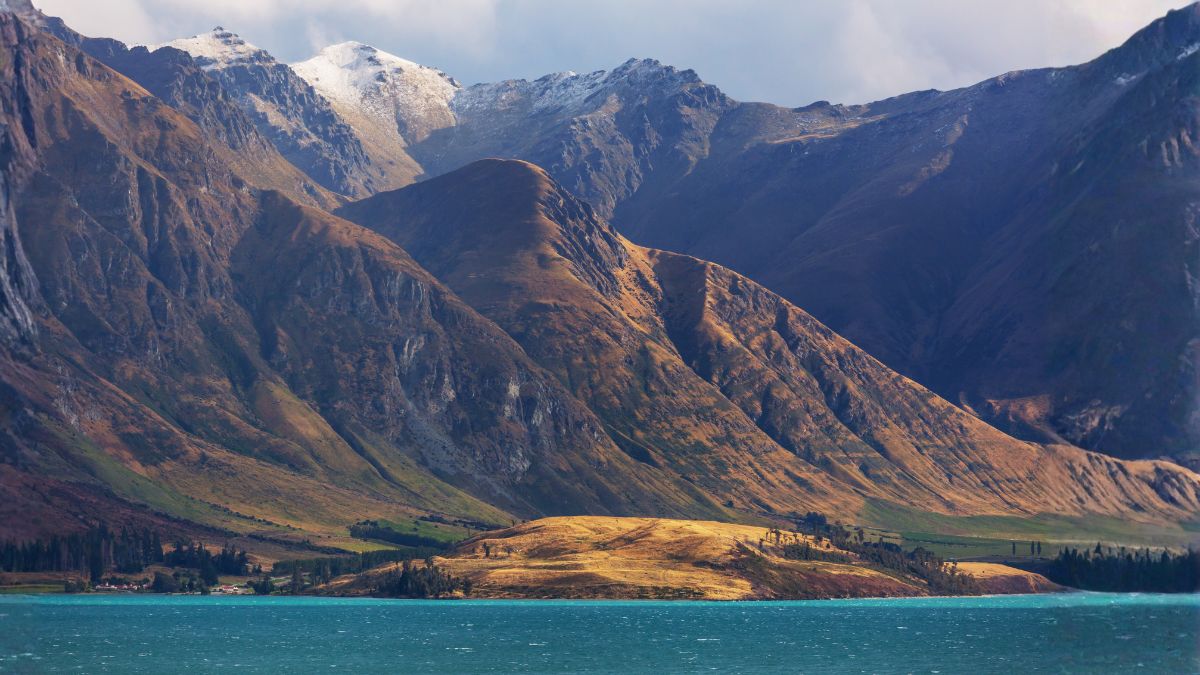
Queenstown earns its fame. Lake Whakatipu changes with the light, the surrounding roads lead into genuine wilderness, and the range of activities means a first-time skier, serious hiker, food-focused couple and solo backpacker can all build completely different trips from the same compact base.
The honest challenge is resisting the pressure to collect experiences. You do not need a bungy, jet boat, gondola, cruise, wine tour, Milford day and scenic flight for the journey to count. Choose the two or three moments you care about, protect the budget with buses and free trails, and give the weather permission to rearrange the plan.
That is when Queenstown feels less like an expensive checklist and more like what it really is: an exhilarating, highly accessible gateway to one of New Zealand’s most dramatic landscapes.
Research and Price Notes
This article was fact-checked on September 11, 2026. Prices are public adult rates or realistic planning ranges in New Zealand dollars. Dynamic accommodation, transport and tour rates can change at any time. Official sources used for current facts include:
- Destination Queenstown: official visitor information
- Otago Regional Council: Orbus fares and transport
- Queenstown Airport: ground transport
- Queenstown Lakes District Council: parking and responsible camping
- Department of Conservation: tracks, alerts, huts and campsites
- NZTA Journey Planner: road conditions
- MBIE: weekly fuel price monitoring
- official attraction and operator price pages linked in the relevant sections above.
29 Works Cited
agoda.com. Agoda Hotels, Activities and transort. 2026, agoda.stay22.com/destinationsuncovered/kmPiWwgYbw.
Algie, J. Queenstown Bay. 2023, seethesouthisland.com/queenstown-bay-new-zealand/.
arrowtown.com. Kia ora, welcome to Arrowtown. 2026, www.arrowtown.com/.
Baigent, J. G. Book Discounted Flights. 2026, book.destinationsuncovered.com/.
beecard.co.nz/. Bus, Train, and Ferry better with Bee Card. 2026, beecard.co.nz/.
CoronetPeak. Coronet Peak GOOD TIMES SINCE 1947. 2026, www.coronetpeak.co.nz/.
DOC. Ben Lomond Track. 2026, www.doc.govt.nz/parks-and-recreation/places-to-go/otago/places/queenstown-area/things-to-do/ben-lomond-track/.
—. Bob’s Cove Track and Nature Walk. 2026, www.doc.govt.nz/parks-and-recreation/places-to-go/otago/places/queenstown-area/things-to-do/bobs-cove-track-and-nature-walk/.
—. Kawarau Suspension Bridge. 2026, www.doc.govt.nz/parks-and-recreation/places-to-go/otago/places/arrowtown-area/kawarau-suspension-bridge/.
—. Moke Lake Loop Track. 2026, www.doc.govt.nz/parks-and-recreation/places-to-go/otago/places/queenstown-area/things-to-do/moke-lake-loop-track/.
—. Routeburn Flats Hut. 2026, www.doc.govt.nz/parks-and-recreation/places-to-go/otago/places/mount-aspiring-national-park/things-to-do/huts/routeburn-flats-hut/.
KiwiBird. Discover the captivating wildlife sanctuary at Kiwi Park. 2026, kiwibird.co.nz/.
milford-sound.co.nz. Discover Milford Sound – New Zealand’s most spectacular natural wonder. 2026, www.milford-sound.co.nz/.
paymypark.com. Quick and Easy parking with PayMyPark. 2026, www.paymypark.com/.
qldc.govt.nz. Responsible Camping in the Queenstown Lakes District. 2025, www.qldc.govt.nz/recreation/responsible-camping.
queenstown.skyline. Welcome to Skyline Queenstown. 2026, queenstown.skyline.co.nz/.
queenstownbikehire. Sherpa Shuttle Bus service – Wineries Shuttle. 2026, queenstownbikehire.co.nz/shuttles/.
queenstownNZ. Queenstown Gardens Trail. 2026, www.queenstownnz.co.nz/listing/queenstown-gardens-trail/9100/.
QueenstownNZ. Queenstown Hill Time Walk. 2026, www.queenstownnz.co.nz/listing/queenstown-hill-time-walk/2039/.
—. Tiki Trail. 2026, www.queenstownnz.co.nz/listing/tiki-trail/9099/.
—. Ziptrek – Kea 6-Line Tour. 2026, www.queenstownnz.co.nz/listing/ziptrek-ecotours/1163/.
queenstownnz.co.nz. Gibbston, the Valley of the Vines. 2026, www.queenstownnz.co.nz/plan/surrounding-region/gibbston/.
—. Glenorchy, a true slice of New Zealand paradise. 2026, www.queenstownnz.co.nz/plan/surrounding-region/glenorchy/.
QueenstownTrails. Frankton Track. 2026, queenstowntrails.org.nz/maps-and-trails/all-trails/frankton-track/.
queenstowntrails.org.nz. Welcome to Queenstown Trails. 2026, queenstowntrails.org.nz/.
realnz. Vintage coal-fired steamship TSS Earnslaw. 2026, www.realnz.com/en/experiences/day-cruises/tss-earnslaw-lake-cruises/.
Remarkables. The Remarkables, Queenstown's big mountain Big Terrain, EVEN Bigger Thrills. 2026, www.theremarkables.co.nz/.
shotoverjet.com. The Ultimate Jet Boat Experience. 2026, www.shotoverjet.com/.
wanaka.co.nz. Wanaka, the season of crisp air, blue skies and creative energy is here. 2026, www.wanaka.co.nz/.