Merdeka Square, River of Life, and Kuala Lumpur’s colonial core form one of the city’s most useful starting points for understanding its history, architecture, and urban layout. This area combines major landmarks, walkable streets, riverfront viewpoints, and civic buildings, making it ideal for a half-day introduction to central Kuala Lumpur before exploring nearby districts such as Chinatown and Brickfields.
Why Merdeka Square matters
Merdeka Square holds great importance for the entire nation, tied to one of Malaysia’s most historic moments — gaining independence. It was here, at midnight on August 31, 1957, that a significant event occurred: the British “Union Jack” was lowered, and for the first time, the Malaysian national flag was raised.
This marked the end of colonial rule and the birth of an independent nation. The word “Merdeka” means “Independence.” From that day on, the square became the center of the country’s main national holiday — Hari Merdeka, or Independence Day. Each year on August 31, grand parades and festivities take place here, drawing thousands of locals and visitors in Kuala Lumpur. This is the perfect moment to see the square at its finest and experience the spirit of national unity.
The square’s historic look is largely defined by its impressive buildings from the colonial period. One of the most well-known buildings, constructed by the British between 1894 and 1897, was later named after Sultan Abdul Samad, the ruler of Selangor. The architectural ensemble of the square blends European and Eastern styles, serving as a reminder of the past and part of the country’s cultural heritage.

Merdeka Square Historical and Cultural Significance
- Symbol of Independence: The Union Jack was lowered here at midnight, symbolizing freedom from British rule.
- National Events: It is the main site for annual Merdeka Day parades, cultural festivals like Citrawarna, and other national celebrations.
- The Padang: Once a cricket field for British colonial elites, it is now a large open green space.
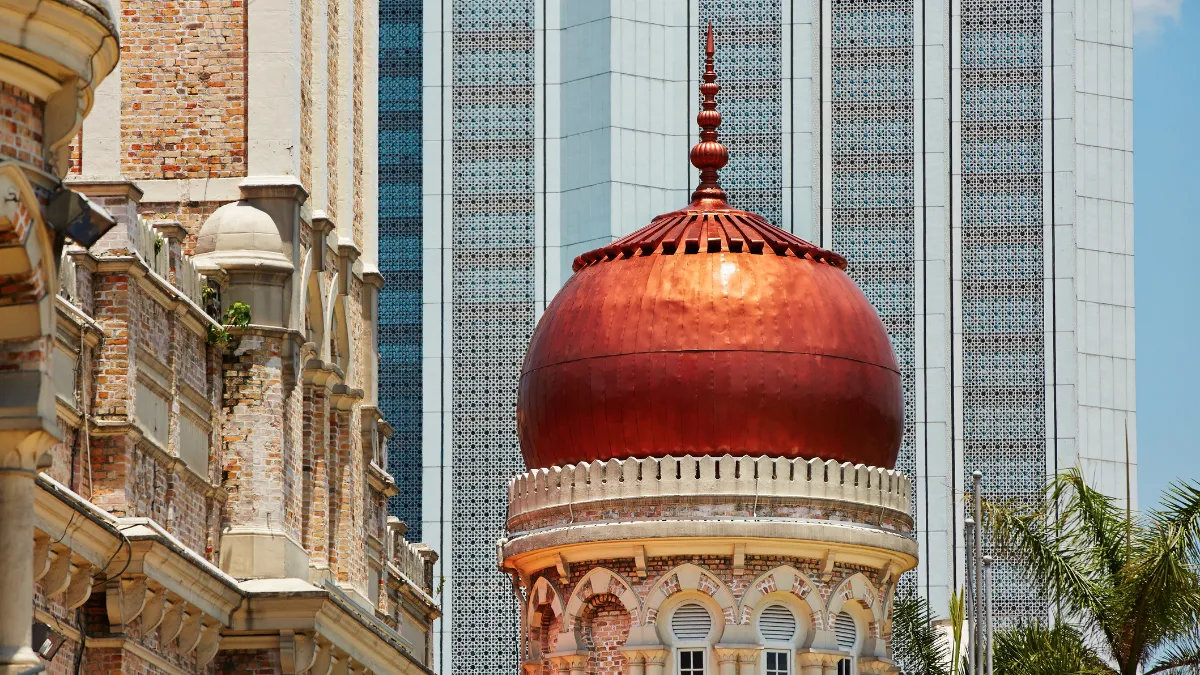
- Sultan Abdul Samad Building: An impressive 1897 Moorish-style building with copper domes and a tall clock tower.
- Royal Selangor Club: A historic Tudor-style social club founded in 1884 for colonial society.
Merdeka Square, also known as Dataran Merdeka, is one of Kuala Lumpur’s most significant civic spaces. It is closely associated with Malaysian independence and sits within a cluster of administrative and historic buildings that show how the city developed under colonial rule and then evolved into a modern capital. For visitors, the square offers a compact introduction to both national symbolism and local urban history.
The surrounding area is especially practical because several major sights can be covered on foot in a single route. It also connects naturally to nearby cultural districts. If you are planning a broader city walk, this is a strong place to link with.
Key landmarks around Merdeka Square
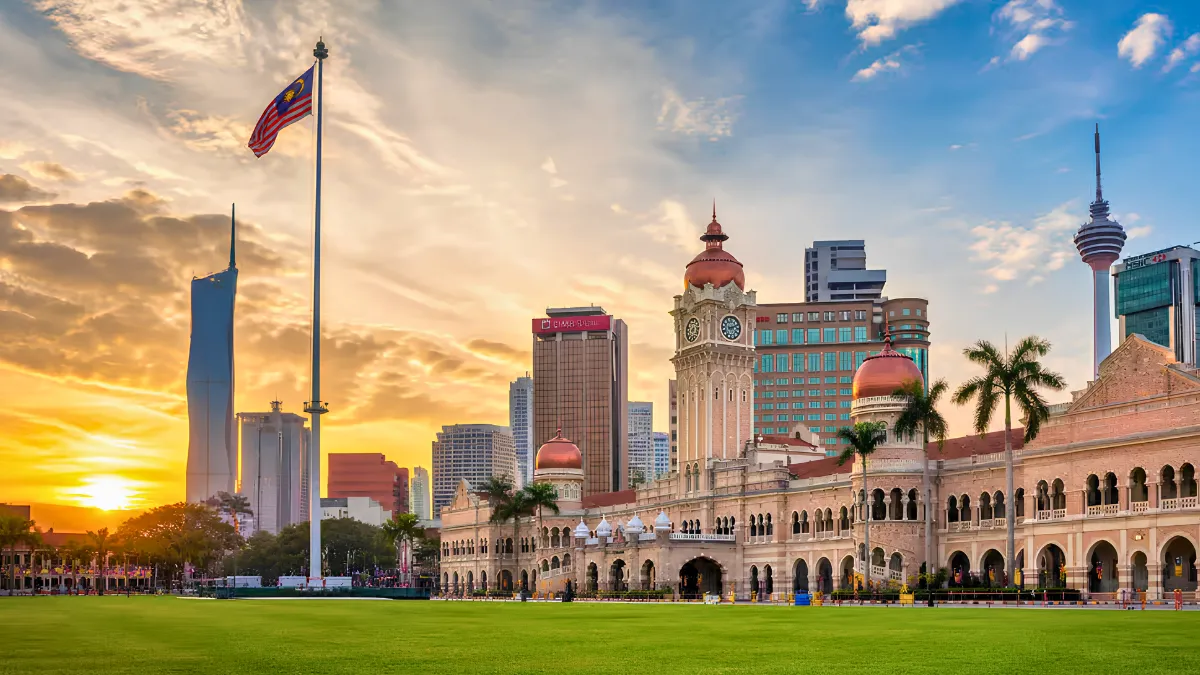
The square itself is a large open field bordered by notable buildings. The most recognizable is the Sultan Abdul Samad Building, known for its Moorish-influenced design, copper domes, and clock tower. Across from it stands the broad lawn and flagpole area that marks the site of the lowering of the British flag and the raising of the Malaysian flag at independence.
- Sultan Abdul Samad Building: Best viewed from the square for its full façade and symmetry.
- Independence flagpole: A key symbolic point and common photo stop.
- Royal Selangor Club: A historic social club facing the square, notable for its Tudor-style appearance.
- St. Mary’s Cathedral: A quieter landmark that adds to the area’s religious and architectural diversity.
- Kuala Lumpur City Gallery: Useful for orientation, local history, and the well-known “I Love KL” photo spot.
If you prefer a structured visit, begin at the City Gallery for context, cross to Merdeka Square for the central views, then continue toward the river junction. This sequence helps first-time visitors understand how the civic core connects to the older commercial center of the city.
What to see at the KL River of Life
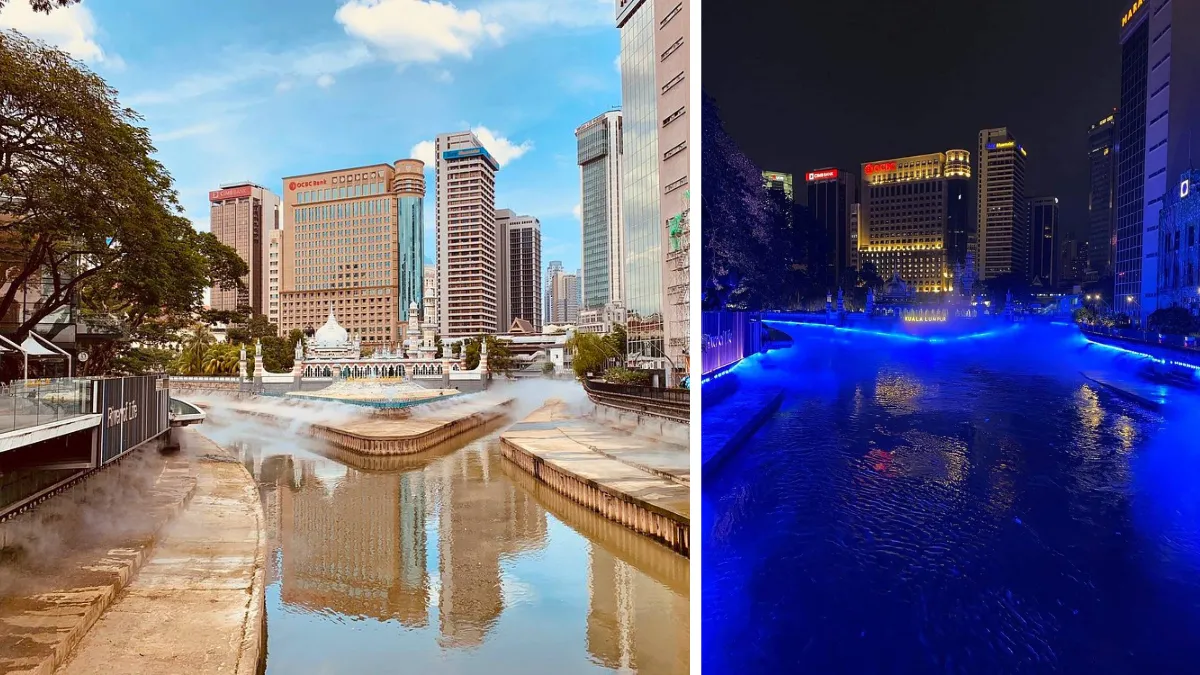
The River of Life redevelopment focuses on the confluence of the Klang and Gombak rivers near Masjid Jamek. Historically, this river meeting point is closely tied to Kuala Lumpur’s origin. Today, the area has improved walkways, lighting, and riverfront viewpoints that make it easier to appreciate a site that was once overlooked by many travelers.
Kuala Lumpur Quick History
Kuala Lumpur (KL) means “muddy confluence,” referring to where the Klang River and the Gombak River meet. These two rivers were both the physical and economic backbone that turned a dangerous jungle mining camp in the 1850s into a thriving modern capital.
Pre-1857
The upper reaches of the Klang Valley was inhabited by scattered groups of aboriginals and Mendailing refugees from war-torn Sumatra
1857: Raja Abdullah party establish a settlement
In 1857, 87 Chinese prospectors, sent by the Malay royal Raja Abdullah, traveled up the Klang River until they arrived at the shallow, fast-flowing meeting point with the Gombak River. The current was too powerful and the water too shallow for the heavily loaded boats to continue further. They faced harsh conditions in the jungle—most of the 87 men died from malaria, cholera, or dysentery. However, their hard work revealed valuable reserves. They then established prosperous tin mines nearby.
1858: Sutan Puasa establishes trading post
Sutan Puasa – a Mendailing leader and wealthy tin entrepreneur – convinced two Chinese merchants to set up a trading post at the fledgling Kuala Lumpur settlement.
First Kapitan Cina established
One of them, Hiu Siew, became the first Kapitan Cina (‘Chinese Captain’) of Kuala Lumpur. This title was traditionally granted by Malay rulers—and later by the British—giving leaders of local Chinese communities the authority to maintain law and order.
1869: Third Kapitan Cina Yap Ah Loy tames the township
The frontier town was like the Wild West, filled with opium dens, brothels, gambling halls, and saloons. Gang fights frequently erupted between the triads over control of the tin mining areas. Rival Malay chiefs soon joined the fray, forming alliances with the Chinese groups. This led to murder, chaos, and civil war, along with a long string of political schemes and betrayals. Kapitan Yap Ah Loy took charge of the harsh mining outpost, establishing law, order, and structured lawful trading posts right by the two muddy riverbanks.
1880: The British Arrive at Selangor
The British moved the Selangor state administrative center to the confluence area because of its central trade importance.
1886: Railway
A new railway line connected KL to Klang port, reducing travel time and shifting reliance away from slow riverboat transport. Officials straighten and cut new channels for the Klang and Gombak rivers to control severe monsoon flooding around the growing town.
1896: Kuala Lumpur the Capital
KL was chosen as the capital of the newly minted Federated Malay States.
August 31, 1957: Malaya Independence
Malaya declared independence from British rule right in KL.
July 9, 1963: Malaysia Agreement
The formal Malaysia Agreement was signed by the United Kingdom, Malaya, North Borneo, Sarawak, and Singapore.
2011–2030: River of Life project
The government launched the massive River of Life project to clean and turn the historic Klang and Gombak riverbanks into clean public waterfronts.
In practical terms, the River of Life is less about a single attraction and more about perspective. It offers views back toward heritage buildings, bridges, and the water corridor that shaped early settlement patterns. In the evening, lighting effects can make the river zone more visually striking, although daylight is still better for architectural observation and photography.
- Look for the rivers confluence near Masjid Jamek.
- Use the riverwalk for broad views of surrounding heritage structures.
- Visit in late afternoon if you want softer light and a cooler walk.
- Check conditions after heavy rain, as weather can affect comfort and visibility.
Suggested walking route through the Merdeka Square colonial core
A practical route starts at Guiding Gallery, continues around Merdeka Square, passing Zero Mile, River of Life (Kolum Bisu) and then moving to Masjid Jamek, the Old High Court and all the way around until we end up back at the textiles museum. From there, you can continue on foot toward other commercial streets or connect to rail stations for the next stop. This route is manageable for most travelers and keeps major landmarks in a logical order.
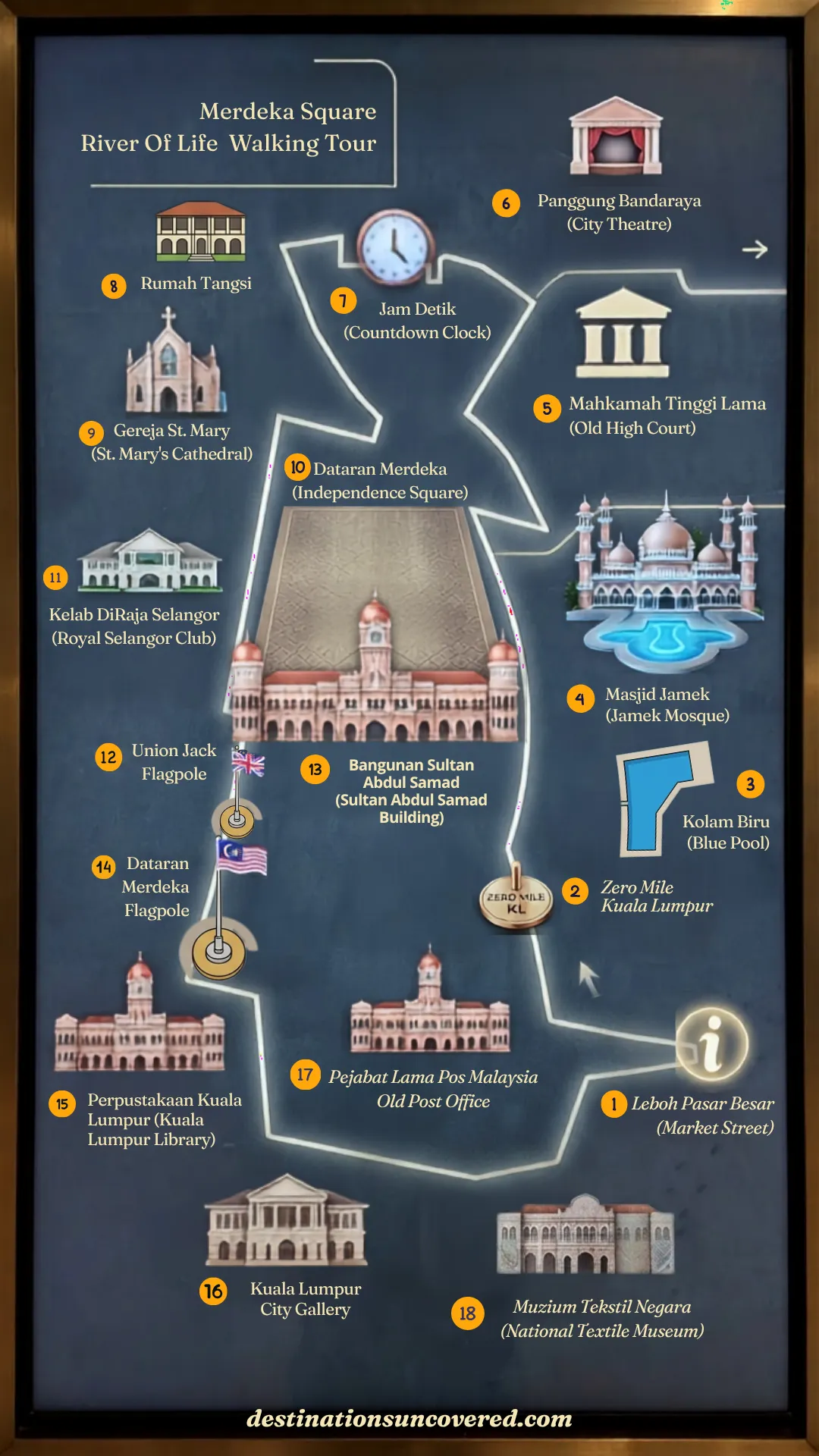
Merdeka Square River of Life Walking Tour
- Leboh Pasar Besar (Market Street)
- Zero Mile
- Kolam Biru (Blue Pool)
- Masjid Jamek (Jamek Mosque)
- Mahkamah Tinggi Lama (Old High Court)
- Panggung Bandaraya (City Theatre)
- Jam Detik (Countdown Clock)
- Rumah Tangsi
- Gereja St. Mary (St. Mary’s Cathedral)
- Dataran Merdeka (Independence Square)
- Kelab DiRaja Selangor (Royal Selangor Club)
- Union Jack Flagpole
- Bangunan Sultan Abdul Samad (Sultan Abdul Samad Building)
- Dataran Merdeka Flagpole
- Perpustakaan Kuala Lumpur (Kuala Lumpur Library)
- Kuala Lumpur City Gallery
- Pejabat Lama Pos Malaysia (Old Post Office)
- Muzium Tekstil Negara (National Textile Museum)
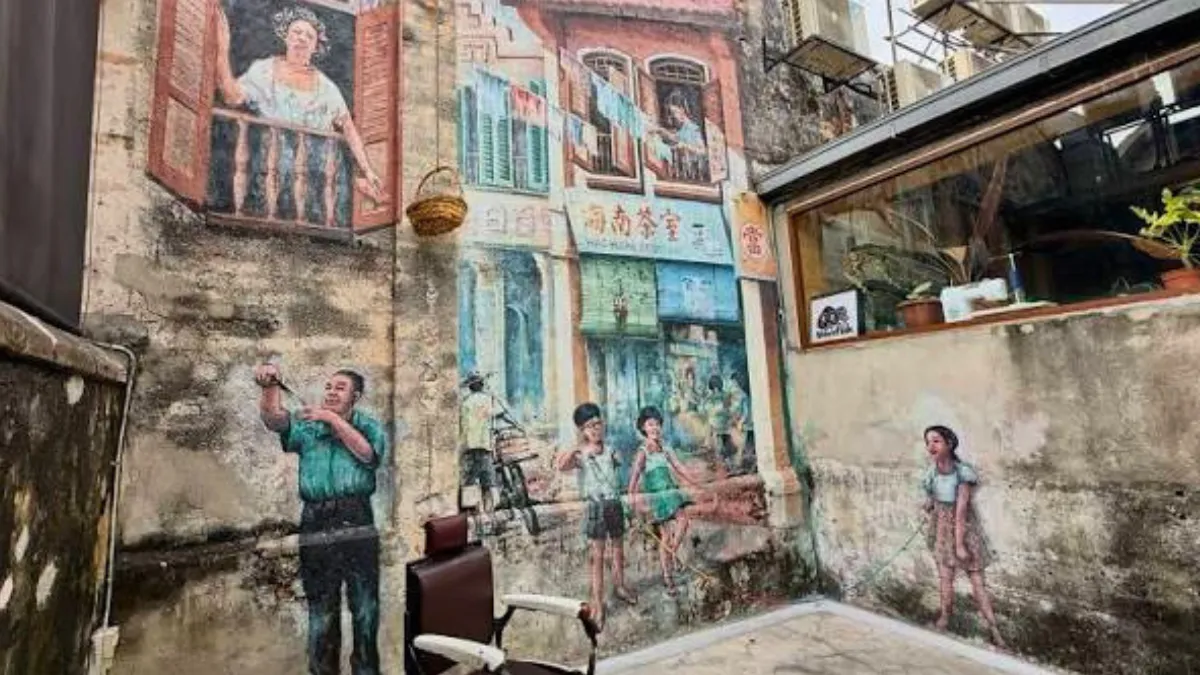
Leboh Pasar Besar (Market Street)
A place to meet and site of the first bridge that allowed both sides of Kuala Lumpur to join together as one. A great place to learn about the history of KL and the River of Life Project.
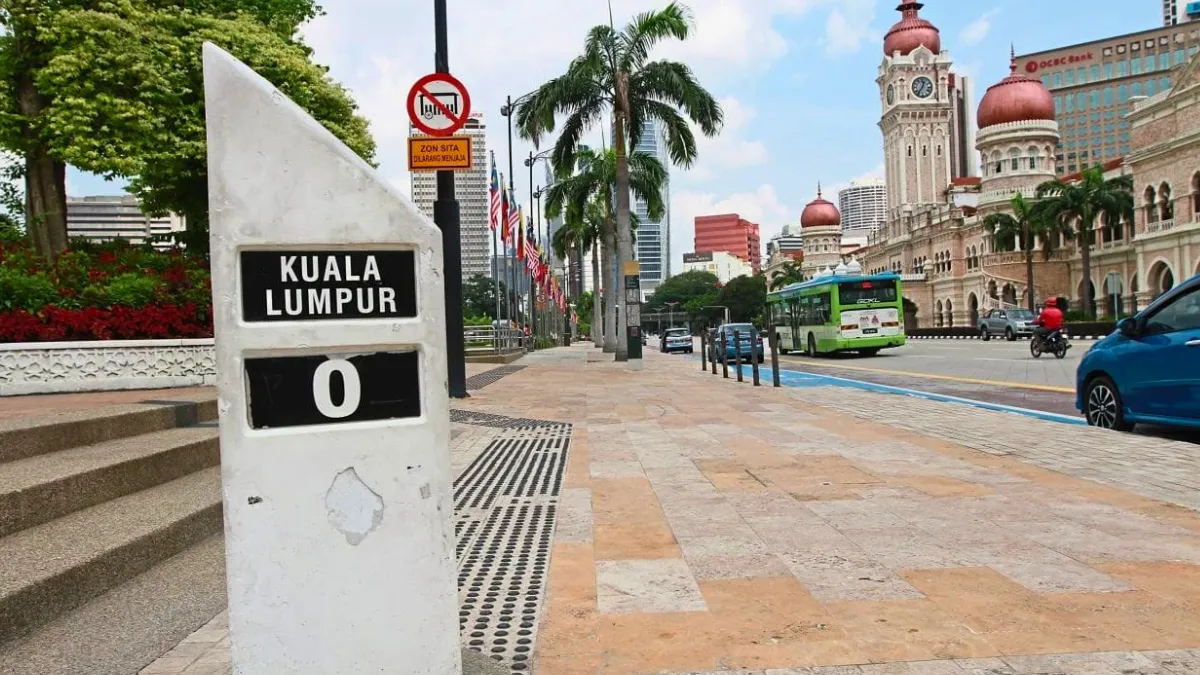
The Zero Mile Marker
This marker means the same as all other cities, it’s point zero from which all distances to the rest of the country are measured.
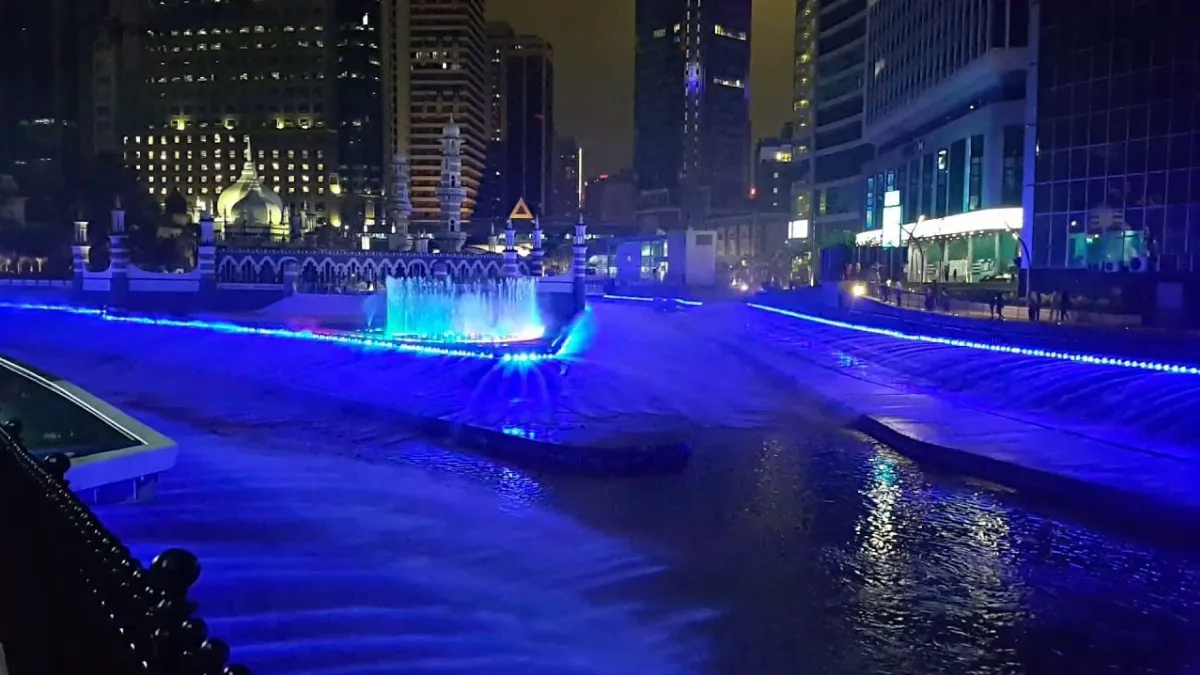
Kolam Biru, or the “Blue Pool”
A highlight of Kuala Lumpur’s River of Life revitalization project. Located at the historic confluence of the Klang and Gombak rivers—where the city began as a tin-mining settlement—this area has been transformed into a stunning urban space. At night, the site is illuminated with striking blue lights, complemented by a musical fountain and artificial mist that create a magical atmosphere. Offering a peaceful walkway near Masjid Jamek, it is a favorite spot for visitors to enjoy the city’s night skyline and reflect on its historical origins.
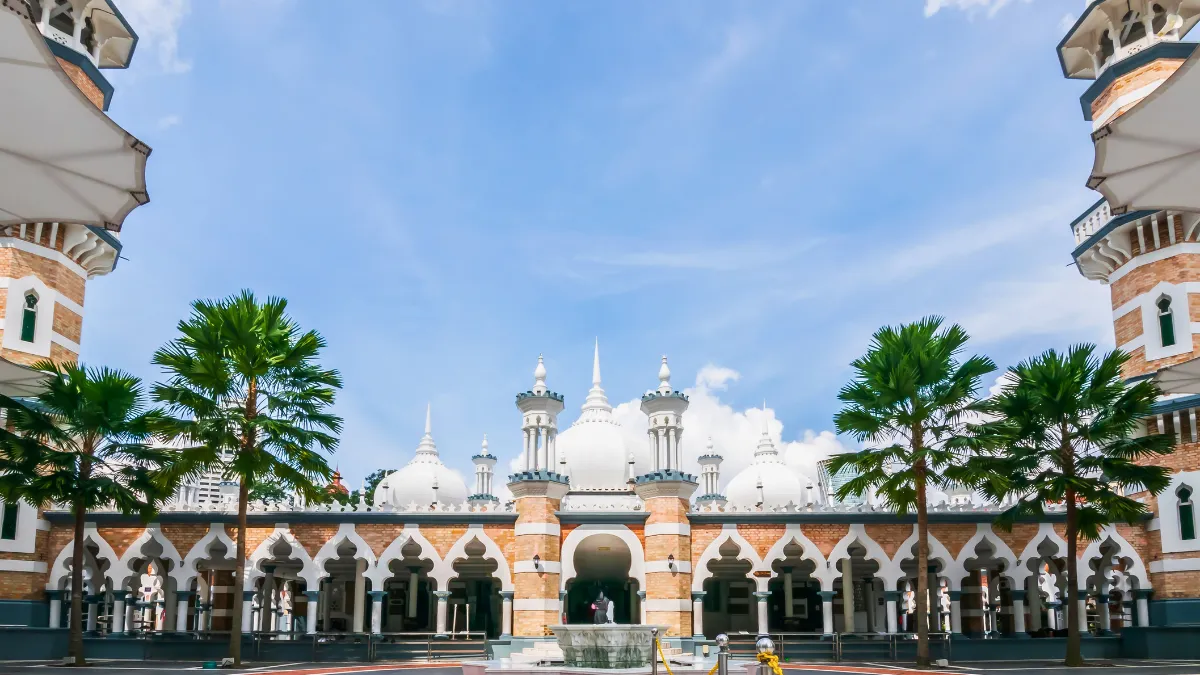
Masjid Jamek (Jamek Mosque)
Built in 1907, Masjid Jamek Mosque is the oldest Islamic place of worship in Kuala Lumpur, Malaysia. Situated at the confluence of the Klang and Gombak rivers—the very site where Kuala Lumpur was founded—the mosque was designed by British architect Arthur Benison Hubback. Its architecture is inspired by the Mughal styles of northern India.
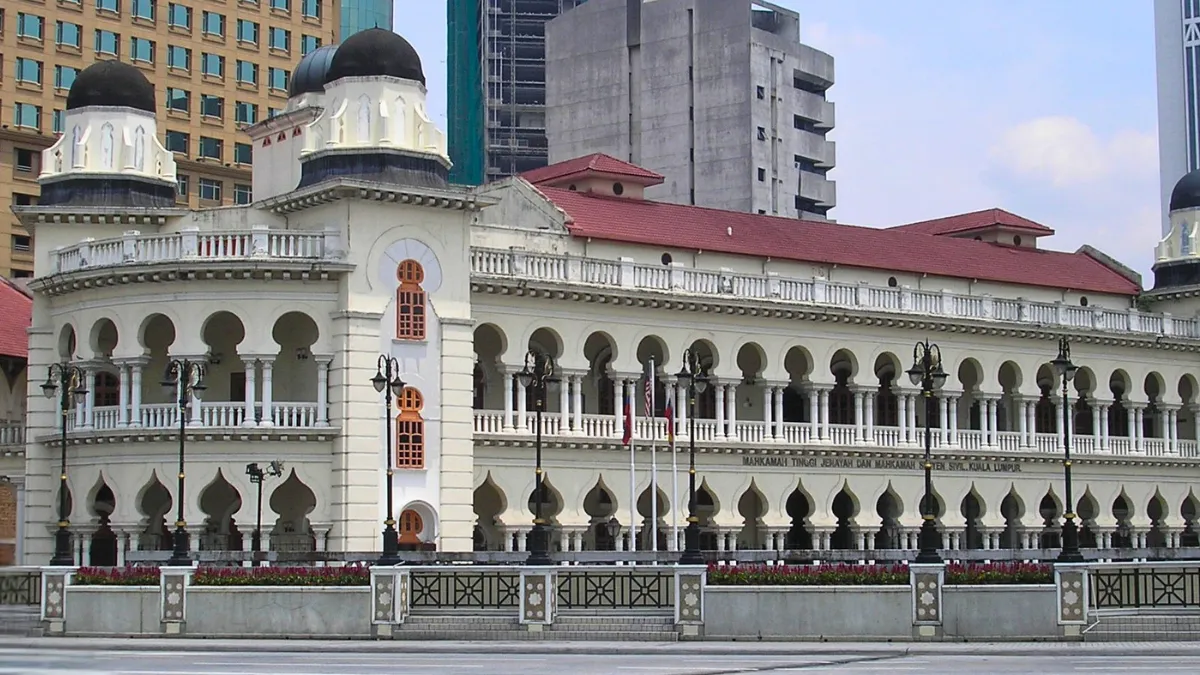
The Old High Court Building (Bangunan Bekas Mahkamah Tinggi)
Historic Indo-Saracenic landmark located on Jalan Raja, near Merdeka Square. Designed by architect A.B. Hubback, it was officially opened in 1915. It first served as the Supreme Court and High Court of the Federated Malay States. Later it housed Sessions and Magistrates Courts before operations moved to Jalan Duta (now Jalan Tuanku Abdul Halim).
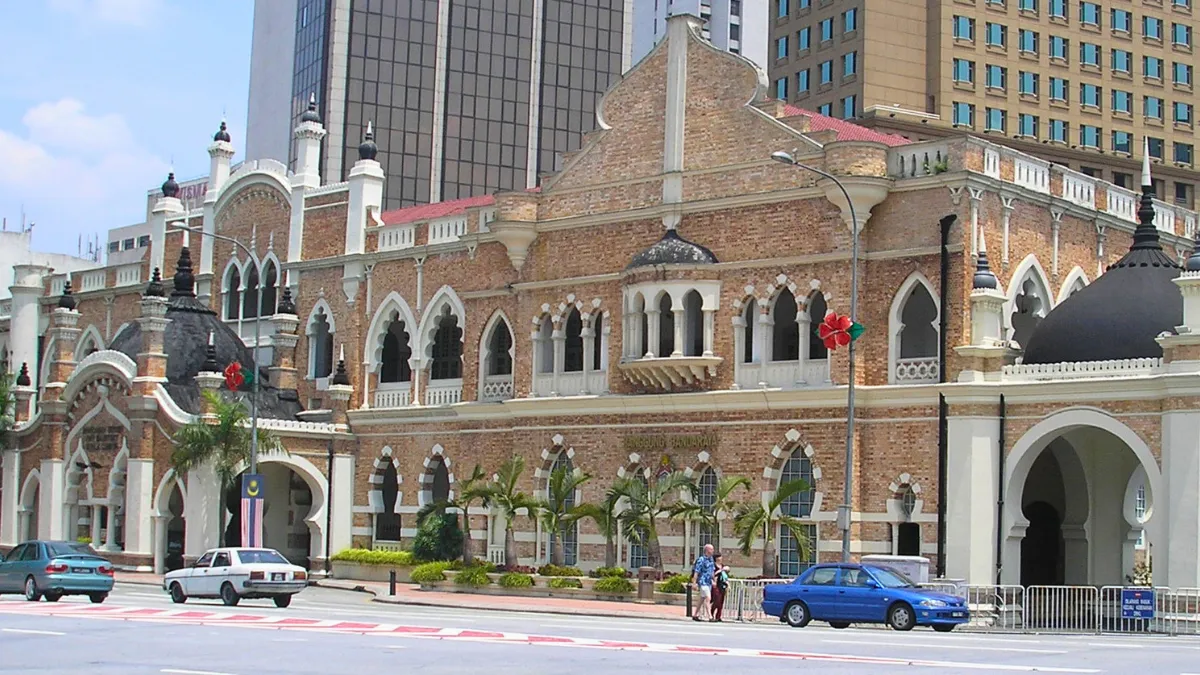
The Panggung Bandaraya (City Theater)
Completed in 1904 and designed by Arthur Benison Hubback, it reflects the early British colonial period when public buildings served both civic and social functions. Originally built as the Kuala Lumpur Town Hall, it also housed the Kuala Lumpur Municipal Council headquarters. Inside, the theater has hosted a variety of performances, from traditional Malay shows to contemporary plays and concerts. Over time, the interior has been adapted to better accommodate stage productions. A major fire in 1992 caused extensive damage, leading to a full restoration. Today, Panggung Bandaraya remains a vital part of Kuala Lumpur’s cultural scene.
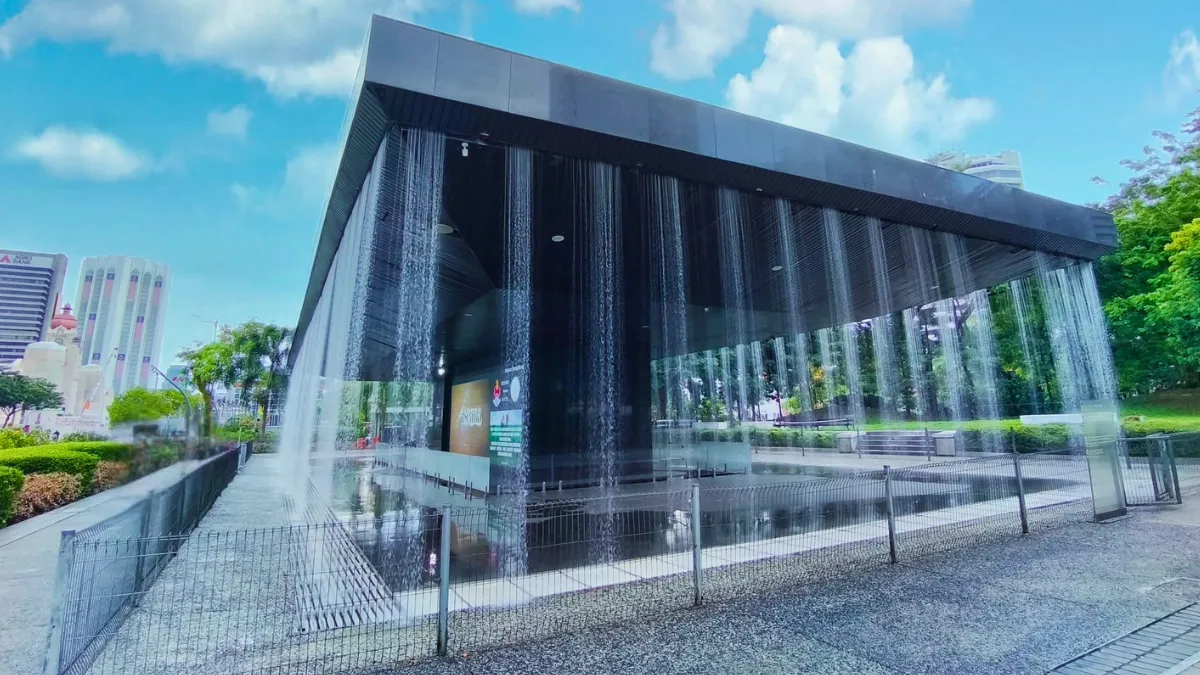
The Jam Detik (Countdown Clock)
The clock was originally built as part of the River of Life project to mark the countdown to Vision 2020, Malaysia’s goal to become a fully developed and modern nation. Today it serves as a decorative public landmark, featuring a lit water curtain and colorful light displays. It is a popular spot along the River of Life Walkway.
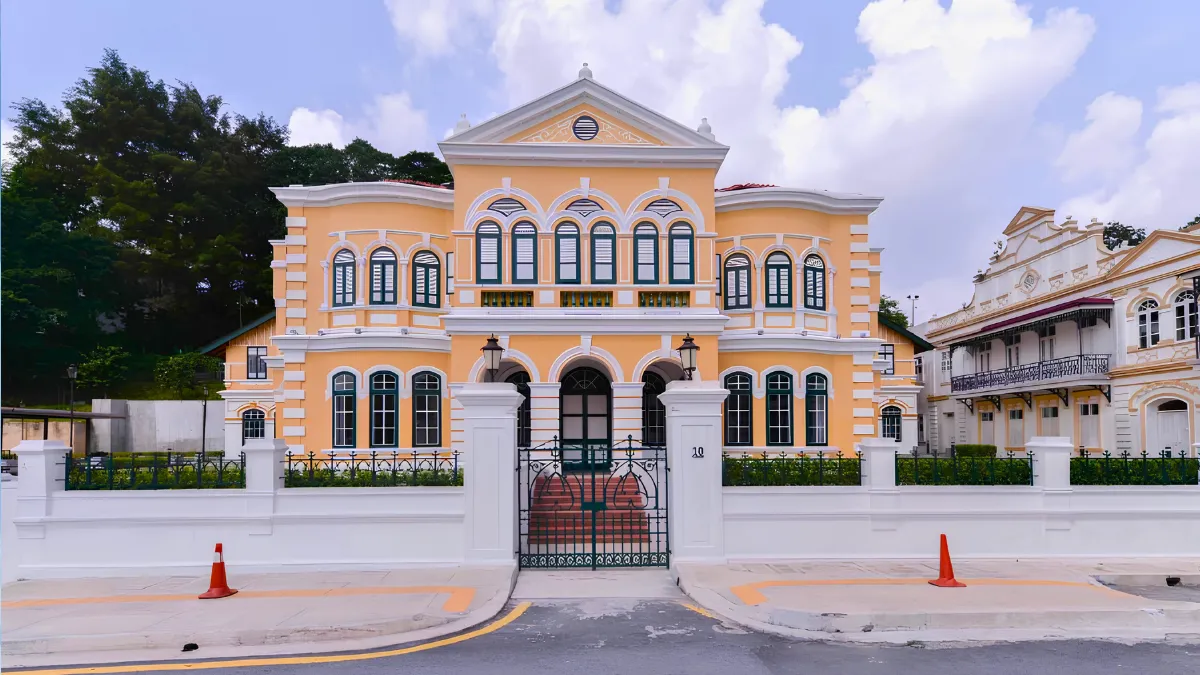
Rumah Tangsi
A historic yellow-and-white colonial mansion in Kuala Lumpur. Originally built as Loke Hall between 1907 and 1909 for tin tycoon Loke Chow Kit, it has since served as a hotel, the Malaysian Institute of Architects headquarters, and a vibrant cultural arts venue. In 2012 it was declared a National Heritage Building and fully restored in 2017 to function as a public cultural and event space.
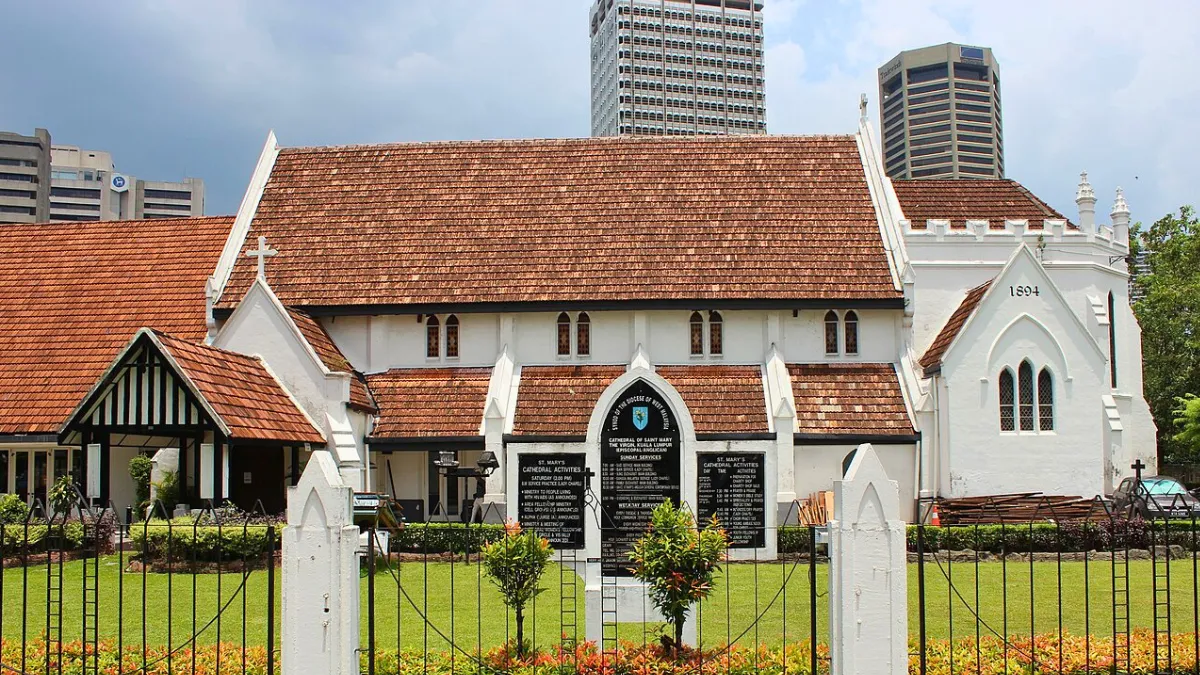
Gereja St. Mary (St. Mary’s Cathedral)
One of KL’s oldest buildings and the cathedral church for the Anglican Diocese of West Malaysia. Originally it was consecrated in 1887 on Bluff Road before the current brick building was completed in 1894–1895. Its architecture was designed by A.C. Norman in a restrained Gothic Revival style featuring pointed arches and louvered windows for tropical ventilation. Inside, it houses a historic Henry Willis pipe organ.
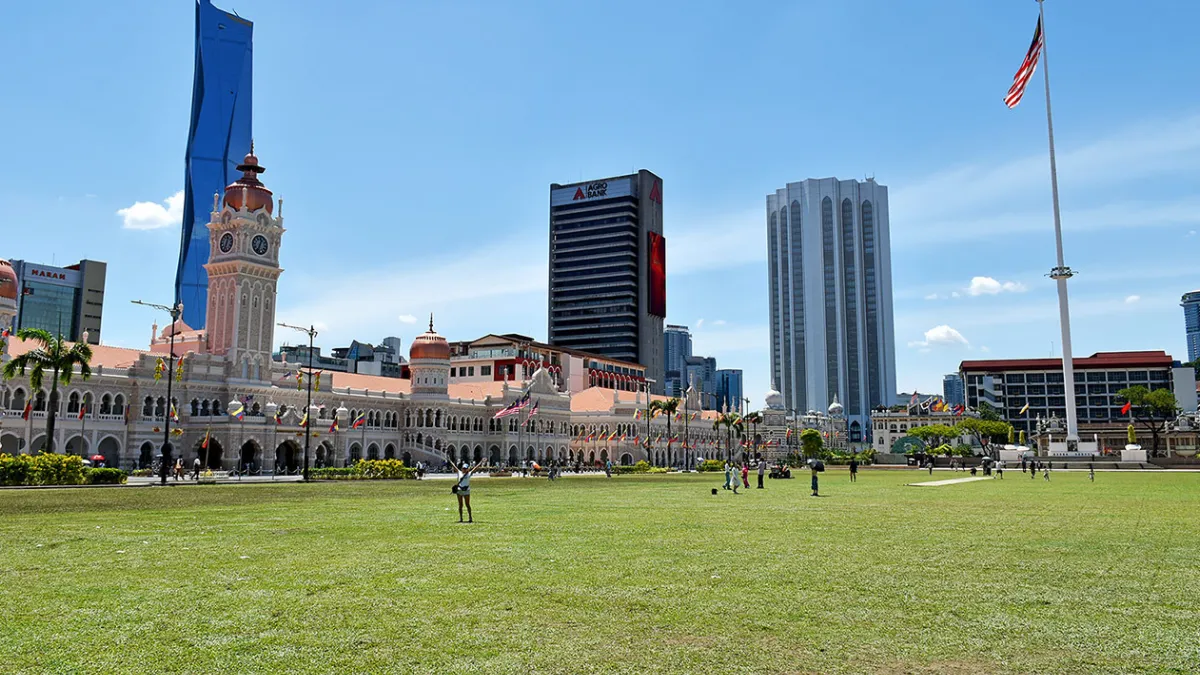
Dataran Merdeka (Independence Square)
Merdeka Square, also known as Dataran Merdeka, is a historic plaza located in Kuala Lumpur, Malaysia. It stands in front of the Sultan Abdul Samad Building and was the site of Malaysia’s Independence Declaration on 31 August 1957. The square is a popular destination for tourists and a gathering place for locals during national celebrations.
It serves as the starting point for the annual Merdeka Parade, which commemorates Malaysia’s independence. The square’s history dates back to the Selangor Civil War of 1867, symbolizing the nation’s struggle for freedom. A large field within the square is bordered by a 100-meter flagpole—the tallest in the world—serving as a reminder that Malaysia was once under British rule and is now an independent nation. Merdeka Square continues to be a place of celebration and reflection, attracting visitors from around the world.
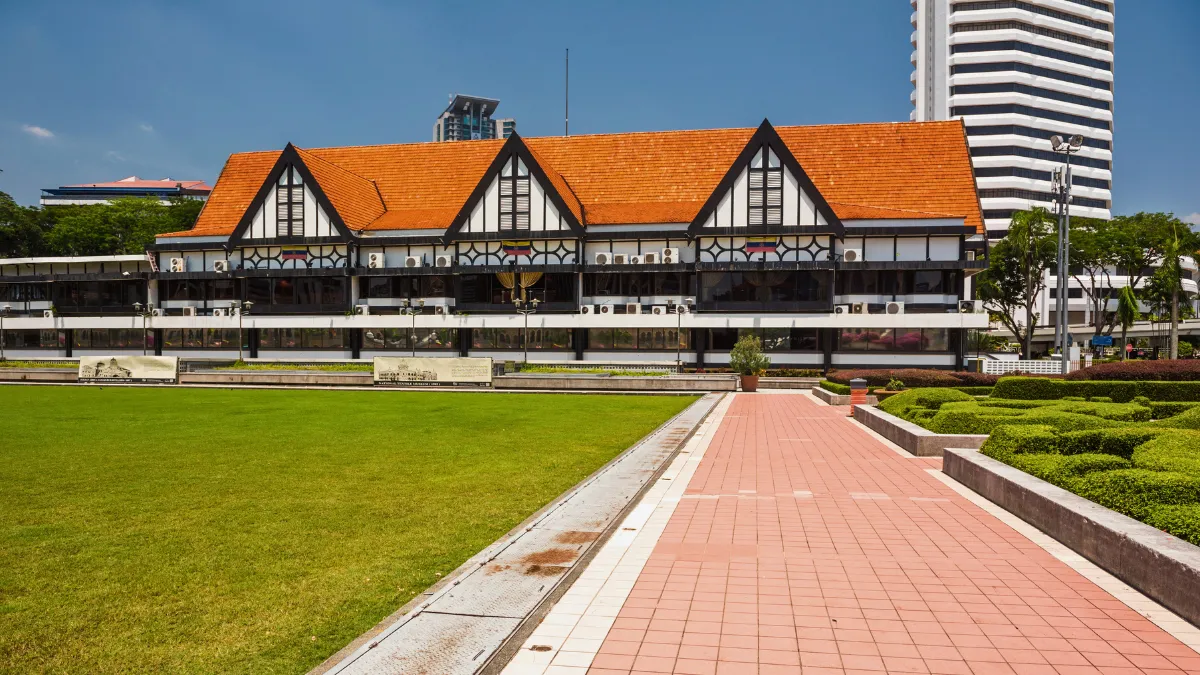
Kelab Di-Raja Selangor (Royal Selangor Club)
The Royal Selangor Club (Kelab Di-Raja Selangor) is a private social and sports club. Founded in 1884 as the Selangor Club by British expatriates during the colonial era, it began as a simple wooden building with an attap roof on the Padang—now Dataran Merdeka—serving as a hub for recreation, billiards, cricket, and social gatherings among colonial officials and planters.
The club later adopted Tudor-style architecture and expanded its role as a venue for entertainment and important discussions, with membership based on educational and social status regardless of race or citizenship.
After Malaysia gained independence in 1957—an event members watched from the club overlooking the historic square—it evolved into a Malaysian institution while preserving its traditions. In 1984, Sultan Salahuddin Abdul Aziz Shah of Selangor granted the club a royal charter, adding the “Royal” prefix and recognizing it as one of Asia’s oldest continuously operating sporting clubs.
The opening of the Kiara Sports Annexe in 1998 by the Yang di-Pertuan Agong further enhanced its sports offerings, including rugby and cricket, along with reciprocal privileges at affiliated clubs worldwide.
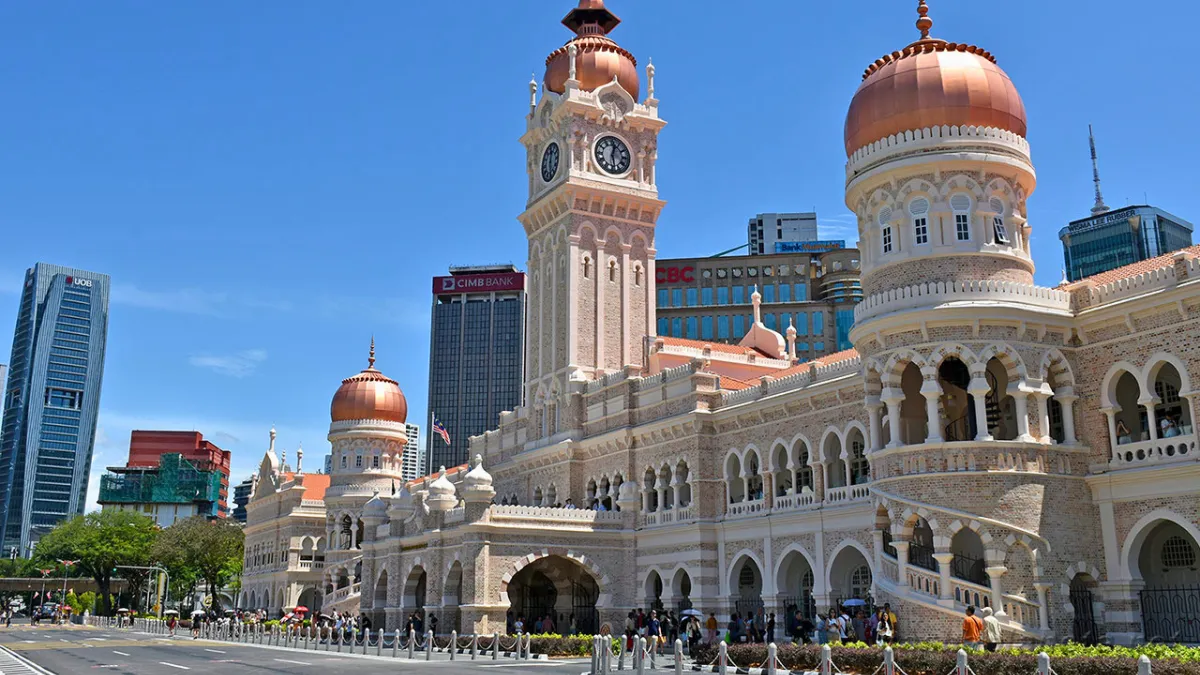
Bangunan Sultan Abdul Samad (Sultan Abdul Samad Building)
The Bangunan Sultan Abdul Samad, or Sultan Abdul Samad Building, is a striking historical landmark located in the heart of Kuala Lumpur, Malaysia. Built in 1897, this iconic structure was originally designed to house British colonial government offices. Its unique architectural style combines Moorish, Mughal, and Western influences, featuring a stunning clock tower, copper domes, and intricate arches that make it a standout feature along Merdeka Square. The building’s rich history and distinctive design make it a must-see stop for anyone exploring the city.
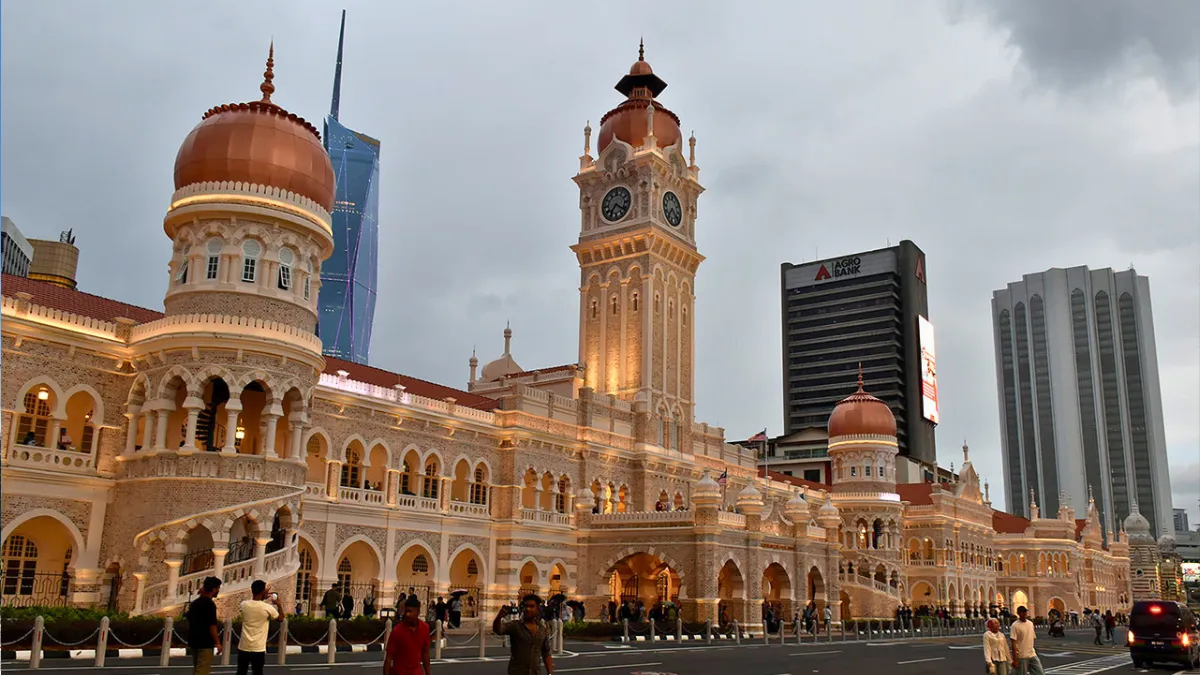
Today, the Sultan Abdul Samad Building stands as a symbol of Malaysia’s heritage and independence. It is often the backdrop for national celebrations and events, reflecting its continued importance in Malaysian culture. As you walk around the area, take in the detailed craftsmanship of the building’s façade and imagine the many historic moments it has witnessed over more than a century.
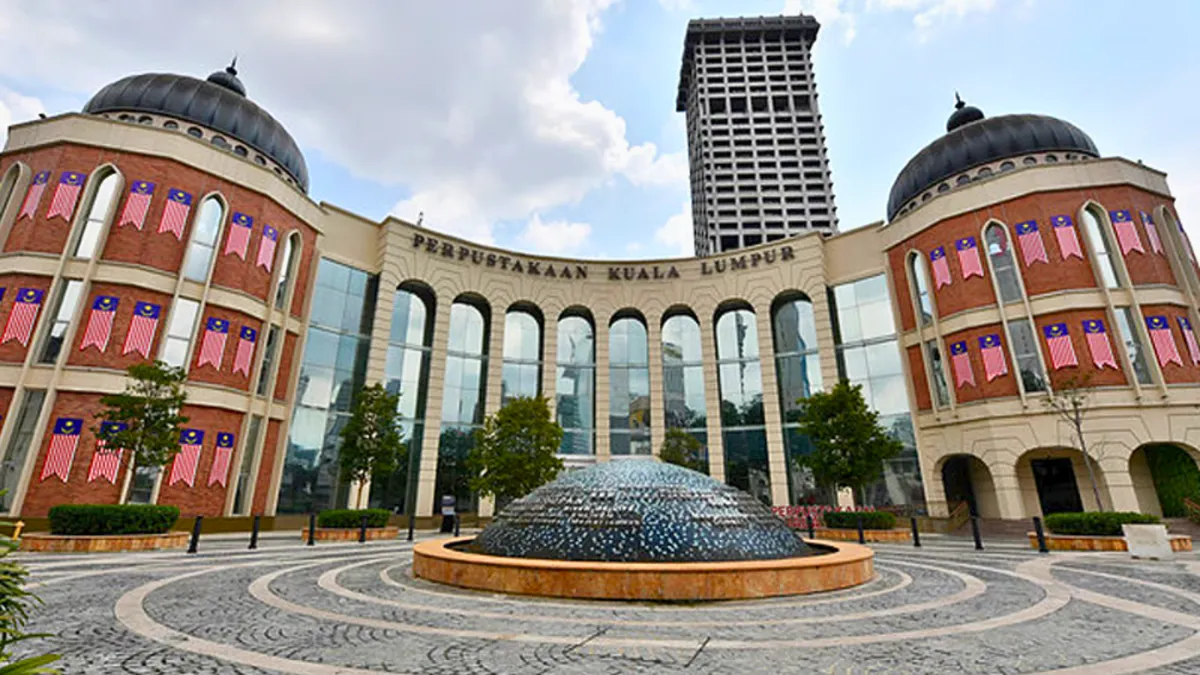
Perpustakaan Kuala Lumpur (Kuala Lumpur Library)
Perpustakaan Kuala Lumpur, located in the heart of the city, is the main public library serving Kuala Lumpur. This is a modern facility built on 1989 and offers a vast collection of books, digital resources, and multimedia materials catering to all ages and interests. It is not only a place for reading and research but also a community hub that hosts educational programs, workshops, and cultural events throughout the year.
Its architecture is significant as it beautifully blends a contemporary design while respecting the surrounding heritage buildings and providers a functional public space, reflecting the city’s commitment to knowledge and community development. Whether you’re a local or a tourist, a visit here offers a peaceful retreat from the bustling city streets.
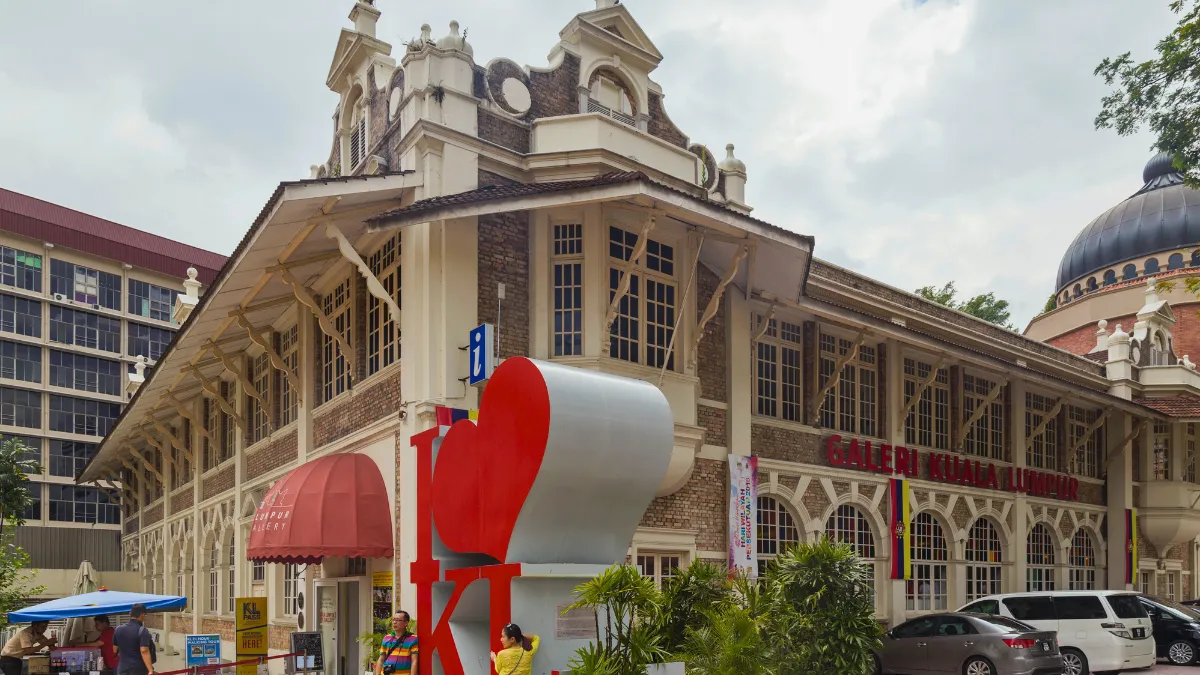
Kuala Lumpur City Gallery
The Kuala Lumpur City Gallery building was constructed in 1898 by government architects A.C. Norman and J. Russell. It has since served as a Government Printing Office, the Metropolitan Postal Security Office, and the Kuala Lumpur Memorial Library before becoming a modern cultural hub.
The KL City Gallery features a colonial-style exterior while boasting a completely modern interior. Alongside displays about old Kuala Lumpur with historical information, it includes models of Little India, the Sultan Abdul Samad Building, and the Kuala Lumpur skyline.
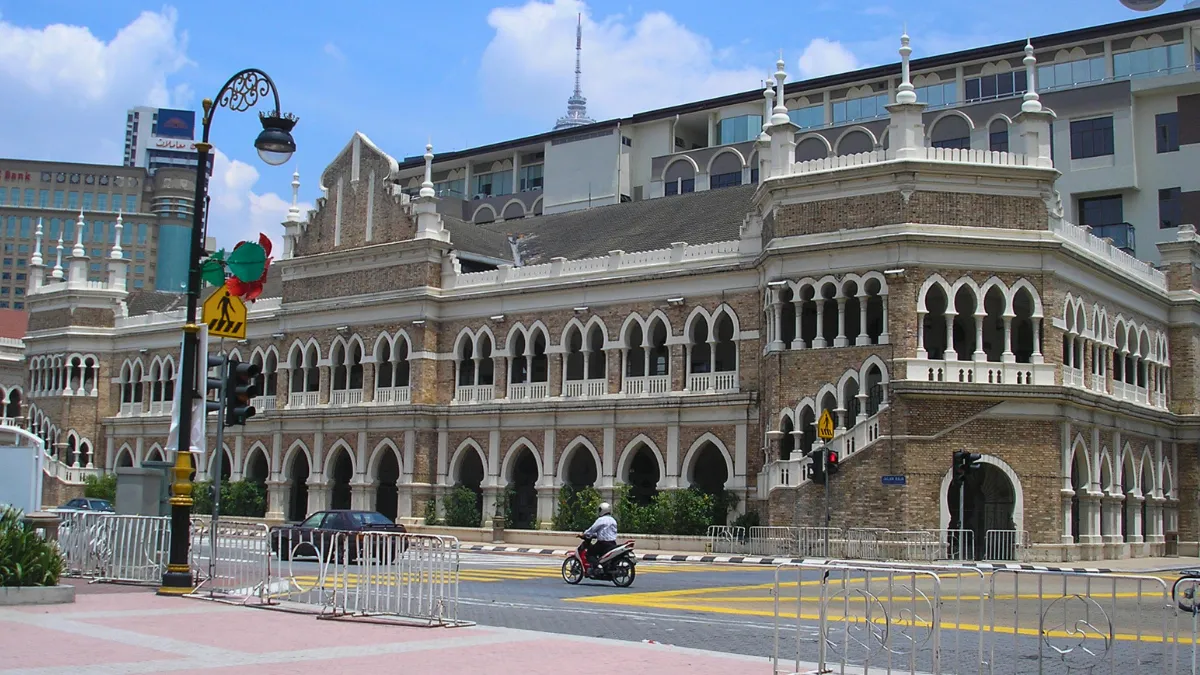
Pejabat Lama Pos Malaysia (Old Post Office)
The Pejabat Lama Pos Malaysia, or the Old Post Office building, is a charming historical landmark nestled in the heart of Kuala Lumpur. Built in 1928, this building is a beautiful example of British colonial architecture, featuring elegant arches, intricate details, and a classic red brick facade that stands out amidst the modern cityscape. Originally serving as the main post office for Kuala Lumpur, it played a crucial role in the city’s communication network during the early 20th century.
As you walk past this iconic structure, imagine the hustle and bustle of postal workers sorting letters and parcels by hand, connecting people across Malaysia long before the digital age. Today, while it no longer functions as a post office, the building remains a treasured piece of Kuala Lumpur’s history, reminding us of the city’s growth from a small tin mining town to a vibrant metropolis. It’s a perfect spot to pause and appreciate the blend of heritage and modernity that defines Kuala Lumpur.
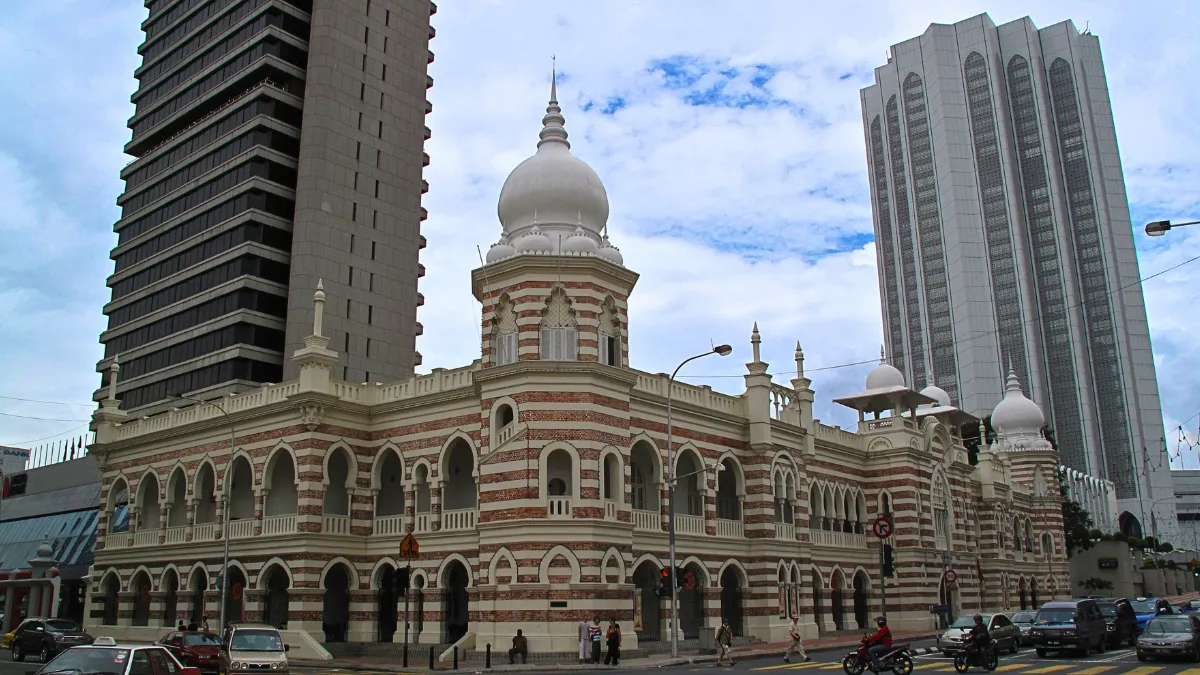
Muzium Tekstil Negara (National Textile Museum)
The Muzium Tekstil Negara, or National Textile Museum, is a fascinating stop that showcases Malaysia’s rich heritage in textile arts. Located near Merdeka Square, the museum is housed in a beautiful colonial-style building that itself reflects the historical charm of the city. Inside, visitors can explore a wide range of traditional fabrics and weaving techniques from various regions of Malaysia, including intricate Batik, Songket, and Tenun textiles. The exhibits not only display the craftsmanship but also tell stories about the cultural significance and the traditional processes behind each piece.
As you walk through the museum, you’ll get a deeper appreciation of how textile art is intertwined with Malaysian identity and daily life. The museum also hosts workshops and demonstrations, offering a hands-on experience with these age-old crafts. It’s a perfect place to learn about the diversity and creativity of Malaysian artisans while enjoying the elegant surroundings of this historic building.
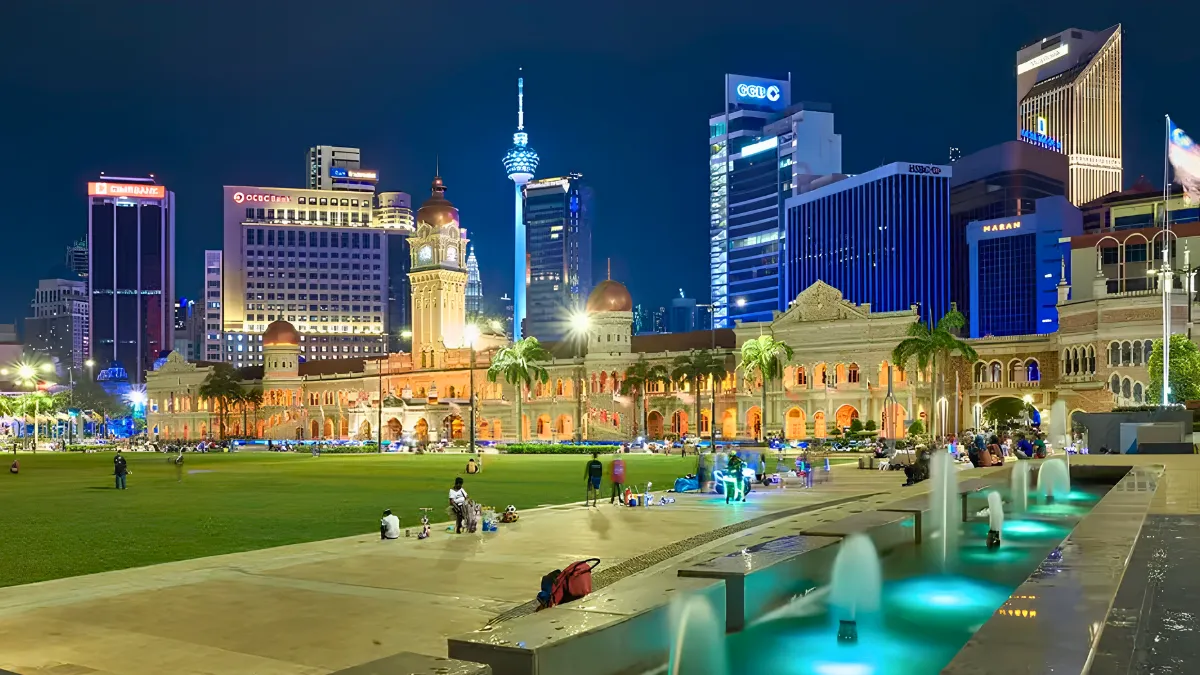
Best time to visit Merdeka Square and the River of Life
Early morning and late afternoon are the best times for most travelers. Midday in Kuala Lumpur can be hot, bright, and tiring because the lawn is exposed and there is limited shade in the central open area. Morning light is softer for photos, while late afternoon usually feels more comfortable for walking to nearby sites.
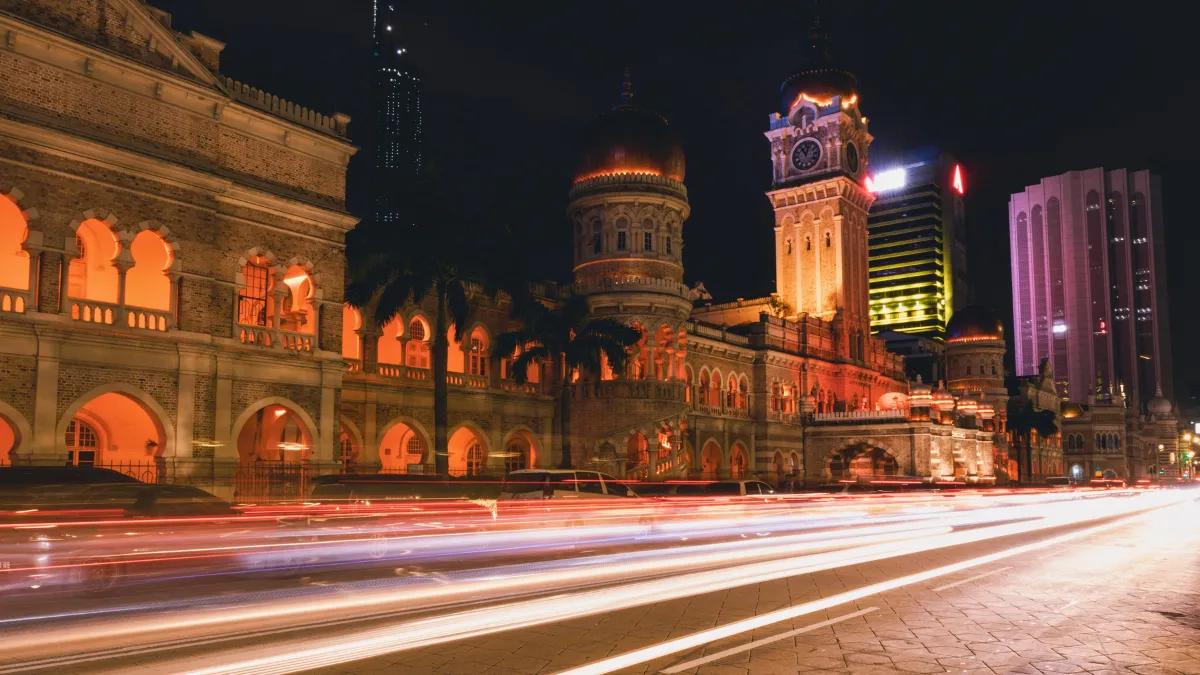
Night visits can also work if you want to see the surrounding buildings lit up. The square has a calmer mood after dark, and the nearby River of Life lighting can be worth adding to the route. That said, the historical details are easier to appreciate in daylight.
How long to spend here
For most people, 30 to 45 minutes is enough for Merdeka square itself. If you include nearby attractions, expect two to four hours. The area rewards a slower visit if you like architecture or city history. If you only want a few photos, the stop can be brief, but that tends to undersell the place.
- Quick stop: 20 to 30 minutes
- Standard visit: 45 to 60 minutes
- With nearby heritage sites: 2 to 4 hours
How to get to Merdeka Square
Merdeka square is centrally located, but station choice matters because different lines leave you with different walking routes. Masjid Jamek is a useful option if you want to combine the visit with the confluence area and older city core. Pasar Seni is another practical station if you plan to continue to Central Market or Chinatown. Some travelers also use ride-hailing for convenience in hot weather.
- By LRT: Masjid Jamek is a common access point
- By MRT or LRT: Pasar Seni works well for a wider heritage walk
- By Grab or taxi: Good for direct drop-off, especially with family or in rain
- On foot: Easy to combine with central heritage neighborhoods
For route planning and station details, check the official Rapid KL network information. If you want current visitor context for the district, the official Malaysia Travel site is a useful reference. For city heritage orientation, Visit Kuala Lumpur can help with nearby attractions and event updates.
Who will enjoy Merdeka Square most?
Travelers who like history, public architecture, and self-guided city walks will get the most from this stop. Families can enjoy it too if they pair it with nearby attractions and keep the visit short. If your main interest is shopping, nightlife, or observation decks, Merdeka Square may feel more like a useful background stop than a headline attraction.
That does not make it less worthwhile. In fact, many people remember places like this more clearly later because they help explain the city. Kuala Lumpur can seem fragmented at first, with modern districts, transport lines, malls, and religious sites pulling attention in different directions. Merdeka Square gives some of that a center.