This itinerary let’s you see the best of Kanchanaburi in 3 days, from it’s rich history to it’s peaceful landscapes. Stroll across the iconic bridge, listen for the whistle of the Death Railway train, and experience the refreshing mist of Erawan Falls. The plan balances moments of quiet reflection with the simple pleasures of riverside meals and temple strolls. You’ll come across weathered war relics and temples glowing in the sunset. You’ll hear the sizzle of woks by the water, smell frangipani and charcoal, feel the spray from waterfalls, and savor grilled river fish alongside coconut ice cream.
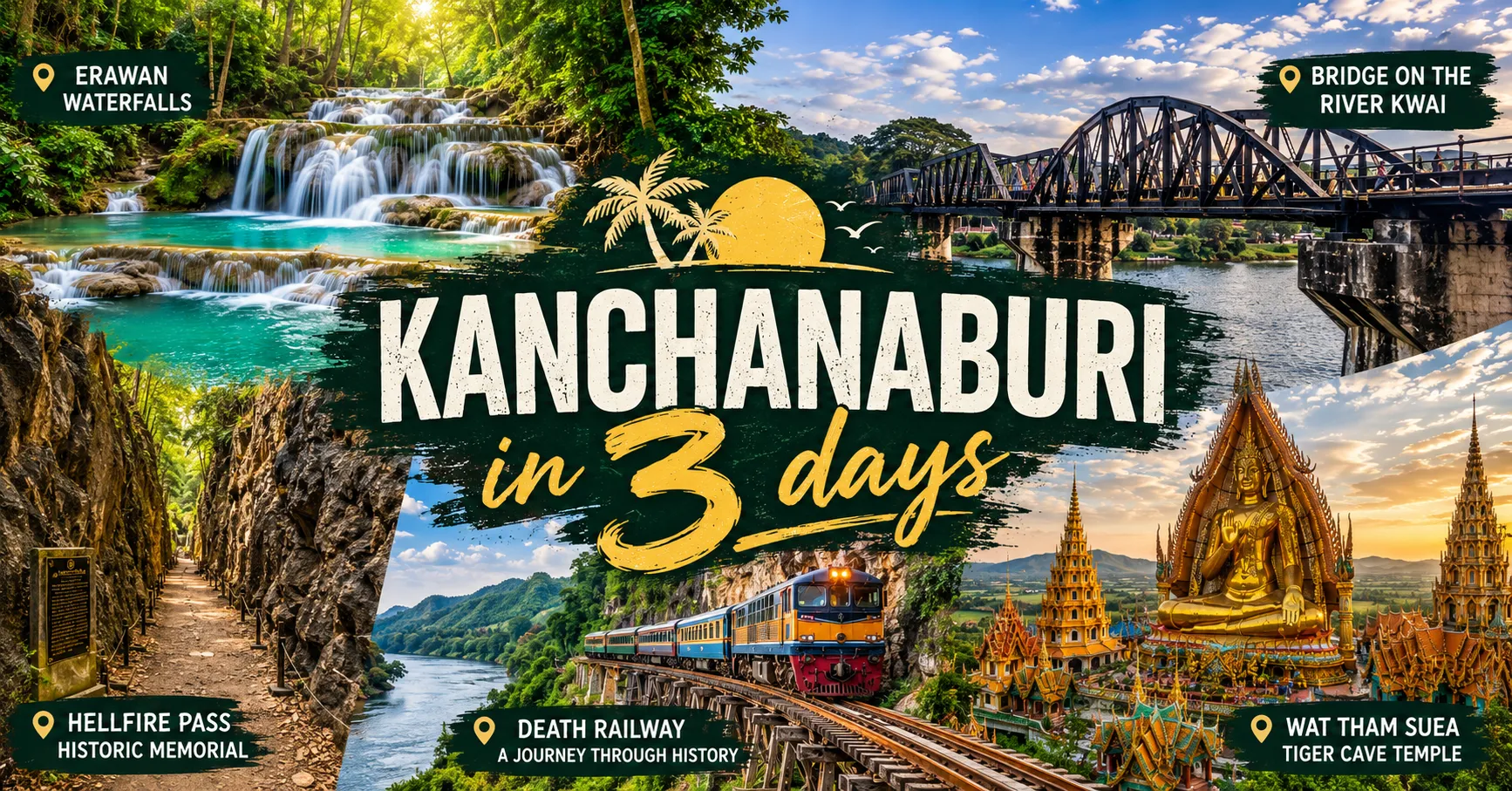
Where Is Kanchanaburi?
Kanchanaburi stretches across a wide river valley in western Thailand, where the Kwai Noi and Kwai Yai rivers meet before flowing south through sugarcane plains, about a three-hour drive west of Bangkok.
The province holds two overlapping identities: one as one of Southeast Asia’s most important wartime memorial sites, and the other as one of Thailand’s most inviting outdoor destinations, featuring tiered mineral-blue waterfalls cascading through limestone gorges within national parks that extend to the Myanmar border.
What To Do In Kanchanaburi in 3 Days
First-time visitors sometimes arrive expecting just the famous bridge but leave amazed by the cool mist that clings to the Tenasserim Hills at dawn and the calls of jungle birds echoing over the river at daybreak. The history here is neither decorative nor distant.
Between 1942 and 1943, Imperial Japanese forces forced over 100,000 Asian laborers and more than 60,000 Allied prisoners of war to build 415 kilometers of railway through terrain the British had once considered impossible to engineer. Kanchanaburi served as the project’s administrative center.
The town’s war cemeteries, the Allied prisoner memorial at Chung kai, and the harsh rock cutting at Hellfire Pass bear the full weight of every name recorded there. Travelers who genuinely engage with that history—walking the track at Konyu Cutting or resting quietly in the Allied War Cemetery where frangipani petals fall on the headstones—leave with an experience no carefully planned itinerary can create.
What makes Kanchanaburi unique is how strongly the landscape resists solemnity. The Kwai River flows fast and green in the wet season, slow and tea-colored in the dry months. Monkeys crash through bamboo groves along the riverbanks. The scent of charcoal smoke and fermented sauces rises from floating kitchens as the sun sets behind the western hills, and by nightfall, the lights strung across houseboats on the water create the town’s most striking scene. Allow yourself more time than you expect, because both the sorrow and the beauty deserve it.
Kanchanaburi In 3 Days Overview
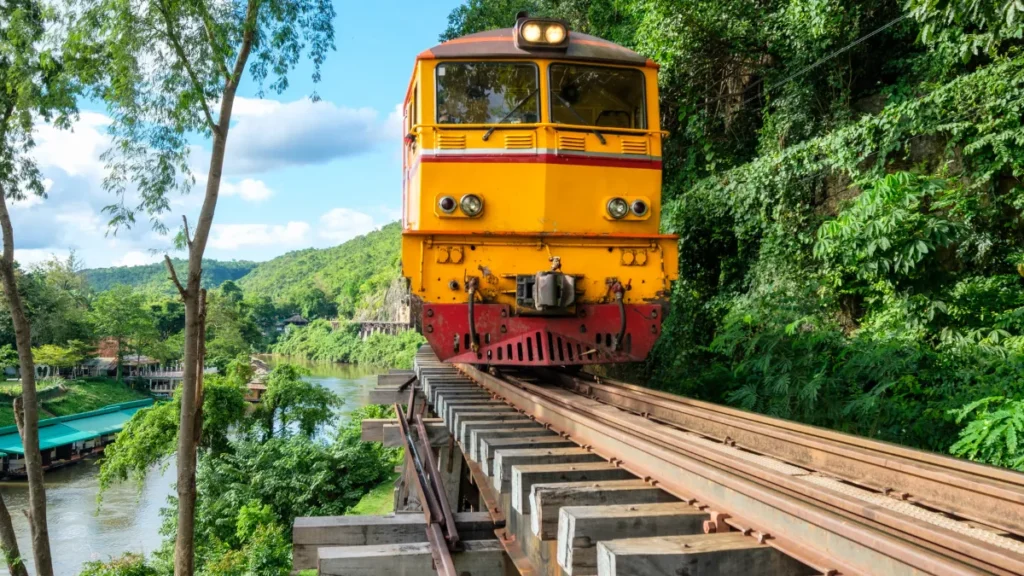
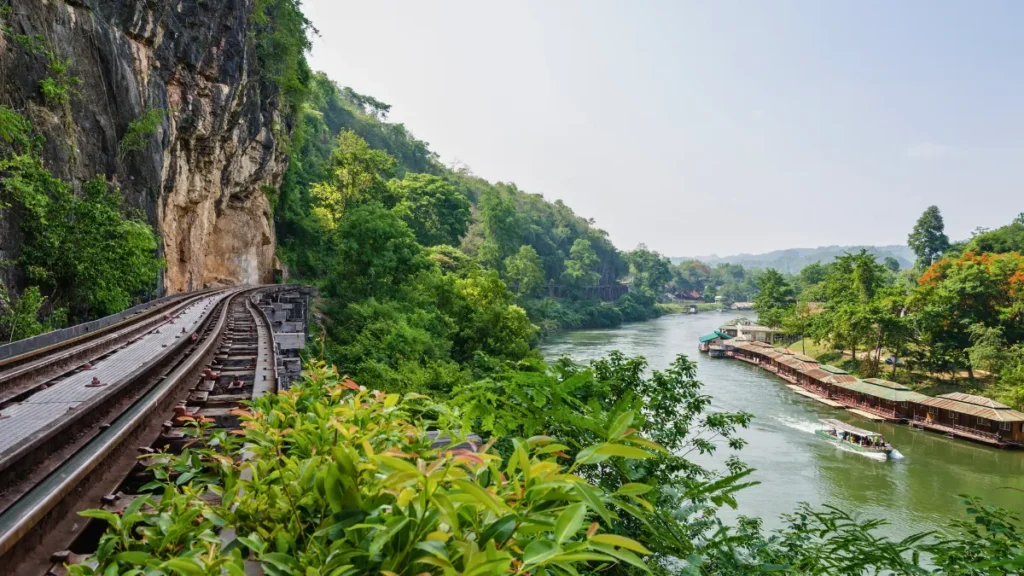
Day 1 – The Bridge and the Railway – Start the day at the famous Bridge on the River Kwai before taking in the JEATH War Museum. After lunch take a local train from Kanchanaburi station. The traincar shakes on tracks prisoners of war and local Thai were forced to cut into cliff faces.
Watch the dense jungle brush past. Hear the horn sound as you cross the Wang Pho viaduct, a wooden trestle spanning a sharp gorge. Finish at Tham Krasae station, a dramatic endi point set inside a cave opening. Then trfavel back to Kanchanaburi for dinner at none of the floating restaurants.
Day 2 – Waterfalls and War Cemeteries – Most of the day is dedicated to Erewan Nation al Park and the jungle hike taking you to the seven tiers of the Erewan waterfalls. These falls are said to be the most beautiful cascading waterfalls in the world.
Then return to Kanchanaburi for some time at the Kanchanaburi War Cemetry and the smaller Chung kai Cemetery. Finally dinner in Kanchanaburi before heading to see Wat Tham Suea (the Tiger Cave Temple) lit up at night.
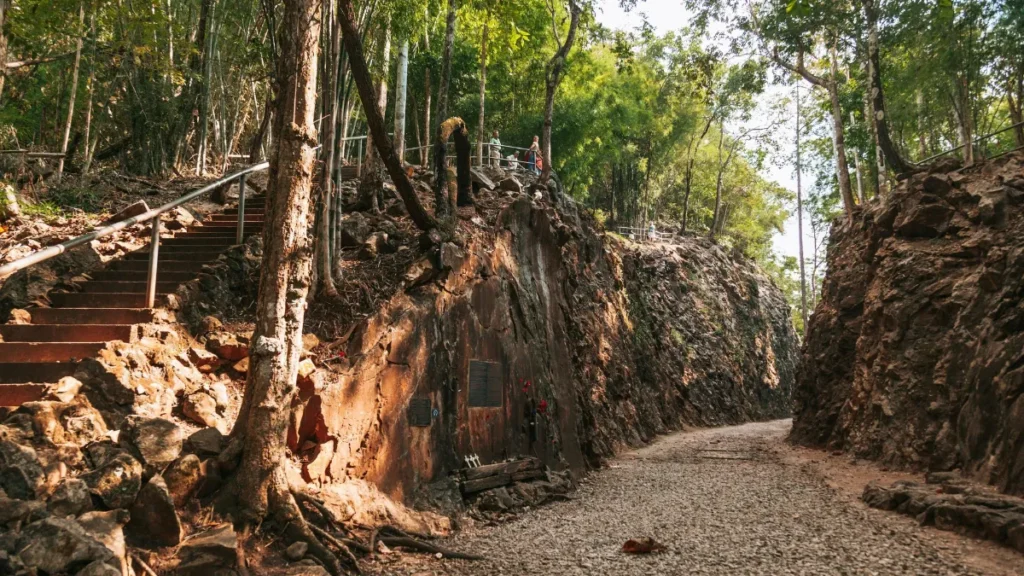
Day 3 – Jungle Tracks and Floating Temples – In the morning head north to the Hellfire Pass Memorial Museums 3 different aspects. Explore the museum exhibits. Afterward, take a walk through the original cutting carved from solid rock. The silence is profound, broken only by the calls of jungle birds. Then take the hike to the Hellfire Pass viewpoint. Notice the heavy atmosphere. Observe the hand-cut rock walls—they serve as a powerful reminder of the workers’ hardships.
Charter a long-tailed boat from a pier close to Sai Yok. The motor hums as you glide past limestone cliffs draped in greenery. Disembark at the golden chedi of Wat Tham Khao Noi perched on the hillside. Visit the nearby Mon tribal village to witness traditional weaving and sample strong local coffee.
Getting Around – To explore Kanchanaburi, you can walk around the town and arrange rides for destinations farther away. For places like Erawan Park and Hellfire Pass, it’s best to hire a songthaew or a private car for the day. For shorter trips between the town’s cemeteries and the bridge, tuk-tuks or rented bikes are convenient options. The Death Railway train operates on a set schedule.
The Bridge on The River Kwai
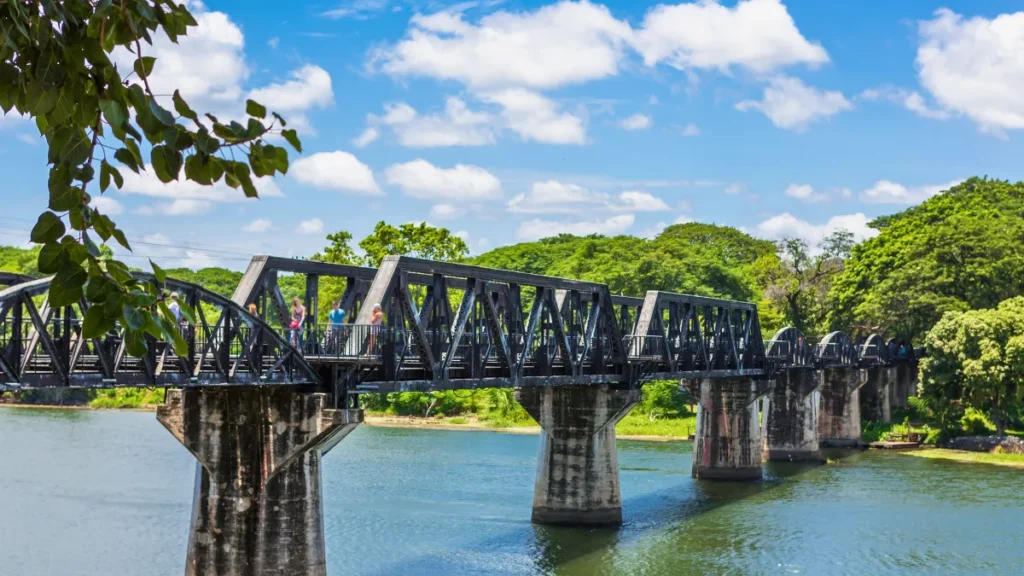
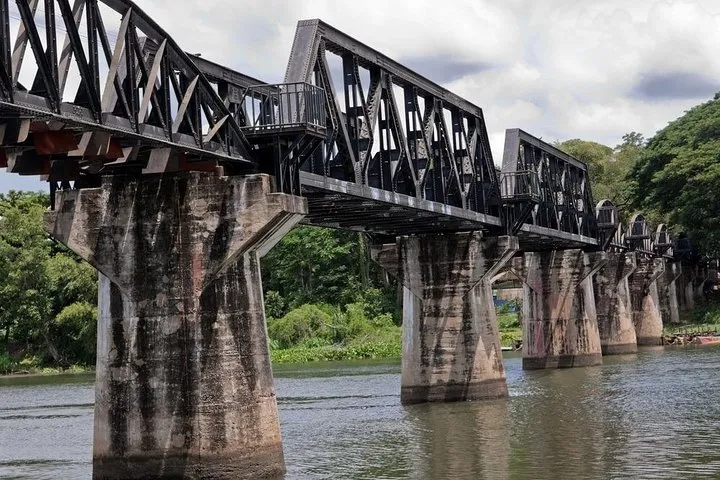
The Bridge on the River Kwai stands low and unassuming over the Khwae Yai River in Kanchanaburi. Its black steel trusses bow slightly in the center, where the original sections were destroyed by Allied bombing in 1945 and later replaced with angular trapezoidal parts you’ll notice immediately. The eight curved spans at each end are original, brought from Java by the Japanese Imperial Army and reassembled by forced labor—Allied prisoners of war and conscripted Asian workers—between 1942 and 1943.
Walking across the wooden planks set between the rails, you’ll feel the bridge gently shift beneath you, hear footsteps clatter metallically, and catch the scent of diesel from the small tourist train that still crosses several times daily. What surprises most visitors is how plain the bridge actually is. The David Lean film turned it into a legendary wooden giant swallowed by jungle, but the real structure is a practical railway bridge about 300 meters long, now surrounded by snack vendors, longtail boats offering river cruises, and a small market selling silver jewelry and Burmese gemstones.
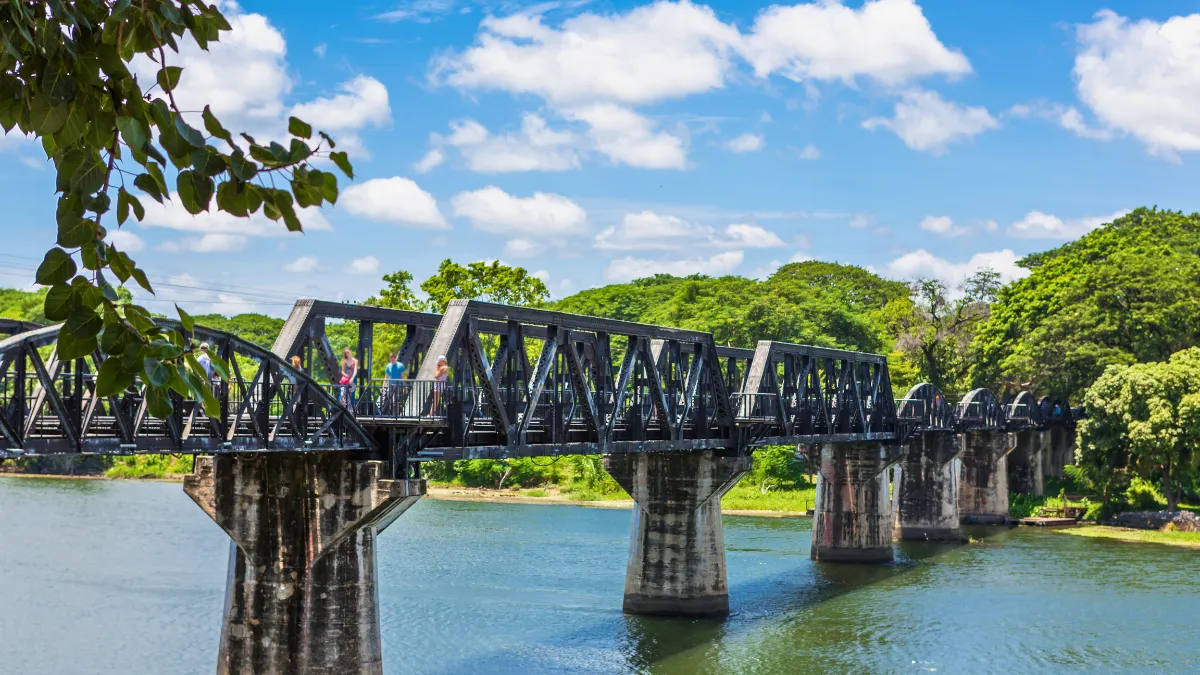
That contrast is part of the story. This unremarkable crossing was part of the 415-kilometer Death Railway linking Thailand to Burma, a project that claimed approximately 12,000 Allied POW lives and an estimated 90,000 Asian laborers in just 16 months of construction.
The atmosphere changes depending on when you visit. Mornings are peaceful, with locals fishing on the banks and sunlight catching river mist. By late afternoon, tour buses from Bangkok arrive, filling the bridge with selfie-takers—an anthropological curiosity that lessens the site’s solemnity.
In the evenings, when the bridge is lit up and riverside restaurants grill fish over charcoal, you’ll experience an unusual but not unpleasant blend of somber history and Thai holiday spirit.
Opening Hours
The bridge on the River Kwai is accessible 24 hours a day and free to walk across, though it tends to be busiest between 10am and 4pm when day-trippers from Bangkok arrive. Around sunrise at about 6am, you can often have the bridge nearly to yourself, with mist still lingering over the water. The nearby JEATH War Museum generally operates from around 8:30am to 4:30pm daily.
Tickets & Pricing
There is no fee to walk the bridge or explore the riverside area. The JEATH War Museum charges a small entrance fee, which is affordable even by Thai standards. The scenic train ride from Kanchanaburi station across the bridge to Nam Tok is inexpensive for foreigners and almost free for Thais, payable in cash at the station.
Best Time to Visit
November through February offers cooler, drier weather, making it the most comfortable time to stand on the exposed steel in direct sunlight. From March to May, temperatures can soar above 38°C, and the metal of the bridge can get as hot as a frying pan. The rainy season from June to October has its own charm, with the river flowing fast and brown and fewer tourists around, although afternoon showers can be heavy.
Suggested Duration
An hour is sufficient to walk the bridge, take photos, and soak in the atmosphere. Adding a visit to the JEATH Museum and a riverside lunch will take up about half a day. Combining this with the Death Railway train ride to Nam Tok makes for a full, rewarding day trip from Kanchanaburi town.
JEATH War Museum
The JEATH War Museum is located on the grounds of Wat Chai Chumphon next to the Mae Klong River in Kanchanaburi. It is housed in a rebuilt bamboo-and-attap hut designed to resemble the prisoner-of-war barracks from the Death Railway period. The acronym represents the six nationalities involved in the history: Japanese, English, American, Australian, Thai, and Dutch (Hollander).
Duck beneath the low thatched eaves, and the temperature drops a few degrees. The air smells of old teak, dust, and river silt. Inside, light filters through gaps in the bamboo, falling on faded sepia photographs, hand-drawn maps, and rusted railway spikes. The silence feels heavier than you’d expect for such a modest building.
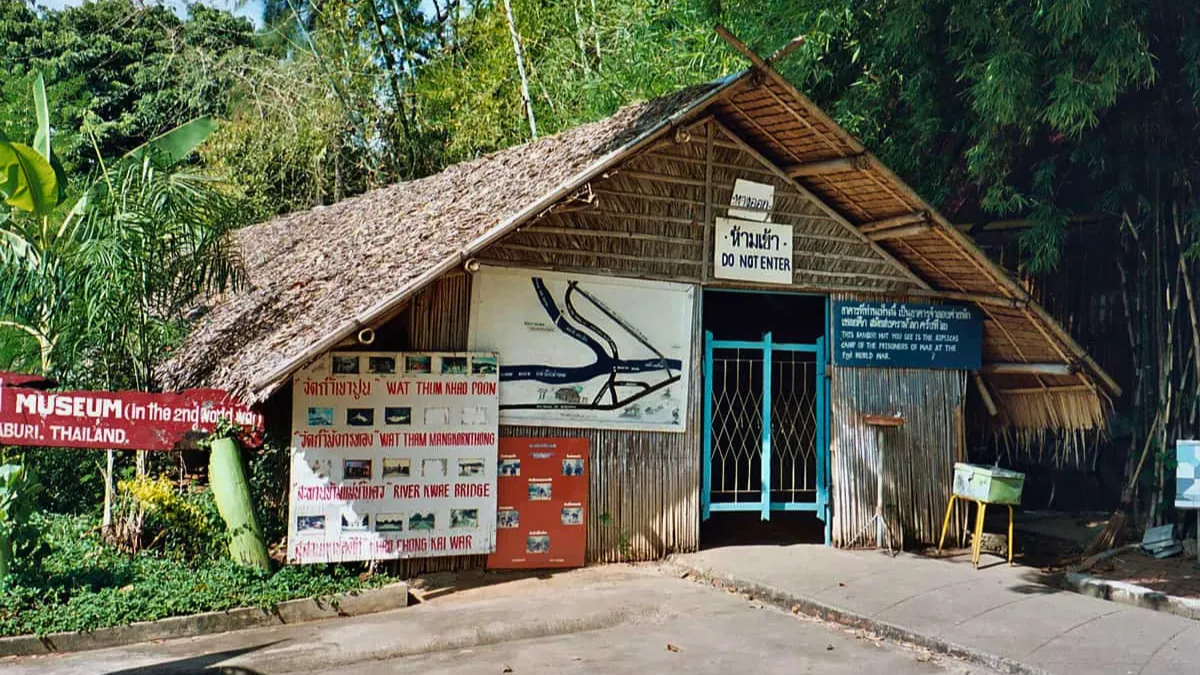
The museum was established in 1977 by Phra Theppanyasuthee, the abbot of Wat Chai Chumphon. Its monastic roots give the place a different feel from the slick, air-conditioned Thailand-Burma Railway Centre across town.
The exhibits are intimate: yellowing letters, a battered mess tin, drawings made by POWs from memory after the war. Handwritten labels in faded marker, sometimes in slightly imperfect English, add to the rawness that hits harder than polished displays. You stand where the men who built the bridge were marched past. The museum ensures you don’t forget that.
It’s small—about forty minutes if you read everything carefully—but worth a visit before or after walking the bridge, which lies about a kilometre upstream. Some find it underwhelming compared to the more academic museum nearby; I say it earns its place because it doesn’t try to compete.
Opening Hours
The site is open daily, generally from around 8:30 in the morning until 4:30 in the afternoon. Since it’s managed by the temple, it rarely closes on Thai holidays. Be sure to arrive before 4pm. No need to rush.
Tickets & Pricing
Admission is affordable. Visitors make a small cash donation at a wooden counter near the entrance. There’s no option for online booking, no queues, and no ticket machines. Just drop your notes, take a paper stub, and enter. Bring small Thai baht bills, as change for larger notes isn’t always available.
Best Time to Visit
The quietest hours are between 9 and 11 in the morning, when sunlight filters through bamboo gaps by the river. Tour buses are still leaving Bangkok at this time. Mid-afternoon tends to get sticky, especially in the hot season. Visiting early means cooler air and fewer crowds, although you won’t catch the golden light on the river that appears late in the day.
Suggested Duration
Plan to spend 30 to 45 minutes if you want to read the captions. The site is intentionally compact, and lingering longer can lessen the impact. Combine your visit with a walk across the bridge and a stop at the war cemetery for a half-day experience that adds meaningful context.
Erewan National Park and Waterfalls
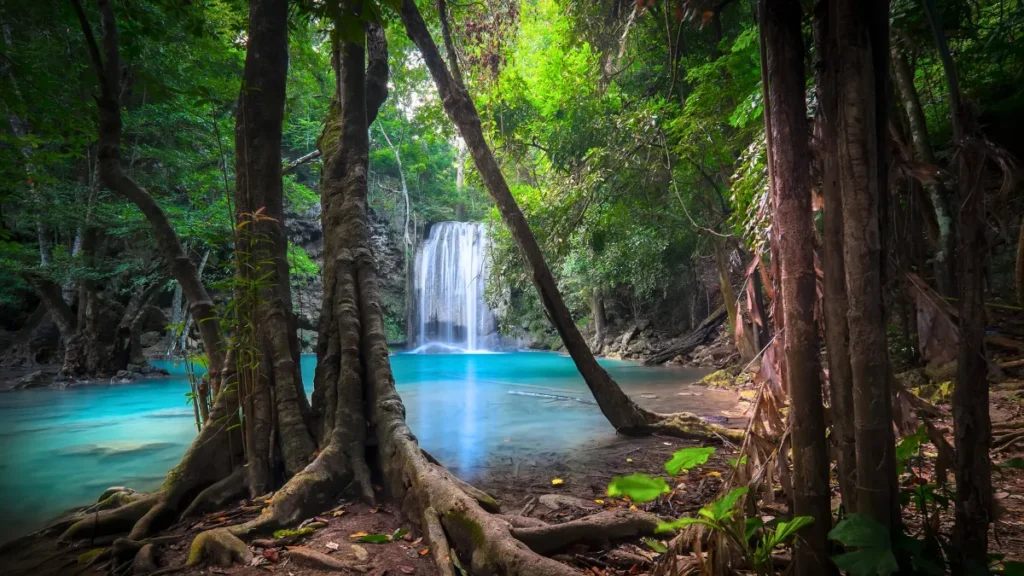
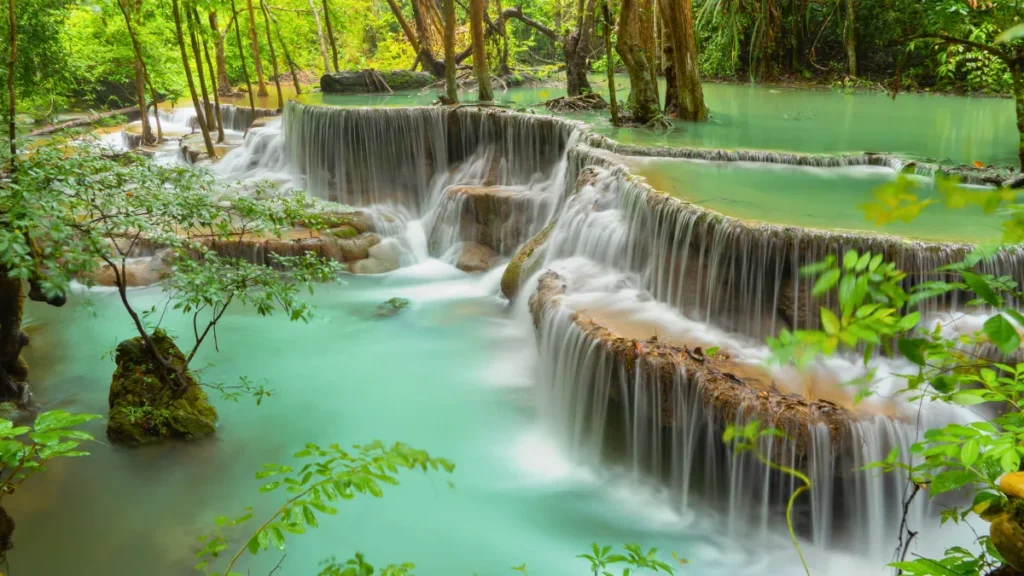
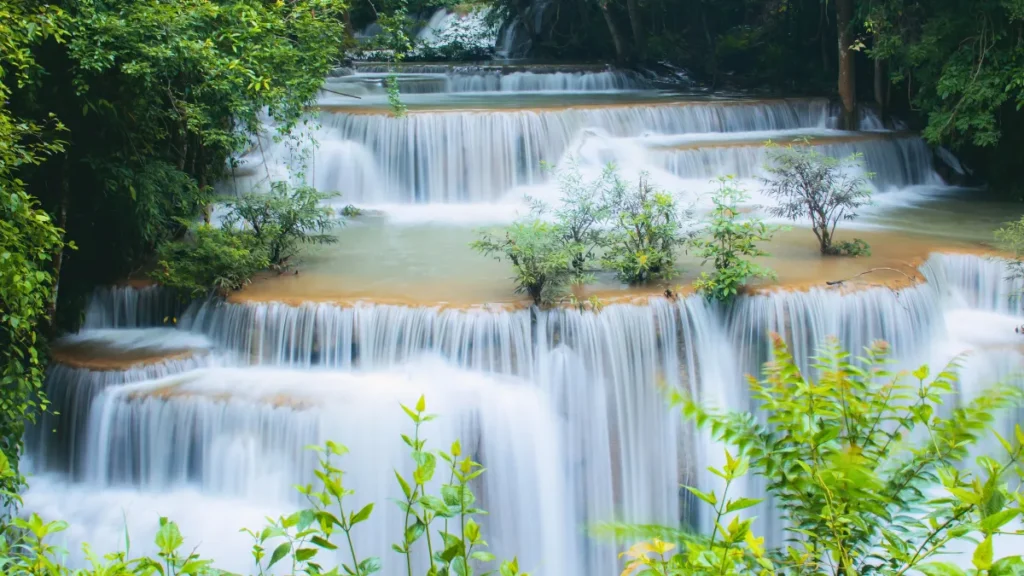
Erawan National Park covers 550 square kilometers in the Tenasserim Hills of western Thailand. The first thing you’ll notice is the scent. Limestone water blends with the humid jungle air, cool and mineral-rich. The smell of decaying leaves drifts beneath your feet. The main attraction is a seven-tiered waterfall cascading through emerald-green pools, each one more untamed than the last.
Erawan is much more than a waterfall. Gibbons call out at dawn. Macaques eye your backpack. Dolomitic limestone has been sculpted by water into forms that resemble the three-headed elephant from Hindu mythology. The trail unfolds gradually.
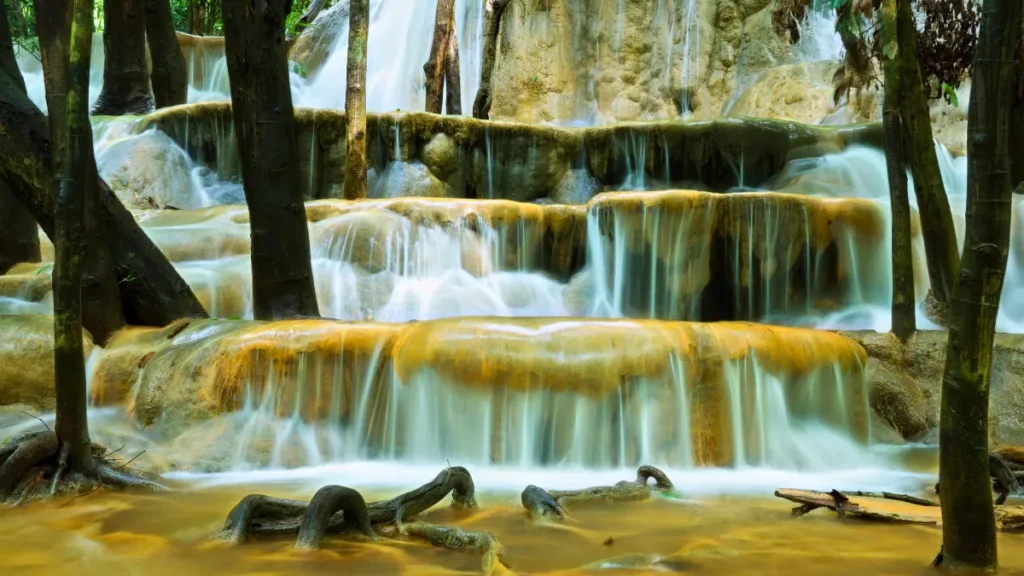
The first and second tiers are broad, easy to access, and crowded with day visitors from Kanchanaburi. Families wade in the water. Fish nibble at their ankles. By the fourth tier, the crowds thin out. The path becomes rougher. You hear the waterfalls more than you see them.
Those who continue to the seventh tier are rewarded. Milky turquoise water, a faint jade tea hue. It’s thirty-two degrees outside, yet the pool remains cold. The forest is just as important as the falls. Deciduous patches blend with evergreen stretches. Cave systems weave through the limestone. Protection began in 1975, and peace is evident. Wildlife is abundant. Trees grow thick, with some trunks so wide they take three people to encircle them.
The Seven Levels of Erawan Falls
Each level has its own character. The first level is the family pool—shallow, broad, and gentle. The second level features a natural rock slide, smoothed over time by locals. Levels three and four offer the most beautiful swimming spots, with travertine ledges where you can sit as water flows around you. Level five gets more challenging with slippery rocks and rope climbs. Level seven is the ultimate reward: a milky aquamarine pool surrounded by waterfalls. If you squint, you can make out the shape of an elephant’s head.
Phra That Cave
Located roughly 12 kilometers from the falls entrance, this limestone cave resembles a naturally cooled cathedral. The humidity decreases, and stalactites drip steadily. Guides often give them names inspired by Buddhist symbols, such as the curtain, the throne, and the elephant. Be sure to bring a headlamp, as the park’s lighting is faint and creates a moody atmosphere. You’ll hear mineral water tapping against the rock and bats fluttering above.
Mi Cave (Tham Mi)
Mi Cave is smaller and less frequented than Phra That and is located close to the park headquarters. It offers a quieter glimpse of the same limestone formations. The chamber opens into a tall, vaulted space where beams of light highlight floating dust particles. It’s worth a 30-minute detour and ideal for those curious about caving but not fully dedicated.
The Fish at Tier Two
Garra rufa fish roam freely in the pools. They are the same type used in pedicure spas. Step in. Remain still. They’ll approach. Soft nibbles. Ticklish sensations. Children giggle. Adults relax deeply. The fish favor the middle levels where the water flows gently.
The Forest Trail Linking the Tiers
The trail connecting the tiers is an attraction in its own right. Many hurry through it without stopping. Look up. Cannonball trees grow fruit directly on their trunks. Strangler figs envelop their host trees completely. Dusky langurs watch you from the treetops. Early in the morning, before the buses come, you might catch sight of a great hornbill. Its wingbeats resemble the sound of wet towels slapping the air.
Erewan National Park Opening Hours
The park gates open daily at 8am. You must begin the trail by 3:30pm, as rangers prevent access beyond tier two after that time. The upper tiers close at 4pm, and everyone must leave before dusk. Phra That Cave has shorter hours, open from 9am to 4pm. The park is open all year round, but heavy rain can close trails, with June through October being the most dangerous period.
Tickets & Pricing
Foreign visitors pay a higher entrance fee than Thai nationals, which is standard for Thailand’s protected areas. Children pay about half the price. There is an extra fee for parking cars or motorbikes. Payment is cash only at the gate since there are no card readers. The ATM at the entrance is unreliable, so it’s best to bring Thai baht from Kanchanaburi.
Best Time to Visit
November to February offers the most dependable weather, with cool mornings and low humidity. Pools are full from the previous rainy season. March and April can be very hot, with memorable water but tough climbs between tiers. May through October is the rainy season, with fewer crowds, roaring waterfalls, slippery paths, and some trail closures. April can be the hottest month; start early or head to the upper tiers where there is more shade.
Suggested Duration
Most visitors spend four to six hours exploring the falls—two hours to climb if you swim at each tier, one hour at the top, then return the same day. Add two more hours if visiting Phra That Cave. Day-trippers from Bangkok often end up running late; if you’re coming from the capital, consider staying overnight in Kanchanaburi for a more relaxed visit with extra time.
Hellfire Pass
The Hellfire Pass Interpretive Centre in Kanchanaburi, Thailand, honors the Allied prisoners of war and rōmusha who were compelled by the Imperial Japanese Army to build the Burma–Thailand Railway during World War II. Through a carefully selected collection of personal accounts, historical displays, and audio-guided walking paths, the Centre keeps alive the memory of those who faced severe hardship and pays tribute to the tens of thousands who died from forced labor, disease, malnutrition, and violence.
The walking trails trace original parts of the railway carved through thick jungle and solid rock—most notably Hellfire Pass, where rōmusha toiled day and night under harsh conditions. This site stands not only as a memorial but also as a powerful reminder of the human toll of war and the resilience of the human spirit.
Hellfire Pass was a key section of the Burma-Thailand Railway. The railway was constructed to establish a land connection between Burma and Thailand, avoiding dangerous sea routes threatened by Allied attacks. This path was created to support the Imperial Japanese Army’s operations in Burma, enabling the safe movement of troops, weapons, and supplies between Thailand and Burma.
Construction on the part of the railway that includes Hellfire Pass began on Anzac Day 1943, deep in dense jungle. Massive amounts of rock had to be removed to lay the tracks. Allied prisoners of war and rōmusha were forced to carry out this grueling labor.
Lacking proper tools, the men had to rely on hammers and chisels to break through solid rock. Their suffering was worsened by insufficient food, harsh and brutal treatment, and the spread of disease. Prisoners and rōmusha often worked up to 18 hours a day under constant threat of violence.
The name ‘Hellfire Pass’ comes from the eerie sight of sick, starving men laboring by torchlight, which looked like a scene from hell. The railway through Hellfire Pass was completed rapidly but at an enormous human cost. The terrible conditions and brutal treatment led to immense suffering and many deaths during the construction of the Burma-Thailand Railway.
Kanchanaburi War Cemetery
Kanchanaburi War Cemetery is located on Saeng Chuto Road in the heart of town, featuring a perfectly green rectangular lawn surrounded by frangipani trees and the gentle hum of motorbikes passing by the entrance.
There are 6,982 graves arranged in neat rows, each marked by a bronze plaque set into a low stone block instead of the typical upright headstones. This design creates a quieter, more horizontal feel, almost inviting visitors to look down and read every name.
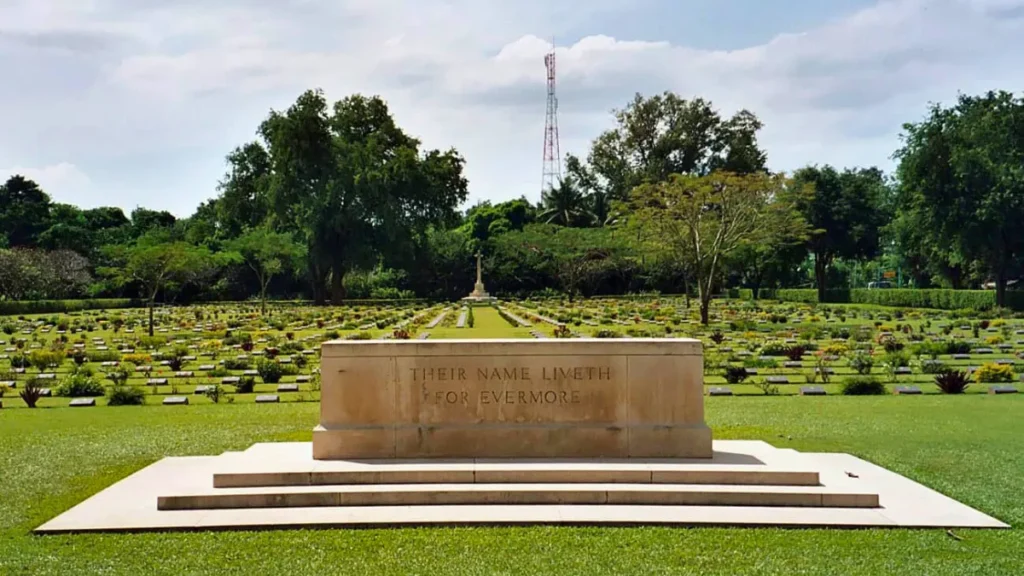
The majority of those buried here are Commonwealth prisoners of war who died while constructing the Thailand-Burma Railway in 1942 and 1943, along with Dutch servicemen from the Netherlands East Indies. American POWs who died here were sent back home after the war, which is why they are not among the graves.
The grounds are meticulously maintained with the same dedication the Commonwealth War Graves Commission applies to its sites worldwide. The lawns are trimmed to a putting-green smoothness, the bronze plaques polished to catch the morning sun, and by late afternoon, the cross of sacrifice at the center casts a long shadow over the grass.
You’ll hear the soft scrape of a gardener’s broom on stone, an occasional train whistle from the nearby station, and little else. It’s one of those places where the usual noise of Kanchanaburi seems to respectfully fade away at the gate.
What often surprises visitors is the age on the plaques: twenty-two, nineteen, twenty-four. The inscriptions chosen by families back home in 1946 or 1947—lines from hymns, snippets of poetry, or simple messages from a mother in Yorkshire or a wife in Adelaide—are etched in bronze.
You can walk through the entire cemetery in twenty minutes or take two hours and still only see half of it. Most people find themselves slowing down without even realizing it.
Tips & Advice
- Dress modestly out of respect, even though it’s not mandatory. Covered shoulders and knees feel appropriate and you’ll be more comfortable in the sun, too.
- If you’re looking for a particular grave, the register at the entrance is organized by name, regiment, and nationality. Be sure to note down the plot, row, and grave number before heading into the rows, or you might end up wandering for a while.
- Photography is allowed, but avoid taking selfies in front of marked graves. Wide shots of the rows or the cross convey a very different tone than posed photos beside someone’s loved one.
- Bring water and a hat during the hot season (March to May), as the central lawn offers almost no shade. Kanchanaburi is noticeably hotter than Bangkok.
- If you plan to visit the cemetery and the Railway Centre across the street, start with the museum first. The names on the plaques mean much more once you’ve seen the conditions in which they died.
- Anzac Day (April 25th) features a dawn service with Australian and New Zealand officials present—worth attending if your visit coincides. Arrive by 5 a.m., as the grounds fill up quickly.
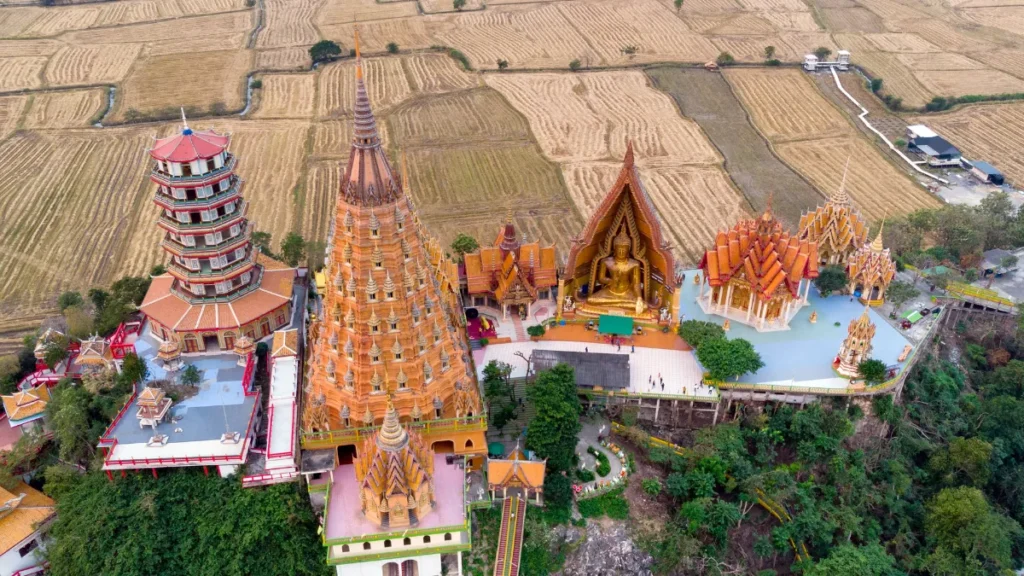
Wat Tham Suea
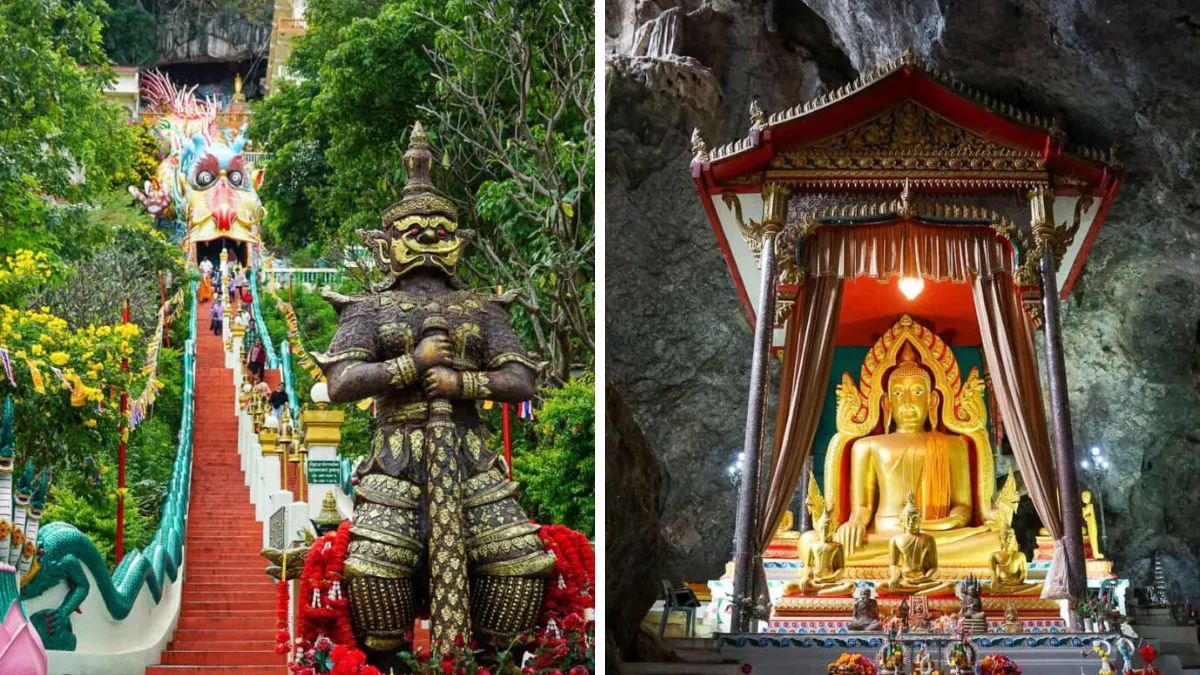
Wat Tham Suea is a well-known mountaintop Buddhist temple in Kanchanaburi, famous for its giant golden Buddha statue, a massive nine-story pagoda, and sweeping views of the surrounding rice fields.
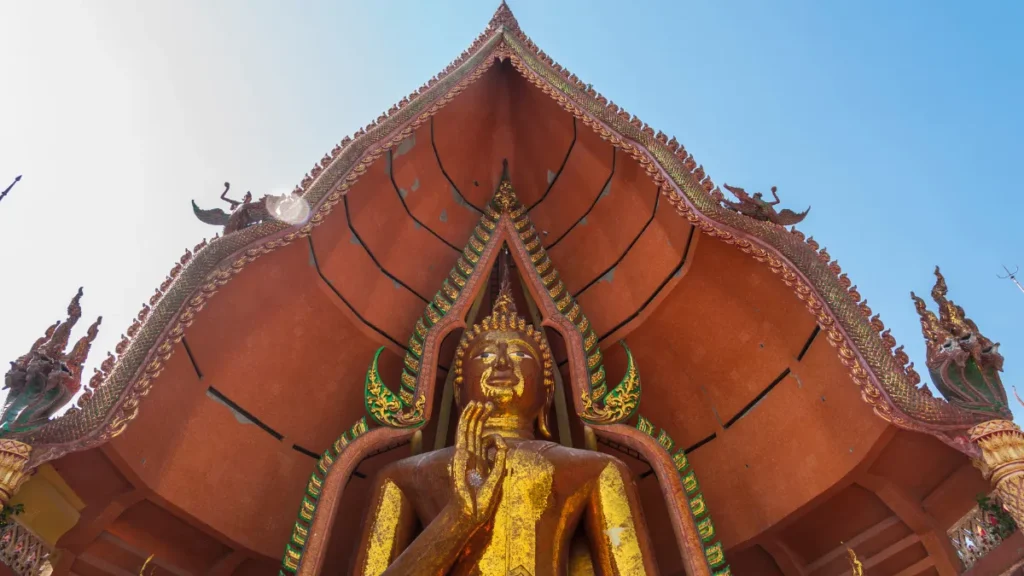
Key Highlights:
- Luang Por Chin Prathanporn: An 18-meter-tall (about 59 feet) seated golden Buddha adorned with a stunning mosaic and sheltered by a large Naga snake hood.
- Chedi Kaew Prasat: A tall, eight-sided, terracotta-orange pagoda with nine levels that visitors can climb to enjoy 360-degree panoramic views.
- The Tiger Cave: A small lower cave on the grounds containing shrines and Buddha statues.
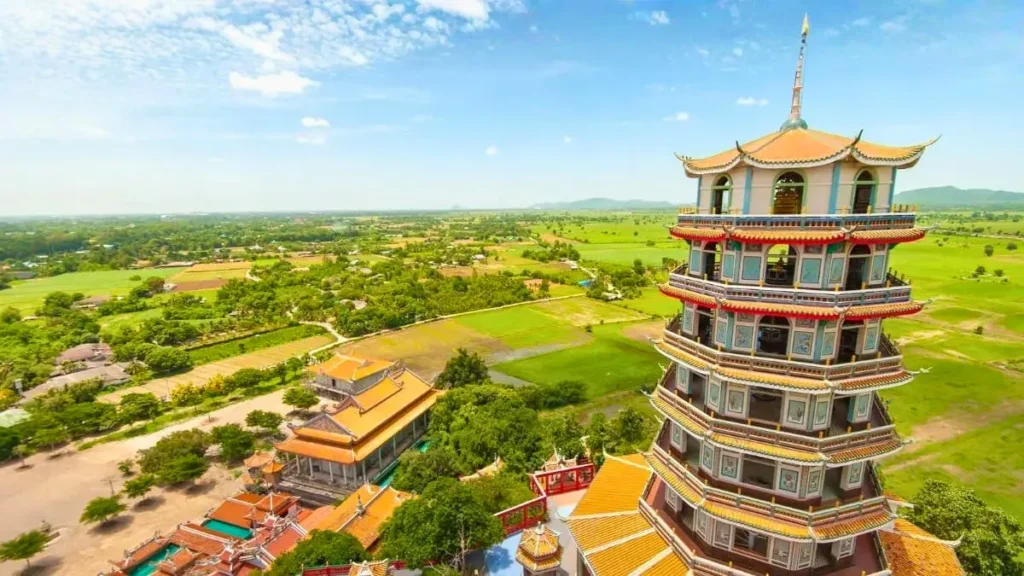
Wat Tham Khao Noi
Wat Tham Khao Noi is a historic Mahayana Buddhist temple that is 130 years old. It is famous for its Chinese-Vietnamese architectural style, its tall multi-tiered pagoda, and the panoramic views from its hilltop location. The temple is located next to the well-known Tiger Cave Temple (Wat Tham Suea) in the Tha Muang District of Kanchanaburi.
- Architecture: Showcases unique Chinese-inspired design elements, such as a prominent seven-tiered pagoda, colorful dragon decorations, and an ordination hall.
- Statues and Art: Contains statues of Chinese gods, a joyful Buddha, and detailed wall murals.
- Scenery: Offers elevated viewing decks with views of the nearby rice fields and the Mae Klong River.