
River Kwai with Train,Lunch,Museum Min. 2 Pax required to confirm
This Tour will take you to the world famous bridge on the River Kwai in Kanchanaburi Province which was built during the…
See More Details →Travel Guide Destination Hub
Discover Sangkhlaburi, Thailand’s hidden gem near the Myanmar border. Explore the famous Mon Bridge, a submerged temple, and historic Three Pagodas Pass in this informative travel guide covering culture, history, and must-see attractions.
Use our Sangkhlaburi travel planners to build your route, compare itinerary ideas and find practical travel tips for your trip.
Browse our latest Sangkhlaburi itineraries and destination planning guides.
Browse our latest articles, hotel guides, food guides and practical travel tips for Sangkhlaburi.
Tours & Activities
I first heard about Sangkhlaburi from a fellow traveler at a Bangkok hawker stand. She mentioned a wooden bridge, a submerged temple, and a town where three cultures lived side by side.
That conversation changed my entire itinerary. Three weeks later, I found myself standing at the edge of the Mon Bridge, watching the sun drop behind the hills, and I understood why she’d insisted I go.
Sangkhlaburi sits in the far western reaches of Thailand, pressed up against the Myanmar border in Kanchanaburi province. It’s remote, and that remoteness is exactly what makes it worth the journey.
Getting there takes effort — a long bus ride from Kanchanaburi town, winding through mountains and past reservoirs. But every mile feels like a transition from one Thailand to another, quieter version of itself.
The Saphan Mon, or Mon Bridge, is the first thing most visitors photograph, and for good reason. Stretching nearly 850 meters across the Songkalia River, it’s recognized as the longest handmade wooden bridge in Thailand. Local Mon villagers built it decades ago, and they still maintain it today using traditional methods passed down through generations.
Walking across early in the morning gives you the best experience. Mist often clings to the water below, and you’ll likely see monks collecting alms from vendors on the opposite bank.
I crossed at sunrise on my second day, and the wood creaked beneath my feet in a way that I wasn’t sure if it was terror or just oddly reassuring. Local fishermen cast nets below while schoolchildren hurry across on their way to class, creating a scene that feels both ordinary and extraordinary at once.
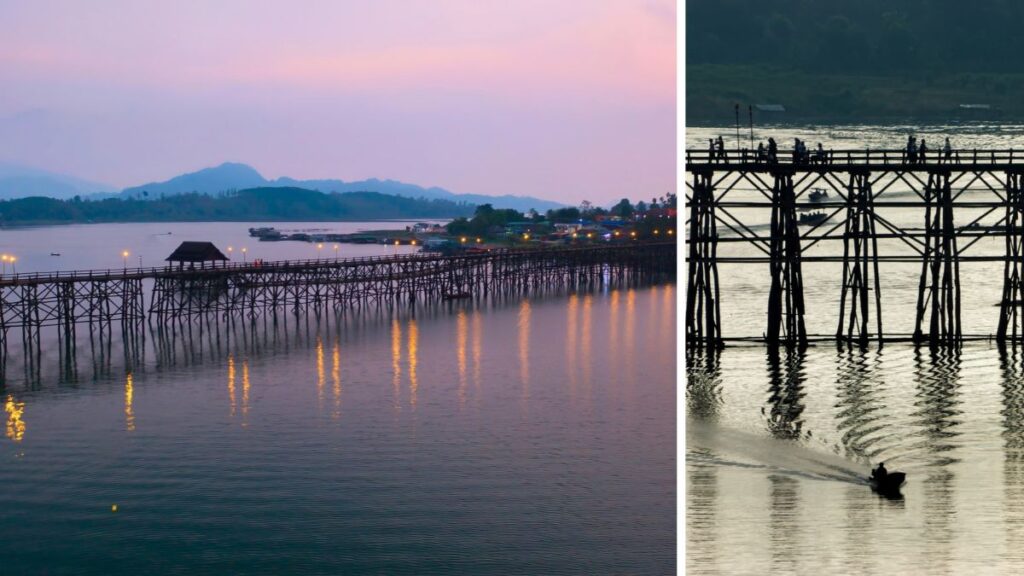
The bridge connects the Thai side of town to Wang Ka, a Mon community that fled conflict in Myanmar decades ago. Visiting this side isn’t just sightseeing — it’s a window into a culture that has preserved its identity while adapting to life in Thailand.
Vendors sell handwoven textiles and simple snacks, and most are happy to chat if you show genuine interest. I’d recommend bringing small bills, since many stalls don’t have change for larger notes, and buying something small supports the local economy directly.
Here’s where Sangkhlaburi gets genuinely fascinating. Beneath the waters of Khao Laem Reservoir lies the original Wat Wang Wiwekaram, a temple that was flooded in 1984 when the Vajiralongkorn Dam was constructed. During dry season, when water levels drop significantly, the old temple’s spire reemerges from the reservoir, creating one of the most striking sights in the region.
I happened to visit during a particularly dry month, so I got to see the submerged temple partially exposed. Boats take visitors out to the site, and you can even swim near the ruins or kayak around them depending on water levels.
It’s a strange, slightly surreal experience — paddling above a building that once held daily prayers, now resting silently underwater most of the year. Local boat operators know the area well and can explain the dam’s history, though I’d suggest asking questions respectfully, since the flooding displaced several communities and remains a sensitive topic for some residents.
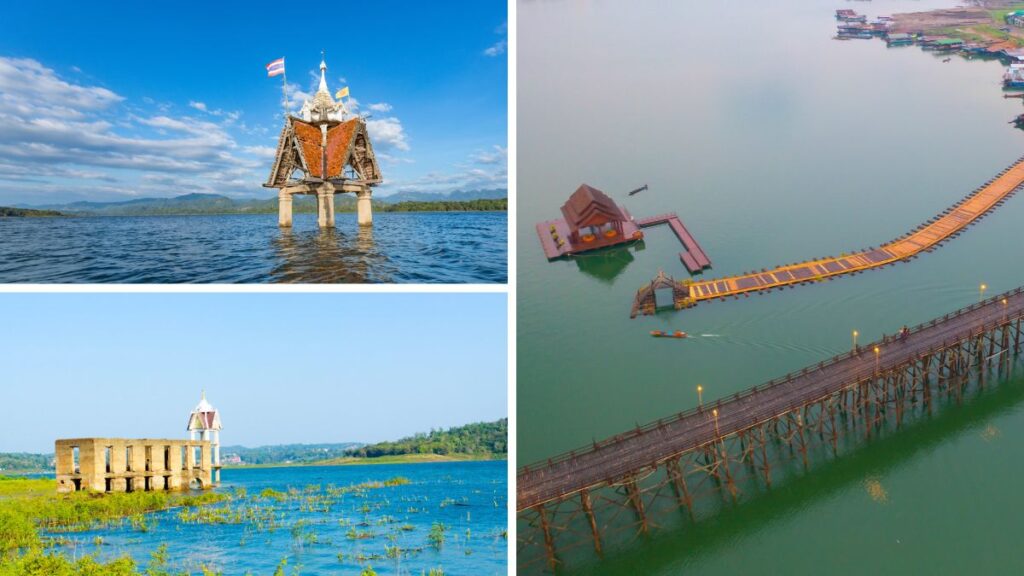
The new Wat Wang Wiwekaram, built on higher ground, replaced the original temple and now stands as the spiritual center for the town’s Mon population. Its golden chedi, modeled after a famous stupa in Bodh Gaya, India, rises impressively against the surrounding hills.
Visitors are welcome to explore the temple grounds, though modest dress is expected, as it remains an active place of worship rather than purely a tourist attraction.
Sangkhlaburi’s final must-see experience lies about 20 kilometers further toward the Myanmar border: Three Pagodas Pass. Historically, this pass served as a major trade and military route between Thailand and Myanmar, and it’s one of the few border crossings in the region accessible to travelers, though regulations change frequently.
Three small white pagodas mark the actual border point, and the area around them has developed into a modest market selling goods from both countries. I spent an afternoon wandering between stalls, picking up gems, textiles, and snacks I couldn’t identify but enjoyed anyway.
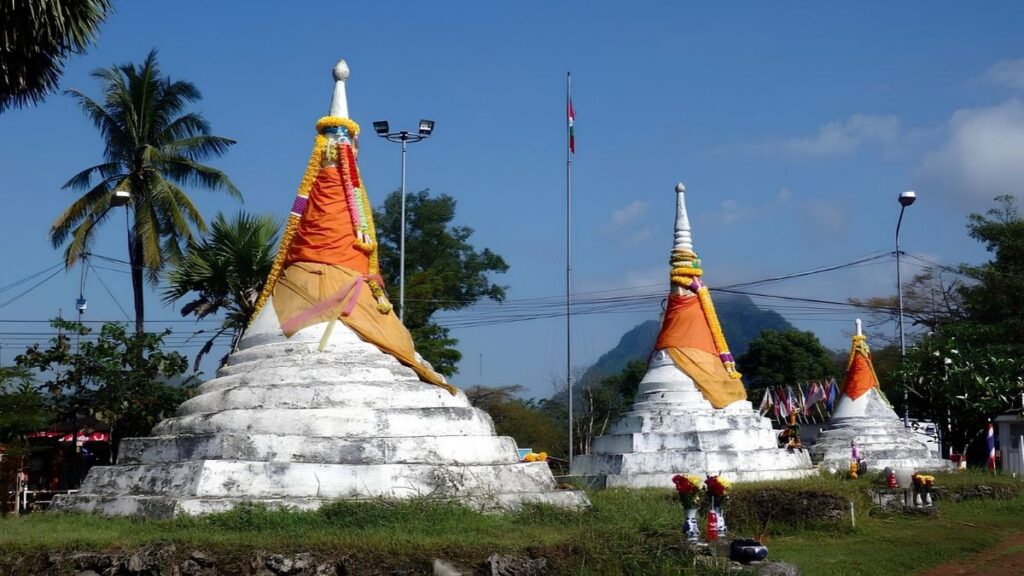
Vendors speak a mix of Thai, Burmese, and Mon, which gives you a real sense of how fluid identity becomes in border regions like this one.
Beyond the market, the pass carries significant historical weight. It was used during World War II as part of the infamous “Death Railway” construction, and several memorials in the broader region commemorate the laborers who suffered during that period.
Understanding this history adds depth to what might otherwise seem like just another border town. Sangkhlaburi, and Three Pagodas Pass specifically, reminds visitors that Thailand’s borderlands hold stories that extend far beyond typical tourist narratives, connecting present-day culture to a complicated, often painful past.
Showing tours and activities related to Sangkhlaburi.
This Tour will take you to the world famous bridge on the River Kwai in Kanchanaburi Province which was built during the…
See More Details →
Full Day Excursion start with the Famous Floating Market Then Proceed to Kanchanaburi. The famous bridge and the beginning of the "Death…
See More Details →
Explore at your own pace with a fully private guided tour. Together with the professional guide, you will visit the most charming…
See More Details →