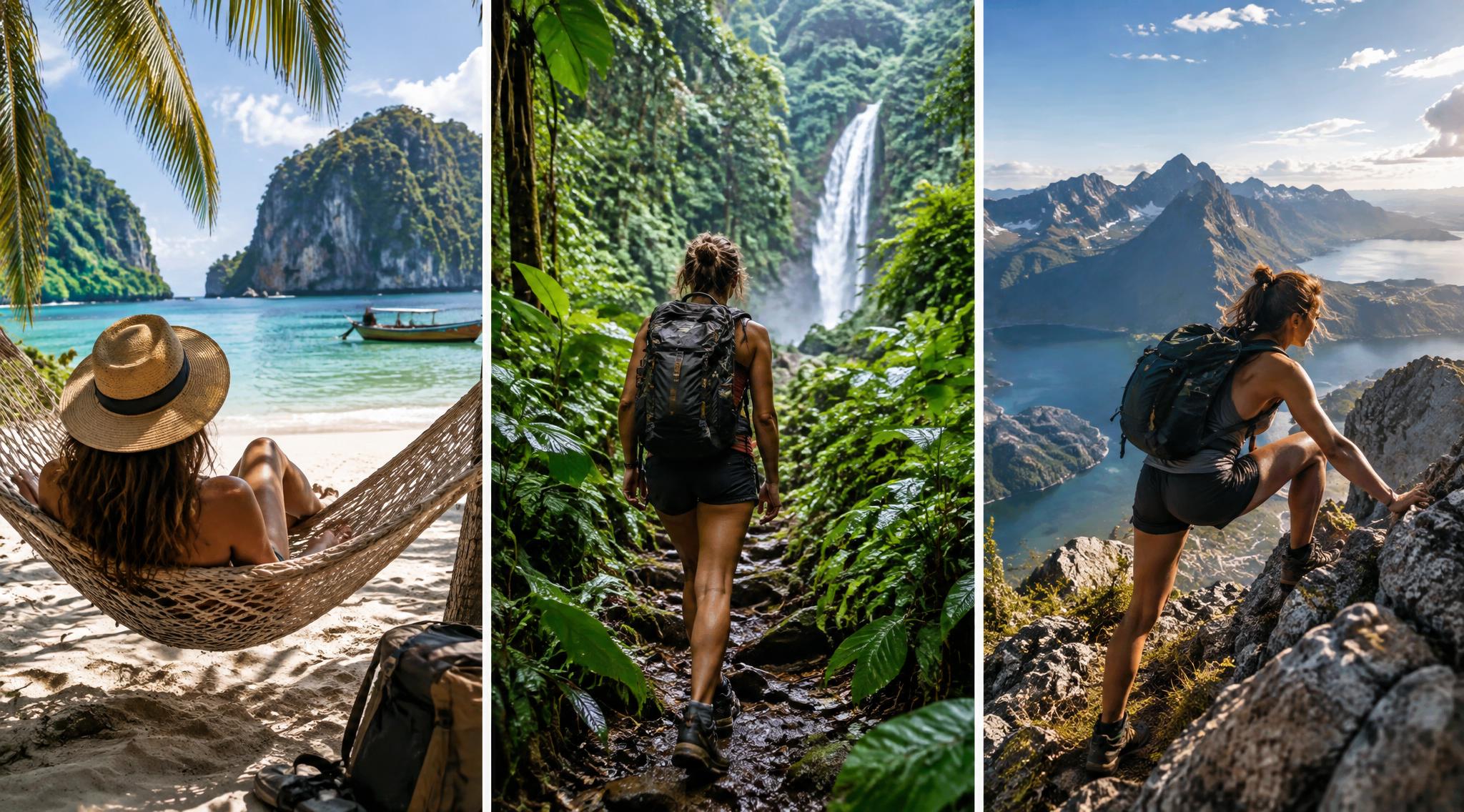
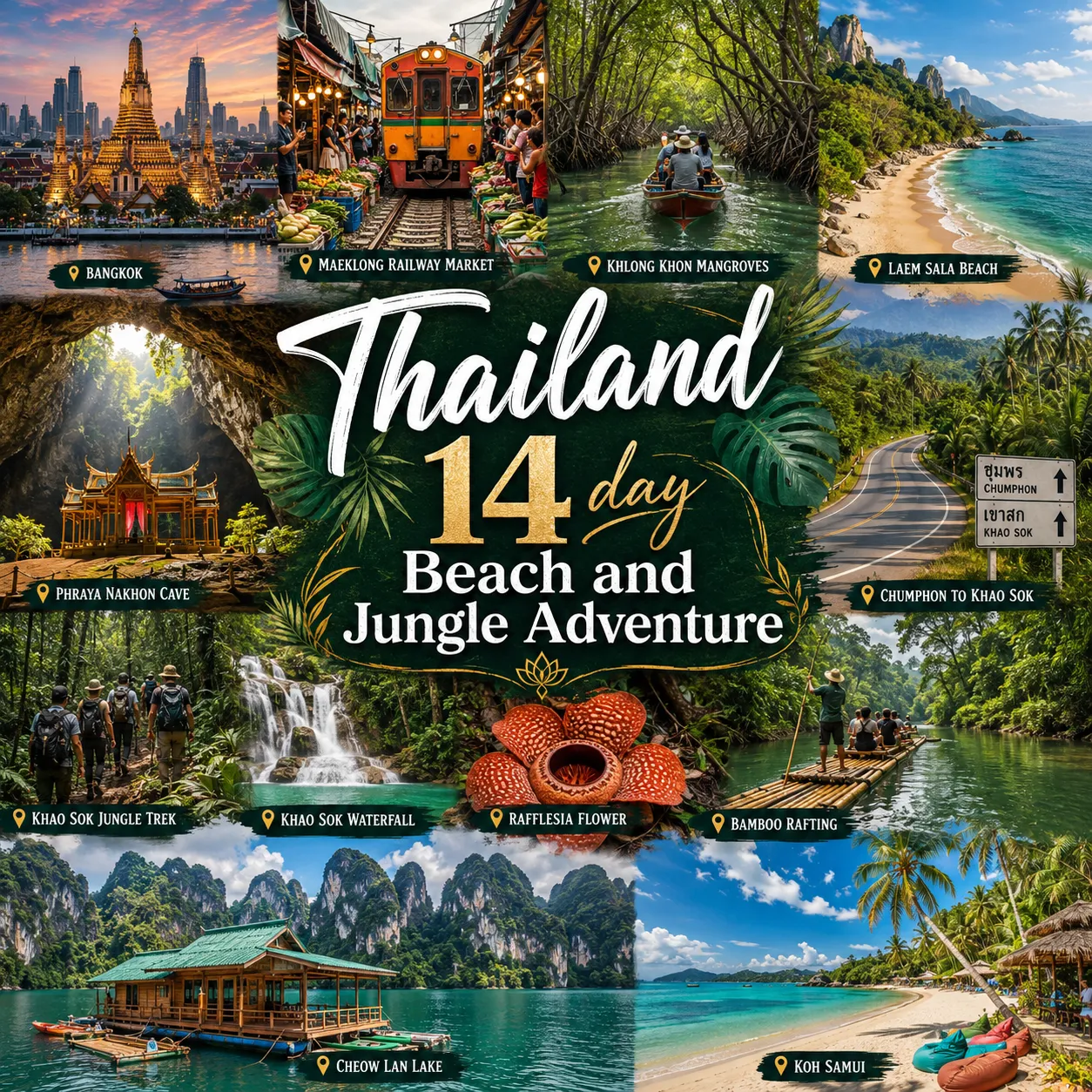
Thailand offers an incredible blend of natural wonders. This 14-day Thailand beach and jungle adventure takes you through bustling Bangkok, dense rainforests, and pristine island beaches. You will experience authentic Thai culture while exploring hidden caves and swimming in crystal-clear waters. This journey combines the best of both worlds. The adventure starts in Thailand’s vibrant capital and winds through national parks before ending on tropical islands. Each day brings new discoveries and unforgettable experiences.
Whether you seek elephants in their natural habitat or prefer snorkeling in turquoise waters, this trip delivers. The itinerary balances guided activities with free time to explore at your own pace. You will create memories that last a lifetime.

- Temperature
- Precipitation
- Rain Chance
- Wind
- Humidity
- Pressure


Days 1-2: Bangkok – Where Your Thailand Beach and Jungle Adventure Begins
Day 1: Arrival in Bangkok
Your Thailand beach and jungle adventure starts the moment you land in Bangkok. The capital city buzzes with energy. Ancient temples stand beside modern skyscrapers. Your guide meets you at the airport and handles your transfer to the hotel.
The afternoon offers time to settle in and rest after your flight. Bangkok’s tropical climate welcomes you with warm temperatures year-round. Take this opportunity to adjust to the local time zone and prepare for tomorrow’s exploration.
The evening presents a chance to venture out and sample authentic Thai cuisine. Street food vendors line the nearby streets, offering everything from pad thai to mango sticky rice. This first taste of Thailand sets the tone for the culinary journey ahead.
Day 2: City Tour by Longtail Boat and Temple Exploration
The morning begins with a longtail boat tour through Bangkok’s intricate waterways. These traditional boats have served as the city’s primary transportation for centuries. Your boat captain expertly navigates the canals while you observe daily life along the water.
The boat tour reveals a different side of Bangkok. Wooden houses stand on stilts above the water while vendors sell fresh produce from floating markets. This perspective shows you how Bangkok earned its nickname as the “Venice of the East.”
Your tour will take to:
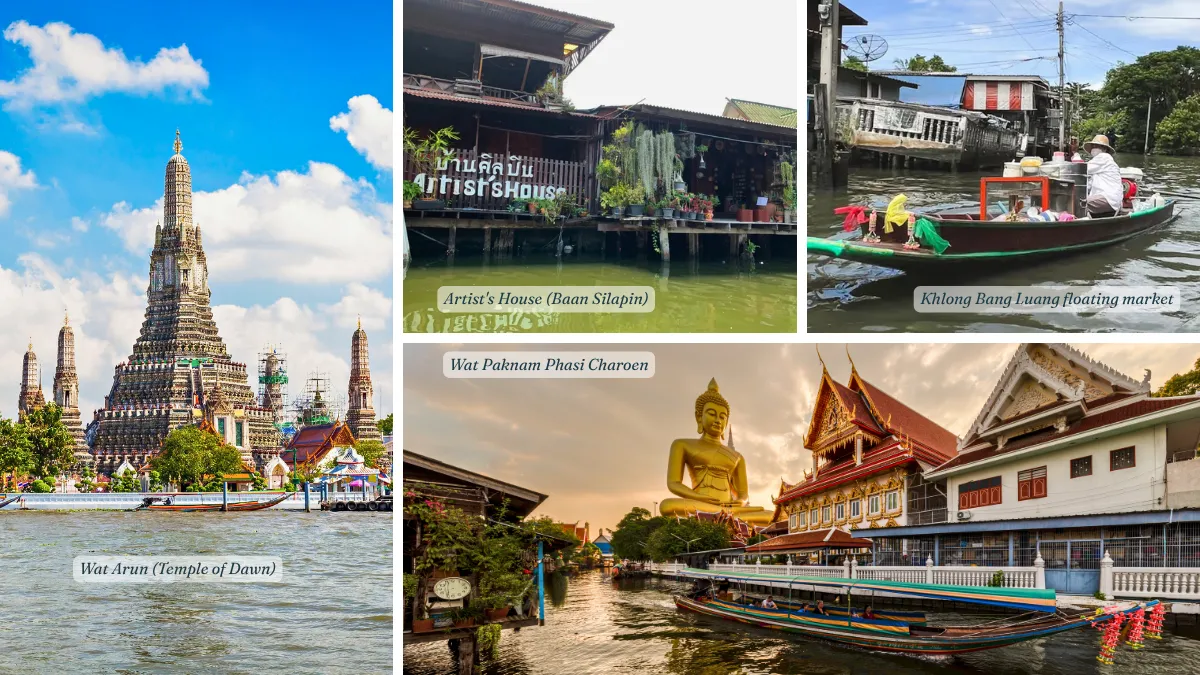
- Wat Paknam Phasi Charoen: See the towering 69-meter-tall glittering Giant Buddha and the emerald-glass pagoda from the water.
- Artist’s House (Baan Silapin): A traditional wooden stilt community offering local shops, traditional Thai tea, and puppet shows.
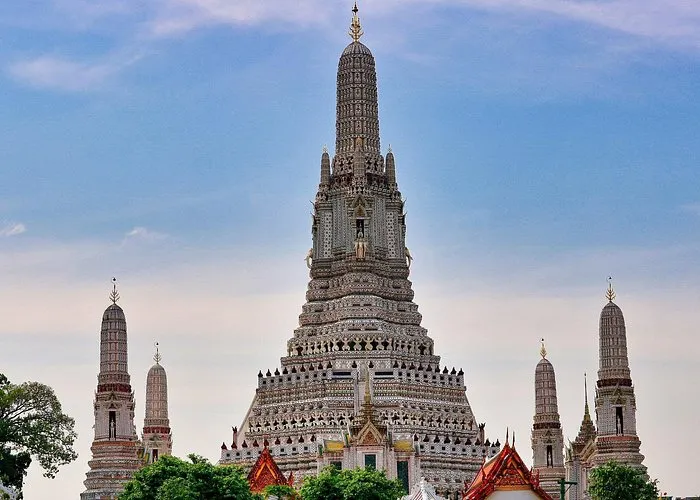
- Wat Arun (Temple of Dawn): Cruise past the iconic, porcelain-encrusted spires of this majestic riverside temple.
- Floating Markets: Pass by vendors paddling in wooden boats selling fresh food, tropical fruits, and handmade goods (such as the Khlong Bang Luang floating market).
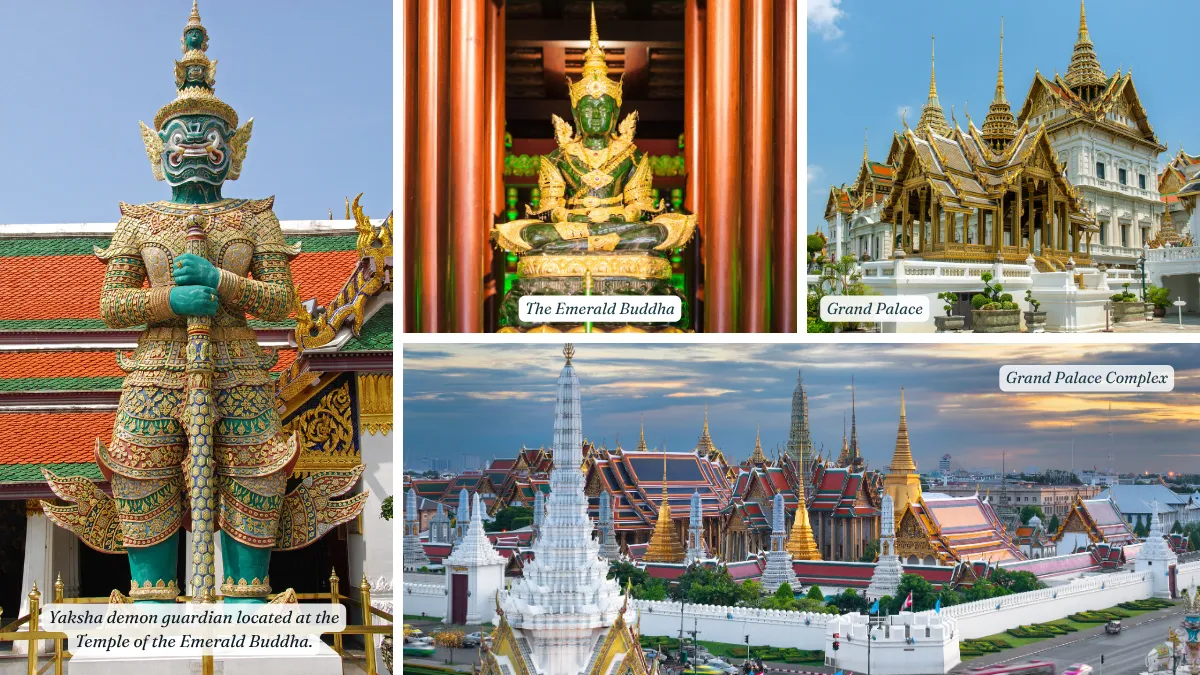
The afternoon is the time to explore the Grand Palace and surrounding temples. The Grand Palace complex houses stunning examples of Thai architecture. Golden spires reach toward the sky while intricate details cover every surface.
Wat Phra Kaew, the Temple of the Emerald Buddha, sits within the palace grounds. This sacred site attracts both tourists and local worshippers. The temple’s spiritual atmosphere offers a peaceful contrast to the bustling city outside.
The Emerald Buddha is Thailand’s most sacred religious artifact. This 15th-century statue (carved from a single block of green jade) is viewed as a supreme symbol of luck, prosperity, and spiritual protection for the Thai people and state.
According to ancient tradition, the Emerald Buddha brings prosperity wherever it rests. King Rama I established it in Bangkok to legitimize the new Chakri dynasty and unify the country
Essential Bangkok Tips
- Dress modestly when visiting temples – cover shoulders and knees
- Remove shoes before entering temple buildings
- Hire a licensed guide for deeper cultural insights
- Carry small bills for entrance fees and donations
- Stay hydrated in the tropical heat
The temple was built in 1782 by King Rama I alongside the Grand Palace, it serves as the spiritual heart of the nation and the official royal chapel. Unlike other temples in Thailand, Wat Phra Kaew has no resident monks. It is strictly a royal chapel reserved exclusively for the King and vital national ceremonies
Days 3-6: Coastal Adventures and Beach Relaxation
| Day | Main experiences | Overnight |
|---|---|---|
| 3 | Maeklong Railway Market and Khlong Khon mangroves | Sam Roi Yot |
| 4 | Laem Sala Beach and Phraya Nakhon Cave | Sam Roi Yot |
| 5 | Sam Roi Yot wetlands and Kui Buri elephant safari | Prachuap Khiri Khan |
| 6 | Ao Manao, Ban Krut Beach and Wat Tang Sai | Chumphon or Thung Wua Laen |
| 7 | Continue to Khao Sok | Khao Sok |
Day 3: Meaklong Train Market and Khlong Khon Mangrove Discovery
I left Bangkok at around 6:30 am, trading the city’s concrete sprawl for salt pans, coconut groves and the flat wetlands of Samut Songkhram. The early start is worthwhile because it put me at Maeklong Railway Market before the 8:30 am train arrives.
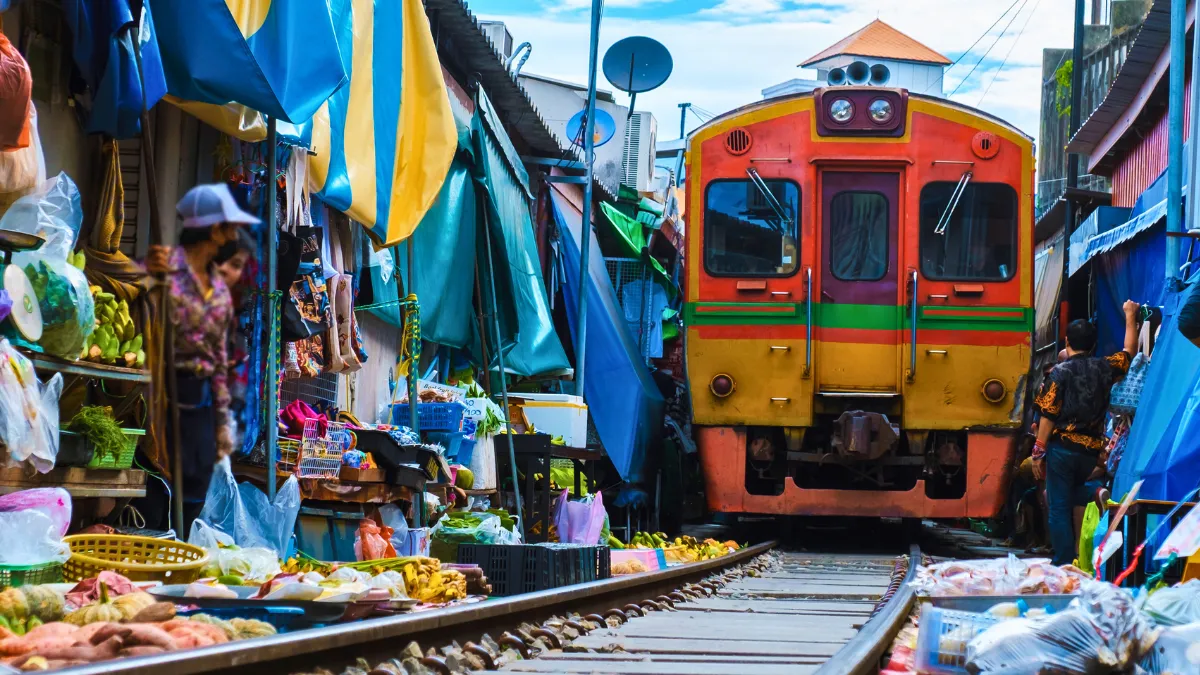
Maeklong—also known as Hoop Rom or the “umbrella-folding market”—is sometimes dismissed as an Instagram stop, but it remains a functioning fresh market. Fish lie on beds of crushed ice, baskets overflow with chillies and tropical fruit, and vendors conduct business within centimetres of the railway line.
Shortly before the train appears, a warning bell rings. Canvas awnings are pulled back, trays slide away from the rails and everyone squeezes into the narrow margins. The train then rolls slowly through the middle of the market before the stalls expand again as though nothing happened.
Current scheduled arrivals are 8:30 am, 11:10 am, 2:30 pm and 5:40 pm, with departures at 6:20 am, 9:00 am, 11:30 am and 3:30 pm. I would aim to see the 8:30 arrival and 9:00 departure, but check the official State Railway of Thailand timetable shortly before travelling. The market itself normally operates from 6:00 am until 6:00 pm.
Allow time to buy breakfast rather than simply waiting for the train. Grilled pork skewers, sticky rice, coconut sweets and iced Thai coffee are all easy to find and make a hearty breakfast! No toast spotted.
Suggested timing
- 6:30 am – Leave Bangkok
- 8:00 am – Arrive and explore the market
- 8:30 am – Watch the train arrive
- 9:00 am – Watch the train depart
- 9:15 am – Continue to Khlong Khon
Late morning: Khlong Khon Mangrove Forest
Khlong Khon feels like a complete change of landscape. Here the coast dissolves into muddy channels, nipa palms, mangrove roots and tidal flats.
I arranged a local long-tail boat through the conservation center, and if you fancy it you can also book rooms at a community homestay. I didn’t, opting instead to continue on to Sam Roi Yot and get the major driving done.
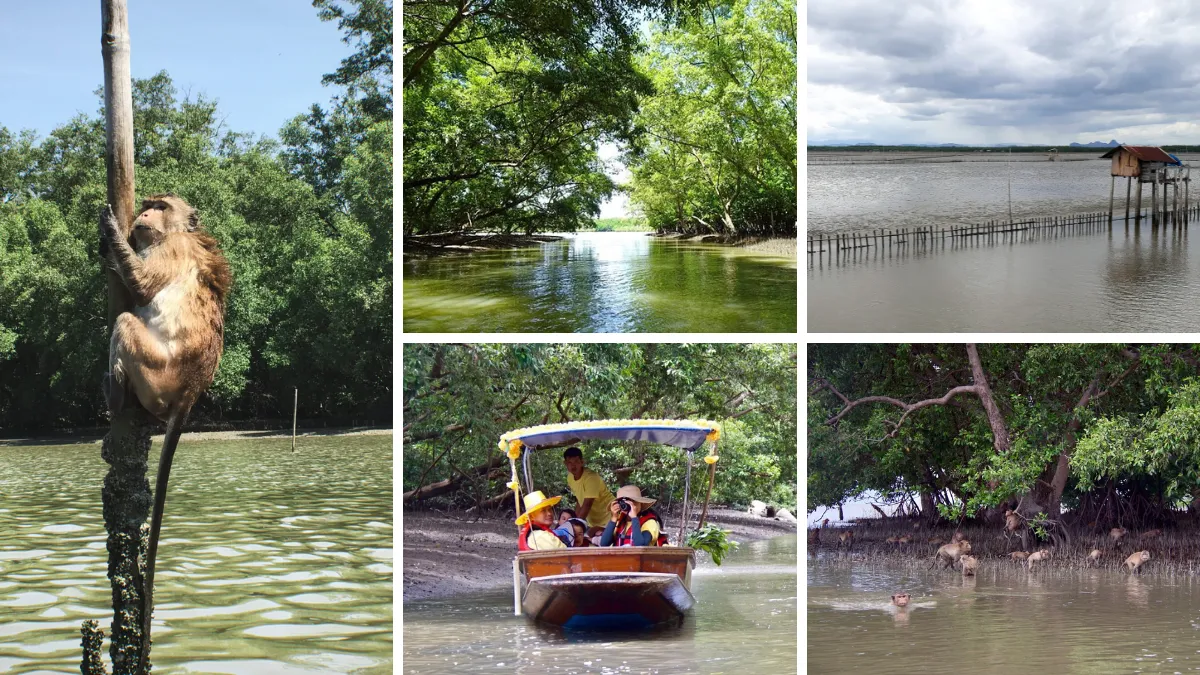
The tour through Khlong Khon follows narrow waterways into the mangroves, where all eyes are peeled looking for mudskippers, fiddler crabs, kingfishers and the long-tailed macaques watching from the branches. The center promotes mangrove conservation while introducing visitors to local fishing life.
The tour includes visits to an oyster and mussel farm, cockle collecting, mangrove planting and mud-boarding (sliding across the mud on wooden boards). These activities do depend on the tide and the time you visit, so I would contact a local operator in advance rather than arriving with a fixed expectation.
Top tip: Don’t feed the macaques. We saw one Australian couple who were eating apples and it almost turned into a horror movie. Needless to say “Macaques 1 -Aussies 0”. Seriously though, feeding encourages aggressive behavior and changes the animals’ natural relationship with the mangrove environment.
Lunch: Local Gulf seafood
After the boat trip, I stopped for a late seafood lunch in Khlong Khon. This is the place for steamed blue crab, grilled prawns, squid, cockles and sea bass served with a sharp chilli-and-lime sauce. The surroundings are simple, but that is part of the appeal: this is fishing-country food rather than a polished resort meal.
Afternoon: Drive to Sam Roi Yot
Leave Khlong Khon by about 2:30 or 3:00 pm latest for the drive south to Sam Roi Yot. Depending on traffic, stops and the location of your accommodation, I would allow approximately three to three and a half hours (Maps will tell you 2 hours – don’t believe it).
Check into one of the small resorts near Sam Roi Yot Beach or Ban Bang Pu. Staying close to Bang Pu makes tomorrow morning much easier.
If daylight remains, walk along Sam Roi Yot Beach as the limestone mountains darken behind the coast. After Bangkok and Maeklong, the quiet feels earned.
Optional addition: Wat Bang Kung
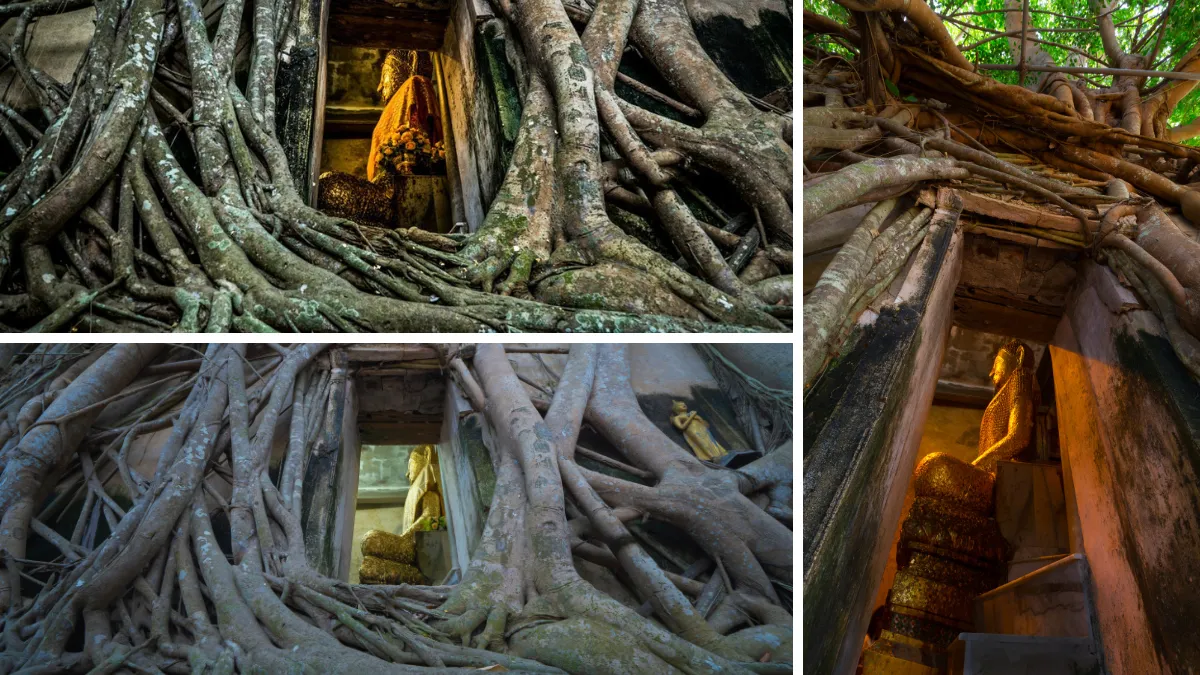
Wat Bang Kung, is awesome. It’s where a small temple appears to be held inside the roots of a banyan tree. You need to do it after Maeklong and before Khlong Khon. However, only include it if you have booked and secured your mangrove excursion. Trying to fit the temple, as well as waiting for the next long boat tour, taking the tour and then a drive to Sam Roi Yot into one day creates more rushing than discovery. If you know your mangrove tour timing you can plan to fit it in. You only need to stop and take a couple of pics. I thought it was well worth it.
Day 4: Laem Sala Beach and Phraya Nakhon Cave
Today is about one of Thailand’s most memorable combinations: a wild coastal walk, a quiet beach and a royal pavilion illuminated inside a collapsed limestone cavern.
Early morning: Bang Pu and the journey to Laem Sala
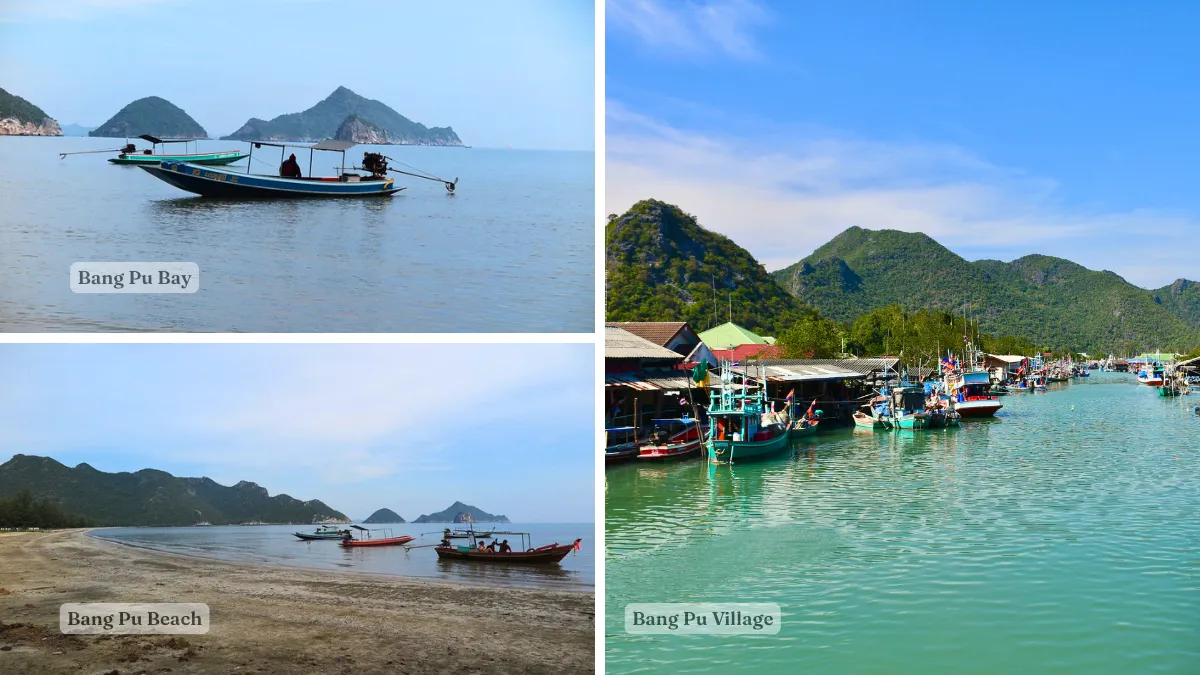
I made my way into Bang Pu village at around 8:00 am, before the heat builds with the sun coming over the hills.
There are two ways to reach Laem Sala Beach:
- Take a short long-tail boat around the headland.
- Walk over Khao Thian hill, descend to Laem Sala and continue from there.
The boat removes the first climb, but it does not eliminate the steep ascent between Laem Sala and Phraya Nakhon Cave. Boats can also be suspended when the sea is rough, so come prepared to walk the entire route. The complete approach involves two significant climbs; the overland trail reaches a viewpoint before descending to Laem Sala.
The weather was calm, so we decided on walking in and returning by boat. It gave us incredible coastal views without repeating every climb.
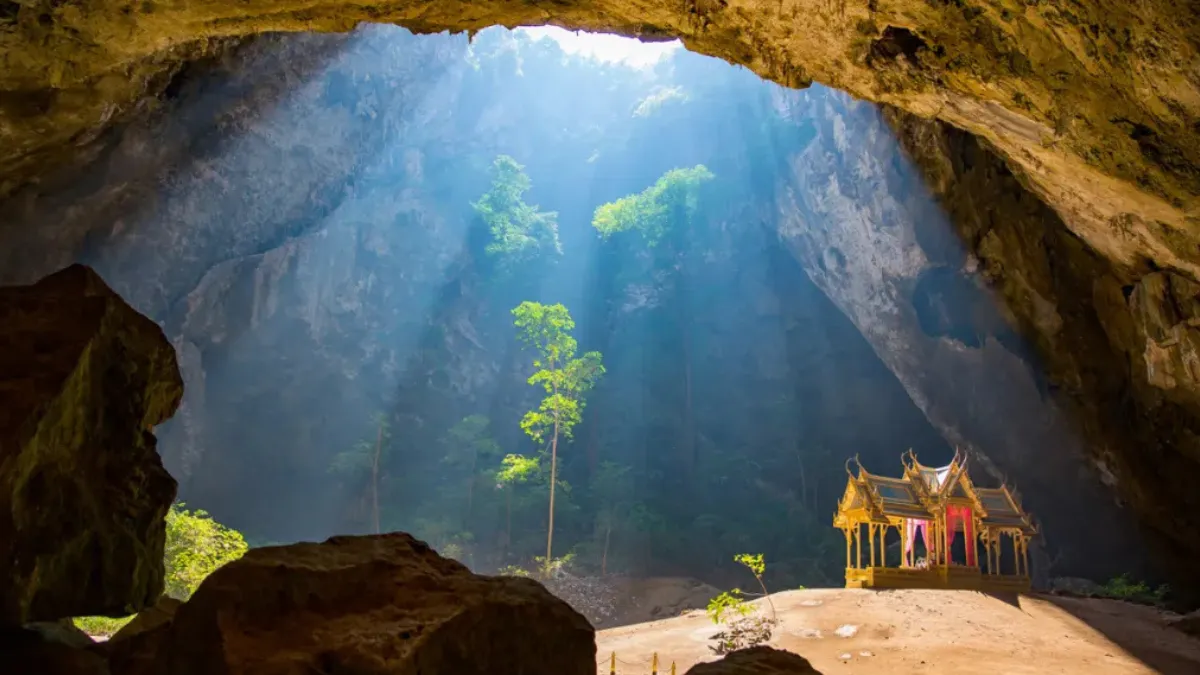
Morning: Climb to Phraya Nakhon Cave
From Laem Sala, the trail climbs steeply through forest and over uneven limestone. It is not technically difficult, but the combination of humidity, stone steps and heat makes it more demanding than its distance suggests.
Inside the first chamber, the temperature drops and daylight falls through a vast opening in the roof. A further descent reveals Khuha Kharuehat Pavilion, constructed during the reign of King Rama V. The small, ornate pavilion appears almost impossibly delicate beneath the scale of the cavern.
Late morning usually offers the best chance of seeing sunlight fall into the chamber, although the exact angle changes with the season and weather. I allow at least half an hour inside rather than treating it as a quick photography stop.
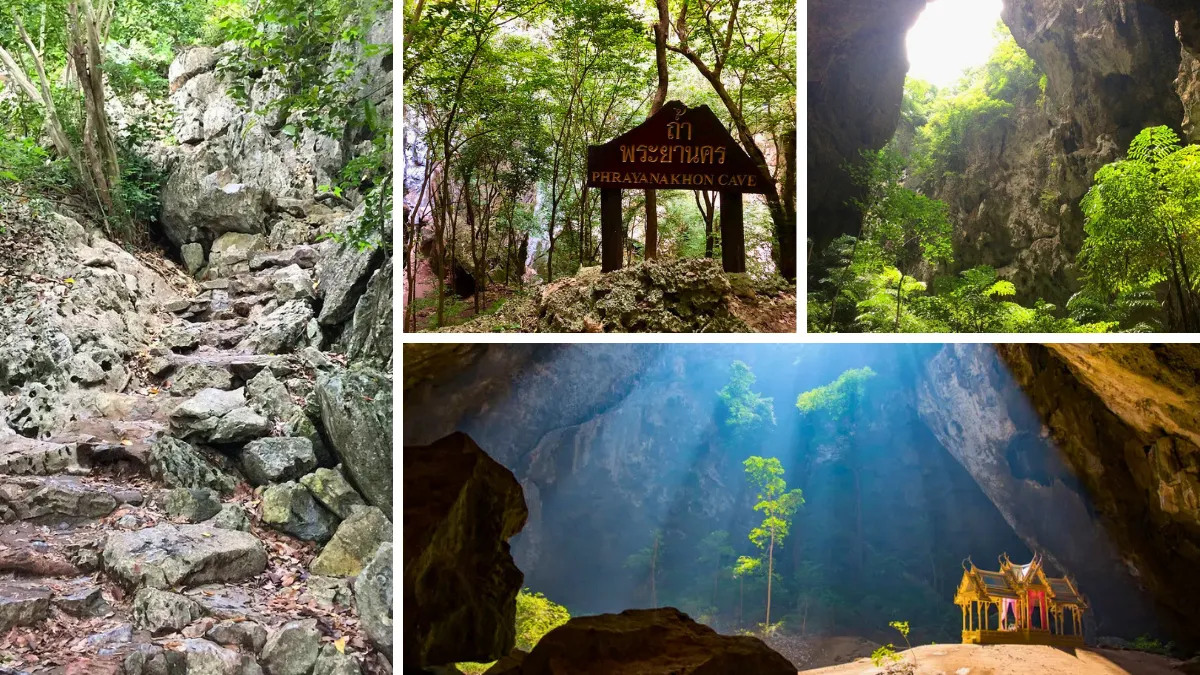
Khao Sam Roi Yot National Park currently lists foreign admission at 200 baht for adults and 100 baht for children. Keep the ticket because it may cover other sections of the park visited on the same day.
What I carry
- At least 1.5 litres of water
- Proper walking shoes with grip
- Sun protection and insect repellent
- A small towel or spare shirt
- Cash for admission, boats and food
- A waterproof cover during the wet season
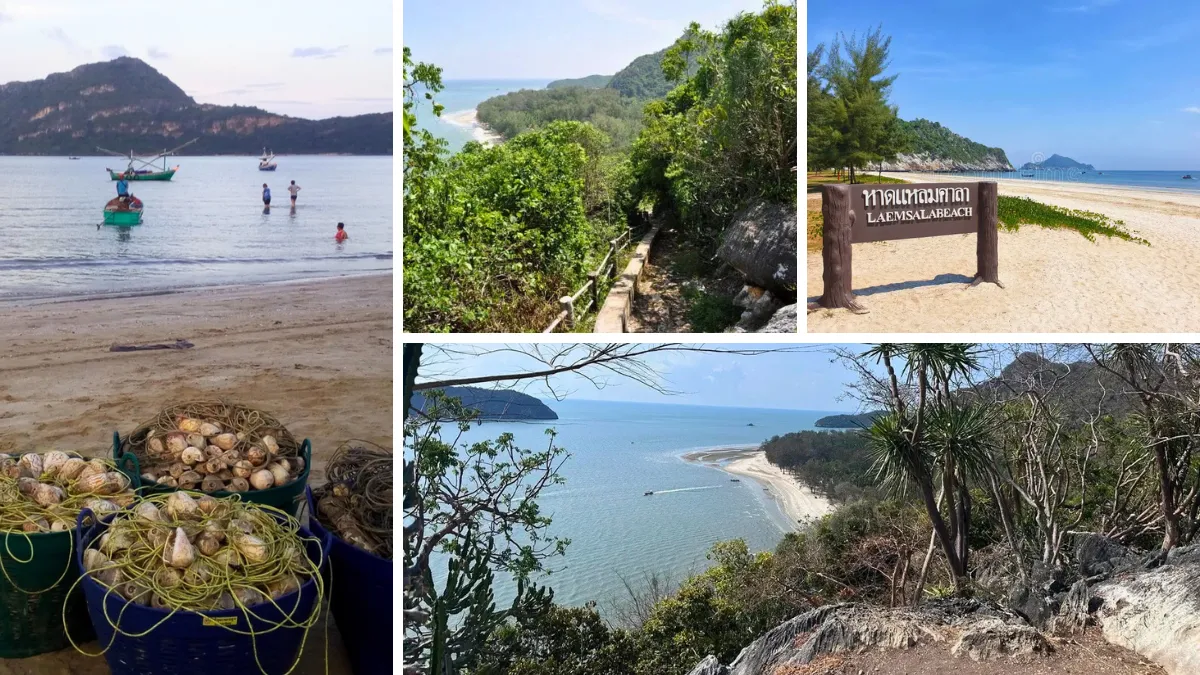
Midday: Laem Sala Beach
Back at Laem Sala, we stopped for lunch and gave the beach the time it deserves. The park area has toilets, showers, a restaurant, camping and simple accommodation facilities. Laem Sala is not a manicured resort beach. Facilities are basic, the sea can be cloudy after rough weather, and monkeys occasionally investigate unattended food. Yet the forested cliffs, casuarina trees and relative isolation make it far more atmospheric than many easier-to-reach beaches.
Late afternoon: Thung Sam Roi Yot Freshwater Marsh
After returning to the mainland, I drove to Thung Sam Roi Yot, the great freshwater marsh on the western side of the park. A boardwalk reaches into a landscape of lotus ponds, reeds and jagged limestone peaks. Water levels vary, but the late-afternoon light is beautiful and bird activity increases as the temperature falls.
The marsh, Kaeo Cave and Khao Daeng are among the park’s other major attractions. A late-afternoon boat trip along the Khao Daeng canal is another option. The narrow river passes beneath limestone cliffs and offers chances to see waterbirds and macaques. Return to Sam Roi Yot for a second night.
Day 5: Sam Roi Yot Wetlands and Wild Elephants in Kui Buri
Kui Buri offers something very different from Thailand’s elephant camps: the possibility of watching genuinely wild elephants moving through their natural habitat.
Morning: A slower start in Sam Roi Yot
After yesterday’s climb, I resist the temptation to schedule another strenuous hike. I spent the morning exploring the parts of Sam Roi Yot I missed the previous afternoon.
Good choices include:
- A Khao Daeng canal boat trip
- Birdwatching at Thung Sam Roi Yot marsh
- A quiet swim at Sam Roi Yot Beach
- A short visit to a fishing village
- Kaeo Cave with a local guide, sturdy footwear and a torch
Kaeo Cave is adventurous, dark and slippery in places. I would not combine it with the elephant safari if rain is forecast or if anyone in the group is uncomfortable with confined spaces.
Lunch and transfer to Kui Buri
Have an early lunch and leave for the Huai Luek wildlife-watching area of Kui Buri National Park.
Aim to arrive between 1:30 and 2:00 pm. The wildlife-watching zone operates from approximately 2:00 pm until 6:00 pm, with the best activity generally developing after 3:00 pm. Visitors are not normally admitted after 5:00 pm.
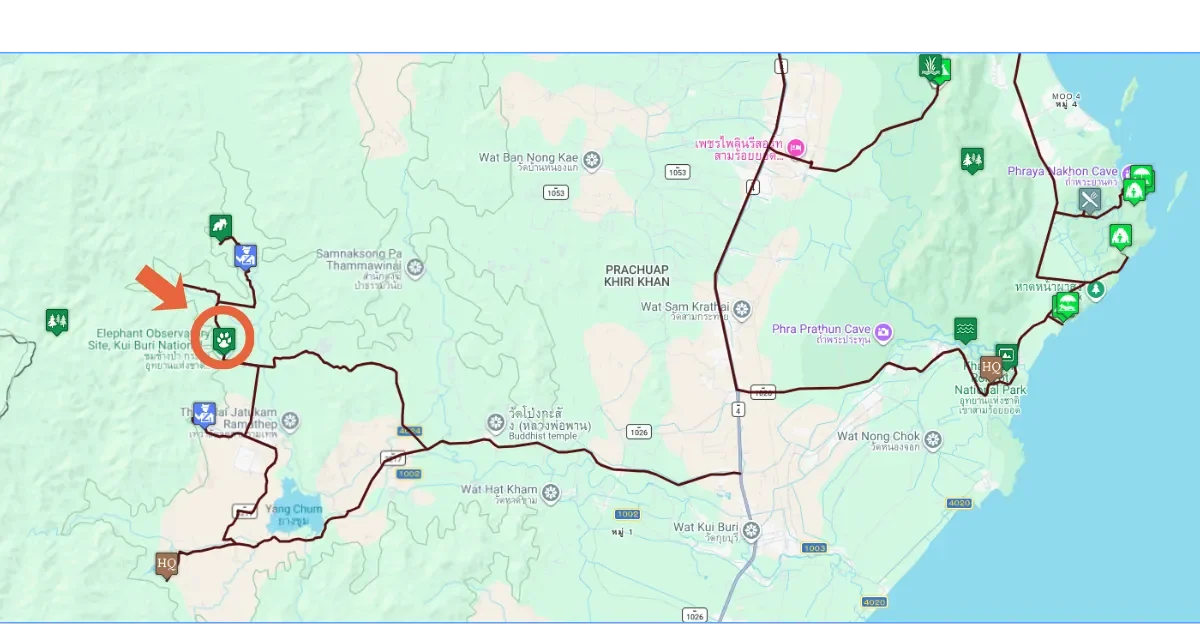
Afternoon: Kui Buri elephant safari
At the entrance, register and transfer into a park-approved open safari vehicle with a local driver and wildlife guide. Private vehicles are not used for the wildlife-viewing route.
The road runs through dry forest, pineapple-growing country and open grasslands. Rangers communicate between viewing points, but there is no performance and no guarantee. These elephants decide whether they will appear. That uncertainty is precisely why Kui Buri matters. These are wild elephants in their natural habitat, they are not previously abused or worked elephants. You are viewing them as they always have been and as they should be. It was for me, a very deep and meaningful experience.
We scan the forest edge for branches moving where there seems to be no wind. Sometimes the first sign is a dark forehead or the slow curl of a trunk above the grass. Gaur—massive wild cattle—may also emerge, along with hornbills, deer, jackals and other wildlife.
The experience is quieter than an elephant sanctuary visit. There is no bathing, feeding or touching. We watch from a responsible distance and let the animals remain wild.
The safari generally lasts two to three hours. The Tourism Authority of Thailand currently lists park admission at 200 baht for foreign adults and 100 baht for children, but the safari vehicle and guide are additional, so bring sufficient cash and confirm the total locally.
Evening: Prachuap Khiri Khan
After the safari, continue to Prachuap Khiri Khan town rather than backtracking to Sam Roi Yot. This shortens the next day’s southern drive.
For dinner, I headed towards the waterfront evening food stalls. You’ll get everything you can think of grilled squid, seafood fried rice, southern curries and roti. Prachuap has a wonderfully ordinary feel after the tour groups have returned to Hua Hin.
Day 6: Ao Manao and a Slow Beach Day at Ban Krut
Today continues south, but I refuse to turn it into seven hours of staring through a windscreen. Instead, I break the journey with two beaches and one of the finest coastal temple settings in the region.
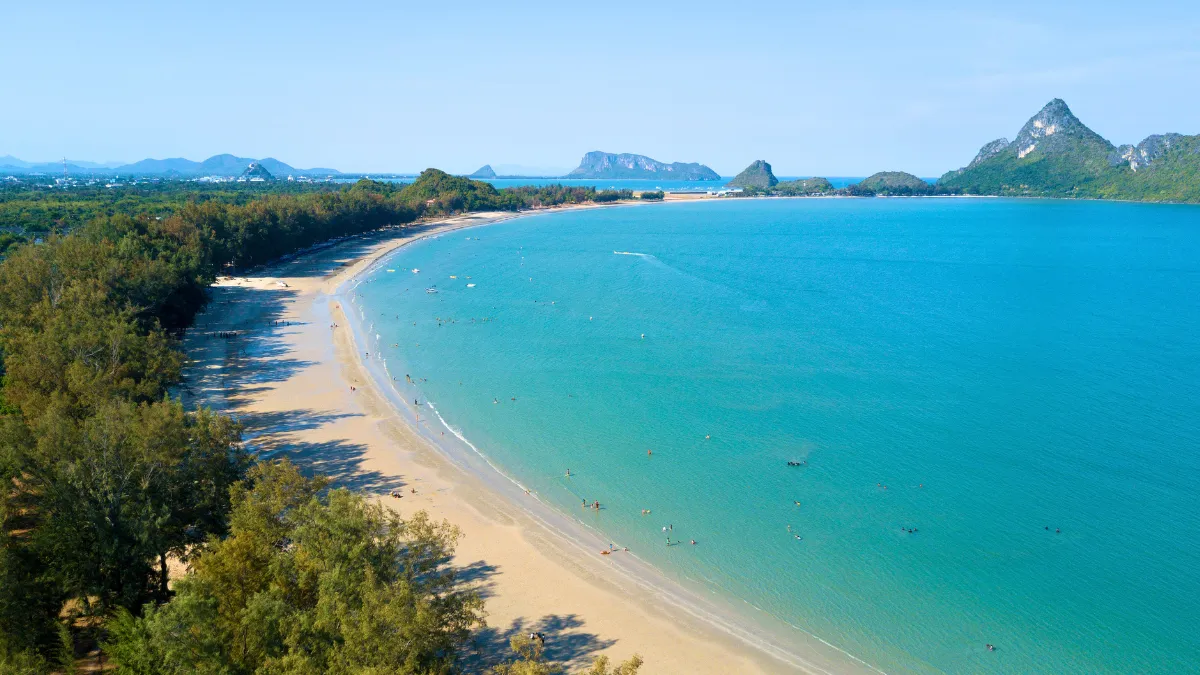
Early morning: Ao Manao
Begin at Ao Manao, a curved bay enclosed by steep limestone headlands. It sits within the Royal Thai Air Force’s Wing 5 base and was the site of fighting during the Japanese invasion of Thailand in 1941. The bay remains under Air Force care.
Arrive early for a swim or walk before the day becomes hot. Access arrangements can change because this is an active military facility, so carry your passport and follow instructions at the gate.
If the base is closed to visitors, continue directly to Ban Krut rather than losing time.
Mid-morning: Drive to Ban Krut
From Prachuap, drive south to Ban Krut, a relaxed coastal village far removed from the intensity of Phuket or Koh Samui. Its broad beach is backed by palms and casuarina trees, with enough small resorts and restaurants to make a stop comfortable without overwhelming the shoreline.
Ban Krut is a wide and beautiful beach. And the drive is long making the town’s railway station and coastal location a natural break on the long journey south.
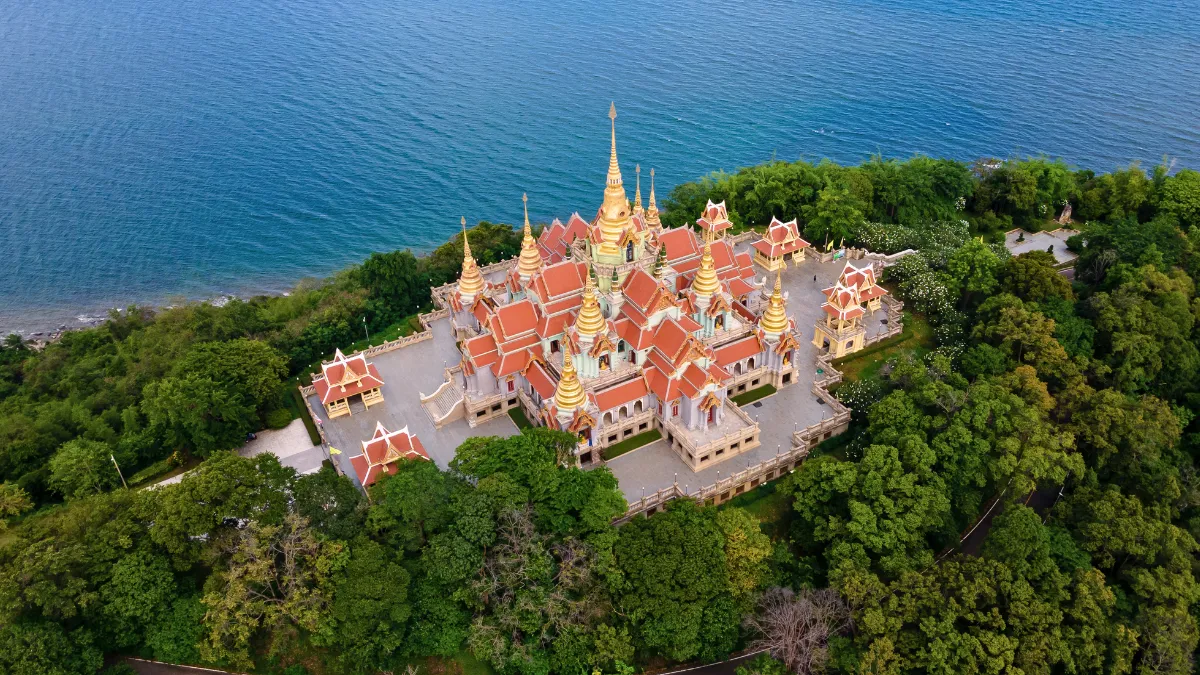
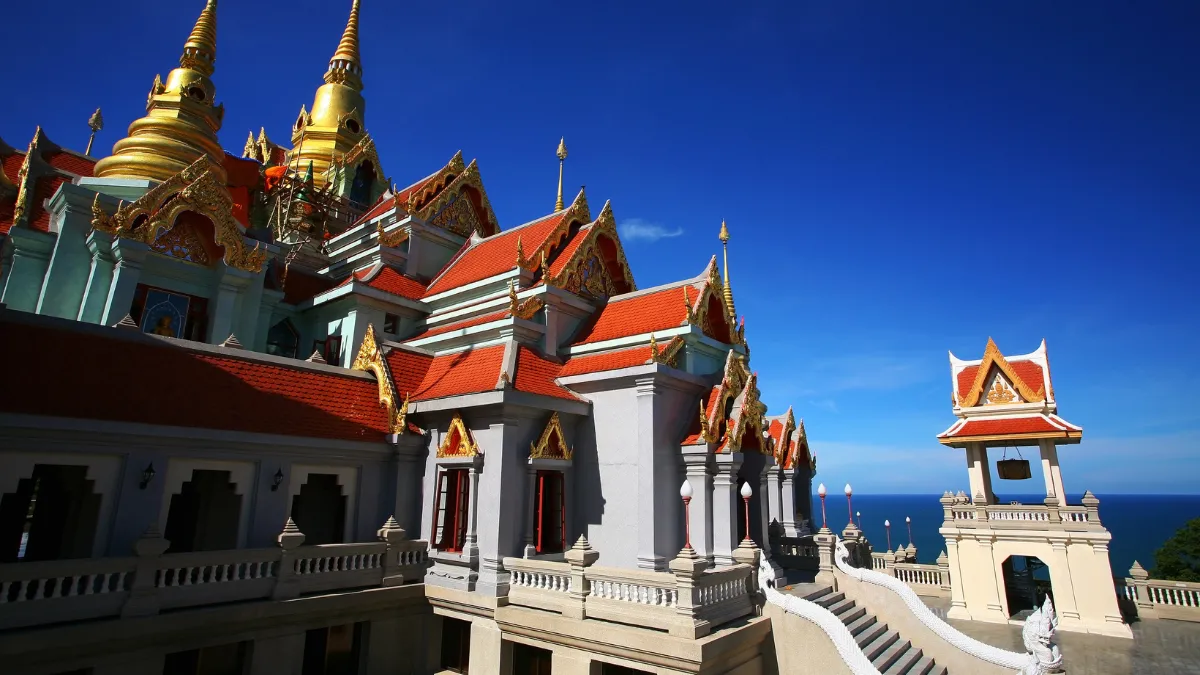
Late morning: Wat Tang Sai
Before settling on the sand, climb or drive up Thong Chai Mountain to Wat Tang Sai and Phra Mahathat Chedi Phakdi Prakat. Golden roofs rise above the trees, while terraces overlook a long sweep of Gulf coastline. It is a striking temple, but still a place of worship. Cover shoulders and knees, speak softly and remove shoes where requested.
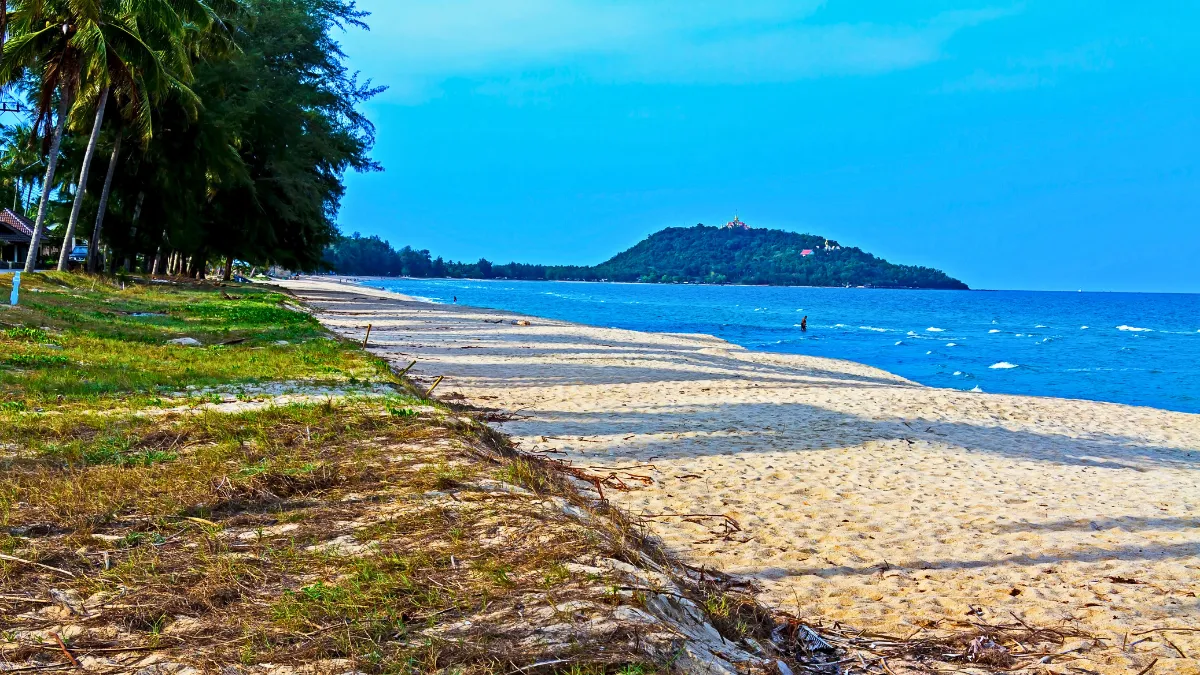
Afternoon: Ban Krut Beach
The rest of the afternoon belongs to the beach.
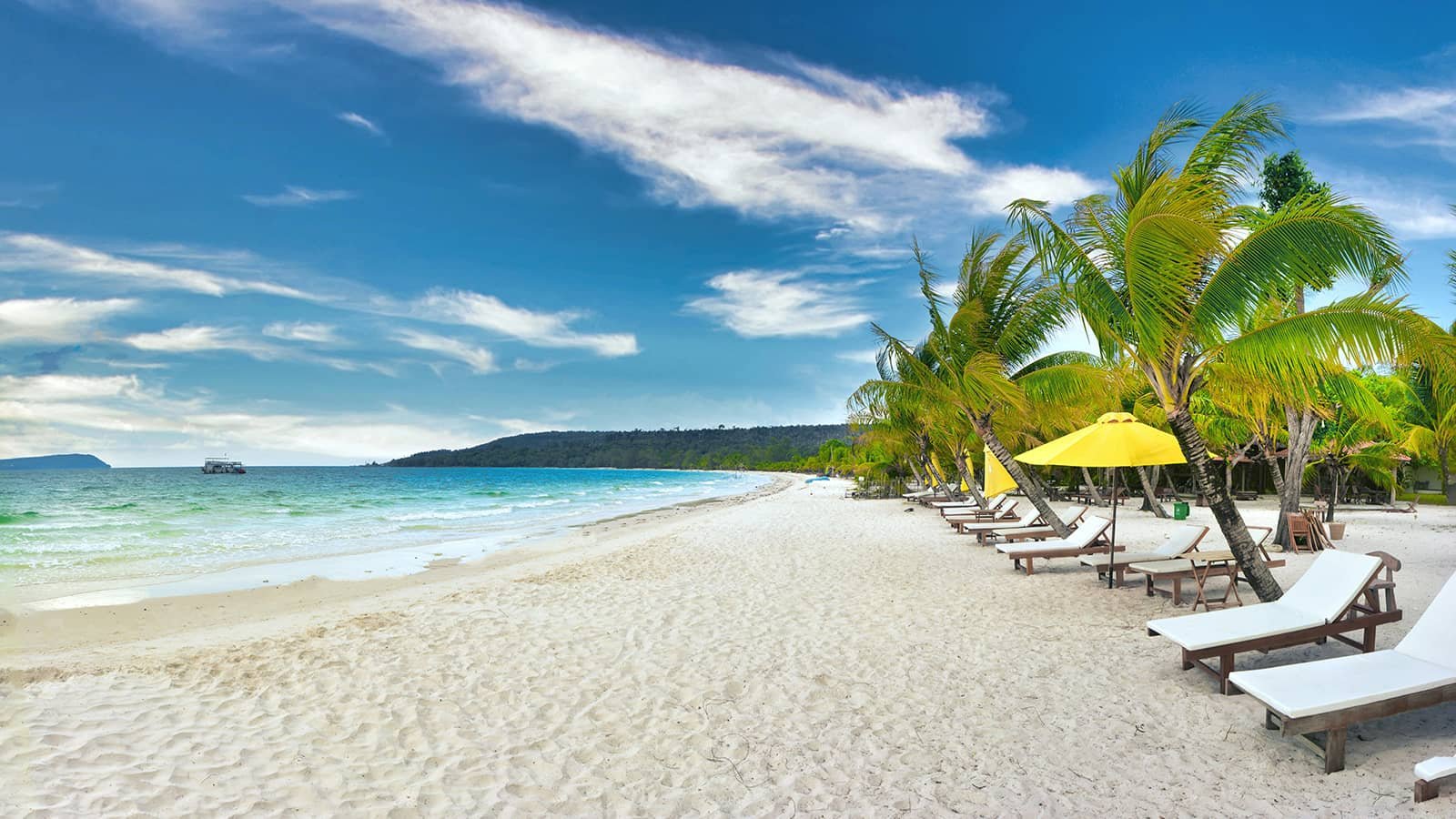
I find a shaded table, order grilled fish or Som Tam and let the journey slow down. The sea here is not always postcard-turquoise, particularly after wind or rain (as you can see in the image – we got wind), but Ban Krut has something more valuable: space. There are no compulsory activities and little pressure to buy anything beyond lunch and perhaps a cold coconut.
Depending on the weather, swim, rent a bicycle, walk beneath the palms or continue around the headland to quieter stretches such as Bo Thong Lang Bay.
Leave Ban Krut at around 3:30 or 4:00 pm and continue to Thung Wua Laen Beach, approximately 16 kilometres from Chumphon. Stay either beside the beach or in Chumphon itself. This places you much closer to Khao Sok while preserving Day 6 as an enjoyable coastal journey rather than an endurance drive.
Day 7: Into the Rainforest – Chumphon to Khao Sok
Morning: Travel south into Khao Sok
I leave Chumphon early, watching the Gulf Coast’s palm plantations and lowland villages gradually give way to dense forest and limestone mountains. Allow roughly four hours for the drive, depending on the location of the previous night’s accommodation and the number of stops.
Khao Sok National Park has two distinct visitor areas. The first surrounds the park headquarters at Khlong Sok village, where jungle trails, river activities and night safaris begin. Cheow Lan Lake lies farther east, around an hour’s drive away. Treating them as separate destinations prevents a great deal of unnecessary backtracking.
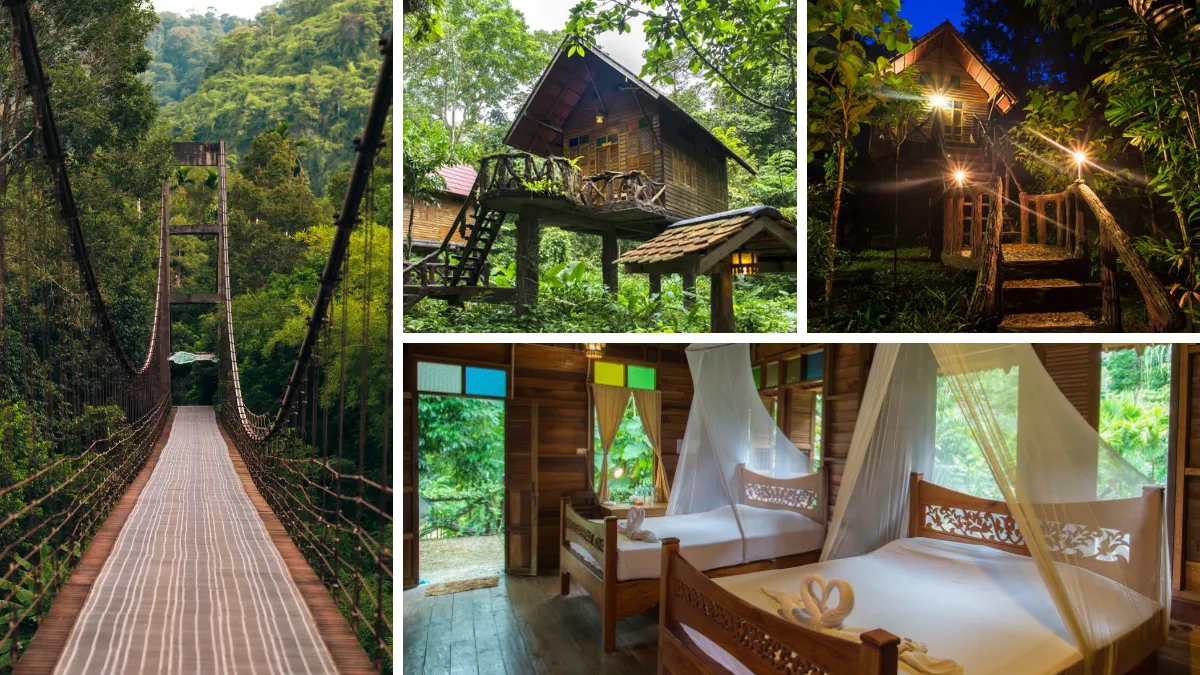
I check into a riverside bungalow or treehouse near Khlong Sok village. A treehouse sounds romantic—and often is—but check whether it has proper mosquito screens, reliable access and private facilities. Some are genuinely immersed in the forest; others are ordinary cabins raised a few meters above the ground.
Afternoon: Canoeing on the Sok River
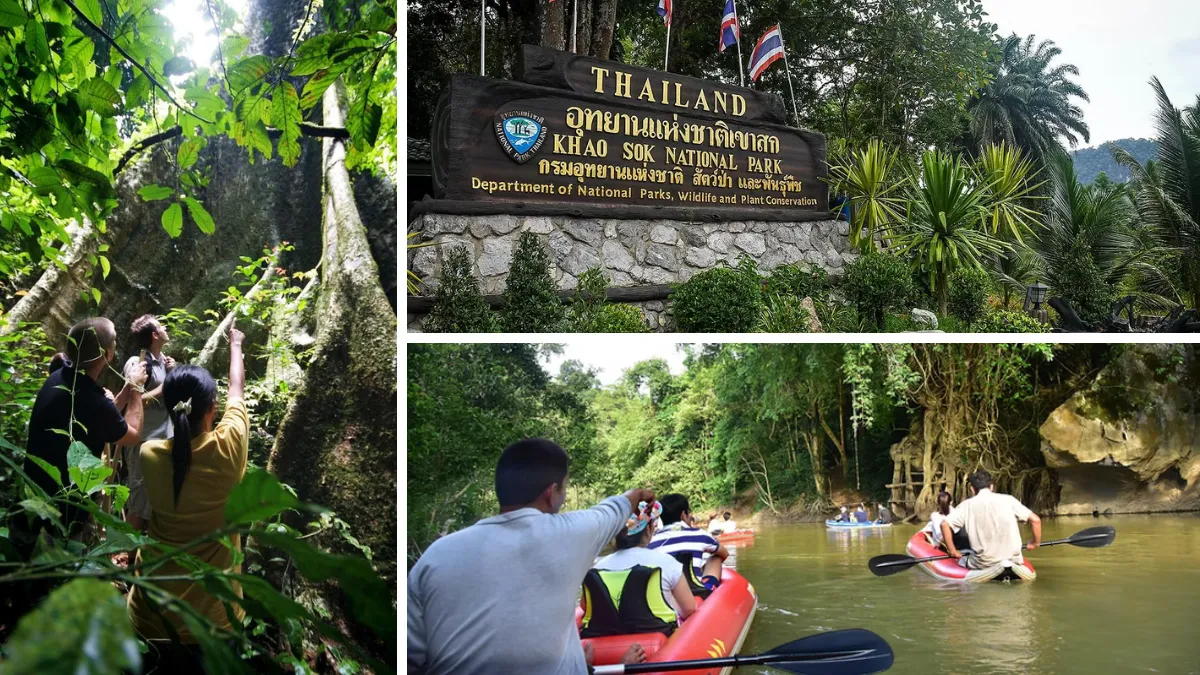
After lunch, we took a guided canoe trip down the Sok River. Limestone cliffs rise behind curtains of bamboo, palms and tangled vines, while the river carries you beneath overhanging branches.
I have to remind myself to keep paddling, as I become more interested in watching for dusky langurs, macaques, kingfishers, snakes and monitor lizards. Wildlife sightings are never guaranteed, but the journey is worthwhile for the scenery alone.
River levels affect the experience. During the dry season, the water can become shallow; after heavy rain, operators may delay or cancel departures. I would accept their judgement rather than pressuring anyone to run the river in poor conditions.
Evening: Guided night safari
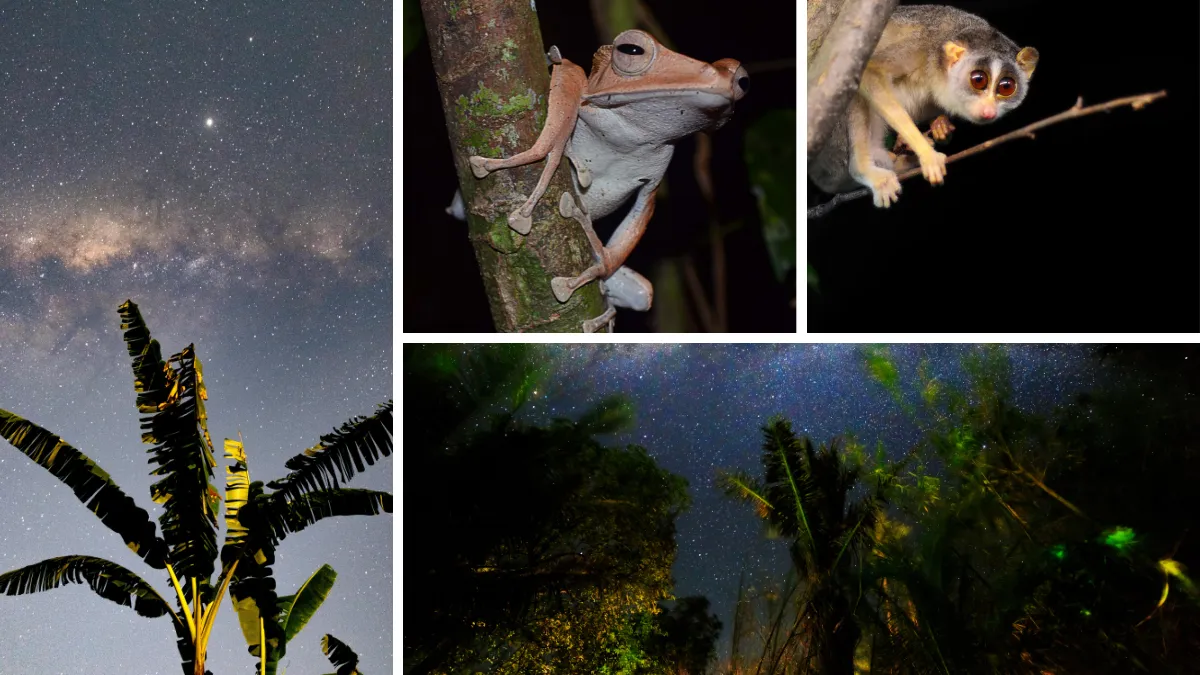
After dinner, we returned to the national park with a licensed guide and headlamp. The forest feels entirely different after dark. Cicadas dominate the soundscape, frogs call from unseen pools and every leaf seems capable of concealing something.
The night walk lasts around two hours. Possible sightings include slow lorises, civets, mouse deer, snakes, scorpions, spiders, annoyed birds you wake from sleeping and an extraordinary assortment of insects. I kept expectations realistic. This is not a drive-through safari or illuminated zoo trail. Tonight though delivered a slow loris and several snakes; then mostly frogs, insects and the charged atmosphere of being inside a tropical forest after dark. Well worth it.
Day 8: A Full-Day Khao Sok Jungle Trek
Today is the most physically demanding day around Khao Sok, so start early with a substantial breakfast and plenty of water.
Morning: Ton Kloi Waterfall Trail
If someone had told me before I left on this hike that I’d be chest-deep in a jungle pool, surrounded by ancient rainforest, with nothing but the sound of cascading water and chattering wildlife around me, I probably would have laughed. But that’s exactly where the Ton Kloi Waterfall hike took me — and everytime I think of it I need to reprocess how incredible (and humbling!) the whole experience was.
Here’s my rundown for anyone thinking about tackling this trail. Spoiler: bring more water than you think you need.
We were up before dawn and at the Khao Sok National Park entrance by 8:00 AM. The park entry fee is 300 baht — absolutely worth it, no complaints there. The scene was pretty much picture perfect – morning mist hanging low and the jungle rising dramatically out of the fog.
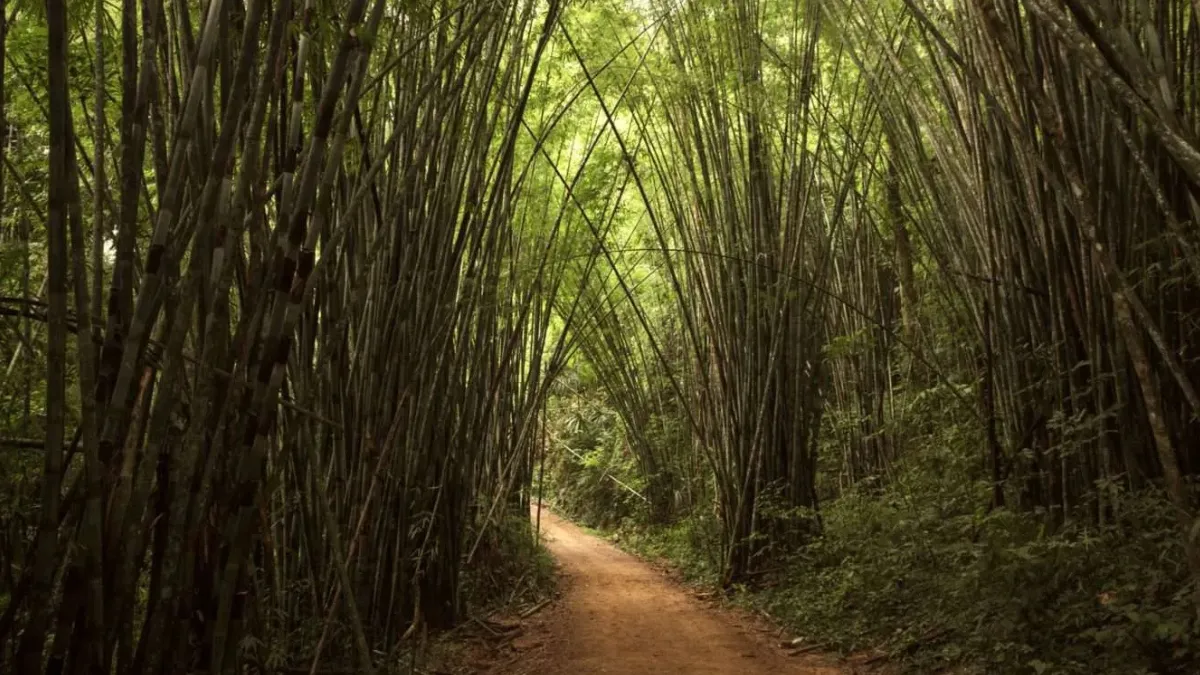
The Ton Kloi trail head begins right from the visitor center area, so there was nothing complicated involved. Just pay the park, get your guide, grab a trail map (manage your expectations — the maps are basic at best), and go. The trail winds roughly 7 kilometers one way through some of the most stunning primary rainforest I’ve ever walked through. This is ancient jungle. We’re talking about one of the oldest rainforests on Earth, reportedly older than the Amazon. Every step felt like something out of a nature documentary.
- Cicadas — they are constant, and almost deafening. Their hum fills the entire jungle.
- Giant bamboo stalks towering above us, some easily 15–20 meters tall
- Enormous spiders — I won’t lie, I nearly walked face-first into a web that would have made an arachnophobe faint on the spot
- Long-tailed macaques crashing through the treetops above us, completely unbothered by our presence
- Gibbons – sadly not on our trek – we heard them but never saw them
The trail itself starts relatively manageable — a well-worn dirt path cutting through dense undergrowth, crossing over tree roots and occasional rocky sections. The canopy provides wonderful shade, which is a blessing because even at 9.30 AM the humidity is absolutely punishing.
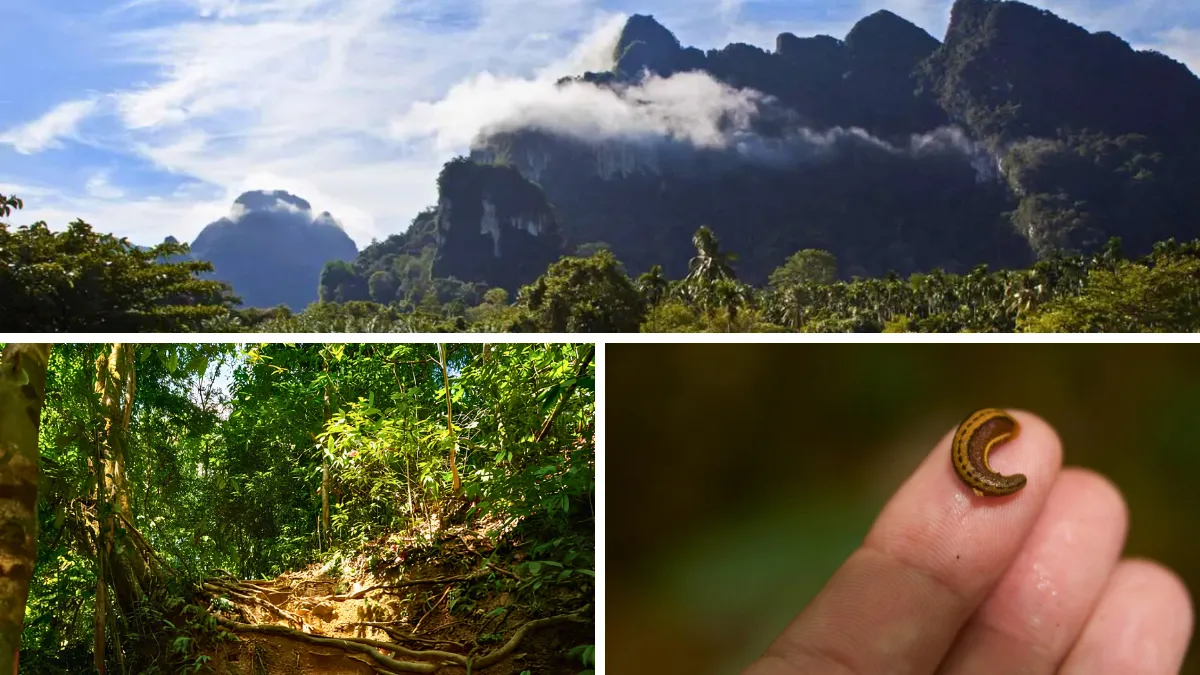
The Leech Situation
Yes, We need to talk about this. Nobody warned me sufficiently. I want to warn YOU sufficiently.
The leeches are real, they are determined, and they will find you.
About two kilometers in, during a wetter, shadier section of trail, I looked down and noticed a small, enthusiastic hitchhiker had attached itself above my ankle. My hiking partner had two. We’d applied repellent that morning but the little suckers found the gaps around our socks anyway.
Tips I wish I’d known:
- Tuck your trousers into your socks — fashion be damned
- Apply DEET around your ankles and shoes before you start
- Do regular checks every 20–30 minutes on wetter sections
- Don’t panic — they’re not dangerous, just deeply unpleasant
- Salt or insect repellent will encourage them to release. Stay calm. It becomes a trail ritual after a while. You almost start to find it funny. Almost.
The River Crossings — Where Things Get Interesting
The river crossings is where the Ton Kloi route separates itself from a casual stroll. The trail crosses the Sok River and several tributary streams multiple times throughout the day. After rainfall, these crossings can be thigh-deep.
We hit the trail during a period following some heavy afternoon storms from previous days, so several crossings had us wading through fast-moving, knee-to-waist-deep water while holding our bags above our heads. There were moments where I genuinely questioned my footing on the slippery rocks beneath, gripping whatever branch or root I could find.
This is genuinely challenging terrain. The trail is rated as moderate-to-difficult, and I’d agree with that assessment. Some of the scrambles up slippery root-covered embankments after wet crossings had my heart rate spiking.
But here’s the thing — each crossing was also its own little reward. Cool, clear jungle water on tired legs? Absolute bliss. One of the unexpected joys of this trail is that it offers so many natural swimming spots along the route. We stopped twice before even reaching the main waterfall, slipping into crystal-clear pools carved into the rock by the river.
At one particularly beautiful pool — maybe 4 kilometers in — we had the water entirely to ourselves. We floated on our backs, looking up through a break in the canopy at a sliver of brilliant blue sky framed by jungle. Those are the moments that make travel genuinely transformative.
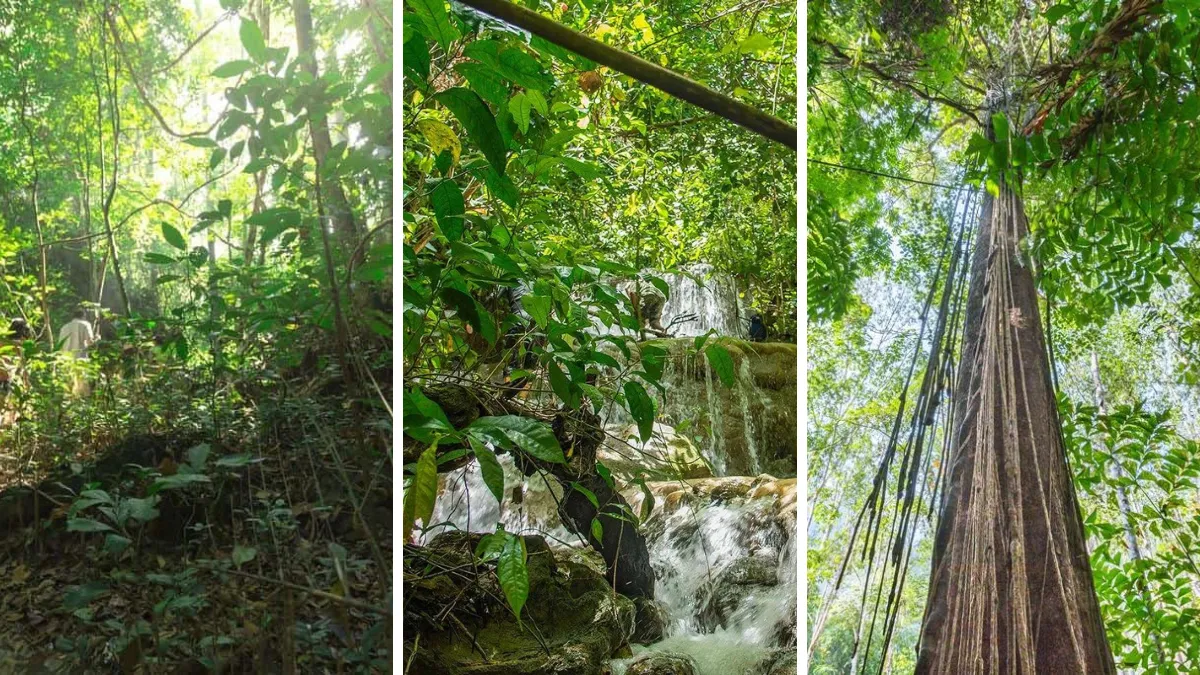
Arrival at Ton Kloi – Thailand Beach and Jungle Adventure
After approximately 3 to 3.5 hours of hiking (with swimming stops and plenty of photo breaks), we finally heard it — the unmistakable rumble of the falls ahead.
Ton Kloi Waterfall is a single tiered cascade dropping somewhere in the range of 20 meters in total. I want to be honest with you: it is not a thundering, jaw-dropping wall of water. If you’re expecting Niagara, recalibrate. But in its jungle setting — framed by overhanging ferns, moss-covered boulders, and dense green canopy — it is absolutely beautiful.
The pool at the base of the main falls is wonderfully swimmable. We dropped our packs, peeled off our trail shoes, and jumped straight in. The water was cool and refreshing after a full morning of sweaty jungle hiking. We spent almost and hour at the waterfall — swimming, eating our packed lunches on the rocks, watching a bright blue kingfisher dart back and forth across the pool, and just… breathing it all in.
We had the falls largely to ourselves for most of that time, with only one other small group arriving later. That feeling of having found something truly remote and untouched — that’s the magic of Ton Kloi.
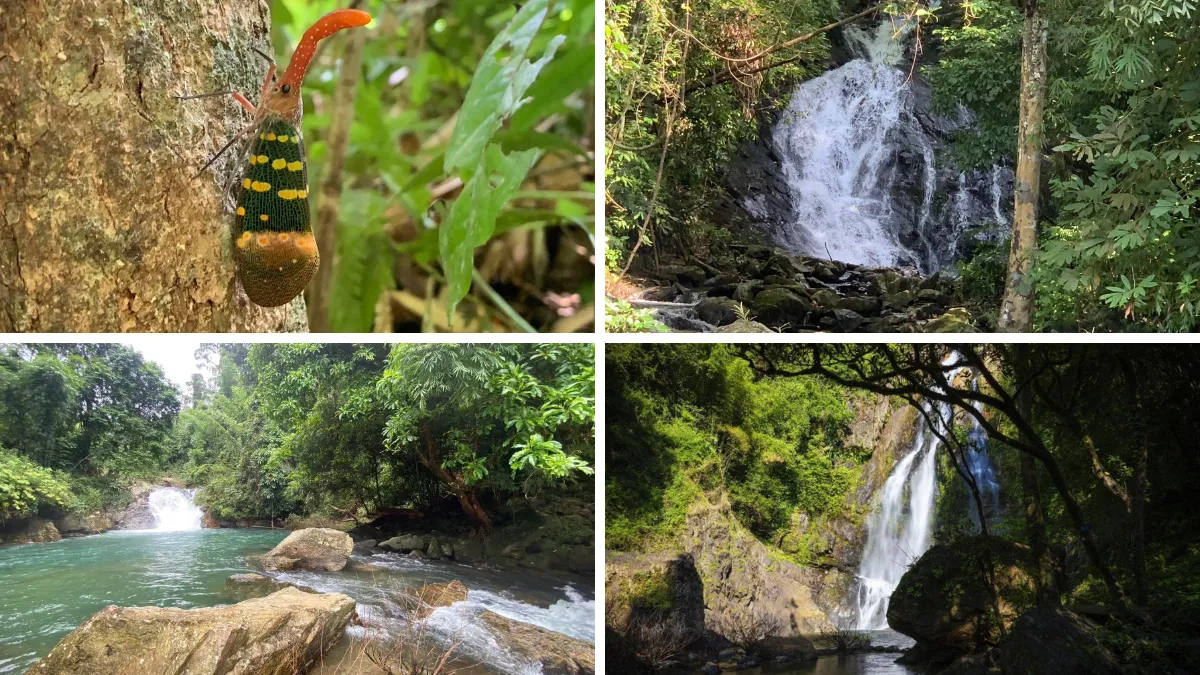
The Return Journey — Legs Screaming, Heart Full
Here’s what people don’t always remember: you have to hike the 7 kilometers back out.
By the time we turned around, my legs had already logged serious miles and the afternoon heat was building. The return trip felt harder in some sections — though mentally easier because you know what’s coming. The river crossings on the way back felt shallower (or maybe we’d just become more confident in them).
We made it back to the trailhead just as the late afternoon light was turning — around 4:30 PM, making it roughly a full 8-hour day including all stops.
Exhausted. Muddy. A little blood-donated to the local leech population. Absolutely, completely satisfied. We showered, we ate, we slept.
Day 9: Rafflesia, Bamboo Rafting and Rural Khao Sok
Day 9 is intentionally adaptable. After the full trek, I wanted another jungle experience without repeating the same trail. But blisters and wet boots changed my mind.
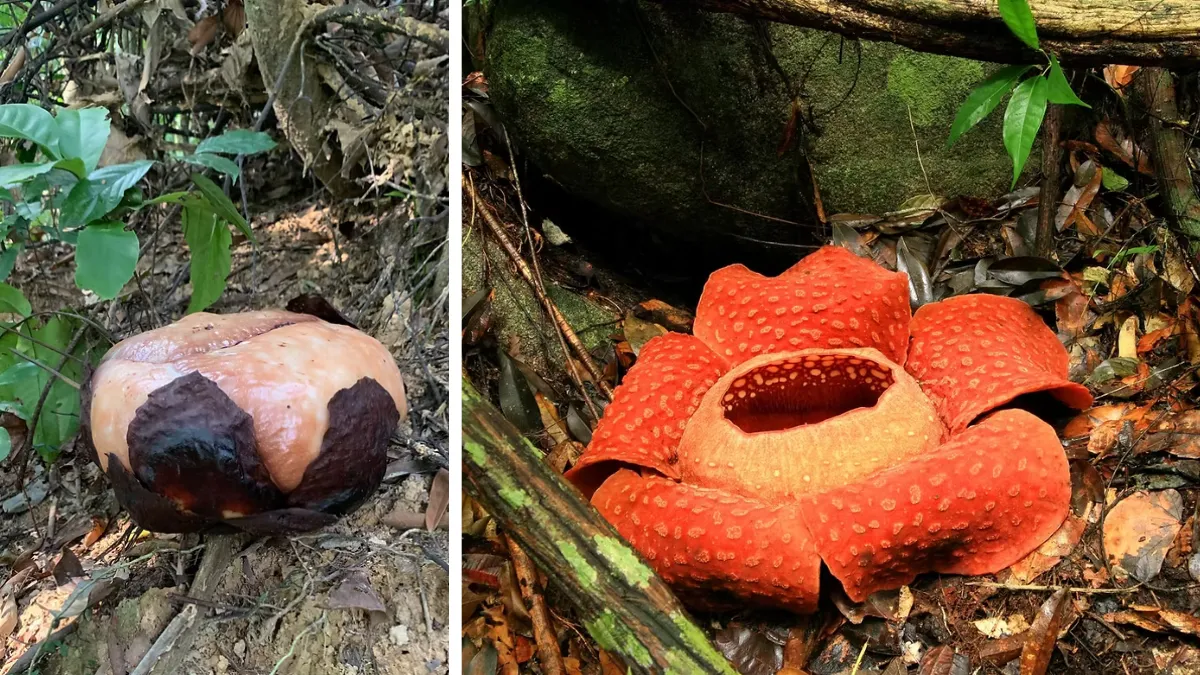
Option one: Search for the Rafflesia
Between approximately November and April, ask local guides whether a Rafflesia is currently flowering. These enormous parasitic flowers can reach around 80–90 centimeters across, but individual blooms last only seven days. They are incredible, they have no roots or leaves, just a simple spore that attaches itself to a vine and sucks the life out of it – literally.
The guided search generally takes three to five hours over steep, muddy terrain. Tours are often only confirmed after guides receive reports of a bloom. I would only choose this option when a guide knows of a recently opened flower. Trekking for hours to see an unopened bud may be botanically interesting, but it is not quite the same reward. I opted for rafting.
Option two: Bamboo rafting on the Khlong Sok River
I choose a bamboo-rafting trip. The raft glides between towering limestone walls, with a local guide steering using a long bamboo pole.
It includes a stop beside the river where the guide boils water over a small fire and serves tea or coffee in a bamboo cup. Very tourist-oriented, but since I was a tourist it was an enjoyable change of pace after yesterday’s long hike. The whole rafting trip lasted around two hours. It was long enough. Very simple but highly enjoyable.
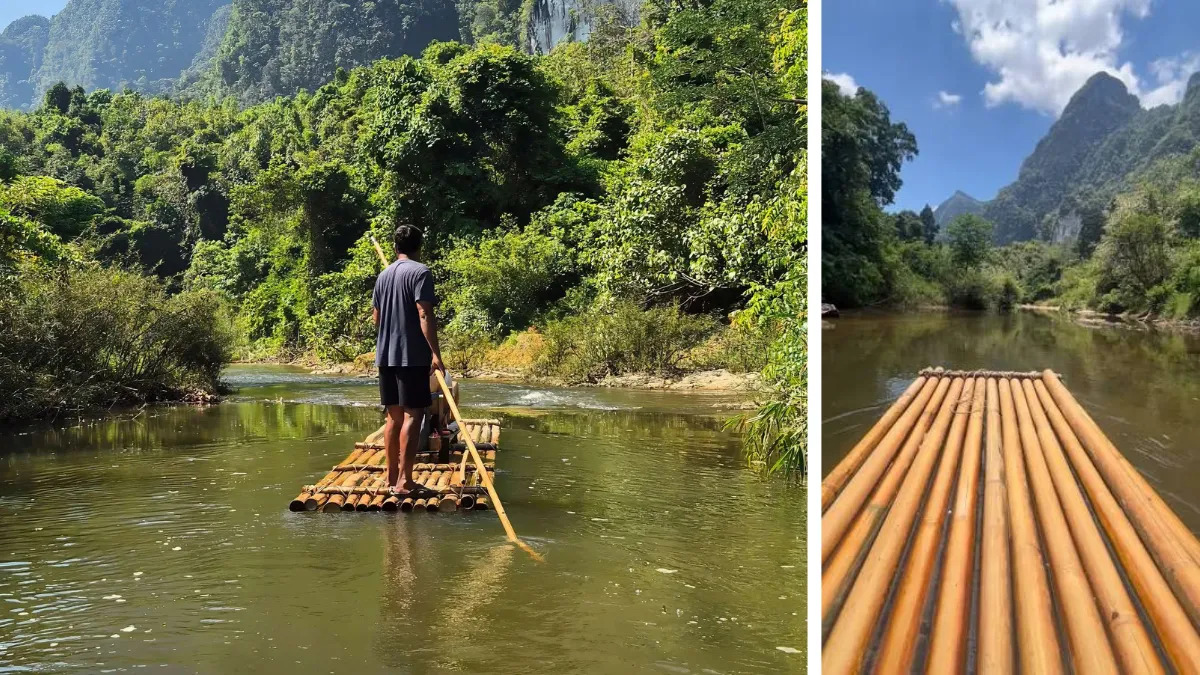
I was knackered so decided on a lazy afternoon and spent it face down Garfield style in my bed. No apologies. Was great!
Prepare for Cheow Lan Lake
Pack a smaller overnight bag for the lake. Large luggage can be stored at the village accommodation or transferred separately.
For Cheow Lan Lake I’d suggest:
- Lightweight clothes and swimwear
- Rain jacket or poncho
- Dry bag
- Head torch
- Insect repellent
- Walking shoes and water shoes
- Power bank
- Cash
- Refillable water bottle
Day 10: Cheow Lan Lake and the Floating House Experience
A two-night stay makes sense here. A single night provides the famous scenery, but two nights allow one full day to reach the lake’s quieter inlets, caves and wildlife areas.
Morning: Transfer to Ratchaprapha Pier
After breakfast, I leave Khlong Sok village for Ratchaprapha Dam and Cheow Lan Pier. Most floating-house packages include this road transfer, the long-tail boat, accommodation, meals and guided activities.
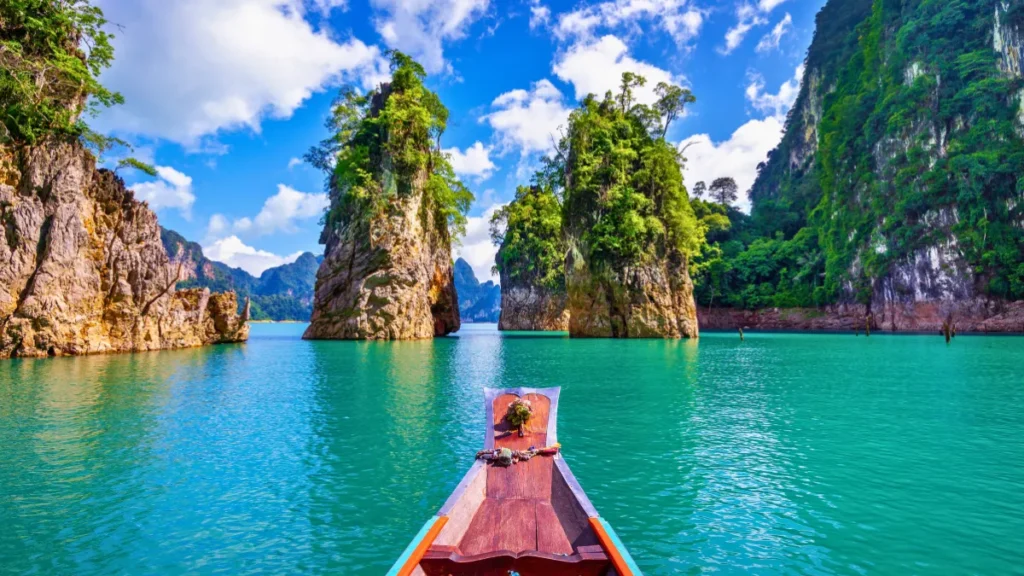
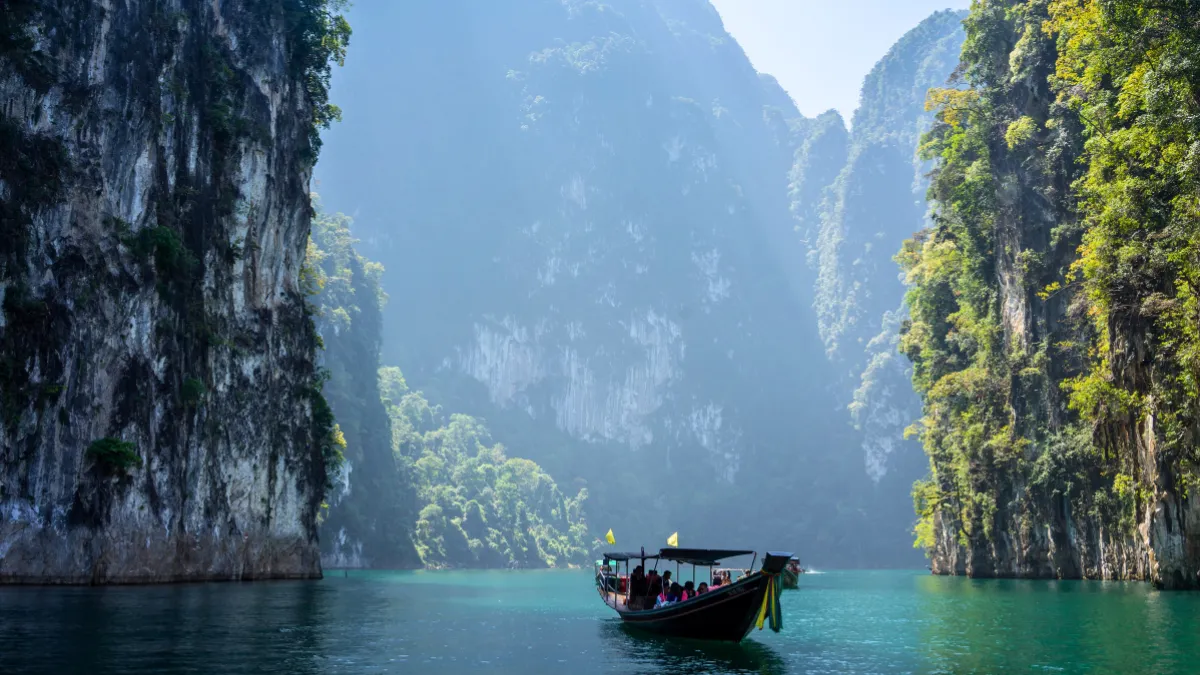
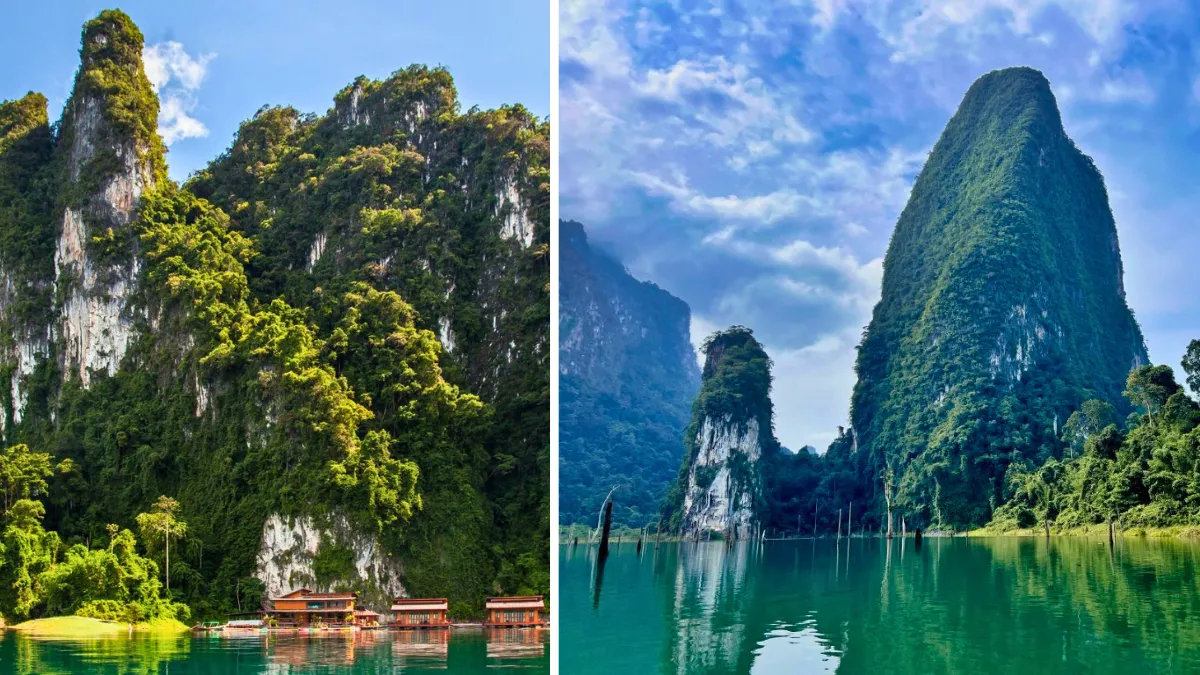
Cheow Lan is not a natural lake. It was created by the construction of Ratchaprapha Dam, but the resulting landscape is extraordinary: forested limestone towers rise directly from emerald water, creating more than 100 islands and countless hidden inlets. Tourism Authority of Thailand
Long-tail boat into the lake
At the pier, I board a traditional long-tail boat and head into the reservoir. The noise of the engine is considerable, but so is the scenery.
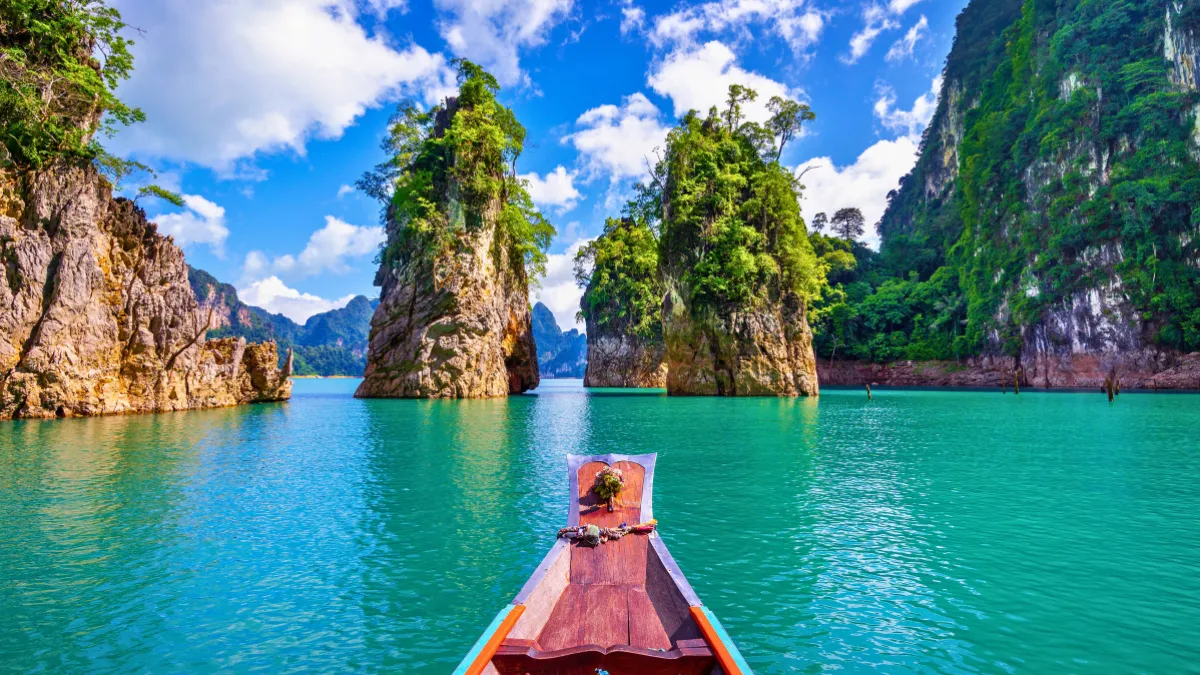
Most journeys stop near Khao Sam Kloe—the Three Brothers limestone formations. They are among the lake’s most photographed landmarks, so I do not expect solitude here. Once the boat continues deeper into the reservoir, traffic begins to thin.
Depending on the floating house, the journey from the pier can take between 45 minutes and more than an hour.
Afternoon: Arrive at the floating house
The best floating-house experience depends on expectations.
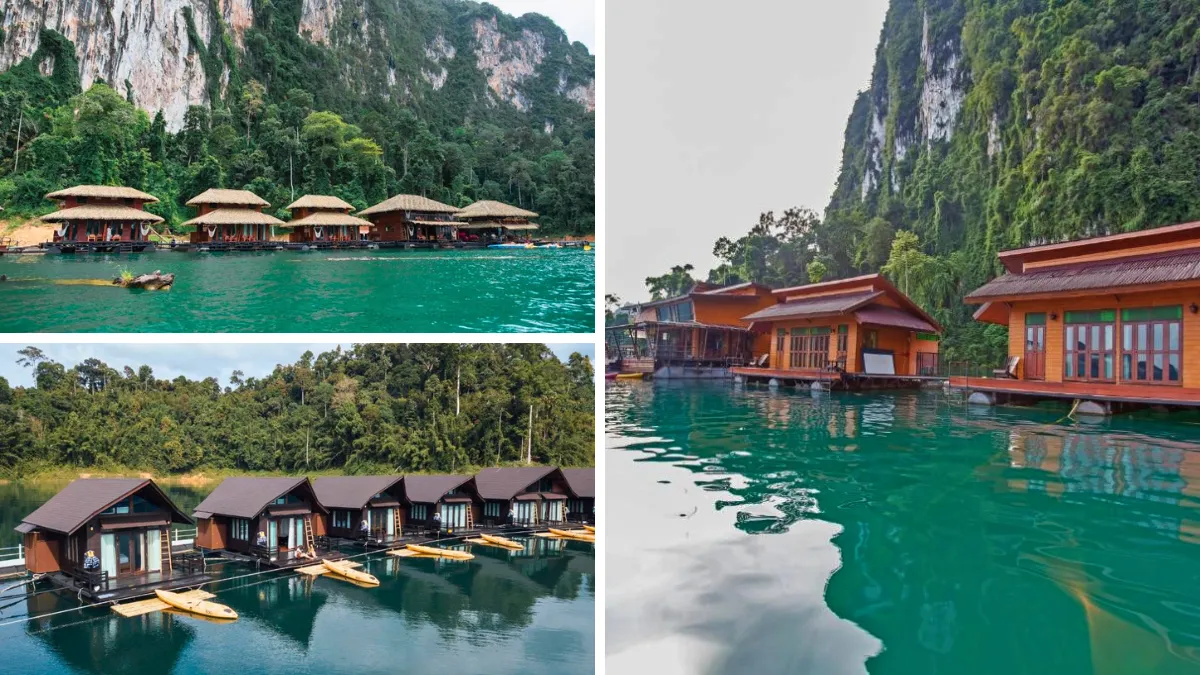
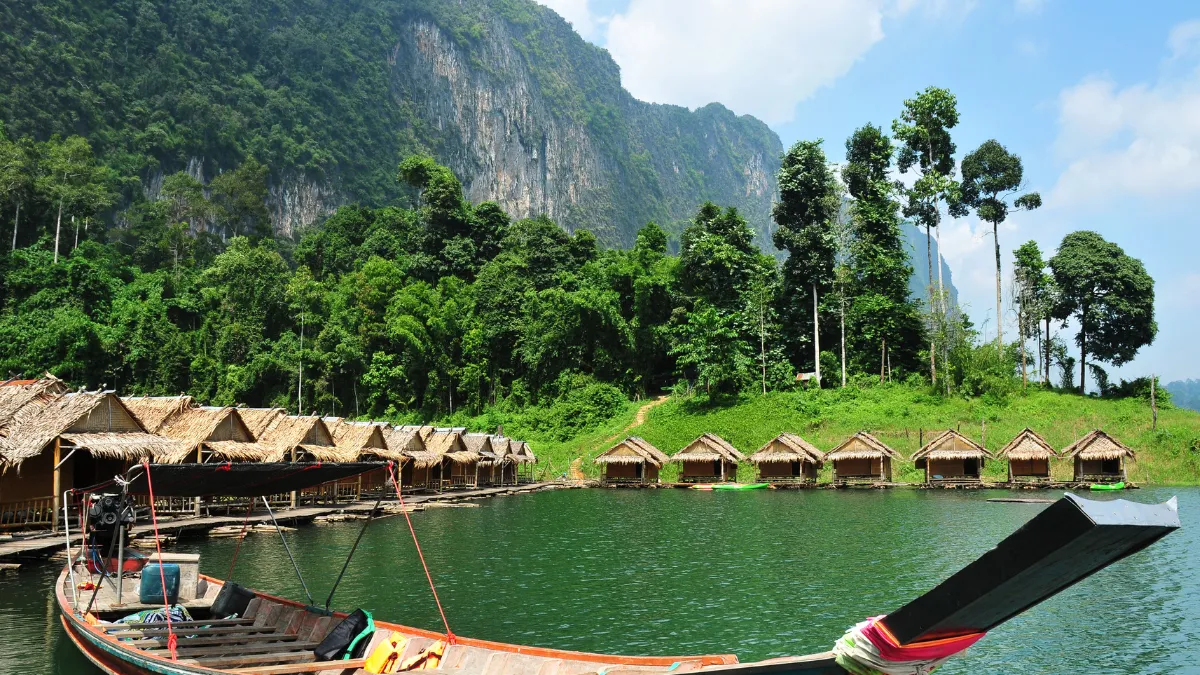
- Basic national park or community raft houses: bamboo rooms, fans or no fans, shared bathrooms and limited electricity.
- Midrange floating resorts: private bathrooms, better mattresses and longer electricity hours.
- Premium floating villas: air-conditioning, private terraces, panoramic windows and more extensive facilities.
I favour a comfortable midrange property that still feels connected to the lake. Air-conditioned luxury has its appeal, but I do not need a television or infinity pool in a place where I can swim directly from my bedroom.
After lunch, I kayak along the shoreline, paddling beneath cliffs and into flooded forest. When the tour boats leave, the lake becomes wonderfully still.
Evening wildlife boat safari
Before sunset, I join a slow boat journey along the forest edge. Guides scan for hornbills, langurs, macaques, gibbons, gaur and wild elephants. Sightings vary enormously; the mist drifting through the karsts is often the evening’s real spectacle.
Boats are not permitted to operate before sunrise or after sunset, so this is a dusk excursion rather than a night safari. Dinner is served at the raft house. Afterwards, there is little to do—and that is the point. I sit outside listening to frogs, cicadas and water moving beneath the floating platform.
Day 11: Deep-Lake Jungle Adventure
Waking on Cheow Lan Lake is one of the defining moments of this itinerary. Mist rests between the cliffs, the water is mirror-still and the first hornbills cross the sky before breakfast.
Early morning: Wildlife safari
I take an early boat ride into one of the quieter channels. Wildlife is most active before the heat builds, although the dense forest makes animals difficult to see. After returning for breakfast, the day’s main adventure depends on the season.
Dry-season adventure: Nam Talu Cave
From approximately early November until the end of May, conditions may permit an expedition to Nam Talu Cave. This is the most adventurous option: a long jungle approach followed by wading, scrambling and sometimes swimming through a cave containing an underground river.
It is not suitable for young children, weak swimmers, anyone uncomfortable in confined spaces or travellers with limited mobility.
Nam Talu is closed during the wet season because water levels can rise with terrifying speed. Current guidance lists its annual closure from 1 June until early November. It should never be entered when closed or after heavy rain, even if an unofficial operator offers to take visitors. Nam Talu Cave safety and closure information
Green-season alternative: Coral Cave
When Nam Talu is unsafe, choose the Pakarang or Coral Cave excursion. Reaching it involves a boat journey, a forest walk and sometimes a bamboo-raft crossing. This is the cave we explored as we were visiting in the rainy season.
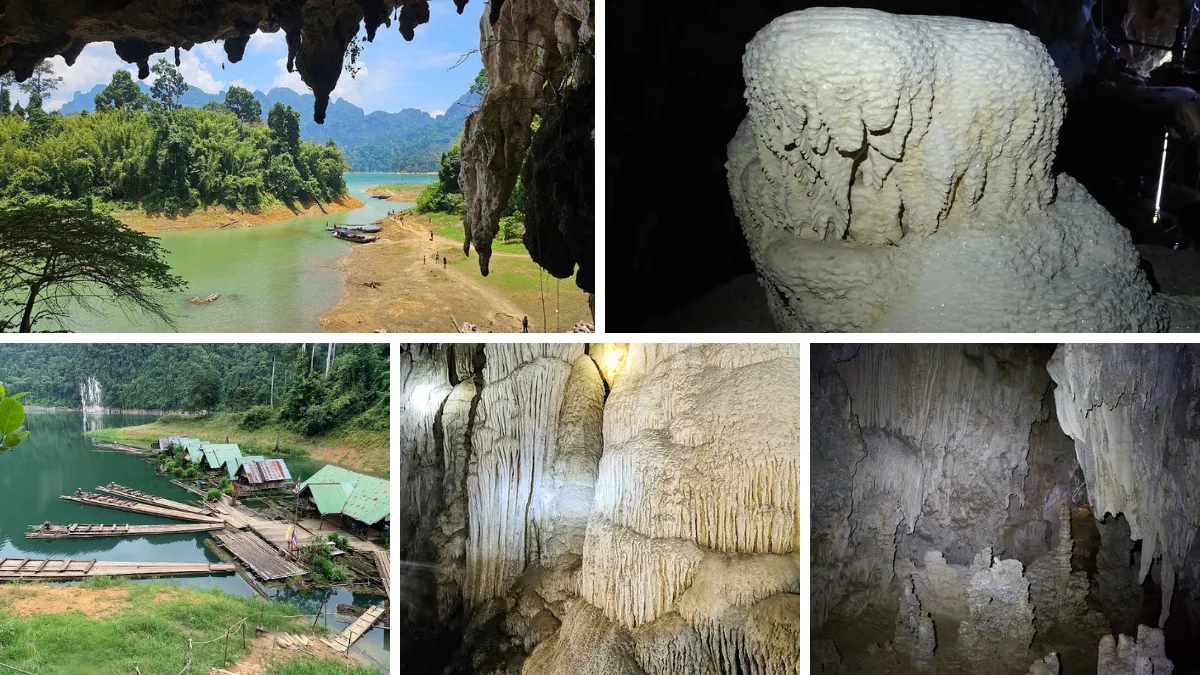
The inside of Coral Cave is captivating, filled with stalactites and stalagmites that look like coral formations found in the ocean. These structures have formed over hundreds to thousands of years as minerals slowly built up, shaping what we see today. When flashlight beams touch these formations, they glisten, creating a magical and enchanting atmosphere inside the cave.
Coral Cave also has natural underground streams, adding the gentle sound of flowing water to the calm and cool surroundings. As you explore, you’ll come across small hidden waterfalls and narrow pathways to squeeze under or through. The cave’s chambers vary in size, with some large enough to feel like grand palace halls. Certain areas feature unique formations that resemble animals or objects, while others look like natural chandeliers.
The cool, fresh air combined with the reflections of the stalactites and stalagmites in the moving water makes exploring Coral Cave an unforgettable experience.
Alternative for hikers: Kri Sorn viewpoint
Strong hikers can ask about a guided viewpoint trek near the remote western part of the lake. The climb can be steep, muddy and exposed, but the reward is a high view over forested islands and limestone peaks.
The exact trek should be selected by the guide according to weather, fitness and current park access. I would rather complete a slightly easier route safely than force a dangerous cave or viewpoint into the schedule.
Late afternoon: Kayaking and swimming
After returning to the floating house we decided on a final swim and unhurried kayak rather than a hike. After a full day of boats and trekking, I welcomed the opportunity to go nowhere.
Spend a second night on Cheow Lan Lake.
Day 12: Sunrise on Cheow Lan Lake and Transfer to Koh Samui
Morning: One last lake safari
I woke before breakfast for a final very early paddle in the lake. Two nights on the lake means I am no longer trying to photograph everything at once. I can watch mist slide away from the cliffs and listen for gibbons across the water.
After a 6am breakfast, pack and return to Cheow Lan Pier by long-tail boat. Most three-day lake packages reach the mainland during the late morning or around midday, but we had confirmed the return time before booking our onward ferry and got back to the the Pier at 7.30am
I always use the following service for all my internal Thailand travel. I can organize every ticket and connection before I leave home and never need to worry or panic about timers and if seats will be available. Another huge benefit is the fact it is local Thai prices, so I end up paying in Baht and the same price as a local Thai citizen when catching the train, bus or boat. Cost saving heaven.
Afternoon: Cheow Lan to Koh Samui
A pre-arranged transfer takes us from the pier towards Donsak, followed by a ferry to Koh Samui. Depending on connections, the journey from the Khao Sok region to a Samui hotel generally takes around five to seven hours. Combined minivan-and-ferry tickets are usually easier than arranging every segment separately. The tickets I had booked saw us arrive in 5 hours and 30 minutes. Sounds like a waste of a day but by getting up early, and grabbing a cabin on the Ferry we slept most of the way and were at the Samui hotel unpacking by 1.30 pm.
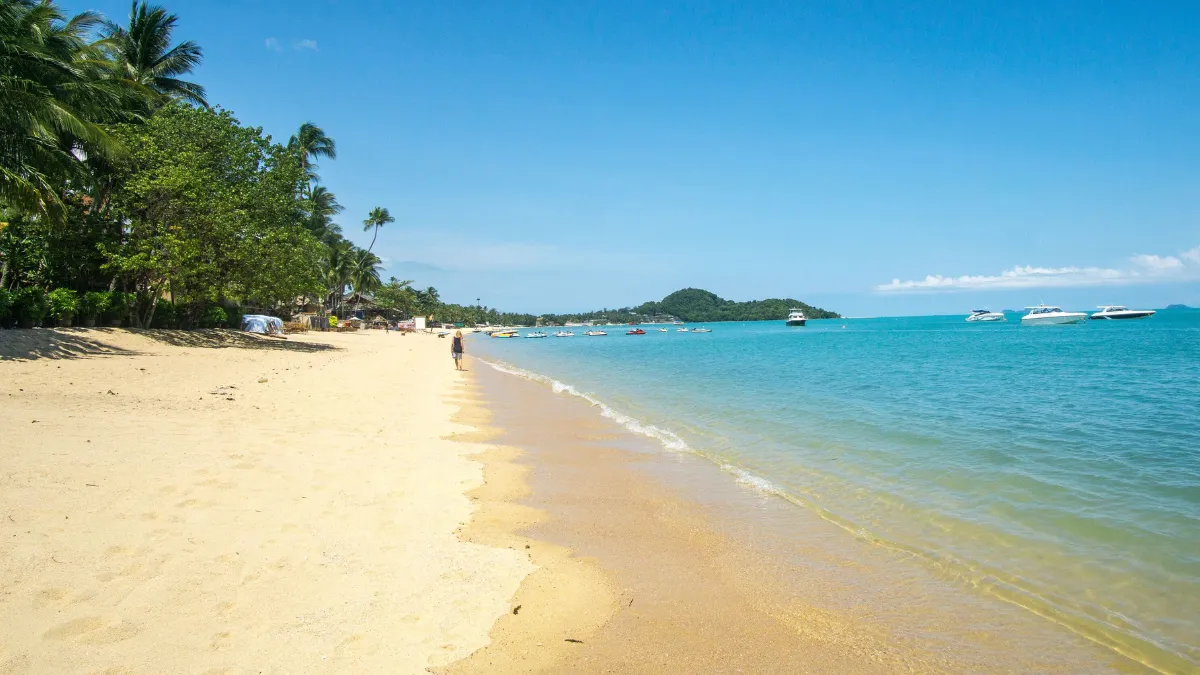
I recommend staying on the north or west side of Koh Samui:
- Bophut: restaurants, a walkable evening area and convenient transfers
- Mae Nam: quieter beach and relaxed atmosphere
- Bang Por: peaceful and less developed
- Lipa Noi: good sunsets and convenient for arrivals at Nathon
- Chaweng: best for nightlife, but the busiest and least restful option
After several days of mud, caves and basic lake accommodation, a comfortable hotel and long shower feel particularly welcome.
Day 13: Ang Thong Marine National Park
Rather than rushing across to another resort island, use Koh Samui as a base for a full-day expedition into Mu Ko Ang Thong National Marine Park.
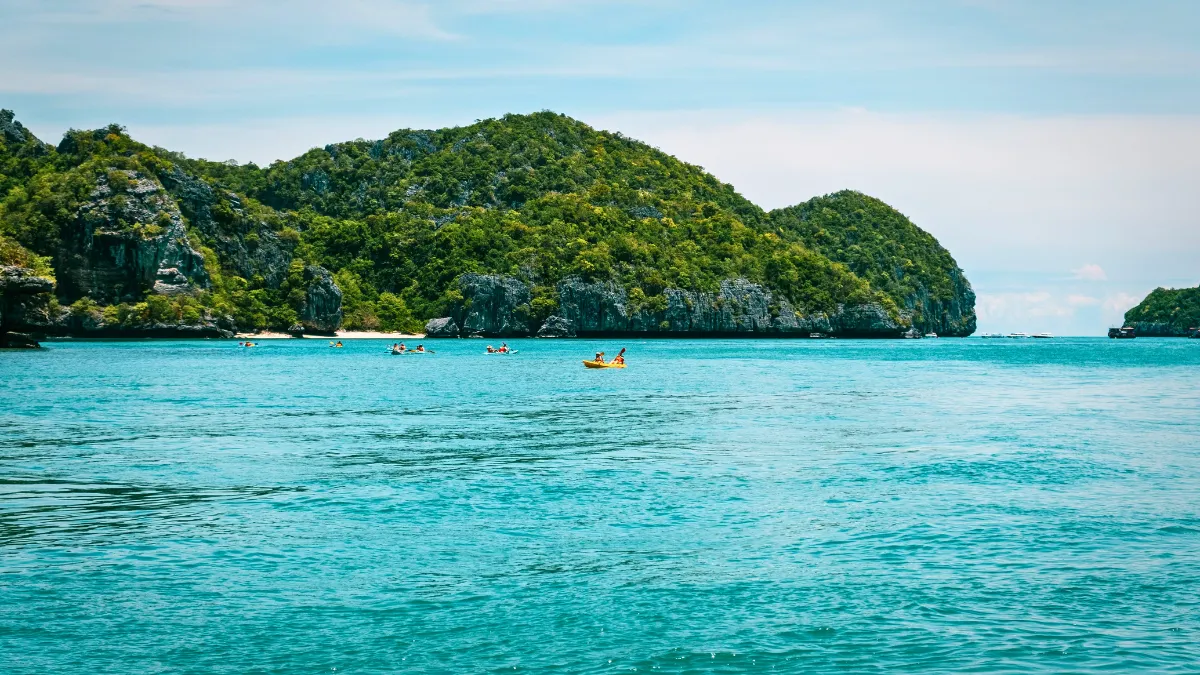
The archipelago contains more than 40 limestone islands, hidden lagoons, caves, forest and small beaches. The Tourism Authority of Thailand describes it as a major kayaking destination and one of the defining excursions from Koh Samui.
Most tours leave early. A speedboat maximises island time but can be rough and crowded; a larger boat is slower but more comfortable. The first stop for us included snorkeling, although visibility around Ang Thong is variable. I see snorkeling as a bonus rather than the main reason to visit.
Emerald Lagoon
On Ko Mae Ko, stairs climb to a viewpoint above Talay Nai, the enclosed Emerald Lagoon. The climb is short but steep, and the metal steps are either scorching hot when sunny or slippery when wet.
Kayaking beneath the cliffs
Kayaking is the most immersive way to experience Ang Thong. We paddled along the cliff edges, beneath eroded limestone walls, and around rocky headlands. The benefit is you get to visit loads of the smaller coves that are inaccessible to larger boats.
Ko Wua Talap viewpoint
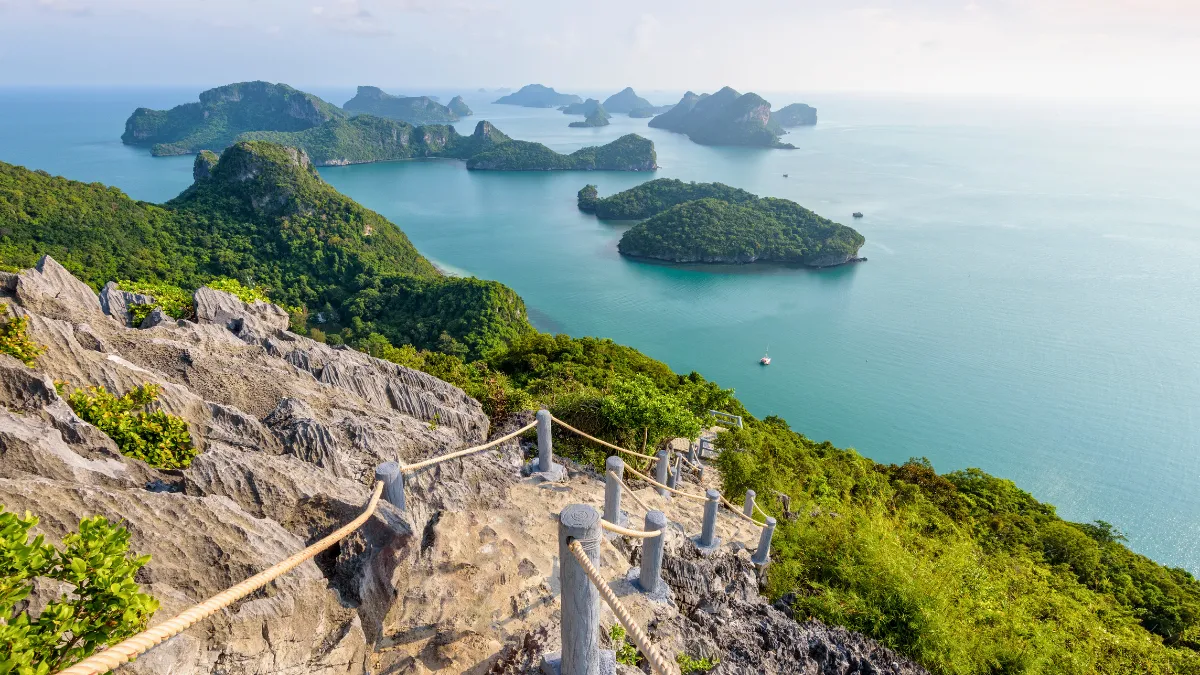
If the tour includes Ko Wua Talap, you must tackle the viewpoint trail. The upper sections are steep and involve rough rocks and fixed ropes, but the summit reveals the classic view across dozens of forested islands. It really is a remarkable sight.
Top tip, wear proper shoes. I attempted it the climb in flip-flops and it was a needlessly painful way to end the trip. Return to Koh Samui in the late afternoon for a final seafood dinner in Bophut, Mae Nam or one of the quieter beach communities.
Day 14: A Slow Final Day on Koh Samui
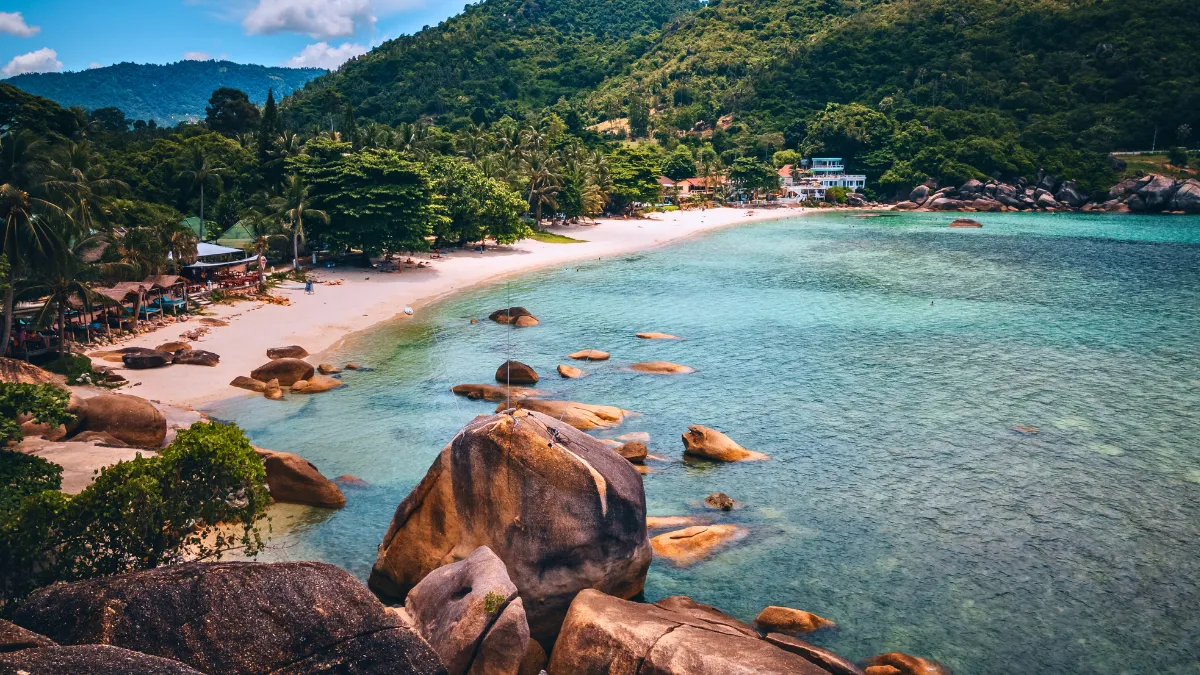
After the intensity of Khao Sok and Ang Thong, we kept the final day flexible. About 10am after a lazy start we decided to spend the morning swimming at Crystal Bay and lounging on Silver Beach. Mae Nam or Choeng Mon are equally good. You may prefer to head to Chaweng which has the longest sweep of sand, but it is also the busiest and most commercial.
Depending on your departure time you could potentially add the following to a Koh Samui day. Hire a scooter and drive!
- Wat Phra Yai and the Big Buddha
- Wat Plai Laem
- Bophut Fisherman’s Village
- A local fresh market
- A small coconut farm or a southern Thai cooking class
If you do decide to drive and explore just be aware that Samui traffic can be hideously slow, and rushing between waterfalls, temples and viewpoints rarely improves the final day. Neither does missing your flight!