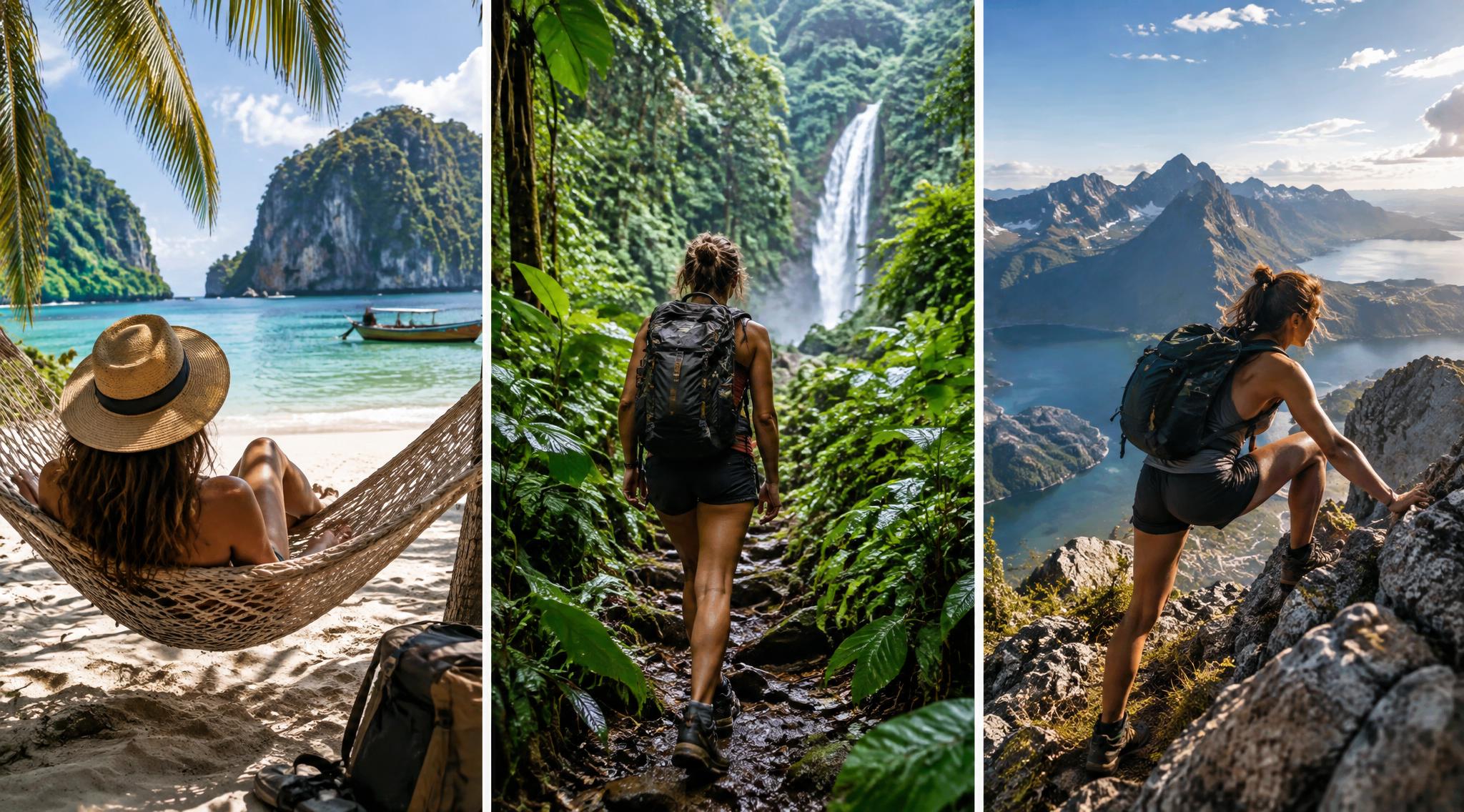

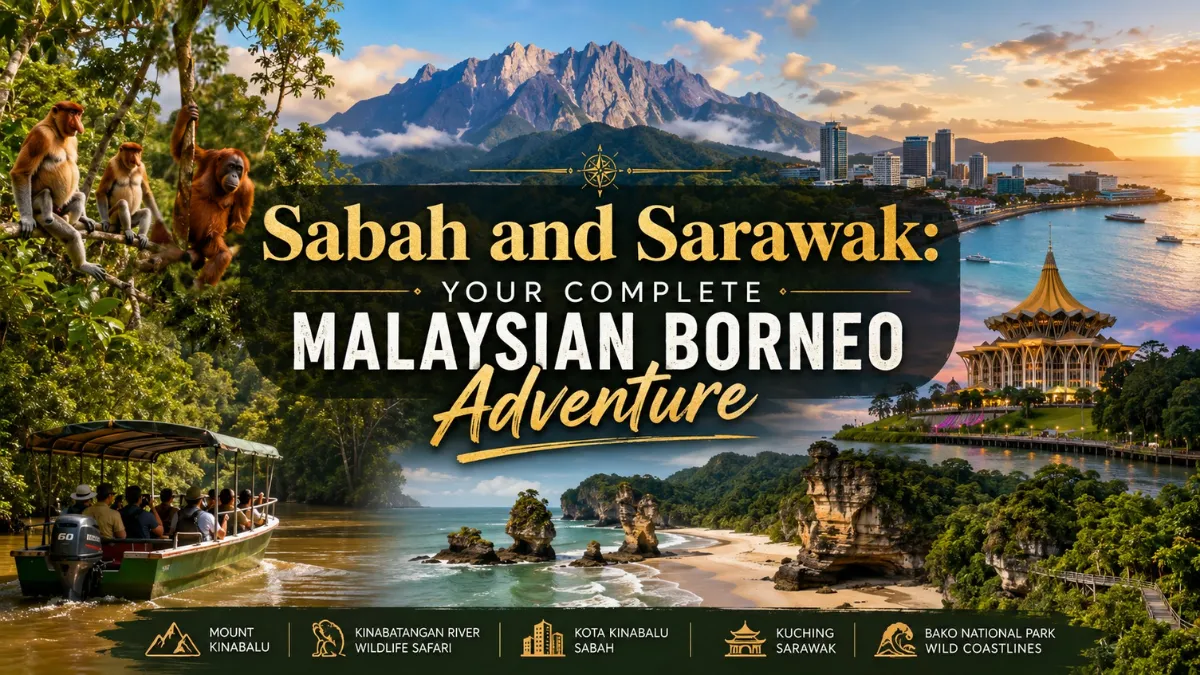
You’re about to tackle one of Southeast Asia’s wildest destinations. Ten days across Sabah and Sarawak gives you time to spot orangutans in the jungle, dive with sea turtles, and trek through rainforests older than the Amazon. This isn’t a beach holiday. Malaysian Borneo demands planning, but rewards you with proboscis monkeys at dawn, pygmy elephants along the Kinabatangan River, and landscapes you won’t find anywhere else on earth.
Solo Traveler Or Member Of A Group You Need Insurance
Protect Your Borneo Adventure
Jungle treks, river cruises, and remote islands mean you need proper coverage. Medical evacuation from Kinabatangan runs $15,000+ without insurance. Get covered before you book anything else.
Compare Travel Insurance PlansWhy Split Your Time Between Sabah and Sarawak
Most travelers pick one state or the other. You’re doing both, which is the smart move.
Sabah delivers wildlife density you won’t believe. Kinabatangan River has the highest concentration of orangutans in the world. Mount Kinabalu towers over everything. Islands off Kota Kinabalu offer world-class diving.
Sarawak brings culture and biodiversity. Kuching blends colonial architecture with modern Malaysian city life. Bako National Park packs more ecosystem variety per square kilometer than almost anywhere. Tribal longhouses open doors to indigenous cultures.
Ten days lets you hit the highlights without feeling rushed.
You’ll fly between states once, which takes 90 minutes and costs $40-80 depending on booking time.
Before You Go: Essential Planning
Visa Requirements for Malaysian Borneo
Most passport holders get 90 days visa-free entry to Malaysia.
Here’s the quirk: Sabah and Sarawak maintain separate immigration controls from Peninsular Malaysia and from each other.
You’ll go through immigration when flying from Kota Kinabalu to Kuching, even though both cities are in Malaysia. Keep your passport handy. Each state stamps you in for another 90 days.
Citizens of these countries get visa-free access: United States, Canada, United Kingdom, EU nations, Australia, New Zealand, Japan, South Korea, Singapore.
Check Malaysia’s immigration website if your nationality isn’t listed above.
Best Time to Visit Sabah and Sarawak
March through October is dry season across most of Borneo.
But “dry” is relative. This is tropical rainforest. Rain happens year-round.
Peak season runs June through August. Prices jump 30-40% for accommodations and tours. River cruises and Mount Kinabalu permits sell out months ahead.
Shoulder seasons (March-May, September-October) give you the best value. Weather is solid. Crowds thin out. You’ll still see plenty of wildlife.
November through February brings northeast monsoon. Eastern Sabah (including Kinabatangan) gets heavy rain. Diving conditions deteriorate. Some lodges close entirely.
How Much Does 10 Days Cost
Budget breakdown for one person:
| Category | Budget | Mid-Range | Comfort |
| Accommodation (9 nights) | $180-270 | $360-540 | $630-900 |
| Food (10 days) | $100-150 | $200-300 | $350-500 |
| Inter-state flight (KK to Kuching) | $40-60 | $60-80 | $80-120 |
| Local transport | $80-120 | $150-200 | $250-350 |
| Activities and tours | $200-300 | $400-600 | $700-1000 |
| Travel insurance | $30-50 | $30-50 | $30-50 |
| Total | $630-950 | $1,200-1,770 | $2,040-2,920 |
These numbers exclude international flights to get you to Malaysia.
Budget travel in Borneo is tougher than mainland Southeast Asia. Remote locations mean higher costs. Quality wildlife experiences require guides and specialized transport.
You can’t hostel-hop and street-food your way through the jungle.
What to Pack for Malaysian Borneo
Essential gear for this itinerary:
- Quick-dry hiking pants and shirts (humid conditions mean cotton stays wet)
- Lightweight rain jacket (compact, waterproof, breathable)
- Broken-in hiking shoes with ankle support (jungle trails get muddy)
- Sandals or water shoes for boat transfers and beaches
- Headlamp with extra batteries (power cuts happen in remote lodges)
- Insect repellent with 30%+ DEET (mosquitoes carry dengue)
- Sunscreen rated SPF 50+ (equatorial sun is brutal)
- Dry bag or waterproof phone case (protect electronics during boat trips)
- Basic first aid kit (anti-diarrhea meds, blister treatment, pain relievers)
- Reusable water bottle (tap water isn’t safe, you’ll buy bottled constantly)
Leave fancy clothes behind. This trip runs casual throughout.
Days 1-2: Kota Kinabalu and Island Hopping
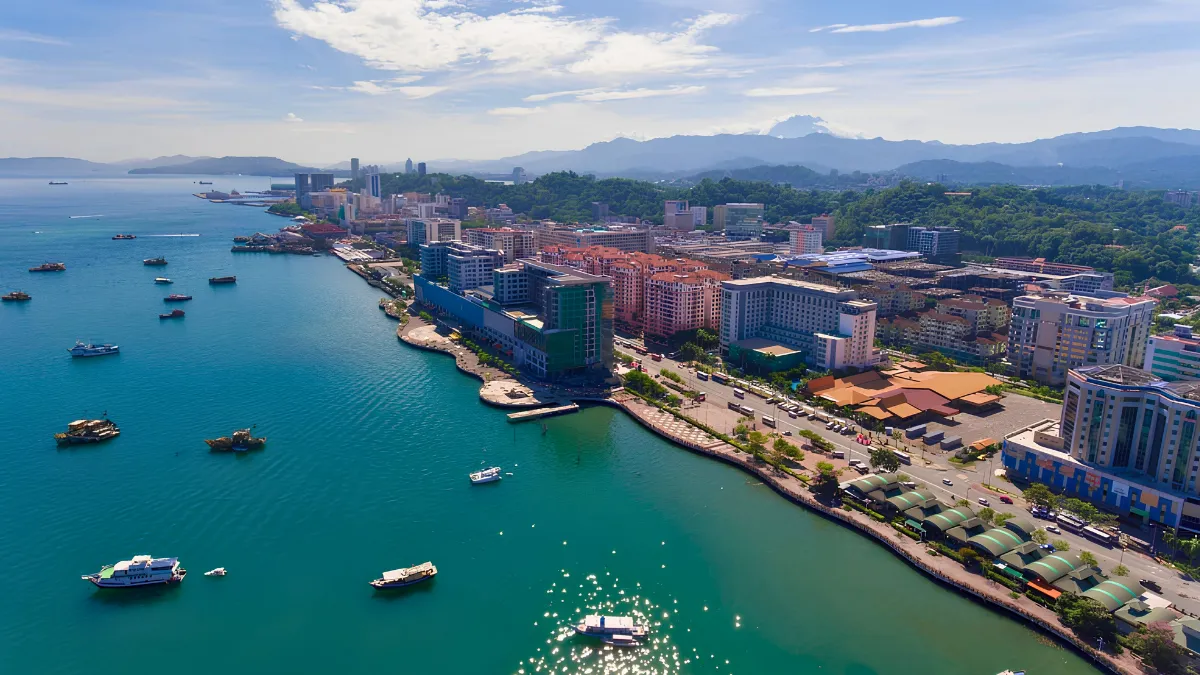
You’ll land in Kota Kinabalu, Sabah’s capital.
Most people call it KK. The city sprawls along the coast with Mount Kinabalu looming in the distance on clear days.
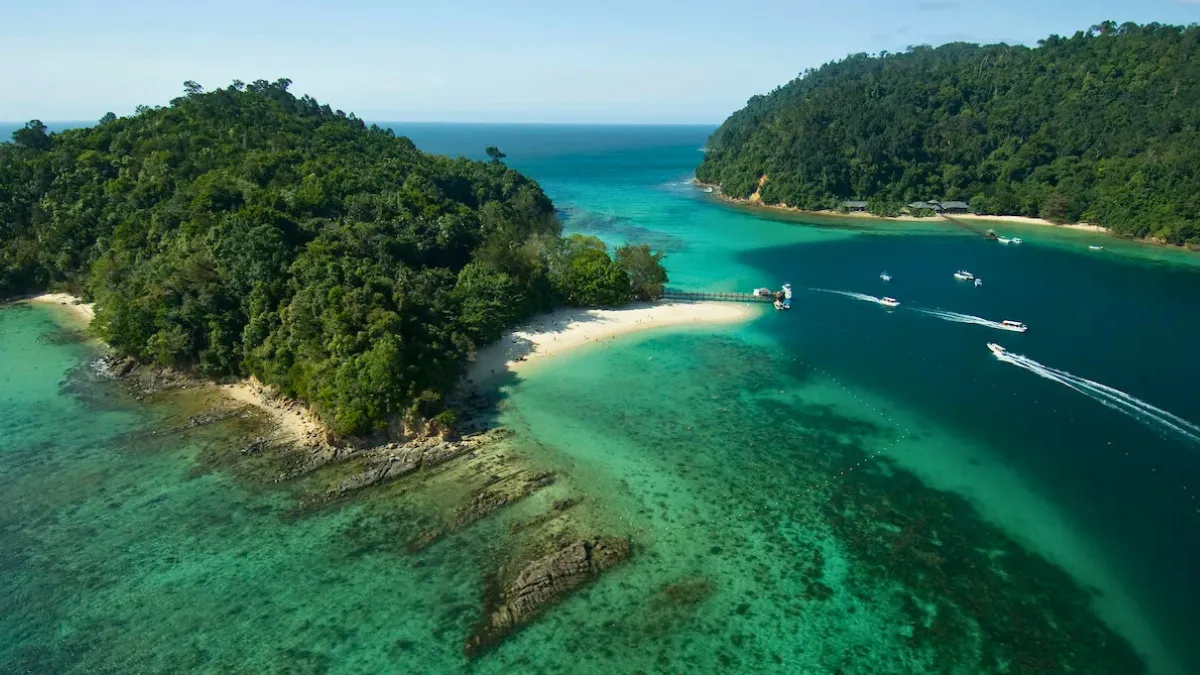
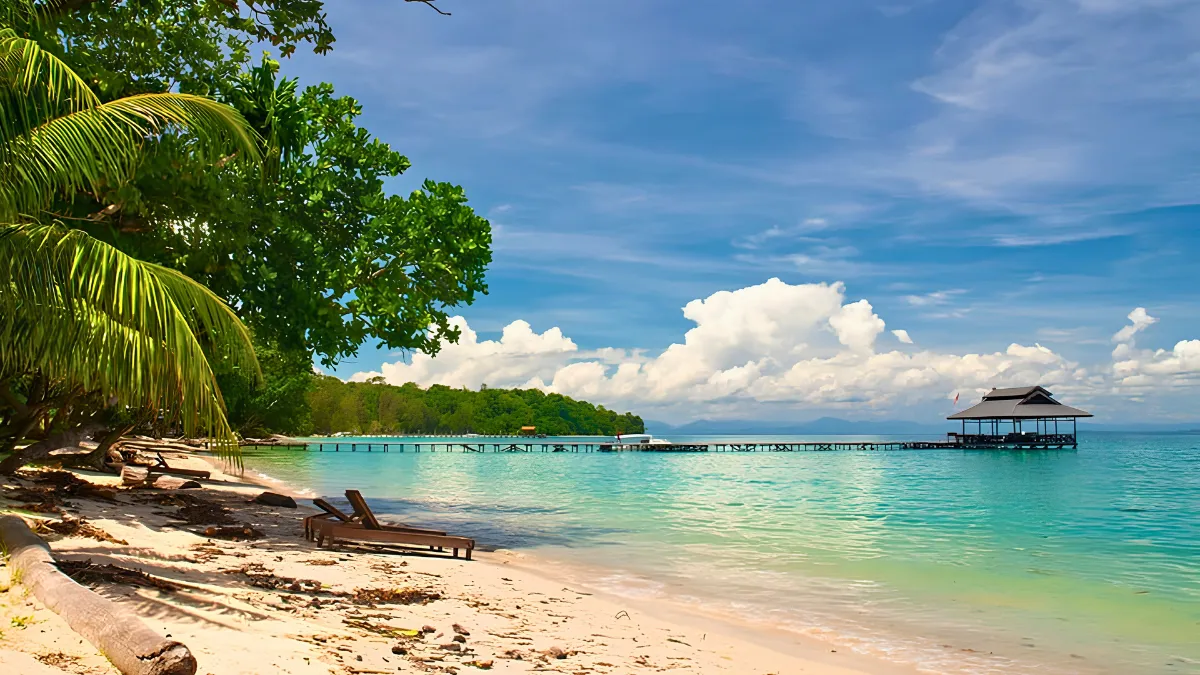
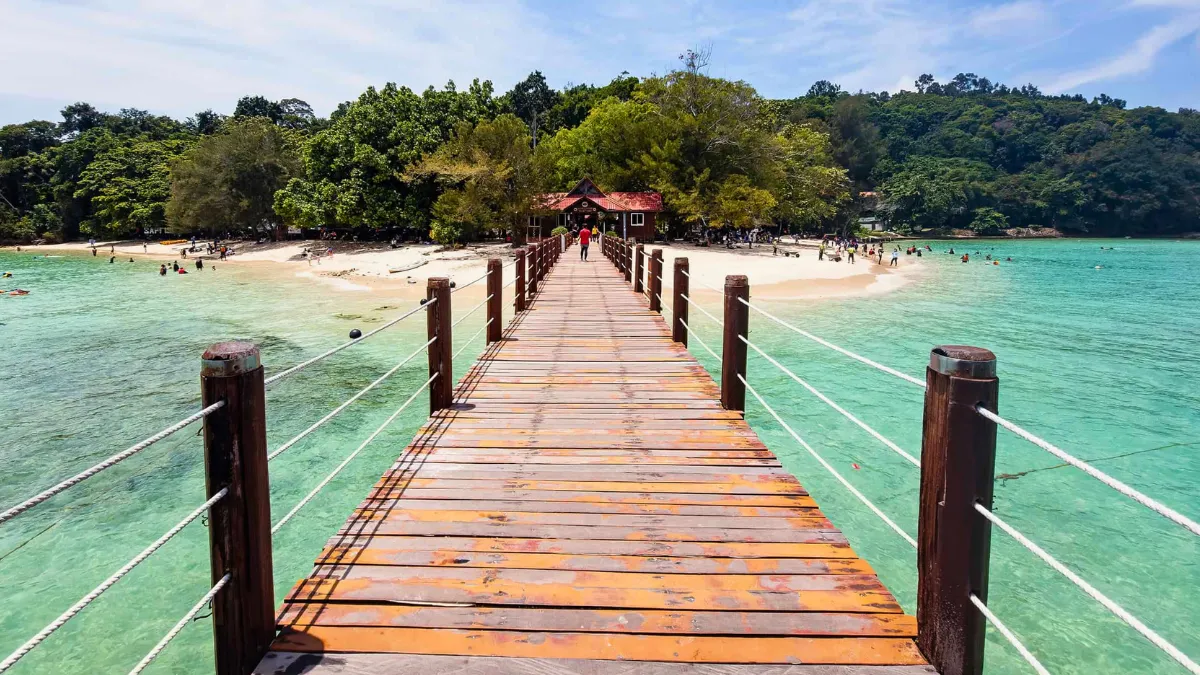
KK serves as your base for island hopping in Tunku Abdul Rahman Marine Park.
Day 1: Arrival and City Orientation
International flights arrive at Kota Kinabalu International Airport (BKI), about 7 kilometers south of the city center.
Airport taxi costs RM30-40 ($7-9) to downtown hotels. Grab (Southeast Asia’s Uber) runs slightly cheaper at RM25-35.
Check into your accommodation and head straight to the waterfront.
Filipino Market (also called Handicraft Market) lines the coast near Jesselton Point Ferry Terminal. Stalls sell sarongs, beaded jewelry, wooden carvings, and tourist trinkets. Prices need negotiating. Start at 40-50% of asking price and work up.
Walk north to Signal Hill Observatory Platform if you want sunset views over the city and islands. It’s a steep 15-minute climb but free.
Dinner at Night Market (Pasar Malam) on Jalan Tun Fuad Stephens gives you the full Malaysian food experience. The market opens around 5pm daily.
Sabah Must-try dishes:
5 of the Best
- Nasi Lemak – coconut rice with sambal, fried chicken, anchovies, egg (RM5-8)
- Satay – grilled meat skewers with peanut sauce (RM1 per stick)
- Roti Canai – flaky flatbread with curry dipping sauce (RM1.50-2)
- Fresh seafood grilled at waterfront stalls (RM15-30 depending on size)
- Coconut pudding and various kuih (local sweets) for dessert (RM2-5)
Where to Stay in Kota Kinabalu
The city center puts you walking distance from the waterfront, markets, and ferry terminal. Most budget and mid-range hotels cluster around Gaya Street and Signal Hill area.
Book accommodations near the waterfront for easy access to morning boat departures to the islands.
Best KK accommodation
Find Your KK Base
Search hotels near Jesselton Point Ferry Terminal. Filter by guest reviews (8.0+ recommended) and free cancellation for flexibility.
Search Kota Kinabalu HotelsDay 2: Tunku Abdul Rahman Marine Park Island Hopping
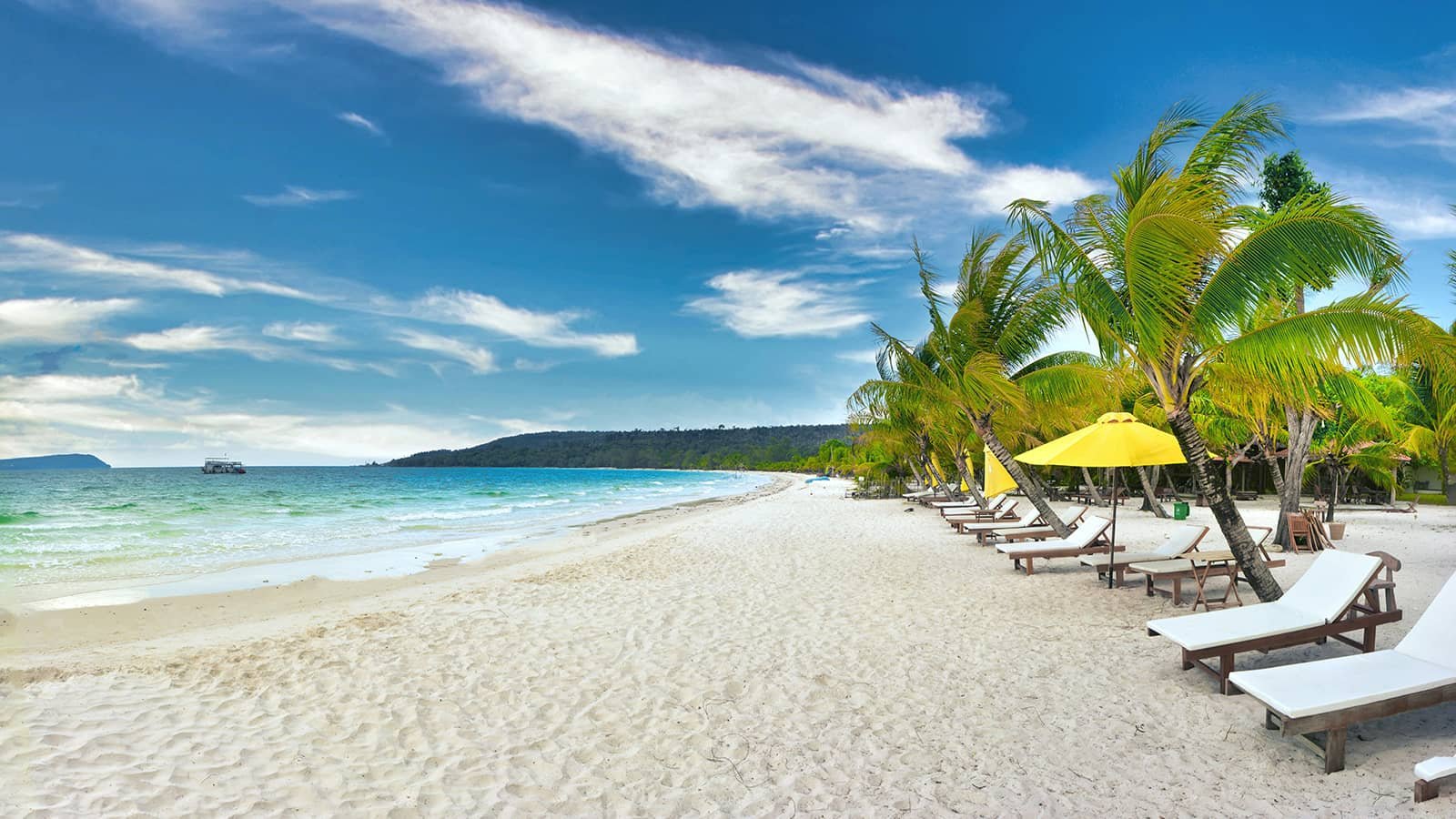
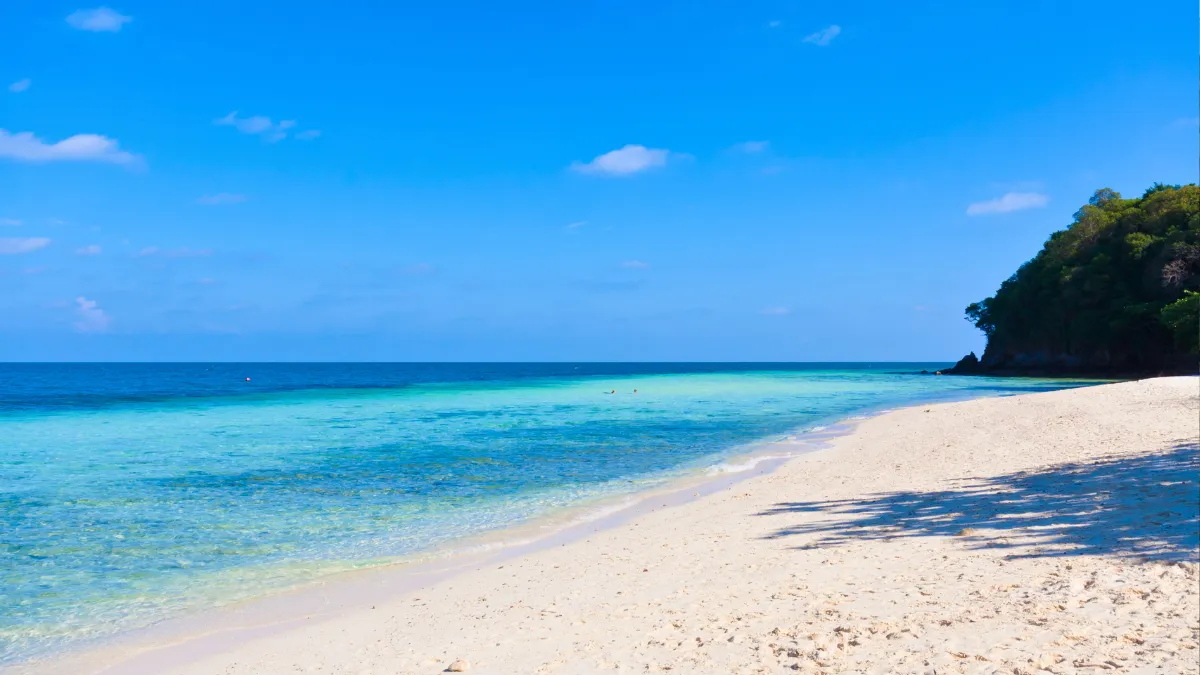
Five islands make up the marine park, all reachable by boat from Jesselton Point Ferry Terminal.
Tour operators crowd the terminal starting at 8am. Most offer similar packages: three-island tour with snorkeling equipment, lunch, and park fees for RM120-180 ($27-40) per person.
Skip the package tour. Do it yourself.
Buy a return boat ticket to one or two islands at the terminal counter. Boats run every 30-60 minutes from 8am to 4pm. Return fare costs RM23-38 depending on the island.
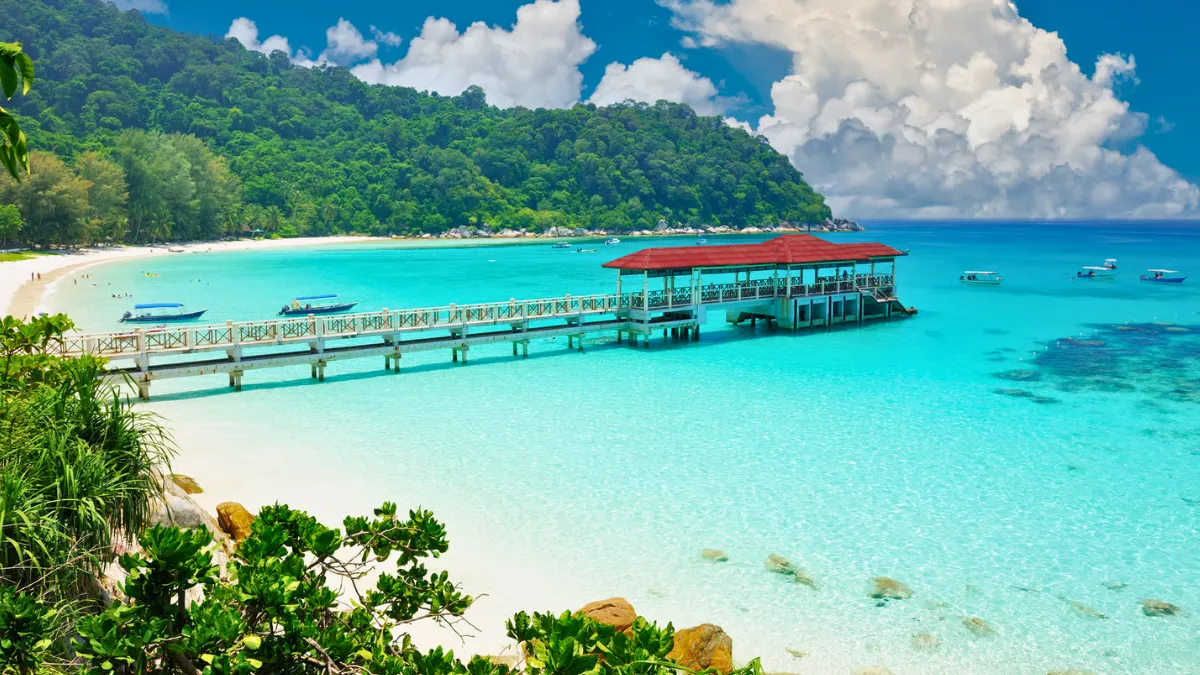
Best islands for independent travelers:
Manukan Island – Most developed with beach facilities, changing rooms, and restaurants. Water clarity is decent but gets crowded by 11am. Good for families or those wanting amenities.
Sapi Island – Smallest island with the clearest water and best coral near the beach. Gets packed with tour groups midday. Arrive before 9am or after 2pm for the best experience.
Mamutik Island – Least visited, quieter beaches, good snorkeling off the western point. Limited facilities. Bring your own food and water.
Recommended approach: Take the first boat to Sapi (8am departure), snorkel until crowds arrive around 11am, boat-hop to Mamutik for quiet afternoon beach time, return to KK by 4-5pm.
What you’ll see underwater: Butterflyfish, parrotfish, clownfish (yes, actual Nemo), occasional sea turtles, healthy hard coral formations near deeper drop-offs.
Bring your own snorkel gear if possible. Rental quality is hit-or-miss and costs RM15-20 anyway.
Tunku Abdul Rahman Marine Park Pro tip:
Park your valuables in the paid lockers at the ferry terminal
Its only RM10 for the day and they are securely stored while you are in the islands. Theft from beach bags happens occasionally when you’re in the water.
Smart Travelers Do This
Skip the Crowds with Private Island Tours
Want to avoid tour-group chaos? Book a private speedboat to less-visited islands with flexible departure times. Better snorkeling, quieter beaches, and you control the schedule.
Browse Private Island ToursEvening back in KK: Walk Gaya Street (closed to traffic evenings and weekends) for street food and people-watching. Sunday morning (7am-1pm) transforms Gaya Street into a massive market worth experiencing if your timing works out.
Days 3-4: Kinabatangan River Wildlife Safari
This is why you came to Borneo.
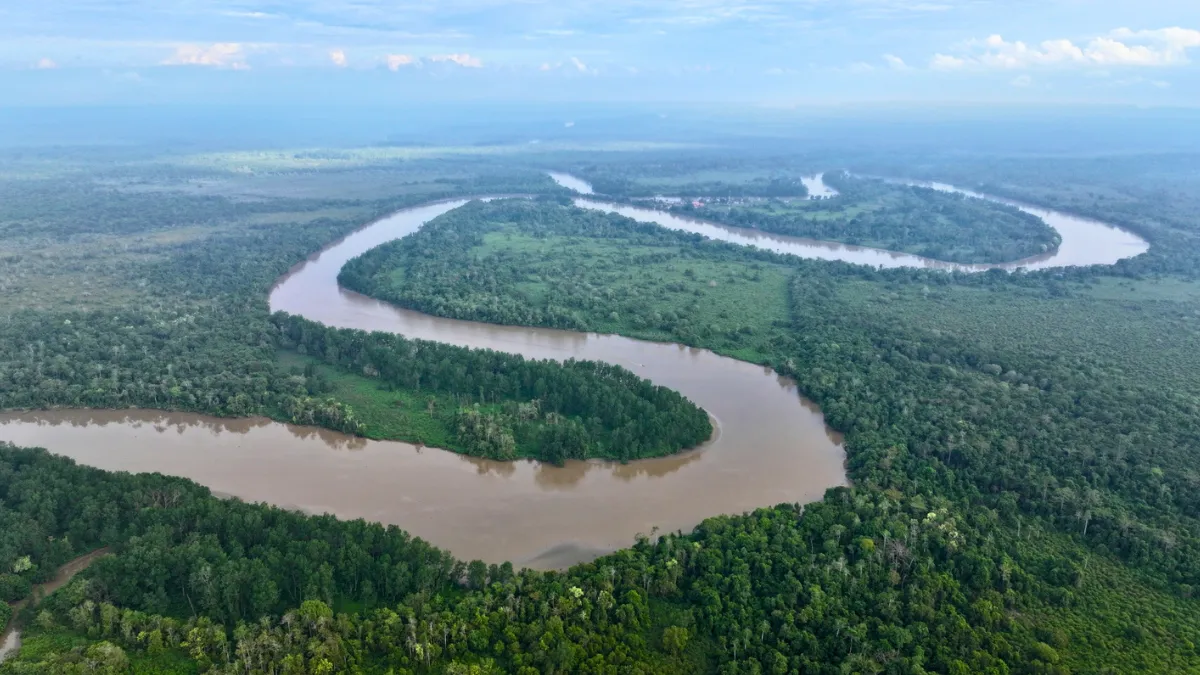
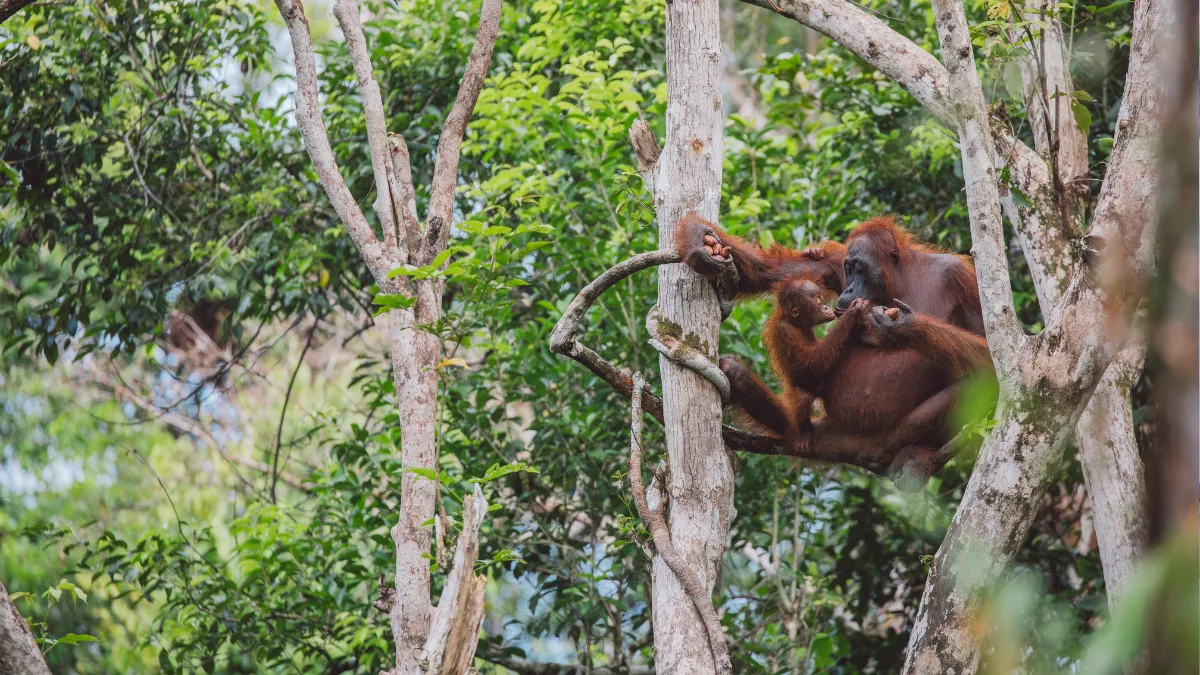
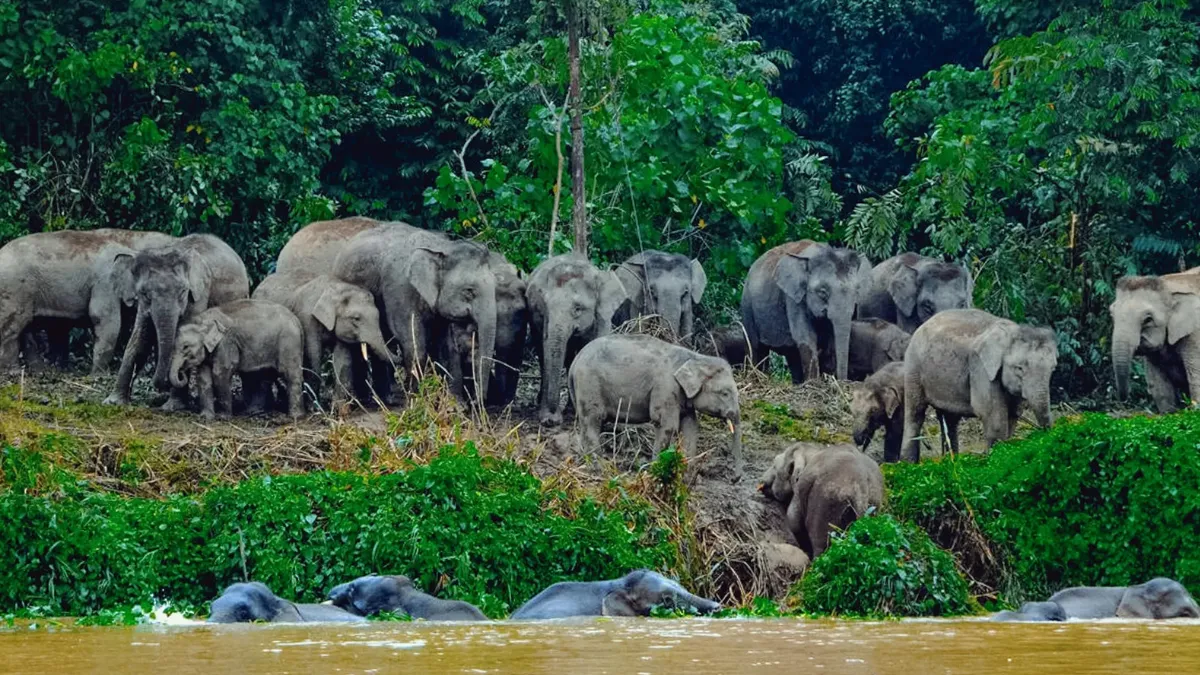
Kinabatangan River cuts through Sabah’s eastern lowlands, creating one of the world’s most accessible wildlife viewing destinations.
You’ll see orangutans. Not maybe. You will see them.
Plus proboscis monkeys, pygmy elephants, hornbills, crocodiles, and if you’re lucky, a leopard cat or clouded leopard.
Getting to Kinabatangan
The river lodges sit near Sukau village, about 2 hours drive from Sandakan.
Most travelers book packages that include transport from KK, accommodation at a river lodge, meals, and multiple boat cruises.
Two-day, one-night packages start around RM600-900 ($135-200) per person. Three-day, two-night runs RM900-1,400.
The package deal makes sense here. Getting there independently requires multiple bus transfers and doesn’t save much money.
Choosing a River Lodge
Twenty-plus lodges operate along Kinabatangan. Quality varies dramatically.
What to look for In a River Lodge:
5 Expert Travel Tips
- Location on lower Kinabatangan (better wildlife density than upper river areas)
- Multiple boat trips included (minimum 3 cruises for 2-day trip)
- Experienced local guides (English-speaking, trained in wildlife identification)
- Basic comfort (mosquito nets, fan, clean rooms – don’t expect luxury)
- Small group sizes (max 8-10 people per boat for better viewing)
Recommended lodges for travelers:
Sukau Greenview B&B – Budget-friendly, family-run, excellent guide team. Basic fan rooms. RM500-700 for 2D1N package. Located right in Sukau village.
Borneo Natural Sukau Bilit Resort – Mid-range comfort, riverside chalets, good food, professional operation. RM800-1,100 for 2D1N. Worth the extra cost.
Nature Lodge Kinabatangan – Eco-focused, comfortable cabins, excellent naturalist guides. RM900-1,200 for 2D1N. Slightly upstream but still productive for wildlife.
Book directly with lodges or through their websites 2-3 months ahead for peak season (June-August).
Book In Advance
Book Your Kinabatangan River Experience
River cruises sell out fast in peak season. Compare lodge packages, check reviews from recent travelers, and book early. Most lodges offer free cancellation up to 7 days before arrival.
Compare Kinabatangan Tour PackagesDay 3: Travel Day and First River Cruise
Packages typically include van pickup from your KK hotel around 6-7am.
The drive takes about 5-6 hours including breakfast stop and a break at Sandakan’s Sepilok Orangutan Rehabilitation Centre (if included in your package – worth the 1-hour detour).
You’ll arrive at the lodge by early afternoon.
Check in, grab lunch, and settle into your room before the first boat cruise around 4pm.
Late afternoon cruises run 1.5-2 hours, departing around 4-4:30pm when wildlife becomes active as temperatures cool.
Your guide will scan the riverbanks and trees with binoculars, pointing out wildlife as the boat cruises slowly upstream and back.
What to expect on your first cruise:
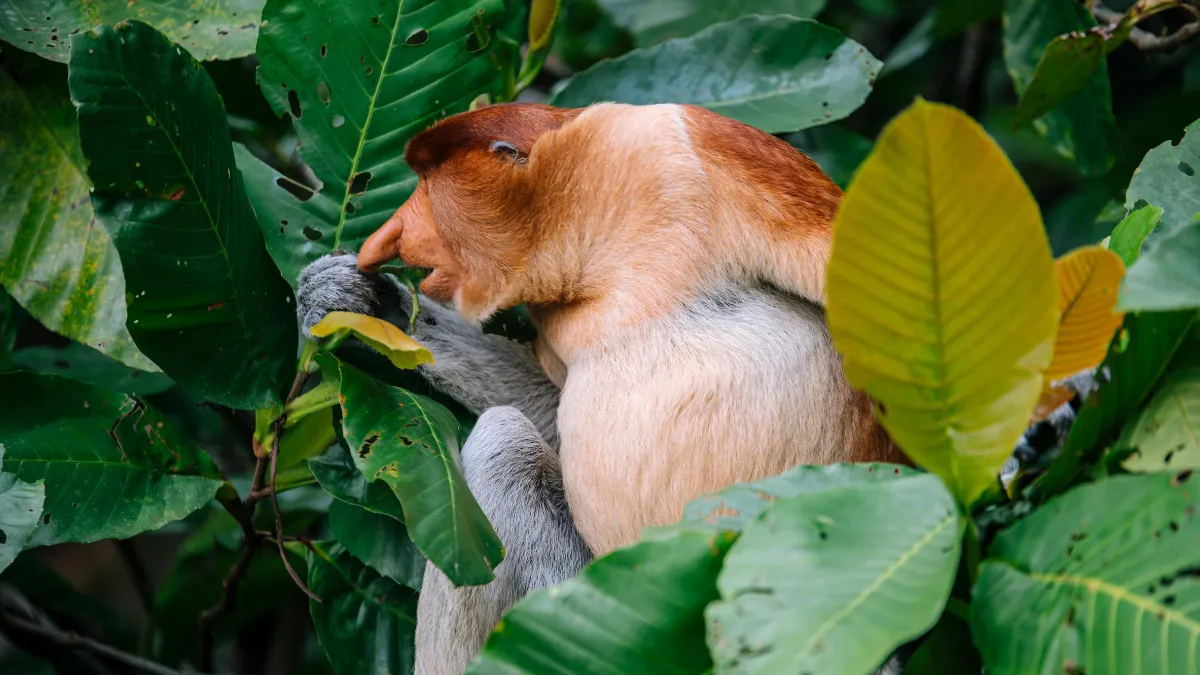
- Proboscis monkeys in riverside trees (almost guaranteed – they sleep in specific areas)
- Long-tailed macaques jumping between branches
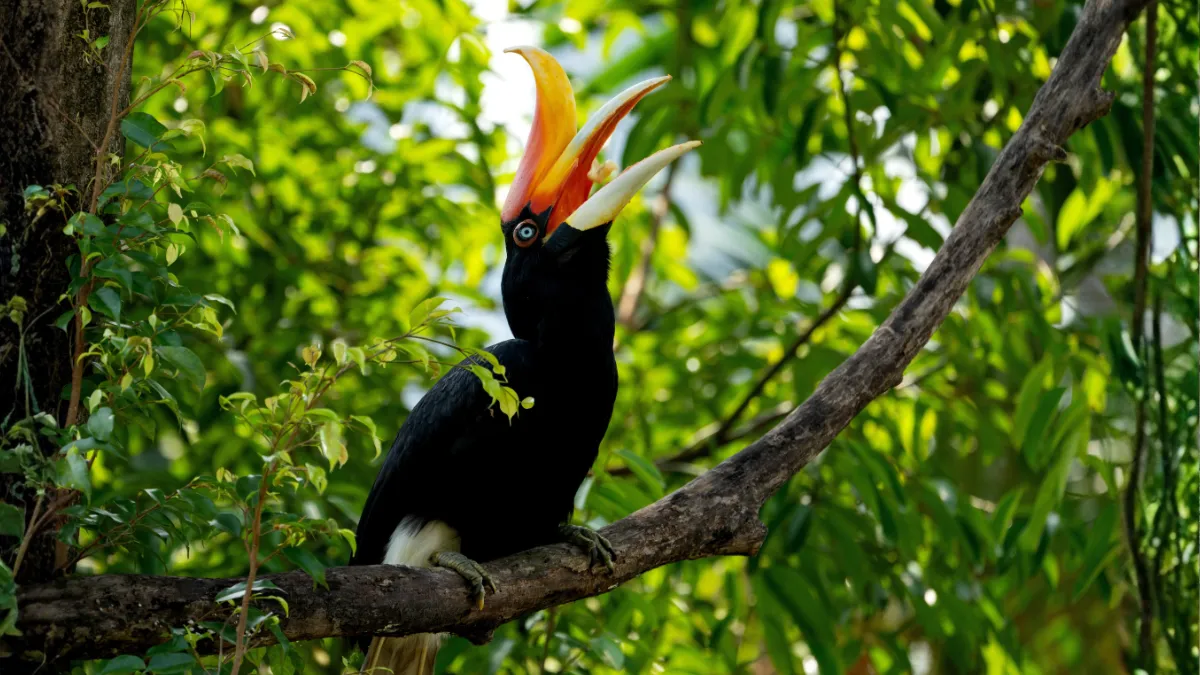
- Hornbills flying overhead (rhinoceros, oriental pied, and wreathed hornbill species)
- Crocodiles sunning on muddy banks (estuarine crocodiles up to 3-4 meters long)
- Monitor lizards climbing tree trunks
- Kingfishers and various water birds
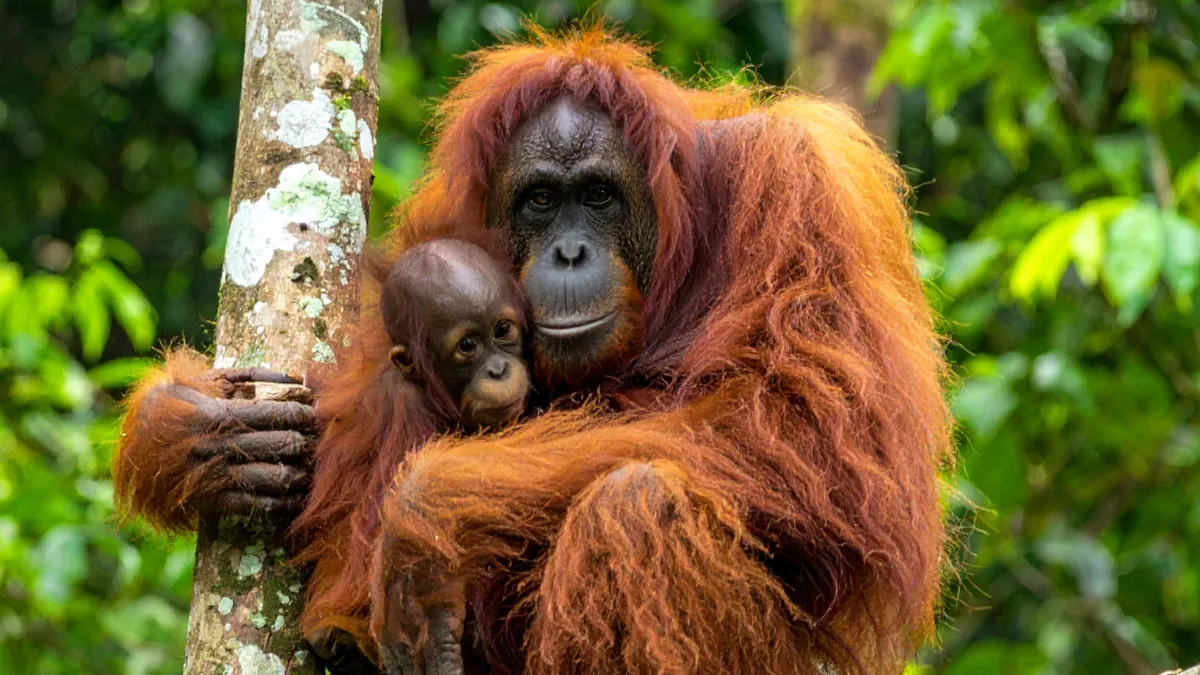
- Orangutans appear less predictably. They range through the forest rather than sticking to specific territories. Your chances improve if you do multiple cruises.
After the sunset cruise, dinner at the lodge runs buffet-style with rice, curries, grilled fish, vegetables, and fruit.
Night walk follows around 7:30-8pm. You’ll explore trails near the lodge with headlamps and flashlights, looking for sleeping birds, nocturnal insects, frogs, and occasional mammals like civets or slow lorises.
Night walks don’t deliver the same wow-factor as boat cruises, but they’re included in your package and worth experiencing.
Day 4: Dawn Cruise and Return
Wake-up call comes around 5:30am. Dawn cruise launches by 6-6:15am, right as the jungle wakes up. This is prime time for wildlife activity and your best shot at seeing orangutans.
Morning light is also better for photography – soft, golden, filtering through the mist that often rises off the river. The dawn cruise runs 1.5-2 hours.
Return to lodge for breakfast, pack up, and you’ll start the journey back to KK around 9-10am, arriving late afternoon or early evening.
Some packages include a second morning activity before departure – either another short boat cruise or jungle walk.
Wildlife Photography Tips
You don’t need professional camera gear. These tips work for smartphones and basic cameras:
- Bring a zoom lens or phone with good digital zoom (wildlife stays 10-50 meters away)
- Shoot in burst mode when animals are moving
- Increase ISO for better low-light performance at dawn/dusk
- Keep your camera ready – wildlife appears suddenly and moves quickly
- Stabilize against the boat railing (movement creates blur)
- Focus on the animal’s eyes for sharper shots
- Take video clips as backup – easier to capture action, then screenshot best frames
Don’t stress the photography too much. Watch with your eyes. Appreciate the experience beyond the Instagram shot.
Day 5: Mount Kinabalu Base and Poring Hot Springs
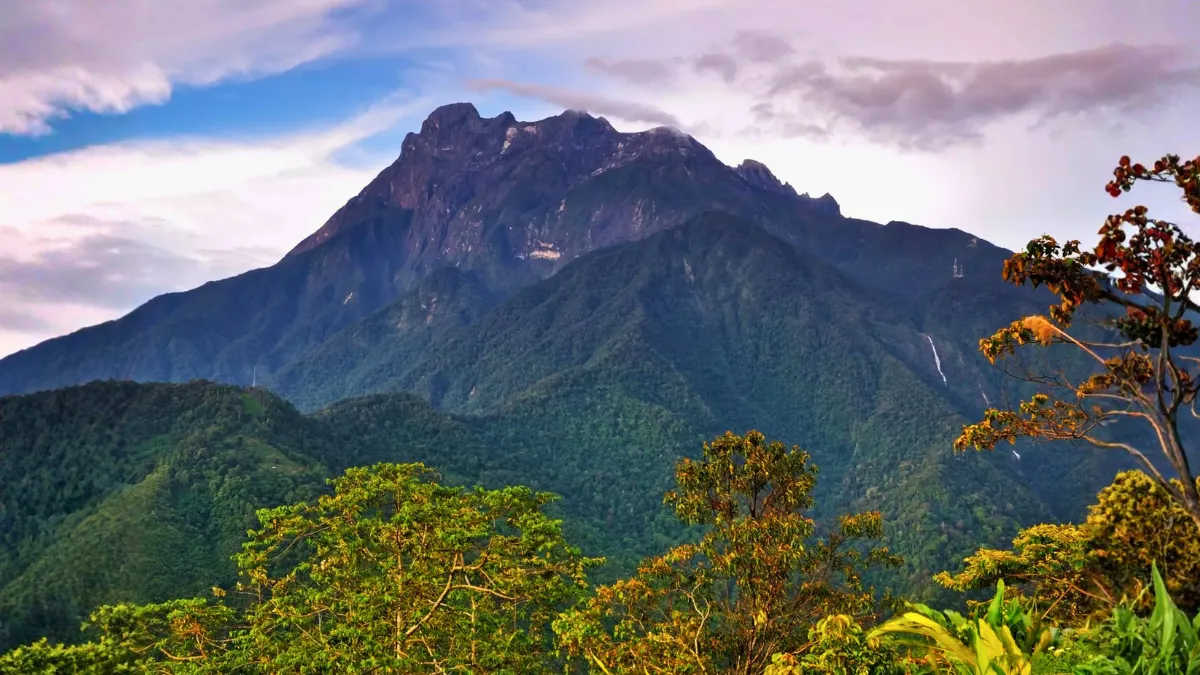
Mount Kinabalu towers 4,095 meters above Borneo, making it Southeast Asia’s highest peak.
You’re not climbing it on this itinerary. The full summit climb requires 2 days and advance permit booking months ahead.
Instead, you’ll explore Kinabalu Park at the mountain’s base – a UNESCO World Heritage Site protecting one of the world’s most biodiverse temperate zones.
Getting to Kinabalu Park
The park entrance sits about 90 kilometers from Kota Kinabalu, roughly 2 hours drive.
Your options:
- Bus: Local buses depart from Inanam Bus Terminal (take Grab from central KK for RM15-20) to Ranau, stopping at Kinabalu Park entrance. Buses leave every 1-2 hours from 7am-3pm. Fare is RM20-25. Journey takes 2.5-3 hours with multiple stops.
- Day tour package: Most KK tour operators offer Mount Kinabalu Park + Poring Hot Springs day trips for RM180-280 per person including transport, park fees, guide, and lunch. Worth it if you want hassle-free logistics.
- Private car/Grab: Costs RM250-350 return for the day. Makes sense if you’re traveling with 2-3 people and want schedule flexibility.
Kinabalu Park Activities
Park entrance fee: RM15 for foreigners.
The park headquarters area offers several hiking trails ranging from 20 minutes to 3 hours.
Best short walk: Pandanus Trail takes 1 hour loop through montane forest. Well-maintained boardwalk sections. Good for plant identification with informational signs along the route.
Longer trek: Silau-Silau Trail climbs to viewpoint overlooking the valley. Moderate difficulty. Takes 2-3 hours return. Steep sections require decent fitness.
What makes these trails special: You’re walking through transition zone from tropical lowland to temperate mountain forest. Plant diversity is extreme. You’ll see pitcher plants, wild orchids, mosses, and unique tree species found nowhere else.
Mountain Garden adjacent to park headquarters showcases cultivated specimens of rare plants from different elevation zones. Worth 30-45 minutes if you’re into botanical diversity.
Poring Hot Springs
Located 40 kilometers from park headquarters, about 45 minutes drive.
The Japanese built these sulfur hot spring baths during WWII occupation. Now they’re open to public as somewhat rustic soaking facility.
Entry fee: RM5-10 for basic pools.
You’ll find both outdoor communal soaking pools and private tub rooms you can rent by the hour (RM15-25).
Water temperature varies by pool from lukewarm to quite hot. The sulfur content is real – you’ll smell it. Supposedly therapeutic for muscle soreness and skin conditions.
Facilities are basic. Don’t expect luxury spa vibes. This is local-style hot spring bathing.
Bring your own towel and swimwear. Small changing rooms available.
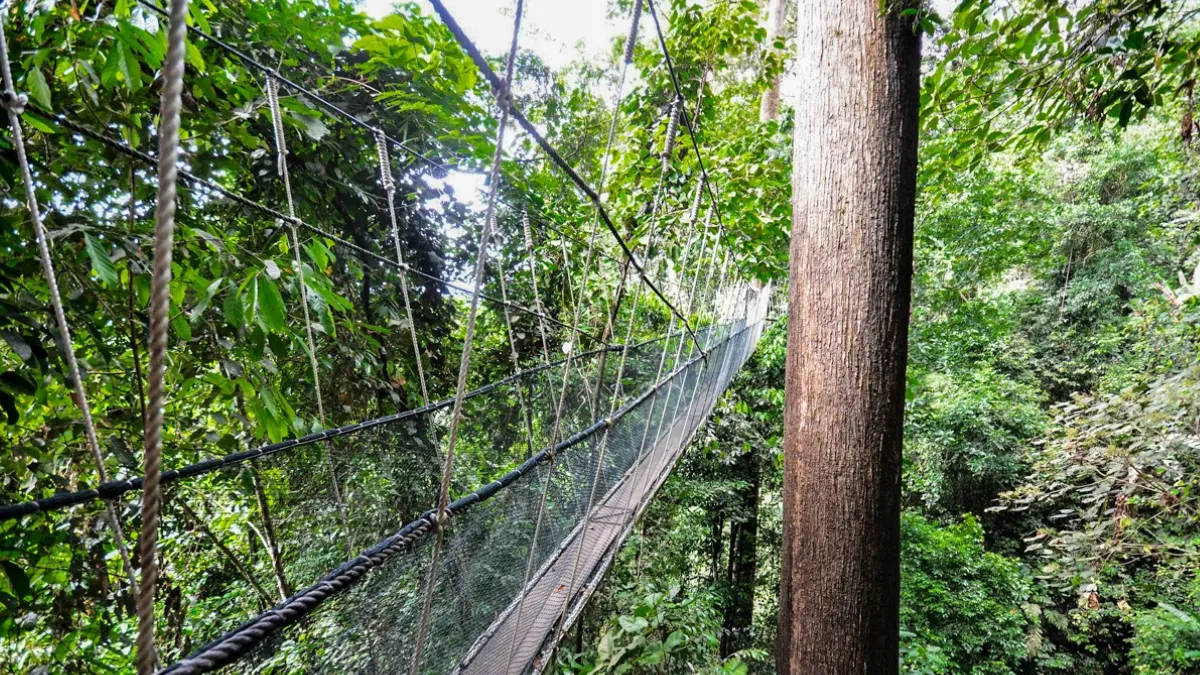
Poring Canopy Walkway
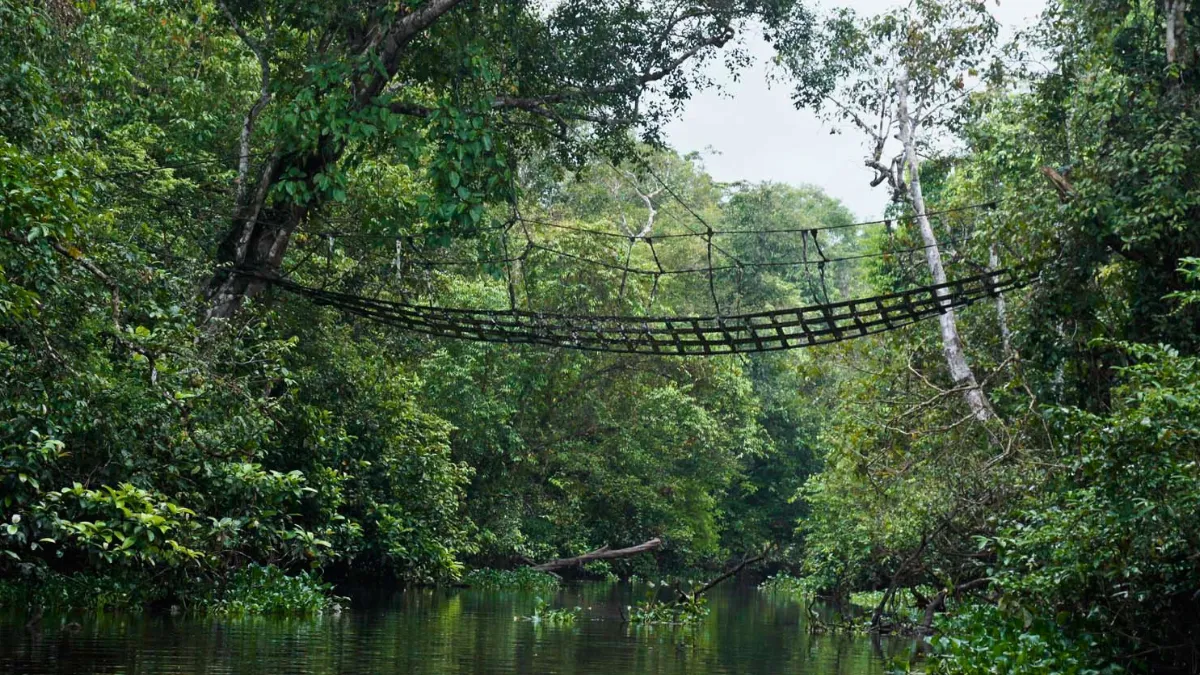
This is the highlight at Poring. The walkway strings between treetops 40 meters above the jungle floor, stretching 157 meters across a series of suspended bridges.
Entry: RM5 separate from hot springs ticket.
The bridges bounce and sway as you cross. Not suitable if you’re terrified of heights or get motion sick easily.
Views from the canopy level are worth the slightly unnerving crossing. You’re up in the tree crowns where hornbills and squirrels navigate branches.
Go early morning (8-9am) before crowds if possible. Weight limit per bridge section means staff regulate the number of people crossing simultaneously.
Combined visit to hot springs and canopy walk takes 2-3 hours.
Timing Your Day
Sample schedule:
7am – Depart Kota Kinabalu
9am – Arrive Kinabalu Park, explore trails and garden
12pm – Lunch at park restaurant or packed lunch
1:30pm – Drive to Poring
2:30pm – Canopy walkway and hot springs
5pm – Begin return journey to KK
7pm – Arrive back in Kota Kinabalu
It’s a full day but completely doable. You’ll sleep well.
Want to climb Mount Kinabalu?
The 2-day summit climb requires permits booked 3-6 months in advance through Sabah Parks or authorized operators. Costs run RM1,500-2,500 per person including permits, guide, accommodation at Laban Rata halfway point, and meals. It’s challenging but non-technical – no climbing equipment needed, just fitness and determination.
Day 6: Flying to Sarawak – Kuching Arrival
You’re swapping states today.
Flight from Kota Kinabalu to Kuching takes 1 hour 30 minutes.
Multiple airlines run this route daily: Malaysia Airlines, AirAsia, MASwings. Prices range RM150-350 ($35-80) depending on booking timing and carrier.
Book at least 2-3 weeks ahead for better fares. Afternoon flights work well, giving you morning in KK and evening arrival in Kuching.
If you are planning on a trip to Sabah and Sarawak why not book your internal flights before you leave home! The best news is by using our search widget you are finding flights in local Malaysian prices, meaning you’ll only pay what the locals pay! No tourist pricing hike up. So stop stressing about flights and rest assured you’ve saved heaps of cash!
Book Your Inter-State Flight
Compare airlines and times for the KK-Kuching route. Afternoon departures let you maximize your last morning in Sabah without rushing to the airport.
Last Morning in Kota Kinabalu
If you haven’t hit the Sunday Gaya Street Market yet, catch it before checkout (7am-1pm Sundays only).
Otherwise, grab breakfast at a local kopitiam (coffee shop). Try kolo mee – Sabah’s signature noodle dish with char siu pork, minced meat, and fried shallots. Costs RM6-8 for a bowl.
Check out of your hotel, Grab to airport. Arrive 1.5 hours before domestic flight.
Arriving in Kuching
Kuching International Airport sits 12 kilometers south of city center.
Taxi costs RM25-35 to downtown hotels. Grab runs RM20-28.
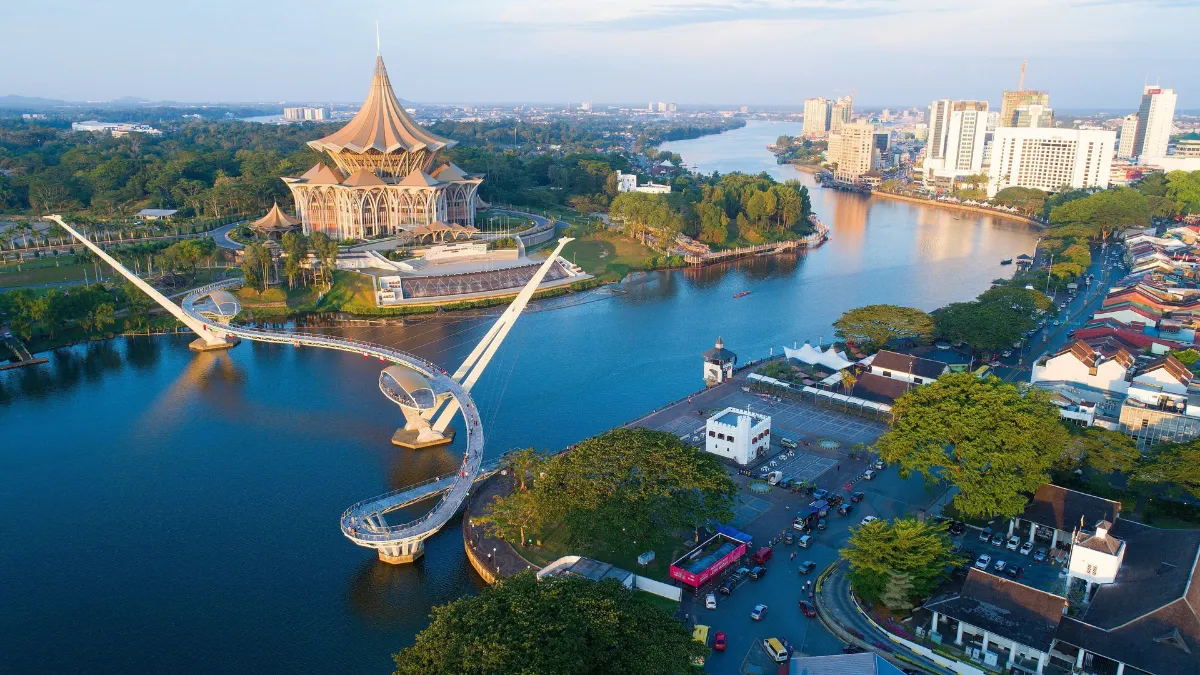
Kuching feels different from Kota Kinabalu immediately. Colonial architecture lines the riverfront. The city moves slower. There’s a refined, almost nostalgic atmosphere that KK lacks.
Sarawak’s capital blends old-world charm with modern Malaysian city life.
Check into your waterfront accommodation.
First Evening in Kuching – Sabah and Sarawak 10 Day Itinerary
Walk the Kuching Waterfront promenade – a beautifully maintained 1-kilometer stretch along Sarawak River.
The walkway connects multiple historic buildings:
- Astana – former palace of White Rajahs (visible across river, not open to public)
- Fort Margherita – Victorian-era fortress now housing Brooke Gallery museum
- Square Tower – 1879 watchtower and prison, now a tourism information center
- Chinese History Museum – free entry, tells story of Chinese community in Sarawak
- Main Bazaar – row of restored shophouses selling antiques, crafts, and textiles
Cross the river on a Tambang (traditional wooden water taxi) for RM1. They run continuously from early morning to evening, ferrying locals across.
Dinner at Top Spot Food Court (Jalan Bukit Mata Kuching) serves the best seafood in town. Take a Grab there (RM5-8 from waterfront area).
This multi-story food court specializes in fresh seafood. Pick your fish, prawns, squid, or crab from the tanks, tell them how you want it cooked, and they’ll prepare it while you grab a table.
Prices are reasonable: Expect RM40-80 per person for a solid seafood dinner with rice and vegetables. Budget more if you’re ordering expensive items like tiger prawns or lobster.
Popular cooking styles: Butter sauce, salted egg, sweet and sour, sambal, steamed with ginger.
Top Spot gets packed 7-9pm. Arrive by 6:30pm or after 9pm for easier seating.
Day 7: Kuching City and Cultural Sites
Full day exploring Sarawak’s riverside capital.
Morning: Sarawak Cultural Village
Located about 35 kilometers north of Kuching near Santubong Peninsula.
This is a “living museum” showcasing traditional dwellings and lifestyles of Sarawak’s indigenous groups: Iban, Bidayuh, Orang Ulu, Melanau, Malay, and Chinese.
Entry fee: RM60-90 depending on package (basic admission vs. admission with cultural show).
The village spreads across 17 acres with full-scale replicas of traditional longhouses and dwellings for each ethnic group.
You’ll walk between houses, watch craftspeople demonstrate traditional skills (weaving, beadwork, blowpipe making), and learn about distinct cultural practices.
Cultural performances run twice daily (11:30am and 4pm) – 45-minute shows featuring traditional dances and music from different groups.
It’s educational rather than thrilling. But if you want to understand Sarawak’s indigenous heritage without trekking to remote longhouse communities, this delivers concentrated exposure.
Plan 2-3 hours for a thorough visit.
Getting there: Grab costs RM35-50 each way. Some city tour operators include it in half-day packages for RM120-180 with transport and entry.
Alternative Kuching Morning Option
Skip the Cultural Village if you’re not into manufactured tourist attractions. Instead, visit Semenggoh Wildlife Centre (24km from Kuching) for semi-wild orangutan feeding at 9am or 3pm. Entry RM10. Orangutan sightings aren’t guaranteed – they only come to the feeding platform if they’re hungry and in the area. But when they show up, you’re watching truly wild behavior in their natural habitat.
Ready to book?
Book Cultural Village Tour
Skip logistics hassle. Package includes transport, admission, and cultural show. Usually combined with Sarawak Museum or other city sights.
Find Cultural Village ToursAfternoon: Markets and Museums
Return to Kuching city center by early afternoon.
Visit Sarawak Museum (currently undergoing renovation – check if reopened before visiting). If closed, head to Fort Margherita across the river which houses the Brooke Gallery covering Sarawak’s Rajah period.
Walk through Main Bazaar shophouses along the waterfront. These historic buildings now operate as antique shops and craft galleries. Prices are high and negotiation is expected, but browsing is free and the architecture is beautiful.
Late afternoon, explore India Street (Jalan India) and Carpenter Street for more shophouse architecture and traditional crafts.
Stop at Tong Sang Supermarket on Carpenter Street for local snacks and foods to bring home: Sarawak pepper (world-famous variety), kek lapis (ornate layered cakes), local coffee.
Evening Street Food Tour
Kuching’s street food scene deserves serious attention.
Start at Padungan area around Jalan Song Thian Cheok for evening hawker stalls.
Must-try Sarawak specialties:
5 highlights
- Sarawak Laksa – spicy coconut-based noodle soup with prawns and shredded chicken, considered one of Malaysia’s best laksa styles (RM6-8)
- Kolo Mee – springy egg noodles with minced pork and char siu (RM5-7)
- Manok Pansuh – chicken cooked in bamboo with ginger and lemongrass, Iban traditional dish (RM15-20 at restaurants, hard to find at street stalls)
- Midin – wild jungle fern stir-fried with garlic and belacan (shrimp paste), unique to Sarawak (RM8-12)
- Kueh Chap – pork offal soup with flat rice noodles (RM8-10)
For dessert, find a stall selling ice kacang (shaved ice with red beans, corn, jelly, syrup) or cendol (shaved ice with coconut milk, palm sugar, and green rice flour jelly).
Total food cost for evening grazing: RM20-40 depending on appetite.
Day 8: Bako National Park
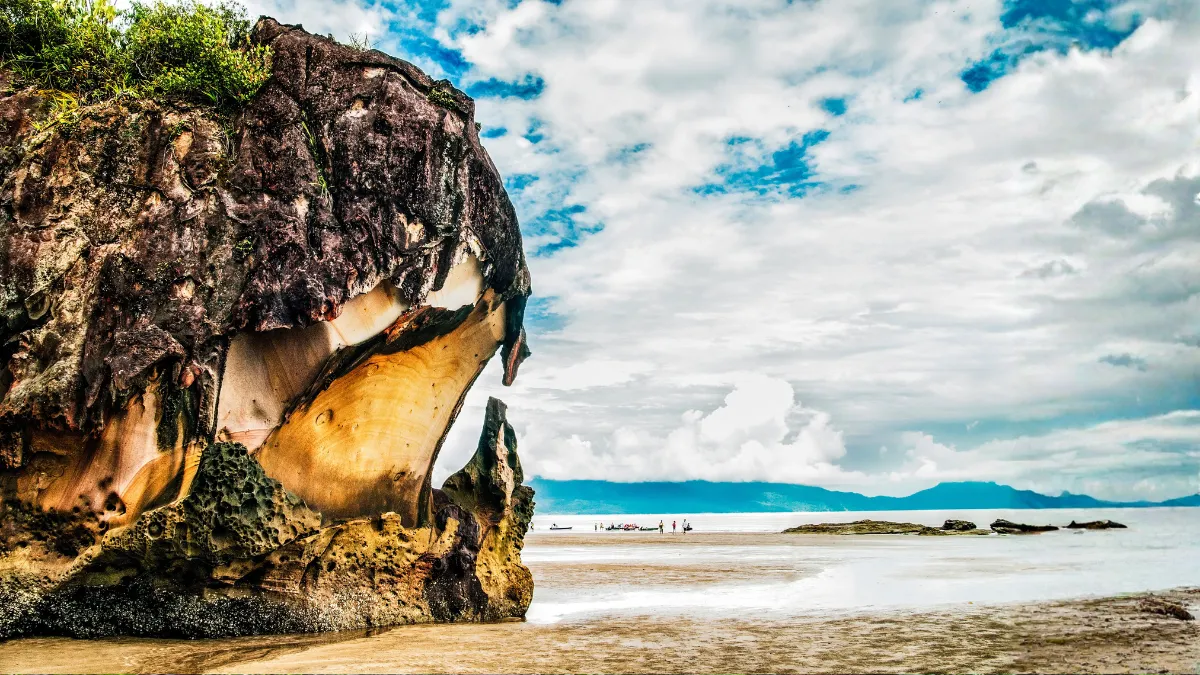
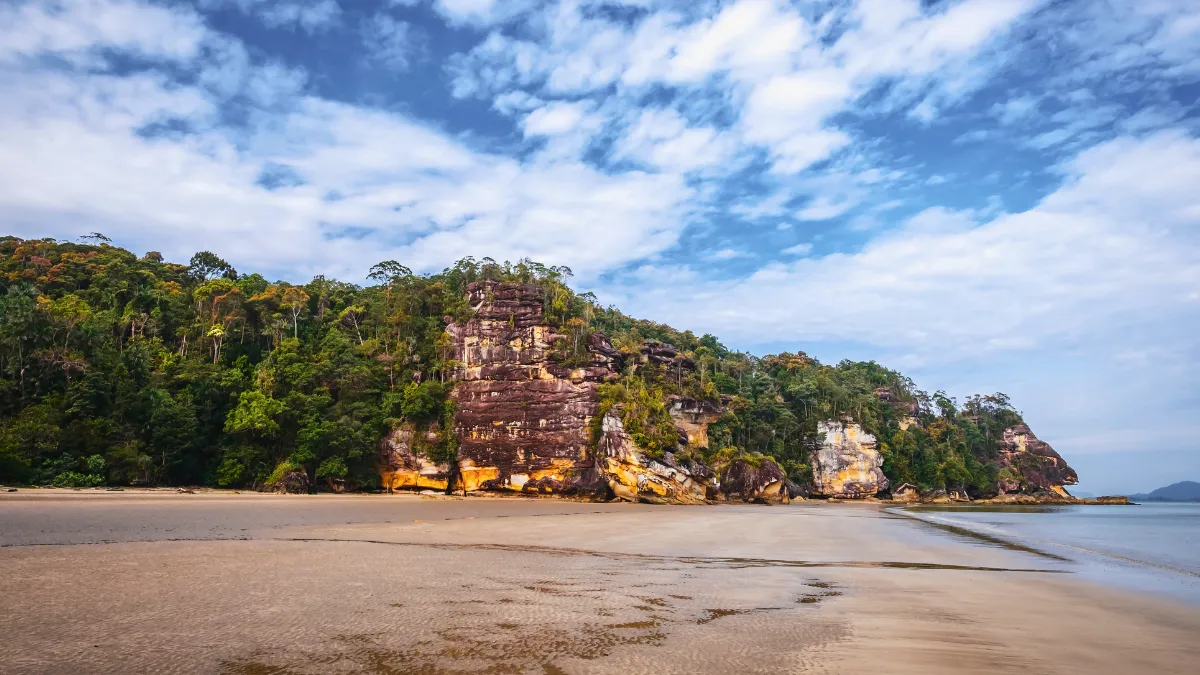
Sarawak’s oldest national park packs ridiculous biodiversity into just 27 square kilometers.
Bako protects nearly every vegetation type found in Borneo: mangrove swamps, beach forest, cliff vegetation, kerangas (heath forest), mixed dipterocarp forest, and padang (grassland).
Translation: You’ll see dramatic landscape variety in a single day of hiking.
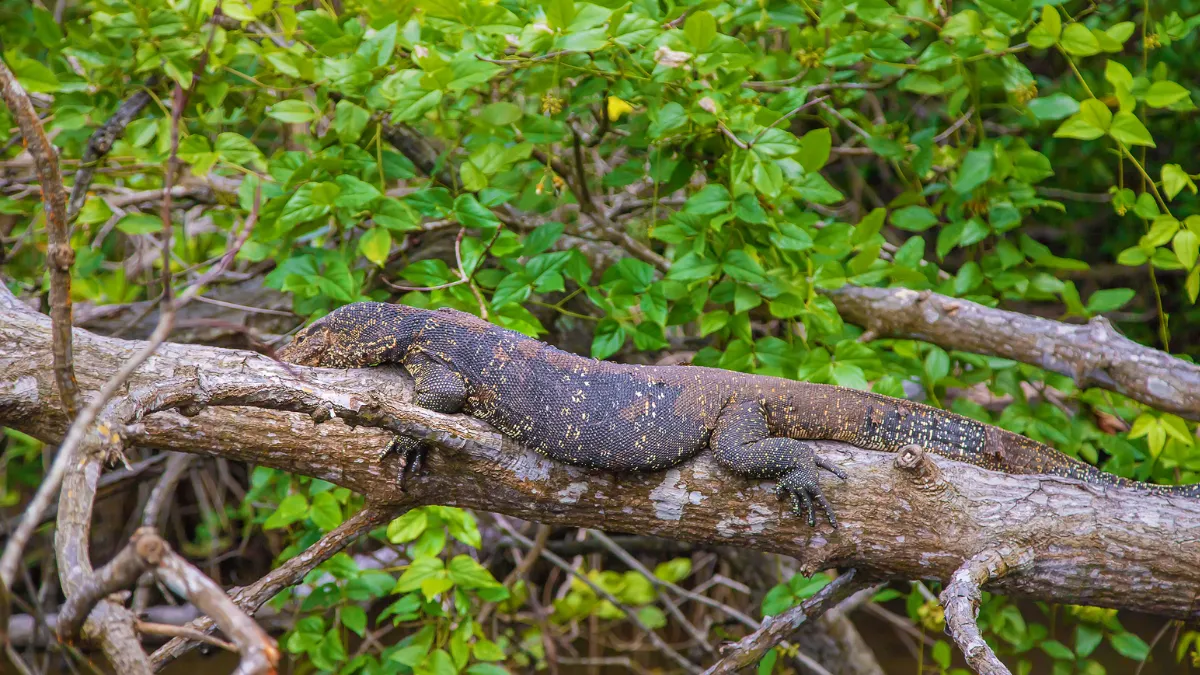
Plus proboscis monkeys, silvered langurs, bearded pigs, monitor lizards, and potentially pit vipers if you’re alert
Getting to Bako
The park entrance is 37 kilometers northeast of Kuching.
You need to reach Bako Bazaar village, then take a boat to the park headquarters.
- Bus option: Bus No. 1 departs from Kuching Open Air Market (near waterfront) heading to Bako Bazaar. Runs every 45 minutes from 7am-5pm. Fare RM4-5. Journey takes 50-60 minutes. Last return bus leaves Bako Bazaar around 5:30pm.
- Grab option: RM40-60 to Bako Bazaar. Negotiate with driver to pick you up later (add RM50-80 for round-trip with waiting).
- Tour package: Many operators offer Bako day trips with transport, boat, guide, and lunch for RM180-250 per person.
From Bako Bazaar, you must take a boat to park headquarters. This isn’t optional – there’s no road access.
Boats wait at the jetty. Fare is RM40-47 per boat (not per person – charter the whole boat). Boat holds up to 5 people. Journey takes 20-30 minutes depending on tide.
If you’re solo, you can wait for other tourists to share a boat, or pay the full fare yourself.
Arrange your return boat time with the boatman. Tell him what time you want pickup. Last boats typically depart park around 4-5pm.
Park Entry and Preparation
Park entry fee: RM20 for foreigners.
Stop at the park office at headquarters to pay fees and register your trail choices.
Rangers provide trail maps and current conditions information. Some trails occasionally close due to weather or maintenance.
Bring sufficient water (2 liters minimum per person), snacks, sunscreen, insect repellent, and rain jacket. No food vendors exist inside the park once you pass the headquarters canteen.
Best Trails for a Day Visit
Bako has 16 marked trails ranging from easy 30-minute walks to strenuous 5-6 hour treks.
For first-time visitors with one day, this combination hits the highlights:
Telok Pandan Kecil Trail (1 hour one-way, 1.9km): Beach trail through coastal vegetation to secluded cove. Easy gradient. This is where proboscis monkeys often hang out in late afternoon. The trail passes through pitcher plant area – look for nepenthes ampullaria on the forest floor.
Lintang Trail (2.5 hours loop, 5.8km): Moderate difficulty circular route climbing to viewpoint then descending through mixed forest. Best for experiencing different vegetation zones. Some steep sections requiring handholds on ropes.
Tajor Waterfall Trail (45 minutes one-way, 1.2km): If you have energy left, this short trail leads to small waterfall and rock pool. Nice for cooling off before returning to headquarters.
Sample day schedule:
- 8:30am – Depart Kuching
- 9:30am – Arrive Bako Bazaar, take boat to park
- 10am – Register and begin hiking Lintang Trail
- 12:30pm – Return to headquarters for lunch at canteen
- 1:30pm – Hike Telok Pandan Kecil trail
- 3:30pm – Return to headquarters, walk boardwalk near accommodation looking for proboscis monkeys
- 4:30pm – Boat back to Bako Bazaar
- 5:30pm – Return bus/Grab to Kuching
Wildlife Watching at Bako
Proboscis monkeys are Bako’s star attraction.
These bizarre-looking primates (males have enormous pendulous noses) are endemic to Borneo and critically endangered.
Best viewing times: Early morning (7-9am) and late afternoon (3:30-5:30pm) along coastline near headquarters and on Telok Pandan Kecil trail.
They sleep in trees near the coast and feed on young leaves and mangrove shoots.
You’ll likely see silvered langurs as well – beautiful grey monkeys with pointed crests of hair on their heads.
Long-tailed macaques prowl around headquarters looking for food scraps. Don’t feed them. They’re aggressive when food-conditioned.
Bearded pigs root around the forest floor. These endemic Bornean pigs sport impressive facial whiskers. They’re shy but occasionally emerge near trails.
Monitor lizards (up to 1.5 meters long) bask on rocks and stumps. They’re harmless unless cornered.
The park also hosts 150+ bird species. Bring binoculars if you’re into birding.
Staying Overnight at Bako
If you have flexibility in your itinerary, staying overnight at Bako significantly improves wildlife experiences.
The park offers simple lodges and campsites at headquarters.
Forest Lodge rooms cost RM108-150 per night for basic fan rooms sleeping 2-4 people. Book through Sarawak Forestry Corporation website weeks ahead.
Night walks reveal nocturnal creatures: flying lemurs, slow lorises, civet cats, various frogs and insects.
Early morning hikes before day-trippers arrive offer the best wildlife viewing and photography conditions.
But one day is sufficient if your schedule is tight.
Ready to book?
Simplify Your Bako National Park Visit
Day tour packages handle all logistics – transport from Kuching, boat transfers, park fees, guided hikes, and lunch. Focus on wildlife spotting instead of coordinating buses and boats.
Book Bako National Park TourDay 9: Journey to Miri and Exploring Northern Sarawak
You’re moving up Sarawak’s coast to Miri – gateway to Gunung Mulu National Park and northern Borneo attractions.
This involves either flying or taking a long-distance bus.
Getting from Kuching to Miri
Flight option: 50-minute flight on Malaysia Airlines, AirAsia, or MASwings. Costs RM180-350 depending on booking timing. Multiple daily departures. This is the sensible choice.
Bus option: 10-12 hour overnight bus journey on mostly good coastal highway. Costs RM70-100. Buses depart Kuching evening (7-9pm), arrive Miri morning (6-8am). Only worth it if you’re extremely budget-constrained or enjoy marathon bus rides.
Book flights 2-3 weeks ahead for decent fares.
Arriving in Miri
Taxi costs RM20-30 to downtown hotels. Grab runs RM15-25.
Miri Airport is tiny and sits just 9 kilometers from city center.
Miri is an oil town first, tourist destination second. The city doesn’t have much charm, but it serves as a functional base for exploring natural attractions in the region.
Check into your hotel and head out to explore what little Miri offers.
Afternoon in Miri
Canada Hill marks Miri’s claim to fame – site of Southeast Asia’s first oil well, drilled in 1910.
The Grand Old Lady (the original oil well) sits at the top of the hill with interpretive displays about petroleum history.
It’s a 15-minute walk up if you’re staying in central Miri. Views over the city and South China Sea are decent.
Petroleum Museum next to the old well covers oil industry development in Sarawak. Entry is free. Worth 30-45 minutes if you’re interested in industrial history.
Walk back down and explore the Marina Parkcity waterfront development – a pleasant pedestrian promenade with cafes and restaurants.
Miri Markets
Tamu Muhibbah (native produce market) operates early morning (6-10am) selling jungle produce, exotic fruits, and traditional foods brought in from interior communities.
If you missed it this morning, there’s not much point as stallholders pack up by late morning.
Bintang Plaza night market opens around 5pm near Miri waterfront. Standard hawker food at budget prices. Less exciting than Kuching’s food scene but adequate for dinner.
Alternative Day 9: Niah Caves
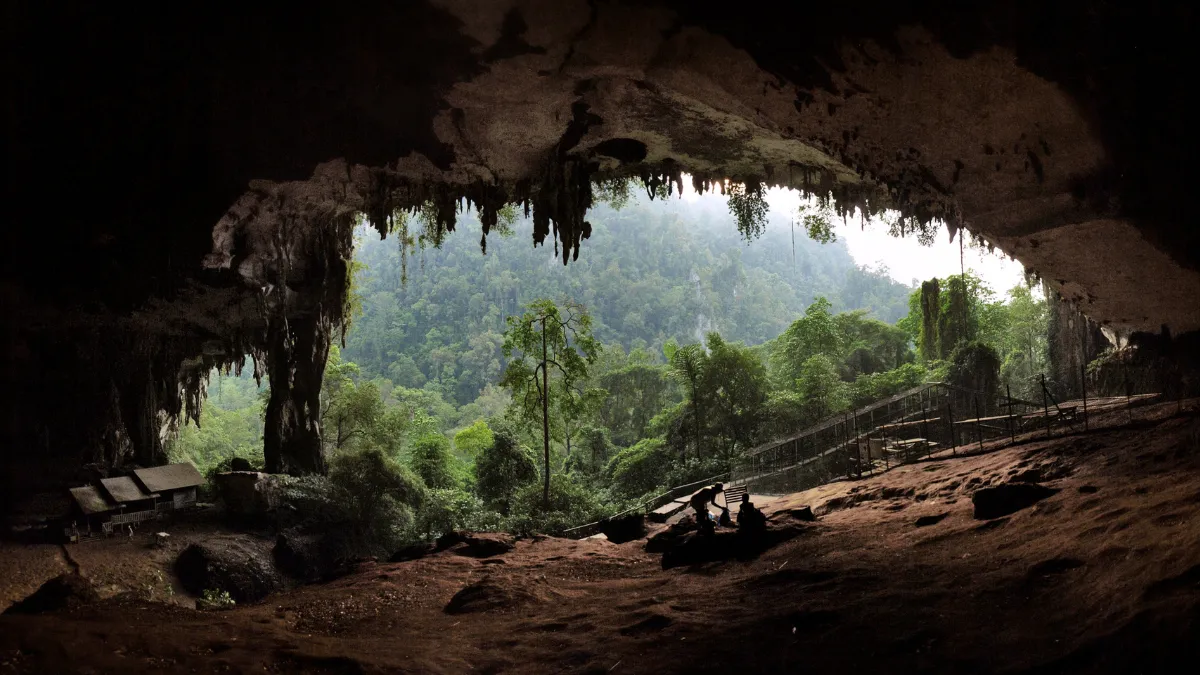
If you arrive in Miri early enough, you could squeeze in an afternoon visit to Niah National Park, famous for massive limestone caves with prehistoric significance.
The caves are 109 kilometers south of Miri, about 1.5 hours drive.
Archaeological evidence shows human occupation dating back 40,000 years, making this one of Southeast Asia’s oldest human settlement sites.
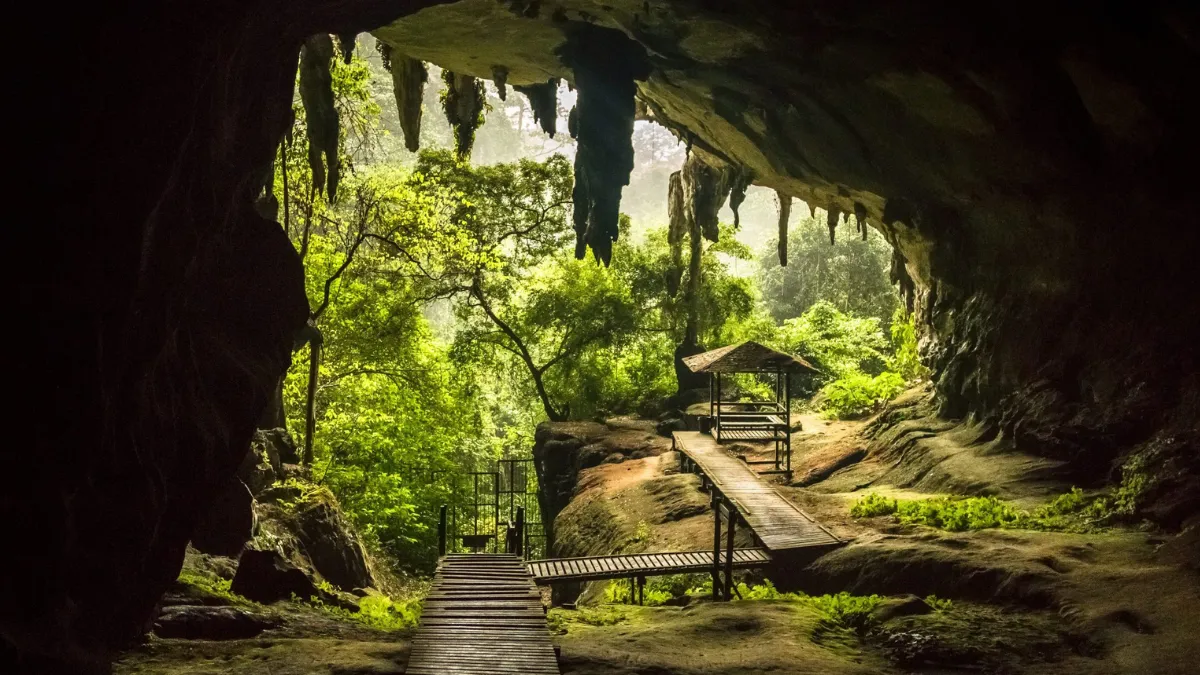
The Great Cave spans 250 meters wide and 60 meters high – genuinely impressive space.
Local people still harvest birds’ nests from cave ceilings for birds’ nest soup production. You’ll see rope ladders and bamboo poles extending high into the darkness.
Visiting Niah requires:
5 highlights
- Park entry fee: RM20 for foreigners
- 45-minute walk on wooden plankwalk from park entrance to caves
- Headlamp or flashlight (mandatory – cave sections have zero light)
- Good shoes (plankwalk gets slippery from bat guano)
- 2-3 hours minimum for basic cave exploration
Getting there: Rent a car in Miri (RM150-200 per day) or hire a taxi for round-trip with waiting time (RM250-350). Few tour operators run Niah trips from Miri as it’s less popular than Mulu caves.
Niah is worth it if you have extra time, but most travelers prefer saving their cave experience for Gunung Mulu which is more impressive.
Day 10: Final Morning and Departure Planning – Sabah and Sarawak 10 Day Itinerary
Your final day depends on where you’re flying out.
Most international travelers exit through either Kuching or Kota Kinabalu, as Miri has limited international connections.
If Departing from Miri
Miri has direct flights to: Kuala Lumpur, Singapore, Johor Bahru.
Spend your final morning walking the waterfront, shopping for last-minute snacks and gifts, and reflecting on ten intense days of Bornean adventure.
Grab to airport costs RM15-25. Arrive 1.5 hours before domestic flight, 2 hours before international.
If Returning to Kuching or Kota Kinabalu
You’ll need to fly back to one of these cities for your international departure.
Miri to Kuching: 50 minutes, multiple daily flights, RM150-300.
Miri to Kota Kinabalu: 1 hour, several daily flights, RM180-350.
Book these connections 2-3 weeks ahead alongside your international flights.
Build in buffer time – don’t book a connection with less than 3-4 hours between flights in case of delays.
What You’ve Accomplished
In ten days, you’ve covered:
- Two states across Malaysian Borneo (Sabah and Sarawak)
- Five major destinations (Kota Kinabalu, Kinabatangan River, Mount Kinabalu, Kuching, Miri)
- Multiple ecosystems (coastal marine parks, lowland rainforest, montane forest, limestone karst, mangrove swamps)
- Wildlife encounters with orangutans, proboscis monkeys, pygmy elephants, hornbills, and marine life
- Cultural exposure to indigenous communities and colonial history
- Adventure activities from jungle trekking to island hopping to river cruises
You’ve earned those flight-delay beers in the departure lounge.
Practical Travel Tips for Malaysian Borneo
Money and Costs
Currency is Malaysian Ringgit (RM or MYR).
Exchange rates fluctuate, but roughly: RM4 = $1 USD, RM5 = €1, RM5.5 = £1.
ATMs are widespread in cities (Kota Kinabalu, Kuching, Miri). Less common in small towns and near national parks.
Withdraw sufficient cash before heading to remote areas like Kinabatangan or Bako.
Credit cards work at hotels, restaurants, and tour operators in cities. Cash is essential for markets, street food, small guesthouses, and local transport.
Tipping isn’t expected in Malaysia. Service charges are included in restaurant bills at mid-range and upscale places.
Connectivity and SIM Cards
Buy a local SIM card at the airport immediately upon arrival.
Major carriers: Celcom, Digi, Maxis. All offer prepaid tourist packages.
Expect to pay RM30-50 for 30-day plan with 20-40GB data plus local calls.
Coverage is excellent in cities and along main highways. Spotty in remote jungle areas and on some islands.
Many lodges in Kinabatangan and national parks have limited or no WiFi. Download offline maps and information before arriving.
Language
Malay (Bahasa Malaysia) is the official language.
English is widely spoken in tourist areas, hotels, and by younger Malaysians in cities.
In remote villages and among older generations, English proficiency drops significantly.
Useful Malay phrases:
- Terima kasih (thank you)
- Berapa harga? (How much?)
- Saya tidak faham (I don’t understand)
- Boleh kurang? (Can you reduce the price?)
- Di mana… (Where is…)
Learn basic numbers for market negotiations and transportation.
Health and Safety
No required vaccinations for entering Malaysia, but recommended: Hepatitis A, Typhoid, routine vaccinations current.
Malaria exists in interior Sabah including Kinabatangan area, though risk is low. Consult your doctor about antimalarial medication.
Dengue fever is present throughout Borneo, especially during and after rainy season. No vaccine (for most travelers), only prevention through mosquito avoidance.
Use insect repellent religiously. Cover exposed skin dawn and dusk. Sleep under mosquito nets when provided.
Don’t drink tap water. Stick to bottled or filtered water.
Bring basic medications: anti-diarrhea (loperamide), pain reliever, antihistamine, oral rehydration salts.
Medical facilities in Kota Kinabalu and Kuching are decent. Rural areas have limited medical infrastructure.
This is why you need proper travel insurance with medical evacuation coverage.
What to Eat in Malaysian Borneo
Beyond dishes mentioned earlier, look for these regional specialties:
Sabah:
- Hinava – raw fish salad with lime, ginger, shallots, and chili (like ceviche)
- Ngiu chap – beef noodle soup with herbs and offal
- Bambangan – wild mango pickle, distinctive sour and salty flavor
- Tuhau – wild ginger relish, pungent and addictive
Sarawak:
- Sarawak laksa (mentioned earlier but bears repeating – it’s that good)
- Umai – Melanau raw fish salad with lime and onions
- Ayam pansuh – chicken cooked in bamboo with lemongrass
- Dabai – seasonal fruit with creamy texture when blanched, often eaten with soy sauce and sugar
Food safety is generally good. Busy hawker stalls with high turnover are your safest street food bet.
Vegetarian options exist but are limited compared to other parts of Southeast Asia. Malay food often contains shrimp paste. Chinese restaurants typically offer more vegetable-based dishes.
Respect and Etiquette
Malaysia is a Muslim-majority country, though Sabah and Sarawak have large Christian and indigenous populations.
Dress modestly when visiting religious sites. Cover shoulders and knees.
Remove shoes before entering homes, mosques, and some shops.
Public displays of affection should be minimal.
Use your right hand for eating and passing objects (left hand is considered unclean in Muslim culture).
When visiting indigenous communities or longhouses:
- Ask permission before photographing people
- Accept offered food and drink (at least taste it)
- Dress conservatively
- Remove shoes when entering
- Bring small gifts (cookies, candy, fruit) for hosts
Environmental Responsibility
You’re visiting fragile ecosystems and endangered wildlife habitat.
Practice responsible tourism:
- Never touch or feed wildlife
- Stay on marked trails
- Pack out all trash, including organic waste
- Use reef-safe sunscreen at beaches (no oxybenzone or octinoxate)
- Don’t buy products made from endangered species (ivory, turtle shell, exotic pets)
- Choose tour operators with environmental certifications and responsible practices
- Minimize plastic use (bring reusable water bottle and bags)
Palm oil plantations have devastated huge areas of Borneo’s rainforest. The orangutans and elephants you see are clinging to shrinking habitat fragments.
Your tourism money, when spent with responsible operators, helps justify conservation over conversion to plantation agriculture.
Extending Your Trip: Additional Destinations
Ten days hits the highlights but barely scratches Borneo’s surface.
If you have 14-21 days, consider adding these destinations:
Gunung Mulu National Park (2-3 days)
UNESCO World Heritage site featuring the world’s largest cave chamber (Sarawak Chamber) and longest cave passage (Clearwater Cave).
Accessible via short flight from Miri or Kuching.
Cave tours, canopy walkways, and challenging jungle treks.
This is Borneo’s premier caving destination.
Danum Valley (2-3 days)
Pristine primary rainforest in eastern Sabah.
World-class wildlife viewing including all Borneo big mammals.
More exclusive and expensive than Kinabatangan but offers deeper jungle immersion.
Access via Lahad Datu followed by 2.5-hour drive on logging roads.
Sipadan Island (3-4 days)
Legendary dive site ranked among world’s top 5 by Jacques Cousteau.
Daily permit limit of 120 divers maintains pristine conditions.
Stay at nearby Mabul or Kapalai islands, day-trip to Sipadan.
Permits book up months ahead for peak season.
Brunei (1-2 days)
Tiny oil-rich sultanate wedged between Sarawak’s two sections.
Ornate mosques, water villages, and the ridiculous wealth of Southeast Asia’s richest royal family.
Easy to add if traveling overland between Miri and Limbang/Lawas areas.
Iban Longhouse Experience (2-3 days)
Overnight stays in traditional Iban longhouses along Sarawak’s rivers.
Cultural immersion with indigenous communities.
Accessible from Kuching or Kapit.
Choose community-based tourism operators for authentic experiences that benefit local people.
Final Thoughts on Your Sabah and Sarawak Adventure
This itinerary pushes you through two distinct states in ten packed days.
You’ll cover significant Malaysian ground: islands, mountains, rivers, rainforest, and cities.
The pace is manageable but not leisurely. You’re moving every 2-3 days.
Borneo rewards travelers who embrace discomfort. Humidity will drench your clothes. Boats will bounce you around. Trails will challenge your balance. Insects will find you delicious.
That’s part of the package.
What you gain in return is access to wildlife experiences few places on earth can match.
Where else can you watch wild orangutans swing through canopy trees in the morning, then spot pygmy elephants crossing a river in the afternoon, then identify proboscis monkeys by their bizarre honking calls at dusk?
Malaysian Borneo delivers on its promise.
Book your flights. Sort your insurance. Pack light and smart.
The jungle is waiting.