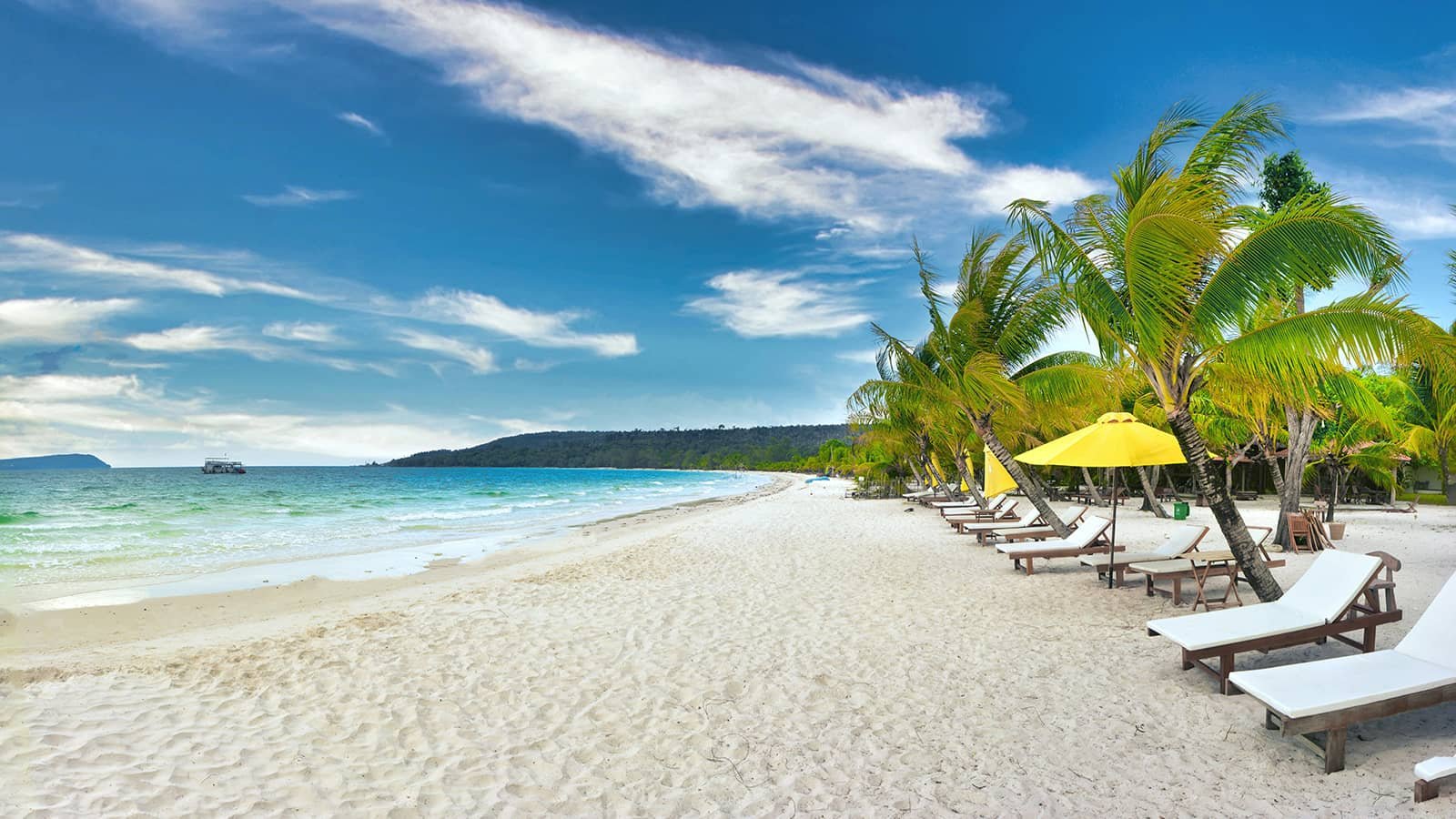

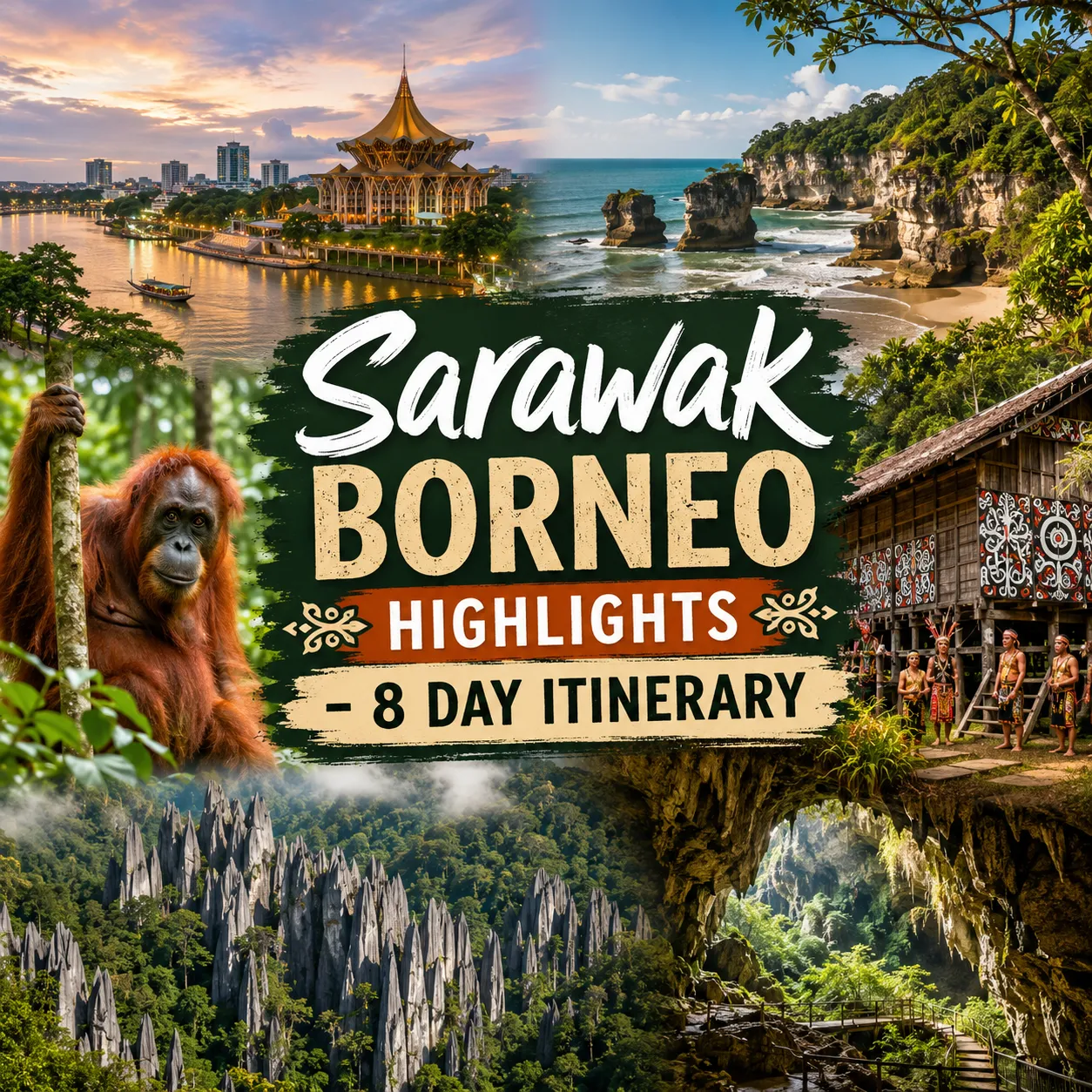
The Borneo Sarawak Highlights tour offers an unforgettable journey through one of the world’s most biodiverse regions. This 8-day itinerary takes you deep into the heart of Malaysian Borneo. You will encounter rare wildlife, ancient caves, and indigenous cultures that have thrived for thousands of years. From the moment you arrive in Kuching, the adventure begins. Each day brings new discoveries across Sarawak’s remarkable landscapes. You will cruise through mangrove forests where proboscis monkeys leap between branches. You will walk beneath towering rainforest canopy and sleep in traditional Iban longhouses.
This trip combines nature, culture, and adventure in perfect balance. The journey showcases the best of what Sarawak offers to travelers seeking authentic experiences. Whether you dream of seeing orangutans in their natural habitat or exploring vast limestone cave systems, this itinerary delivers unforgettable moments at every turn.
Personalized Itinerary
Start Planning Your Borneo Sarawak Highlights Adventure
Join our expertly guided tour with local specialists who know every trail, every wildlife hotspot, and every cultural treasure. Small group sizes ensure personalized attention throughout your journey.
Get Your Custom ItineraryDay 1: Kuching: Culture, Heritage and the Sarawak River
Is eight days enough to see the highlights of Sarawak, Borneo?
Yes, Eight days is an ideal amount of time to explore the main attractions of Sarawak, Borneo. With careful planning, you can enjoy a comfortable mix of wildlife encounters, indigenous culture, and UNESCO World Heritage sites without feeling rushed.
Your Borneo Sarawak Highlights adventure begins in Kuching, the vibrant capital of Sarawak. This charming city sits along the banks of the Sarawak River. The name Kuching means “cat” in Malay, and you will notice cat statues throughout the town celebrating this unique identity.
Kuching makes a wonderfully gentle introduction to Borneo. Sarawak’s capital is compact, walkable and deeply multicultural, with Chinese temples, Malay kampungs, colonial buildings and Indigenous traditions all woven into the city centre. This itinerary assumes your flight lands at around 8:00 am. If you arrive later, head directly to the Borneo Cultures Museum and save the heritage walk for afterwards. Make sure to visit a bank or ATM if you don’t have cash, once outside the city many places will only take cash. For more details see our post about realistic Malaysia travel costs 2026.
8:00 am – Arrive at Kuching International Airport
After collecting your luggage, take a taxi or e-hailing service such as Grab into central Kuching. The journey usually takes around 20–30 minutes, although morning traffic can make it longer.
Leave your bags at your hotel and resist the temptation to linger. Kuching has plenty to fit into one day, but most of the important sights are conveniently clustered around the historic waterfront.
I start the day with Kuching’s most famous breakfast: Sarawak laksa. The dish combines rice vermicelli, prawns, shredded chicken, egg and bean sprouts in a rich, aromatic broth flavoured with spices and coconut milk. It’s delicious!
First Day Essentials
- Airport pickup included
- Hotel check-in assistance
- Evening city orientation
- Welcome dinner recommendations
- Trip briefing from guide
Where to go? Easy, head to Choon Hui Café. It’s one of the best-known places, although Chong Choon Café and Mom’s Laksa are also popular. Order a glass of iced coffee or teh tarik alongside it, but leave room for more food later—eating is an essential part of exploring Kuching.
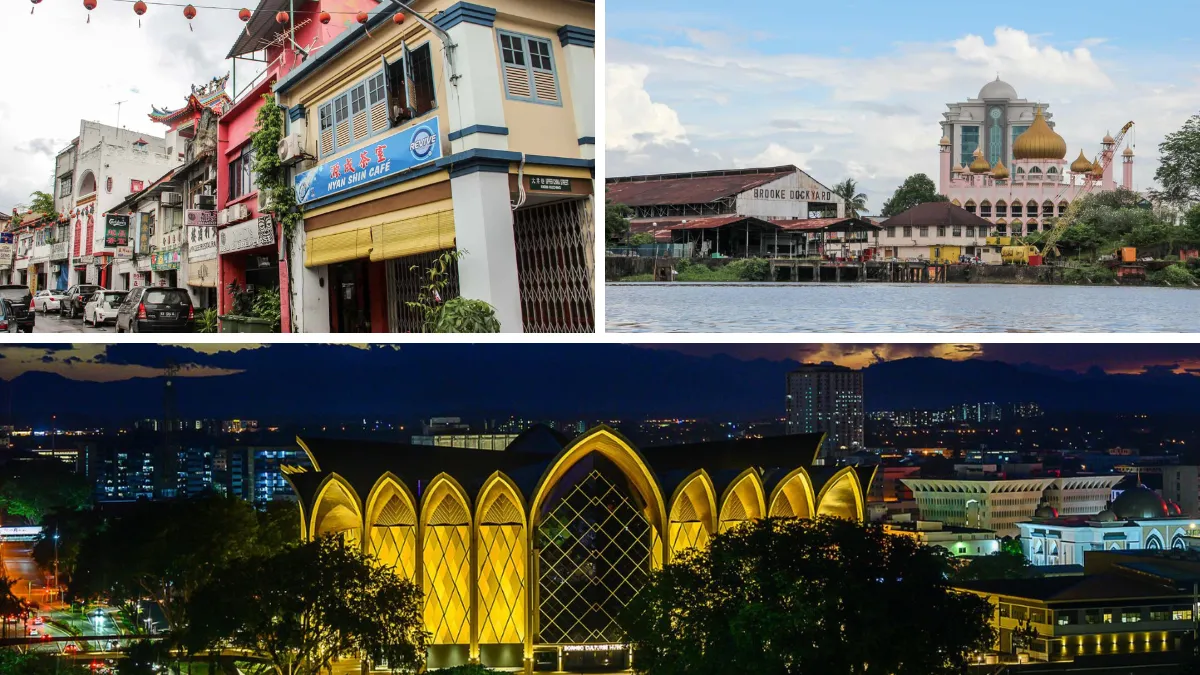
10:00 am – Explore the Borneo Cultures Museum
Allow at least two and a half hours for the outstanding Borneo Cultures Museum. This is not a museum I would rush. Its thoughtfully designed galleries provide valuable context for everything else you will encounter in Sarawak, from longhouse traditions and rainforest livelihoods to textiles, spiritual beliefs and the relationship between Indigenous communities and the natural world.
The five-story museum includes galleries devoted to environmental relationships, social and historical change, traditional craftsmanship and significant cultural objects. It is one of Kuching’s essential attractions and an ideal first stop before travelling elsewhere in Sarawak.
12:30 pm – Walk through Padang Merdeka and the Old Courthouse
Leaving the museum, cross Padang Merdeka, the open civic square that has witnessed many important moments in Sarawak’s history. Continue towards the Old Courthouse complex, once the administrative centre of the Brooke government.
Stop at the Brooke Memorial, which honours Charles Brooke, Sarawak’s second White Rajah. The figures at its corners represent Sarawak’s Dayak, Kayan, Malay and Chinese communities—a small but revealing detail in a city shaped by cultural diversity.
Nearby heritage buildings include the Round Tower, built in 1886, and Kuching’s grand General Post Office, distinguished by its neoclassical façade and Corinthian columns. Sarawak Tourism Board
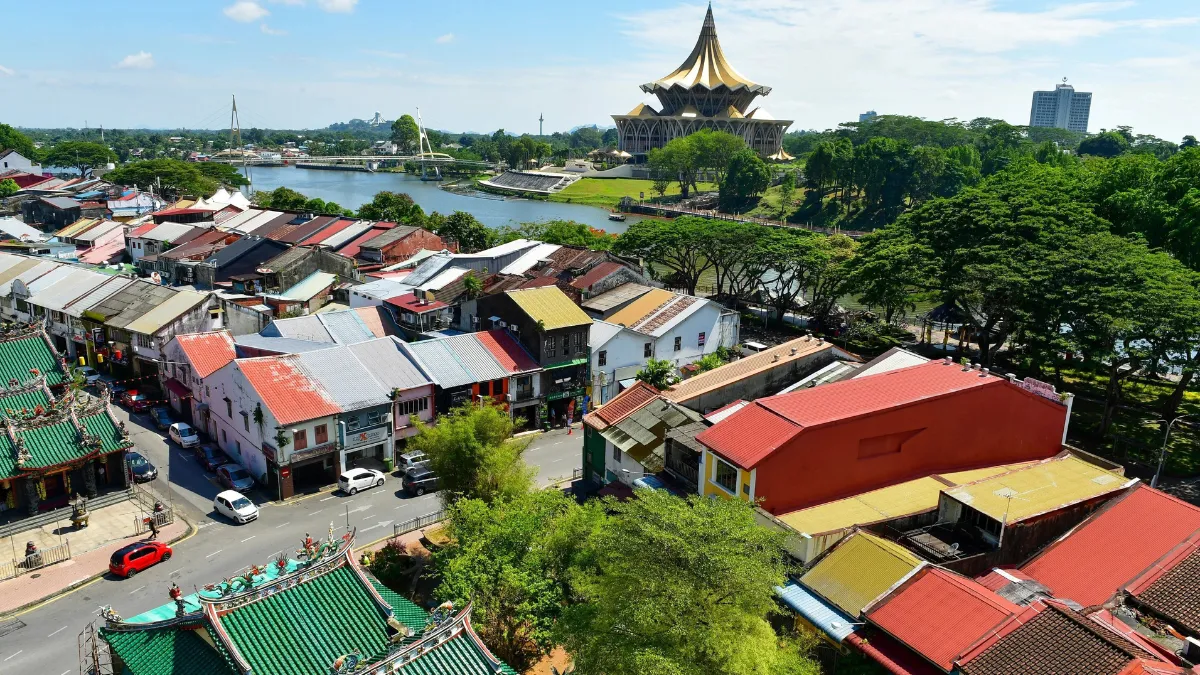
1:00 pm – Lunch on Carpenter Street
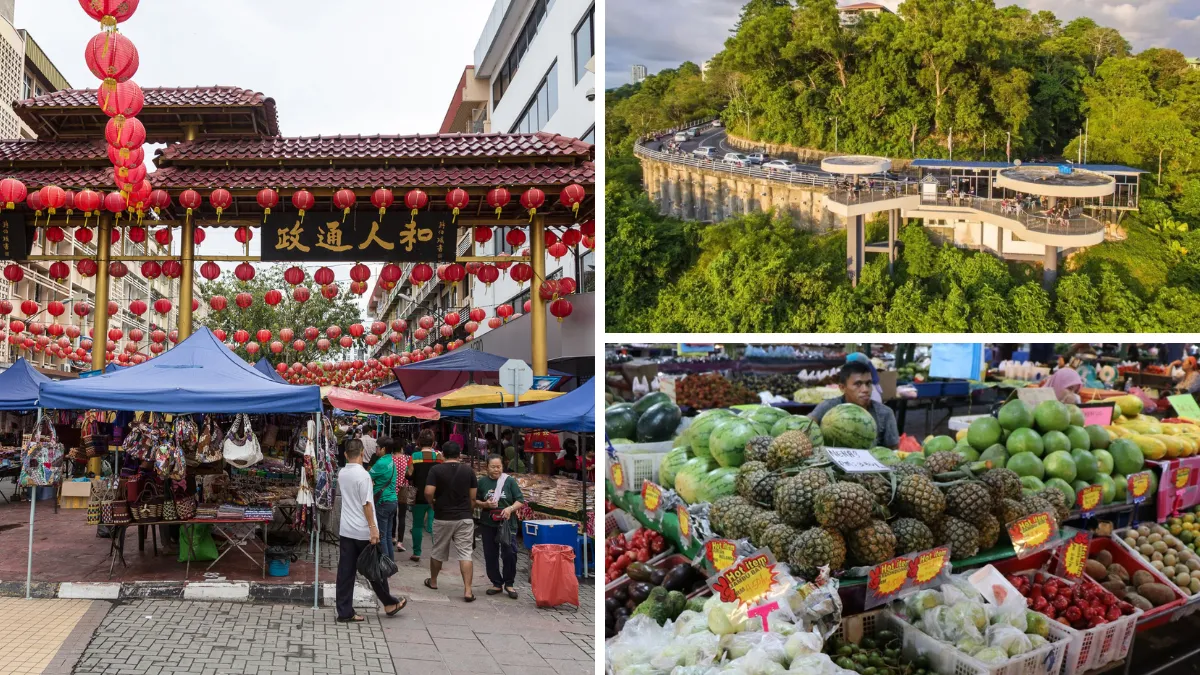
Pass through the Harmony Arch and enter Carpenter Street, one of Kuching’s oldest commercial streets. Its colourful shophouses now contain coffee shops, restaurants, bakeries, small temples and family businesses. For lunch, try Kolo Mee—springy noodles tossed with oil, seasoning and slices of meat—or another Sarawak speciality such as Ayam Pansuh, chicken cooked with herbs inside bamboo. Vegetarian versions of many local noodle dishes are also available, although it is worth confirming whether the broth or sauce contains meat.
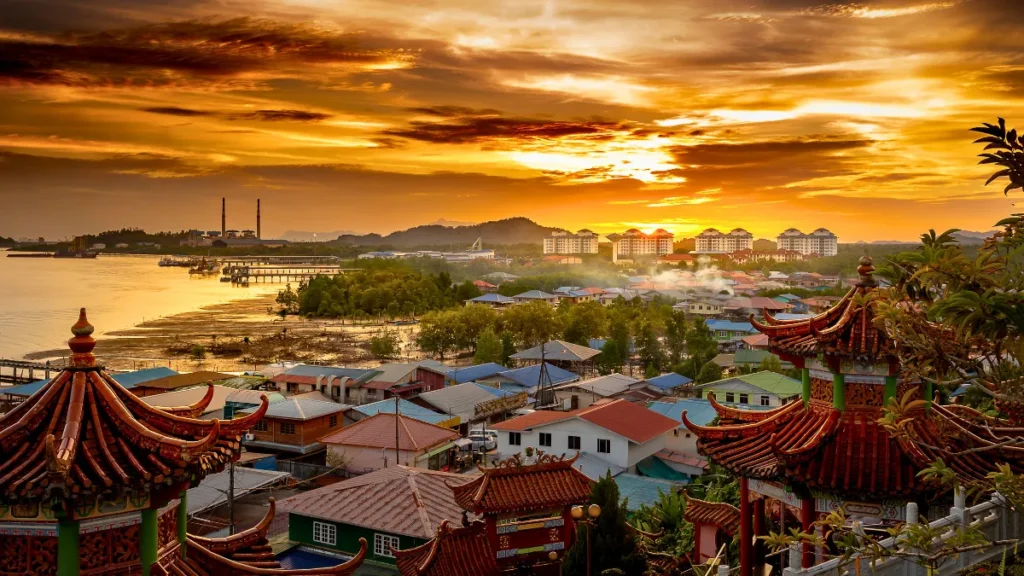
After eating, visit the beautifully decorated Hiang Thian Siang Ti Temple or Hong San Si Temple. Remember that these remain active places of worship, so keep voices low and ask before photographing worshippers.
2:15 pm – Browse Main Bazaar
Walk down to Main Bazaar, a row of heritage shophouses facing the Sarawak River. Historically, this was one of Kuching’s principal trading streets. Today it is a good place to look for woven baskets, beadwork, carved objects, textiles and other Sarawak handicrafts. Quality varies, and not everything sold here is genuine.
Continue to the small Chinese History Museum on the waterfront if it is open. Its exhibits explain the arrival and development of Sarawak’s different Chinese communities and add another layer to Kuching’s multicultural story.
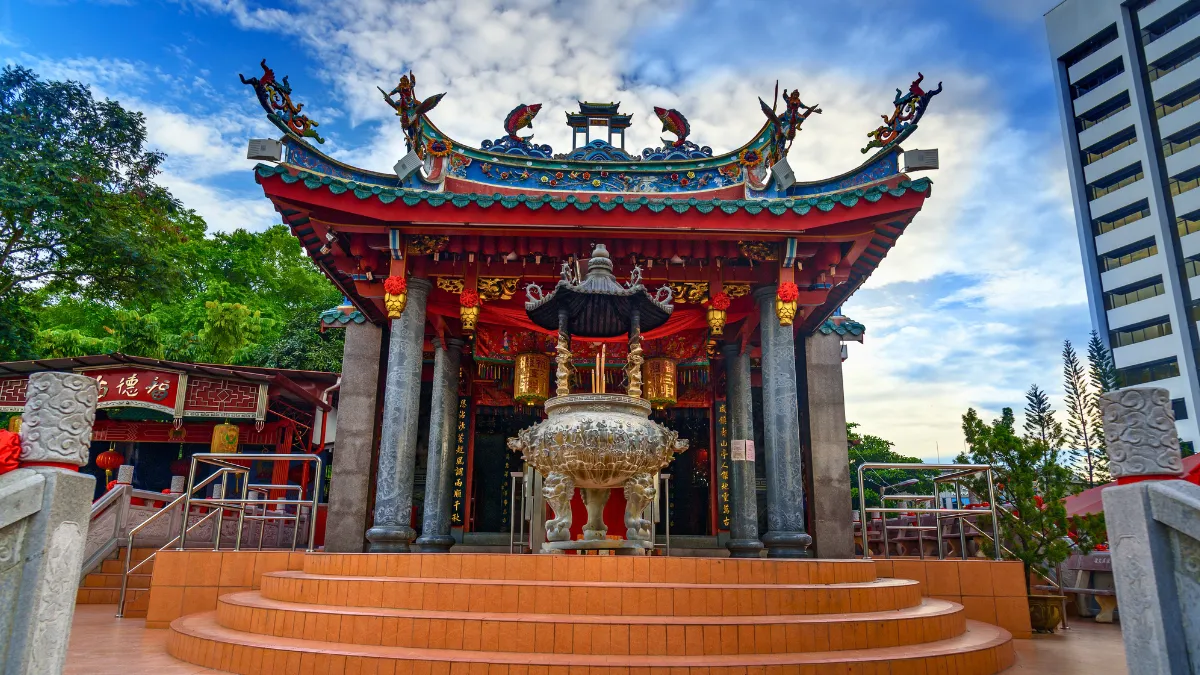
3:15 pm – Visit Tua Pek Kong Temple
At the eastern end of Main Bazaar, stop at the colorful Tua Pek Kong Temple. Its hillside position once provided commanding views of the river and the trading settlement below. The temple is relatively small, so you will not need long here, but its carved dragons, incense coils and richly painted surfaces make it one of the most atmospheric cultural sights in central Kuching.
3:45 pm – Walk along the historic Kuching Waterfront
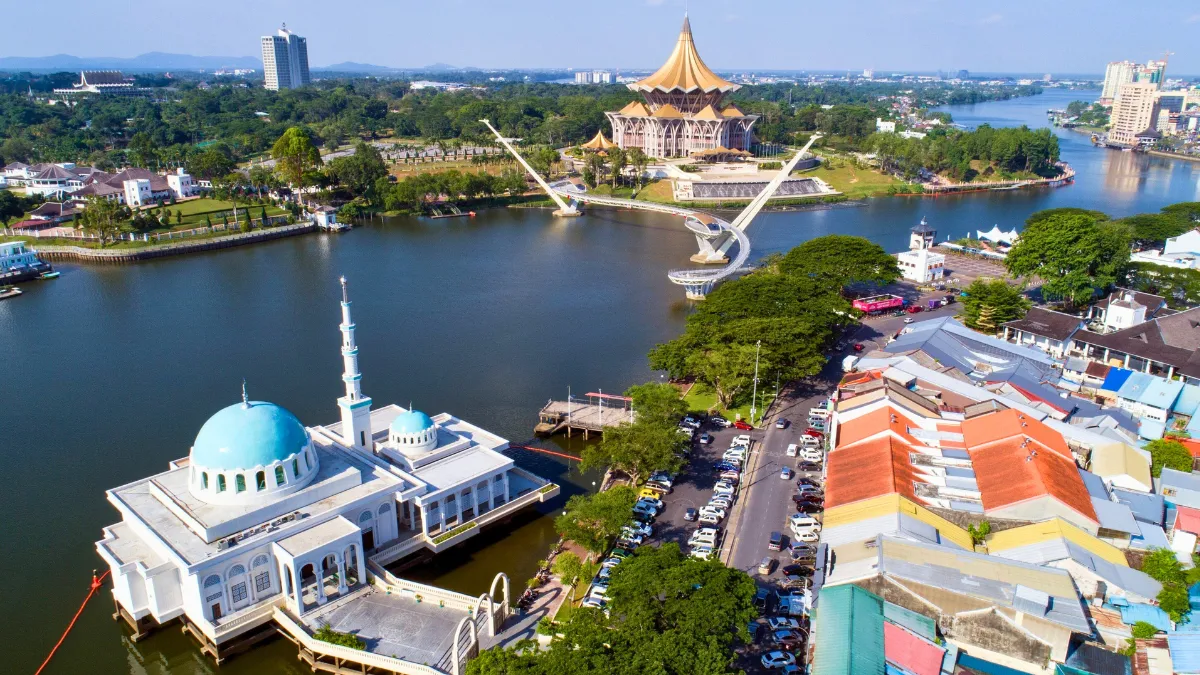
Now slow the pace and follow the Kuching Waterfront beside the Sarawak River. The landscaped promenade extends for approximately 1.5 kilometres along the former trading port and passes several reminders of the city’s commercial and colonial past. Look across the water towards the Astana, the former residence of Sarawak’s White Rajahs, and the striking State Legislative Assembly building. You will also pass the Square Tower, the Old Sarawak Steamship Building and the golden-domed Floating Mosque.
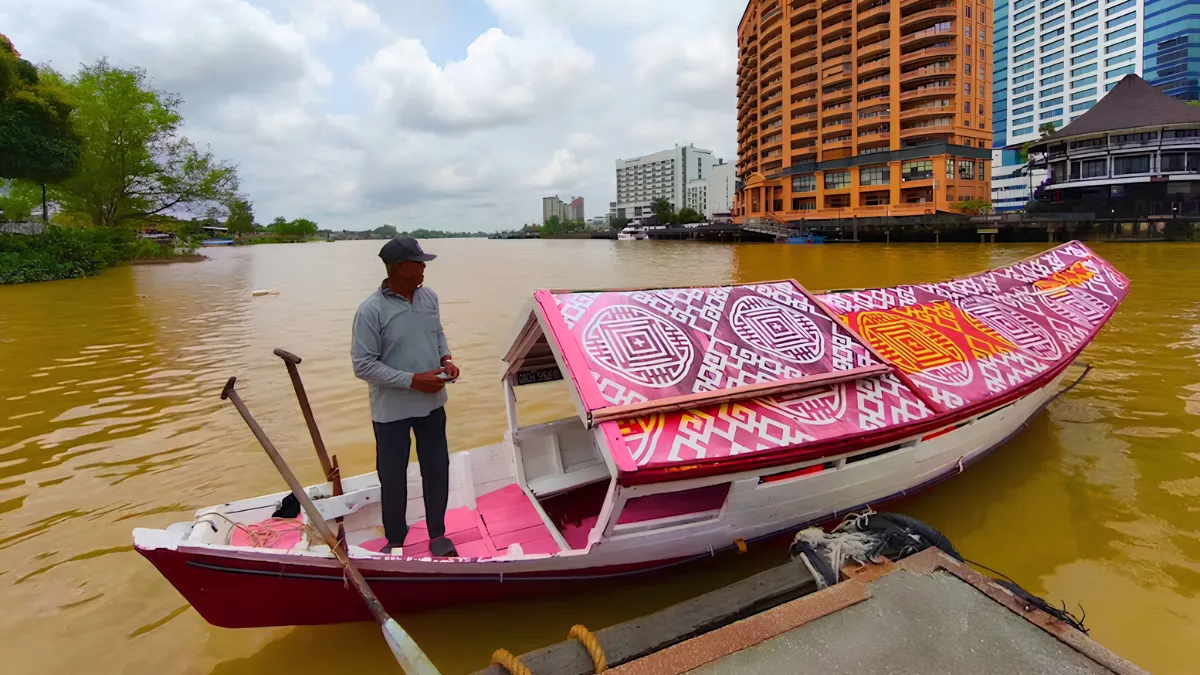
4:30 pm – Cross the river aboard a traditional sampan
One of my favorite Kuching experiences is also one of its simplest: crossing the Sarawak River in a small traditional wooden sampan, locally known as a tambang. Boats leave from several small waterfront jetties. The journey takes only a few minutes, but it offers an entirely different perspective of the city. Carry small-denomination Malaysian ringgit and confirm the fare with the boat operator before boarding.
On the northern bank, wander through a traditional Malay kampung and stop for a piece of Kek Lapis Sarawak. Shops here sell the colorful, intricately layered cakes in an almost bewildering variety of flavors. If you still have energy—and enough daylight—walk towards Fort Margherita. Built to protect Kuching from river-borne attacks, the whitewashed fort is now associated with the Brooke Gallery. With only one day, I would treat this as an optional stop rather than rush through it.
5:45 pm – Return across the Darul Hana Bridge
Instead of taking another boat, return to the city center via the sinuous Darul Hana pedestrian bridge. Its S-shaped design links the two riverbanks and provides panoramic views of the waterfront, Astana and State Legislative Assembly building. The bridge becomes particularly photogenic as its lights come on after dark.
Continue west along the waterfront towards the Floating Mosque. Its golden dome and riverfront position are especially striking around sunset, when the building appears reflected in the water. This is an active mosque rather than simply a photographic attraction. Dress modestly, avoid entering during prayers and follow any instructions provided at the entrance.

End your day with dinner near the waterfront or at Top Spot Food Court, a casual open-air seafood centre above a city car park. Choose your fish, prawns or shellfish from the displays and have them cooked to order.
Look out for local dishes such as:
- Midin jungle fern fried with garlic or belacan
- Manok pansuh, chicken cooked in bamboo
- Sarawak-style butter prawns
- Umai, a Melanau dish of raw fish cured with lime and chilli
- Oyster pancake
- Three-layer tea, a sweet Sarawak drink made with tea, evaporated milk and palm sugar
After dinner, return to the waterfront for one final walk. Kuching is at its most inviting in the evening, when the river breeze arrives, the bridge is illuminated and food stalls begin serving local families. It is an unhurried end to a day that captures the city particularly well: culturally layered, historically fascinating and always closely connected to the river.
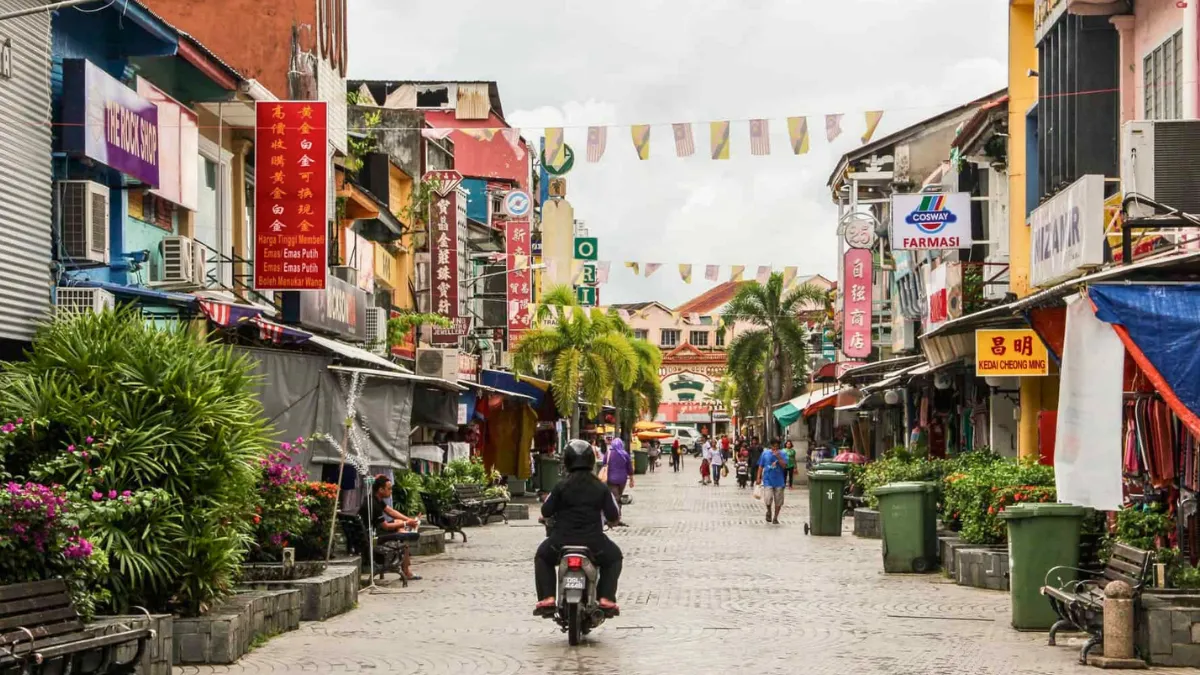
Practical note: Kuching is hot, humid and prone to sudden rain. Wear comfortable shoes, carry drinking water and keep a lightweight rain jacket or umbrella in your day bag. Small cash notes are useful for sampans, market stalls and independent food vendors.
Day 2: Bako National Park – Rainforest and Wildlife Encounter
Is Bako National Park worth visiting, and should I stay overnight?
Bako National Park is absolutely worth visiting. It is Borneo’s oldest national park, it features seven unique ecosystems, dramatic sea stacks, and rare wildlife like the pot-bellied proboscis monkey. Staying overnight is recommended if you have the time, it helps avoid crowds, enjoy cooler morning hikes, and join guided night walks to spot nocturnal animals.
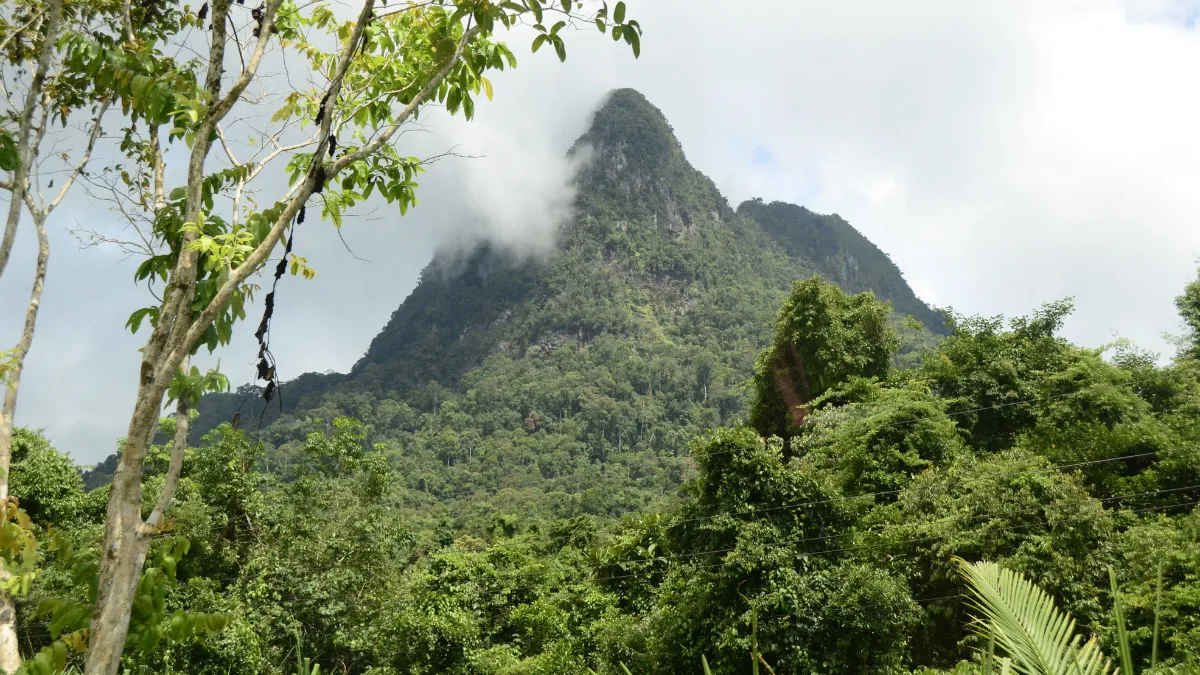
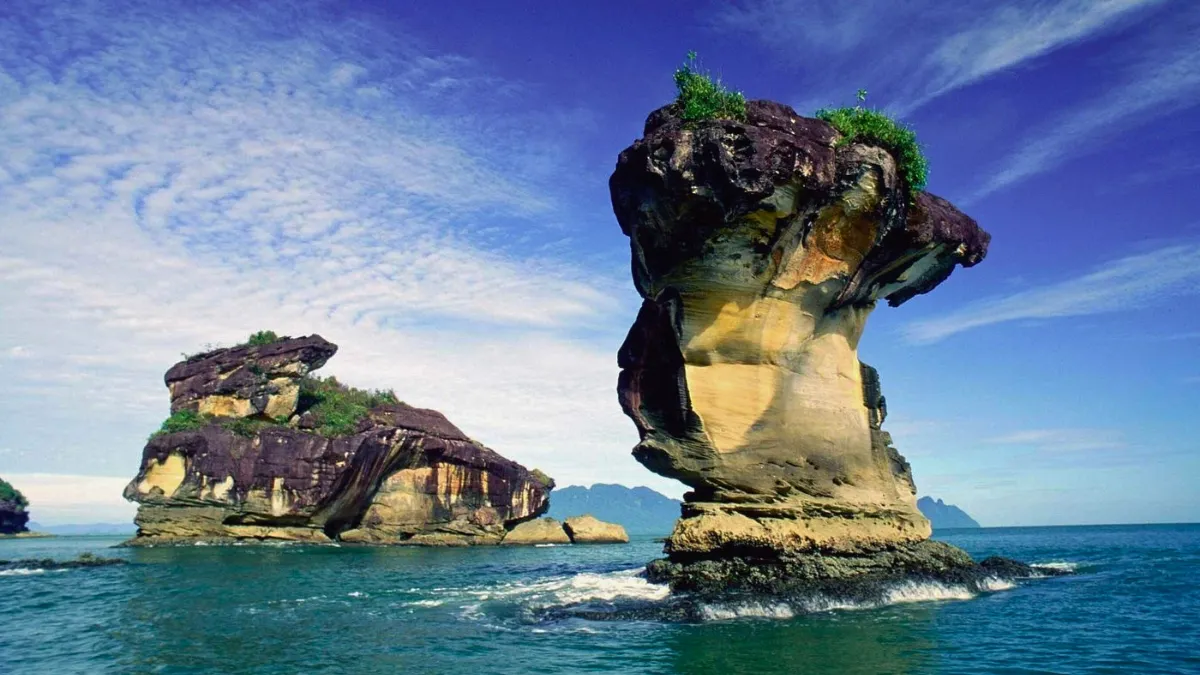
Bako National Park may be Sarawak’s oldest national park, but it remains one of its most rewarding. Within a relatively small area, the landscape shifts between mangrove forest, tangled rainforest, sandstone cliffs, beaches and unusual tropical vegetation. It is also one of the most accessible places in Sarawak to look for wild proboscis monkeys.
6:30 am – Leave Kuching
Set out early from Kuching by taxi, Grab or prearranged transfer. The drive to Bako Village normally takes approximately 30–45 minutes, depending on traffic. Public buses can be cheaper, but a private transfer gives you a better chance of reaching the park when wildlife is most active. Bring breakfast from Kuching or eat before leaving, as facilities at the park are limited.
7:15 am – At Bako Village, register for the national park, pay the relevant entrance and boat fees and arrange your return journey. Boats are shared when possible, so other travelers may be waiting to form a group. If time matters, paying for a private boat can help you leave promptly.
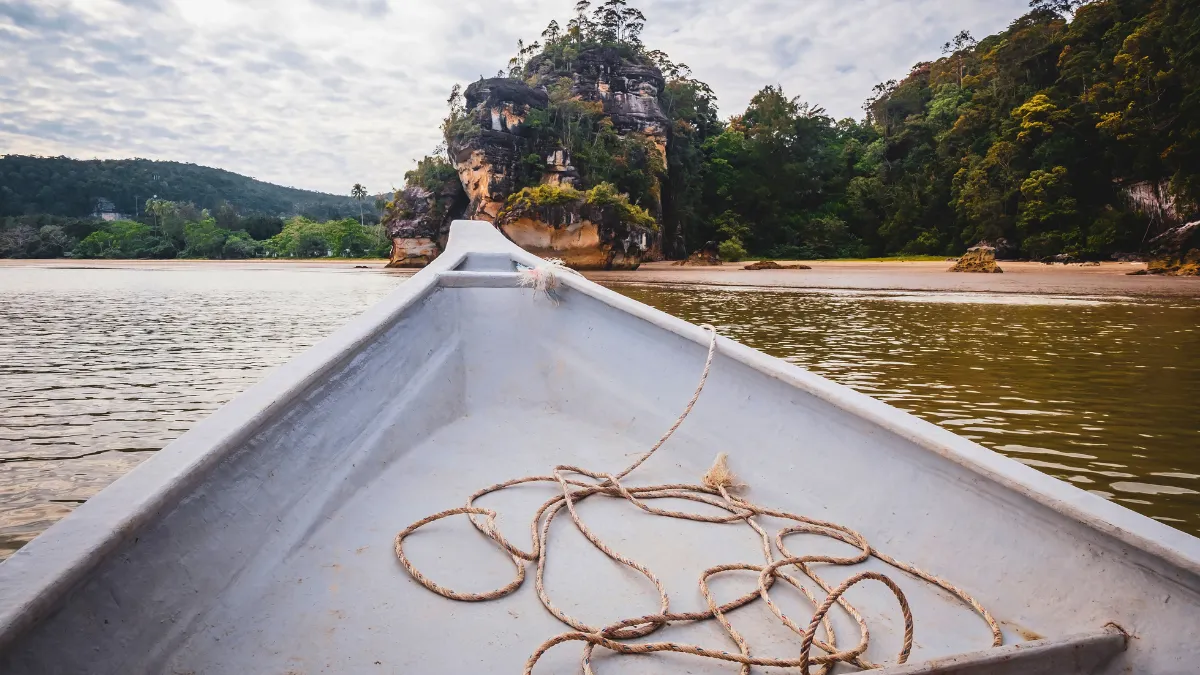
Boat access is affected by tides, weather and sea conditions. Do not assume a beach pickup will be available unless the boat operator confirms it that morning. The boat ride from Bako Village to the national park usually takes around 20 minutes. The journey follows the mangrove-fringed coastline before approaching the park’s forested headland.
Depending on the tide, you may disembark at the jetty or step out onto the beach. Wear footwear that is easy to remove and keep electronics inside a waterproof bag.
Bako National Park officially operates from 8:00 am until 5:00 pm. Sarawak Tourism advises checking tidal conditions before using beach trails and notes that wildlife is generally more active early in the morning and later in the afternoon.
8:15 am – Arribal at Bako National park
Look for wildlife around park headquarters. Do not hurry straight onto the longest trail. Some of Bako’s best wildlife encounters occur around the mangroves, trees and open areas near park headquarters.
Confirm three things with your boat operator:
- Your return departure time
- Whether tidal conditions could affect the journey
- Whether a pickup from Telok Pandan Kecil Beach is possible
This is a particularly good time to look for proboscis monkeys. Listen for movement in the canopy and the distinctive crashing sound they make when jumping between branches. They often feed quietly above the mangroves and may be surprisingly difficult to see despite their size.
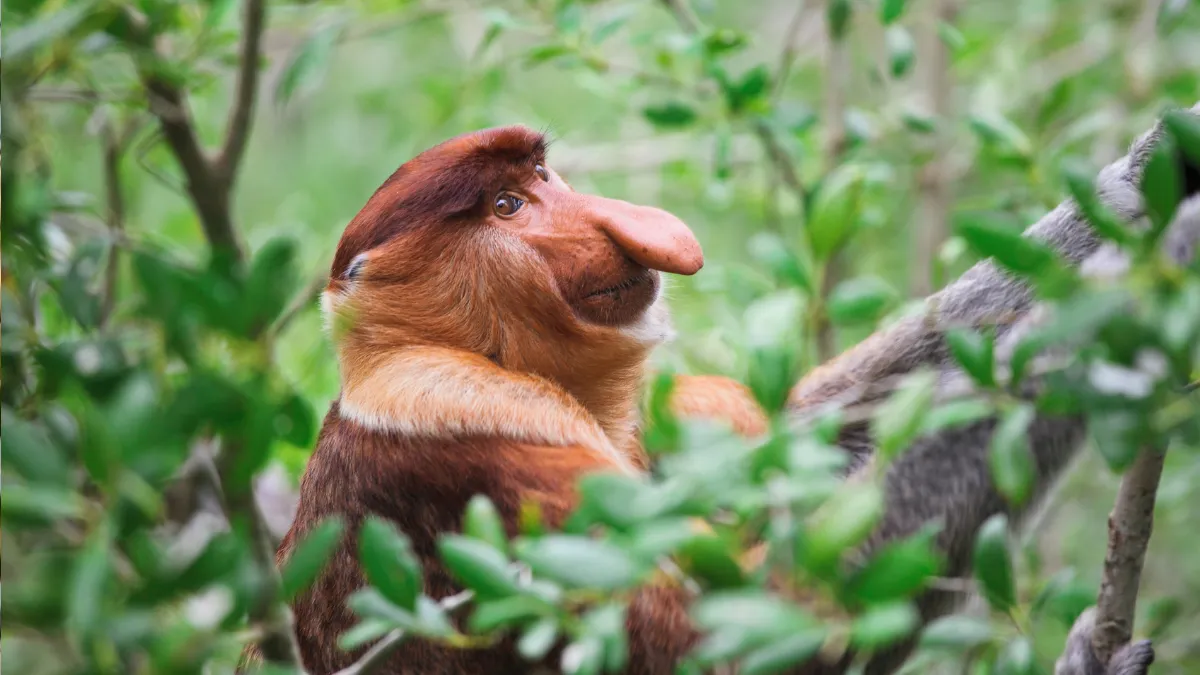
You may also encounter:
- Bornean bearded pigs
- Silvered langurs
- Long-tailed macaques
- Monitor lizards
- Plantain squirrels
- Mudskippers and fiddler crabs
- Kingfishers and other coastal birds
Keep a safe distance and never feed the animals. Long-tailed macaques can be opportunistic, so keep food inside your bag and avoid carrying plastic bags where they can see them.
Hiring a licensed guide is worthwhile if wildlife is your priority. An experienced guide is far more likely to notice a proboscis monkey hidden in the canopy or identify the alarm calls and feeding signs that most visitors overlook.
9:00 am – Hike the Telok Paku Trail
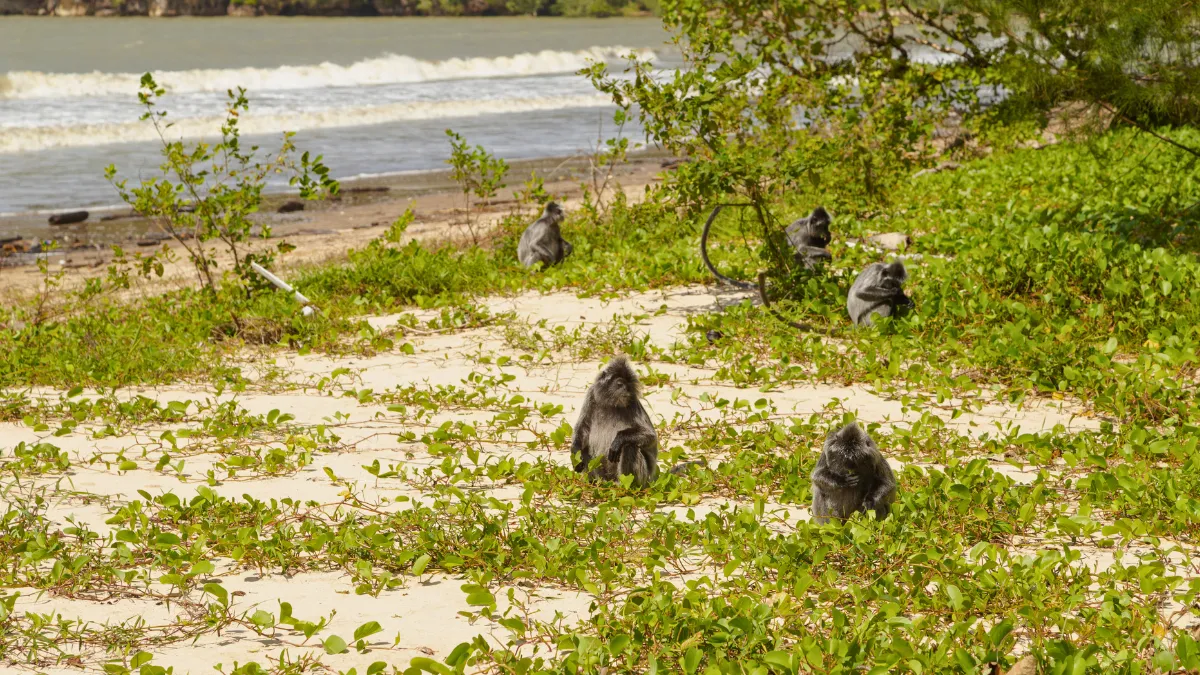
Begin with Telok Paku, one of the best short trails for combining rainforest, mangroves and potential proboscis-monkey sightings.
The trail passes through dense coastal forest before descending towards a small beach. Although it is relatively short, expect exposed roots, slippery sections and uneven ground. Bako’s tropical heat makes even modest distances feel more demanding than they appear on a map.
Walk slowly and scan the canopy rather than concentrating solely on reaching the beach. Proboscis monkeys are sometimes seen feeding near the mangrove forest along this route.
Spend a short time at Telok Paku Beach, but do not leave food unattended. The beach is attractive, although the wildlife and forest are the real reasons for choosing this trail. Allow approximately 90 minutes to two hours for the return walk, including wildlife stops.
11:00 am – Return to park headquarters
Back at headquarters, refill your water bottle and take a short rest. Check the trail board and speak with park staff about current conditions before beginning the afternoon hike. Trails can occasionally close because of fallen trees, erosion, flooding or other hazards. Park staff can also advise whether recent wildlife sightings have been reported near headquarters.
11:30 am – Have an early lunch
Eat lunch at the park canteen if it is operating, or bring a packed meal from Kuching. Keep lunch relatively light; the next hike involves exposed sections and a steady climb. I took a plastic sack to ensure I could take all rubbish back to headquarters. Tempting as it is, don’t feed leftovers to pigs, monkeys or other wildlife. By this point, the temperature and humidity will be building. Drink more water than you think you need and consider carrying electrolyte powder or rehydration salts.
12:15 pm – Hike to Telok Pandan Kecil
The Telok Pandan Kecil trail delivers the classic Bako combination of rainforest, unusual vegetation and dramatic coastal scenery. The route initially climbs through forest before emerging onto more exposed plateau terrain. Along the way, look for pitcher plants and other species adapted to Bako’s nutrient-poor soils. The changing vegetation is one of the most fascinating aspects of the walk.
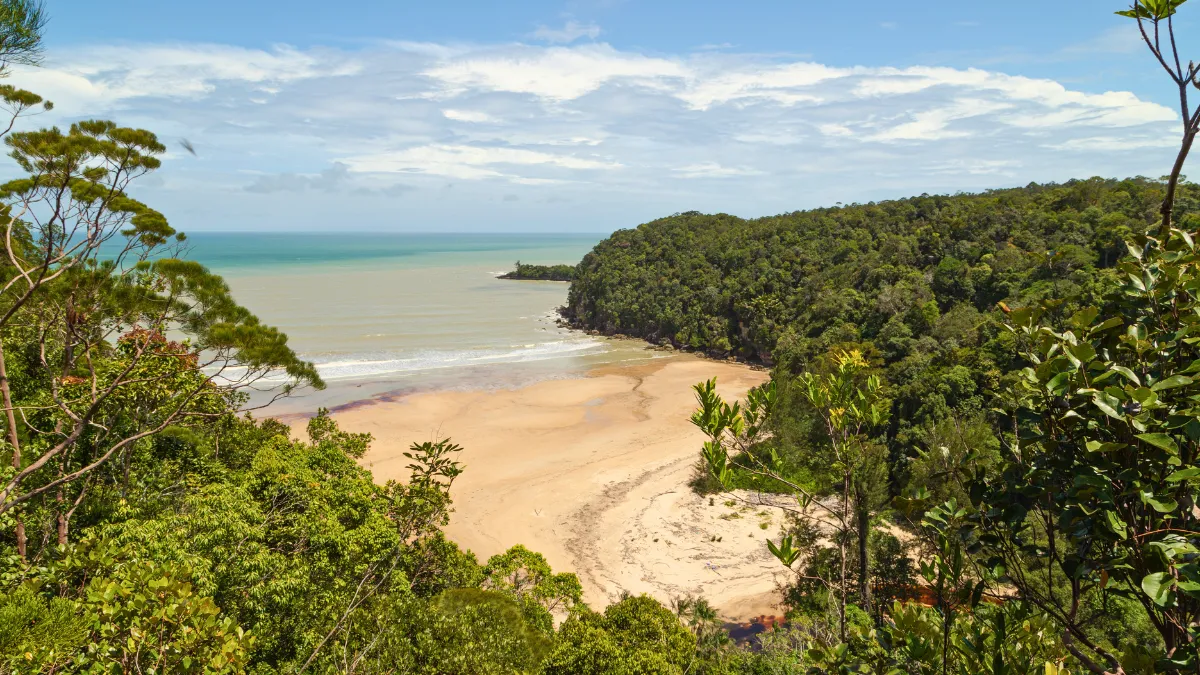
Eventually, the trail reaches a sandstone clifftop overlooking Telok Pandan Kecil Beach. This elevated viewpoint is one of the most impressive coastal panoramas in the park, with forested headlands, weathered rock formations and the South China Sea stretching beyond. Take time to enjoy the viewpoint, but remain behind safe edges. Sandstone can be unstable and the cliffs are not protected by continuous barriers.
Should you descend onto Telok Pandan Kecil beach?
If you have arranged a boat pickup and the tide permits, descend the final section to Telok Pandan Kecil Beach. This avoids retracing the entire trail and turns the afternoon into a satisfying one-way walk.
If a pickup has not been confirmed, enjoy the clifftop viewpoint and return to park headquarters on foot. Do not descend expecting to find a boat waiting. Allow approximately three to four hours for the return hike, including photographs and rest stops. A one-way hike followed by a boat pickup may be shorter, but this depends entirely on conditions.
If you returned by boat from Telok Pandan Kecil, you may be taken directly towards Bako Village or back to headquarters first, depending on the arrangement made with your boat operator.

4:15 pm – Take the boat back to Bako Village
Plan to leave the park well before its 5:00 pm closing time. Boat schedules are not as rigid as an urban ferry service, and changing tides or weather can affect the return journey. The trip back offers one last chance to watch for macaques, birds and other wildlife along the mangrove shoreline.
5:00 pm – Return to Kuching
Meet your driver at Bako Terminal and travel back to Kuching. You should arrive in the city at approximately 5:45–6:00 pm. After a shower and some rest, reward yourself with a Sarawak dinner. Midin jungle fern, Manok Pansuh, Umai or freshly cooked local seafood all make an appropriate end to the day.
Day 3: Semenggoh Orangutans and Iban Longhouse Experience
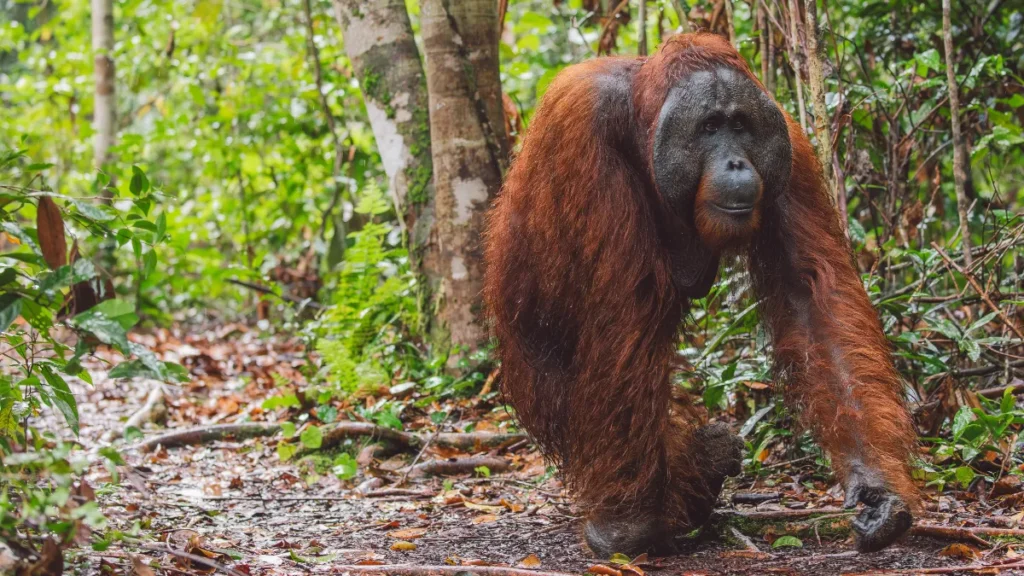
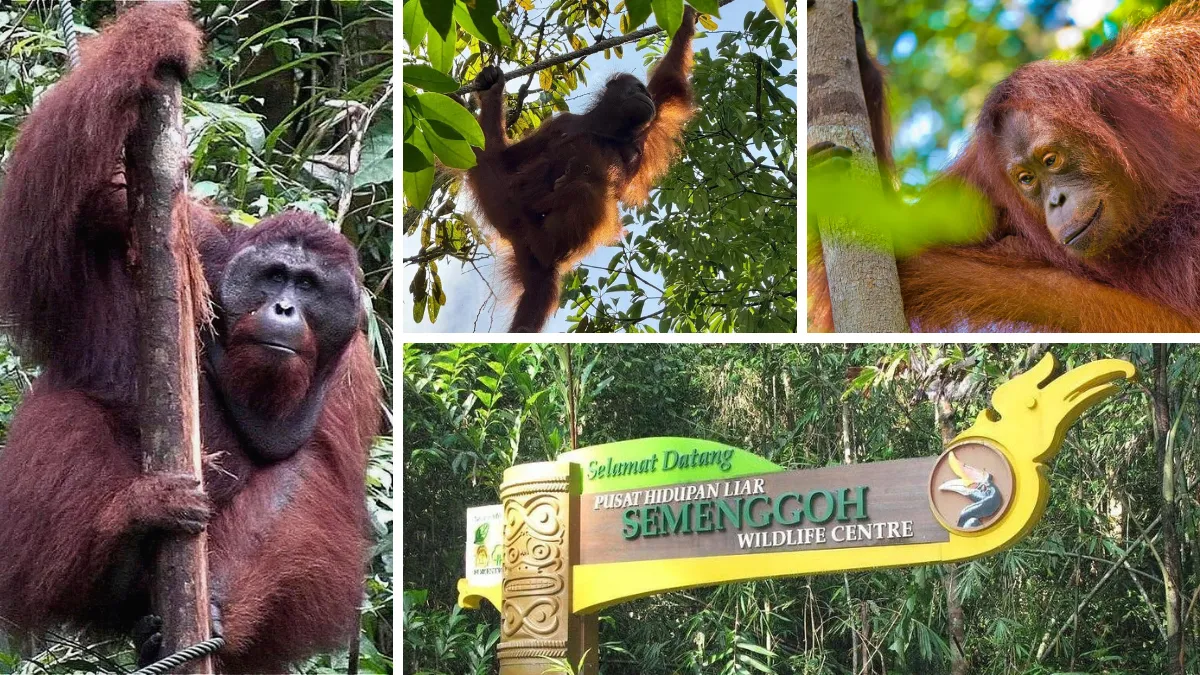
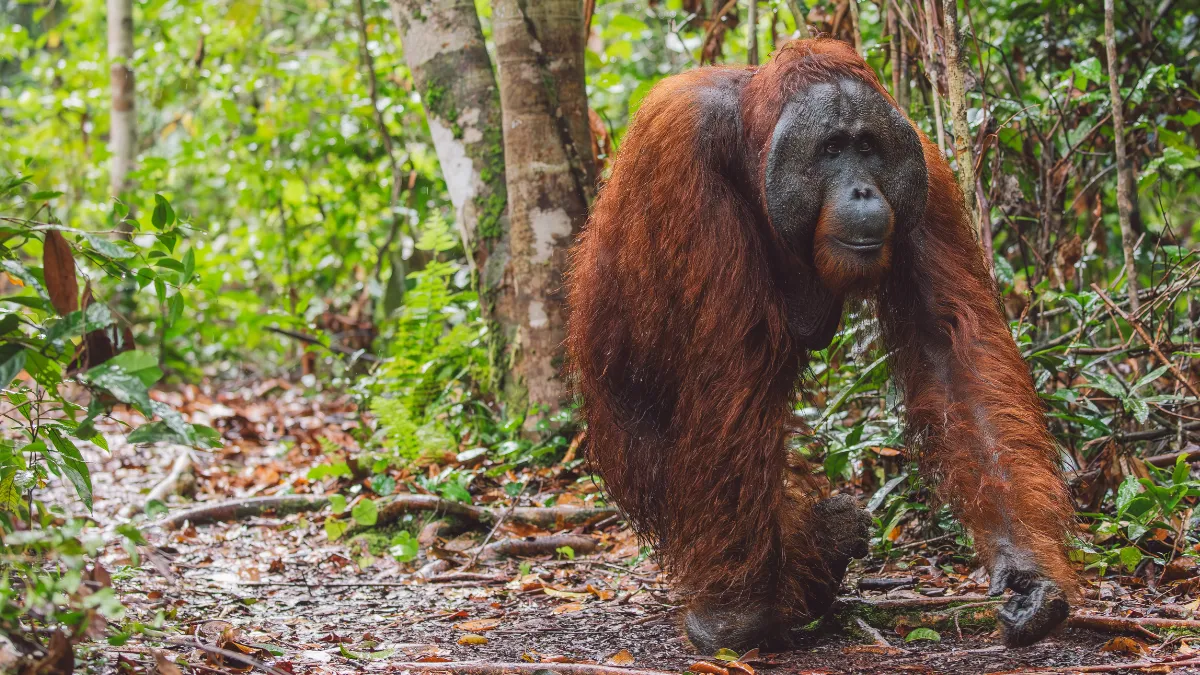
Day three brings one of the trip’s most anticipated moments. This morning you visit the Semenggoh Orangutan Wildlife Centre. This rehabilitation center has successfully returned numerous orangutans to their natural forest habitat. The morning feeding time offers the best opportunity to see these magnificent animals.
Meeting the Orangutans – Borneo Sarawak Highlights
Rangers lead you along forest trails to feeding platforms. Semi-wild orangutans emerge from the jungle when fruit is available. These animals are free to come and go as they please. Some choose to forage entirely in the forest, while others return regularly to supplement their diet.
Watching orangutans in this natural setting reveals their incredible intelligence. Mothers teach their young how to select ripe fruit and build sleeping nests. The bond between mother and infant orangutans mirrors human parent-child relationships in touching ways. Your guide explains conservation efforts to protect these critically endangered animals from habitat loss.
The Semenggoh center plays a vital role in orangutan conservation. Staff monitor the health of animals living in the surrounding forest. Educational programs teach visitors about threats facing wildlife in Borneo. The number of wild orangutans has declined dramatically over recent years due to deforestation for palm oil plantations.
Journey to the Longhouse
After spending the morning with orangutans, you depart for an Iban longhouse. The journey takes you deeper into the Bornean countryside. Rural landscapes replace urban development as you travel along winding roads. Rice paddies stretch across valleys, and small villages dot the hillsides.
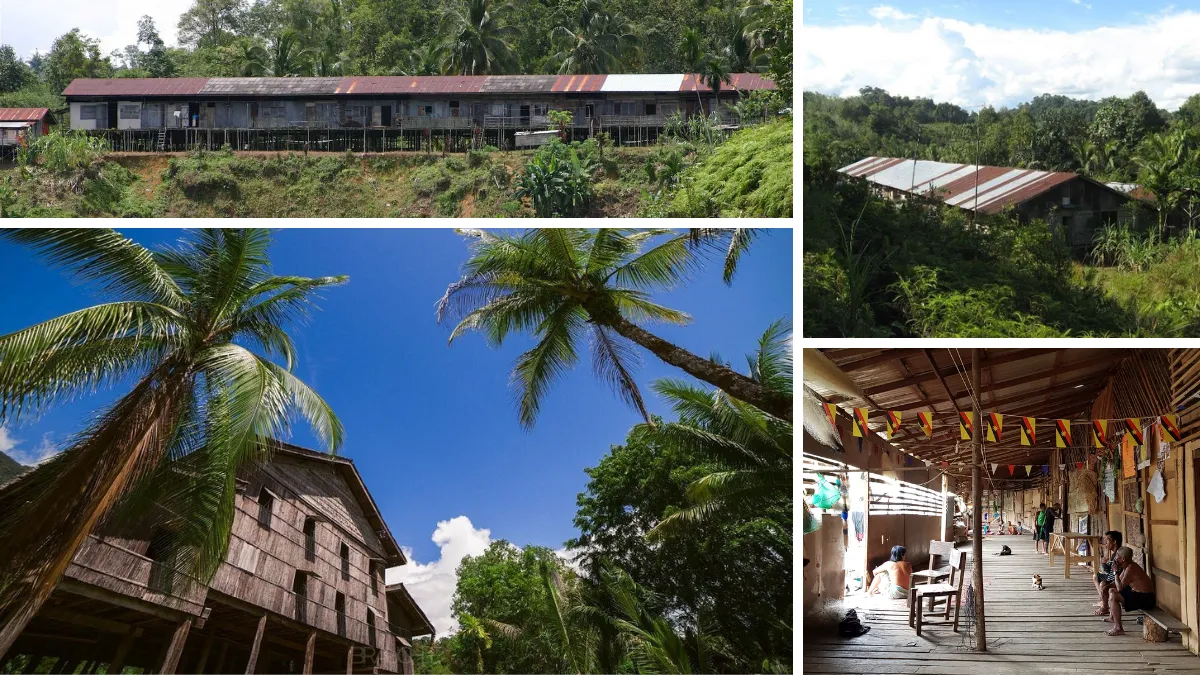
The Iban people are the largest indigenous group in Sarawak. Their traditional longhouses have sheltered communities for centuries. These impressive structures can house dozens of families under one roof. Each family occupies separate living quarters, while a communal veranda runs the length of the building.
Longhouse Cultural Immersion
Your arrival at the longhouse follows traditional protocol. The headman welcomes visitors with a ceremony that includes rice wine. This homemade beverage called tuak represents hospitality and community bonds. Accepting the offering shows respect for Iban customs, though you can decline politely if preferred.
Evening brings opportunities to learn about Iban culture firsthand. Women demonstrate traditional weaving techniques passed down through generations. Men might showcase blowpipe skills once used for hunting in the rainforest. Children often perform traditional dances accompanied by drums and gongs.
Dinner features Iban cuisine prepared over wood fires. Chicken cooked inside bamboo tubes, absorbs smoky flavors during cooking. Wild ferns and jungle vegetables complement rice as the meal’s foundation.
Eating together in the communal area fosters connection between visitors and local people. Sleeping in a longhouse provides insight into traditional lifestyles. Simple mattresses and mosquito nets create your sleeping space.
The sounds of the jungle form a natural soundtrack throughout the night. This authentic experience differs vastly from standard hotel accommodation and creates lasting memories.
Is an overnight stay in the longhouse worth doing?
100% yes, it was unforgettable. If doing a day trip it feels a bit like a touristic human exhibit – overnight brings the discomfort but by morning you have a new family! (and a headache).
The overnight stay longhouses are incredibly remote and isolated. Don’t expect running water or electricity, except for a few fortunate families who have a generator running for a few hours each night, you’re likely to be cooking on flames and using a lantern. I’ve traveled extensively and try to immerse myself in local cultures, but this experience was on a whole different level.
Naturally, there was some initial awkwardness—you definitely feel like an outsider, you are much larger in size (me especially), and it can be uncomfortable, almost like you’re intruding on people’s lives. But that’s our own self consciousness and once you get past it, life becomes much easier. The Iban people are renowned for their hospitality, and it’s clear why. Dancing, drinking, and partying are central to their way of life, and you’re encouraged to join in—and of course I readily did so. Hence the headache comment!
The language barrier was tough, and I was grateful for a guide who was with us for introductions. But after he left the village just set into motion doing the daily routine. Then came food and we were offered plenty, with bottles and bottles of rice wine and rice whisky. After that communication was a breeze. Be prepared to drink a lot of rice alcohol and dance—forget any romantic notion of deep spiritual and cultural insights. Expect a lot of fun, a lot you don’t understand and lots of noise, it’s loud!
Even in the middle of the night the longhouse was noisy! Bring earplugs and don’t expect much sleep—but that’s part of the experience! It was a fascinating place to be. The longhouse we stayed in was stunning—it was amazing to see an entire village living under one roof, with people relaxing throughout the day. There’s a strong sense of community and I got a feeling that you could never be lonely, even if you wanted to!
The kids are like kids everywhere. The young ones were shy and it was hard to get them to smile let alone chat, but they eventually warmed up and by 3am when heading to bed I had three who decided they were bunking down with me…and a cat that could not be disuaded. If you have time I highly recommend the over night stays. Its good to feel the discomfort of not being able to communicate, it’s hard work making connections, but once you do…you feel connected to something much bigger.
Day 4: Bornean Countryside Walk and Return to Kuching
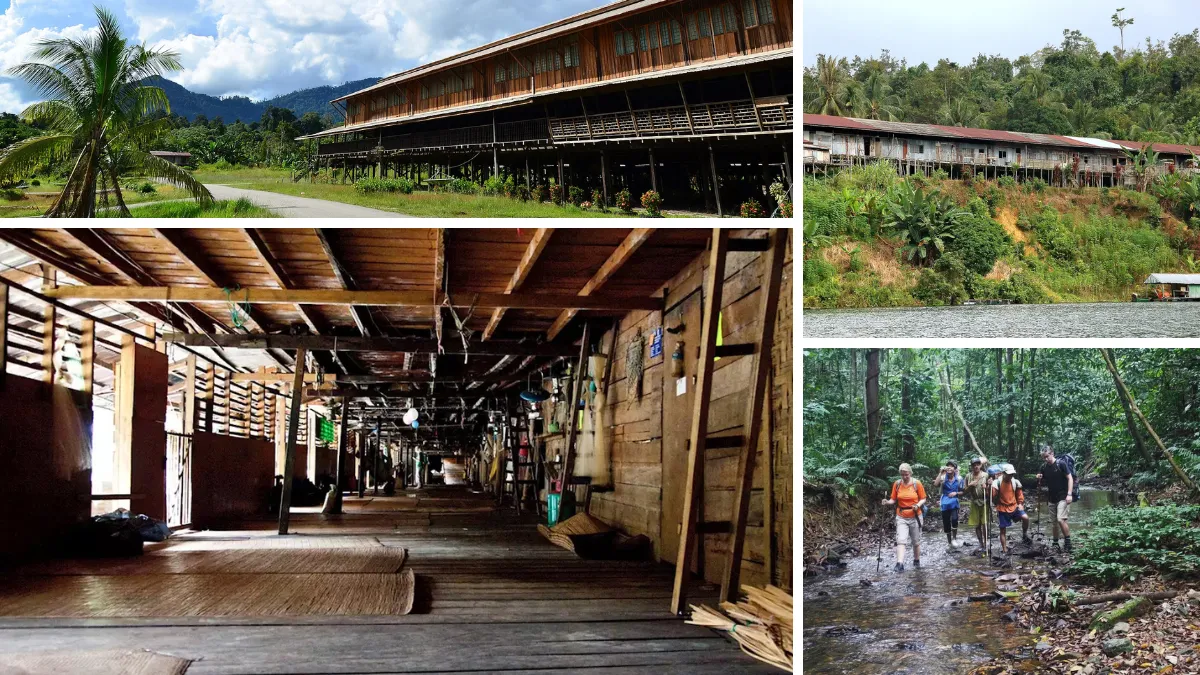
Morning begins with breakfast at the longhouse. Simple food provides energy for the morning’s activities. I was up at 5am after my 2 hours of cat and kids. Expecting it was an early rise and learning most of the longhouse gets busy around 8am. At 8.30am the guide reappears to take you for a walk with the head of the longhouse. You’ll get to learn about traditional farming, Iban burial practices, and get to hear about the infamous head hunting practice.
More than that you get to experience the community way of life, and a small taste of what it must be like to live in the thick rainforest surrounding the longhouse community. The walk was a great way to gain some perspectives on their rural life, and is something that is still rarely seen by tourists.
Longhouse options
Annah Rais Longhouse is a large traditional Bidayuh longhouse housing over 80 families. With a history spanning more than 150 years, it provides a fascinating glimpse into the Indigenous Peoples way of life, highlighting their customs, rituals, and communal lifestyle. Visitors can experience their traditional food and culture, including music, dance, and crafts. You can also explore the hot springs and nearby waterfalls, go rafting, and take jungle walks. The drive from Kuching city takes around an hour, offering views of the stunning rainforest and Padawan mountain along the route.
The longhouses at Batang Ai in the Sri Aman division (this is where we stayed) are among the oldest Iban settlements in Sarawak. Experience the Iban culture through music, dance, and traditional food. Nestled deep within the rainforest near Batang Ai National Park, these longhouses are accessible via a four-hour drive from Kuching, passing through dense jungle. Upon reaching Batang Ai Dam, you can board a native boat for an upriver journey to the longhouses—an adventure itself, offering stunning views of the surrounding nature.
Near Sibu town, the Bawang Assan longhouses comprise a fascinating cluster of nine Iban longhouses dating back to the 18th century. This community blends traditional and modern elements, allowing visitors to explore the rich cultural heritage of the Iban people. The drive from Sibu to Bawang Assan takes about 40 minutes.
The drive back to Kuching provides reflection time on the experiences of recent days. Orangutan encounters, rainforest trails, and cultural immersion have filled your senses. Returning to Kuching’s comfort feels both welcome and slightly bittersweet.
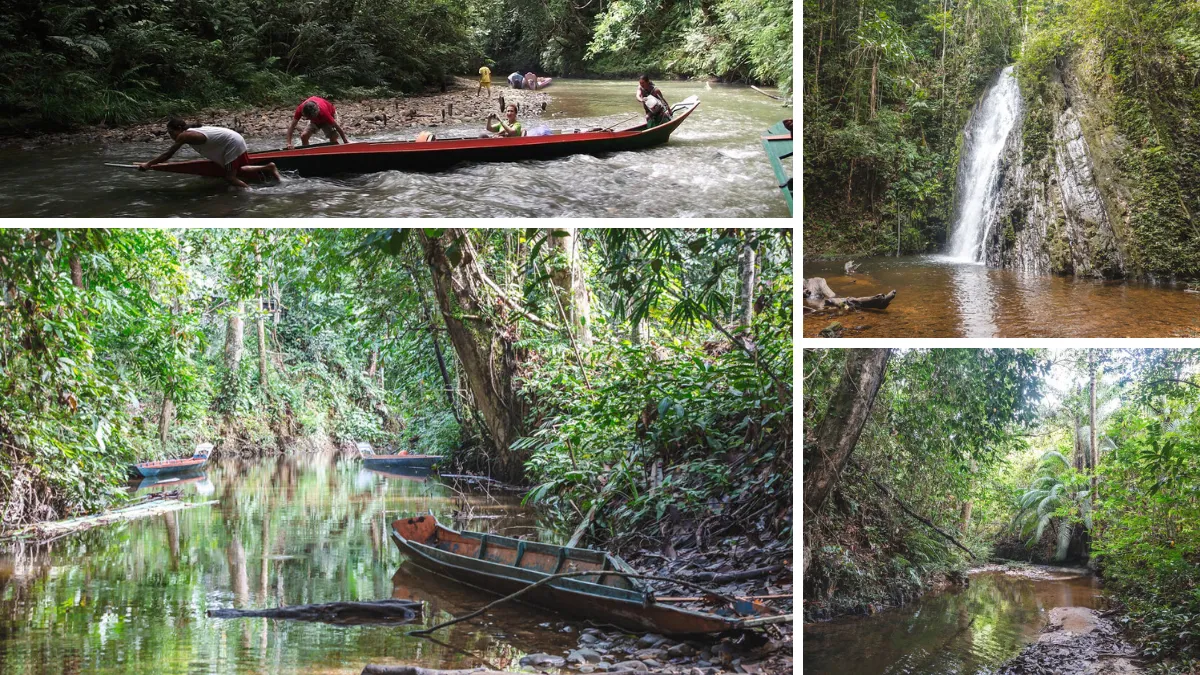
A late afternoon arrival in Kuching leaves free time for personal exploration. The city’s museums offer deeper cultural context for what you have experienced. The Sarawak Museum houses extensive collections of indigenous artifacts. Alternatively, relax at your accommodation and prepare for tomorrow’s flight to Mulu National Park.
Cultural Respect Reminder:
When visiting indigenous communities, always ask permission before photographing people. Modest clothing shows respect for local customs. Small gifts like school supplies are appreciated by longhouse communities.
Day 5: Flight to Mulu and Afternoon Park Exploration
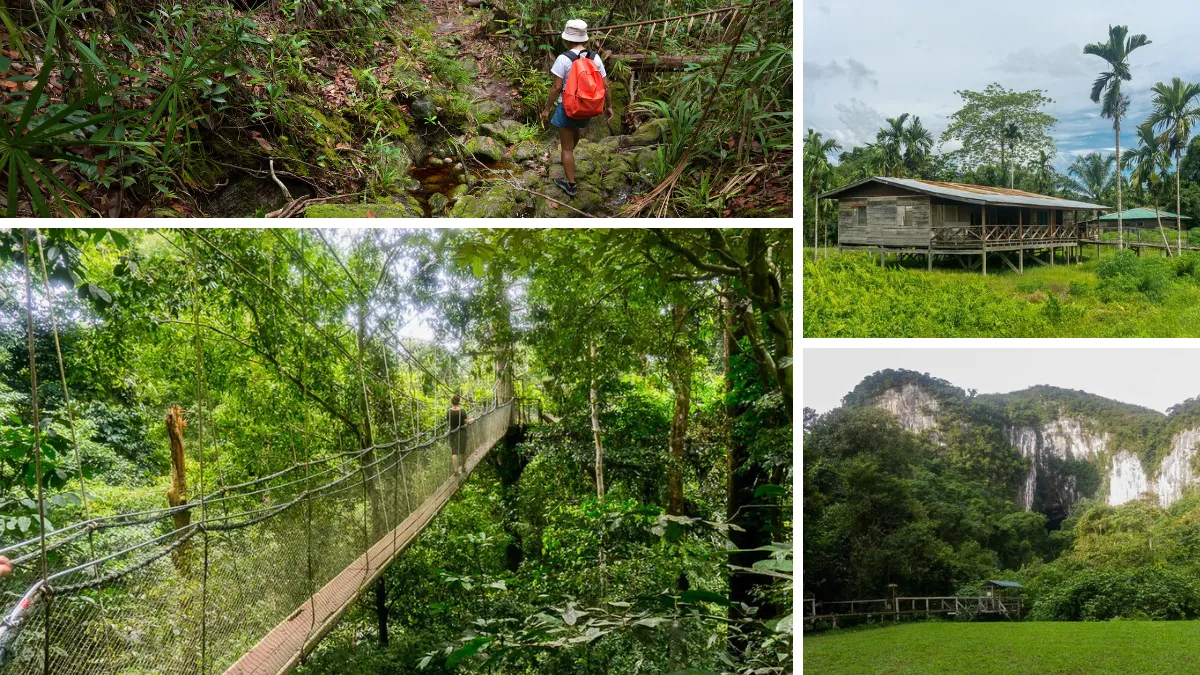
An early morning flight transports you from Kuching to Mulu. The aerial journey offers spectacular views of Sarawak’s endless rainforest. From above, the canopy appears as an unbroken green carpet stretching to the horizon. Isolated hills punctuate the landscape, hinting at the karst formations that make Mulu National Park extraordinary.
Arrival at Mulu National Park
Mulu’s small airport sits within the national park boundaries. The flight duration is approximately 90 minutes. Upon landing, the humid embrace of the rainforest immediately surrounds you. This UNESCO World Heritage Site protects some of the world’s most spectacular cave systems and unique geological features.
After checking into your accommodation near park headquarters, lunch provides a break before afternoon activities. The park offers various lodging options ranging from basic to comfortable. All accommodation maintains environmental standards to minimize impact on this pristine wilderness.
Introduction to Mulu’s Wonders
Gunung Mulu National Park is one of those rare places where the landscape feels genuinely monumental. Beneath its rainforest-covered mountains lies a vast network of underground rivers, immense chambers and limestone passages, while above ground, millions of bats pour out of the caves at dusk.
This Malaysian Borneo national park was inscribed on the UNESCO World Heritage List in 2000 for its extraordinary caves, tropical karst formations, biodiversity and ecological importance. UNESCO describes Mulu as the world’s most extensively studied tropical karst area, containing 17 vegetation zones, approximately 3,500 vascular plant species and at least 295 kilometres of explored caves. UNESCO World Heritage Centre
This itinerary covers Mulu’s four principal show caves—Deer Cave, Lang Cave, Wind Cave and Clearwater Cave—along with its rainforest, rivers, canopy and famous bat exodus.
Deer Cave and Lang Cave
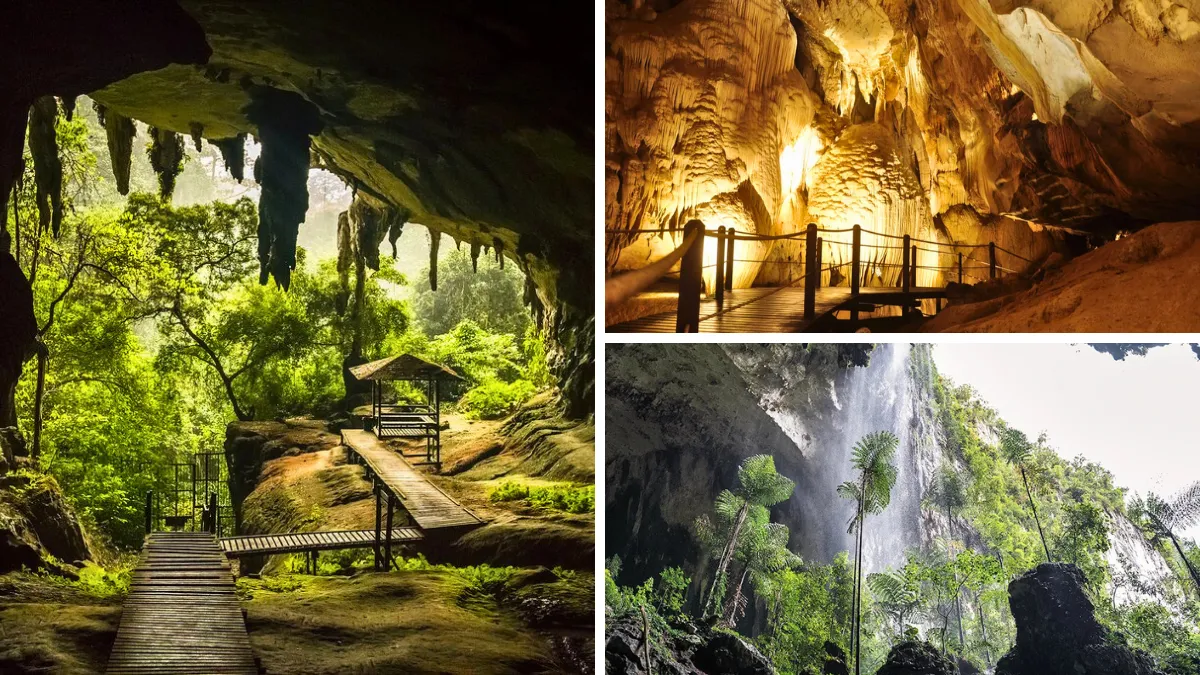
1:30 pm – Join a guided afternoon excursion to Lang Cave and Deer Cave. The route follows an approximately three-kilometer raised plank walk through the rainforest to the caves. This walk is part of the experience rather than simply an approach trail. Your guide may point out insects, lizards, unusual plants and signs of larger animals along the way.
2:30 pm – Explore Lang Cave
Lang Cave is smaller than neighboring Deer Cave, but its delicate formations make it one of Mulu’s most visually rewarding show caves. Carefully positioned lighting reveals stalactites, stalagmites, rimstone pools, flowstone and translucent mineral formations. Because the cave is more intimate, it is easier to appreciate how slowly dripping water has shaped the limestone.
Watch the walls and ceilings for cave-dwelling creatures, but do not touch the formations. Oils from human skin can discolour or interfere with their continued development.
3:15 pm – Enter the immense Deer Cave
The scale changes dramatically inside Deer Cave. Its enormous passage is one of Mulu’s defining sights and provides a clear demonstration of why this landscape is globally significant.
The cave contains:
- An immense main passage
- Vast ceilings occupied by bat colonies
- The Garden of Eden, a forested karst depression
- The famous profile known as Abraham Lincoln
- Large guano deposits supporting a specialised cave ecosystem
The smell of guano can be strong, and the floor may be wet or slippery. A face covering can make the experience more comfortable for sensitive visitors.
Deer Cave is not pristine in the conventional sense—it is noisy, earthy and alive. Millions of bats, swiftlets and invertebrates form a complex underground ecosystem, making the cave as biologically fascinating as it is physically impressive.
4:30 pm – Wait at the Bat Observatory
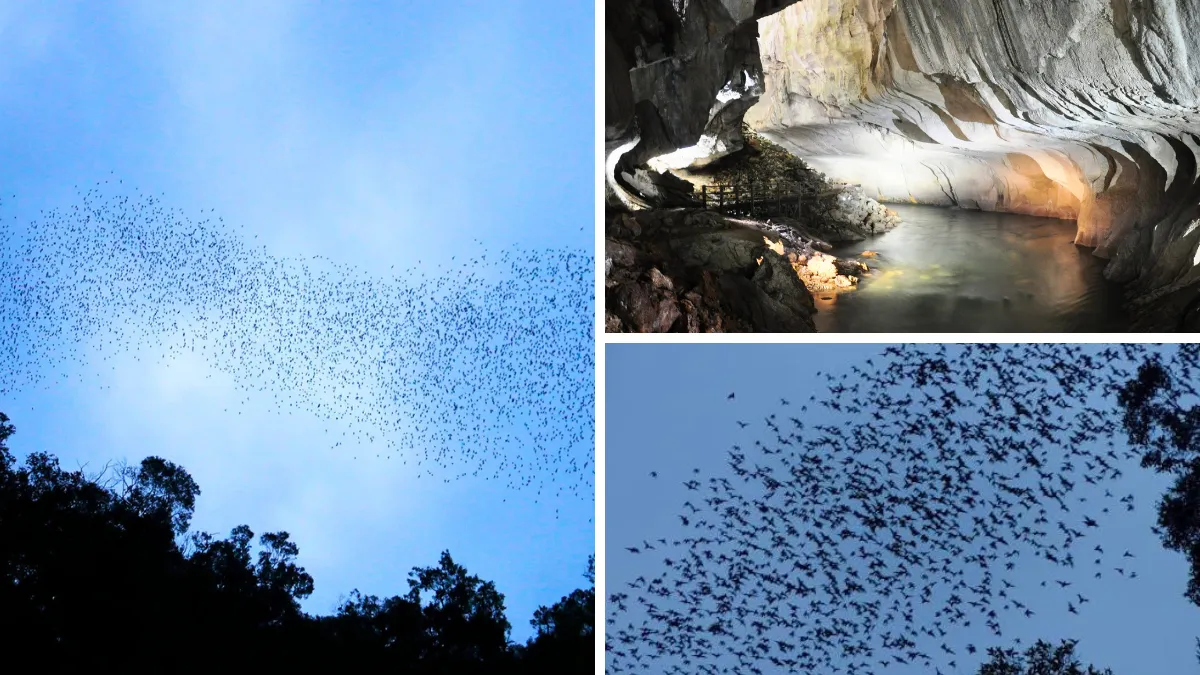
After leaving Deer Cave, walk to the nearby Bat Observatory and settle in for one of Borneo’s great wildlife spectacles. Around dusk, enormous streams of bats spiral from the cave and form dark, shifting ribbons across the sky. Bat hawks sometimes wait nearby, attempting to intercept them as they emerge.
The exodus is a natural event rather than a scheduled performance. Its timing and scale depend on weather and other conditions. Heavy rain may delay the bats or prevent a major emergence, so sightings can never be guaranteed.
UNESCO records millions of bats and cave swiftlets within Mulu’s cave systems and recognizes the spectacle as part of the park’s outstanding ecological value.
6:15 pm – Walk back through the rainforest
Return to park headquarters along the plank walk as darkness settles over the forest. Carry a headlamp or torch, even if your phone has a light. The walk back feels very different after dark. Listen for frogs, cicadas and other nocturnal animals, and check the railings and surrounding vegetation for insects. Have dinner at your accommodation. If you still have energy, join a guided night walk. They are highly recommended.
Mulu’s rainforest becomes intensely active after dark, with guides searching for:
- Tree frogs
- Stick insects
- Leaf insects
- Spiders
- Snakes
- Sleeping birds
- Nocturnal mammals
Morning Travel
- Flight from Kuching to Mulu
- Airport transfer to accommodation
- Park orientation and check-in
- Lunch and rest time
Afternoon Activities
- Lang’s Cave exploration
- Rainforest walking trails
- Deer Cave
- Bat exodus observation
- Evening at park lodge
- Night walk
Day 6: Melinau River, Penan Culture, Wind Cave and Clearwater Cave
7:00 am – Breakfast and prepare for the river
Eat an early breakfast and pack a small day bag containing water, sun protection, rain gear, insect repellent and a waterproof pouch for electronics. Wear shoes with reliable grip. The cave staircases can be damp, while changing river levels may require you to step through shallow water when boarding or leaving the longboat.
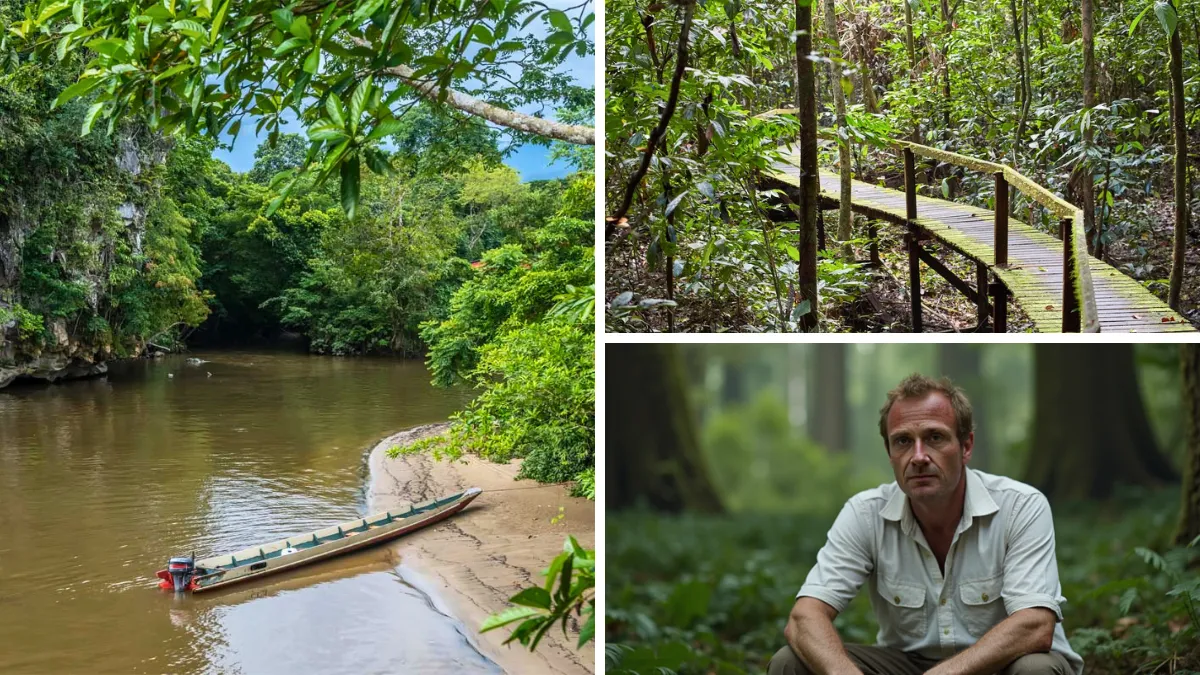
8:30 am – Travel along the Melinau River by longboat
Meet your guide and board a traditional longboat for the journey upriver towards Wind Cave and Clearwater Cave. The river trip provides a different perspective on Mulu. Dense rainforest crowds the banks, limestone cliffs occasionally appear through the vegetation and local boats connect small settlements that remain inaccessible by road.
Water levels affect the journey. During dry periods, passengers may need to get out and help push the longboat through shallow sections. After heavy rain, currents can be stronger and itineraries may need to change.
9:00 am – Stop at a Penan settlement and handicraft market
Many Clearwater and Wind Cave excursions include a stop at Batu Bungan, a Penan settlement beside the Melinau River.
The Penan traditionally lived as nomadic forest hunter-gatherers, although many communities now live in permanent settlements. Visit respectfully and avoid treating the village as an open-air exhibit. A small market may sell handmade baskets, mats, beadwork and other crafts. Buying directly from local makers is one way to contribute to the community, but there is no obligation to purchase anything.
10:00 am – Explore Wind Cave
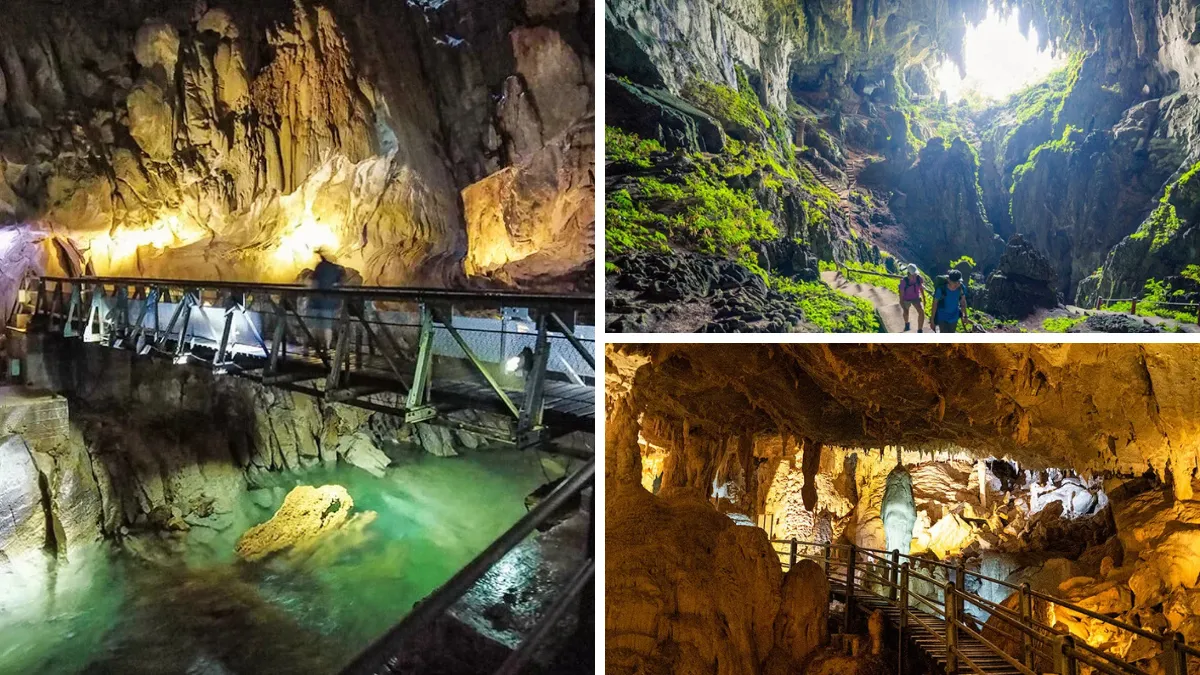
Continue upriver to Wind Cave, named for the cool draughts that move through sections of its passages.
A series of walkways and steps leads into chambers filled with stalactites, stalagmites, columns and flowstone. One of its best-known sections is King’s Chamber, where large limestone formations rise from the cave floor.
Wind Cave demonstrates a more decorative side of Mulu’s geology than the immense open passage of Deer Cave. Pay attention to the different shapes and textures created as water travelled through cracks in the limestone.
11:15 am – Follow the riverside walkway to Clearwater Cave
From Wind Cave, continue along the elevated walkway beside the Melinau River towards Clearwater Cave.
The route passes beneath limestone cliffs and through dense vegetation. Butterflies are often seen around damp ground, while the surrounding forest contains numerous palms, ferns and shade-loving plants.
Before entering Clearwater Cave, climb the substantial staircase leading to its entrance. Take the steps slowly; the heat and humidity make the ascent feel more demanding than its distance suggests.
Clearwater Cave forms part of one of the world’s great cave systems. An underground river continues to carve its way through the limestone, creating passages on an almost incomprehensible scale.
Inside, your guide will explain how flowing water, uplift and erosion shaped the cave over millions of years. Look for scalloped walls, water-worn rock, enormous chambers and shafts of daylight entering through openings in the limestone.
The public tour reveals only a small portion of the greater system. Much of Mulu remains closed to ordinary visitors to protect its fragile geology, cave fauna and scientific value. The park’s official website lists Clearwater and Wind, Deer and Lang, and Fastlane among its guided show-cave experiences.
1:00 pm – Picnic and swim near Clearwater Cave
After leaving the cave, have a picnic lunch in the designated riverside area. Depending on conditions and current park guidance, you may be able to swim in the clear water outside the cave. This is a welcome opportunity to cool down before returning to park headquarters.
2:00 pm – Return by longboat
Travel back down the Melinau River to park headquarters. The return journey usually feels more relaxed, but keep your camera protected from spray and sudden rain. You should arrive back during the early to mid-afternoon, although river conditions can alter the schedule.
3:30 pm – Walk the Mulu Canopy Skywalk
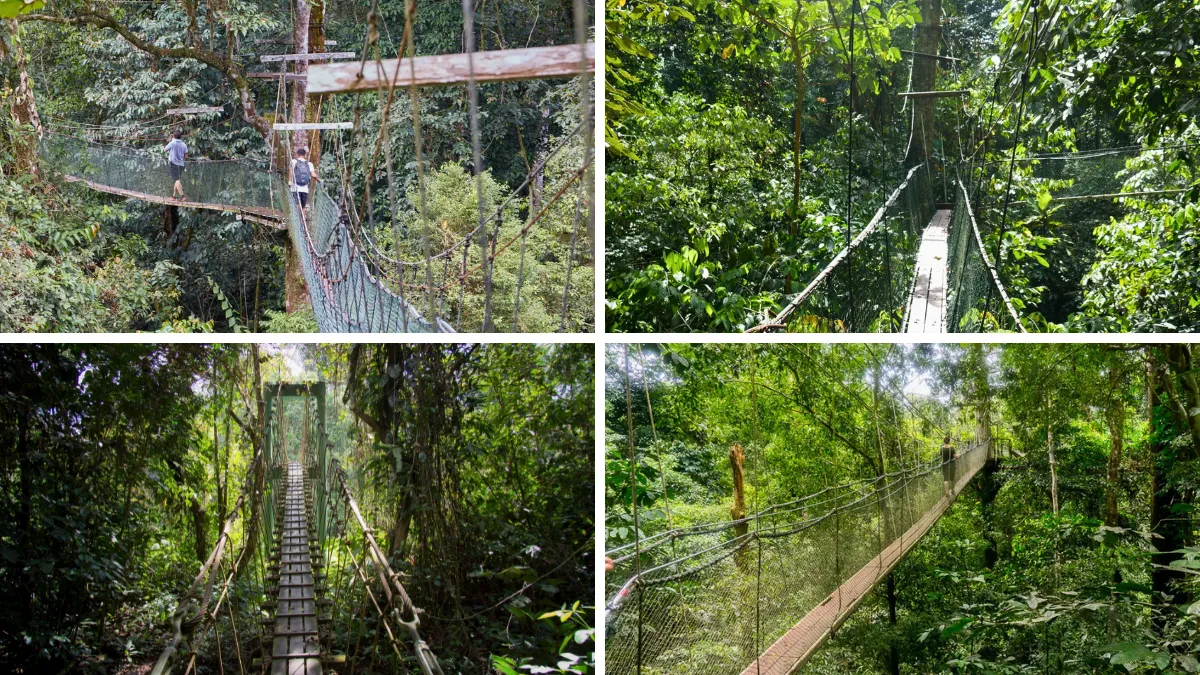
If tour schedules permit, finish with the guided Canopy Skywalk. Advance booking is essential because group numbers and departure times are controlled. Suspension bridges carry visitors through the rainforest canopy, providing a close view of epiphytes, vines and the upper layers of the forest. The walk is less about dramatic heights than experiencing an ecological zone that is difficult to appreciate from the forest floor.
Use your remaining daylight for a quiet walk around park headquarters or the nearby forest trails.
After two days of caves and organised tours, this unstructured time provides an opportunity to pause and absorb the setting. Watch for hornbills crossing above the river, butterflies gathering near the paths and lizards warming themselves on railings.
What cannot realistically be included
Two days is enough for Mulu’s four show caves and its most accessible rainforest experiences, but not for its more demanding expeditions.
The following require additional days, specialist guides or overnight stays:
- The Pinnacles of Gunung Api
- The summit of Gunung Mulu
- Camp 5
- Sarawak Chamber
- Clearwater Connection
- Adventure-caving routes
The Pinnacles normally require at least three days and two nights, including river travel, a hike to Camp 5 and an extremely steep climb. Sarawak Chamber is also an advanced expedition rather than a conventional sightseeing cave.
Finish with dinner at your accommodation or the park café. By now, you will have experienced the four principal show caves, the Melinau River, lowland rainforest, canopy habitat and Mulu’s famous bat exodus.
Day 7: Flight to Kota Kinabalu – Sabah’s Coastal Capital
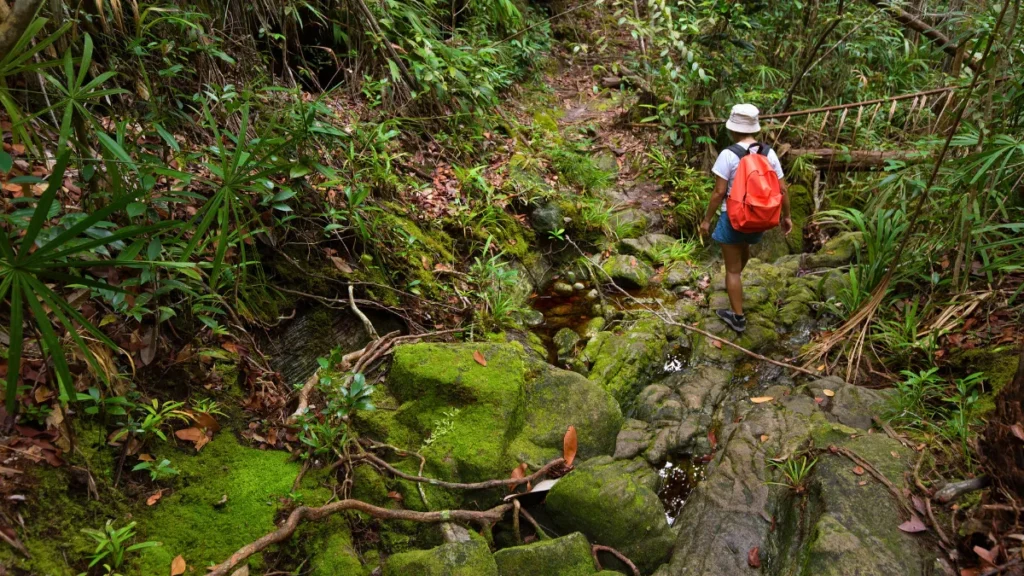
Start your exploration above ground on the self-guided Mulu Botanical Heritage Trail. It is tempting to think of Mulu solely as a cave destination, but its rainforest biodiversity is one of the main reasons the park received World Heritage status.
7:30 am – Walk the Mulu Botanical Heritage Trail
The relatively gentle trail introduces the lowland rainforest surrounding park headquarters. Interpretation panels identify many of the plants and explain their ecological or traditional uses.
Look for:
- Towering dipterocarp trees
- Strangler figs and forest vines
- Ferns, palms and orchids
- Colourful butterflies
- Lizards and frogs
- Hornbills and other rainforest birds
- Pitcher plants in suitable habitats
Walk quietly and scan different levels of the forest. Wildlife sightings are unpredictable, but early morning offers a better chance of hearing gibbons, cicadas and forest birds before the day becomes busier.
Flight to Kota Kinabalu
Departure from Mulu takes you to Kota Kinabalu, the capital of Sabah. This flight represents a transition from Sarawak’s jungles to Sabah’s coastal environment. The journey offers final glimpses of the rainforest from above before descending toward the South China Sea.
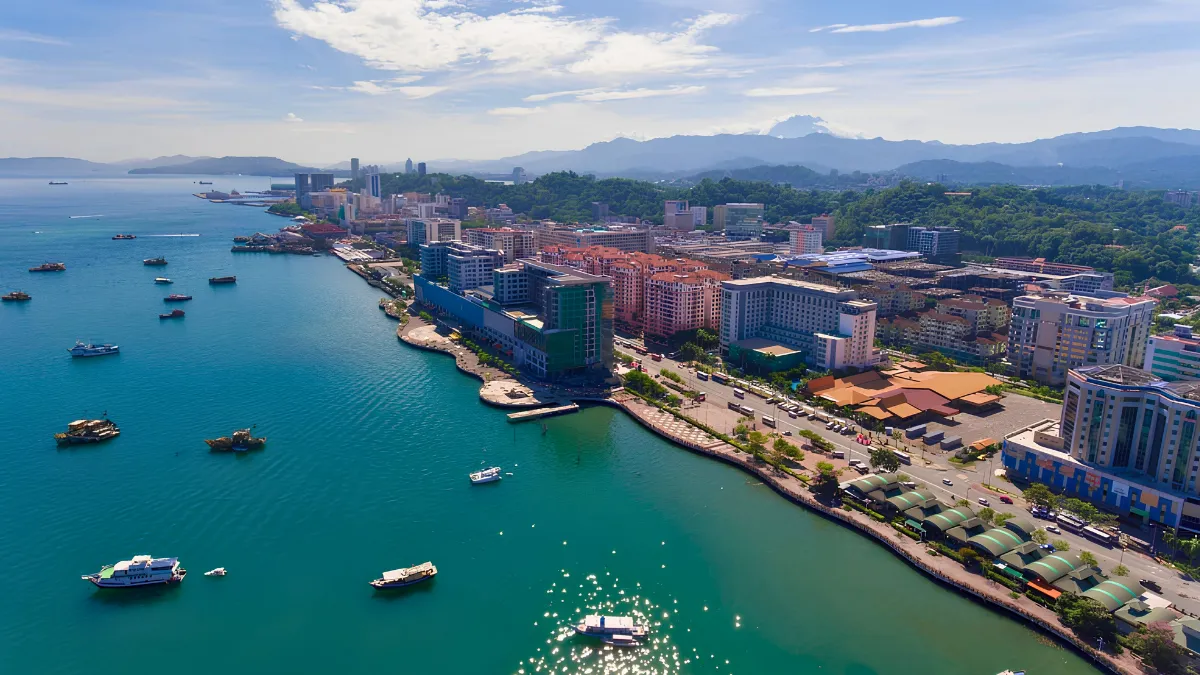
Kota Kinabalu presents a different face of Borneo than Kuching or Mulu. This modern city balances urban development with natural surroundings. Mount Kinabalu, Southeast Asia’s highest peak, dominates the horizon on clear days. The mountain’s presence reminds visitors of the wild landscapes surrounding the city.
After checking into your hotel, the afternoon offers flexibility. We chose to rest after several active days. But you can explore Kota Kinabalu’s attractions independently. The city center provides easy walking with shopping areas, restaurants, and waterfront promenades.
Optional Kota Kinabalu Activities and Exploration
The Signal Hill Observatory provides panoramic views over Kota Kinabalu and surrounding islands. This viewpoint sits on a hill overlooking the city center. The short drive or walk rewards visitors with sunset vistas across the South China Sea.
The Filipino Market near the waterfront bustles with activity throughout the day. Vendors sell handicrafts, pearls, and local products. This market offers final opportunities to purchase souvenirs before your trip concludes. Bargaining is expected and adds to the shopping experience.
Evening Dining Options
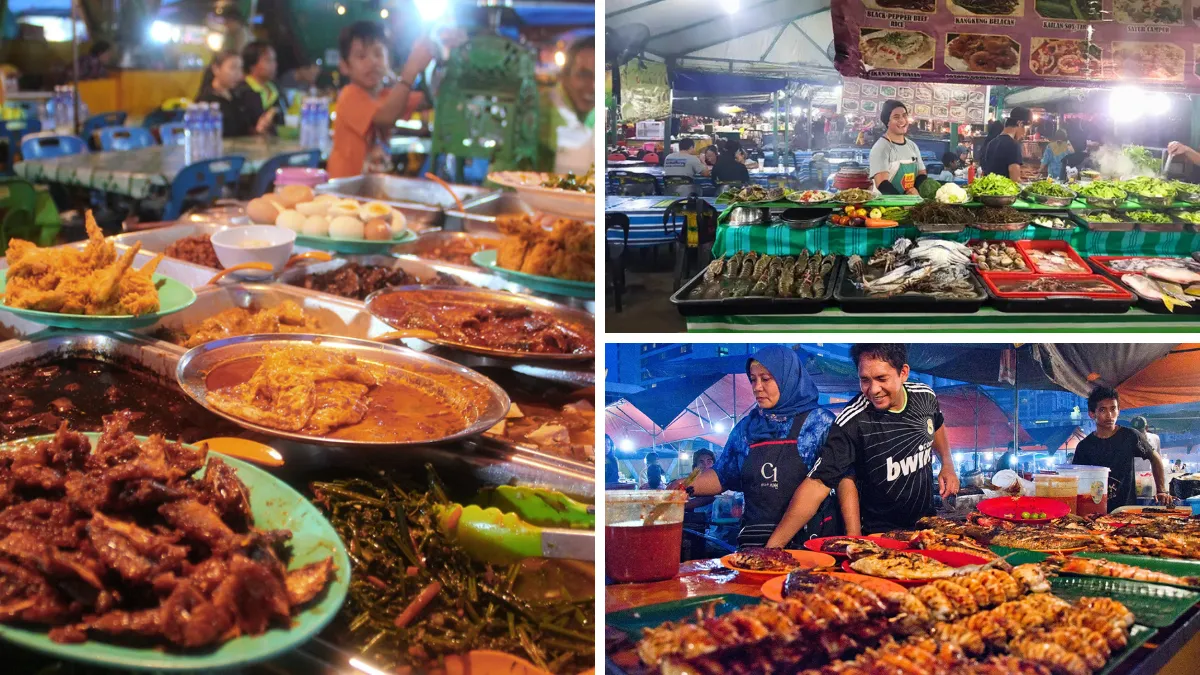
Kota Kinabalu’s waterfront comes alive in the evening. The night market sets up near Tanjung Aru beach, offering fresh seafood and local specialties. Choose your seafood from market stalls, and vendors grill it to order. Eating at plastic tables under the stars provides an authentic local experience.
For those preferring restaurants, Kota Kinabalu offers diverse cuisine reflecting Sabah’s multicultural population. Fresh fish dominates menus, but Chinese, Malay, and Filipino influences create varied options. Your guide can recommend establishments matching your preferences and budget.
Reflecting on the Journey
This evening marks the conclusion of your active journey across Borneo Sarawak Highlights. Tomorrow brings departure, but tonight offers time to reflect on experiences gathered over eight days. From orangutans to caves, from longhouses to canopy walkways, the memories accumulated will last a lifetime.
Many travelers spend this final evening reviewing photographs and sharing stories. The diversity of experiences packed into one week creates rich material for reflection. Each day brought different adventures, yet they connected to form a comprehensive portrait of Sarawak’s natural and cultural treasures.
Day 8: Departure from Kota Kinabalu
The final morning of your Borneo Sarawak Highlights tour arrives. Depending on your flight schedule, there may be time for last-minute activities. Early flights require direct transfer to the airport. Later departures allow morning exploration of Kota Kinabalu.
Final Morning Options
If time permits, visit the Sabah Museum to gain broader context on the region’s history and cultures. The museum houses extensive ethnographic collections from Sabah’s indigenous groups. Exhibits cover traditional lifestyles, crafts, and the impact of modernization on tribal communities.
Alternatively, a morning walk along Tanjung Aru beach provides peaceful reflection time. The beach stretches for several kilometers, with views toward offshore islands. Local families often gather here in early morning, and the atmosphere feels authentically local rather than touristy.
Airport Transfer and Departure
Your guide ensures timely transfer to Kota Kinabalu International Airport. The drive typically takes 15-20 minutes from central hotels. International flights connect through Kuala Lumpur or other regional hubs. Domestic flights link to other Malaysian destinations. For more transport and travel guidance check out our post on how to get around Malaysia.
As you depart Borneo, the experiences of the past eight days travel with you. The trip has shown you aspects of our natural world increasingly rare in the modern age. Ancient rainforests, endangered wildlife, and traditional cultures face uncertain futures. Your visit supports conservation efforts and provides economic alternatives to destructive development.
Essential Information for Your Trip
Proper preparation ensures you maximize enjoyment of your Borneo Sarawak Highlights adventure. This section covers practical details about what to bring, health considerations, and travel logistics. Planning ahead prevents common issues and allows you to focus on the incredible experiences awaiting.
What to Pack
Clothing Essentials
- Lightweight, quick-dry shirts and pants
- Long sleeves for jungle protection
- Rain jacket or poncho
- Comfortable hiking shoes with good grip
- Sandals for casual wear
- Hat for sun protection
- Swimwear for beach and pools
Important Items
- Insect repellent with DEET
- Sunscreen (high SPF recommended)
- Personal first aid supplies
- Flashlight or headlamp
- Reusable water bottle
- Camera with extra batteries
- Binoculars for wildlife viewing
Health and Safety
Borneo poses minimal health risks for most travelers. Consult your doctor about recommended vaccinations before travel. Hepatitis A and typhoid vaccinations are commonly suggested. Malaria risk exists in some rural areas, though prophylaxis is not always necessary for short visits.
The tropical climate means heat and humidity require adjustment. Drink plenty of water throughout each day. The combination of physical activity and heat can lead to dehydration quickly. Rest when needed, and don’t push beyond reasonable limits.
Best Time to Visit
Borneo experiences tropical weather year-round, with no true dry season. The period from March to October generally sees less rainfall than November through February. However, rain can occur any month, and the rainforest depends on this precipitation.
Don’t let rain forecasts deter you from visiting. Showers typically arrive in afternoon bursts rather than all-day downpours. The rain cools the temperature and brings wildlife out to drink and feed. Many travelers find the wet season offers excellent opportunities for wildlife observation.
| Month | Rainfall | Temperature | Wildlife Activity | Visitor Numbers |
| March – May | Moderate | 28-32°C | High | Medium |
| June – August | Lower | 27-31°C | Very High | Peak |
| September – November | Increasing | 27-31°C | High | Medium |
| December – February | Higher | 26-30°C | Moderate | Lower |
Incredible Wildlife of Borneo Sarawak Highlights
The animals you encounter during your Borneo Sarawak Highlights tour represent some of the world’s most endangered and unique species. Understanding these creatures enhances appreciation for conservation efforts protecting them. Each wildlife encounter carries special significance when you recognize the rarity of these moments.
Orangutans – The Forest People
Orangutans exist only on Borneo and Sumatra. The Bornean orangutan faces critical endangerment from habitat loss. Only 55,000 individuals remain in the wild, down from over 230,000 just a century ago. Palm oil plantations have replaced vast areas of rainforest that once sustained these great apes.
Orangutans spend nearly their entire lives in trees. Adult males develop large cheek pads and throat pouches when mature. Females raise their young for up to eight years, one of the longest childcare periods among mammals. This slow reproduction rate makes population recovery difficult.
The Semenggoh Wildlife Centre plays a crucial role in orangutan conservation. Former captive animals learned forest skills before release. Rangers monitor their wellbeing and provide supplemental food when natural fruit becomes scarce. Your visit fees directly support these conservation programs.
Proboscis Monkeys – Borneo’s Endemic Treasure
Proboscis monkeys live nowhere else on Earth except Borneo. Their enormous noses distinguish them from all other primates. Scientists believe the large nose amplifies mating calls to attract females. These monkeys are excellent swimmers, unusual among primates, often leaping from trees directly into rivers.
Bako National Park provides one of the best locations to observe proboscis monkeys. They gather in large groups along the coast, feeding on mangrove leaves and fruits. Morning and evening offer optimal viewing times when monkeys move between feeding areas.
Bornean Rainforest Birds
Over 600 bird species inhabit Borneo, with many found nowhere else. Hornbills represent the most iconic rainforest birds. Eight hornbill species live in Borneo, from the massive rhinoceros hornbill to the smaller bushy-crested hornbill. Their distinctive casques and loud calls make them unmistakable.
Hornbills serve vital ecological roles as seed dispersers. They consume fruit from numerous tree species, then fly considerable distances before depositing seeds. This behavior helps maintain forest genetic diversity. Protecting hornbills means protecting the entire forest ecosystem.
Other Notable Wildlife
The diversity of life in Bornean rainforests extends far beyond the most famous species. Long-tailed macaques appear frequently along trails and near human settlements, where people sharing their experiences often mention the chance to see orangutans in the wild. Silver leaf monkeys swing through the upper canopy. Bearded pigs root through the forest floor searching for fallen fruit.
Reptiles and amphibians add to the incredible biodiversity. Monitor lizards grow to impressive sizes, reaching over two meters in length. Flying lizards glide between trees using extended ribs covered in membrane. Countless frog species fill the night with their calls, each species producing unique sounds. The local Iban tribe often spends time observing these remarkable creatures in their natural habitat.
Mulu’s Magnificent Cave Systems
The caves of Mulu National Park rank among Earth’s greatest geological wonders. These limestone formations developed over millions of years through water slowly dissolving rock. The result is a subterranean landscape of breathtaking beauty and staggering scale.
Formation and Geology
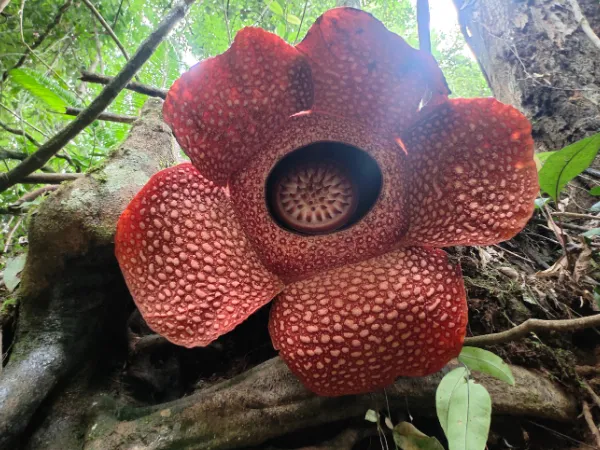
Mulu’s limestone formed from ancient coral reefs approximately 40 million years ago. Tectonic forces pushed these marine sediments above sea level. Rainwater, slightly acidic from dissolved carbon dioxide, began eroding the limestone. Over millions of years, this process carved the extensive cave networks we see today.
The caves continue forming and changing. Stalactites grow from cave ceilings as mineral-rich water drips downward. Stalagmites rise from the floor where these drips land. When stalactites and stalagmites meet, they form columns. The growth rate measures just millimeters per century, meaning the formations visible today represent millions of years of development.
Sarawak Chamber – Hidden Giant
Within Mulu’s cave system lies Sarawak Chamber, the world’s largest known cave chamber by area. This single room measures 600 meters long, 415 meters wide, and 80 meters high. The volume could contain ten Boeing 747s parked nose-to-tail with room to spare. Access requires technical caving skills, so standard tours don’t visit it, but knowing of its existence adds perspective to Mulu’s underground wonders.
Cave Ecology
Caves host unique ecosystems adapted to perpetual darkness. Bats form the foundation of cave food chains. Their guano feeds insects, which in turn feed other cave dwellers. Cave racer snakes hunt bats as they return from nightly feeding flights. Specialized crabs and cockroaches have evolved to thrive in complete darkness.
The bat population in Mulu’s caves numbers in the millions. Several species coexist by feeding on different food sources. Some eat insects caught in flight. Others consume fruit from surrounding forests. Their nightly exodus redistributes nutrients across vast areas as droppings fertilize the forest floor.
Are the caves safe to visit?
What about bats and disease?
How physically demanding is cave exploration?
Can I photograph inside the caves?
Indigenous Culture and Traditions
The human story of Borneo stretches back tens of thousands of years. Indigenous tribes developed sophisticated cultures perfectly adapted to rainforest life. Your longhouse stay provides authentic glimpses into these traditional ways of life, though modern influences increasingly shape contemporary indigenous experiences.
The Iban People
The Iban represent Sarawak’s largest indigenous group, numbering over 700,000 people. Historically, they earned reputation as fierce warriors and headhunters, though those practices ended over a century ago. Today, most Iban people balance traditional customs with modern Malaysian life.
Traditional Iban society organized itself around longhouse communities. These structures enabled cooperation in agriculture and defense. Each family maintained private quarters, but communal spaces fostered strong social bonds. This lifestyle continues in rural areas, though many young Iban move to cities for employment.
Longhouse Architecture and Life
Longhouse construction demonstrates impressive engineering using forest materials. Wooden posts elevate the structure above ground, protecting residents from flooding and wild animals. Ironwood, nearly indestructible by insects and rot, provides primary building material. Some longhouses have stood for over 100 years with proper maintenance.
The interior layout follows consistent patterns. A long veranda runs the building’s length, serving as communal gathering space. Here, people weave, prepare food, socialize, and conduct ceremonies. Private family quarters branch off this central area, providing sleeping and storage space.
Daily longhouse life revolves around agriculture. Most communities cultivate rice as the staple crop, supplemented by vegetables and fruit. Fishing and hunting once provided protein, though store-bought foods now supplement diets. Women primarily handle weaving and domestic tasks. Men focus on farming, hunting, and maintenance work.
Rice Wine and Hospitality
Rice wine, called tuak, holds cultural significance beyond simple beverage status. Communities brew tuak for ceremonies, celebrations, and welcoming guests. The fermentation process uses traditional methods passed through generations. Strength and flavor vary by brewer, with each family maintaining their recipe.
Accepting rice wine demonstrates respect for Iban hospitality traditions. The serving ceremony itself carries meaning. The headman typically offers the first cup to honored guests. Drinking together creates social bonds and shows mutual respect between hosts and visitors.
If alcohol doesn’t suit you, polite refusal is acceptable. Touch the cup to your lips without drinking, or explain dietary restrictions. Most Iban people understand modern health considerations and won’t take offense at respectful declining.
Contemporary Challenges
Modern development presents challenges to traditional indigenous cultures. Young people increasingly pursue education and careers in cities. Logging and plantations pressure traditional lands. Government policies sometimes conflict with customary practices and land claims.
Tourism provides both opportunities and risks. Income from visitors helps sustain longhouse communities economically. However, there’s danger of cultures becoming performances rather than living traditions. Responsible tourism seeks to support communities while respecting authentic cultural expression.
Your Journey Awaits
The Borneo Sarawak Highlights itinerary delivers an extraordinary concentration of experiences in just eight days. From the moment you arrive in Kuching until your departure from Kota Kinabalu, each day brings new wonders. Few destinations on Earth offer such diversity of wildlife and landscapes, or being able to spend time in genuine cultural encounters within a single trip.
The journey connects you with nature in profound ways. Standing beneath orangutans in the forest, walking through caves millions of years old, sleeping in a traditional longhouse – these experiences create lasting perspective shifts. You return home with not just photographs and memories, but deeper understanding of our planet’s precious wild places.
Borneo faces uncertain futures for its forests and wildlife. Palm oil agriculture drives rapid deforestation. Climate change threatens delicate ecosystems. The orangutans, proboscis monkeys, and countless other species depend on conservation actions taken today. Your visit contributes to protecting these treasures by demonstrating their value and supporting local communities.
The Borneo Sarawak Highlights tour requires moderate fitness and adventurous spirit. The rewards vastly exceed any challenges encountered along the way. Whether you’re an experienced traveler or embarking on your first major adventure, this itinerary provides structure and support while delivering authentic experiences.
Don’t wait too long to make this journey. Borneo’s wild places face mounting pressures with each passing year. The opportunity to witness these natural wonders exists now, but future availability cannot be guaranteed. Make 2024 or 2025 the year you finally explore one of Earth’s last great wildernesses.
“Twenty years from now you will be more disappointed by the things you didn’t do than by the ones you did do. So throw off the bowlines. Sail away from the safe harbor. Catch the trade winds in your sails. Explore. Dream. Discover.”
— Mark Twain
The adventure of a lifetime waits in Borneo. The rainforests call. The wildlife beckons. The Iban people welcome you. Will you answer? Your Borneo Sarawak Highlights journey begins with a single decision to go. Everything else flows from that commitment.
Contact our travel specialists today to begin planning your personalized Borneo adventure. Whether you choose a scheduled group departure or private custom tour, expert guides ensure every day maximizes your time in this remarkable corner of the world. The experience you’ve read about in these pages can become your own story. Take the first step now.