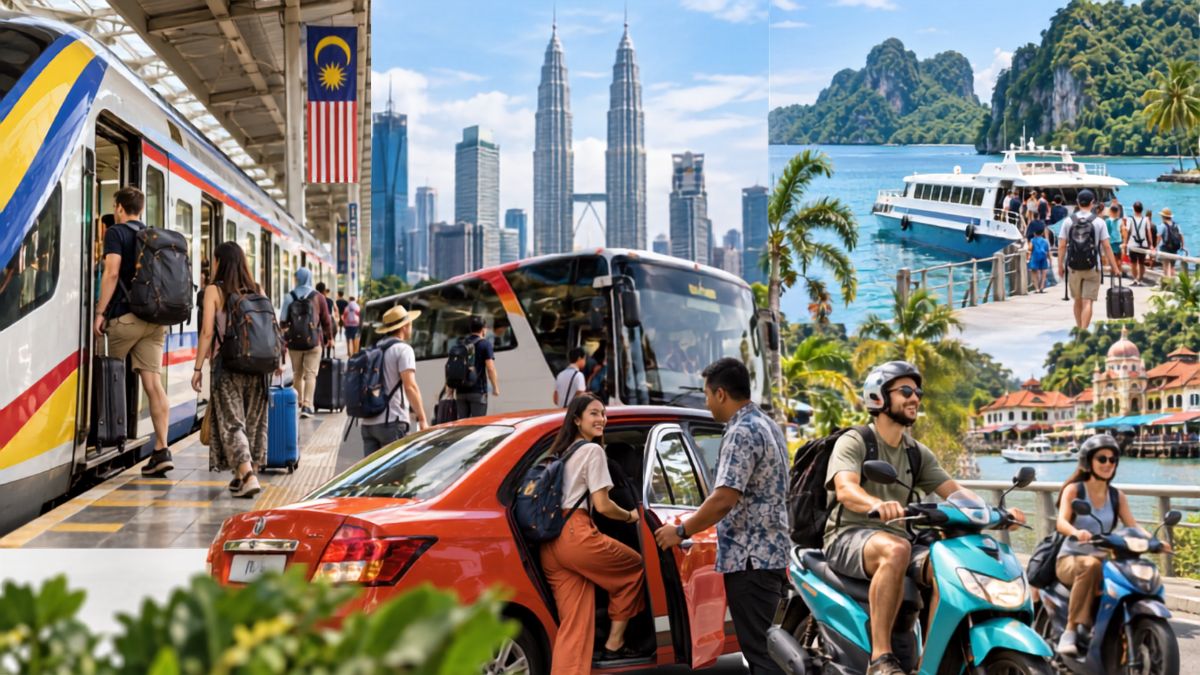


In this post we look at how to get around Malaysia in 2026. We will cover all types of transport and all corners of the country from Peninsiula Malaysia, to Malaysian Borneo and the many Malaysian islands. You’ll get detailed, accurate and up-to-date travel information you can trust. We will discuss how to use Kuala Lumpur’s MRT, LRT and monorail for predictable city journeys; take KTM’s comfortable ETS trains along the west-coast corridor; use express buses for Melaka, the Cameron Highlands and towns without useful rail service; and fly between Peninsular Malaysia, Sabah and Sarawak. Ferries or speedboats complete island journeys, while a rental car earns its cost mainly in rural districts and on road-trip routes.
Malaysia is generally straightforward for independent travelers. Signs and booking systems commonly use English, modern rail and coach services connect many visitor destinations, ride-hailing removes much of the uncertainty around urban taxis, and domestic flights cover the country’s largest distances. The complications are usually geographical rather than intimidating: the station may be outside the city you want, a low-cost flight may leave from a different airport or terminal, and an island fare rarely includes the road transfer to the jetty.
This guide explains those details honestly. It covers what each transport mode does well, where it becomes inconvenient, realistic 2026 costs, how to reach the major islands, how travel differs in Sabah and Sarawak, and the connections most likely to catch a first-time visitor out.
Times, fares and services are accurate as of 5th September 2026
Malaysia Transport at a Glance
| Journey | Best first option | Why it usually works | What to check |
|---|---|---|---|
| Kuala Lumpur city | MRT, LRT, monorail and some Grab trips | Rail avoids road congestion; Grab solves the last kilometre | Station walking distance and late-evening operating hours |
| Kuala Lumpur to Ipoh | KTM ETS train | Fast, comfortable and city-centre to city-centre | Reserved seats can sell out |
| Kuala Lumpur to George Town | ETS to Butterworth, then ferry or local transfer | Comfortable west-coast journey with a simple final connection | Butterworth is on the mainland, not in George Town |
| Kuala Lumpur to Melaka | Express bus | Frequent and direct; no central rail station in Melaka | TBS departure and Melaka Sentral last-mile transfer |
| Kuala Lumpur to Johor Bahru | ETS train or direct coach | ETS now runs to JB Sentral; buses add schedule choice | Compare the exact train, terminal and door-to-door time |
| Peninsular Malaysia to Sabah or Sarawak | Domestic flight | The regions are separated by the South China Sea | Baggage, airport transfers and domestic immigration checks |
| Kota Kinabalu to Sandakan | Flight for speed; bus for cost and scenery | Flight is under an hour in the air; bus is roughly 6–8 hours | Airport process versus Inanam terminal and road conditions |
| Mainland to Perhentian, Redang or Tioman | Road transfer plus boat | These islands have no normal bridge or scheduled commercial flight | Correct jetty, marine fee, weather and last departure |
| Penang to Langkawi | Flight or overland via Kuala Kedah/Kuala Perlis | There is no dependable direct Penang–Langkawi passenger ferry | Whole transfer chain, not only the final boat |
| Rural loop or national-park gateway | Rental car, scheduled shared transfer or reputable driver | It reaches places poorly connected by public transport | Licence, insurance, tolls, fuel, parking and road conditions |
For a two-week first visit, a common and efficient pattern is rail or coach between Kuala Lumpur, Ipoh, Penang and Melaka; a flight for Langkawi or Borneo when it genuinely saves a day; and local rail, buses and Grab within cities. Travelers do not need a car for the classic urban route. A car becomes useful when the itinerary prioritises smaller towns, beaches, highland viewpoints or several rural stops in one day.
Quick decision rule: choose rail when both ends are close to stations, a coach when it removes a change, a flight when geography makes the surface journey disproportionate, and a car only when flexibility will be used repeatedly. Always compare the complete journey from hotel door to hotel door.
Train Travel in Peninsular Malaysia
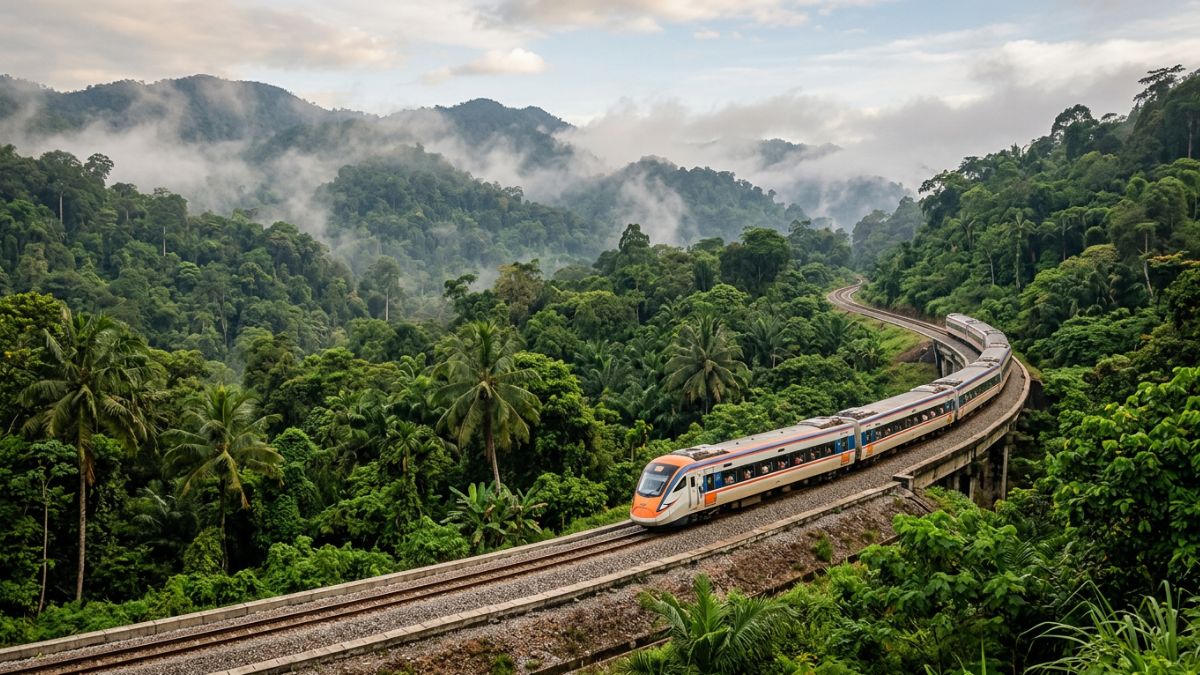
Malaysia’s trains are best for comfortable journeys along the west coast, not for reaching every part of the country. KTM Berhad operates ETS electric intercity trains, slower KTM Intercity services and regional Komuter networks. In 2026, ETS covers the north–south corridor from Padang Besar to Johor Bahru, with Kuala Lumpur, Ipoh and Butterworth among the most useful stops for independent travelers.
ETS: the most useful visitor train
ETS services are air-conditioned and reserved-seat. The official June 2026 timetable includes Kuala Lumpur–Ipoh, Kuala Lumpur–Butterworth, Kuala Lumpur–Padang Besar and trains continuing south to JB Sentral. Service labels such as Express, Platinum, Gold and Silver describe stopping patterns and, on selected trains, seating products. They are not simply interchangeable tickets for any departure.
Kuala Lumpur to Ipoh usually takes a little over two hours, while the faster Kuala Lumpur–Butterworth journeys are roughly four hours. Kuala Lumpur to JB Sentral is around five hours on the fastest through services, with slower patterns taking longer. Those timings compare well with road travel because stations are relatively central and there is no airport check-in process.
Butterworth is the rail gateway for George Town. From the station, follow signs through Penang Sentral toward the passenger ferry or use local road transport across the bridge. A traveler continuing to Langkawi can instead take rail farther north to Alor Setar or Arau, then transfer by road to Kuala Kedah or Kuala Perlis for the island ferry.
The East Coast Line and “Jungle Railway”
KTM Intercity’s East Coast Line runs between Gemas and Tumpat through inland Pahang and Kelantan. The Ekspres Rakyat Timuran and local shuttles serve destinations including Jerantut, Kuala Lipis, Gua Musang, Dabong, Kuala Krai, Tanah Merah, Pasir Mas and Wakaf Bharu. The route is slower than ETS, and schedules can involve overnight travel, but the forested interior makes it an experience rather than merely a transfer.
The line does not run along the resort coast. For Kota Bharu, leave at Wakaf Bharu and continue by taxi or local transport. For the Perhentian Islands, travelers still need a road journey to Kuala Besut. Jerantut is a gateway for Taman Negara, but the national park village of Kuala Tahan requires another road or river transfer. A late train arrival can therefore create an unplanned night before the final connection.
KTM Komuter
KTM Komuter is useful for suburban and regional travel, including Batu Caves from Kuala Lumpur and some northern journeys around Butterworth, Ipoh, Alor Setar and Padang Besar. It operates more like a commuter train: seats are not reserved, stopping patterns are slower and busy periods can be crowded. Use the live timetable rather than assuming metro-like frequency.
How and when to book Malaysian trains
Create a KITS account using the passenger’s passport details and book through the official KTMB ticketing site or app. To create a KITS account go to https://online.ktmb.com.my/. KTMB changes sales windows and sometimes releases future months in blocks, particularly around timetable revisions. Instead of relying on a universal “book exactly 30 or 90 days ahead” rule, check whether the required date is open and reserve promptly once the preferred service appears.
Weekends, Malaysian school holidays and the travel periods around Hari Raya, Chinese New Year and Deepavali can sell out well ahead. KTMB uses dynamic ETS pricing influenced by route, service, day, departure and purchase timing. Travelers should compare the exact train, not an old minimum fare quoted without a date.
Station and onboard advice
- Check KL Sentral, Kuala Lumpur and Bandar Tasik Selatan carefully; they are different stations.
- Match the passport name and number to the booking and keep the ticket available offline.
- Arrive around 30 minutes early for ETS, especially at an unfamiliar station.
- Use onboard luggage racks but keep passports, money and electronics at the seat.
- Bring a layer for strong air-conditioning and water for a long journey.
- Do not assume every service has the same café opening, meal stock or charging access.
- Check the arrival time of the last ferry, bus or hotel transfer before selecting a late train.
Train travel is one of Malaysia’s pleasures when it fits the route. Its limitation is reach, not quality. The right question is not “Can I take a train?” but “Does the train deliver me close enough to the place I actually want to sleep?”
Long-Distance Buses and Local Coaches
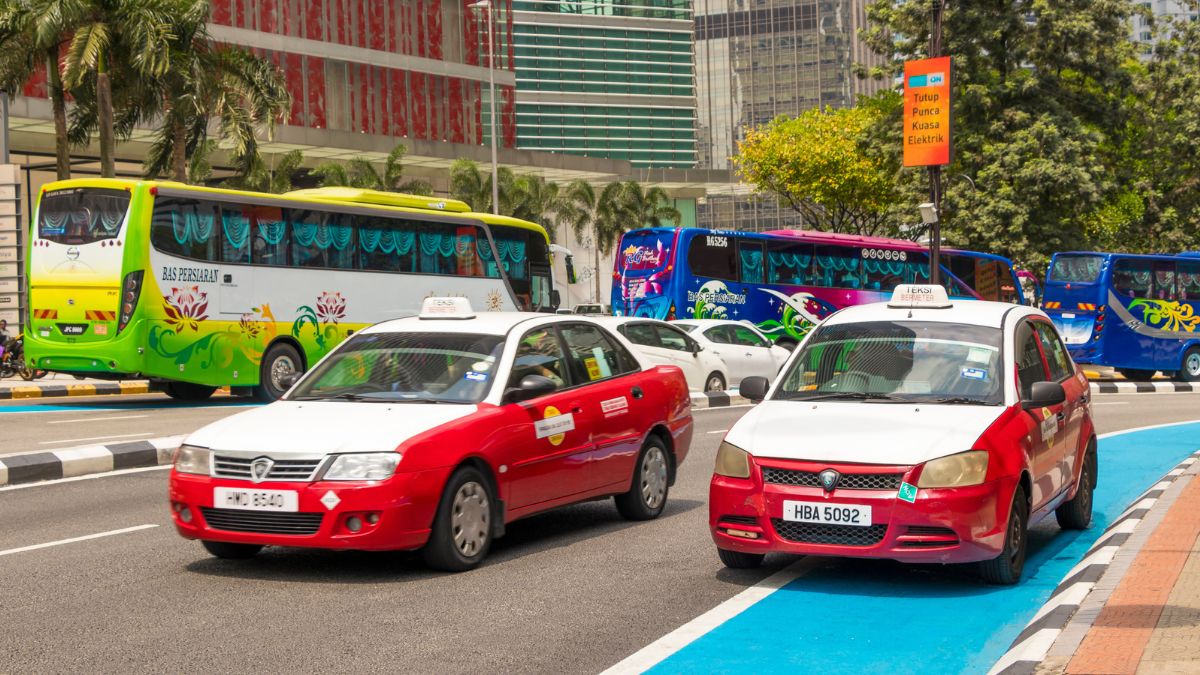
Express buses have broader coverage than trains and are often Malaysia’s best-value intercity transport. Modern coaches commonly have air-conditioning, reclining seats and underfloor luggage space. They are the natural choice for Kuala Lumpur–Melaka, Kuala Lumpur–Cameron Highlands, many east-coast towns and routes within Sabah and Sarawak.
When the bus beats the train
A direct coach can be better than a technically faster train if rail requires two local transfers. Melaka illustrates this clearly: the railway serves Tampin/Pulau Sebang outside the historic city, while frequent buses run from Kuala Lumpur’s Terminal Bersepadu Selatan to Melaka Sentral for roughly RM10–20. Add a final Grab or local bus, but the overall chain is still straightforward.
Tanah Rata in the Cameron Highlands has no railway. Direct coaches from Kuala Lumpur generally cost around RM30–45 and take roughly four to five hours, depending on traffic and mountain-road conditions. Coaches also link the highlands with Ipoh and selected other cities, although frequency is lower than the Kuala Lumpur service.
Major terminals travelers should recognise
- Terminal Bersepadu Selatan (TBS): Kuala Lumpur’s main southern and many long-distance coach departures, connected to Bandar Tasik Selatan rail.
- Penang Sentral: mainland transport hub beside Butterworth railway station and the ferry connection.
- Sungai Nibong: an important Penang Island coach terminal south of George Town.
- Melaka Sentral: main coach terminal outside Melaka’s historic centre.
- Larkin Sentral: major Johor Bahru bus terminal, distinct from JB Sentral.
- Inanam: principal long-distance bus departure area north of Kota Kinabalu for routes including Sandakan.
- Kuching Sentral: regional and long-distance terminal south of central Kuching.
A booking page that says only “Kuala Lumpur” or “Penang” is incomplete information. Open the boarding and arrival details before payment. A cheap departure from a remote stop at 06:00 can require an expensive pre-dawn car and remove the saving.
We recommend using our transport booking platform below. Simply enter where you want to go i.e. Kuala Lumpur to Langkawi and the results will give you the possible travel options from cabs, trains, boats, buses etc. You can then decide which mode of transport suits you and your plans best. The other added benefit is you are paying in local prices without tourism addons. Your ticket will cost you the same as it costs a local. And you’ll have all that money you saved to spend abroad.
Buying bus tickets
Major routes can be compared through established booking platforms or bought at terminals. Online booking is useful for choosing a seat and securing holiday travel, but the platform may charge a small fee. Confirm whether a digital ticket is sufficient or must be exchanged at a counter. At large terminals, follow the operator, departure bay and displayed service number rather than boarding a bus based only on the city name.
Daytime departures are easier for an unfamiliar route because the final transfer occurs before local services stop. Overnight coaches save waking hours but rarely provide the rest of a proper bed, and a 04:30 arrival can leave a traveler waiting for accommodation. The hotel night saved should be weighed against luggage storage, early check-in and reduced energy the next day.
Local buses outside Kuala Lumpur
Rapid Penang is the most useful visitor network outside the Klang Valley. BAS.MY networks operate in places including Melaka, Johor Bahru, Ipoh, Kuantan, Kota Bharu, Kuala Terengganu, Seremban and Kota Setar. They can be very inexpensive, with stage fares beginning below RM1 on some services, but frequency varies from urban feeders to rural routes running at long intervals.
Use local buses when the timetable and stop align with the day, not as an ideological requirement. A RM2 bus that arrives after 70 minutes is not necessarily better than a RM12 Grab when two people share it and have a fixed train to catch. Conversely, a traveler with time can use BAS.MY or Rapid Penang to reach places where repeated ride-hailing would become costly.
Coach comfort and safety
- Keep valuables, medication and documents in the cabin rather than under the bus.
- Photograph the vehicle or note its registration if leaving during a rest stop.
- Use the seat belt where fitted and choose another operator if the vehicle appears unsafe.
- Carry a light layer because air-conditioning can be very cold.
- Do not place a passport or wallet in an unattended seat pocket.
- Allow extra time during severe rain, festival traffic and Friday or Sunday urban peaks.
Grab, Taxis and Private Drivers
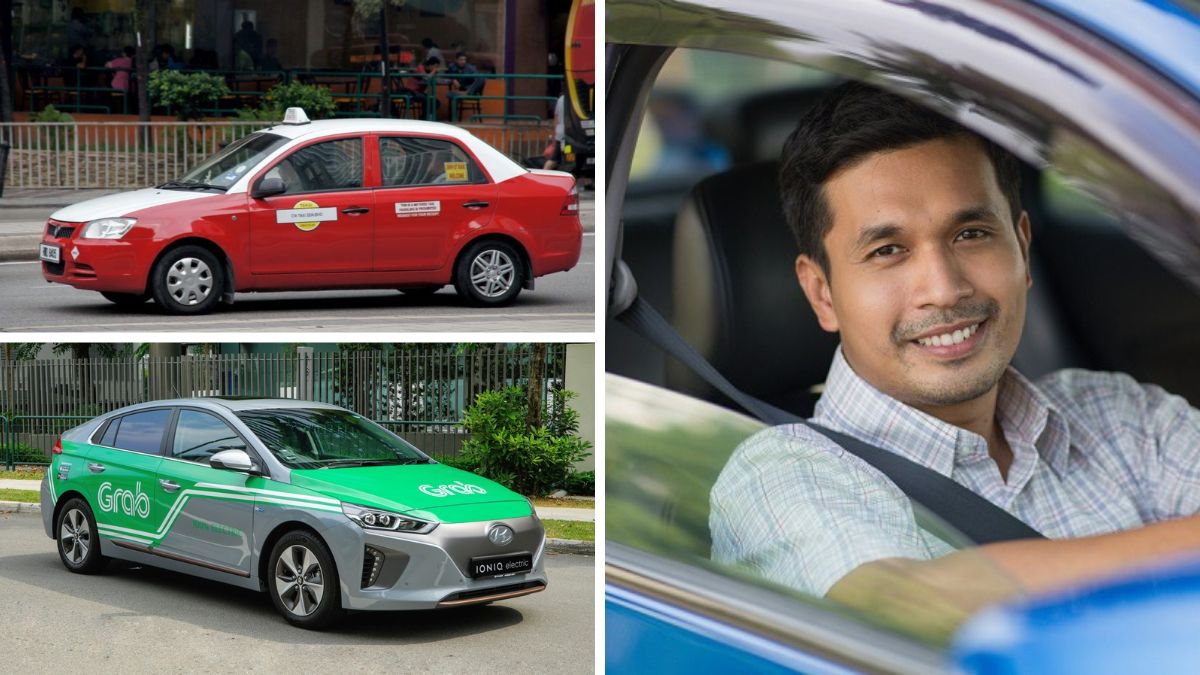
Grab is usually the simplest short-distance transport for international visitors in Malaysia. The app displays the vehicle, driver and fare before confirmation, keeps a journey record and reduces negotiation. It works well in Kuala Lumpur, George Town, Melaka, Ipoh, Johor Bahru, Kuching, Kota Kinabalu and other substantial towns, although availability becomes less certain in rural areas, at small jetties and very early in the morning.
Using Grab well
Set the precise pickup point and compare the vehicle plate, model and driver photograph before entering. Airports, malls and stations frequently have designated e-hailing zones that are not directly outside the door. At KLIA, follow signs to the correct pickup level and expect airport charges or tolls to influence the fare.
Grab car surge pricing can occur in rain, at commuter peaks or after a major event. If the journey is not urgent, wait a few minutes, change the pickup away from a congested gate or use rail for the main portion. A Grab fare is per vehicle rather than per passenger, so it becomes good value for two to four people. Select a larger vehicle when luggage will not fit safely in an ordinary car.
Licensed taxis
Licensed taxis remain useful where app coverage is thin or a taxi rank is immediately available. Use an official rank or reputable hotel booking, check the roof sign and driver identification, and ask for the meter where applicable. At airports with coupon or zoned systems, use the authorised counter. Decline an unlicensed approach offering an unclear “special price.”
Of note: I love a Malaysian teksi, but be aware that the Malaysian cab driver has ben voted the worst taxi service in the world, more than once. Drivers often ignore people hailing a ride, if they don’t like the look of your jib, even if you’ve been waiting in the official queue, they may turn their light off and drive away. But the number one thing you’ll need to cope with is Malaysian taxi drivers who don’t want to go to the place you ask. If its a bit out of the way, if there are roadworks, or they think they wont be able to find a return fare they will refuse to take you. Enjoy! Go for Grab!
e-Hail
Malaysia’s transport regulator, APAD, maintains a list of licensed e-hailing companies for Peninsular Malaysia. An app’s popularity does not remove the need to verify the car. Solo passengers can share the trip details with a trusted contact, sit in the back and keep bags accessible rather than locked away if a quick exit would be difficult.
Private drivers and day hires
A driver becomes valuable for dispersed sights in the Cameron Highlands, rural Sarawak, Sabah day routes and a multi-stop heritage or food itinerary. Agree in writing on duration, route, waiting time, parking, tolls, overtime and the vehicle size. A quoted “day” may mean eight hours rather than sunrise to evening.
Use a licensed company or a driver recommended by a reputable property. A private transfer costs more than a bus but can solve a late ferry connection or divide sensibly among a small group. It should not be used to create an unsafe connection that relies on speeding or driving through severe weather.
Renting a Car and Driving in Malaysia
A rental car is useful for rural Malaysia but unnecessary for most city-to-city first trips. Driving works particularly well for small-town west-coast loops, beaches and countryside in Kedah or Perak, parts of the Cameron Highlands, Langkawi, Kundasang and self-contained sections of Sabah or Sarawak. It is less appealing in central Kuala Lumpur and George Town, where traffic, parking and one-way streets remove much of the freedom.
Licence and international driving permit
Malaysia drives on the left. A visitor must carry a valid licence accepted for the vehicle class, and many nationalities should also obtain the appropriate 1949 International Driving Permit before travel. Requirements differ for ASEAN licences and other issuing countries, and rental-company policy can be stricter than the basic legal rule. For example, current UK government guidance requires a UK licence plus a 1949 IDP in Malaysia.
Do not rely on an informal translation made after arrival. Confirm the rule with the Malaysian Road Transport Department, the licence-issuing country and the rental company before paying. Carry the original documents and passport. The same principle applies to motorcycles: a car licence does not authorise riding a scooter, and travel insurance may reject a claim if the correct motorcycle class, helmet or permit is missing.
The real rental-car price
An advertised compact car may begin near RM70 a day, but RM100–180 is a more realistic daily allowance after selecting an appropriate vehicle and insurance. Automatic transmission, airport collection, one-way return, a younger driver, child seat and reduced excess can add to the cost substantially. The company may place a deposit or card hold that reduces available credit until after return.
Read the collision-damage waiver and exclusions rather than assuming “full insurance” means zero liability. Photograph every panel, wheel, windscreen and the fuel level at collection and return. Confirm the procedure for a breakdown or collision, and obtain a police report where the policy requires it.
Tolls, fuel and parking
Major expressways are efficient and largely cashless. A physical Touch ’n Go card supplied or purchased for the vehicle is the practical tool at tolls; check its balance before a long journey. Do not enter an RFID-only lane unless the rental vehicle is correctly registered for it. Tolls should be added to the comparison with rail or coach, especially for a solo driver.
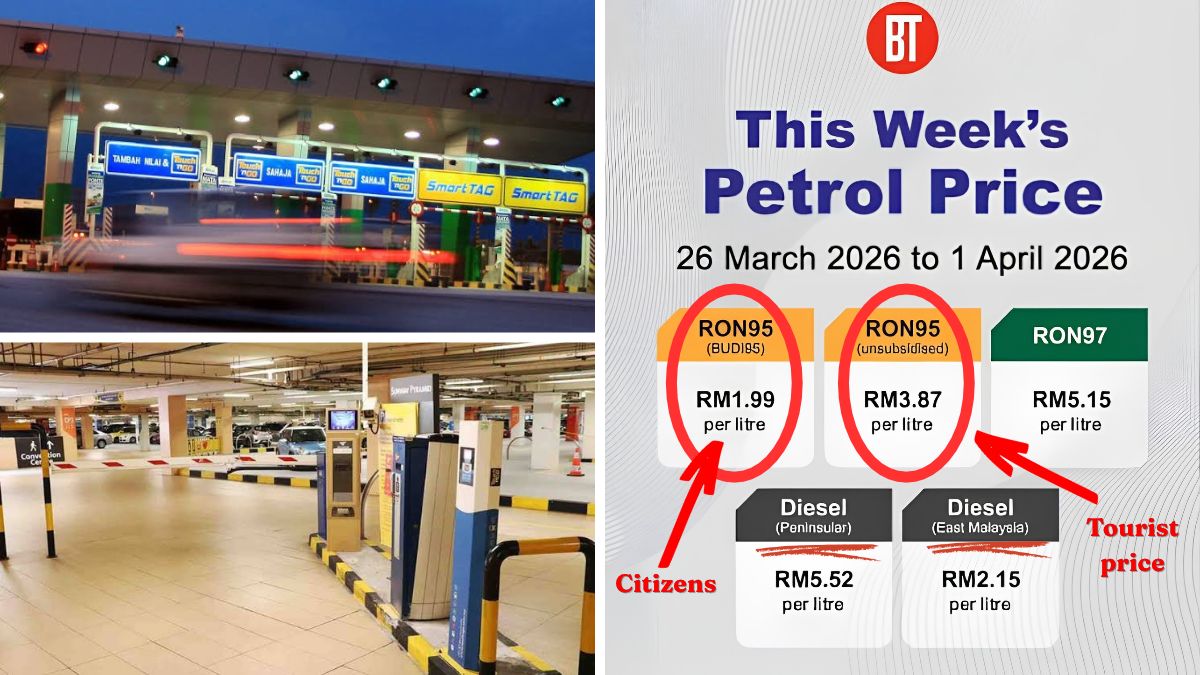
Foreign motorists pay the unsubsidised market price for RON95 rather than the RM1.99 citizen-subsidised rate. The price changes and was unusually high in late August 2026, so check the live weekly fuel rate instead of using an older article. Many fuel stations require prepayment or a card authorisation. Parking may use an app, a coupon, Touch ’n Go or a machine depending on local authority; ask the hotel rather than assuming street parking is free.
Road conditions and timing
Malaysia’s main highways are generally good, but mountain and rural roads can be narrow, winding or affected by heavy rain. Motorcycles filter between lanes, and urban lane changes can be assertive. Avoid driving tired after a long flight and do not estimate journey time from distance alone.
The Cameron Highlands can experience weekend congestion and slow queues around farms and towns. The Pan Borneo Highway continues to improve regional movement, but construction, detours and long distances still affect Sabah and Sarawak. Night driving increases the difficulty of seeing animals, motorcycles, road damage and poorly lit junctions. Plan to arrive in daylight in a new rural destination.
Should you drive in the monsoon?
Driving in a monsoon is a challenge. When I lived in Malaysia I drove to Selangor EcoPark where I was working, from my apartment in Kuala Lumpur. The journey and route were fantastic but during the monsoon season the rains usually arrived every day around 6pm. When driving on motorways it was a nightmare. Within seconds you literally couldn’t see 2 inches in front of the car. Most drivers pull off to the side, or try to find a food stop, and sit it out. Just be aware that while most drivers do that – some don’t, and long haul truckies definitely do not. So make sure you pull off to the left as far as safely possible and be careful exiting the vehicle. The good news is the rain is usually gone in under an hour.
Langkawi by car or scooter
Langkawi is one of the destinations where a rental vehicle immediately improves the trip. Attractions and beaches are dispersed, public buses do not form a useful sightseeing network, and Grab supply can vary outside busy areas. A car suits families and wet weather; a scooter is economical only for a properly licensed, insured and experienced rider wearing a suitable helmet.
Domestic Flights and Malaysia’s Airports
Flights are the practical way to move between Peninsular Malaysia and Malaysian Borneo. They also save time on selected routes to Langkawi, Kota Bharu, Kuala Terengganu, Johor Bahru, Penang and cities within Sabah or Sarawak. Malaysia Airlines, AirAsia, Batik Air and Firefly provide overlapping networks, but fare inclusions, airports and baggage rules differ.
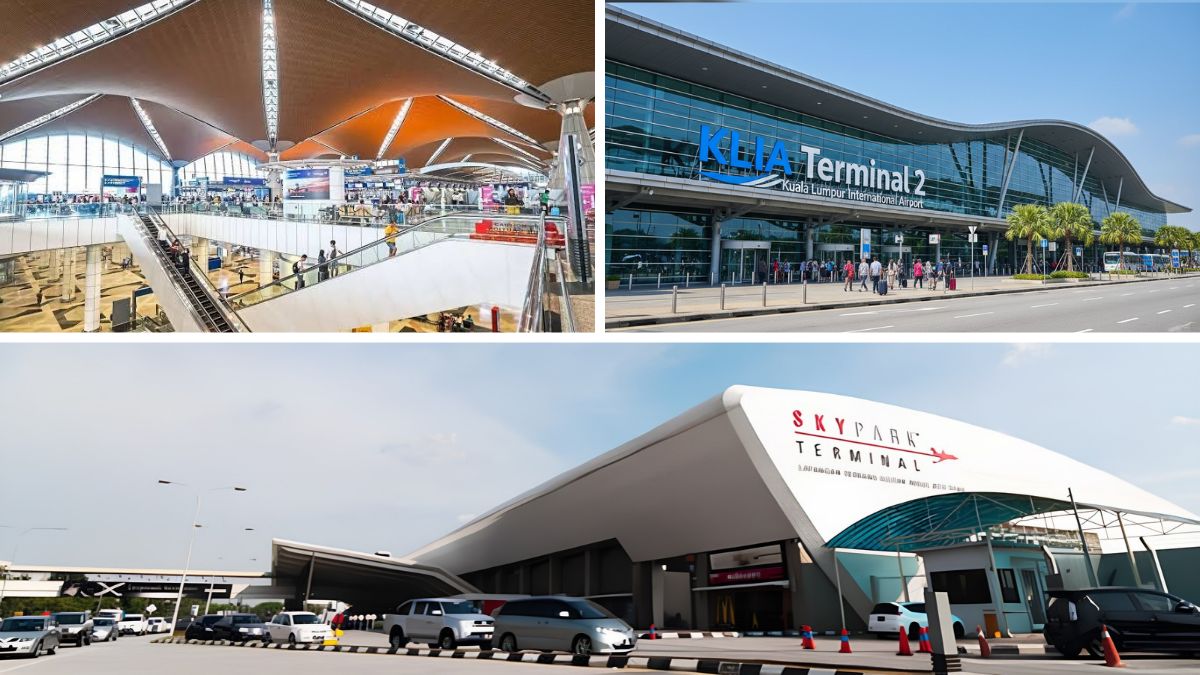
KLIA Terminal 1, KLIA Terminal 2 and Subang are not interchangeable
Kuala Lumpur International Airport uses Terminal 1 and Terminal 2 under the KUL airport code. They are separate terminals several kilometres apart. Check the operating airline and boarding pass rather than assuming “KLIA” identifies the building. A free 24-hour shuttle connects the terminals landside, and KLIA Transit charges RM2 for the short rail sector; allow enough time to retrieve and recheck baggage if tickets are separate.
Sultan Abdul Aziz Shah Airport at Subang uses the code SZB and is much closer to parts of Kuala Lumpur and Petaling Jaya. Firefly and Batik Air operate selected routes there. A Subang flight may be more convenient than a lower KLIA fare, while a traveler staying near KLIA or connecting internationally may find the opposite. Always include the airport code in the comparison.
Getting between KLIA and Kuala Lumpur
| Option | Typical adult fare | Usual advantage | Main drawback |
|---|---|---|---|
| KLIA Ekspres | RM55 single; RM100 return | Non-stop and predictable; 28 minutes from T1 to KL Sentral | KL Sentral may not be near the hotel |
| KLIA Transit | RM55 to KL Sentral; lower from intermediate stops | Serves Putrajaya, Salak Tinggi and Bandar Tasik Selatan | Slower than the express to central KL |
| Airport coach | About RM15 to KL Sentral | Lowest straightforward central fare | Traffic-dependent |
| Grab or authorised taxi | Often RM75–120 plus tolls, varying by demand and destination | Door-to-door and competitive for a group | Traffic and surge pricing |
KLIA Ekspres takes 28 minutes from Terminal 1 and 33 minutes from Terminal 2 to KL Sentral. KLIA Transit takes about 35 and 39 minutes respectively because it stops. The last train is after midnight on the current schedule, but a delayed flight should never assume a connection without checking the live timetable.
The real cost of a low-cost flight
AirAsia’s standard cabin allowance is two pieces with a combined maximum weight of 7kg. Checked baggage, seat selection, booking fees, counter check-in and route-dependent fuel surcharges can add to the base price. The August 2026 domestic fee schedule lists a RM20 counter check-in fee, a RM21.60 booking service fee and fuel surcharges that differ between routes within one region and those crossing between West and East Malaysia.
Compare the final basket across airlines. A slightly higher Malaysia Airlines, Firefly or Batik Air fare may include checked baggage or use a more convenient airport, while a low base fare may still win for someone carrying only 7kg. The comparison is personal, but it must be made after baggage and surface transport are entered.
When flying is not faster
Kuala Lumpur–Penang illustrates the limits of air travel. Add the ride to KLIA or Subang, early arrival, security, flight, baggage collection and the trip from Penang airport to George Town. ETS from KL Sentral to Butterworth takes roughly four hours and can be similar door to door. For Kota Kinabalu–Sandakan, however, a sub-one-hour flight can save most of a day compared with a 6–8 hour coach.
Domestic documents
Foreign visitors should carry the original passport on domestic flights. Sabah and Sarawak operate separate immigration controls, so travelers may pass an immigration checkpoint when entering or leaving these states. Keep any entry endorsement or electronic visit-pass evidence accessible; a photocopy alone may not satisfy an airline or official.

Why the Best Way to Travel Around Malaysia Changes by Region
Malaysia is divided into two main land areas. Peninsular Malaysia contains Kuala Lumpur, Melaka, Penang, Langkawi, the Cameron Highlands and the east-coast islands. East Malaysia consists of Sabah and Sarawak on Borneo. Brunei and Indonesian territory separate parts of the Borneo road network, and the South China Sea separates East Malaysia from the peninsula. There is no train, bus or road that replaces the flight between these halves of the country.
Within the peninsula, the west coast has the strongest rail and motorway infrastructure. KTM’s electrified ETS corridor now connects major destinations from Padang Besar near Thailand through Butterworth, Ipoh, Kuala Lumpur, Gemas and Johor Bahru. By contrast, the east-coast railway is a slower intercity route running through inland landscapes toward Kelantan. It can be a memorable journey, but it does not put travelers directly on the resort coast or its islands.
Sabah and Sarawak require a different mindset. Kuching has no passenger railway, and Sabah’s state railway is a limited regional line rather than a network linking the state’s major wildlife destinations. Flights, long-distance coaches, shared vans, scheduled lodge transfers and private road transport do most of the work. A distance that appears modest on a map can involve mountainous terrain, roadworks, rivers and a six-hour drive.
Malaysia’s place names can hide a transfer
Several transport listings use the gateway name rather than the destination travelers imagine. “Penang” rail tickets normally mean Butterworth on the mainland. The closest railway stop for Kota Bharu is Wakaf Bharu. Boats to the Perhentian Islands leave Kuala Besut; Redang services use Merang or Kuala Terengganu; and Tioman ferries use Mersing or Tanjung Gemok. A ticket to a gateway is only one segment unless the listing explicitly includes the onward transfer.
This is also true inside cities. Kuala Lumpur has KL Sentral, the older Kuala Lumpur railway station, Terminal Bersepadu Selatan and several airport terminals. Johor Bahru has JB Sentral and the more distant Larkin Sentral coach terminal. Matching the correct terminal to the following journey can matter more than saving RM5 on the fare.
Typical Malaysia Transport Costs in 2026
Transport remains good value, but a truthful comparison includes terminal transfers, baggage and booking charges. The following prices are useful planning ranges rather than guaranteed fares. Malaysian ringgit is the primary currency; at 5th September 2026 reference rate, RM4 was approximately US$1.
| Transport | Typical 2026 planning cost | Important inclusion or omission |
|---|---|---|
| KL urban rail or bus journey | Usually a few ringgit | Fare depends on distance and payment method |
| Rapid Kembara tourist pass | RM25 for 1 day; RM55 for 3 days | Touch ’n Go card and minimum stored value are additional |
| GoKL city bus for foreign adult | RM1 on charged routes | Cashless; children aged 12 and under travel free |
| Ordinary short Grab ride | RM7–25 | Peak, rain, toll and airport pricing can be higher |
| KLIA airport coach to/from KL Sentral | About RM15 each way | Slower and more traffic-dependent than the train |
| KLIA Ekspres | RM55 single; RM100 return | Non-stop between KL Sentral and KLIA T1/T2 |
| Kuala Lumpur–Melaka express bus | About RM10–20 | Add transport to TBS and from Melaka Sentral |
| Kuala Lumpur–Cameron Highlands bus | About RM30–45 | Usually terminates in Tanah Rata |
| Kuala Lumpur–Butterworth ETS | Roughly RM60–100 by service and demand | Add Butterworth–George Town transfer |
| Basic domestic flight | Often RM100–350 one way when booked ahead | Baggage, seat, fuel/booking fees and two airport transfers may be extra |
| Small rental car | About RM100–180 per day with a realistic insurance level | Fuel, tolls, parking, deposit and excess reduction are additional |
| Perhentian speedboat | Usually below RM50 one way | Does not include mainland transfer or marine-park fee |
| Tioman ferry | Roughly RM60–85 one way | Tide-dependent; marine fee separate |
Dynamic flight, rail and ride-hailing prices can fall outside these ranges. The purpose of the table is to expose the structure of the expense. A RM15 airport bus may require an additional Grab at midnight, while a RM55 airport train can be cheaper overall if the accommodation is beside KL Sentral. The companion Malaysia travel-cost guide places these transfers inside complete 7-, 14- and 30-day budgets.
Tickets, Apps, Cards and Cash
A phone and one transport card remove much of the friction from Malaysian travel, but no single payment method works everywhere. Download useful apps before leaving reliable Wi-Fi, keep screenshots of essential bookings, and carry enough cash for a rural transfer or jetty even when the preceding journey accepted a card.
Useful official tools
- KTMB KITS and the KTMB website: official ETS, KTM Intercity and Shuttle Tebrau schedules and tickets.
- MyRapid PULSE and journey planner: Rapid KL and Rapid Penang route planning and live service information where available.
- KLIA Ekspres: airport-train schedules, tickets and current promotions.
- Grab: ride-hailing, advance fare display and in-app trip records.
- Airline apps: direct check-in, disruption notices and baggage management. Google Play. Apple AppStore.
- METMalaysia or myCuaca: Weather and marine warnings before island or long road travel.
Touch ’n Go and single fares
A physical Touch ’n Go card is the most useful stored-value option for urban rail, many buses, road tolls and selected parking. The mobile eWallet does not automatically replace the physical card at every gate. Travelers can also buy single-journey tokens or tickets on parts of the Rapid KL rail network, and some systems accept contactless bank cards, but acceptance is not identical across operators.
The Rapid Kembara pass is intended for tourists and covers unlimited Rapid KL LRT, MRT, monorail, BRT, Rapid KL bus and MRT feeder-bus travel during its validity. In 2026 it costs RM25 for one day or RM55 for three days, excluding the card and required purse balance. It is convenient for a busy sightseeing schedule, but ordinary pay-as-you-go fares may be cheaper if only one or two rail rides are planned.
Do not build a visitor budget around My50 or other concession products without checking eligibility. My50 is a heavily subsidised product tied to Malaysian identity requirements. Likewise, GoKL buses are not universally free to foreign adults: central and additional routes introduced a RM1 cashless fare for non-citizens, while children aged 12 and under remain free.
Booking portals versus operators
Coach and ferry aggregators are helpful for comparison, but they may add a booking fee, optional insurance or a markup. Check the operator name, terminal and cancellation terms before paying. For trains, KTMB states that Easybook is no longer an authorised KTM ticket agent, so the official KITS channel is the safest default. A screenshot from an old timetable or a search-engine summary is not a valid ticket.
Keep the passenger name and passport number accurate. International rail and air tickets may be non-transferable, and Sabah or Sarawak travel can involve document checks even on a domestic itinerary. Store the ticket offline because station Wi-Fi and mobile reception are not guaranteed exactly when the barcode is needed.
Getting Around Malaysian Cities
Kuala Lumpur and the Klang Valley
Kuala Lumpur has Malaysia’s strongest public-transport network. MRT, LRT, monorail, KTM Komuter, BRT, airport rail and buses connect the wider Klang Valley, while covered walkways and Grab fill many gaps. For most visitors, rail is the best default for Bukit Bintang, KLCC, Chinatown, Merdeka Square, Pasar Seni, Kampung Baru, Batu Caves and major malls, although Batu Caves uses KTM Komuter rather than the central MRT/LRT network.
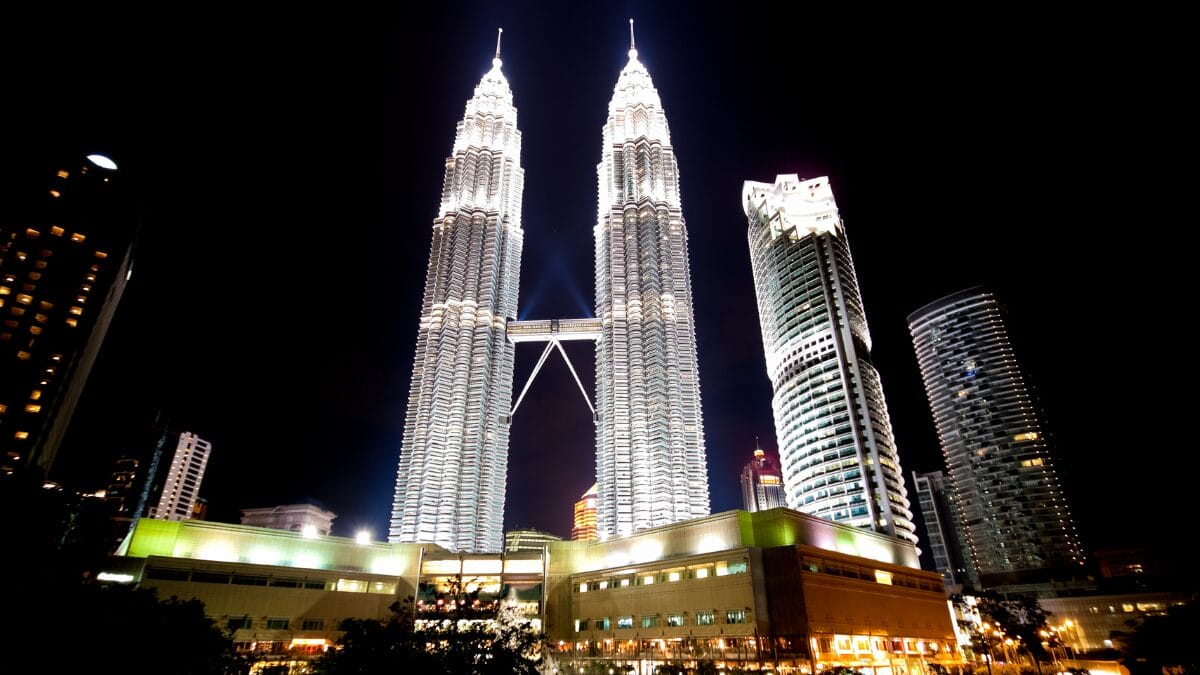
“Near a station” deserves scrutiny when choosing accommodation. A hotel may be 600 metres from a platform but require an exposed walk across major roads in tropical heat. KL Sentral and Muzium Negara MRT are connected by a pedestrian route but are not the same platform. Masjid Jamek, Pasar Seni and TRX are useful interchanges, yet changing lines with luggage takes longer than a map suggests.
Peak traffic can make a car slower than rail from roughly 07:00–09:30 and 16:30–19:30, with rain or an event extending congestion. Grab remains excellent for a group, an awkward last kilometre or a late return. Set the pickup at the app’s designated mall, station or airport point; large buildings commonly have several entrances and roads on different levels.
Most Rapid KL services begin around 06:00 and end around midnight, but the last useful connection can be earlier than the final train on one line. Check the complete trip rather than assuming every interchange remains open. Rapid KL’s official journey planner is more reliable for planned network use than a static map alone.
George Town and Penang Island
George Town’s UNESCO core is best explored on foot in manageable sections. Heat, sudden rain and uneven pavements make an all-day walking plan harder than the street map implies, so buses and Grab are useful between clusters. Rapid Penang buses link the ferry terminal and KOMTAR with Batu Ferringhi, the airport, Penang Hill, Kek Lok Si and other areas, but traffic can make arrival times variable.
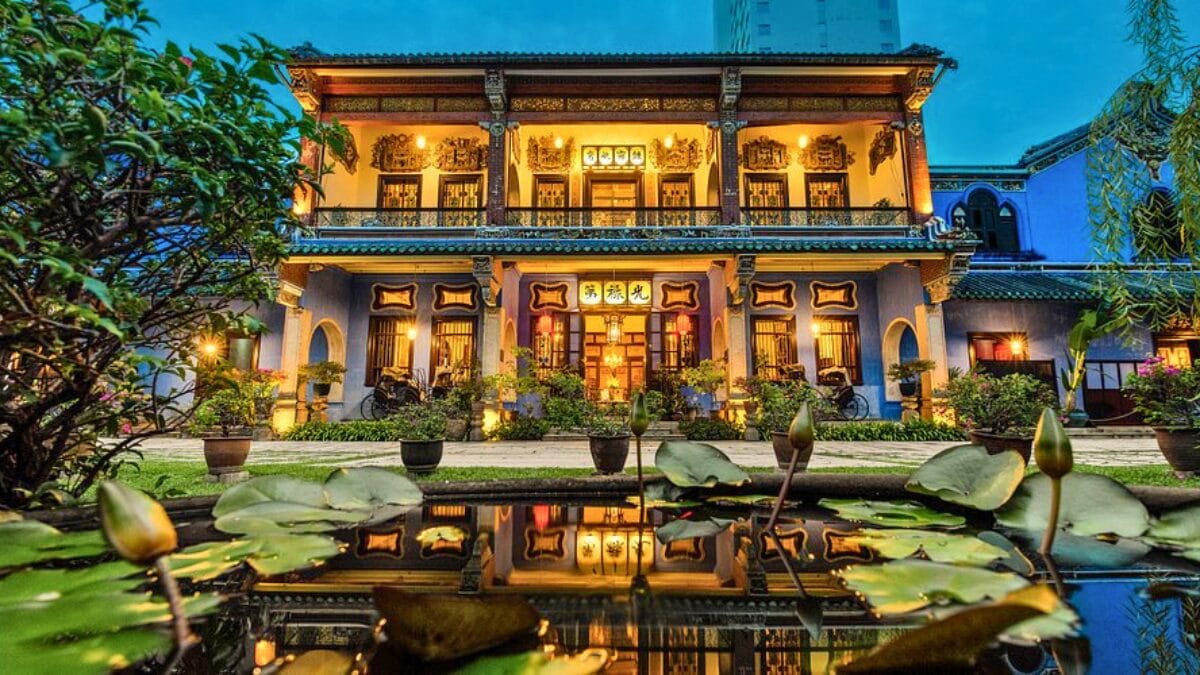
Penang International Airport is south of George Town. The public bus is economical but can be slow with luggage; Grab is often the simplest door-to-door choice, especially for two or more people. Batu Ferringhi is also well outside the heritage core. A hotel there is suitable for a beach-focused stay, but a food-and-heritage trip will repeatedly pay in time or fares.
Butterworth railway station, Penang Sentral and the mainland ferry terminal form one transport zone. The passenger ferry crosses to Pangkalan Raja Tun Uda beside George Town. This makes ETS plus ferry a coherent journey, but it still requires walking between components and a final transfer to accommodation.
Melaka
Melaka’s historic centre is compact enough to walk, and short Grab journeys are inexpensive. The main intercity coach terminal, Melaka Sentral, is several kilometres from Jonker Street, so a bus ticket from Kuala Lumpur does not finish at the old town. Local BAS.MY services exist, but a first-time visitor with luggage will usually find Grab simpler for the final segment.
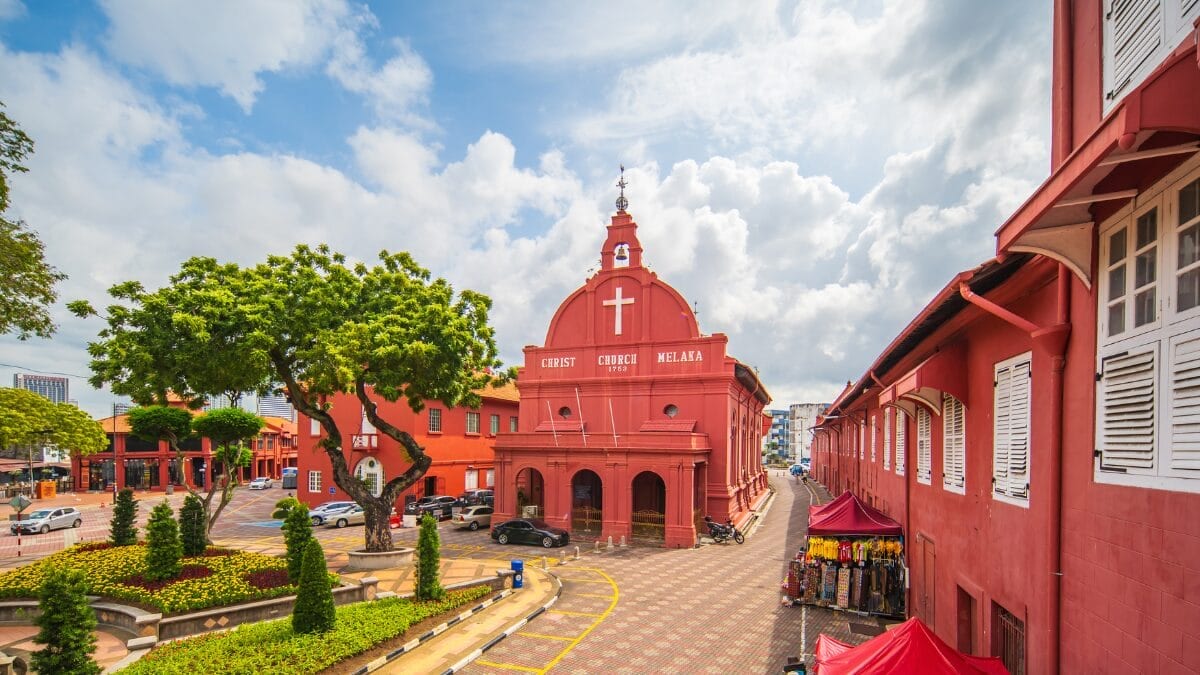
Traditional trishaws are a colourful sightseeing experience rather than efficient public transport. Agree on the route, time and price before starting. For ordinary movement, walking early or late in the day and using Grab in peak heat is both more comfortable and usually better value.
Ipoh
ETS delivers passengers close to Ipoh’s heritage centre, making the city an easy rail stop between Kuala Lumpur and Penang. The old town is walkable, but cave temples, newer food districts and suburban attractions require a local bus, Grab or car. A short stay can work without a rental, while a wider Perak road trip benefits from one.
Johor Bahru
JB Sentral sits beside the city centre and Malaysian immigration complex for the Causeway, while Larkin Sentral handles many long-distance and regional coaches several kilometres away. KTM’s ETS extension now provides direct electric trains from Kuala Lumpur to JB Sentral on selected services. This is an important improvement over the old Gemas transfer, but schedules remain limited enough that coaches still offer useful choice.
The Johor Bahru–Singapore RTS Link was still under construction in September 2026 and was targeted to begin passenger service at the end of the year. Until an official opening is confirmed, travelers must continue to use cross-border buses, the limited-seat Shuttle Tebrau or road transport rather than planning around the future rapid-transit line.
Kuching
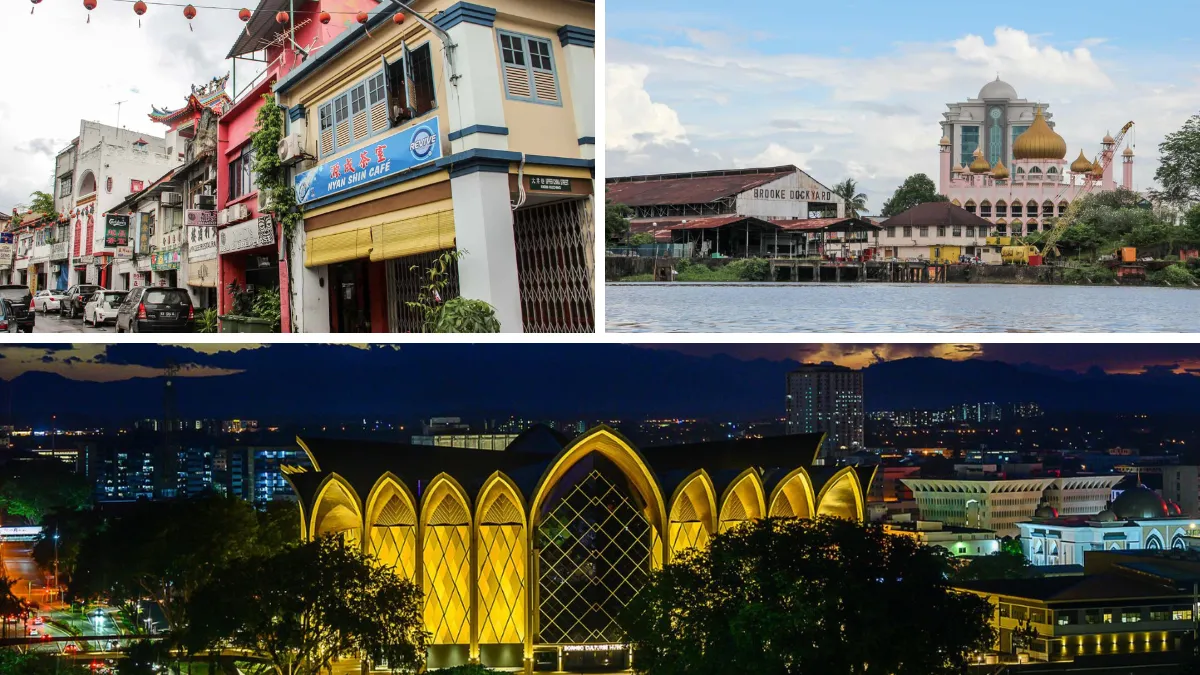
Central Kuching is pleasant to walk, and Grab works well for urban trips and the airport. There is no passenger railway. Public buses cover selected corridors but may be infrequent for a visitor’s itinerary, so Semenggoh, Bako’s gateway village and cultural attractions need route-specific planning. A park shuttle, shared excursion or pre-arranged driver can be better value than asking a Grab driver to wait for hours.
Kota Kinabalu
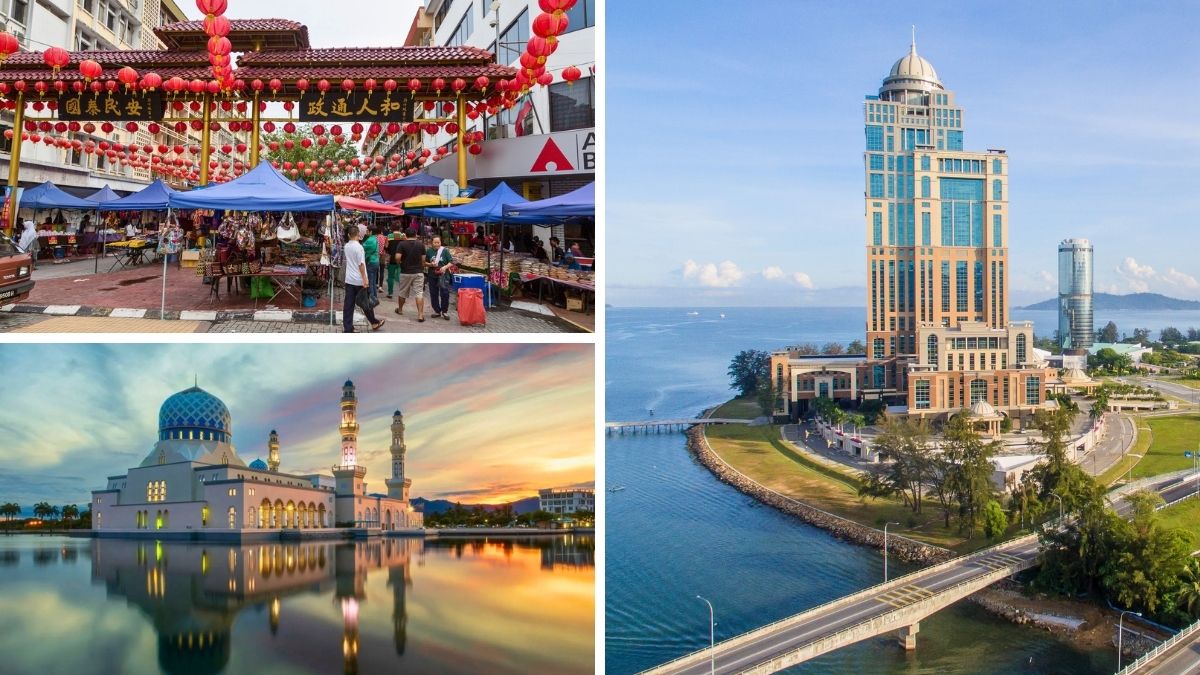
Kota Kinabalu’s waterfront and central markets are walkable, while Grab connects the airport, city districts and Jesselton Point. Intercity buses usually use terminals outside the most convenient visitor area; buses to Sandakan commonly depart from Inanam, north of central Kota Kinabalu. Add the transfer to the bus terminal when comparing the coach with a flight.
The Sabah State Railway begins at Tanjung Aru and runs south toward Beaufort and Tenom, with a change and long timetable on some through journeys. It is a local and scenic experience, not a general solution for reaching Kinabalu Park, Sandakan, Sepilok, the Kinabatangan or Semporna. Check the official Sabah Railway timetable shortly before travel because operations and notices can change.
Ferries and Island Transfers
The practical rule for Malaysian island travel is to plan the gateway first and the boat second. A search result may describe a “ferry to the island,” but the complete journey usually includes a train, bus or flight to the nearest town, a road transfer to a specific jetty, the scheduled boat and sometimes a smaller beach transfer at the far end. Those pieces do not always connect automatically.
Ferry timetables are more exposed to monsoon conditions, tides and operator changes than urban transport. Book the main sea crossing through the operator or an established seller, but check the departure again with your accommodation one or two days before traveling. Avoid relying on the final boat of the day when a missed connection would also mean losing a prepaid hotel night.
Langkawi: fly or use the mainland jetties
The dependable scheduled domestic ferry routes to Langkawi currently leave from Kuala Perlis and Kuala Kedah. The former direct Penang–Langkawi passenger ferry is not a route travelers should build a 2026 itinerary around. From George Town, the realistic choices are a short flight or an overland journey to one of those mainland jetties.
Rail travelers can take ETS to Arau for a road transfer to Kuala Perlis, or to Alor Setar for Kuala Kedah. The station name and jetty name are not interchangeable, and the final taxi or e-hailing ride must be added to the schedule. From Kuala Lumpur, a direct flight is usually easiest for a short holiday; an overnight train is not available on this corridor, so rail plus ferry consumes much of a day.
The official Langkawi Ferry Line publishes the current schedule and passenger categories. Confirm which fare applies to a foreign adult or child rather than copying a locally discounted price from an old blog. Kuah Jetty is on Langkawi’s southeast side, several kilometres from the main beach areas, so add a taxi or rental-car pickup after arrival.
Perhentian Islands from Kuala Besut
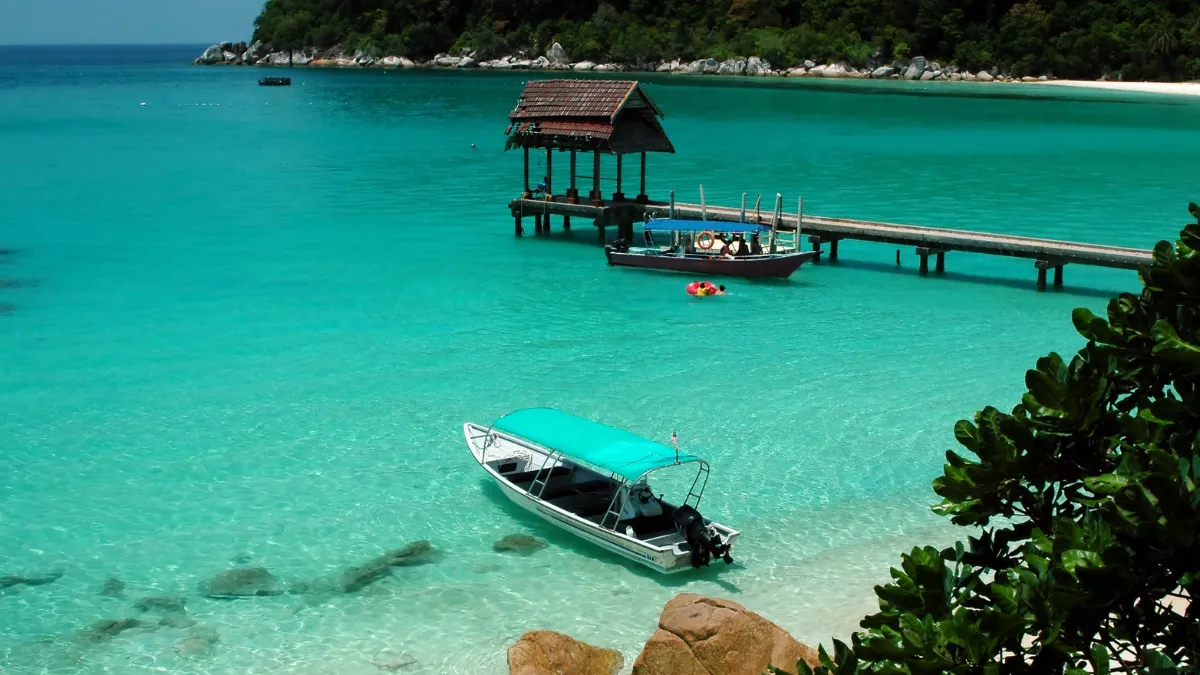
Kuala Besut is the normal gateway for the Perhentian Islands. Boats generally take around 45–60 minutes and, in the operating season, leave repeatedly during daylight rather than following a railway-style minute-by-minute timetable. A one-way seat commonly costs under RM50, but a marine conservation charge, jetty charge or small-boat landing transfer may be separate. Confirm exactly which island, beach and resort the ticket covers.
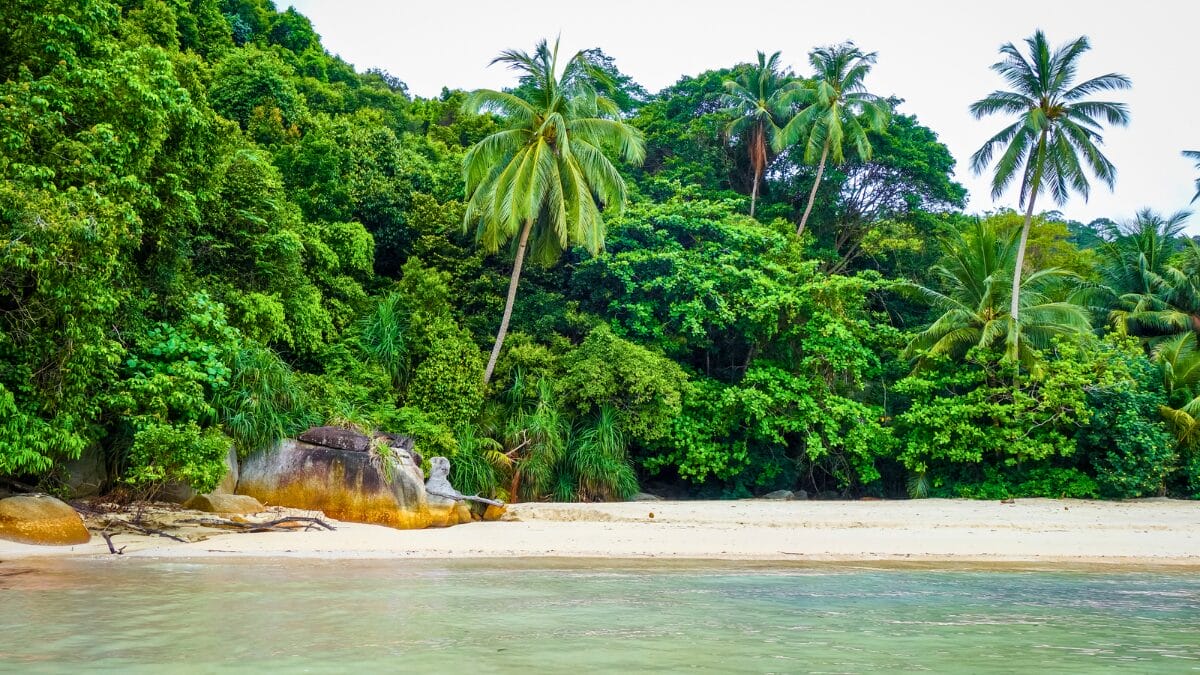
Kota Bharu airport is often the closest flight gateway, although Kuala Terengganu also works. Neither airport is beside the jetty: both require a road transfer, and a late-afternoon arrival can miss the last practical boat. An overnight coach from Kuala Lumpur can save a hotel night, but poor sleep followed by a boat crossing is not ideal for every traveler.
The east-coast island season matters. Resorts and boat frequencies reduce sharply during the northeast monsoon, roughly November to February, and some properties close completely. Opening dates vary by year and operator. The marine-park visitor page provides a useful overview of getting to the Perhentians, but the final decision should use a current operator notice and weather forecast.
Redang from Merang or Kuala Terengganu
Redang has two commonly confused gateways. Boats from Merang Jetty usually take about 30–45 minutes and have several daytime departures in season. Shahbandar Jetty in central Kuala Terengganu is convenient for the city but the crossing is much longer, often close to two hours, and choices may be more limited. A package saying “ferry included” should identify the jetty, departure time and whether the land transfer is also covered.
Many Redang resorts sell accommodation with meals and boat transfers, which can be good value but reduces flexibility. Independent booking is possible; simply compare the full package with the combined price of room, meals, transfers and marine fees. The official marine-park guide explains the principal Redang access routes.
Tioman from Mersing or Tanjung Gemok
Tioman ferries use Mersing and Tanjung Gemok on the peninsula’s east coast. Departures are tide-dependent and commonly number only a few per day, so published times can change. The trip usually takes around two hours or more depending on sea conditions and the sequence of island stops. Do not schedule a tight international-flight connection after the boat.
Your village is part of the ticket decision. Tekek, Air Batang, Salang, Paya, Genting and other stops are spread around the island; arriving at the wrong one can mean an expensive boat transfer. Juara is on the east coast and is normally reached overland from Tekek or by a specially arranged boat. Ask the accommodation for the correct disembarkation point before buying.
Most independent travelers reach the mainland jetty by coach from Kuala Lumpur, Johor Bahru or Singapore, then allow a generous buffer before sailing. Marine fees are normally separate from the ferry fare. See the marine-park overview for current planning information on travel to Tioman.
Pangkor and the Kota Kinabalu marine islands
Pangkor is one of the easier west-coast islands to reach year-round. Regular boats run from Lumut and Marina Island, and the crossing is short. Bus travelers should still check which mainland terminal their onward boat uses. On Pangkor, pink taxis operate on set or negotiated fares; a scooter can be convenient for a licensed and experienced rider, but the roads are hilly and narrow in places.
From Kota Kinabalu, boats to the Tunku Abdul Rahman Park islands leave from Jesselton Point. The crossing can be only 15–20 minutes, yet the total includes ticket purchase, terminal charges, park conservation fees and possibly several island stops. Ask for the final return time and keep the correct operator’s contact details. Sabah Parks publishes the official park and facility information.
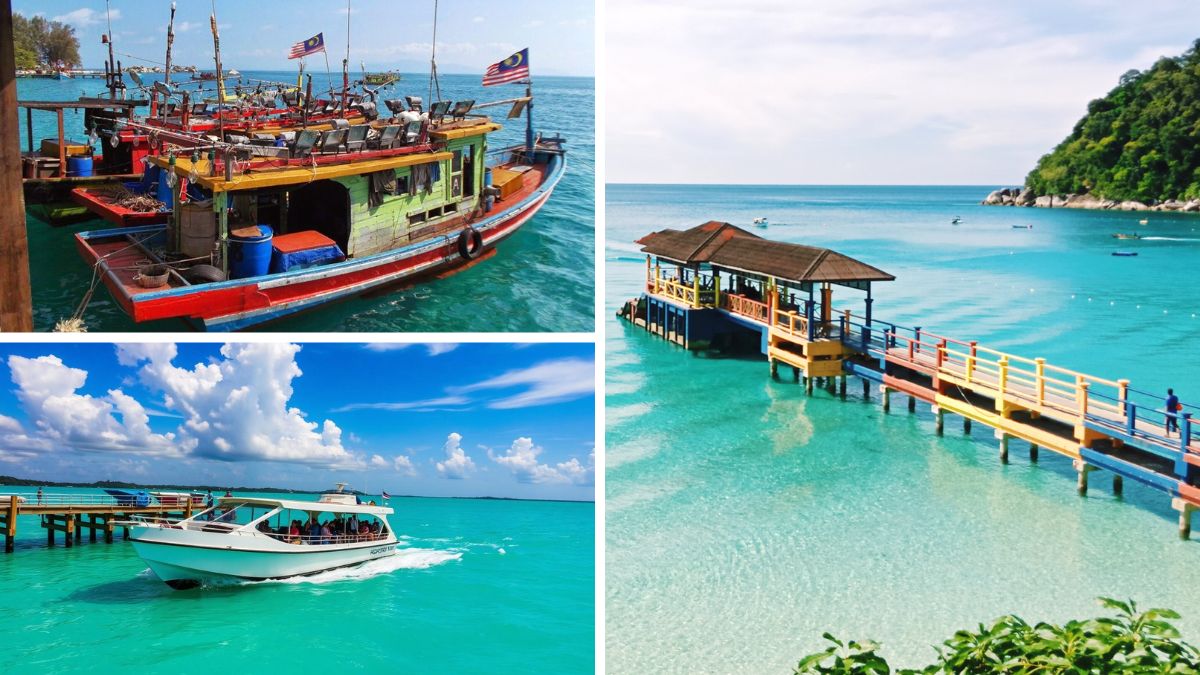
Ferry safety and luggage
Use an established operator, listen to crew instructions and locate the life jacket before departure. If a boat appears overloaded or the weather is clearly deteriorating, do not board merely because accommodation has already been paid. A dry bag or waterproof liner is valuable on open speedboats, where spray and beach landings are normal.
Large suitcases are possible on many ferries but awkward on jetties, sand and small transfer boats. Confirm baggage charges and handling if carrying diving equipment, a bicycle or unusually large luggage. Keep passports, electronics, medication and one set of dry clothes in a small bag you control rather than in the general luggage pile.
Getting Around Malaysian Borneo
Travel in Sabah and Sarawak is built around flights, long-distance coaches and local road transfers, not a peninsula-style rail network. Distances are substantial, roads can be slow and many wildlife destinations sit outside the city whose name appears on the ticket. A domestic flight often saves an entire day, while a private or shared transfer may be the only efficient final connection.
Sabah and Sarawak control their own immigration entry. Travelers arriving from Peninsular Malaysia normally pass through immigration even though they have not left the country. Carry the original passport and keep the entry endorsement or electronic record in mind when leaving. Do not put the passport in checked baggage on a domestic flight to Borneo.
Sabah: Kota Kinabalu, Sandakan, Sepilok and Semporna
Kota Kinabalu is Sabah’s main air and road hub. Kinabalu Park is roughly two hours away by road, depending on traffic and weather, and is not served by the state railway. Shared vans, buses toward Ranau or Sandakan, day excursions and private transfers are the usual options. A public vehicle may drop passengers near the park entrance but not at a remote lodge, so obtain precise instructions from the accommodation.
Sandakan is less than an hour from Kota Kinabalu by air, while the coach normally takes about six to eight hours plus transfers to and from the terminals. The road journey is scenic in parts and can suit a slower budget itinerary, but flying is sensible when time is limited. Sepilok is outside Sandakan; add a Grab, taxi or arranged transfer rather than treating the airport or coach station as the final destination.
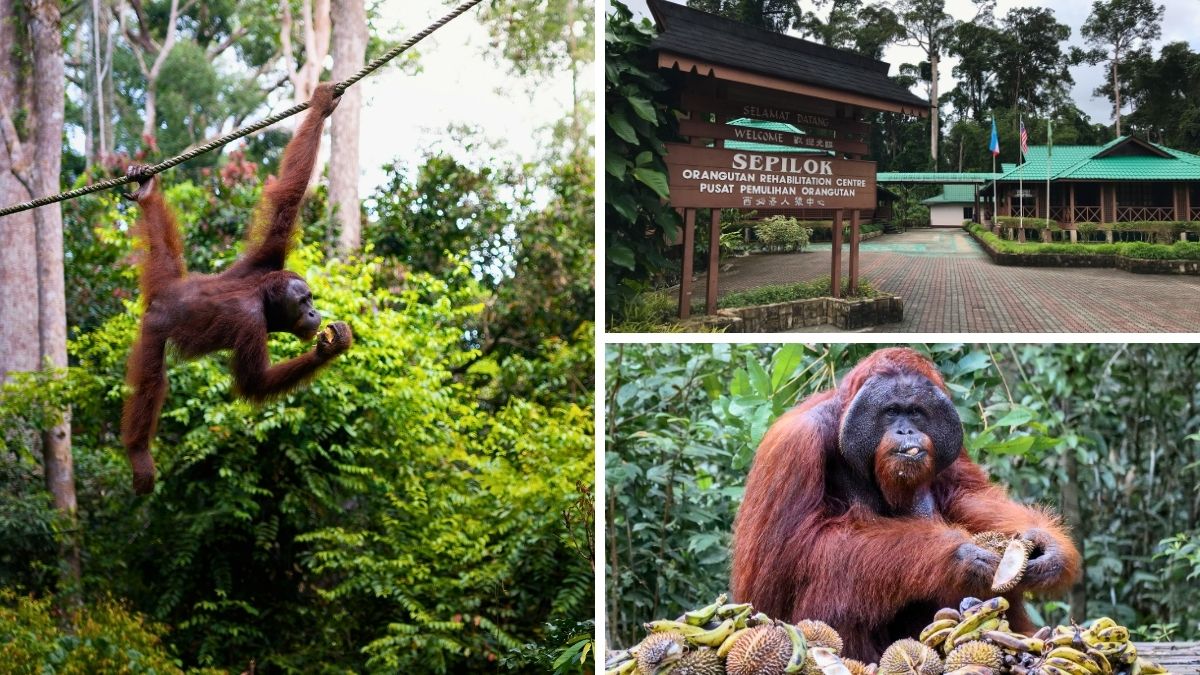
Kinabatangan wildlife lodges commonly include or sell transfers from Sandakan, Sepilok or Lahad Datu. Compare the pickup point carefully. A cheap room rate can cease to be cheap after two private road transfers and separate river excursions, while a lodge package may cover transport, meals and cruises. Independent travel here means selecting the components yourself, not expecting frequent public transport to reach a riverside lodge.
For Semporna and the dive islands, Tawau is the normal airport. The airport is around 80 kilometres from Semporna, followed by another boat transfer for Mabul, Kapalai or other islands. Use a licensed dive or boat operator, and allow a buffer after the final dive before flying. Never assume a resort labelled “Semporna” is in the town rather than offshore.
Sarawak: Kuching, Sibu, Miri and Mulu
Sarawak’s principal cities are connected by flights and long roads. Kuching to Sibu, Bintulu or Miri can be traveled by coach, but a flight saves many hours. River transport remains important locally and can be an interesting option on selected routes, yet it is no longer a universal express network that visitors can assume will link every major destination conveniently.
Gunung Mulu National Park is normally reached by a short flight from Miri, Kuching or Kota Kinabalu according to the operating schedule. There is no simple all-weather public road trip that substitutes for that flight. National-park activities, cave visits and boat journeys may require guides or park arrangements even when the traveler has organized the wider itinerary independently.
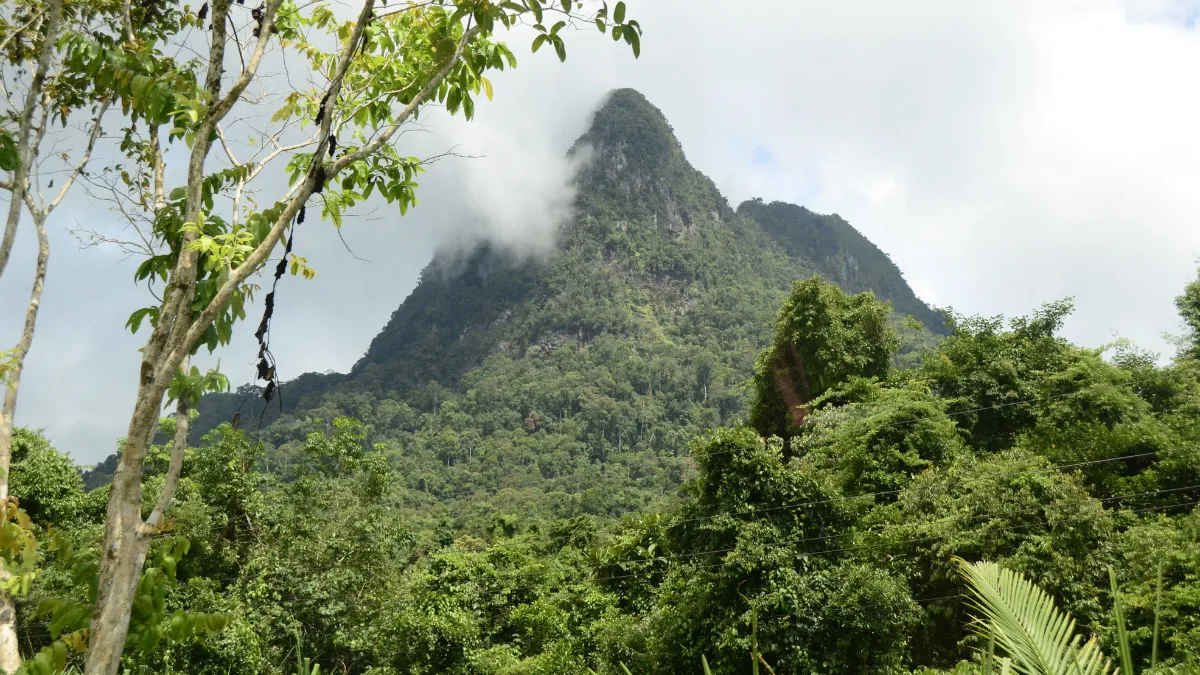
Bako National Park involves a road journey from Kuching to Bako village and then a boat, whose operation depends on tide and conditions. Semenggoh can be reached by public bus at selected times, Grab or an organized shuttle, but arranging a return pickup in advance avoids being stranded after the rehabilitation centre closes.
Eastern Sabah security
Most visits to Sabah are trouble-free, but the eastern coastal and island security situation deserves specific, current attention rather than a vague reassurance. As of September 2026, several governments maintained stronger advice for parts of eastern Sabah, and a 18:00–06:00 water curfew continued in six districts. Conditions and boundaries can change.
Check your government’s travel advice before buying a non-refundable island trip because insurance may be affected. Use established resorts and licensed operators, follow local maritime restrictions and do not arrange informal night-boat travel. This is a reason to plan carefully, not to write off the whole of Sabah; Kota Kinabalu, Kinabalu Park and many western areas are subject to different risk assessments.
Realistic Door-to-Door Routes Around Malaysia
The fastest-looking ticket is not always the fastest journey. Compare travel from one accommodation to the next, including checkout, terminal transfers, security, check-in, waiting, the scheduled trip and the last kilometre. The following ranges are planning estimates rather than guaranteed timetables or fares.
| Route | Most practical choice | Typical planning time | Important detail |
|---|---|---|---|
| Kuala Lumpur to Ipoh | ETS | About 2–2.5 hours station to station | Central stations make rail unusually efficient |
| Kuala Lumpur to George Town | ETS to Butterworth plus ferry, or coach | About 5–7 hours door to door | Rail ticket ends on the mainland |
| Kuala Lumpur to Melaka | Coach | About 3–4 hours door to door | Melaka Sentral is outside the old town |
| Kuala Lumpur to Cameron Highlands | Direct coach | About 4–5.5 hours | Winding final road; arrive before dark if prone to motion sickness |
| Kuala Lumpur to Johor Bahru | ETS or coach | Roughly 5–7 hours | Selected ETS services now run directly to JB Sentral |
| George Town to Langkawi | Flight, or road/rail to Kuala Perlis or Kuala Kedah plus ferry | Flight: roughly half a day door to door; overland: most of a day | No dependable direct Penang–Langkawi passenger ferry |
| Kuala Lumpur to the Perhentians | Fly to Kota Bharu plus road and boat; or overnight coach | About 6–9 hours by air route; longer overland | Late flights can miss the last boat |
| Kota Kinabalu to Sandakan | Flight for time; coach for budget | Flight trip about 3–4 hours door to door; coach 7–9 hours door to door | Sepilok requires another transfer |
| Kuching to Mulu | Flight | Allow most of a travel day around the flight | No simple continuous public-road alternative |
Kuala Lumpur to Penang: train or bus?
ETS is the more comfortable choice when a suitable departure is available. It runs to Butterworth, from where passengers walk through Penang Sentral to the passenger ferry or take a road vehicle across the bridge. A coach may leave at more times and can stop at Penang Sentral or Sungai Nibong, but road congestion is less predictable.
For accommodation in George Town, ETS plus ferry is a satisfying and fairly coherent trip. For Batu Ferringhi, Bayan Lepas or a hotel near the airport, a coach or flight may position you differently but still requires a last transfer. Compare the exact terminal rather than treating “Penang” as one point.
Kuala Lumpur to Melaka: bus wins
A direct coach from Terminal Bersepadu Selatan is normally the clearest public-transport option. The ticket commonly costs around RM10–20, but add travel to TBS and the transfer from Melaka Sentral to the historic centre. The nearest working railway stations do not make rail a competitive choice for most visitors.
Kuala Lumpur to Taman Negara
Independent travelers can use a direct tourist van or combine rail or bus with a transfer through Jerantut or Kuala Tembeling, depending on season and river operation. The classic boat approach is scenic but not automatically faster. Ask whether a ticket ends at Kuala Tahan, Jerantut or the boat jetty, and confirm whether national-park registration and local activities are separate.
A workable seven-day west-coast route
For a first visit, three nights in Kuala Lumpur, one or two in Ipoh and three in George Town make a clean rail itinerary. ETS links the cities without an airport day, while local rail, buses, walking and Grab cover the urban portions. Langkawi should only be added if at least two or three nights can be given to it; otherwise the extra flight or ferry chain reduces the time available in every stop.
A workable two-week peninsula and Borneo route
A realistic mixed itinerary could combine Kuala Lumpur, Ipoh or Melaka, George Town and one Borneo base such as Kuching or Kota Kinabalu. Fly from Penang or Kuala Lumpur to Borneo, then use local transfers for one or two nature destinations. Trying to include both Sabah and Sarawak, several islands and four peninsula cities in the same fortnight creates more terminal time than discovery.
Crossing from Malaysia to Singapore, Thailand and Brunei
International border trips need more time than a domestic route of the same distance. Every passenger must complete immigration, and buses may require luggage to be carried through the checkpoint. Visa eligibility, digital arrival requirements and permitted length of stay depend on the traveler’s passport and can change, so check the destination government’s official immigration site before departure.
Johor Bahru to Singapore
The limited-seat KTM Shuttle Tebrau runs between JB Sentral and Woodlands Train Checkpoint. The scheduled train ride is only minutes, but passengers must arrive early for immigration and the boarding gate closes before departure. KTM’s official FAQ lists a fare of RM5 from Johor Bahru to Woodlands and SGD5 in the opposite direction for a non-Malaysian traveler. Tickets can sell out well ahead around weekends and holidays.
Cross-border buses use the Causeway or Second Link and run much more frequently, but queues vary dramatically. Passengers generally leave the bus for immigration and then rejoin the same service or the next eligible bus according to the operator’s rules. Keep the ticket, carry your own luggage and avoid a tight flight or long-distance rail connection after the border.
The Johor Bahru–Singapore RTS Link was not carrying passengers at the article’s September 2026 fact-check date. The project was targeted for service around the end of 2026, but readers should verify an official opening rather than assuming a construction deadline is a usable timetable.
Peninsular Malaysia to Thailand
Padang Besar is the principal rail border. Malaysian ETS and Thai trains use the same broad station area, but they are separate services with separate tickets and no guarantee of a protected connection. Allow time for both countries’ formalities, potential queues and a meal or delay rather than booking the shortest theoretical interchange.
Long-distance buses and vans also cross at road checkpoints. Confirm whether the ticket is a through service, where immigration occurs and whether you must change vehicles. Government travel advice may apply to parts of Thailand’s far south, so check the exact route rather than applying a national headline to every crossing.
Sabah or Sarawak to Brunei
Flights are simplest when time is short. Overland travel is possible on selected coach or private-transfer routes, but public options can be infrequent and a journey through northern Sarawak may involve more than one border formality. Carry the original passport, check entry and vehicle requirements, and do not assume a rental car is permitted to cross without written authorization.
Accessibility, Families and Traveling With Luggage
Malaysia’s newer airports and urban rail systems generally provide lifts, ramps and accessible toilets, but the journey between them can contain gaps. A station may be step-free while the surrounding pavement is broken, steep or exposed to traffic. Lift outages, platform gaps and crowded peak services can also change what is practical on the day.
Travelers who need assistance should contact the airline, railway or terminal in advance and reconfirm shortly before travel. Airport wheelchair assistance is usually the most standardized. KTM and urban rail staff may help, but arrive early and identify the exact entrance with lift access. A folding mobility aid or stroller should be labelled clearly and protected from rough handling.
Long-distance coaches vary. Some have several high steps and luggage stored below; accessible vehicles cannot be assumed. Ask the operator directly about boarding, wheelchair storage and rest stops. Ferries and speedboats are usually the hardest part of an accessible itinerary because jetties, tides, steps and beach landings differ. A resort transfer is not necessarily accessible simply because it is included.
Families should request a child seat from a transfer company in advance; Grab and ordinary taxis do not reliably carry one. Bringing a compact travel seat may be preferable when age, size and local law allow. For small children, plan shorter travel days, reserve adjacent seats and carry water, snacks and a change of clothes where you can reach them.
Minimal luggage materially improves a multi-stop Malaysia trip. It is easier on station stairs, ferry gangways, island sand and e-hailing pickup points. Laundry is widely available, so a smaller wheeled bag or backpack is often more useful than a large case filled for every possible weather condition.

International Education Expert
Jason Baigent
International Education Expert
“I’ve found that the best Malaysian travel experiences happen when you venture beyond the standard circuit. Our detailed Malaysian solo travel guide reveals lesser-known routes, secret beaches, and authentic cultural experiences.”
Transport Safety, Scams and Disruption Planning
Malaysia is generally straightforward for independent travelers who use licensed operators, wear seat belts and leave realistic connection time. The most common problems are less dramatic: a wrong terminal, an unofficial taxi, a missed last boat, a low-cost airfare inflated by bags, or a route disrupted by heavy rain.
Use licensed vehicles and visible fares
Book e-hailing rides inside the official app and verify the registration before entering. At airports and bus terminals, use official taxi counters or clearly licensed ranks. Decline unsolicited “taxi” offers inside an arrivals hall when the vehicle, fare and operator cannot be verified. For a metered taxi, ask for the meter before departure; for a fixed route or private driver, agree on the total price and inclusions in writing.
Seat belts, overnight coaches and road travel
Wear the available seat belt in a car or coach. An overnight coach can save time and accommodation, but it also arrives very early, gives poorer sleep and has a road-safety trade-off. Choose a reputable operator, avoid leaving valuables in the hold and keep medication, passport and electronics with you.
Self-drivers should avoid pushing through fatigue, heavy tropical rain or darkness on unfamiliar rural roads. Motorcyclists face substantially higher risk and should use a proper helmet, hold the correct motorcycle entitlement and confirm insurance coverage. A scooter rented without the right licence can become a costly problem after even a minor collision.
Weather, floods and monsoon seas
Heavy rain can cause urban congestion, flash floods, landslides and ferry disruption. The east-coast island season is particularly sensitive to the northeast monsoon, while west-coast weather follows a different pattern. Check the Malaysian Meteorological Department and local operator notices instead of assuming “rainy season” means the same conditions nationwide.
Build one recovery margin into any expensive connection: arrive in the airport city the night before a long-haul flight, or return from a remote island at least a day early. Travel insurance should cover the activities and regions planned, along with delay, missed departure and medical evacuation where relevant.
Emergency and current-advice checks
Malaysia’s general emergency number is 999. Save the accommodation, transport operator and insurer contacts offline. Before travel to eastern Sabah, an isolated park or an international land border, check current official advisories and local restrictions. Advice can change faster than a long-form guide can be republished.
How to Build a Realistic Malaysia Transport Plan
- Mark the exact gateways. Write down the station, airport, bus terminal and jetty—not merely the city or island.
- Calculate door to door. Add the trip from accommodation, check-in time, the scheduled ride, transfers and the final kilometre.
- Price the complete journey. Include baggage, seat selection, tolls, fuel, parking, marine fees, terminal charges and last-mile transport.
- Identify the fragile connection. A last ferry, limited train, border shuttle or final park boat needs a generous buffer.
- Book the constrained leg first. Holiday ETS seats, island resorts, festival coaches and limited flights should shape the rest of the itinerary.
- Keep flexible legs flexible. Urban Grab rides and frequent local rail normally do not need to be locked in weeks ahead.
- Recheck 24–48 hours before departure. Look for weather, terminal, gate and timetable changes, then ask the accommodation to confirm unusual final transfers.
Worried about Travel Costs?
Use Our Digital Travel Itinerary Planner
Choose from a range of templates, add activities, accommodfation, keep track of costs eassily and efficiently.
Go to the trip builder nowWhen to book
For ordinary weekdays, long-distance coach tickets can often be bought shortly before travel. ETS seats are more constrained, and popular departures can sell out. During Hari Raya Aidilfitri, Chinese New Year, school holidays and long weekends, book major rail, air and bus legs as soon as the relevant inventory opens. Island rooms and the connecting boat should be treated as one planning decision.
Domestic airfares are not reliably cheapest at the last minute. Compare a fare with the required baggage and seat rather than the headline number, then compare that all-in amount with rail or coach. A refundable or changeable ticket may be worth the difference when it connects to weather-dependent travel.
How to get around Malaysia means a sensible disruption reserve
Independent travelers should keep both time and money in reserve. RM100–250 per person is a useful cash buffer for an unexpected taxi, replacement bus, extra baggage charge or one additional night, although a remote-island or Borneo itinerary warrants more. This is not a predicted daily expense; it is what prevents a modest disruption from becoming a crisis.
Download tickets and maps before leaving reliable internet, carry a small amount of cash in different denominations and keep a charged power bank. Malaysia is highly connected, but a phone with no battery at an unstaffed pickup point is still a practical failure.

How To Get Around Malaysia FAQ
What is the best way to get around Malaysia?
The best method is a combination: urban rail and Grab inside major cities, ETS on the west-coast peninsula corridor, coaches for Melaka and the Cameron Highlands, flights for Borneo and long cross-country journeys, and ferries for islands. A rental car is most useful for rural multi-stop routes, not central Kuala Lumpur.
Can I travel around Malaysia without a car?
Yes. Kuala Lumpur, Ipoh, George Town, Melaka and major intercity corridors are manageable with trains, buses, ferries and e-hailing. A car becomes more valuable for remote homestays, dispersed nature attractions and a route with several rural stops, but many travelers complete a varied trip without one.
Are Malaysian trains good for tourists?
Yes, particularly ETS between Kuala Lumpur, Ipoh, Butterworth, Padang Besar and now Johor Bahru on selected services. Trains are comfortable and avoid road congestion, but the network does not reach Melaka, the Cameron Highlands or most east-coast beaches directly, and advance booking is wise.
How do I get from Kuala Lumpur to Penang?
Take ETS from KL Sentral to Butterworth and continue by passenger ferry or road vehicle to Penang Island. A direct coach is often cheaper and has more departures. Flying makes most sense when the airport locations or an onward connection outweigh the extra check-in and transfer time.
Is there a ferry from Penang to Langkawi?
Travelers should not plan around a direct Penang–Langkawi passenger ferry in 2026. Fly from Penang, or travel overland to Kuala Perlis or Kuala Kedah and use the scheduled ferry from there. Always check the current Langkawi Ferry Line routes before paying for a connecting ticket.
How do I get from Kuala Lumpur International Airport to the city?
KLIA Ekspres is usually fastest, reaching KL Sentral in about 28 minutes from Terminal 1 and slightly longer from Terminal 2. An airport coach is much cheaper, while Grab or an official taxi can be better value for a group or a late-night door-to-door journey. Compare the complete trip to the hotel, not only the airport leg.
Is Grab safe in Malaysia?
Grab is widely used and generally straightforward. Book inside the official app, verify the registration and driver, use the in-app fare and meet at the designated pickup point. Airport and shopping-centre pickup zones can be on a different level from arrivals, so follow the app instructions.
Do I need cash for Malaysian transport?
Carry some cash even if most major bookings are paid by card or app. Small buses, boat counters, marine fees, rural taxis, parking and food stops may be cash-only. A Touch ’n Go card is useful for many urban journeys and tolls but is not a universal payment method for every transport operator.
Should I book Malaysian ferries in advance?
Book ahead for weekends, holidays and limited seasonal routes, then reconfirm close to departure. Frequent short crossings may be purchased at the jetty, but weather and tides can alter service. Ask whether the price includes marine fees, terminal fees, luggage and the final transfer to the correct beach or village.
What is the best way to travel around Borneo?
Use flights between distant cities, coaches when time is available and pre-arranged local transfers for parks, lodges and dive gateways. There is no intercity passenger rail network across Sarawak and Sabah; Sabah’s limited state railway serves a specific southwest corridor rather than the main wildlife destinations.
Can I take a train from Kuala Lumpur to Singapore?
You can take ETS to JB Sentral, then cross using the limited-seat Shuttle Tebrau or a cross-border bus. The Johor Bahru–Singapore RTS Link was not yet operating at the September 2026 fact-check date, so verify any announced opening before building a trip around it.
How much should I budget for transport in Malaysia?
A city-focused independent traveler may spend roughly RM20–60 a day on local transport, while mixed intercity days cost more. A domestic flight, rental car or island transfer can add RM100–350 or more. Calculate expensive transfer days separately rather than forcing every day into one average.
Does the east-coast monsoon stop island travel?
It can sharply reduce or suspend services to islands such as the Perhentians, Redang and Tioman, particularly from roughly November to February. Exact closure dates vary. West-coast islands such as Langkawi and Pangkor have a different weather pattern, so they can be better alternatives, though no coast is guaranteed dry.
Is driving in Malaysia easy for foreign visitors?
Roads and signage are generally good, and traffic keeps left. The difficult parts are city congestion, toll and parking payment, motorcycle traffic, heavy rain and understanding licence and insurance requirements. Confirm whether your home licence must be accompanied by a 1949 International Driving Permit and obtain written cross-border permission if needed.
Official Sources and Fact-Check Notes
This guide was fact-checked on 5 September 2026. Fares and schedules are working planning figures, not promises: operators can revise them, and holiday demand or weather can change availability. Before payment, confirm the exact route, date, passenger category, luggage allowance and terminal with the operator.
- KTM Berhad current train timetables and official KITS ticket booking
- MyRapid journey planner and Rapid Kembara visitor pass
- Malaysia’s Land Public Transport Agency licensed taxi and e-hailing information
- KLIA Ekspres official fares and Malaysia Airports ground-transport information
- Langkawi Ferry Line current routes and schedules
- Sabah State Railway and Sabah Parks
- Malaysian Meteorological Department weather and warnings
- Department of Statistics Malaysia weekly fuel-price data
- Current Malaysia safety advice, including eastern Sabah water restrictions
- KTM Shuttle Tebrau official FAQ
- Singapore Land Transport Authority RTS Link project status
The Honest Verdict on Malaysia Transport
Malaysia rewards travelers who mix transport rather than searching for one perfect nationwide system. The west-coast railway is comfortable, coaches fill the network gaps, Grab solves many last kilometres, flights make Borneo workable and ferries turn the islands into accessible independent destinations. The infrastructure is good enough for spontaneity, but the smoothest trips still identify their exact terminals and constrained connections in advance.
Plan fewer bases, price journeys door to door and keep one buffer before a flight or seasonal boat. That approach is not only safer and more realistic; it leaves more of the trip for markets, food, neighbourhoods, beaches and national parks instead of transport halls. For the wider daily budget, see the companion guide to real Malaysia travel costs for independent travelers in 2026.