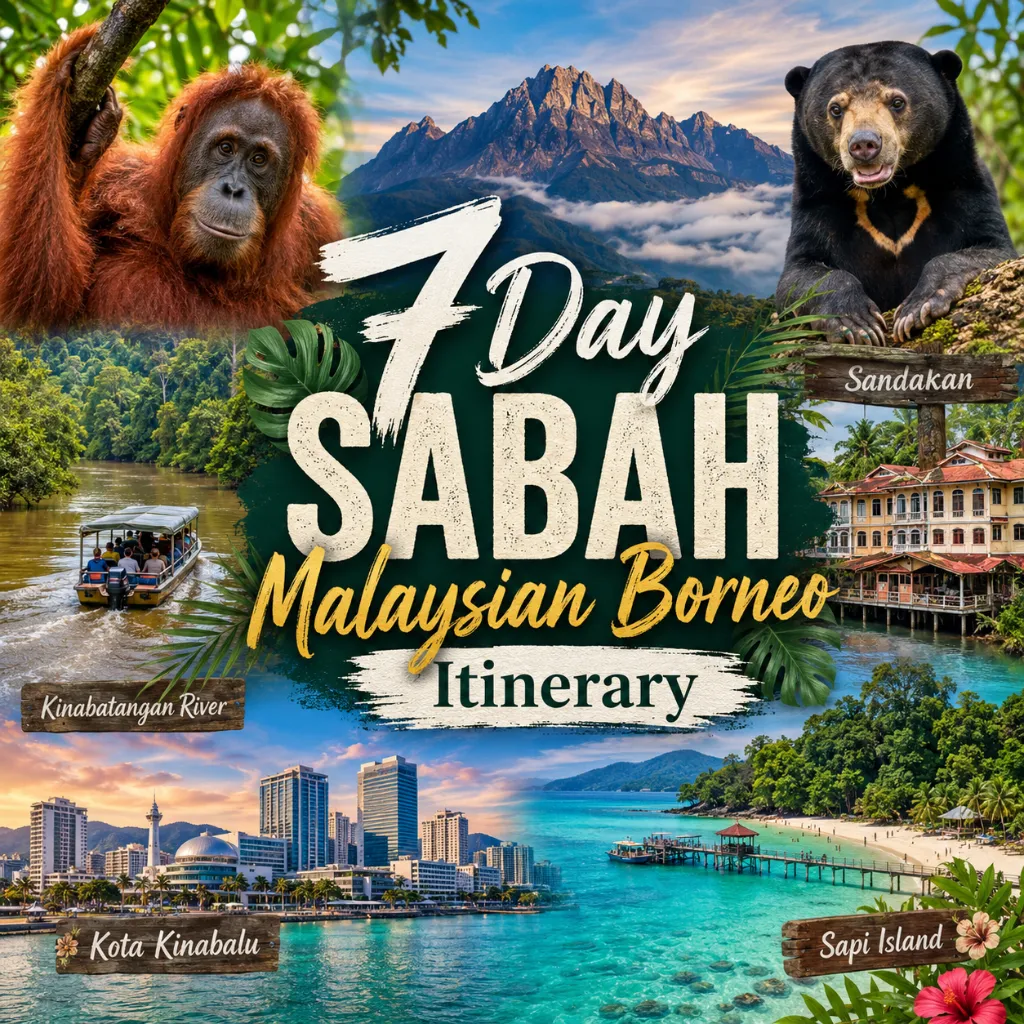
Borneo is one of the few places on earth where you can watch wild orangutans swing through the canopy, climb Southeast Asia’s tallest peak, and cruise past pygmy elephants feeding on the riverbank. And all in a single trip. This Malaysian Borneo itinerary strings together the island’s greatest hits without rushing you through any of them. It’s built for the traveler who wants depth, not just a checklist.
The first orangutan I saw at Sepilok didn’t come down for the fruit platform at all. She stayed forty feet up, working her way through a strangler fig, entirely uninterested in the twenty of us craning our necks below. That’s the thing nobody tells you before you go: Sepilok is not a zoo, and the animals know it. Half the value of the place is in that indifference.
Sabah rewards that same expectation-adjustment everywhere else, too. This is the Malaysian state occupying the northern third of Borneo — mountains, one very long wildlife-choked river, rainforest older than the Amazon, and a coastline of jetty towns where the ferry schedule matters more than the guidebook. It’s also, refreshingly, a place where you don’t need a tour company standing between you and any of it. As an independent traveler all you need is a plan, a sense of the distances involved, and a willingness to occasionally get somewhere three hours behind schedule because the boat driver stopped to point at a hornbill.
This guide covers the classic west-to-east route in reverse: fly into Sandakan, work your way overland to Kota Kinabalu, and fly out. While I do provide a day-by-day itinerary — you know your pace and your budget better than I do — so use it to build an itinerary that suits you. l have also included what things cost as of 2026, how long they actually take, which combinations make geographic sense, and where I’d spend an extra night if I had one to spare.
The Shape of This Malaysian Borneo Itinerary
Sandakan and Kota Kinabalu (universally shortened to “KK”) sit on opposite coasts of Sabah, about 330 km apart by road — a 6 to 7-hour drive, or roughly 50 minutes by air. Flying into one and out of the other is the single smartest routing decision you can make here, because it turns the trip into a straight line instead of a there-and-back. Nearly everything worth seeing on the east side — Sepilok, Labuk Bay, Gomantong, the Kinabatangan River — sits within about two hours of Sandakan. Nearly everything on the west side — Mount Kinabalu, Poring, KK itself, the islands — sits along or near the Sandakan–KK highway. You end up seeing the state, not shuttling back and forth across it.
The one wrinkle: the Kinabatangan River lodges (Sukau and Bilit) sit down a side road off the main highway, and there’s no public transport link from there directly toward Ranau and the mountain. If you’re self-driving, this is a non-issue — it’s about a 3-hour drive from Sukau to Kundasang. If you’re relying on buses, you’ll likely need to loop back toward the main road or arrange a private transfer with your lodge, which nearly all of them will do for a fee. I’ll flag this again when we get to the river.
Before You Fly: Visas, Money, and the Practical Stuff
Do you need a visa for Sabah?
Most nationalities — the US, UK, EU, Australia, New Zealand, Canada, and the ASEAN countries among many others — enter Malaysia visa-free for stays of 30 to 90 days, depending on nationality. India and China currently have their own visa-exempt arrangements (India’s runs through the end of 2026). Whatever your passport, every traveler now has to complete the Malaysia Digital Arrival Card (MDAC) online before landing — it’s free, takes about five minutes, and immigration will ask for it. You can apply for the MDAC online at https://imigresen-online.imi.gov.my/mdac/main
Sabah has its own immigration control, separate from Peninsular Malaysia. If you’re arriving from Kuala Lumpur or anywhere else in the peninsula, you’ll clear a second immigration checkpoint on landing in Sandakan or KK and get a fresh entry stamp specific to Sabah, sometimes with a different permitted stay length than your Peninsular one. It’s a five-minute formality, not a real hurdle, but worth knowing about so it doesn’t catch you off guard. Read more about entry to Sabah at https://sabahguide.com/laws/sabah-immigration/
Best time to visit Sabah
Sabah doesn’t have a dramatic wet-versus-dry split the way some tropical destinations do, but there is a real pattern. March through September is the more reliable window for hiking, canopy walks, and clear mountain views — Kota Kinabalu’s driest months are February through April, and Mount Kinabalu climbs are generally clearest March to September. The northeast monsoon (roughly November through February) brings the heaviest rain, particularly to the east coast around Sandakan, and can occasionally affect summit conditions on Kinabalu.
Here’s the part that surprises people: the Kinabatangan River doesn’t follow the same rulebook. Wildlife along the riverbanks is often just as good — sometimes better — during the wetter months, because rising water pushes animals out of the flooded interior forest and onto the accessible fringes you can see from a boat. If your priority is orangutans and pygmy elephants rather than dry hiking trails, don’t rule out October through February on the east coast.
Temperatures barely move year-round: expect 24–33°C (75–91°F) at sea level, cooler and genuinely chilly at Kinabalu Park’s 1,500m elevation, where a light jacket earns its space in your bag. Humidity is a constant regardless of season — budget for it mentally as much as you budget for it in litres of water.
Money, SIM cards, and daily budget
Malaysia runs on the Ringgit (RM/MYR), roughly 4.2 to the US dollar as of mid-2026, though check a current rate before you go. Cash still rules at the wildlife centres — Sepilok’s ticket counter is cash-only, and there’s no ATM on site, so stock up in Sandakan or at the airport first. ATMs are otherwise easy to find in Sandakan and KK; most major Malaysian banks don’t charge foreign withdrawal fees, though your home bank might.
For data, a local SIM or eSIM from CelcomDigi or Hotlink gives the most reliable coverage once you’re off the main coastal roads and into Sepilok, Kinabatangan, or Kinabalu Park — Sabah’s rural signal is genuinely patchy compared to Peninsular Malaysia, and it’s the network you choose, not the plan size, that determines whether you have bars at all in Bilit. Buy at the airport on arrival; physical SIMs now require passport registration on the spot, which takes about fifteen minutes.
For a rough daily budget as an independent traveler: a basic guesthouse room runs RM60–120, a full local meal RM10–20, and a mid-range river lodge package (all-inclusive, shared guide) lands somewhere between RM500 and RM900 for two nights. The wildlife centre entrance fees are individually modest — RM30 here, RM60 there — but they add up fast if you’re hitting four or five of them a day, so budget RM150–250 per person just for entrance tickets across a full Sepilok–Labuk Bay day. Check our Malaysia travel costs page for up to date costs and hidden travel fees you need to be aware of.
Getting around: self-drive, private transfer, or tours
Self-driving is genuinely the most flexible option in Sabah, and one-way rentals between Sandakan and Kota Kinabalu are common enough that several local companies (not just the international brands) offer them without a hefty drop fee. Roads on the main Sandakan–Ranau–KK highway are sealed and reasonably well maintained; you’ll want to take a bit more care and opt for a higher-clearance vehicle if you’re detouring to anything unpaved.
If you’d rather not drive, a private driver-guide for the whole route is the next-best thing for independence without the logistics headache — you’re not locked into a group’s pace, but someone else deals with the roads. Budget-minded travelers can link the trip together with a mix of shared shuttles (most Sepilok-area lodges run scheduled vans to and from Sandakan for a small fee), the Sida Express bus between Sandakan and KK (roughly RM50–65, 7–8 hours), and lodge-arranged transfers for the Kinabatangan leg. You can book bus tickets to all destinations between Sandakan and Kota Kinabalu at this link.
Straight tour packages exist for every stop in this guide and remove all the planning, but they also remove the flexibility that makes this kind of trip worth doing independently in the first place — my honest take is to do what I did with my travel companions. Book guided packages for Kinabatangan river wildlife tours and any Mount Kinabalu Park climb. Both are unable to be achieved genuinely withoiut an experienced guide anyway. And then go it alone everywhere else.
A note on safety
Sandakan, Sepilok, and the Kinabatangan River are mainland destinations with a normal, unremarkable safety profile — busy market towns and eco-lodges, not conflict zones. It’s worth knowing, though, that Sabah’s easternmost coast and offshore islands (particularly around Semporna, which isn’t part of this route) have carried elevated government travel advisories for over a decade, stemming from cross-border kidnapping incidents linked to militant groups based in the southern Philippines.
There have been no such incidents recorded since January 2020, and some governments revised their advisories for the Sabah mainland in 2026 to reflect that record, while maintaining more caution around the outer islands specifically. None of that affects the Sandakan–Kinabatangan–Kinabalu–KK route in this guide, but if you’re tempted to extend toward Semporna or Sipadan, check your own government’s current advisory before booking — it changes periodically and is worth five minutes of your time.
Sandakan: Your Arrival Point (and Worth an Afternoon)
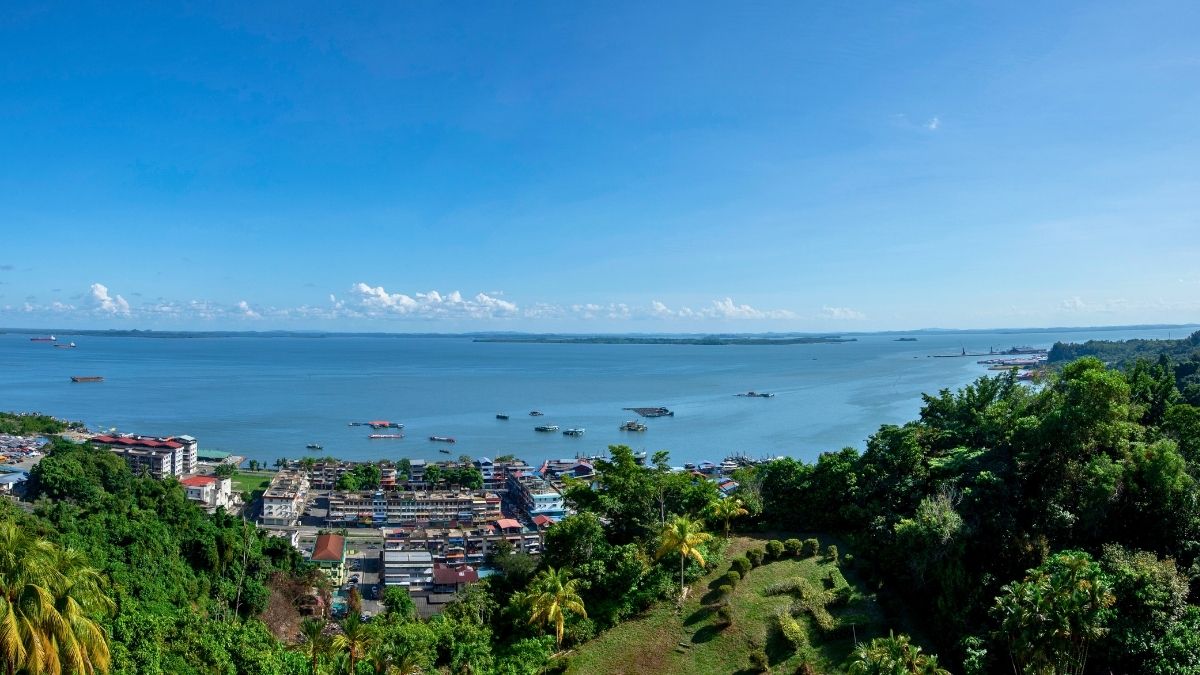
Most visitors treat Sandakan as a layover between the airport and Sepilok, which shortchanges a town with a genuinely heavy history. This was the capital of British North Borneo until it was flattened in WWII, and the scars are still legible if you look for them.
The Agnes Keith House sits atop a hill via a set of roughly a hundred steps, the restored colonial home of the American writer Agnes Newton Keith, whose books about pre-war Sandakan life are still the most vivid English-language account of the place. The adjoining English Tea House does a decent scone if you’ve earned it climbing up.
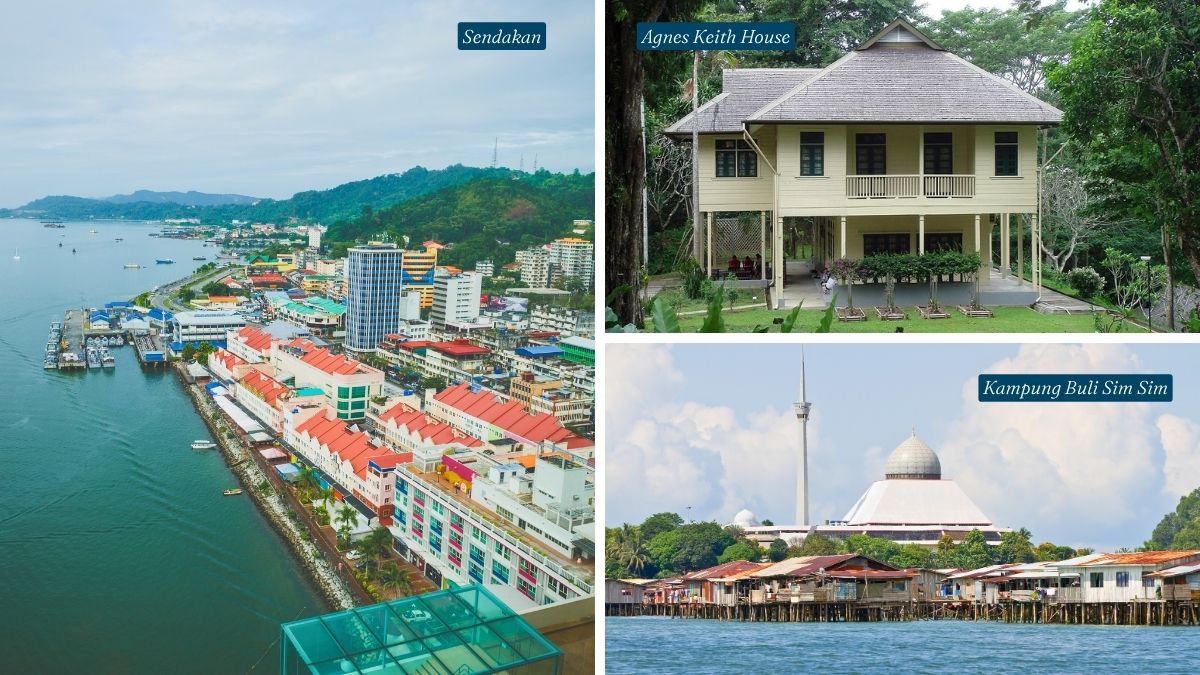
Sandakan Memorial Park, built on the site of the former POW camp, commemorates the Sandakan Death Marches — one of the war’s grimmer chapters, in which Australian and British prisoners were forced on brutal marches to Ranau; almost none survived. It’s a quiet, well-kept park rather than a heavy museum experience, and worth thirty reflective minutes.
Beyond the history, Sandakan’s Central Market is one of the best fish markets in Sabah, and the town is genuinely known — locally, not just in tourist copy — for its seafood and its Cantonese-influenced noodle dishes. If you’re staying in town rather than immediately decamping to Sepilok, eat well here; you won’t find this quality of hawker food again until KK.
If you have an extra night: consider a side trip to Turtle Islands Park (Pulau Selingan), about an hour by boat from Sandakan. Access is overnight-only and permits are limited, so it needs booking ahead through a licensed operator — but it’s one of the only places in the world where you can watch a green or hawksbill turtle nest and hatchlings released into the sea on the same night, generally best between roughly March and October.
The Sepilok Cluster: Three Reserves, One Road
Sepilok sits about 25 km (a 30–40 minute taxi or Grab ride) from Sandakan, and it’s really three separate attractions sharing a driveway. You can walk between all three, which makes a full day here easy to arrange without a tour.
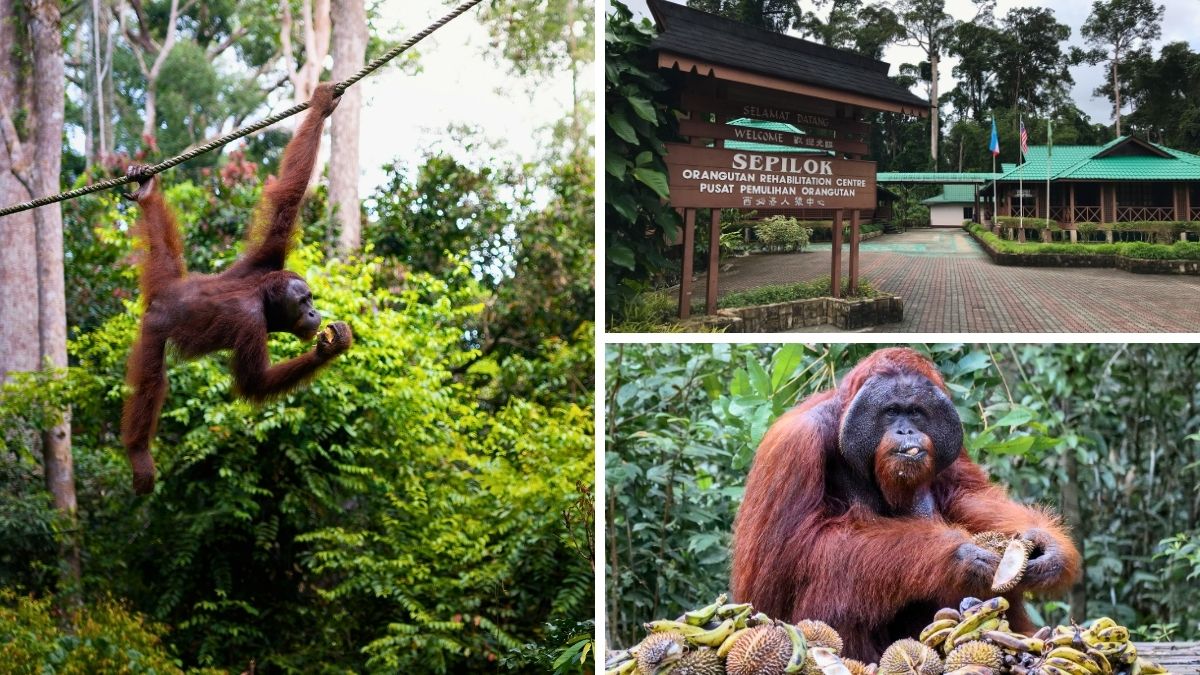
Sepilok Orangutan Rehabilitation Centre
Entry: RM30 for foreign adults, RM5 for Malaysians, plus RM10 if you’re bringing a camera (phones are exempt). One ticket covers the whole day.
Hours: Generally 9:00am–12:00pm and 2:00pm–4:00pm (closed midday), with slight seasonal variation.
Feeding times: The main platform feeds at 10:00am and 3:00pm; there’s also an earlier, closer viewing at the outdoor nursery around 9:30am and 2:30pm, worth prioritizing if you’re traveling with kids who want a nearer view of the younger orangutans.
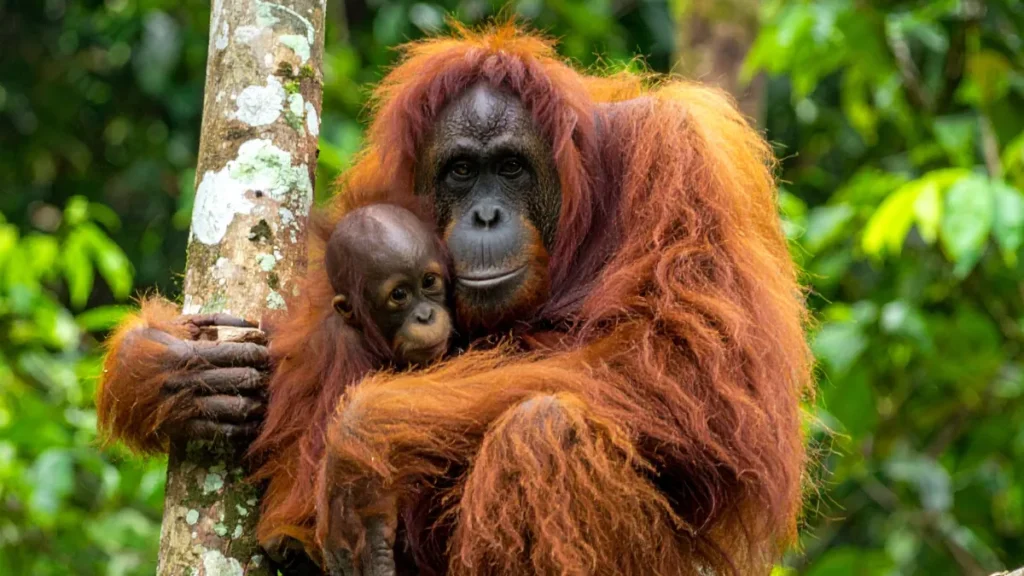
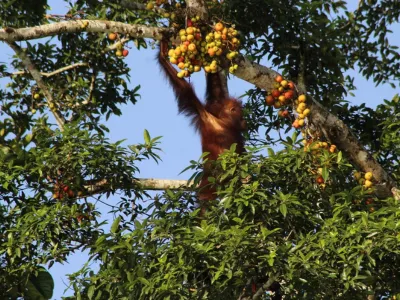
Founded in 1964, this is the world’s first and largest orangutan rehabilitation centre, spread across 4,300 hectares of forest reserve. Sixty to eighty semi-wild orangutans roam free here, alongside a nursery of roughly twenty-five younger, still-dependent animals. Feeding is deliberately not guaranteed — the fruit on the platform is supplementary, and the whole point of the programme is that these animals should prefer foraging over showing up for bananas. Some visits you’ll see six orangutans at close range; others you’ll see one distant silhouette and a lot of very entertaining macaques instead. Arrive 20–30 minutes before a feeding time to get a spot on the platform, and don’t wear bright colors — it draws curious attention you don’t want.
Bornean Sun Bear Conservation Centre
Entry: RM50 for foreign adults, RM25 for children; RM10/RM5 for Malaysians.
Hours: 9:00am–3:30pm daily, with no midday closure — useful if you want to fill the orangutan centre’s lunchtime gap.
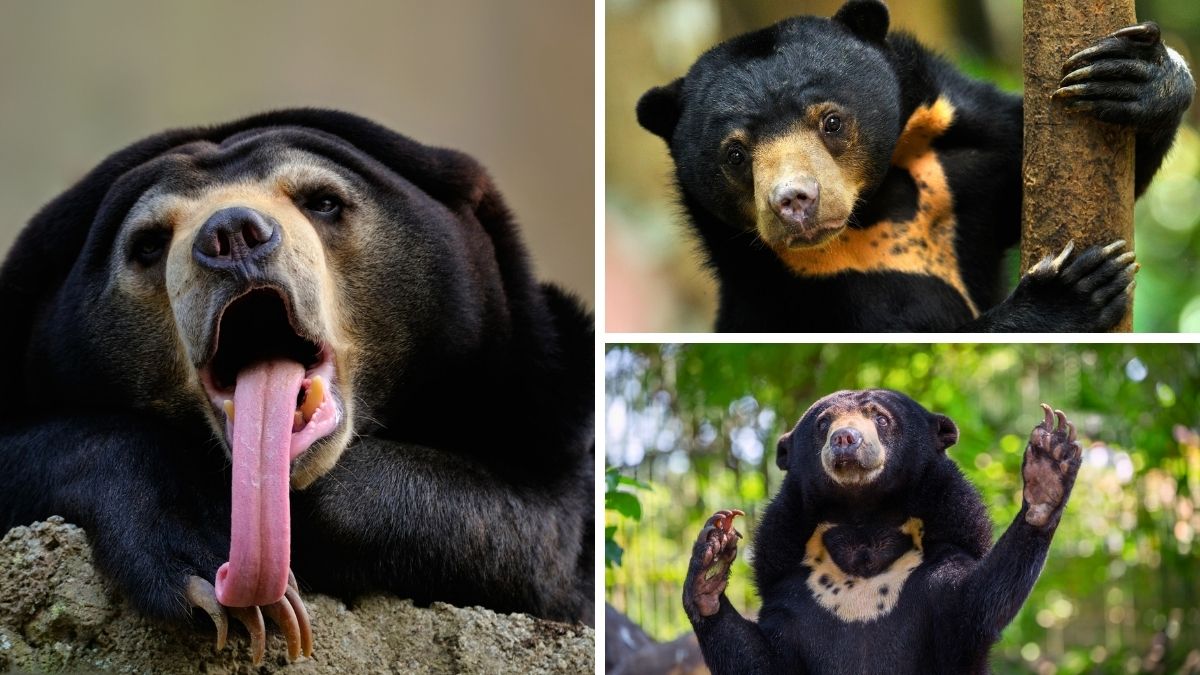
Directly opposite the orangutan centre’s entrance, this is the world’s only dedicated sanctuary for the sun bear, the smallest bear species on earth and one of the least studied. It’s smaller and more information-board-driven than Sepilok — visit for about an hour — but the enclosures are genuinely spacious, and because feeding here isn’t scheduled the way it is next door, sightings feel less staged. Given its private, non-government funding, the higher entry fee goes directly to bear care rather than general park administration, which is worth knowing if the price difference from the orangutan centre gives you pause.
Rainforest Discovery Centre
Entry: RM30 for foreign adults, RM7 for Malaysians (children roughly half).
Hours: 8:00am–5:00pm for the ticket counter; trails stay open until around 7–8pm. A guided night walk (6:00–8:00pm) runs for an additional RM30–50 per person and must be booked at the counter by mid-afternoon.
This is the one people skip and shouldn’t. The RDC’s canopy walkway — 347 metres long, rising 25 metres above the forest floor — gives you the treetop perspective that Poring’s equivalent walkway (more on that later) currently can’t, since Poring’s has been closed for maintenance since mid-2025. RDC is also one of the best birdwatching sites in Southeast Asia; if you’re even mildly curious about birds, the night walk is worth the extra ringgit for a shot at giant red flying squirrels gliding between trees, something you won’t see on any daytime visit anywhere in Sabah.
Labuk Bay Proboscis Monkey Sanctuary
Entry: RM60 for foreign adults, RM30 for children; RM10 camera fee.
Feeding times: Platform A at 9:30am and 2:30pm; Platform B at 11:30am and 4:30pm.
Getting there: About 40 minutes from Sepilok/Sandakan by taxi or Grab; there’s no reliable public bus. Some lodges run a shuttle timed to the 11:30am Platform B feeding.
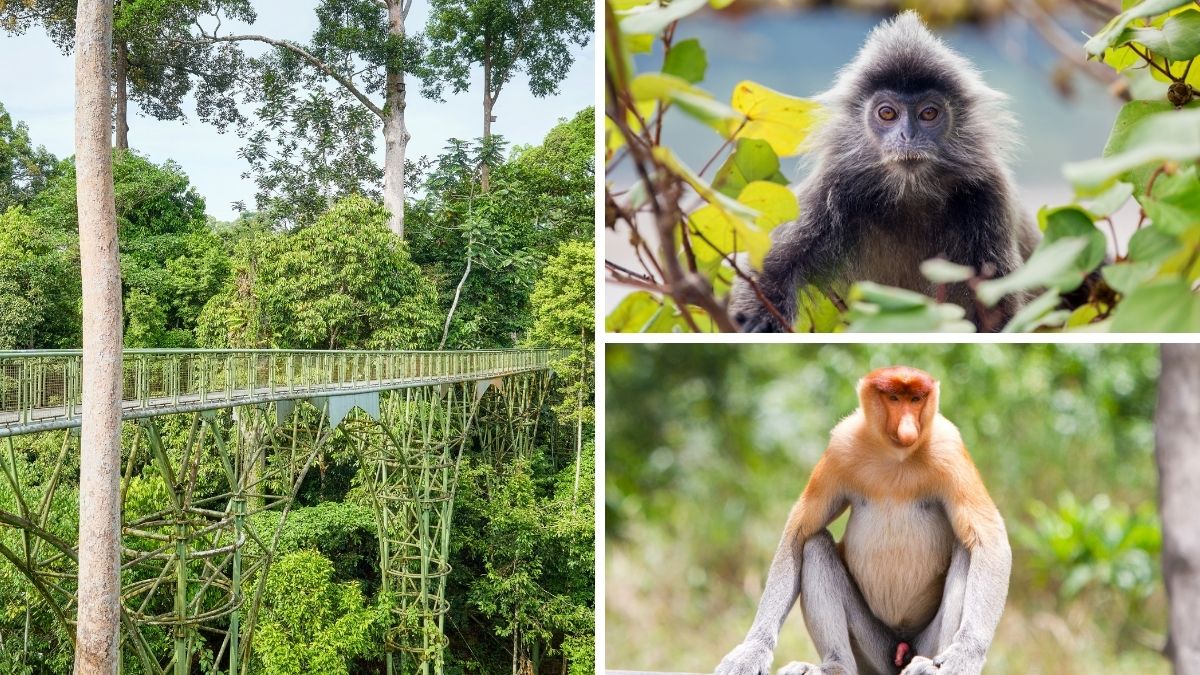
Rainforest Discovery Centre and Labuk Bay Proboscis Monkey Sanctuary
This pocket of mangrove forest was scheduled for destruction and redevelopment as a palm oil plantation, however it had a repreave when the owner discovered a resident population of proboscis monkeys — Borneo’s most improbable-looking primate, all pendulous nose and pot belly, found nowhere else on earth. The inital peice of land was saved and since then has been added to, growing the sanctury size and giving hope for the future of these incredible monkeys.
When you visit you will note the setup is more commercial than Sepilok (there’s a restaurant, video presentations, and a gift shop), and the monkeys are noticeably more habituated to people than the wild ones you might glimpse from a Kinabatangan boat. That’s not necessarily a bad trade — it’s the most reliable up-close proboscis monkey sighting in Sabah, and you’ll likely also spot silvered leaf monkeys and oriental pied hornbills around the platforms. The good news is that the treatment and interactions with the animals is ethical and Labuk Bay is giving these animals a future. If you only have time for one feeding, aim for Platform A’s 9:30am session; it tends to be less crowded than the afternoon slots.
Gomantong Caves
Entry: RM30, plus RM10 for a camera.
Hours: 8:00am–6:00pm daily.
Getting there: About 1.5–2 hours from Sandakan by road, and usually visited as a stop en route to the Kinabatangan River rather than a dedicated day trip — check with your driver or lodge about combining it with your transfer to Sukau or Bilit.
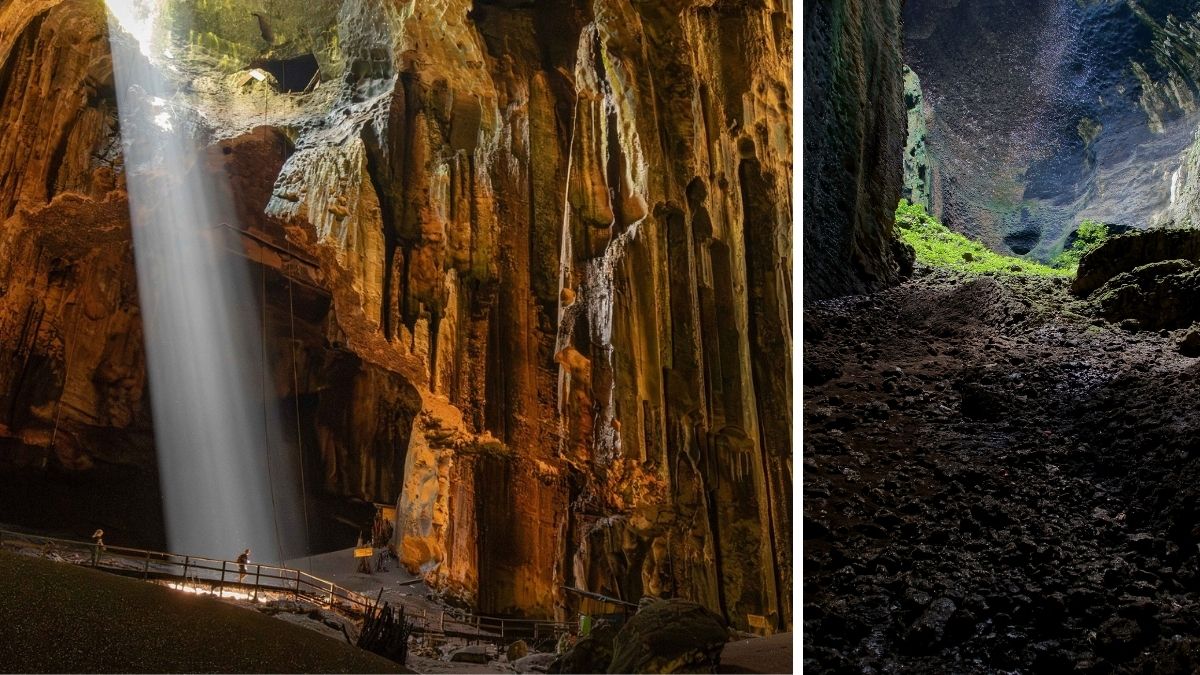
Nothing else on this list smells the way Gomantong does, and I mean that as a genuine warning rather than colorful commentary: the ammonia reek of accumulated guano hits you before the cave entrance does. What’s inside is worth it regardless — a limestone cavern with a ceiling reaching roughly 90 metres, home to over a million bats and swiftlets whose nests are harvested twice a year (roughly February–April and July–September) by licensed collectors scaling rattan ladders for the raw material of bird’s nest soup, a practice regulated here since 1925. The floor is genuinely carpeted in cockroaches feeding on the guano — wear closed shoes, not sandals, and skip this one if you’re squeamish about insects, because there’s no way to avoid them on the boardwalk.
The real spectacle happens outside, around 5:00–6:00pm: the mass exodus of bats leaving to feed for the night crosses paths with the swiftlets returning to roost, and serpent eagles and bat hawks show up to pick off stragglers mid-air. If your schedule allows any flexibility, arrive by 4:00pm, do the cave first, and time your exit for this. Keep an eye on the forest around the access road, too — wild orangutans are regularly spotted here.
The Kinabatangan River: Sabah’s Wildlife Highway
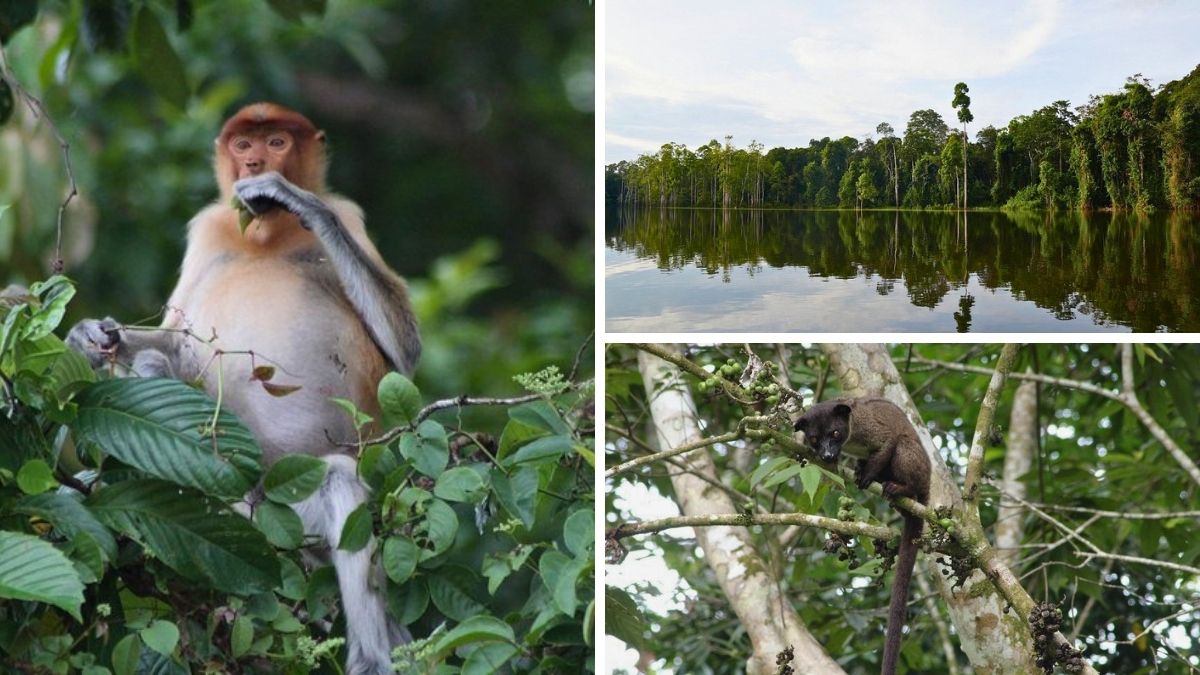
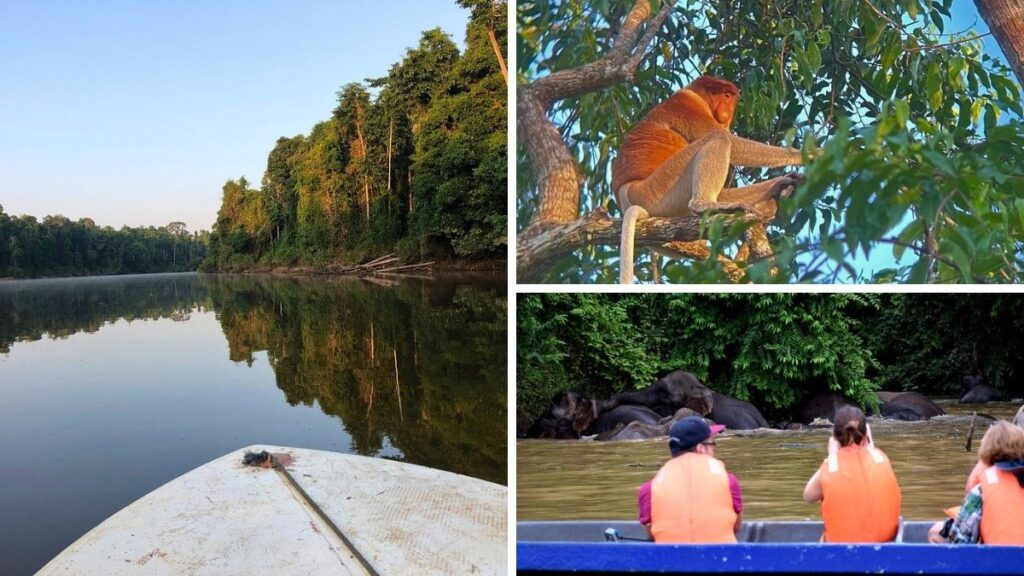
At 560 km, the Kinabatangan is Sabah’s longest river and the spine of its best wildlife-watching. Decades of plantation clearance around it have squeezed the region’s wildlife into the surviving riverine forest corridor, which sounds like an ecological tragedy (and of course in the main, it is) and also explains why sightings from a boat here are so consistently dense — the river is, quite literally, the last through-road for the animals that travel along it.
Choosing Sukau or Bilit
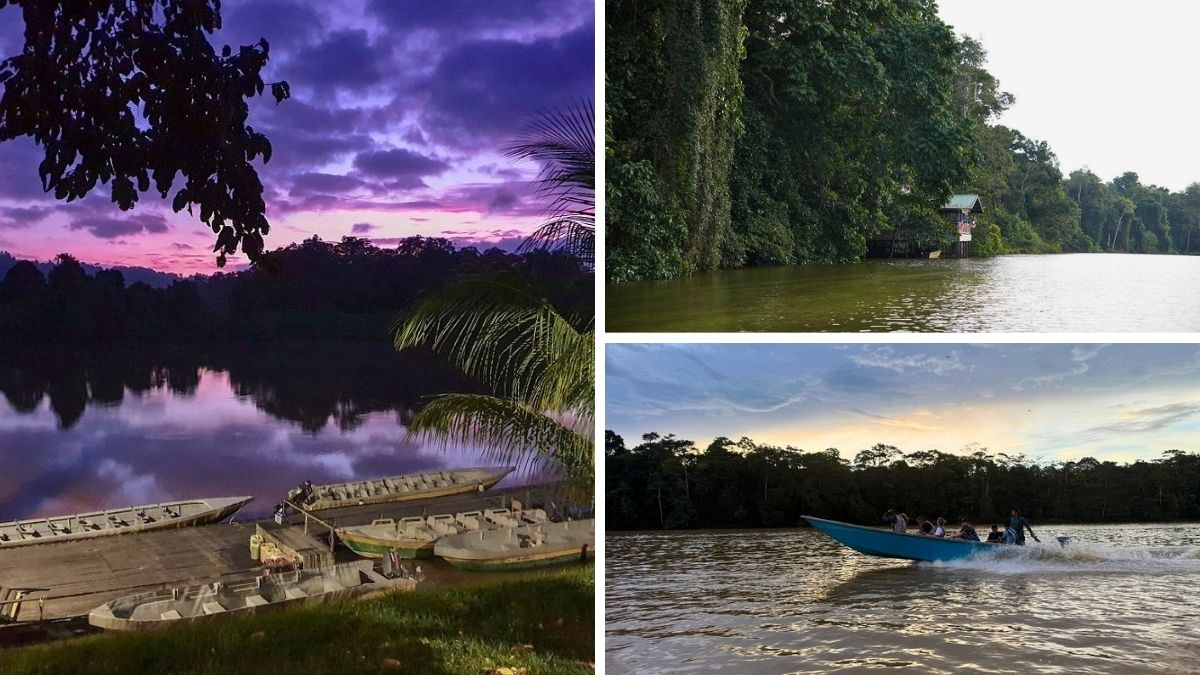
Both are small riverside villages roughly 2.5 hours from Sandakan by road (Sukau slightly further at around 110 km, Bilit around 104 km), each with a cluster of lodges ranging from homestay-basic to genuinely comfortable eco-lodges. Neither is objectively “better” — pick based on which lodge fits your budget, since the wildlife-viewing stretch of river is largely shared. Most lodges aren’t on Booking.com; so I have added some favorites of mine below. Or you can search directly on Google Maps, making sure to add either “Sukau” or “Bilit” and then check the individual lodge websites. I stayed at the Sukau Rainforest Lodge and can highly recommend it.
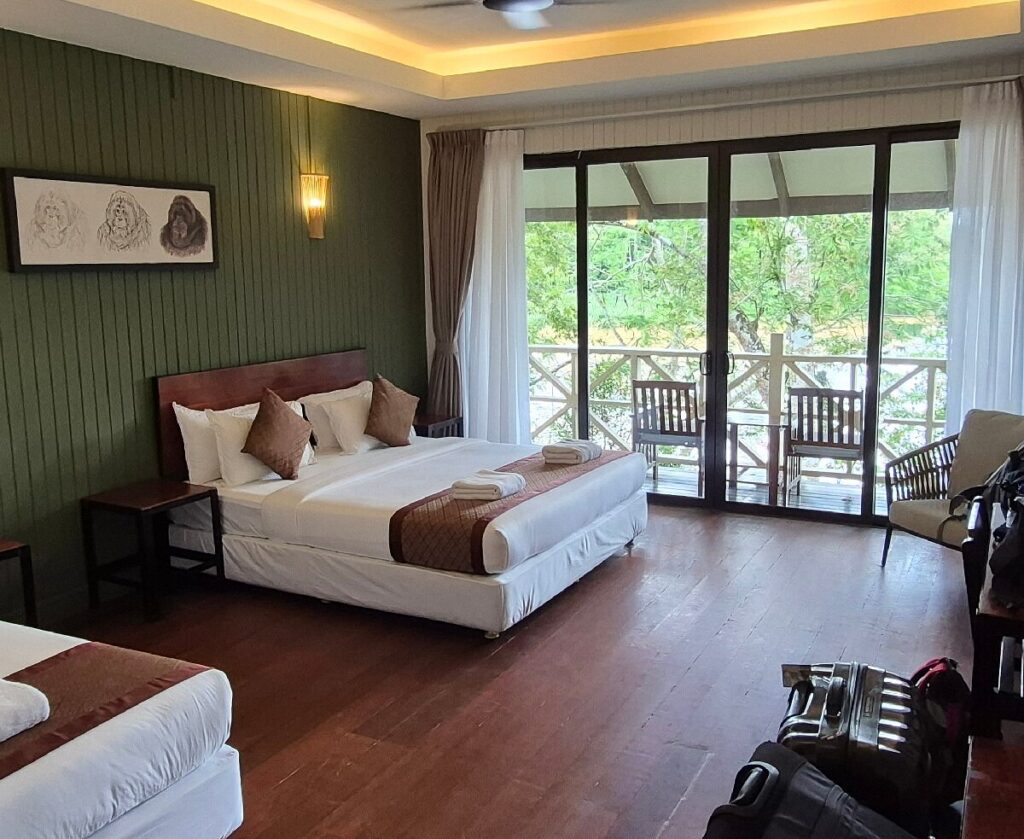
Hornbill Lodge
A newly renovated eco lodge on a quiet bend of the Kinabatangan River. The lodge specialises in nature focused trips, aiming to maximise wildlife spotting opportunities up and down the river, while providing comfortable, yet value for money, accommodations to visiting travellers.
Accommodation consists of chalets or dorms. Each river chalet and dormitory comes with it’s own river-facing balcony, offering you a peaceful space to enjoy the river view between cruises. All river chalets and dormitories have modern, ensuite Western-style bathroom facilities with hot water showers.
The rooms are nestled amongst the trees and connected to a large dining area and river-facing deck via covered wooden walkways.
3 Days 2 Nights Package Includes:
– 4 river cruises (2 morning, 2 dusk)
– 2 night walks
– 1 daytime jungle walk
– Accommodation
– All Meals
– Tea, coffee & water
– Return transfers to Sandakan/Sepilok on scheduled basis
– Nature guide on join-in basis
– 8% SST
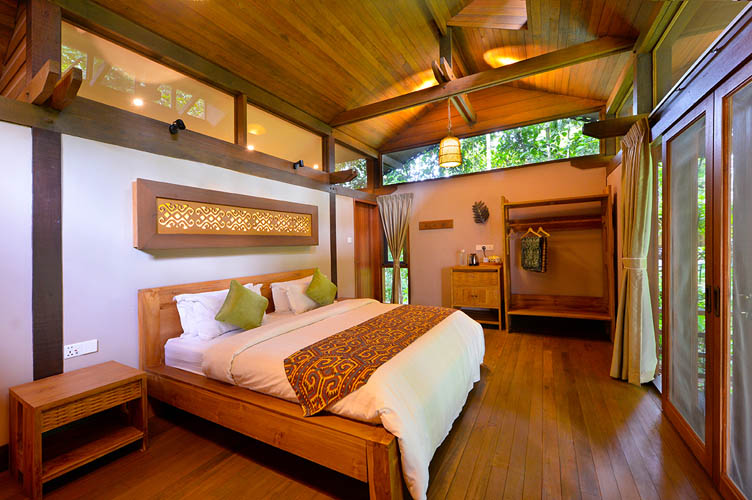
Sukau Rainforest Lodge
Award-winning Sukau Rainforest Lodge is nestled along the banks of the Kinabatangan River, one of Borneo’s most important waterways and a haven for its magnificent wildlife.
The lodge has recently undergone redevelopment and now bosats 20 brand-new villas alongside 20 Superior Rooms. What better way to experience Borneo’s rainforest and wildlife than from inside your own villa in the heart of Borneo? The lodge hold the Boutique Hotel Award for Asia’s Most Eco-Friendly Hotel.
3 days 2 Nights Package
Your chance to encounter the Borneo’s Big 5 wildlife! Includes:
– 3 River Cruises (1 morning, 2 dusk)
– Sepilok Orangutan Rehabilitation Centre included
– 1 daytime Jungle walk
– Accommodation
– All meals
– Tea, coffee, water
– English-speaking guide
– This tour package rates include pick-up and drop-off from Sandakan Airport or hotels in Sandakan Town
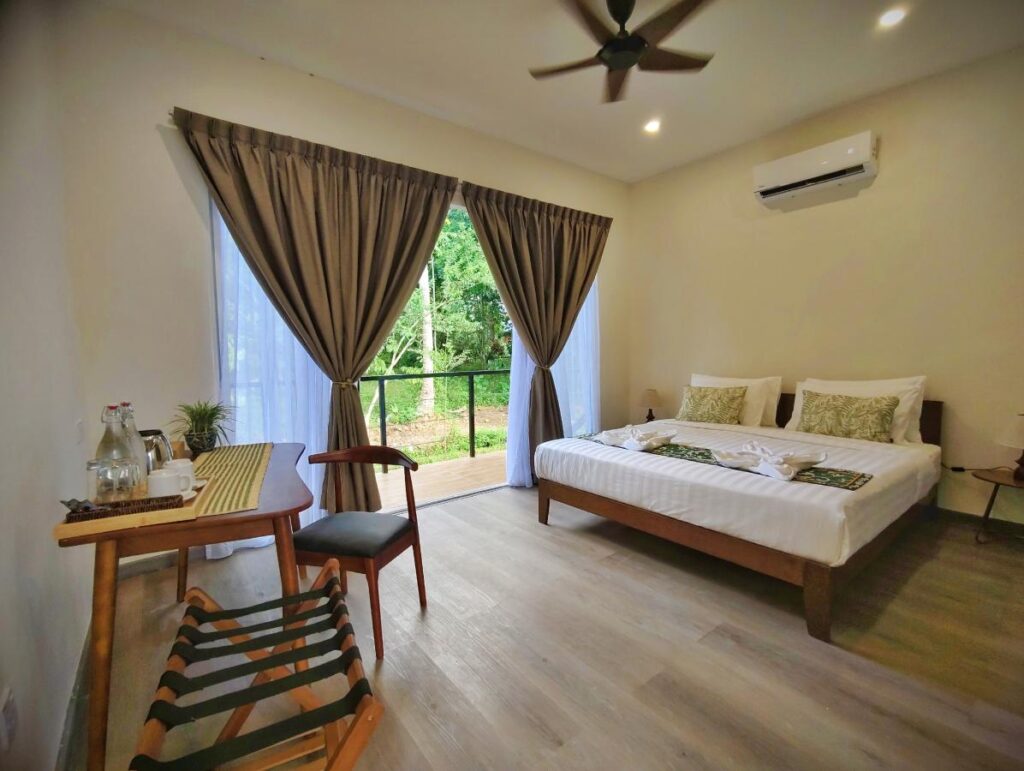
Borneo Nature Lodge 2
Borneo Nature Lodge 2 in Kinabatangan features family chalets with air conditioning, balconies, and private bathrooms. All chalets offer garden views, work desks, and free toiletries.
The modern restaurant serves local, Asian, and international dishes, including halal options. Breakfast features local specialties and fresh fruit. The lodge offers free WiFi, a bar, and a coffee shop.
3 Days 2 Nights Package Includes:
– 3 river cruises (1 morning, 2 dusk)
– 1 daytime jungle walk
– Accommodation
– All meals
– Tea, coffee, water
– A complimentary airport shuttle – Sandakan Airport
What a river package actually includes
Nearly everyone visiting Sukau or Bilit books a package rather than piecing it together, mostly because there’s no independent way to reach the river villages without a car or a hired driver. A typical 2 Day 1 Night package runs somewhere between RM400 and RM900 per person on a shared, join-in basis, and generally includes:
- Round-trip transport from Sandakan
- Two river cruises (late afternoon day 1, early morning day 2)
- a night walk
- a day walk
- All meals
- A shared guide and boat
The formula across lodges is consistent: cruise at golden hour, when animals come down to the water to drink and feed. On a good outing you might see orangutans, pygmy elephants, proboscis monkeys, saltwater crocodiles, and several of Borneo’s eight hornbill species — collectively nicknamed the “Big Five” of the Kinabatangan, though seeing all five in one visit is genuinely more luck than method. If you’re staying independently and just want a cruise without the full package, expect to pay roughly RM50–100 per person directly with a lodge.
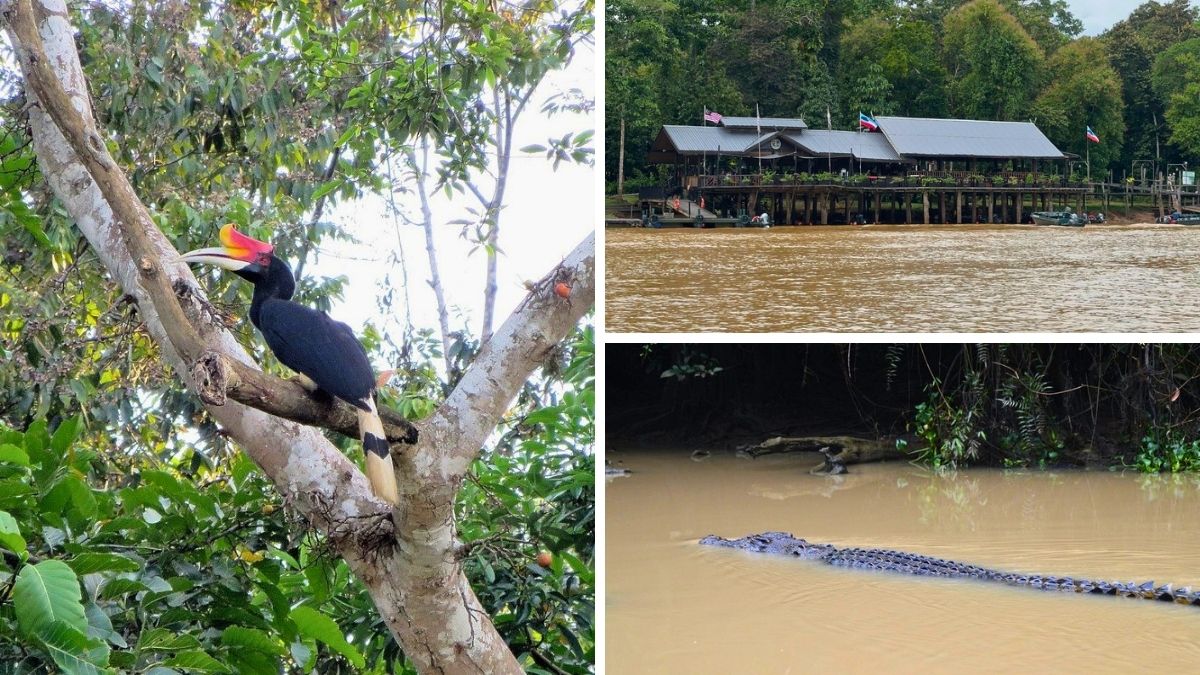
The onward logistics gap: this is the one place in the whole route where public transport genuinely breaks down. There’s no direct bus or shared van from Sukau or Bilit toward Ranau, Kundasang, or Kinabalu Park — you’re looking at either a private transfer (arrange with your lodge in advance; expect to pay for a dedicated vehicle) or backtracking to Sandakan and picking up the KK-bound bus or a flight from there. If you’re self-driving, none of this applies — it’s a straightforward 3-hour, roughly 230 km drive from Sukau to the Kundasang area.
If you want more: Danum Valley and Maliau Basin
If two extra days and a real appetite for deep rainforest are on the table, Danum Valley Conservation Area, accessed via Lahad Datu (itself a few hours from the Kinabatangan area), is Sabah’s most pristine lowland dipterocarp forest and genuinely improves your odds of a wild orangutan or clouded leopard sighting over the Kinabatangan. The catch is cost: the luxury Borneo Rainforest Lodge runs upwards of $700–800 a night, and most tour-agency packages aren’t much cheaper. The workaround independent travelers use is booking directly with the Danum Valley Field Centre office in Lahad Datu — basic, dorm-style accommodation with meals and guided walks included, for roughly RM1,000–1,200 per person across a 3–4 day stay. It requires more legwork to arrange (email or call ahead; walk-ins aren’t guaranteed a spot) but it’s the same forest and the same wildlife at a third of the price.
Maliau Basin, sometimes called Sabah’s “Lost World” for its isolated, crater-like topography, is wilder still and genuinely remote — this is one for travelers with flexible schedules and a taste for logistics puzzles, best arranged through a specialist operator rather than attempted cold. I’d only add it to a longer trip, not this route.
The Road to the Mountain: Telupid, Kundasang, and the Roof of Borneo
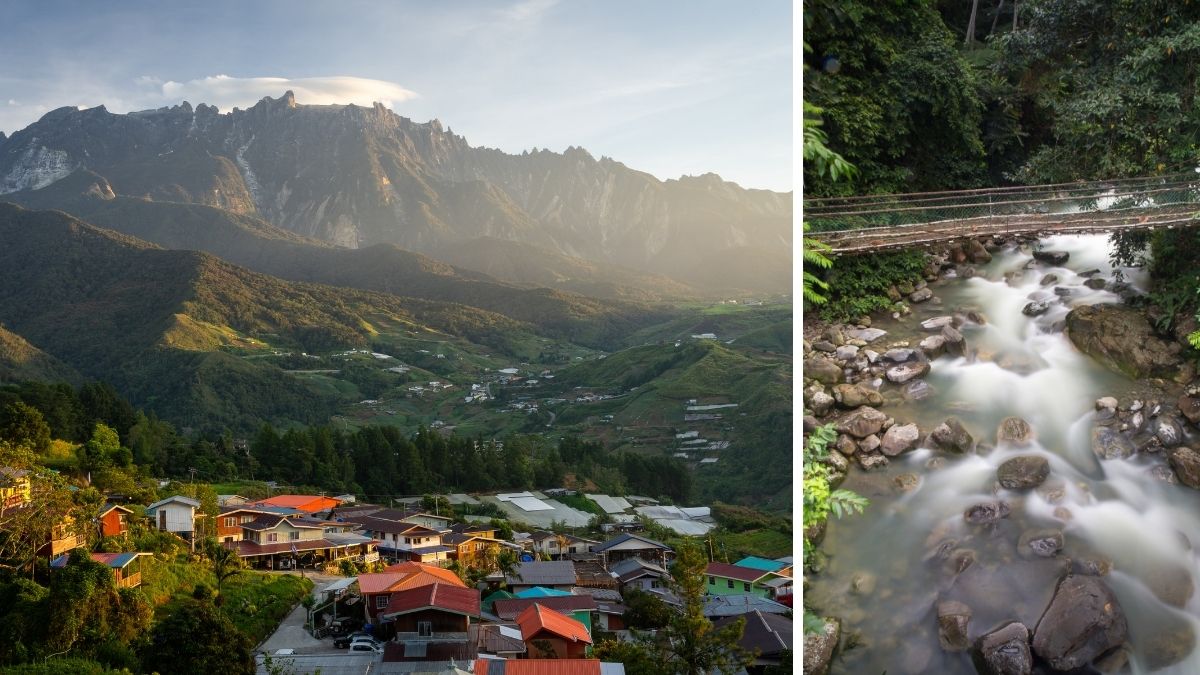
The drive from the Kinabatangan area to Kinabalu Park runs through Telupid and climbs steadily into cooler highland air — a genuinely pleasant change after days of coastal humidity. Kundasang, the small town just below Kinabalu Park, is worth a slow-down rather than a straight drive-through.
The Kundasang War Memorial, a series of English, Australian, and Borneo-themed gardens, commemorates the same Sandakan Death Marches you’ll have already encountered at Sandakan Memorial Park — Kundasang and Ranau were the marches’ brutal endpoint, which gives the connection between the two memorials real weight if you visit both. Nearby, the Desa Cattle Dairy Farm, with its rolling green hills and (weather permitting) backdrop views of Mount Kinabalu, has become a minor social-media pilgrimage site; it’s genuinely pretty and worth twenty minutes if you’re passing, without needing to build a special trip around it. Roadside stalls throughout Kundasang sell some of Sabah’s best produce — this is highland-grown territory, so look out for strawberries, passionfruit, and Sabah tea.
Kinabalu Park and Poring Hot Springs
Kinabalu Park Headquarters
Entry: Reported figures range from RM10 (Malaysian) up to RM50 for foreigners, with some 2024–2026 reporting that the foreigner fee has been waived or restructured — the rates are genuinely inconsistent across sources right now, so confirm current pricing directly with Sabah Parks before you go. The Botanical Garden carries a small separate fee (roughly RM4–5) and runs a guided walk once daily, usually around midday.
Elevation: 1,563m — noticeably cooler than the coast, so bring a light jacket. You can check the current pricing for entry at https://www.sabahparks.org.my/kinabalu-park.
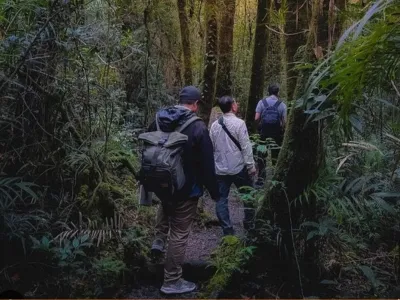
You do not need to summit Mount Kinabalu to justify a visit to the park. Headquarters sits at the entrance to a genuinely rewarding day of its own: the Botanical Garden’s guided walk is the single best introduction to Borneo’s high-altitude flora you’ll find anywhere, packed with pitcher plants, wild orchids, and rhododendrons found nowhere else. The Silau Silau Trail follows a clear mountain stream through montane forest and is an easy 40-minute loop with solid birdwatching odds. If you’re very lucky and visiting in the right window, you might catch a blooming Rafflesia — the world’s largest flower, up to a metre across, blooming unpredictably and only for three to five days at a time. There’s no way to plan around it; ask at the park office whether anything’s currently in bloom, since staff generally know.
Climbing Mount Kinabalu (and the Via Ferrata)
This deserves its own section because it’s genuinely a different kind of undertaking than everything else in this guide — a two-day, one-night ascent of Southeast Asia’s tallest mountain outside the Himalayas, and one of the more expensive short hikes you’ll ever do.
The basics: the climb permit alone runs RM100 for Malaysians and RM400 (roughly $85) for foreigners, but that’s genuinely the smallest line item. You cannot climb without booking a bed at Panalaban base camp first — Laban Rata Resthouse, the newer Panalaban hostels, or the via ferrata-exclusive Pendant Hut — because a bed reservation is what secures your mandatory licensed guide and your permit slot. There is no way around this system, and no same-day or unguided climbing. Full packages, including guide, permit, park fees, accommodation, and meals, generally run from roughly RM1,500 for a shared/budget climb up to several thousand ringgit for private or via ferrata packages.
The catch that trips people up: only 163 climbers are permitted per day, for conservation reasons, and tour operators buy up availability many months — sometimes a year — in advance and resell it as packages at a markup. If you’re hoping to book two or three weeks out during peak season (roughly March through September, and any school holiday period), you may simply find nothing available. Book three to four months ahead at minimum; six or more for peak dates.
The climb itself: 17.4 km round trip from Timpohon Gate, split across two days — a 4–6 hour ascent to Laban Rata on day one, then a pre-dawn 5–8 hour summit push and full descent on day two. It’s rated hard less because of technical difficulty (it’s mostly stairs) and more because of the altitude — 2,200m of total elevation gain will slow almost anyone down, regardless of fitness level.
The via ferrata: Mountain Torq operates the world’s highest via ferrata here, at 3,776m — a genuinely striking add-on for climbers comfortable with exposure and heights, crossing a suspension bridge at 3,600m and involving four to six hours of cabled rock traverses. It’s technically approachable (the cables do most of the work) but not for anyone with real vertigo. Via ferrata packages run roughly $700–1,800 per person and include a stay at the dedicated Pendant Hut.
If the cost or the booking lead time rules out the summit for your trip, don’t treat that as a loss — the park headquarters area genuinely stands on its own, and I’d rather see someone spend an unhurried day in the Botanical Garden than a rushed, underprepared summit attempt. I spent a very pleasant afternoon doing the Silau Trail and was happy as a clam, although admittedly I never had any intention of scaling Kinabalu’s peak.
Poring Hot Springs
Entry: Roughly RM50 for foreign adults, RM25 for children (Malaysians pay considerably less).
Hours: 8:00am–5:00pm daily; last entry to most attractions around 3:00pm.
Getting there: About 40 km from Kinabalu Park headquarters, roughly 1–1.5 hours by road; a reasonable stop on the way toward or away from KK rather than its own dedicated day.
A quick and important flag: Poring’s celebrated canopy walkway has been closed since July 2025 for maintenance, with no confirmed reopening date as of this writing. If a treetop walkway is the specific reason you’re planning to visit Poring, do the Rainforest Discovery Centre one in Sepilok instead and treat Poring as what it’s genuinely still worth visiting for — the Japanese-built open-air sulphur baths (piped hot spring water into outdoor tubs, plus private indoor tubs for a modest hourly fee), a botanical garden, a butterfly farm, and — with real luck — a chance at spotting a blooming Rafflesia in the private gardens near the entrance. Bring your own reusable bag; as of January 2026, single-use plastic bags are banned across all Sabah Parks properties.
Kota Kinabalu: The City at the End of the Road
After days of jungle and highland air, KK’s waterfront energy is a genuine tonal shift — more city, more traffic, more places to eat well without planning around a feeding schedule.
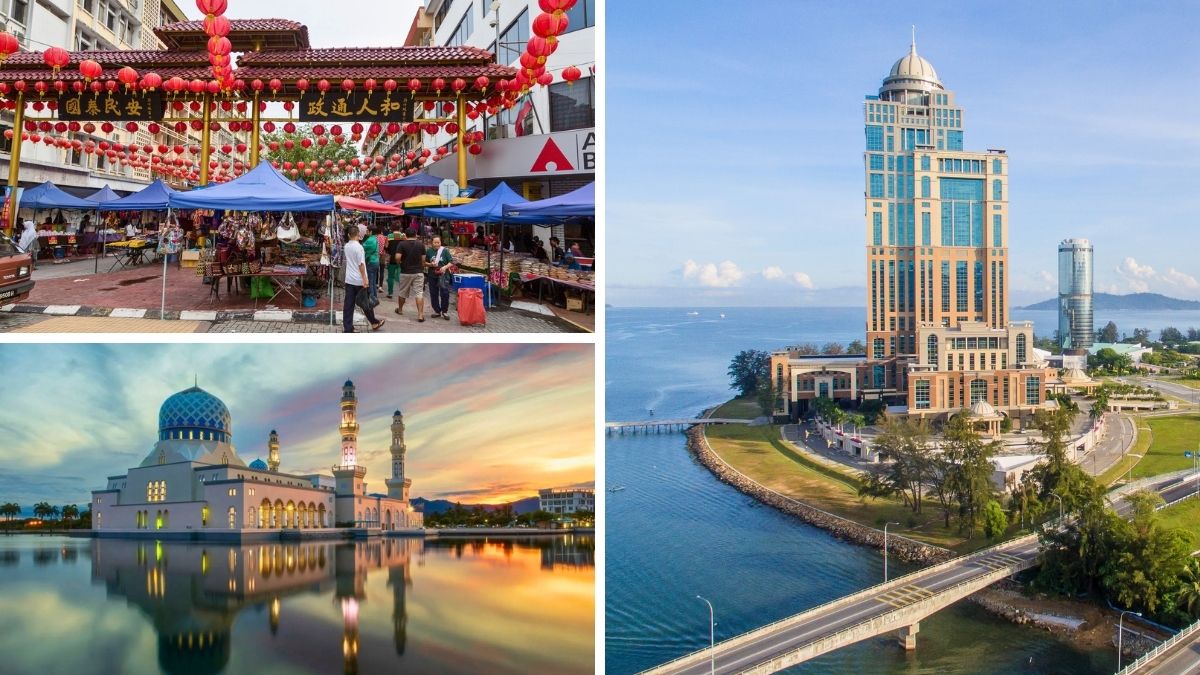
Gaya Street and the Waterfront
Gaya Street Sunday Market runs 6:00am to roughly 1:00pm every Sunday, closing the street to traffic for stalls selling everything from batik and antiques to fresh produce and street food — it’s the single best window into everyday Sabahan life you’ll get in the city, and it’s free to wander. If your dates don’t line up with a Sunday, the KK Waterfront and its Filipino Night Market cover similar ground most other evenings, with fresh seafood grilled to order and a livelier bar scene after dark.
Signal Hill Observatory, a short walk up from the city centre, gives a genuinely good panoramic view over the city and the coastline for the price of the climb — free, and a good sunset spot if the timing works out. Jesselton Point, the historic pier on the northern edge of downtown, is both a pleasant fifteen-minute wander in its own right and your departure point for the islands, which brings us to tomorrow’s plan.
Mari Mari Cultural Village (and a more low-key alternative)
Mari Mari, about an hour outside KK, presents the traditions of five of Sabah’s indigenous groups — Dusun, Rungus, Lundayeh, Bajau, and Murut — through recreated longhouses, demonstrations (fire-starting, blowpipe-making), and a buffet lunch. I’ll be candid: reviews are genuinely split, and some visitors find it feels staged and rushed compared to the wildlife encounters earlier in this trip — which is a fair critique, since it’s a scheduled, guided experience with fixed 10:00am and 2:00pm sessions rather than something you wander through at your own pace. There’s no independent public transport route, so it requires booking a tour package (roughly $60–100 including transfer and lunch) regardless.
If that trade-off doesn’t appeal, the Sabah State Museum‘s heritage village annex covers similar ground — traditional houses from several ethnic groups, set in pleasant grounds — for a few ringgit and without the fixed schedule, though it trades the live demonstrations and guided narration for a quieter, self-directed visit.
Sapi and Manukan Islands: Your Reward at the Finish Line
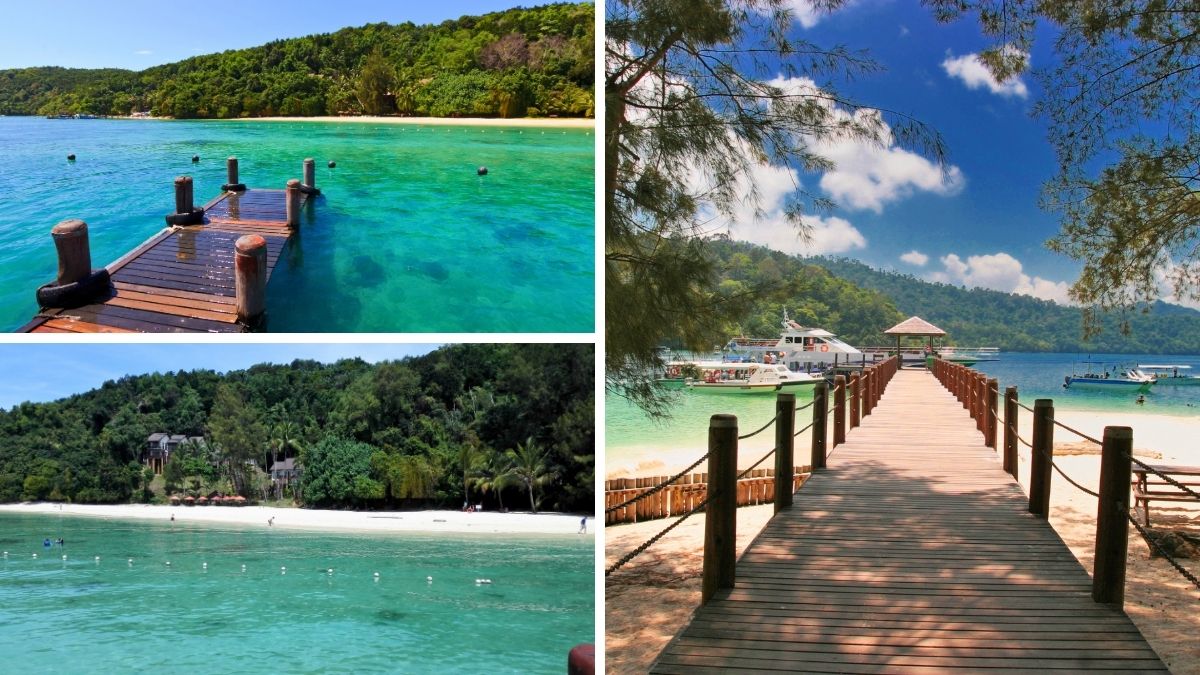
Getting there: Speedboats depart Jesselton Point roughly every 30–60 minutes between 8:00am and 4:00pm. No advance booking is needed — walk up to the numbered ticket booths inside the terminal.
Costs: Figures vary slightly by year and source, but expect a park conservation entry fee (roughly RM20–25 for foreigners, covering all five islands for the day), a terminal fee (around RM7), and a ferry package priced by how many islands you want to hop between — roughly RM35 for one island up to RM65–75 for four.
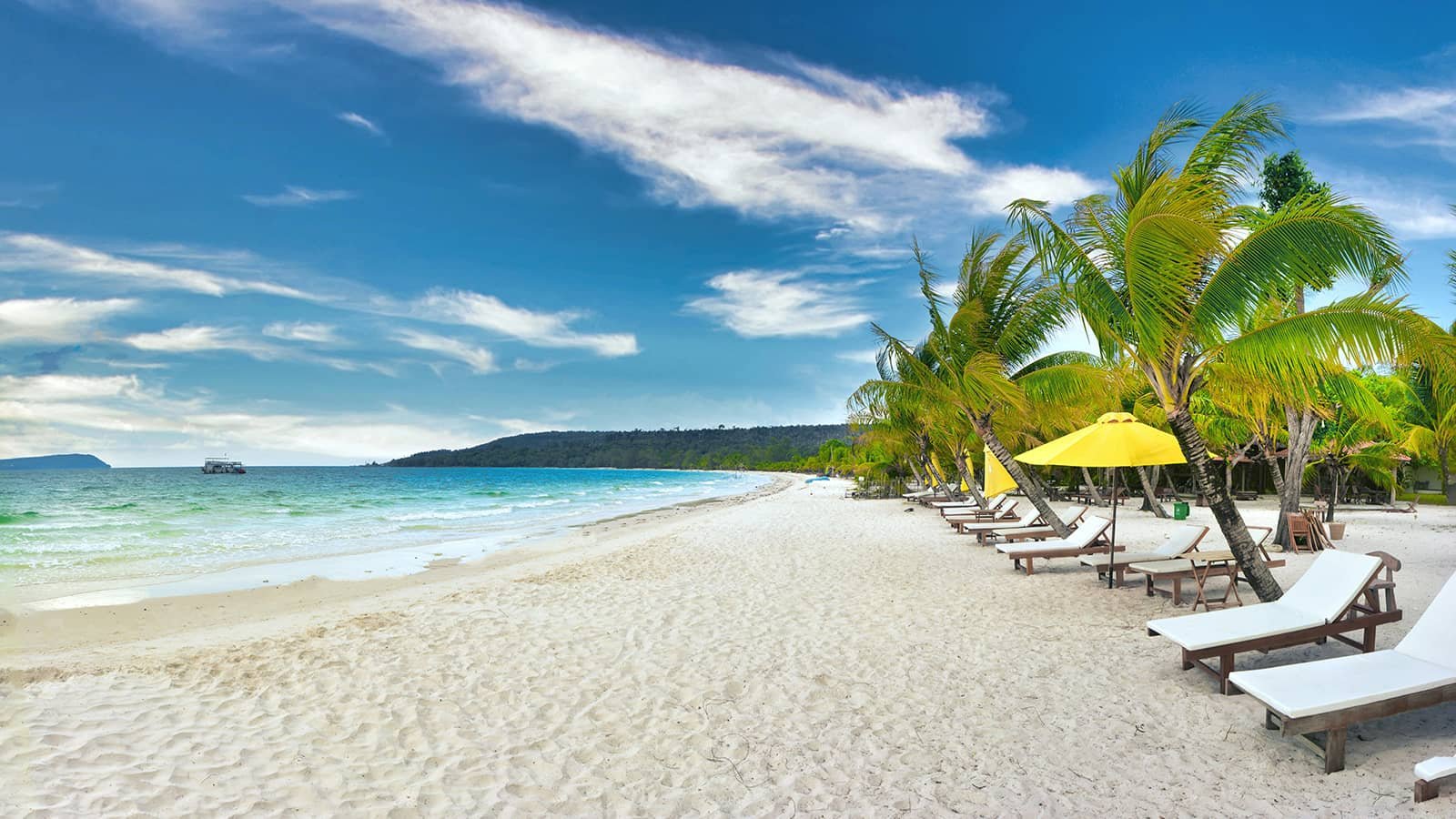
Tunku Abdul Rahman Park is a cluster of five islands just 15–20 minutes offshore from KK, and Sapi and Manukan are the two most visited for good reason. Sapi, connected to the larger Gaya Island by a sandbar at low tide, has the better snorkeling and a network of nature trails through dense coastal forest. Manukan is more developed — it houses the park’s administrative headquarters, has the better beach on its eastern tip, and offers kayak and snorkel-gear rental if you didn’t bring your own. Neither needs a full day unless you want one; a half-day covers the highlights, which makes island-hopping between both entirely doable before your evening flight out of KK.
A practical note that matters more here than almost anywhere else in this guide: only book through licensed operators at Jesselton Point. Unlicensed boats running from other departure points around the city have been linked to genuine safety incidents, and the savings aren’t worth the risk.
Do
Borneo Wildlife Tour 3 Days 2 Nights At Tanjung Bulat Jungle Camp Kinabatangan
Day Trip to Kinabalu Park and Poring Hot Spring Guided Tour

Guided Snorkeling Day Trip, Kota Kinabalu, Sabah, Malaysia
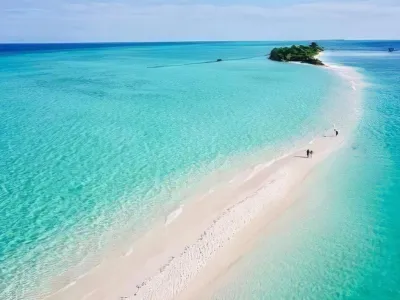
3 Semporna Islands Tour with Snorkel or Diving Experience
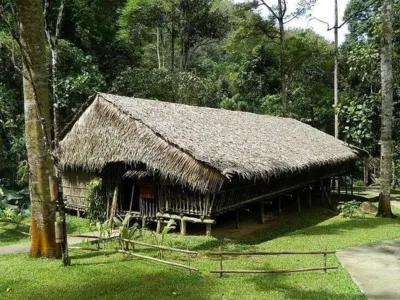
Mari-Mari Cultural Village Tour Including Lunch
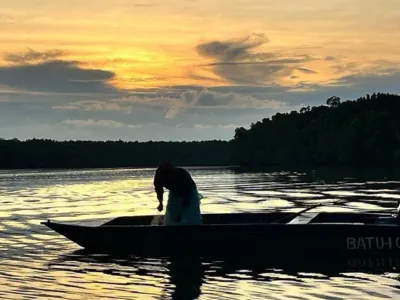
Mangrove Cruise with Fireflies Tour Including Dinner from Sandakan
Stay

Sabah Hotel

Sepilok Nature Lodge

Sepilok Forest Edge Resort

Sepilok Jungle Resort

Ormond Sandakan

Citadines Waterfront Kota Kinabalu

Le Meridien Kota Kinabalu

Shangri-La Rasa Ria, Kota Kinabalu
How Long Do You Actually Need?
While you could use this as a fixed itinerary you can also use the peices flexibly to design the Sabah Malaysian Borneo itinerary that works best for you. Use each activity as a separate piece and fit them together based on how many days and how much time you have. Below are some suggestions I have about how they best fit together in practice, from someone who’s watched other travelers try to rush it:
-
- Bare minimum (7 days): Sandakan/Sepilok (2 days), Kinabatangan (2 days), Kinabalu Park day-trip plus Poring (1 day), KK plus islands (2 days). Tight, but genuinely workable if you’re not climbing the summit.
- Comfortable (10–12 days): Add a proper overnight at Kinabalu Park (rather than a day trip from KK), a Turtle Islands overnight from Sandakan, and slightly more breathing room around the Kinabatangan.
- With the summit climb (13–14 days): Add 2–3 days for the Mount Kinabalu ascent itself, plus the buffer of not booking anything tight around it — climbs get rescheduled for weather more often than people expect.
- With Danum Valley (14+ days): Add 3–4 days and accept a bit of backtracking through Lahad Datu.
Whatever your total, resist the urge to stack Sepilok, Labuk Bay, and Gomantong into a single day just because the driving distances allow it. Feeding times are fixed and don’t flex for your schedule, and rushing between them means you’re watching a clock instead of a treeline.
What Does This Malaysian Borneo Itinerary Cost? (Realistic Budget Ranges)
Per person, excluding international flights as at 30 August 2026:
| Category | Budget | Mid-range |
|---|---|---|
| Sepilok cluster (3 entries + transport) | RM120–150 | RM150–200 |
| Labuk Bay | RM70–90 | RM70–90 |
| Gomantong (usually bundled into river transfer) | RM30–40 | RM30–40 |
| Kinabatangan River, 2D1N package | RM400–500 | RM600–900 |
| Kinabalu Park HQ day + Poring | RM80–120 | RM100–150 |
| Mount Kinabalu summit climb (optional) | RM1,500+ | RM3,000–8,000+ (via ferrata) |
| Accommodation, per night | RM60–120 | RM150–350 |
| Meals, per day | RM40–60 | RM80–150 |
| TAR Park islands, half-day | RM60–80 | RM60–80 |
A realistic 10-day trip without the summit climb, splitting the difference between budget and mid-range, lands somewhere around RM3,500–5,500 (roughly $850–1,300 USD) per person excluding flights — genuinely reasonable for the density of wildlife and landscape you’re covering.
Printable activities and attractions Sabah Malaysian Borneo Itinerary
Packing Notes That Actually Matter
Skip the generic packing list; here’s what specifically earns its space in Sabah.
- A lightweight rain jacket, not an umbrella — you’ll be on boats and boardwalks where an umbrella is a liability.
- Closed, grippy shoes for Gomantong (genuinely non-negotiable given the cockroach situation) and for any Kinabalu Park trail.
- A dry bag or waterproof phone pouch for river cruises, where spray is a given even without rain.
- Unscented insect repellent and sun protection — the wildlife centres will ask you not to apply strong scents right before feeding times, since it can affect the animals.
- A headlamp for night walks at the Rainforest Discovery Centre or Kinabatangan lodges.
- Cash in smaller denominations — several of the wildlife centres are cash-only with no ATM within reach.
Frequently Asked Questions
Can I visit Sabah’s wildlife centres without booking a tour?
Yes. Sepilok, the Bornean Sun Bear Conservation Centre, the Rainforest Discovery Centre, and Labuk Bay Proboscis Monkey Sanctuary are all independently accessible by taxi, Grab, or self-drive, with walk-up tickets at the gate. The Kinabatangan River is the one exception where a lodge package (rather than a pure tour) is the practical way in, since there’s no independent transport to Sukau or Bilit.
Do I need to book Mount Kinabalu months in advance?
For peak season (roughly March through September, plus school holidays), yes — book at least three to four months ahead, since only 163 climbers are permitted daily and operators buy up availability early. Shoulder-season dates sometimes open up with only a few weeks’ notice.
Is it safe to travel independently in Sabah?
The Sandakan–Kinabatangan–Kinabalu–KK route covered in this guide runs through mainland destinations with a normal safety profile for Southeast Asia. Sabah’s east coast islands near Semporna carry a separate, more serious government advisory history related to cross-border kidnapping risk, but that area isn’t part of this itinerary.
What’s the best time to see wild orangutans in Sabah?
For the Sepilok feeding platforms, timing barely matters since it’s a managed feeding schedule year-round. For wild sightings along the Kinabatangan River, the dry season (roughly March–October) offers more comfortable trekking and boating conditions, though wetter months can actually concentrate wildlife along the accessible riverbanks.
Do I need a 4×4 to self-drive this route?
No. The main Sandakan–Ranau–Kota Kinabalu highway and the roads to all the attractions in this guide are sealed and manageable in a standard rental car. A 4×4 only becomes useful if you’re detouring to less-maintained back roads beyond this route.
Is Poring Hot Springs still worth visiting with the canopy walkway closed?
Yes, for the sulphur baths, botanical gardens, and the chance of a Rafflesia sighting — but if a treetop canopy walk specifically is the draw, do the Rainforest Discovery Centre’s walkway in Sepilok instead, which remains open.
Final Words on your Sabah, Malaysian Borneo Itinerary
The version of Sabah worth having isn’t the one where you tick off every name on this list at a sprint. It’s the one where you’re standing on a boardwalk at Gomantong at 5:40pm, watching bats and swiftlets cross paths mid-air while a serpent eagle works the gaps between them, and you realize you’ve stopped checking the time. Build your itinerary around that kind of margin, not against it. The logistics in this guide will get you to every stop; what you do once you’re standing there is the part worth protecting.
5 Works Cited
CelcomDigi. CelcomDigi | Tourist SIM for Malaysia with Unlimited Internet. CelcomDigi, 2026, www.celcomdigi.com/roaming/tourist-sim.
SabahParks. Kinabalu Park – The Official Sabah Parks Website. SabahParks, 2026, www.sabahparks.org.my/kinabalu-park.
ImigresenMalaysia. Malaysia Digital Arrival Card – MDAC. ImigresenMalaysia, 2026, imigresen-online.imi.gov.my/mdac/main.
sabahparks. News – Sabah Parks to ban single-use plastic bags starting Jan 1 2026 – The Official Sabah Parks Website. sabahparks, 2026, www.sabahparks.org.my/resource-centre/news/sabah-parks-to-ban-single-use-plastic-bags-starting-jan-1-2026.
SabahGuide. Sabah Immigration: Entry, Passports & Work Passes. SabahGuide, 2026, sabahguide.com/laws/sabah-immigration/.