

There’s genuinely nothing else in Costa Rica quite like Tortuguero. No roads lead here — you arrive only by boat or tiny plane, gliding through black-water canals lined with rainforest so dense it feels prehistoric. Howler monkeys roar overhead, caimans drift past like logs, and if you time it right, you’ll watch a 300-pound green sea turtle haul herself onto the beach at midnight to lay eggs exactly as her ancestors have for millennia. It’s wild, it’s a little bit of a mission to reach, and that’s precisely why it rewards the independent, eco-minded traveler so well. Here’s everything you need to plan it yourself, honestly and in detail.
What are the things to see and do in Tortuguero National Park?
Here are the highlight’s and we will discuss each in detail in this post.
- Canal boat and canoe tours. This is the headline experience — gliding silently through the park’s waterways at dawn (best light, most animal activity) spotting three-toed sloths, spider monkeys, keel-billed toucans, caimans, and river otters. Do it by motorized boat, canoe, or kayak; canoes and kayaks are quieter and better for wildlife.
- Turtle nesting tours (seasonal). Tortuguero is the single most important green sea turtle nesting beach in the Western Hemisphere. Green turtles nest here from roughly June/July through October, with leatherbacks arriving earlier (February–June) and hawksbills and loggerheads filling out the rest of the calendar. Guides lead small groups onto the beach at night — no flash photography, no white light, dark clothing required — to watch the process respectfully.
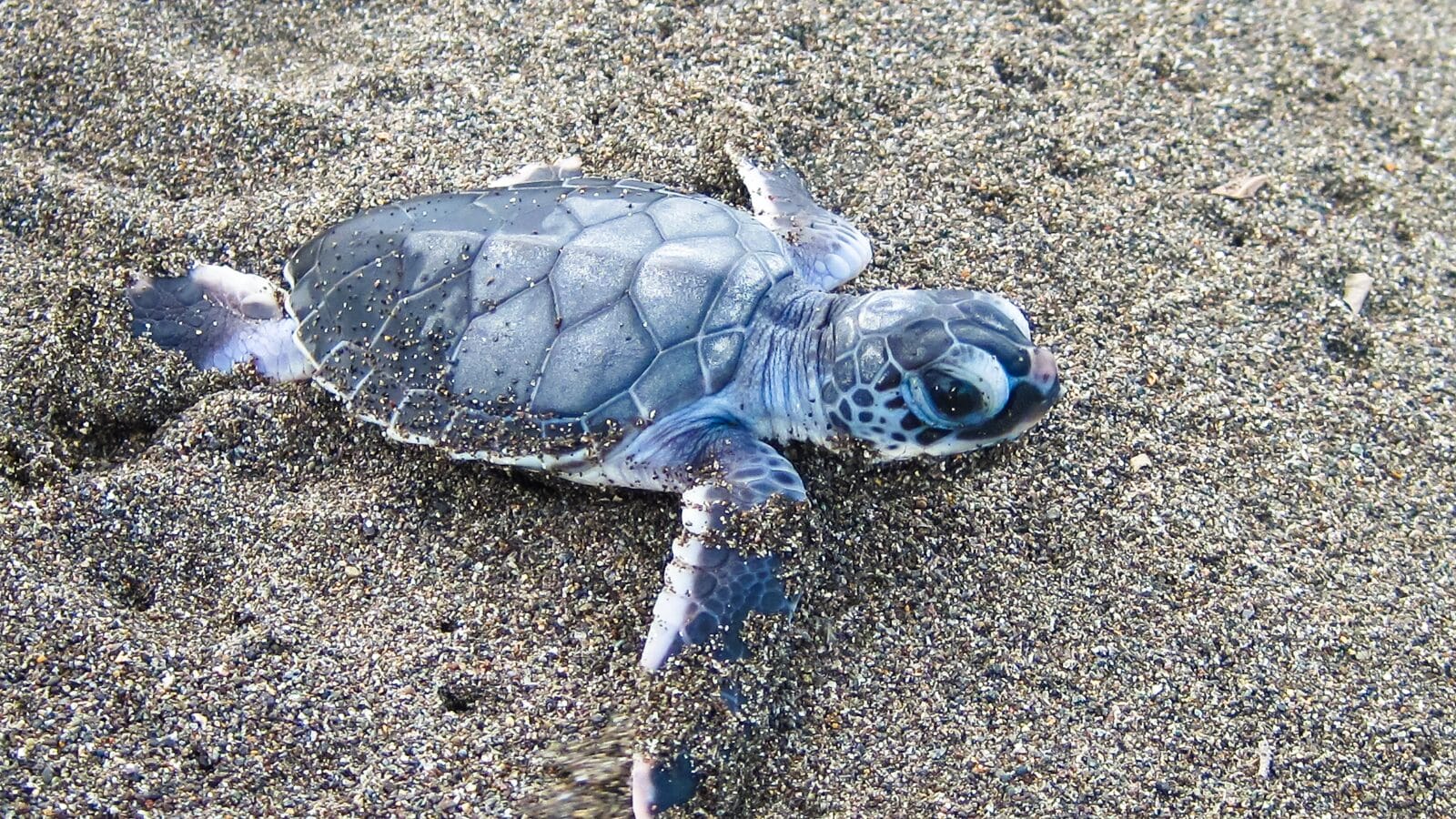
- Turtle hatching. Hatching happens roughly September through December, so a shoulder-season visit can trade “watching mom nest” for “watching baby turtles sprint to the sea,” which is arguably even more magical.
- Hike Cerro Tortuguero. A short, steep climb up the park’s one hill for a panoramic view over the canal system, village, and Caribbean coastline — a nice break from being in a boat.
- Walk the Jaguar Trail / Gaviota Trail. Forest boardwalks and paths through the park where you might spot poison dart frogs, basilisk (“Jesus Christ”) lizards, and a genuinely absurd number of bird species.
- Explore the village and Sea Turtle Conservancy exhibit. Tortuguero village is tiny, colorful, and walkable in 20 minutes. The Sea Turtle Conservancy’s small visitor center explains the decades of research and protection work that turned this coast around.
- Independent kayaking. Rent a kayak in the village and paddle the canals just outside the strict park boundary yourself — no guide required, and a lovely, cheap way to spend an afternoon.
- Try Caribbean-Costa Rican food. Coconut-milk rice and beans, fresh red snapper, patí (spiced meat pastries) — the Afro-Caribbean influence on the coast gives Tortuguero a completely different food identity from the rest of the country.
Tortuguero National Park (Parque Nacional Tortuguero) is a remote, roadless paradise on Costa Rica’s northeastern Caribbean coast. Often called the “Amazon of Costa Rica,” it spans over 77,000 acres of rainforest, lagoons, and canals teeming with wildlife. It’s globally famous as the largest nesting site for endangered green sea turtles in the Western Hemisphere.
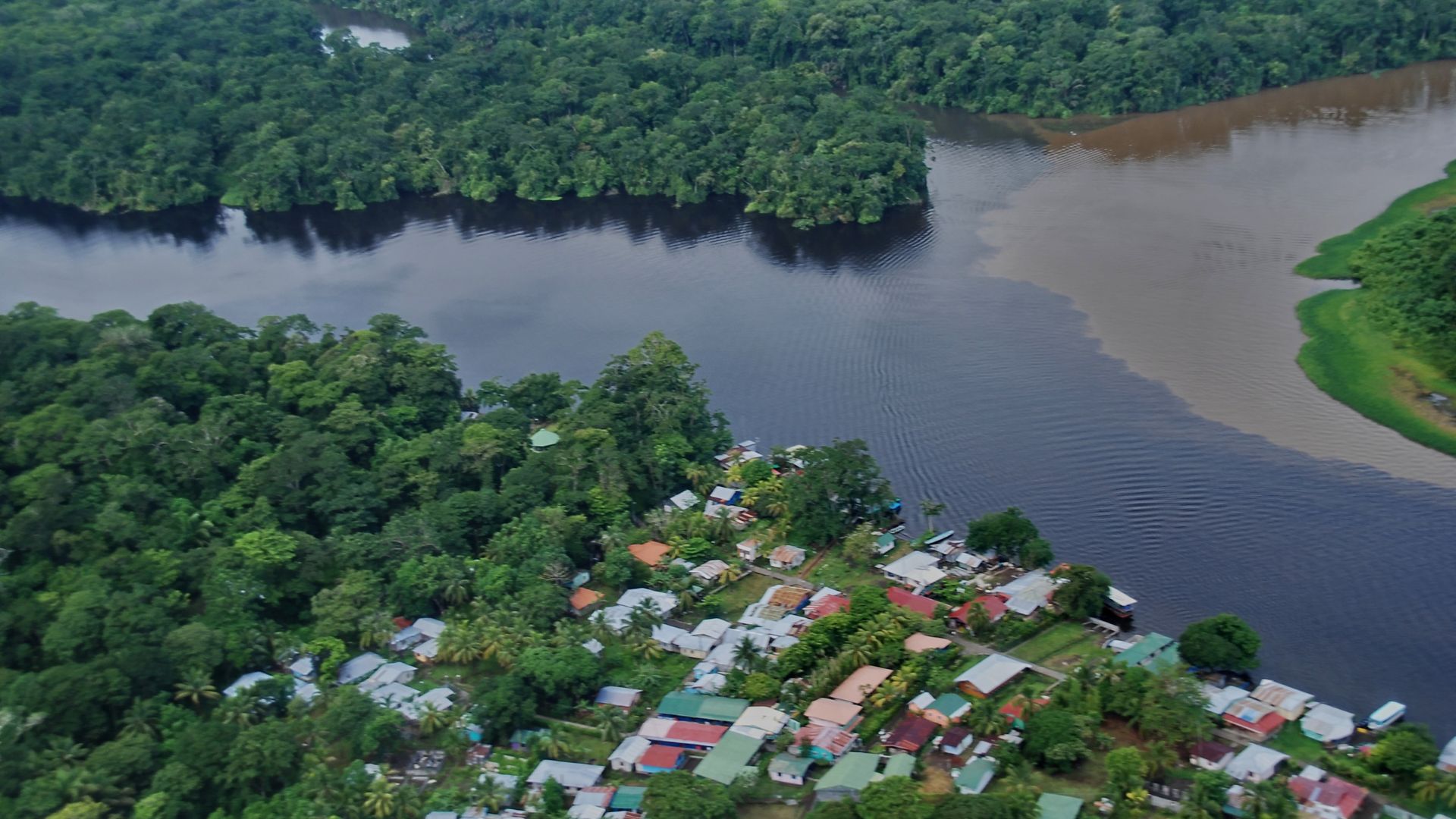
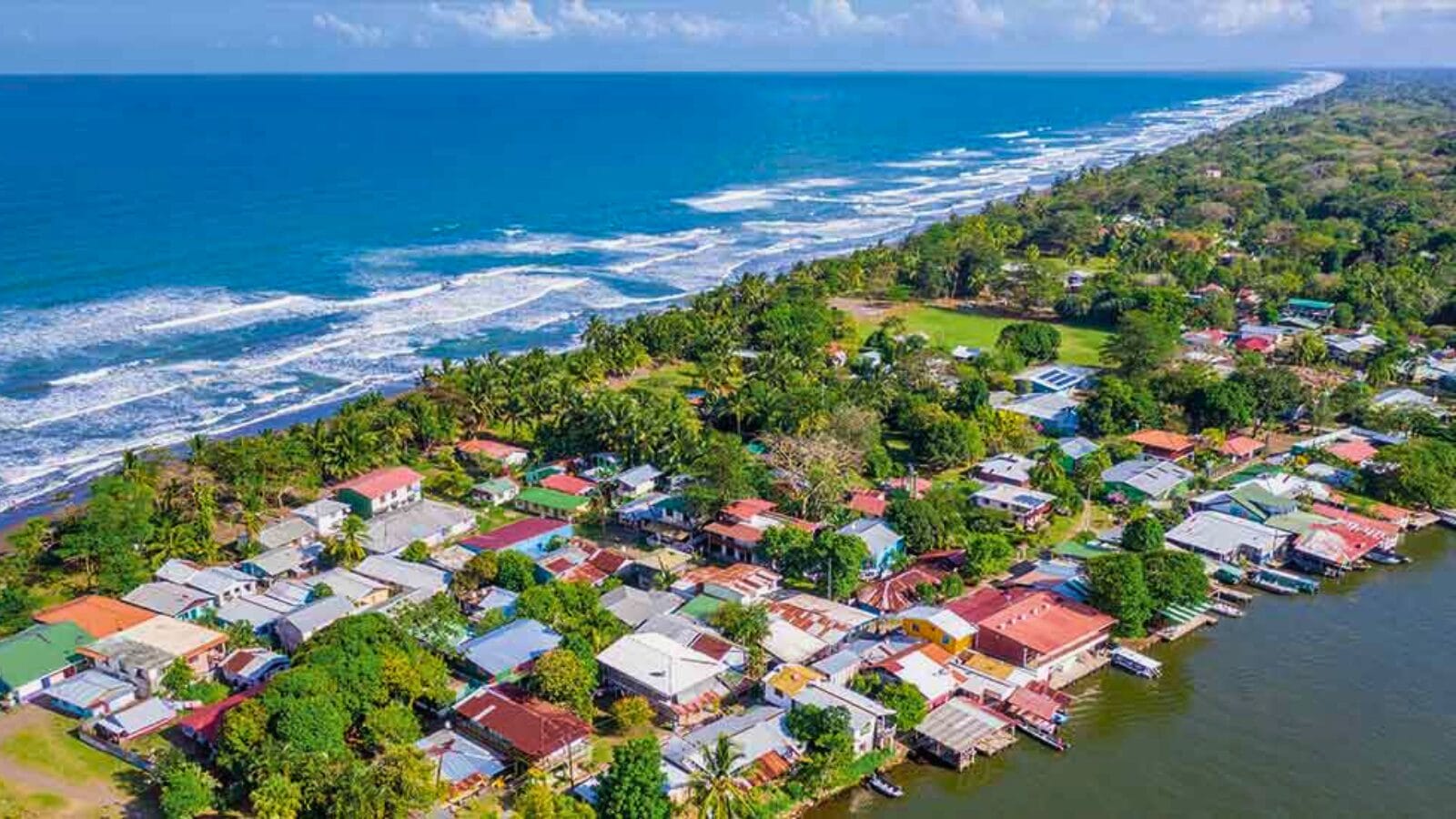
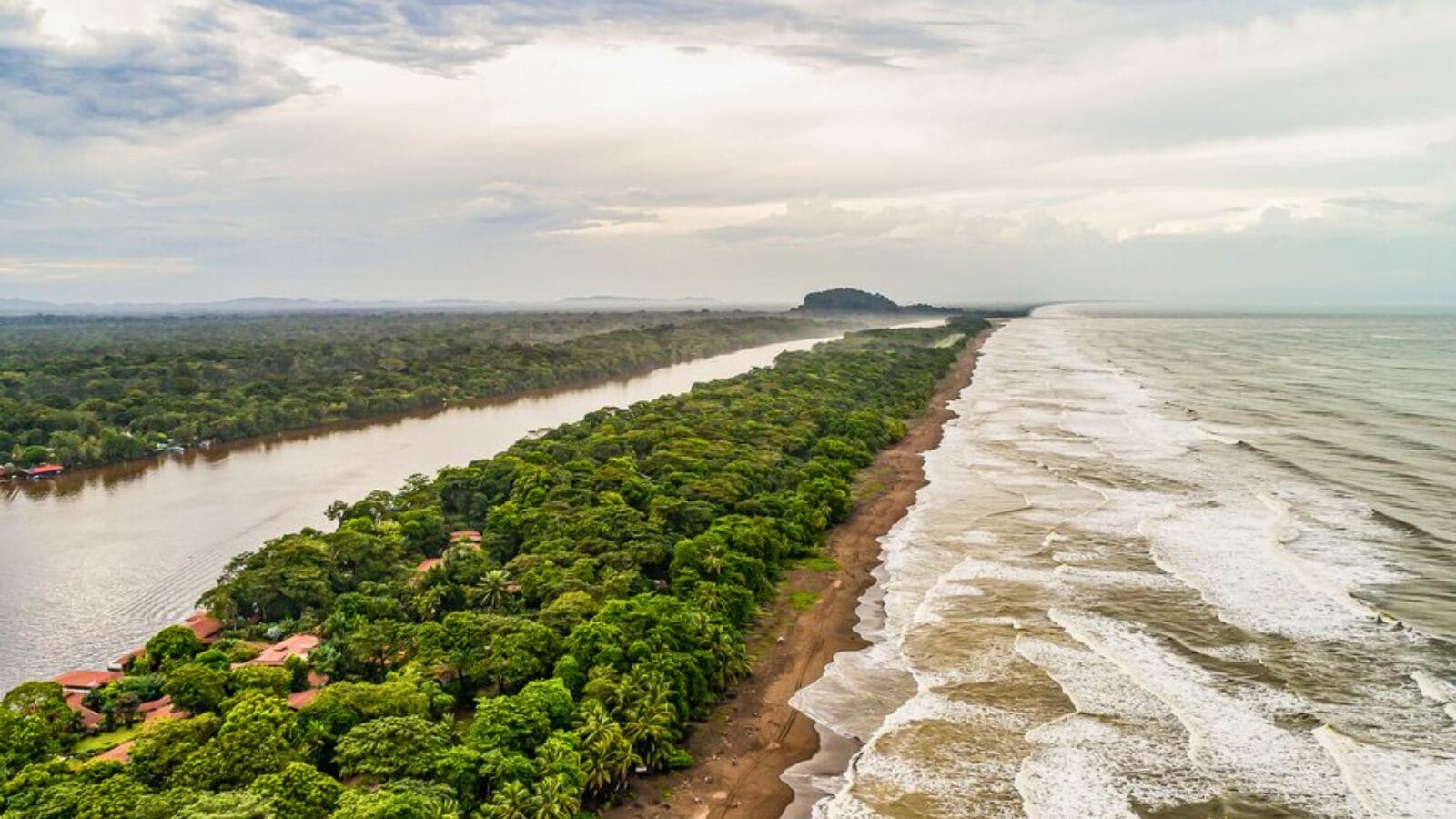
Expect howler monkeys swinging overhead, sloths lounging in trees, caimans gliding through the water, vibrant birds like toucans and macaws, and the thrill of spotting turtles laying eggs on dark beaches. The tiny village of Tortuguero sits on a narrow sandbar between the river and ocean—colorful, car-free (bikes rule here), and deeply connected to Caribbean culture.
Canals, Wildlife, and the World’s Most Important Green Sea Turtle Nesting Beach

What are the Canal Boat and Canoe Tours in Tortuguero?
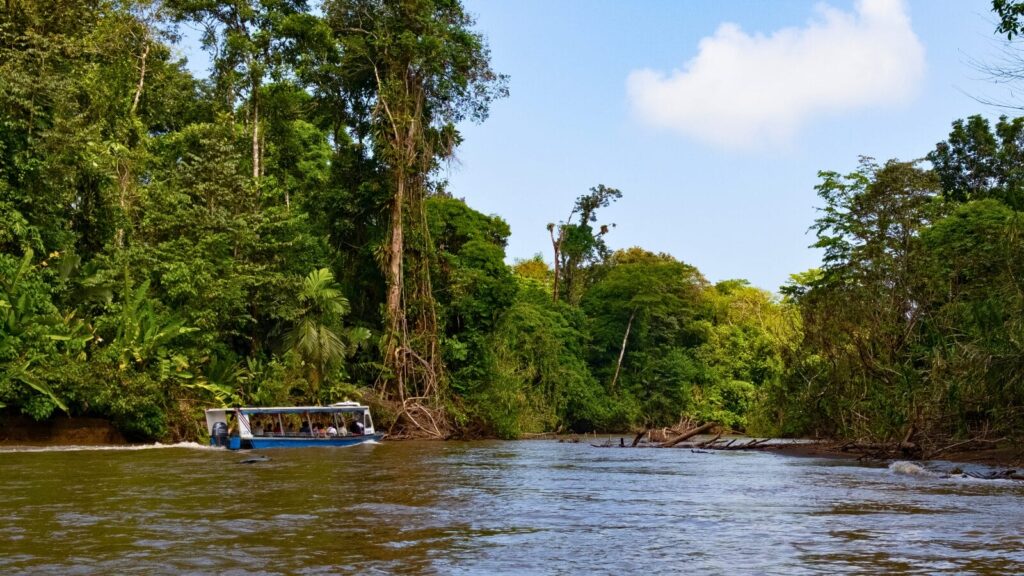
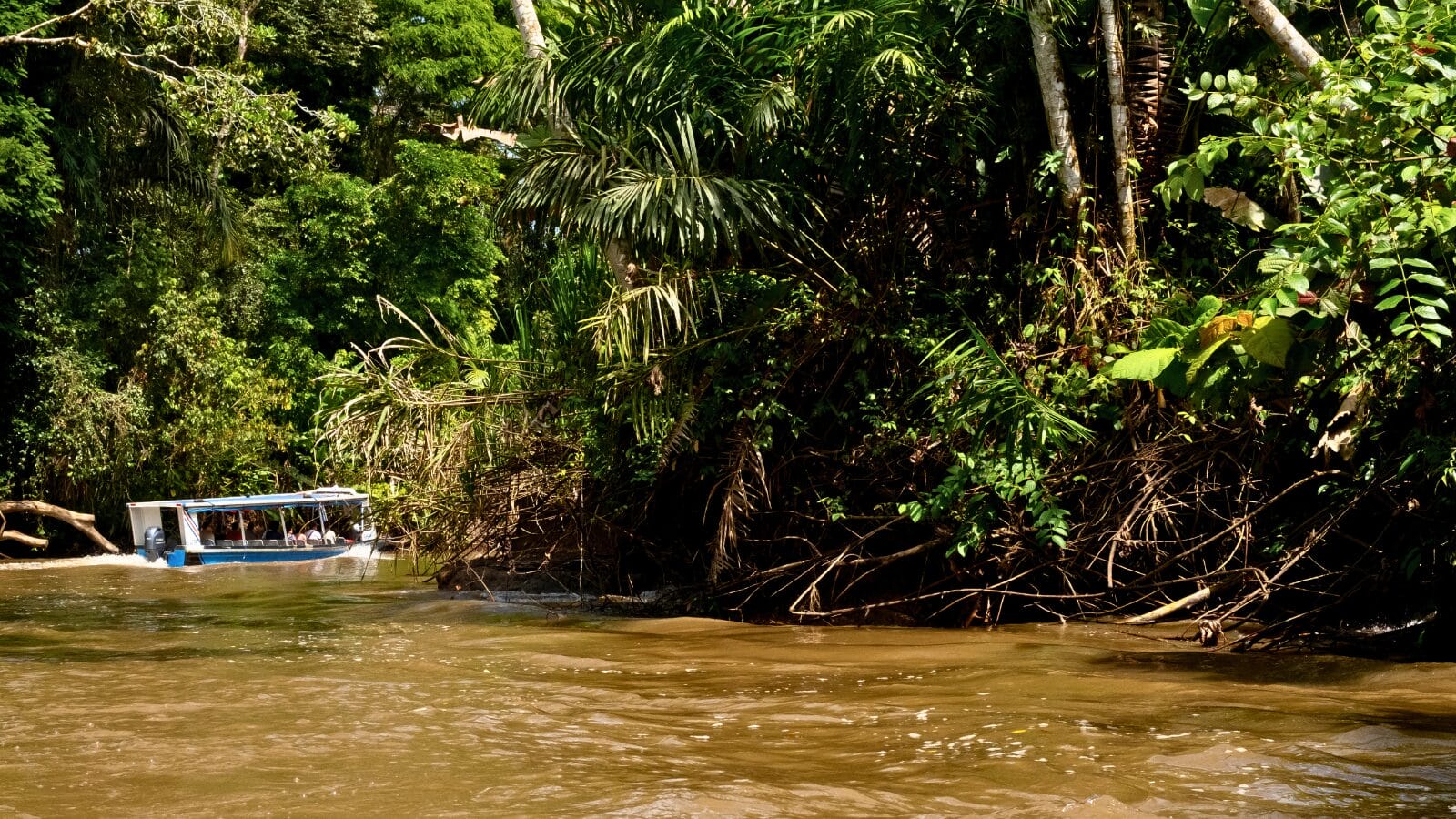
Canal boat and canoe tours are the best way to explore Tortuguero National Park, providing a close-up view of one of Costa Rica’s most biodiverse, water-bound rainforests. Since the park has no roads, its vast network of freshwater lagoons and creeks can only be explored by water.
A direct comparison of the two main tour styles shows how they differ in experience, access, and pacing:
| Feature | Canoe / Electric Canoe Tours | Motorised Canal Boat Tours |
|---|---|---|
| Primary Advantage | Silent approach allows you to glide incredibly close to wildlife without startling them. | Covers vast distances, allowing you to see different types of ecosystems in one trip. |
| Waterway Access | Navigates narrow, shallow, palm-fringed channels where larger boats cannot physically fit. | Restricted to the wider, main river arteries and larger lagoons. |
| Vibe & Atmosphere | Meditative, peaceful, and immersive. You intimately hear the sounds of the jungle. | Active and structured. Typically features comfortable bench seating under a large rain canopy. |
| Physical Effort | Low to none (for canoes where the guide paddles or uses a silent electric motor). | None. You sit back and enjoy the ride. |

What to Expect
Often called the “Amazon of Costa Rica,” Tortuguero’s waterways offer a far better chance of seeing wildlife than the thick jungle trails on land. Early-morning tours, which typically leave around 6:00 a.m., take place when the jungle is most active.
During a standard tour, you might encounter:
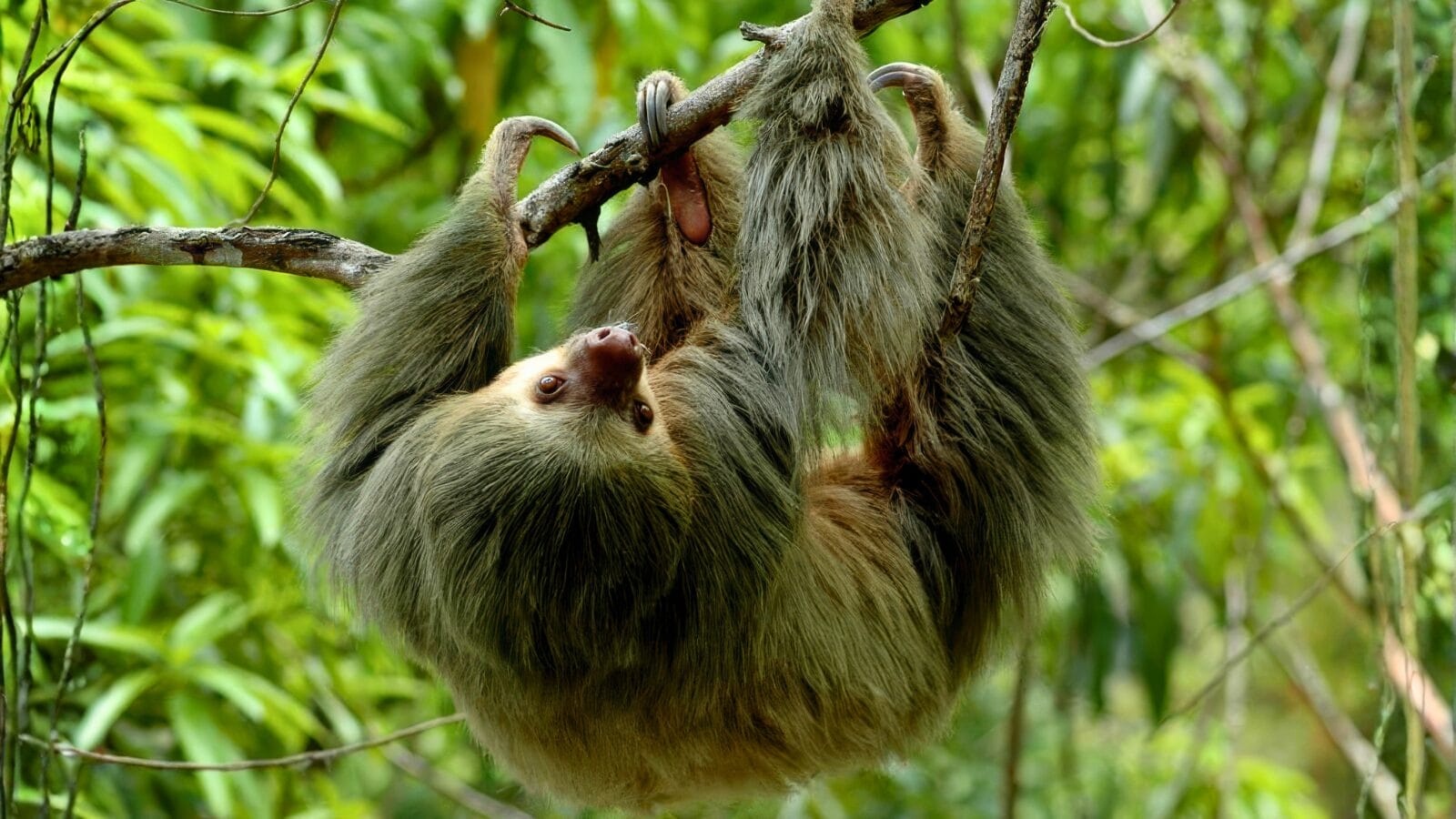
- Mammals: Three-toed sloths resting in cecropia trees, as well as lively groups of howler, spider, and capuchin monkeys moving through the treetops.
- Reptiles and amphibians: Spectacled caimans sunning themselves along muddy shores, large green iguanas, and bright emerald basilisk lizards—often called “Jesus Christ lizards” because they can run across water—hiding along the riverbanks.
- Birdlife: With more than 300 recorded species, the area is ideal for birdwatching. Look out for tiger herons, toucans, kingfishers, northern jacanas stepping across lily pads, and, with some luck, the rare great green macaw.
- Rare marine life: Sightings are unusual, but especially quiet canoe trips may reveal endangered West Indian manatees or southern river otters moving through the lagoons.

Are the Tours Worth It?
Yes, without a doubt. Skipping a water tour means missing one of the most important parts of the Tortuguero experience. Even beyond the green sea turtle nesting season, which runs from July to October, the remarkable concentration of wildlife along the canals makes the journey to this remote, car-free village well worth the effort.
If you need to choose between the options, go for a paddle or electric-canoe tour. The quietness of a paddle allows you to approach animals more closely before they disappear.
What do I need to know about Tortuguero National Park turtle nesting tours?
Green sea turtles (Chelonia mydas) are the crown jewels of Tortuguero National Park. Tortuguero hosts the largest green turtle rookery in the entire Western Hemisphere. The park itself was created in 1975 specifically to protect this vital 22-mile stretch of nesting beach.
The official green sea turtle nesting season runs from July 1 through October 31, with peak activity concentrated in August and September. During this period, up to 100,000 nests are dug along the shoreline. Observing a massive, 150-kilogram mother haul herself out of the ocean to lay her eggs is an unforgettable experience, although access is strictly regulated by conservation protocols.
How the Turtle-Nesting Tours Work
Because the beaches are closed and heavily patrolled by rangers from sunset to sunrise, you can set foot on the beach only as part of an officially licensed, guided night tour.
Gather at Base Point → Trackers Locate Nesting Turtle → Receive Instructions by Radio → Walk Quietly Along the Dark Beach → Observe Nesting
- The setup: Tours depart in two specific, assigned time slots, usually at 7:00 p.m. or 9:00 p.m. Visitors gather at one of five “base points,” or staging areas, away from the sand.
- The search: Professional, highly trained local park trackers, known as rastreadores, scour the beach in complete darkness to find turtles.
- The approach: Once a tracker confirms that a turtle has entered the “nesting phase”—when she is actively laying eggs and has entered a trance-like state—the tracker radios the guide. The group then quietly walks to that specific location.
- The viewing: Visitors observe the turtle from behind. The guide uses a special infrared or red light that the turtles cannot perceive, allowing the group to watch the egg-laying or nest-camouflaging process without disrupting her rhythm.

Strict visitor regulations
To participate, visitors must adapt entirely to the turtles’ sensory limitations.
- Dress Code: Wear head-to-toe black or dark clothing to avoid creating a silhouette against the sand.
- Total Blackout: Flashlights, mobile phones, cameras, and flash photography are strictly prohibited. A single white flash can cause a turtle to panic and abandon her eggs before completing the nesting process.
- Scent Restrictions: Do not wear perfume, heavily scented lotions, or traditional insect repellents, as these may disturb the turtle’s acute sense of smell.

How ecologically sound are the turtle nesting tours?
Tortuguero’s turtle tours are highly ecologically responsible and serve as a global model for sustainable wildlife tourism. Historically, Tortuguero was a hub for commercial sea-turtle hunting and egg poaching. The transition to regulated ecotourism fundamentally changed the local economy, making a living turtle worth far more to the community than a harvested one.
Ecological Mechanisms
- The Tracker System: Rather than allowing hundreds of tourists to stumble around with flashlights and scare away emerging turtles, the system keeps visitors waiting out of sight. Turtles are never approached while crawling out of the surf; visitors approach them only after they have begun nesting.
- Strict Capacity Limits: The park limits beach access to roughly 200 visitors per departure window, divided into small groups of no more than 15 people per guide.
- Research Partnerships: The tours operate alongside the Sea Turtle Conservancy (STC), the world’s oldest turtle-conservation organization, which has operated in the area since 1959. Tourism revenue directly funds beach patrols, scientific tracking, and anti-poaching enforcement.
Although any human presence introduces some stress into an ecosystem, Tortuguero’s highly controlled system successfully minimizes direct impacts. It turns tourists into active funders of turtle conservation, helping ensure the species’ survival.

How do I see the turtles hatching?
Watching turtles hatch is a very different experience to watching the nesting. While nesting tours are highly structured lottery-drawn night events, seeing the hatchlings is a much more casual, daytime experience that you do on your own or with a morning guide. In fact, formal “hatching tours” are intentionally avoided or restricted because human interference (like guides digging up nests to guarantee sightings) harms the babies. They are equally well monitored.
What is different between hatching and nesting?
Nesting Tours: Highly regulated nighttime tours that take place at either 7:00 p.m. or 9:00 p.m. Visitors must stay with a licensed park guide and wait for radio confirmation from a beach tracker.
Hatching Experiences: These are generally daytime activities. Although turtles hatch under the sand at night when temperatures are cooler, they usually reach the surface around dawn (5:00–6:00 a.m.) or in the late afternoon (4:30–5:30 p.m.), as the sand temperature changes. During these times, you can walk along the beach and observe them.
Turtle hatching photography: Because hatchlings are observed in daylight during the morning or evening, photography is allowed. However, camera flashes must be turned off, as bright flashes can temporarily blind the hatchlings and confuse them as they make their way toward the ocean.

Ecological Etiquette for Hatchlings
Although morning beach walks are not directly supervised by rangers, you should follow these important ecological guidelines to protect the hatchlings:
- Do Not Touch: Never pick up a hatchling or clear a route for it. The journey from the nest to the sea is an important biological process that helps the turtle imprint the beach’s magnetic field, allowing females to return to the same beach roughly 20 years later to lay their eggs.
- Give Them Space: Keep at least 10 metres (35 feet) away. Standing too close could cause you to crush concealed nests or obstruct the hatchlings’ route to the water.
- Watch Your Step: Walk only on the wet sand near the tideline. Avoid the soft, dry sand farther up the beach, where you may accidentally step on a nest that is about to hatch.

What do I need to know about hiking Cerro Tortuguero?
Hiking Cerro Tortuguero, or Tortuguero Hill, provides a dramatic change from the park’s flat waterways and leads to the highest point on Costa Rica’s Caribbean coast. Rising 119 metres (390 feet), this ancient extinct volcano lies just north of Tortuguero Village, near the small community of San Francisco.
What You Need to Know
- Boat Access: Since Cerro Tortuguero is across the main river from the national park’s main entrance, reaching it requires a boat ride. From Tortuguero Village, you can take a short public boat (colectivo) or arrange a guided water taxi to San Francisco.
- Permits and Tickets: Tickets are not available at the trailhead. Entry must be purchased in advance through the official SINAC Online Portal. The Cerro Tortuguero permit costs approximately $2 to $3 USD when added to your main park admission.
- Trail Conditions: The hike is short but fairly strenuous, usually taking 45 minutes to an hour round-trip. The route follows about 500 well-maintained steps through the rainforest. Caribbean humidity can make the climb feel harder, while rain may leave the steps slippery.


What are the main attractions when hiking Cerro Tortuguero?
360-Degree Summit View: The main reward is the panoramic view from the observation deck at the summit. From here, you can see the distinctive landscape of the Tortuguero River, the extensive freshwater canal system, the rainforest canopy, and the Caribbean Sea all at once.
Rainforest Wildlife: Although the staircase keeps you climbing, the surrounding jungle is full of wildlife. Watch for bright red strawberry poison dart frogs with blue legs, along with toucans, spider monkeys, and large morpho butterflies.
San Francisco Village Culture: A visit to Cerro Tortuguero also provides an opportunity to explore San Francisco. The community is quieter and less developed for tourism than Tortuguero Village, offering a more authentic look at local Caribbean life. Small, family-run sodas (cafés) are ideal places to enjoy a cold drink after the hike.

What you need to know about walking the Jaguar Trail / Gaviota Trail
The Jaguar Trail (Sendero El Jaguar), together with connecting routes like the El Gavilán Trail, is the main land-based hiking route through Tortuguero National Park. Sometimes described as part of the coastal park trails, it provides an exciting, rugged alternative to exploring the park by water. The trail follows a narrow stretch of land between the thick rainforest and the waves of the Caribbean Sea.
Route and Terrain: The trail covers approximately 2.5 to 3 kilometres (around 1.5 to 2 miles). You can walk it as an out-and-back route or include it in a loop. Since the terrain is entirely flat, it is suitable for visitors with different fitness levels.
Dealing with Mud: Although the trail is flat, the weather can make it difficult. Tortuguero does not have a true dry season, and heavy rainfall can quickly turn parts of the dirt path into deep mud and standing water. Hiring tall rubber boots from shops near the park entrance is strongly recommended and may be necessary for a more comfortable hike.
Guides Are Required: Before entering, visitors must purchase a regular national park admission ticket online through the SINAC website. The cost is usually around US$15–17. Park rules also require everyone to explore the trail with a licensed local naturalist guide.

Main Trail Highlights
From Ocean to Jungle: The thick canopy keeps much of the trail shaded, while the route runs alongside the coast. At several marked points, you can take a short detour onto Tortuguero’s wild, dark volcanic-sand beach. Swimming is strictly forbidden because of powerful rip currents and the risk of encountering sharks.
Following the Big Cat’s Trail: The trail takes its name from Tortuguero’s known jaguar habitat. Spotting one during daylight is extremely unlikely, but a guided walk may reveal enormous, fresh paw prints pressed into the soft mud—an exciting sign of the park’s untamed nature.
Wildlife in the Canopy and Understory: Boating offers views along the riverbanks, while hiking lets you explore beneath the forest canopy. The trail is an excellent place to see howler and capuchin monkeys moving through the trees, sloths resting in cecropia branches, leaf-cutter ants crossing the path, and brightly coloured poison dart frogs blending into green leaves.
Signs of Turtle Nesting: If you visit between July and October and walk onto the beach during the day, you may find wide, unmistakable tracks in the sand. These tractor-like marks are left by large green sea turtles that came ashore the night before.

What makes Tortuguero village so unique?
Tortuguero Village is a vibrant, remote Afro-Caribbean enclave, completely isolated from the rest of Costa Rica by dense jungle and winding rivers. Home to roughly 1,500 permanent residents, the village sits on a narrow, half-mile-wide strip of land wedged between the expansive Tortuguero Canal and the Caribbean Sea. Because it is entirely car-free—there are no roads leading here, and the village has no cars, trucks, or motorcycles—the entire destination relies on water taxis, bicycles, and footpaths.
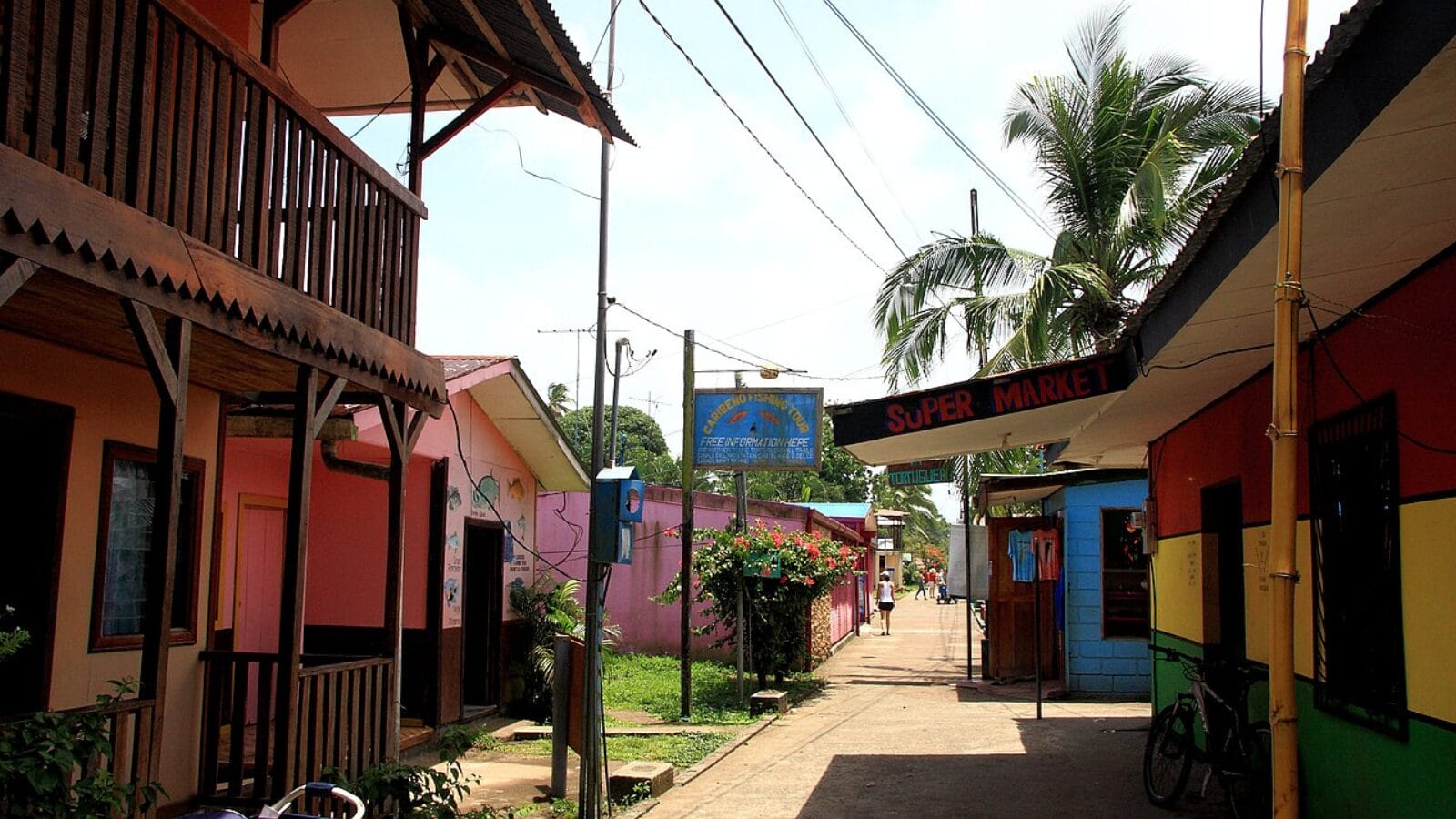
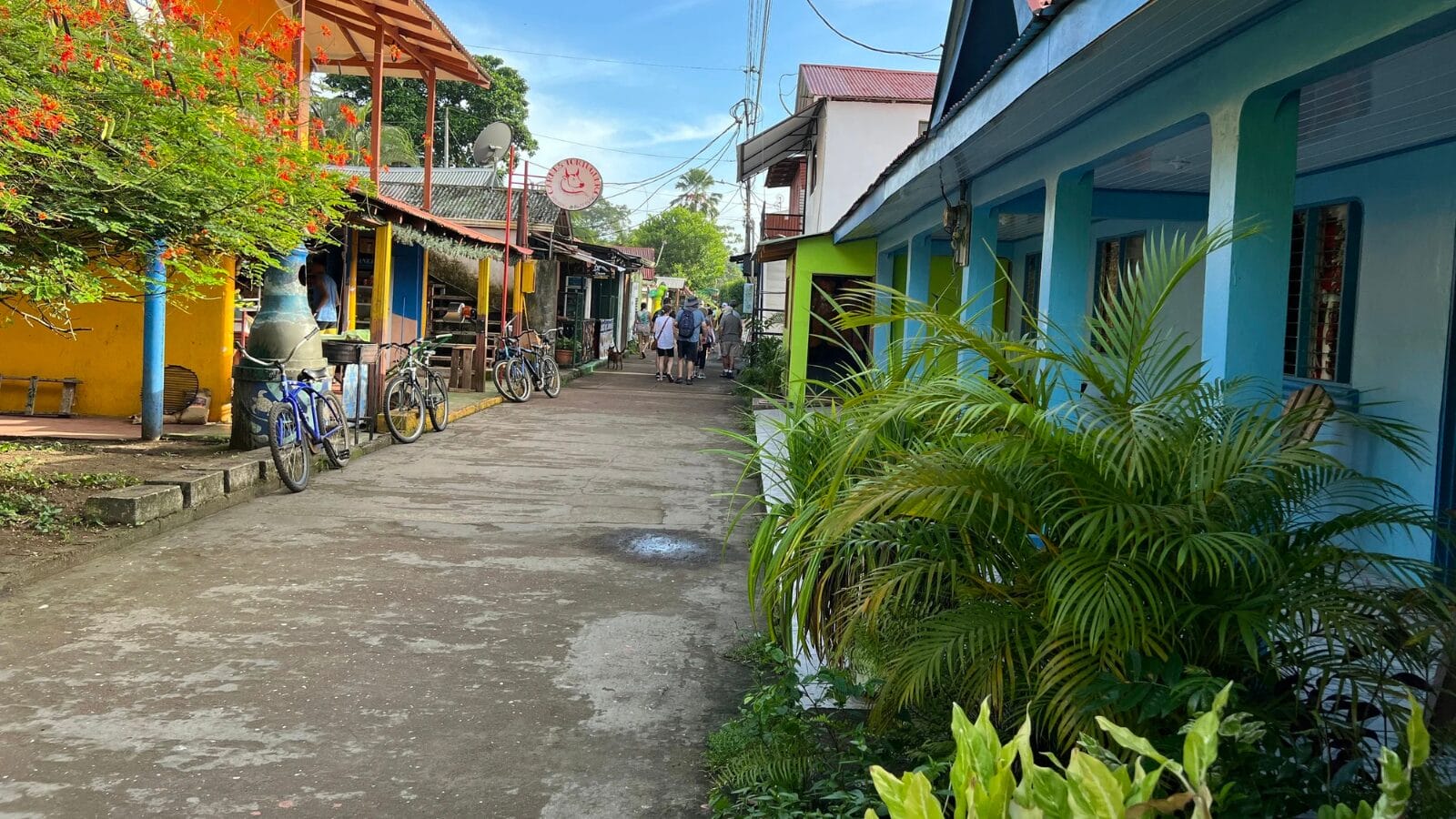
A Car-Free Way of Life: The lack of combustion engines creates a remarkably peaceful, slow-paced atmosphere. The main “street” is a narrow pedestrian sidewalk. Instead of traffic, the village’s soundscape consists of crashing ocean waves, chirping birds, reggae music, and the low hum of passing boats.
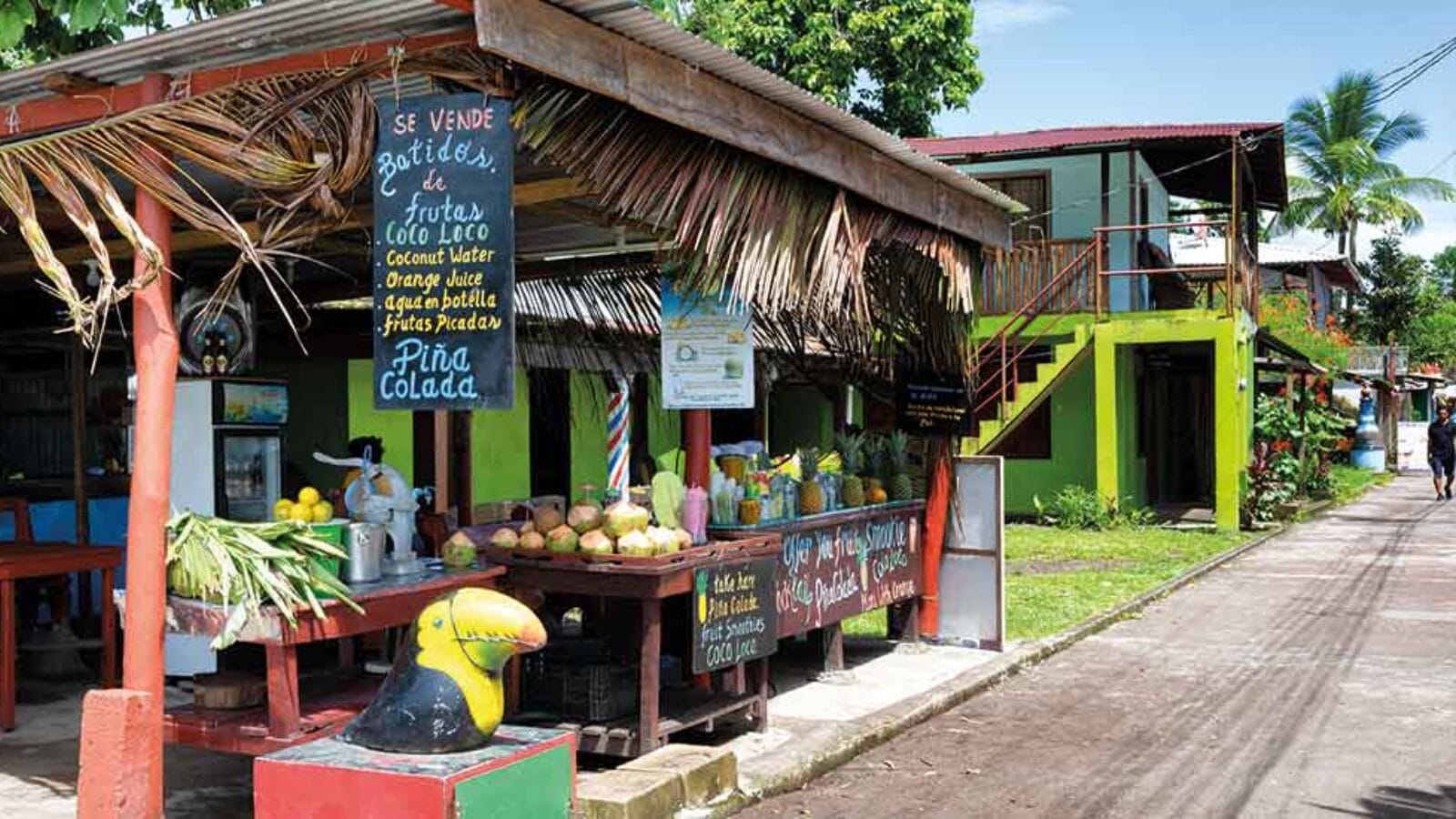
Rich Afro-Caribbean Culture: Unlike Costa Rica’s Pacific coast, Tortuguero’s culture is deeply rooted in Caribbean heritage. You will experience this through the vibrant, brightly painted wooden architecture, the sounds of local patois, and the rich aromas of Caribbean-style cooking featuring coconut milk, ginger, and pan de bon (sweet bread).
The Evolution of Conservation: The village is a living testament to successful conservation. Fifty years ago, the local economy relied almost entirely on hunting sea turtles and logging the rainforest. Today, many of those same families work as park rangers, certified naturalist guides, and lodge owners, demonstrating that protecting wildlife can be more sustainable than harvesting it.


How to Explore the Village
The village is compact and can be explored entirely on foot in just a couple of hours.
- Stroll Along the Main Pedestrian Strip: The single paved sidewalk serves as the spine of the community. Walking from one end to the other takes about 20 minutes. Along the way, you will find small souvenir shops selling local artisan crafts, tour operator booths, ice cream shops, and friendly stray dogs lounging in the shade.
- Dine at a Local Waterfront “Soda”: Skip the resort buffets for a few hours and sit down at a local, family-run eatery—a soda—facing the calm river canal.
- What to order: Try rice and beans, specifically cooked with coconut oil and red beans. This dish is distinct from traditional Costa Rican gallo pinto and is usually served with Caribbean jerk chicken or fresh fish.
- Top spots: Soda Doña María and Budda Café offer excellent views of the water, where you can watch boats zip past as you eat.
- Visit the Sea Turtle Conservancy (STC) Visitor Center: Located at the northern end of the village sidewalk, this modest but highly informative visitor center is a must-visit. For a small donation of $2 to $3, you can explore exhibits detailing the history of turtle tagging and the biology of the four sea turtle species that nest here. You can also watch a short documentary about Archie Carr, the visionary conservationist who helped save Tortuguero’s turtles.
- Watch the Sunset Over the River Canal: Because the village faces the canal to the west and the ocean to the east, it is one of the few places on Costa Rica’s Caribbean coast where you can watch the sun set over the water. Head down to the main public dock, El Embarcadero, or grab a plastic chair at a riverside bar around 5:15 p.m. to watch the sun drop directly behind the thick rainforest canopy.

How to Get To Tortuguero National Park
No roads reach Tortuguero—access is by boat or small plane only. The journey is part of the adventure.
Most Popular & Scenic Option: Boat from La Pavona (Recommended)
- Drive or take a shuttle/bus from San José (~2.5–3 hours to La Pavona dock via Guápiles/Cariari).
- Public boat taxis: La Pavona → Tortuguero at 7:30 a.m., 12:30 p.m., 4:30 p.m. (1–1.5 hours, ~$8–10 USD one way). Return boats: 5:30 a.m., 9 a.m., 11 a.m., 2:45 p.m.
- Secure parking at La Pavona (~$12/day). Many lodges offer door-to-door shuttles including boat transfer.
Faster Option: Fly
- Sansa Airlines from San José (SJO domestic terminal): 25–45 minutes, ~$100–150 USD one way. Short boat ride from airstrip to village/lodge. Luggage limit ~30–50 lbs. Book via Costa Rica domestic airlines or check out our Destinations Uncovered flights.
From Elsewhere: Boats also possible from Moin (near Limón) or Caño Blanco for southern Caribbean travelers.
Pro Tip: Book packages through lodges for seamless transfers—they handle everything.
Best Time to Visit
- Turtle Nesting Season (Must-See): July–October for green sea turtles (peak nesting August–September; hatchlings into November). Leatherbacks: March–May.
- Wildlife & Fewer Crowds: Year-round is excellent, but May–June or November offer lower prices and good sightings with fewer visitors.
- Weather: Rainy year-round (Caribbean side gets heavy showers), but mornings are often dry. September–October can be drier during peak turtle time. Pack for humidity and afternoon downpours.
Tortuguero National Park Entry & Costs in 2026
- Entry Fee: $17 USD per adult, $5 per child (under 12). Foreign visitors only—buy online in advance via SINAC (no tickets sold at the gate).
- Park open daily 6 a.m.–4 p.m. (or up to 6 p.m. for some activities).
- Turtle Tours: ~$35–45/person (nighttime, guided only—book immediately during peak season).
- Canal/Kayak Tours: $25–50/person.
- Lodging & Packages: Budget village hotels $40–80/night; eco-lodges (all-inclusive with meals + tours) $140–300+/night for 2-night packages.
Remember there are NO ATMs in the village—bring cash (USD or colones).
Where to Stay
- Village (Budget-Friendly): Simple hotels/hostels with easy access to restaurants and shops.
- Eco-Lodges (Best Experience): Canal-side properties like Lapa Rios Lodge, Pachira Lodge, Mawamba Lodge, Evergreen Lodge, or Aninga Lodge. Most include transfers, meals, and guided tours—perfect for immersion in nature. Stay 2–3 nights minimum.
Note: No swimming in the ocean (strong currents, sharks) or canals (caimans).
Suggested 3-Day Itinerary
- Day 1: Arrive, afternoon canal boat tour, explore village.
- Day 2: Early morning canal/kayak tour and hike (Cerro Tortuguero or park trails). Evening turtle tour (if in season).
- Day 3: Sunrise wildlife spotting, optional night walk or village time, then depart.
What to Pack
- Quick-dry, dark/light clothing (long sleeves/pants for bugs).
- Waterproof rain jacket/poncho and quick-dry shoes (or rain boots).
- Binoculars, camera with zoom, headlamp/flashlight.
- Strong insect repellent (DEET), sunscreen, hat.
- Reusable water bottle, snacks, and cash.
- Waterproof dry bag for electronics.
“”Tortuguero is a world apart from the rest of the country. Wholly surrounded by water, this remote locale is accessed only by boat or plane, and the journey there is half the adventure!”
Practical Tips & Rules
- Guides Are Essential: Hire naturalist guides for deeper insights and better sightings.
- Sustainability: Follow “leave no trace.” No single-use plastics in many areas. Support local conservation.
- Safety: Stay on paths, don’t touch wildlife, respect turtle tour rules (no phones/flashes).
- Health: High humidity—stay hydrated. Mosquitoes are present; use repellent.
- Book turtle tours and transfers early in high season.
Tortuguero is one of Costa Rica’s most magical, low-impact destinations—pure wilderness meets authentic Caribbean vibes. Go for the turtles, stay for the canals and creatures. Safe travels!
Looking for other options in beautiful Costa Rica? Check out out top 10 ecotourism destinations in Costa Rica, Arenal Volcano National Park, or Manuel Antonio National Park.
17 Works Cited
Botes y Parqueo La Pavona Tortuguero | Horarios y Reserva. Transportes T7 Tortuguero, 2026, lapavonatortuguero.com/en/.
Brown Stangeland, Layli. The Caribbean Spirit: Preserving Our Heritage and Ancestral Rights. ReVista, 2024, revista.drclas.harvard.edu/the-caribbean-spirit-preserving-our-heritage-and-ancestral-rights/.
cms.int. Chelonia mydas | Convention on the Conservation of Migratory Species of Wild Animals. 2026, www.cms.int/species/chelonia-mydas.
conserveturtles.org. Tortuguero Sea Turtle Tracking – Sea Turtle Conservancy. Sea Turtle Conservancy, 2024, conserveturtles.org/field-site/tortuguero-sea-turtle-tracking/.
—. Tortuguero, Costa Rica – Sea Turtle Conservancy. Sea Turtle Conservancy, 2024, conserveturtles.org/project/stc-programs-research-tortuguero-costa-rica/.
Contributors to Wikimedia projects. Tortuguero village in Costa Rica. Wikimedia Foundation, Inc., 2005, en.wikipedia.org/wiki/Tortuguero,_Costa_Rica.
costaricatortuguero.com. About Tortuguero – Tortuguero | Costa Rica. 2024, costaricatortuguero.com/about-tortuguero/.
entercostarica.com. Tortuguero. 2025, www.entercostarica.com/destinations/caribbean-coast/tortuguero.
Jason B. Tortuguero National Park Traveler’s Guide – Costa Rica’s “Amazon”. Destinations Uncovered, 2026, destinationsuncovered.com/tortuguero-national-park-costa-rica/.
Jenn and Matt. Cerro Tortuguero: Hike and Viewpoint. Two Weeks in Costa Rica, 2023, www.twoweeksincostarica.com/cerro-tortuguero/.
Meletis, Zoë A., and Emma C. Harrison. “Tourists and Turtles: Searching for a Balance in Tortuguero, Costa Rica.” Conservation and Society, vol. 8, no. 1, JSTOR, 2010, pp. pp. 26–43., www.jstor.org/stable/26392992.
Pavona Parking | Only Fully Fenced & Secure Lot in La Pavona. -, 2025, pavonaparking.com/.
STC. Sea Turtle Conservancy. Sea Turtle Conservancy, 2024, conserveturtles.org/.
Tom Bregman. How Conservation Saved Tortuguero. COTERC, 2024, www.coterc.org/blog/blog-post-title-two-287sz-jl5cg-xnwhe-rp3cj-7dm68-krf3r-4jak3-8hn9a-kb5xg-2kf3n-x83f9-jn5d4.
Tortuguero National Park Tours | Canal, Jungle & Turtle Tours Costa Rica. Tortuguero Concierge, 2025, tortuguero.net/tortuguero-canal-tour.
Tortuguero National Park Tours | Canal, Jungle & Turtle Tours Costa Rica. Tortuguero Concierge, tortuguero.net/la-pavona-to-tortuguero-boat.
vivaracr.com. Turtle Conservation Costa Rica: A Practical Guide | VIVARA Costa Rica Journal. 2026, vivaracr.com/blog/turtle-conservation-costa-rica.