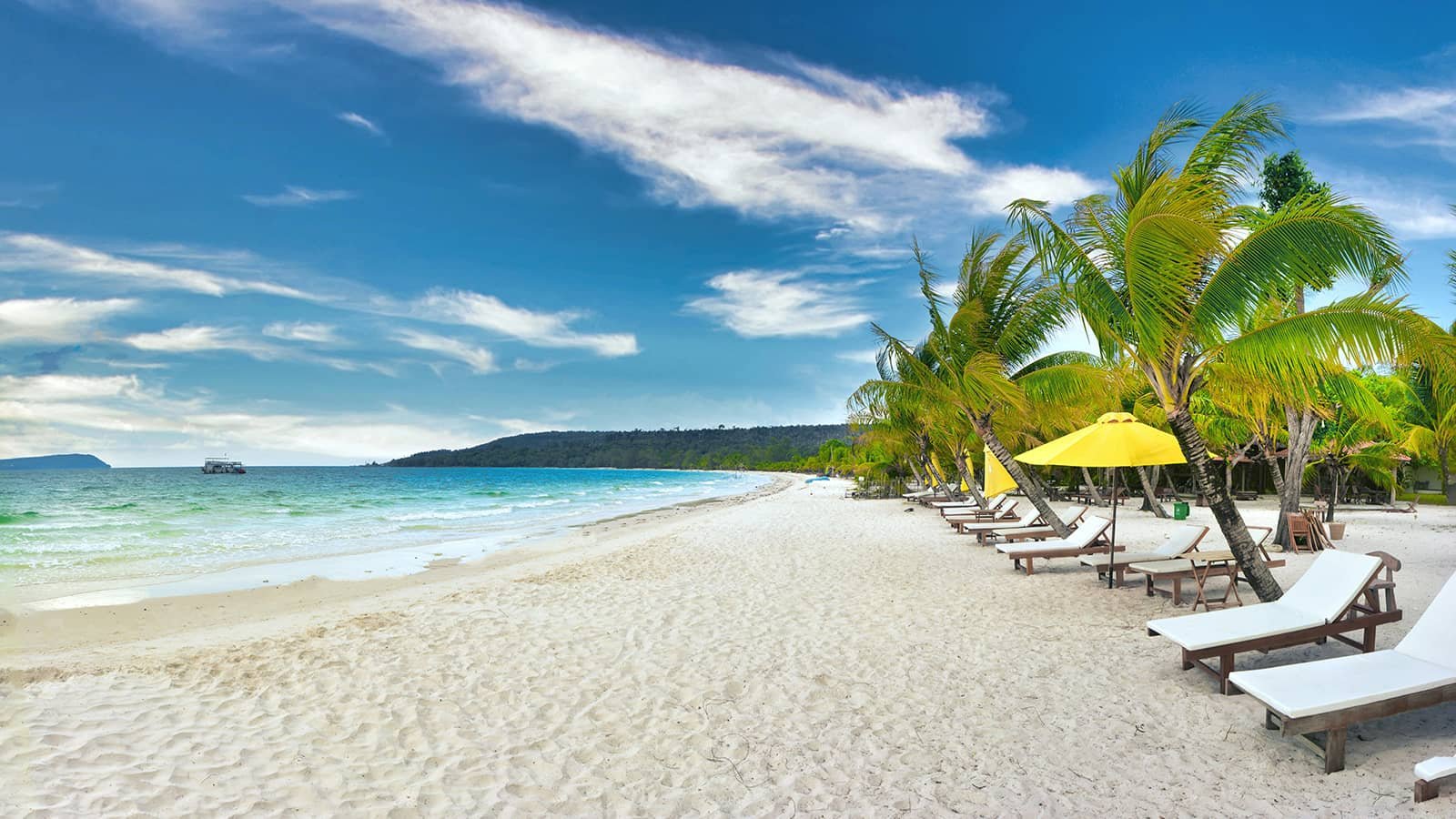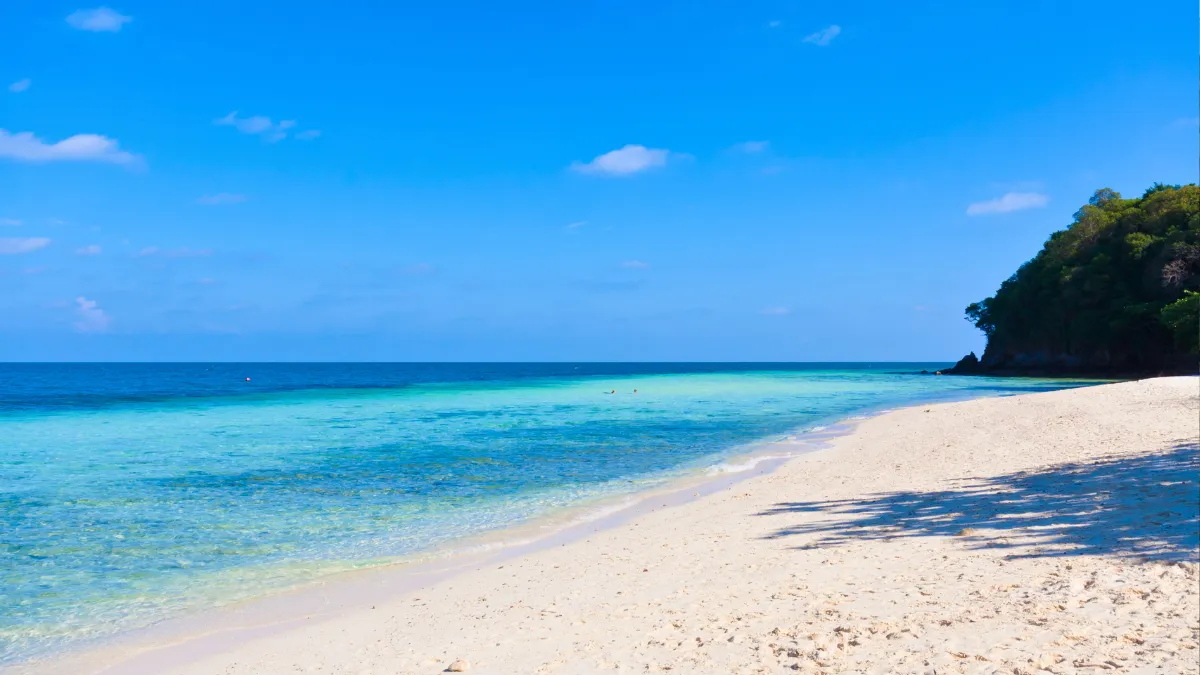
You’re about to book a flight to Bali. Alone. That mix of excitement and nerves? Normal. Every solo traveler feels it before their first trip to this Indonesian island. Bali isn’t just beaches and temples. It’s rice terraces that climb mountains. Night markets packed with food you’ve never tasted. Waterfalls hidden in jungle valleys. Our Bali travel guide cuts through the tourist trap advice. You’ll get real costs, actual safety tips, and places most visitors never find. No fluff. Just what works.

Whether you’re planning five days or five weeks, traveling on $30 per day or $100, this guide has you covered. Let’s get you ready.
Why Bali Works For Solo Travelers
Bali makes solo travel easy. The infrastructure exists. Millions of independent travelers visit each year. You’re never truly alone unless you want to be.
The island has developed specifically for people traveling solo. Hostels run daily group trips. Cafes are built for laptop workers and solo diners. Scooter rentals don’t bat an eye at single renters.
Why Solo Travelers Choose Bali
- Massive solo traveler community year-round
- Easy to meet people at hostels and coworking spaces
- Safe for solo exploration (with normal precautions)
- Affordable accommodation from $8 per night
- Simple transport options (scooters, drivers, ride apps)
- English widely spoken in tourist areas
- Excellent wifi for remote workers
- Variety of experiences from party to spiritual to adventure
Challenges To Expect
- Overwhelming tourist crowds in peak areas
- Traffic congestion between major towns
- Inconsistent pricing (tourist vs local rates)
- Scooter accidents common for inexperienced riders
- Aggressive touts at major tourist sites
- Quality varies dramatically between areas
- Rainy season limits some activities
The island spans roughly 95 miles east to west. Each region offers different vibes. Canggu attracts digital nomads. Ubud draws yoga practitioners and culture seekers. Uluwatu pulls in surfers and beach lovers.
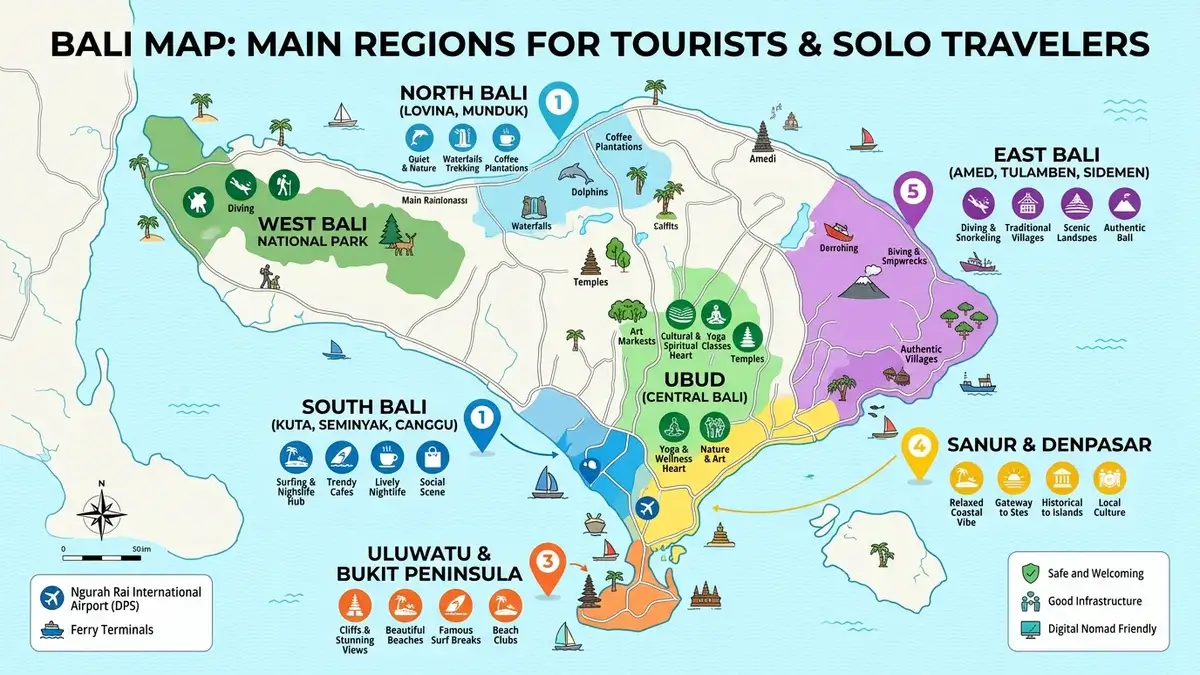
You can base yourself in one spot or bounce between regions. Most solo travelers spend 2-3 weeks exploring multiple areas. The flexibility is yours.
Top Destinations And Attractions In Bali
Bali packs diverse experiences into one small island. Temple complexes dot cliffsides. Black sand beaches stretch along the north coast. Rice terraces cascade down volcanic slopes.
Here’s where to focus your time as a solo traveler. These destinations balance eco-friendly practices, accessibility, safety, and genuine cultural experience.
Ubud: Cultural Heart And Rice Terrace Hub
Ubud sits in Bali’s central highlands. Cool temperatures. Dense jungle. Ancient temple complexes. This area draws people seeking culture over beach time.

The Tegallalang Rice Terraces showcase Bali’s UNESCO-recognized subak irrigation system. Arrive before 8 AM to beat tour groups. Entry costs 20,000 IDR ($1.30). Local cafes overlook the terraces if you want to sit and absorb the view.
Ubud’s Monkey Forest hosts over 700 long-tailed macaques. These monkeys steal glasses, phones, and food. Keep belongings secured. Don’t make eye contact. Entry fee: 80,000 IDR ($5.20). The forest contains three temple complexes worth exploring.

Ubud Palace (Puri Saren Agung) sits in the town center. Free entry during the day. Traditional Legong dance performances happen nightly at 7:30 PM. Tickets cost 100,000 IDR ($6.50). Book same-day at the palace entrance.
For temple experiences, visit Tirta Empul. This water temple hosts purification rituals where locals and visitors bathe in sacred springs. Bring a sarong (required). Entry: 50,000 IDR ($3.25). The water is cold. The experience is authentic.
Ubud Solo Traveler Tips
5 Tips for Travel
- Stay in central Ubud for walkability or outlying areas (Penestanan, Nyuh Kuning) for nature immersion
- Book cooking classes through your accommodation – excellent way to meet other travelers
- Campuhan Ridge Walk offers free sunrise/sunset hiking with rice paddy and river valley views
- Skip overpriced Ubud Art Market; better deals exist in surrounding villages
- Rent a scooter to reach distant temples and waterfalls independently
Canggu: Digital Nomad Central And Surf Scene
Canggu transformed from quiet surf village to nomad hub in under a decade. Coworking spaces line the main streets. Healthy cafes outnumber warungs. English is the default language.
The beach scene centers on several breaks. Echo Beach draws experienced surfers. Batu Bolong Beach suits beginners. Black sand. Strong currents. Not ideal for swimming but perfect for sunset watching.

Tanah Lot Temple perches on a rocky outcrop offshore. One of Bali’s most photographed temple complexes. Visit at sunset. Expect crowds. Entry: 60,000 IDR ($3.90). The temple sits on private land, so additional fees apply for certain viewing areas.
For solo travelers, Canggu excels at social connection. The Lawn hosts weekly community dinners. Pretty Poison and Old Man’s pack with people every night. You’ll meet other travelers without trying.
Canggu Essentials For Solo Travelers
6 Canggu Travel Tips
- Accommodation runs $15-40/night; book near Batu Bolong for central location
- Rent scooters from established shops (80,000-100,000 IDR per day)
- Try surf lessons at Batu Bolong Beach (300,000 IDR for 2 hours including board)
- Work from Dojo Canggu or Biliq coworking spaces to meet digital nomads
- Join Sunday’s Beach Club for pool access (minimum spend required)
- Traffic is brutal during peak hours (8-10 AM, 4-7 PM)
Uluwatu: Cliff Temples And World-Class Surf
The Bukit Peninsula offers dramatic cliff scenery and consistent surf. Less crowded than Canggu. More spread out than Ubud. Transportation requires scooters or drivers.

Uluwatu Temple (Pura Luhur Uluwatu) is mandatory. Clifftop temple complex overlooking the Indian Ocean. Arrive by 5:30 PM for the Kecak fire dance. Entry: 50,000 IDR ($3.25). Dance performance: 150,000 IDR ($9.75). Monkeys here are particularly aggressive – secure your belongings.
The beaches require descending steep stairs. Padang Padang Beach appears in “Eat Pray Love.” Small cove. Clear water. Gets packed. Better options exist at Thomas Beach and Nyang Nyang Beach for solitude.
Single Fin dominates the sunset scene. Clifftop bar overlooking surf breaks. Sunday sessions draw hundreds. Cover charge varies. The view is free if you arrive early and order drinks.
Uluwatu Navigation For Solo Visitors
5 Uluwatu Travel Tips
- Distances between beaches are significant – plan transportation carefully
- Limited public transport; scooter rental essential ($6-7/day)
- Accommodation clusters in Bingin, Padang Padang, and Pecatu areas
- Most restaurants close by 10 PM unlike Canggu’s late-night scene
- Beach access involves stairs – sometimes 300+ steps down and back up
Nusa Penida: Remote Island Day Trips
Nusa Penida is Bali’s wild neighbor island. Dramatic cliff formations. Crystal water. Minimal development. Day trips are popular but rushing. Overnight stays let you explore properly.
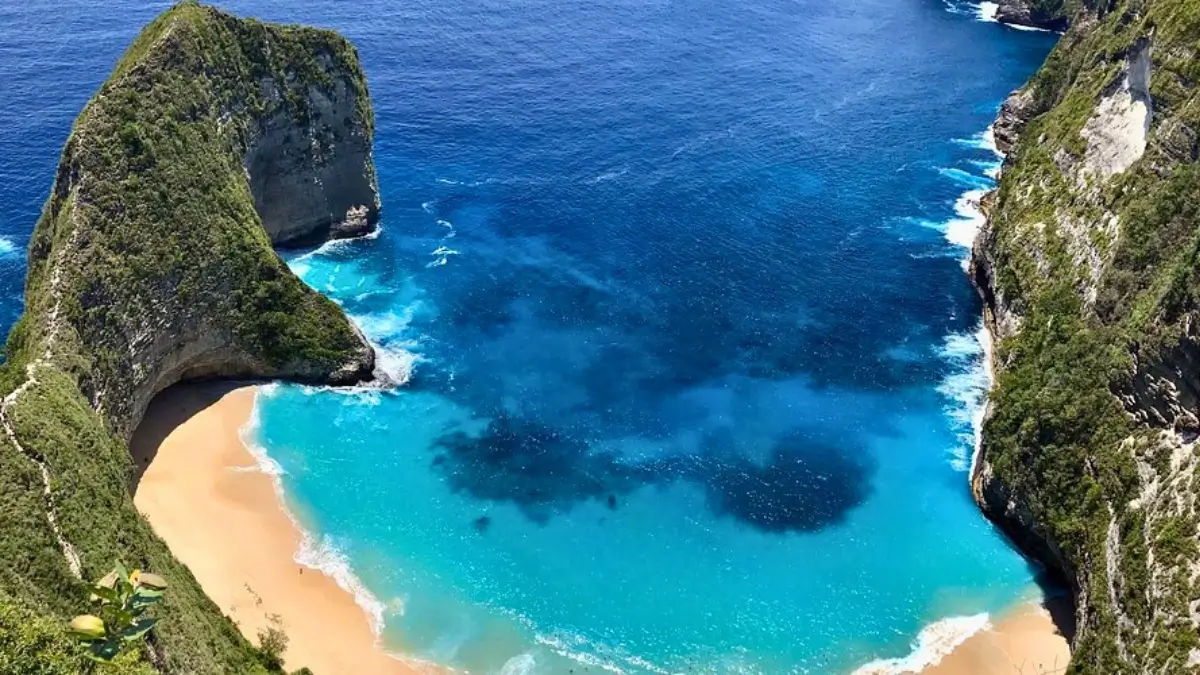
Kelingking Beach features the famous T-Rex cliff formation. The viewpoint is accessible. The beach requires a steep, dangerous descent. Many turn back halfway. The view from the top is the real attraction anyway.
Angel’s Billabong and Broken Beach sit next to each other. Natural rock pool and collapsed cliff archway. Arrive early (7-8 AM) before tour groups. Free entry. Watch tide schedules – high tide fills the billabong and creates dangerous currents.
Snorkeling at Crystal Bay offers manta ray encounters and excellent visibility. Rent gear on the beach (50,000 IDR). Best time: April to November. The bay can get choppy during other months.
Getting To Nusa Penida Solo
6 Nusa Penida Travel Tips
- Fast boat from Sanur takes 30-45 minutes (150,000-200,000 IDR one way)
- Book tickets day before at harbor or through accommodation
- Waters can be rough – take motion sickness medication if prone
- Hire a driver on Nusa Penida (500,000-700,000 IDR for full day tour)
- Roads are rough – scooter rental risky for inexperienced riders
- Consider staying overnight to catch sunrise at Diamond Beach
Amed And East Bali: Diving And Quiet Villages
East Bali sees fewer tourists. Black sand beaches. Laid-back fishing villages. Mount Agung looms in the background.
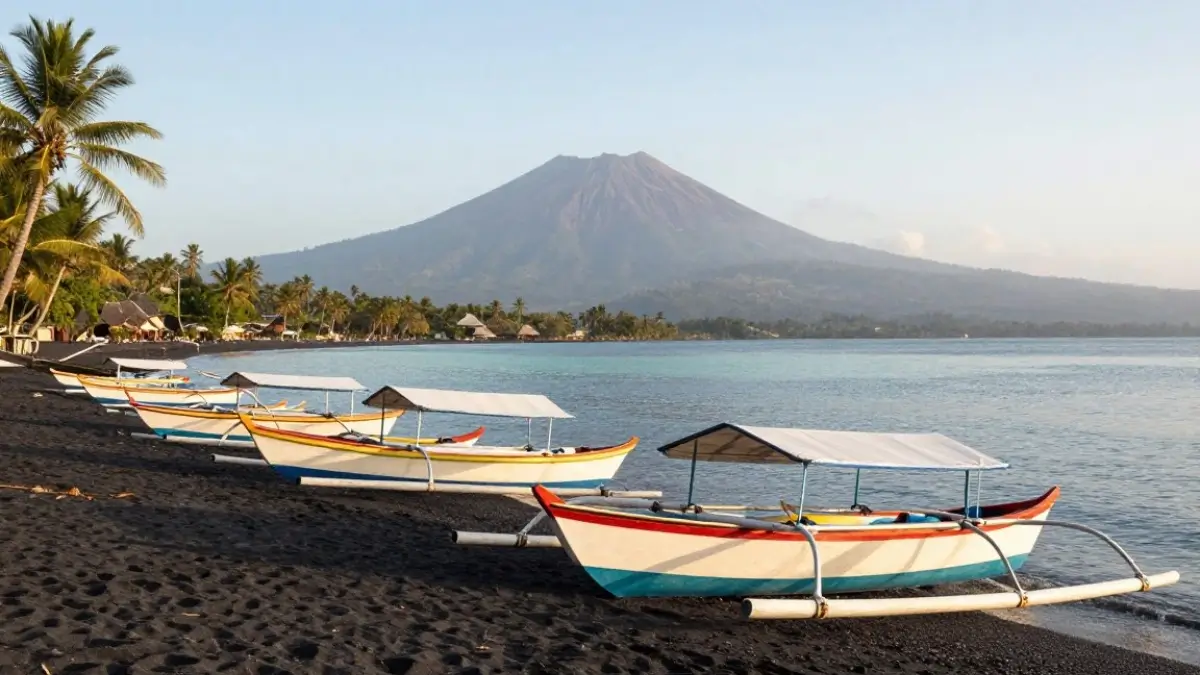
Amed is Bali’s diving center. The USAT Liberty shipwreck in Tulamben offers world-class diving and snorkeling. The wreck sits 30 meters offshore in 5-30 meters of water. Snorkel trips cost 100,000 IDR including gear. Diving packages start at 650,000 IDR for two dives.
Tirta Gangga Water Palace showcases ornate pools and fountains. Entry: 50,000 IDR ($3.25). You can wade through the pools. Bring a towel and extra clothes. The setting is peaceful – most tour buses skip this area.
Lempuyang Temple (Gates of Heaven) requires climbing 1,700 steps. The famous Instagram shot of the gates framing Mount Agung draws huge crowds. Arrive at sunrise (5:30 AM) to avoid 2-hour photo queues. Entry: donation requested. Wear proper temple attire.
Amed For Solo Adventurers
6 Amed Travel Tips
- Quieter than south Bali – limited nightlife and social scene
- Perfect for solo travelers seeking relaxation over partying
- Scooter journey from Ubud takes 2.5-3 hours through mountain roads
- Accommodation is affordable ($10-30/night) with ocean views
- Join dive groups to meet other travelers
- Fresh seafood dominates restaurant menus – prices half of south Bali
Waterfalls Worth The Journey
Bali hides dozens of waterfalls in its jungles. Most require hiking. Some need local guides. All offer cooling relief from tropical heat.
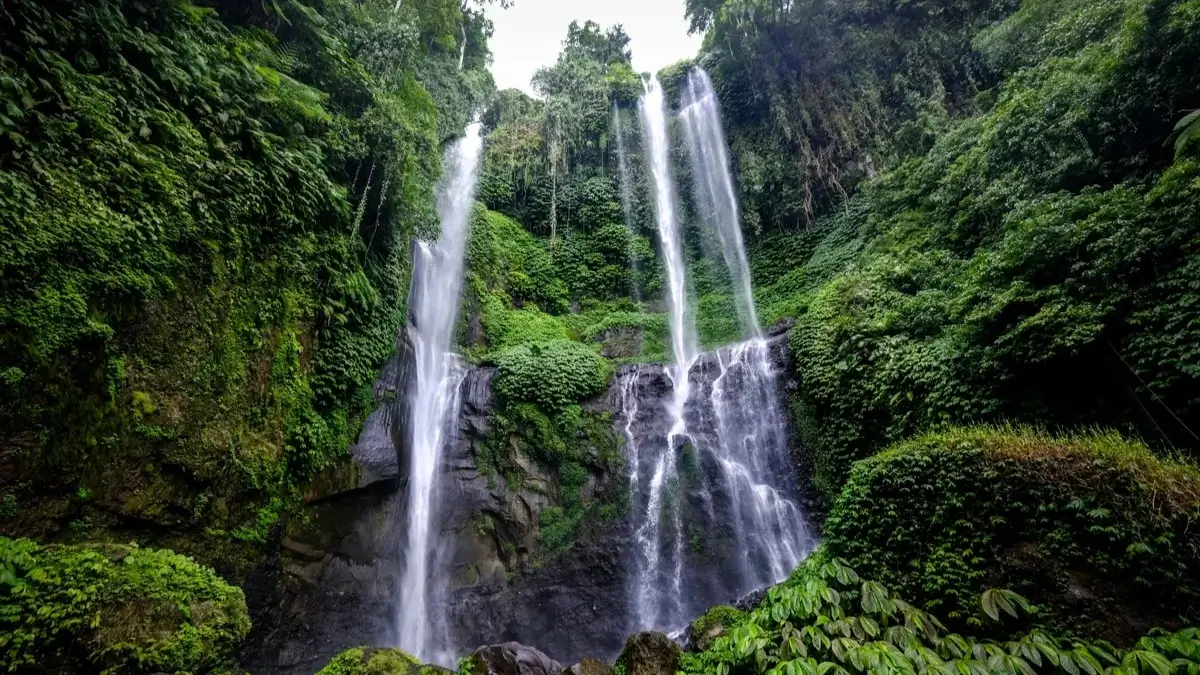
Sekumpul Waterfall ranks as Bali’s most spectacular. Three separate falls drop 80 meters through dense jungle. The trek requires crossing rivers and descending steep paths. Hire a local guide in Sekumpul village (150,000 IDR). Entry plus guide package: 250,000 IDR ($16). Wear proper hiking shoes. Expect to get wet.
Tegenungan Waterfall sits close to Ubud. Easy access. Developed for tourists. Steps lead down to the base. Entry: 20,000 IDR ($1.30). Arrive before 9 AM to avoid crowds. The pool is swimmable when water levels are safe.
Tukad Cepung Waterfall offers unique photography. Sunlight beams through the cave opening onto the falls. Visit between 10 AM and 12 PM for the best light. Entry: 15,000 IDR ($1). The walk involves stairs and wading through shallow streams.
Waterfall Visit Guide
5 Waterfall Travel Tips
- Bring swimwear, waterproof phone case, and towel to all waterfalls
- Wear shoes with grip – flip-flops cause most waterfall injuries
- Morning visits mean fewer crowds and better light
- Some waterfalls require modest dress codes (knees and shoulders covered)
- Locker rentals available at popular sites (10,000-20,000 IDR)
Where To Stay: Best Areas For Solo Travelers
Choosing the right base determines your Bali experience. Stay in the wrong area and you’ll spend hours in traffic. Pick wisely and everything you need is walkable or a short scooter ride away.
Solo travelers have specific needs. Social hostels for meeting people. Safe neighborhoods for late returns. Proximity to cafes for working. Good scooter parking. Reliable wifi.
Ubud: Cultural Immersion And Nature
Ubud works for solo travelers wanting community and culture. Yoga studios on every corner. Organic cafes packed with laptop workers. Rice terraces within scooter distance.
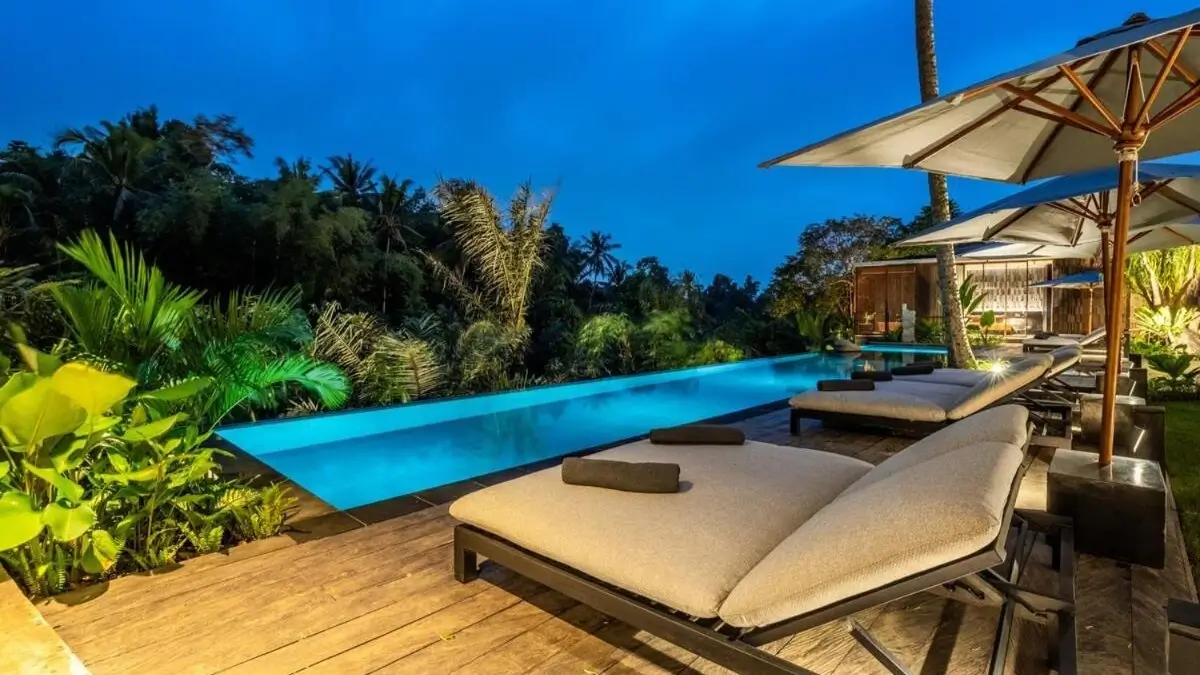
Central Ubud gets loud. Monkeys raid hotel rooms. Traffic clogs narrow streets. Consider staying in Penestanan or Nyuh Kuning – 10 minutes from center, much quieter, better value.
Ubud Accommodation Budget Ranges
| Budget Level | Price Per Night | What You Get | Best Areas |
| Budget Hostels | $8-15 | Dorm beds, shared bathrooms, common areas, basic breakfast, social atmosphere | Central Ubud, near Monkey Forest |
| Private Guesthouses | $15-30 | Private room, fan or AC, basic breakfast, pool access, quiet setting | Penestanan, Nyuh Kuning, Sambahan |
| Mid-Range Hotels | $30-60 | Private bungalow, AC, hot water, pool, rice field views, full breakfast | Tegallalang, Campuhan Ridge area |
| Boutique/Luxury | $60-150+ | Villa accommodation, jungle/river views, spa services, premium breakfast, concierge | Sayan Valley, Payangan, outskirts |
Canggu: Social Hub For Digital Nomads
Canggu is where solo travelers meet other solo travelers. Every cafe has people on laptops. Every bar has people traveling alone. Finding company takes zero effort.
The area sprawls. Batu Bolong Beach is the epicenter. Berawa sits north and feels slightly more upscale. Echo Beach to the south offers surf breaks and fewer crowds.
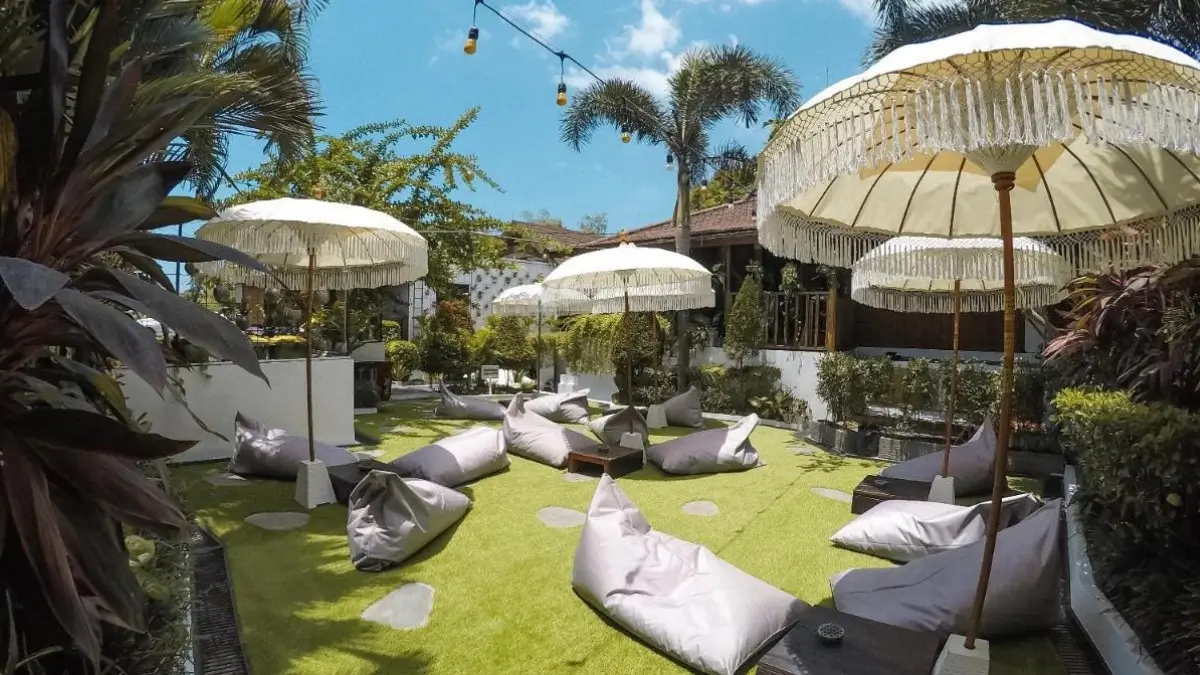
Book accommodation within walking distance of main areas. Canggu’s traffic makes short scooter trips take 20 minutes. Central location saves frustration.
Canggu Neighborhood Guide
4 Canggu Neighborhoods
- Batu Bolong: Most social, walkable to everything, highest prices, loud at night
- Berawa: Slightly quieter, newer development, beach clubs, 10-minute scooter to Batu Bolong
- Echo Beach: Surf-focused, more local feel, fewer tourists, limited walkable restaurants
- Pererenan: Up-and-coming, rice fields still visible, 15 minutes to Batu Bolong, better value
Uluwatu/Bukit Peninsula: Beach And Surf Focus
Uluwatu attracts surfers and people prioritizing beach time over cultural sites. The area is spread out. Each beach has its own mini-community.
Transportation between beaches requires scooters. Walking isn’t practical. The upside? Less density. More nature. Fewer crowds.

Bingin has the backpacker surf vibe. Padang Padang offers mid-range options. Pecatu/Ungasan provides luxury resorts. Choose based on your budget and surf ability.
Uluwatu Accommodation Considerations
6 Uluwatu Accommodation Tips
- Most accommodation requires climbing stairs – sometimes many stairs
- Limited supermarkets – stock up before arriving or pay premium at mini-marts
- Social scene exists but smaller than Canggu
- Sunset drinks at Single Fin are the main group activity
- Scooter rental essential – factor 80,000 IDR/day into budget
- Beach access separate from accommodation in most cases
Sanur: Quiet Beach Town For Relaxation
Sanur is Bali’s original beach resort. Older crowd. Families. Retirees. Much quieter than the south and west coast party areas.
The beach promenade stretches for kilometers. Calm water. Gentle waves. Perfect for swimming. Sunrise views over Nusa Penida island.
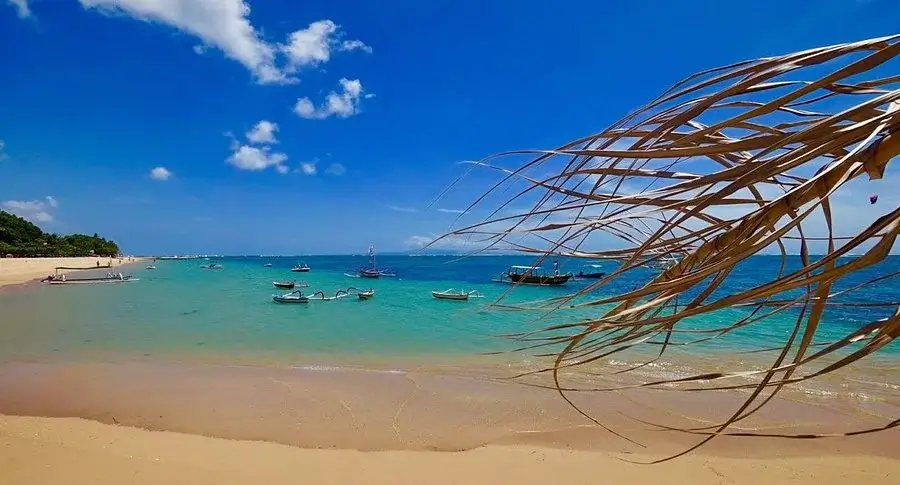
Solo travelers seeking quiet recovery time appreciate Sanur. It’s boring if you want nightlife. It’s perfect if you want to decompress. The harbor connects to Nusa Lembongan and Nusa Penida for day trips.
Amed: Remote East Coast Diving
Amed is for solo travelers who prioritize diving, snorkeling, and escaping tourist crowds. The coast stretches along 14 kilometers of black sand beaches.
Accommodation clusters in small fishing villages. Each area has a few restaurants and dive shops. Limited nightlife. Early bedtimes. The pace is slow.
Most solo travelers staying in Amed are divers or people needing a break from busy south Bali. The community is small but friendly. Meet people at dive shops and hotel restaurants.

Tribal Bali – Canggu
Social hostel near Batu Bolong Beach. Daily activities, pool parties, and group dinners. Excellent for meeting other solo travelers. Dorm beds include lockers, reading lights, and USB charging ports.
Price: $12-18/night (dorm), $35-50/night (private room)
Location: 5-minute walk to beach, central Canggu
Best For: Solo travelers 25-35, digital nomads, social butterflies
- Free breakfast buffet included
- Coworking space with high-speed wifi
- Surfboard and scooter rental on-site
- Weekly BBQ nights and movie screenings
- 24-hour security and lockers
Puri Garden – Ubud
Family-run guesthouse in quiet Nyuh Kuning area. Rice paddy views from every room. Traditional Balinese architecture meets modern comfort. Perfect for solo travelers wanting peace while staying close to central Ubud.
Price: $22-35/night (private room with breakfast)
Location: Nyuh Kuning, 10-minute scooter to Ubud center
Best For: Solo travelers seeking quiet, nature lovers, yoga practitioners
- Swimming pool overlooking rice fields
- Balinese breakfast included
- Free yoga classes three times weekly
- Scooter rental arranged (70,000 IDR/day)
- Helpful staff book tours and transport

Mata Bingin – Uluwatu
Legendary surfer accommodation in Bingin. Basic but clean bungalows with ocean views. Social atmosphere without hostel party vibes. Walking distance to surf breaks and Single Fin sunset bar.
Price: $25-40/night (private bungalow)
Location: Bingin Beach, cliff-top position
Best For: Surfers, solo travelers 25-40, beach lovers
- On-site restaurant with affordable meals
- Surfboard storage and rinse area
- Helpful local staff with surf advice
- Pool with sunset ocean views
- Short walk to multiple surf breaks
Solo Traveling to Bali?
Find More Solo-Friendly Accommodation
I’ve partnered with trusted booking platforms to help you find accommodation that actually works for solo travelers. Filter by location, budget, and amenities that matter – like social spaces, wifi quality, and solo traveler reviews.
Browse All Bali RecommendationsPractical Booking Tips For Solo Travelers
Don’t book your entire trip in advance. Reserve 3-4 nights in your first location. Extend if you like it or move to the next area.
Bali has abundant accommodation. You can book day-of in most areas except peak season (July-August, December-January). Last-minute deals appear on booking apps regularly.
- Read recent reviews focusing on wifi speed, noise levels, and solo traveler experiences
- Message hosts before booking – response time indicates management quality
- Confirm scooter parking availability if renting transport
- Ask about laundry services – most guesthouses offer washing for 20,000-30,000 IDR per kilo
- Check distance to nearest ATM and minimart
- Verify if breakfast is included and what time it’s served
- Understand cancellation policies – flexibility matters for solo travelers
Safety Tips For Solo Travelers In Bali
Bali is safe compared to many destinations. Violent crime against tourists is rare. Most problems come from petty theft, scooter accidents, and tourist scams.
You’re more likely to hurt yourself on a scooter than encounter serious crime. That’s the real safety picture. Let’s cover what actually matters.
Scooter Safety: The Biggest Risk
Scooter crashes injure more tourists than anything else in Bali. Road conditions vary dramatically. Drivers follow loose traffic rules. Helmets save lives but won’t prevent broken bones.
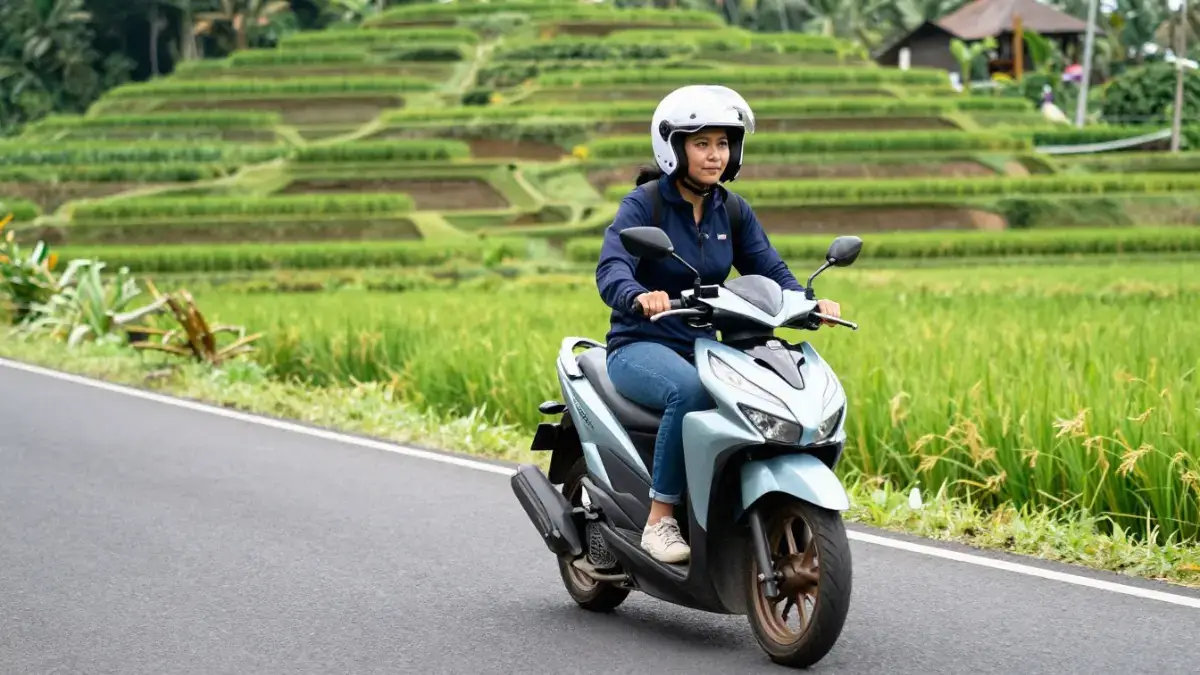
Only rent a scooter if you’ve ridden before. Bali isn’t the place to learn. Roads are chaotic. Drivers cut across lanes without warning. Dogs and chickens wander into traffic.
Scooter Accident Prevention
- Wear a proper helmet (not the flimsy ones rental shops provide)
- Get an international driving permit before arriving – police checkpoints fine unlicensed riders 500,000-1,000,000 IDR
- Purchase scooter insurance – medical bills from accidents cost thousands of dollars
- Avoid riding at night – many roads lack lighting and drunk drivers increase
- Never ride in flip-flops – road rash from sliding in sandals is brutal
- Check brakes and lights before leaving rental shop
- Stay off scooters during/after heavy rain – roads become slippery
- Use turn signals and assume other drivers don’t see you
If you crash and damage the scooter, rental shops charge repair costs. Take photos of all existing damage before riding away. Shops try to blame previous damage on you.
Common Scams And How To Avoid Them – Bali Travel Guide
Bali’s scams target inexperienced travelers. None are violent. Most involve overcharging or fake services. Stay aware and you’ll be fine.
Money Exchange Scams
Dishonest money changers use rigged calculators or sleight-of-hand to short-change tourists. The rate looks great. The cash you receive is less than calculated.
Use official money changers like Central Kuta or BMC. Avoid street-side booths offering rates significantly above bank rates. Count your money before leaving the counter. Recount it. Don’t let staff rush you.
Fake Taxi Drivers
Men claiming to be taxi drivers approach tourists at the airport and tourist sites. They quote reasonable prices then demand triple at the destination. Or they claim the meter is broken.
Use official Blue Bird taxis or ride-sharing apps (Grab, Gojek). Never get in unmarked vehicles. Agree on prices before entering any taxi without a meter.
Temple “Guides” And Donations
People at temple entrances claim you need a guide or must pay large donations. Real temple entry fees are clearly posted. Donations are optional.
Politely decline uninvited guides. Pay posted entry fees only. If making a donation, small bills (20,000-50,000 IDR) are appropriate.
Closed Road/Shop Scam
A friendly local tells you your destination is closed for a ceremony. They offer to take you somewhere better – which pays them commission.
Verify closure information yourself. Call ahead or check online. Most “closed for ceremony” claims are lies to redirect tourists.
Emergency Numbers In Bali
Save these numbers in your phone before arriving. Hotel staff can also help contact emergency services.
Police: 110
Ambulance: 118
Tourist Police: +62 361 224111
BIMC Hospital (24/7): +62 361 761263
International SOS: +62 361 710505
Health And Medical Considerations
Bali’s medical facilities are adequate for minor issues. Serious medical emergencies may require evacuation to Singapore or Australia. Travel insurance covering medical evacuation is essential.
Common Health Issues
Bali belly affects most visitors at some point. Contaminated water, unfamiliar bacteria, or food handling causes stomach problems. Symptoms range from mild discomfort to severe diarrhea.
- Drink only bottled water – even for brushing teeth
- Avoid ice in drinks at questionable establishments
- Wash hands frequently or carry hand sanitizer
- Stick to busy restaurants with high turnover
- Peel fruits yourself rather than eating pre-cut fruit
Pack Imodium, oral rehydration salts, and antibiotics if prescribed by your doctor. Most pharmacies (apotek) sell medications without prescriptions. Guardian and Century pharmacies stock familiar brands.
Mosquito-Borne Diseases
Dengue fever occurs in Bali. No vaccine exists. Prevention means avoiding mosquito bites. Dengue mosquitoes bite during the day, unlike malaria mosquitoes.
Use DEET-based repellent. Wear long sleeves during dawn and dusk. Sleep under mosquito nets in budget accommodation. Burn mosquito coils in your room at night.
Sun Protection
Bali sits 8 degrees south of the equator. The sun is intense. Sunburn happens in 15-20 minutes without protection.
Sunscreen sold in Bali often has low SPF or expired stock. Bring reef-safe sunscreen from home. Reapply every 2 hours. Wear hats and UV-protective clothing for extended outdoor time.
Solo Female Traveler Safety – Bali Travel Guide
Bali is generally safe for solo female travelers. Harassment is less common than many Southeast Asian destinations. That said, normal precautions apply.

Avoid walking alone late at night on dark roads. Use ride-sharing apps rather than walking after 10 PM. Stay in well-lit areas. Trust your instincts – if a situation feels wrong, leave.
Dress modestly when visiting temples and rural areas. Cover shoulders and knees. This shows respect and reduces unwanted attention.
Don’t leave drinks unattended at bars. Accept drinks only if you watch them being made. Stick with other travelers when going out at night.
Specific Concerns For Solo Women
- Catcalling is rare but happens occasionally – ignore and keep walking
- Balinese men may offer “friendship” that’s actually romantic interest – be direct if not interested
- Massage services vary in professionalism – read reviews and stick to established spas
- Beach vendors are persistent but not aggressive – firm “no thank you” works
- Swimming alone at remote beaches carries risk – stick to populated beaches or swim with others
Protecting Your Belongings – Bali Travel Guide
Petty theft happens at beaches, cafes, and tourist sites. Pickpocketing is rare. Opportunistic bag-snatching from scooters occurs occasionally.
Don’t leave valuables on the beach unattended. Bring only what you need. Use waterproof bags that attach to your body when swimming.
In cafes, keep your phone and wallet in sight. Don’t hang bags on chair backs. Laptop theft from cafes is uncommon but happens.
Use accommodation safes for passports, extra cash, and electronics. Take photos of important documents and store them in cloud storage.
Scooter Security
Lock your scooter properly. Thieves target tourist-rented scooters. Use the steering lock and add your own chain lock if possible.
Don’t leave bags in the seat compartment. Phone snatching from baskets happens at stoplights. Keep valuables in a backpack worn on your front.
What To Eat: Balinese Food Guide For Solo Travelers
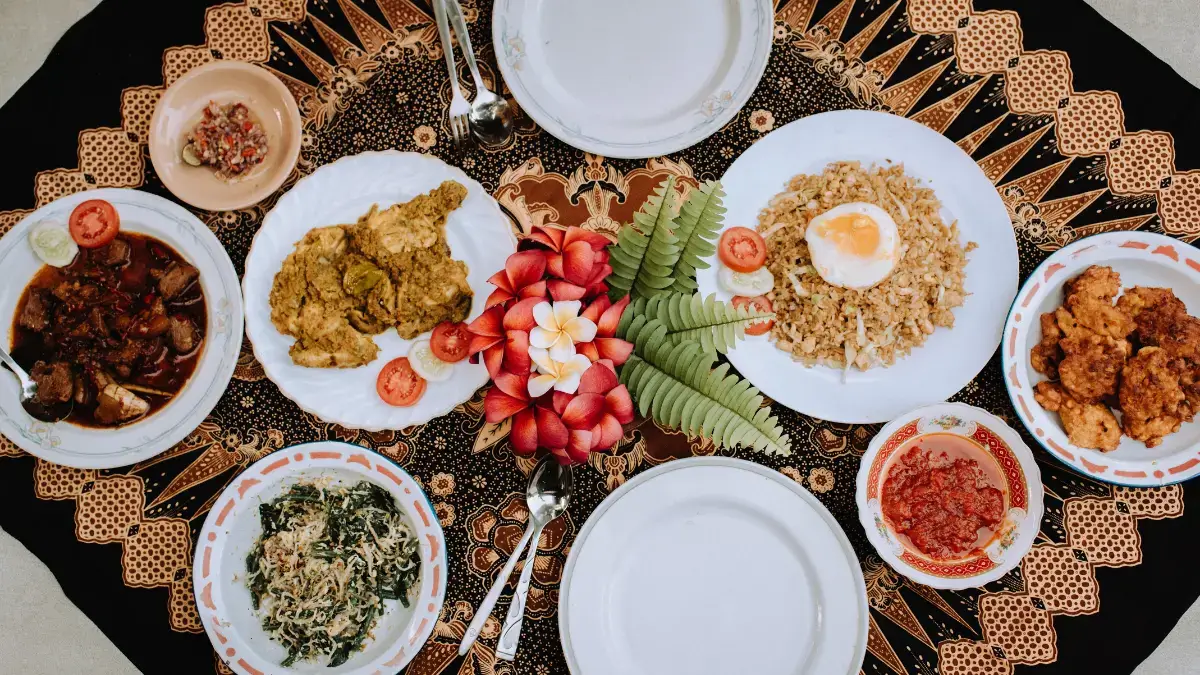
Balinese food goes beyond nasi goreng and satay. Real local cuisine incorporates complex spice pastes, coconut, and ingredients you’ve never encountered. The food scene splits between authentic warungs and Western-influenced cafes.
Solo travelers have advantages here. Order multiple small dishes to sample variety. Eat at street stalls without looking awkward alone. Try restaurants outside tourist comfort zones.
Essential Balinese Dishes To Try
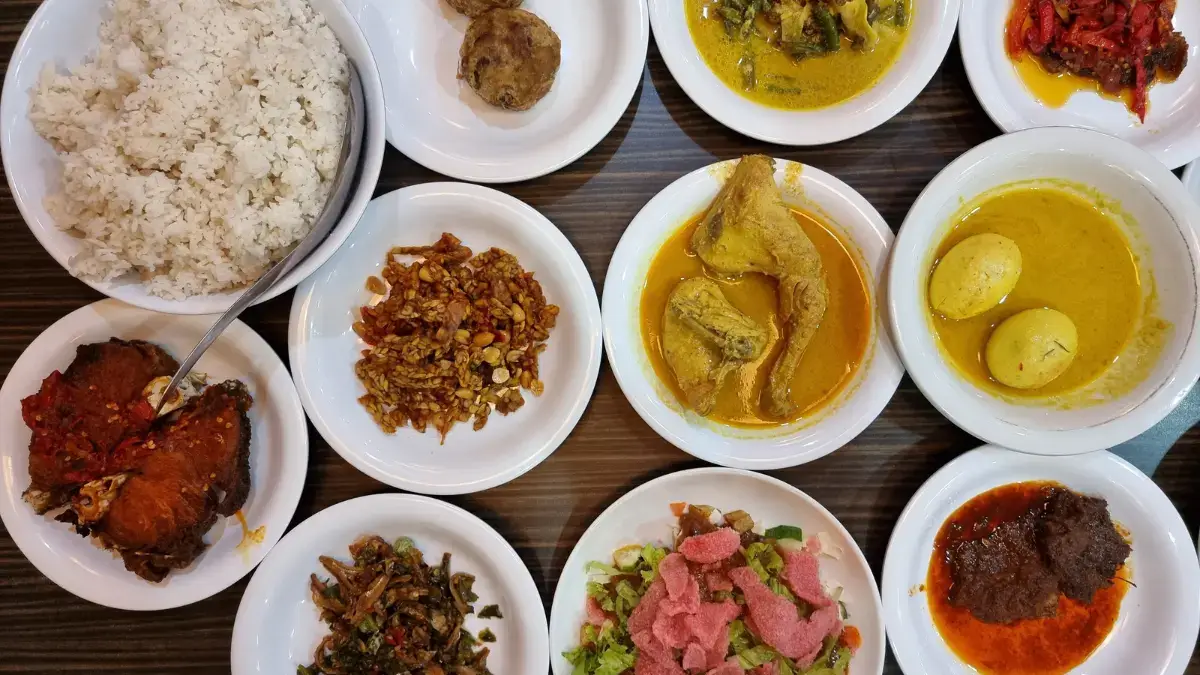
Traditional Balinese cuisine differs from Indonesian food in other regions. Hindu influence means pork appears regularly. Spice levels are moderate compared to Padang or Manado cuisine.
Babi Guling (Suckling Pig)
Bali’s most famous dish. Whole pig stuffed with spice paste, vegetables, and cassava leaves, then spit-roasted. The skin is crispy. The meat falls apart. Served with rice, lawar (vegetable salad), and blood sausage.
Best spots: Ibu Oka in Ubud (the original, always packed), Warung Babi Guling Dobiel (locals’ choice), Candra Babi Guling in Denpasar. Price: 35,000-50,000 IDR per portion.
Lawar
Chopped vegetables, coconut, and minced meat mixed with rich spices and sometimes fresh blood. Sounds intense. Tastes incredible. Texture is unique – not quite a salad, not quite a curry.
Green lawar uses long beans and leaves. Red lawar includes blood. White lawar skips the blood. Order it as a side dish with babi guling or on its own with rice.
Sate Lilit
Minced fish or chicken mixed with coconut, lime leaves, and spices, wrapped around lemongrass stalks and grilled. Different from standard satay – no peanut sauce, more aromatic.
Street vendors sell them for 5,000-10,000 IDR per stick. Perfect solo traveler snack. Cheap. Filling. Found everywhere.
Bebek Betutu
Duck stuffed with spices and wrapped in banana leaves, then slow-cooked for hours. The meat is fall-off-the-bone tender. The spice paste penetrates every bit.
This is ceremony food. Restaurants serve it but require advance orders (6+ hours). Warung Murni in Ubud prepares it daily. Price: 75,000-100,000 IDR. Large portion – consider sharing or saving half.
Nasi Campur Bali
Mixed rice with small portions of various dishes. Each stall has different options. Typically includes meat or fish, vegetables, sambal, tempeh, tofu, and crispy bits.
Perfect for solo travelers. You get variety without ordering multiple full dishes. Point to what looks good. They’ll pile it on rice. Price: 15,000-25,000 IDR at local warungs.
Where To Eat As A Solo Traveler
Eating alone in Bali is completely normal. No one stares. No one judges. Restaurants welcome solo diners without hesitation.
Warungs: Local Eateries
Warungs are small family-run restaurants. Basic seating. Limited menus. Incredible food. Prices are 30-50% lower than tourist restaurants.
Look for busy warungs packed with locals. High turnover means fresh food. If the place is empty at meal times, skip it.
Menu might be in Indonesian. Photos help. Pointing works. Most warung owners speak basic English in tourist areas. Standard phrases:
- “Apa ada menu?” (Do you have a menu?)
- “Yang mana enak?” (Which one is delicious?)
- “Tidak pedas” (Not spicy) or “Pedas sedikit” (Little bit spicy)
- “Berapa?” (How much?)
Pay after eating. Bills rarely arrive automatically. Ask for “Bon” when ready. Tipping isn’t expected but 5,000-10,000 IDR is appreciated for excellent service.
Night Markets (Pasar Malam)
Night markets offer variety, cheap prices, and local atmosphere. Vendors sell everything from satay to fresh juice to fried snacks.
Gianyar Night Market (near Ubud) operates nightly. Sanur Night Market happens Friday-Saturday. Singaraja Night Market in north Bali runs daily.
Arrive hungry. Budget 50,000-80,000 IDR to sample multiple items. Bring hand sanitizer. Eating utensils might be minimal.
Cafe Culture In Tourist Areas
Canggu and Ubud overflow with Western-style cafes. Avocado toast. Smoothie bowls. Flat whites. Instagram-worthy presentations.
These cafes cater to digital nomads and health-conscious travelers. Prices match Western standards (50,000-120,000 IDR per meal). The wifi is excellent. The air conditioning works. You can sit for hours.
Solo travelers work from these cafes during the day. It’s socially acceptable. Order one meal and multiple coffees. No one rushes you.
Food Safety For Solo Travelers
Street food in Bali is generally safe if you follow basic rules. Your stomach might react to unfamiliar bacteria regardless of food safety. That’s normal.
- Eat where locals eat – high turnover means fresh ingredients
- Avoid pre-cut fruit sitting in the sun for hours
- Watch food being cooked – hot food is safe food
- Skip shellfish and raw seafood unless at reputable restaurants
- Meat should be thoroughly cooked (no rare/medium)
- Ice from established restaurants using filtered water is usually fine
- Start with milder dishes and work up to spicier food
Budget Breakdown: Food Costs Per Day
Food costs in Bali vary enormously based on where you eat. You can survive on $5 per day or spend $50+ on single meals.
| Meal Type | Budget Option | Mid-Range Option | Splurge Option |
| Breakfast | Nasi goreng at warung: 15,000 IDR ($1) | Cafe breakfast with coffee: 60,000 IDR ($4) | Hotel buffet: 150,000+ IDR ($10+) |
| Lunch | Nasi campur at warung: 20,000 IDR ($1.30) | Restaurant meal: 75,000 IDR ($5) | Beach club lunch: 200,000+ IDR ($13+) |
| Dinner | Street food/warung: 25,000 IDR ($1.65) | Tourist restaurant: 100,000 IDR ($6.50) | Fine dining: 400,000+ IDR ($26+) |
| Snacks/Drinks | Fresh juice: 15,000 IDR, Snacks: 10,000 IDR | Cafe coffee: 45,000 IDR, Smoothie: 55,000 IDR | Cocktails: 100,000+ IDR each |
| Daily Total | 75,000-100,000 IDR ($5-6.50) | 300,000-400,000 IDR ($19-26) | 900,000+ IDR ($58+) |
Most solo travelers mix budget and mid-range options. Eat cheap local food for breakfast and lunch. Splurge on one nice dinner every few days. Total food budget: $12-18 per day.
Drinks: Water, Coffee, And Alcohol
Never drink tap water. Even locals don’t drink unfiltered water. Bottled water costs 5,000-10,000 IDR at minimarts. Restaurants provide free filtered water – ask for “air putih.”
Bali has excellent coffee. Local kopi bali is strong and slightly sweet. Cafes serve every preparation method imaginable. Prices: 25,000-50,000 IDR for quality coffee.
Beer is expensive due to taxes. Bintang (local beer) costs 35,000-50,000 IDR at restaurants, 25,000 IDR at minimarts. Spirits are cheaper. Arak (local rice spirit) is powerful and sometimes dangerous – stick to regulated brands.

Vegetarian And Vegan Options
Bali caters exceptionally well to plant-based eaters. Ubud and Canggu have dozens of fully vegan restaurants. Traditional Balinese cuisine includes many vegetable-based dishes.
Tempeh and tofu appear in most warung menus. Sayur urab (vegetable salad with coconut), gado-gado (vegetables with peanut sauce), and cap cay (stir-fried vegetables) are widely available.
Tell vendors “Saya vegetarian” (I’m vegetarian) or “Tidak pakai daging” (No meat). Most understand and accommodate. Watch out for shrimp paste and fish sauce in seemingly vegetarian dishes.
Must-Try Drinks And Desserts
Es campur: Shaved ice with colorful jellies, condensed milk, and fruit. Served in plastic bags or cups. Refreshing in tropical heat. Price: 10,000-15,000 IDR.
Jus alpukat: Avocado smoothie with chocolate syrup. Sounds weird. Tastes like dessert. Popular afternoon drink. Price: 20,000-30,000 IDR.
Klepon: Sweet rice cake balls filled with palm sugar and coated in coconut. Traditional snack sold at markets. Price: 1,000-2,000 IDR each.
Es kelapa muda: Fresh young coconut water served in the coconut. Vendors chop the top off with a machete. Add a straw. Perfectly hydrating. Price: 15,000-25,000 IDR.
Worried about Budget?
Use Our Solo Travel Budget Calculator
Use our detailed budget calculator and this post to plugin the real prices for food, accommodation, transport, and activities. And you’ll have an accurate and actual budget for your. Its just one less thing you need to worry about!
Use the budget calculatorGetting Around Bali: Transport Options For Solo Travelers
Bali lacks comprehensive public transport. Buses exist but serve mainly local routes. Getting around requires scooters, private drivers, or ride-sharing apps.
Your transport choice affects your entire trip. So before you leave consider how you are going to get around. Scooters offer freedom but require skill. Drivers provide convenience but cost more. Ride-sharing apps balance both.
Scooter Rental: Freedom And Flexibility
Most solo travelers rent scooters. It’s the cheapest way to explore independently. Traffic is chaotic but manageable once you adjust.
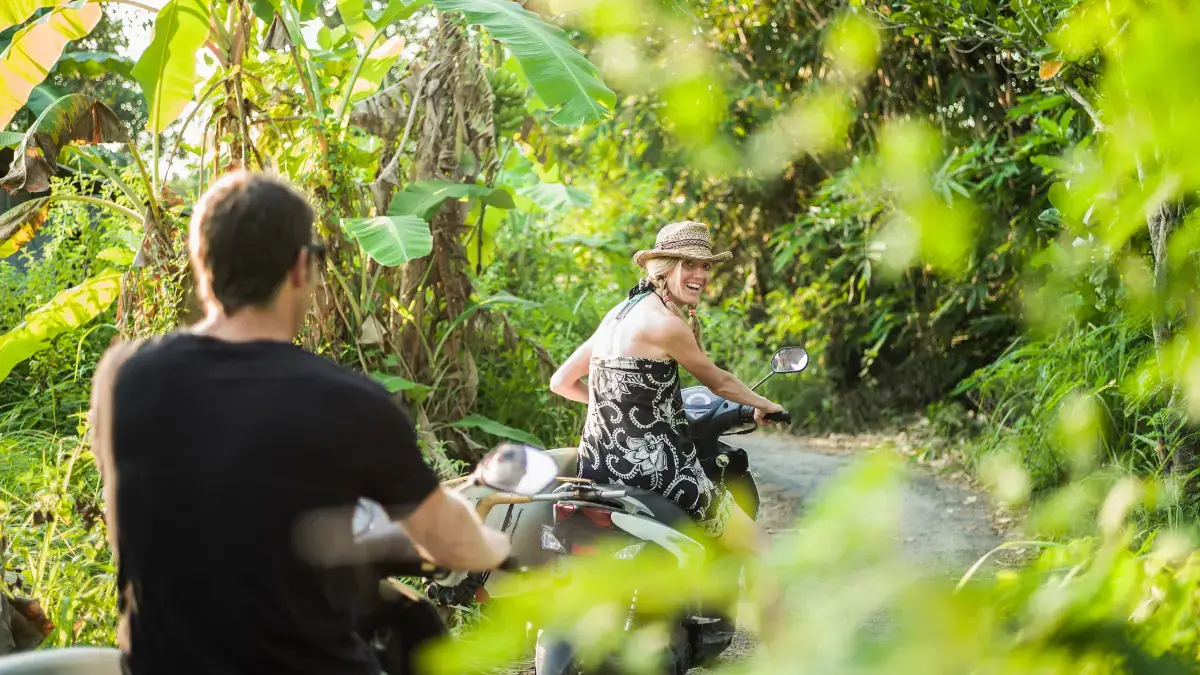
Rental shops are everywhere in tourist areas. Prices: 60,000-100,000 IDR per day depending on scooter condition and rental duration. Weekly rates drop to 50,000-70,000 IDR per day. Monthly rates go as low as 35,000-45,000 IDR per day.
Renting A Scooter Properly
Never hand over your passport as deposit. Shops ask for this. Refuse. Offer cash deposit (500,000-1,000,000 IDR) or photocopy of passport instead. If they insist on passport, find another shop.
Inspect the scooter thoroughly before riding away. Check brakes, lights, turn signals, horn, and tire condition. Take photos or video of all existing damage. Scratches. Dents. Missing parts. Everything.
Test ride around the block before committing. Make sure gears shift smoothly and brakes respond properly. Return it immediately if something feels wrong.
Get the owner’s phone number. Confirm they provide roadside assistance if the scooter breaks down. Ask what happens if you crash or the scooter gets stolen.
Scooter Insurance Reality
Rental shops offer “insurance” for 20,000-50,000 IDR per day. This usually just reduces your liability for damages, not eliminates it. Read the fine print.
Your travel insurance might cover scooter accidents if you have appropriate licenses. Check your policy. Many standard travel insurance policies exclude scooter coverage or require motorcycle licenses.
Proper motorcycle insurance through Indonesian insurers costs 150,000-300,000 IDR for two weeks. Worth considering if you plan extensive riding.
Scooter Riding Tips For Bali
- Drive on the left side of the road (British system)
- Assume no one sees you – ride defensively
- Honk before passing or going through blind corners
- Watch for sand, gravel, and oil on roads (especially after rain)
- Dogs sleep in the road – slow down in villages
- Wear closed-toe shoes always – severe injuries from flip-flops are common
- Fill up gas before long rides – stations can be sparse in rural areas
- Park in designated areas or pay local parking attendants (2,000-5,000 IDR)
Police Checkpoints
Police set up checkpoints on main roads. They check for licenses and vehicle registration. Tourists without proper licenses get fined.
Official fine is 250,000 IDR but police often ask for more. Some travelers report paying 500,000-1,000,000 IDR “on the spot.” Having an international driving permit reduces but doesn’t eliminate hassles.
International Driving Permits (IDP) are supposed to be sufficient. Reality varies. Some police accept them. Others claim you need Indonesian motorcycle license. It’s inconsistent.
Ride-Sharing Apps: Grab And Gojek
Grab and Gojek operate throughout Bali. Book scooter taxis (cheap) or cars (more expensive). Prices are fixed through the app. No haggling. No confusion.
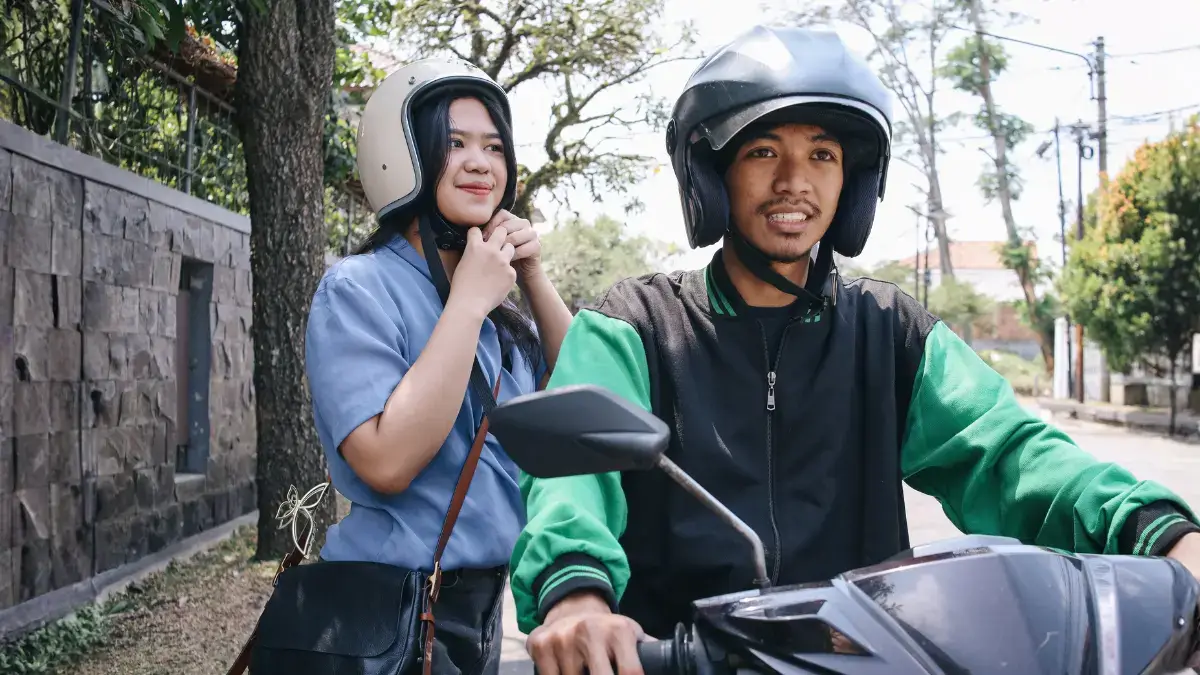
Download both apps before arriving. Set up accounts with local Indonesian phone number (buy SIM card at airport). Load credit or connect payment method.
Cost Comparison: Grab vs Gojek
Prices are similar between apps. Gojek sometimes runs promotions. Grab has more drivers in tourist areas. Try both and see which works better in your location.
Sample prices (approximate):
- Canggu to Seminyak (8km): 25,000-35,000 IDR (scooter), 55,000-75,000 IDR (car)
- Ubud to Tegallalang Rice Terraces (8km): 30,000-40,000 IDR (scooter), 60,000-80,000 IDR (car)
- Sanur to Uluwatu (25km): 65,000-85,000 IDR (scooter), 140,000-180,000 IDR (car)
- Airport to Canggu (18km): 50,000-70,000 IDR (scooter), 110,000-150,000 IDR (car)
Scooter taxis are incredibly cheap for solo travelers. You ride on the back. Drivers provide helmets. Traffic moves faster than cars on busy routes.
Car rides make sense when carrying luggage, during rain, or traveling with another person to split costs.
Private Drivers: Convenience And Local Knowledge
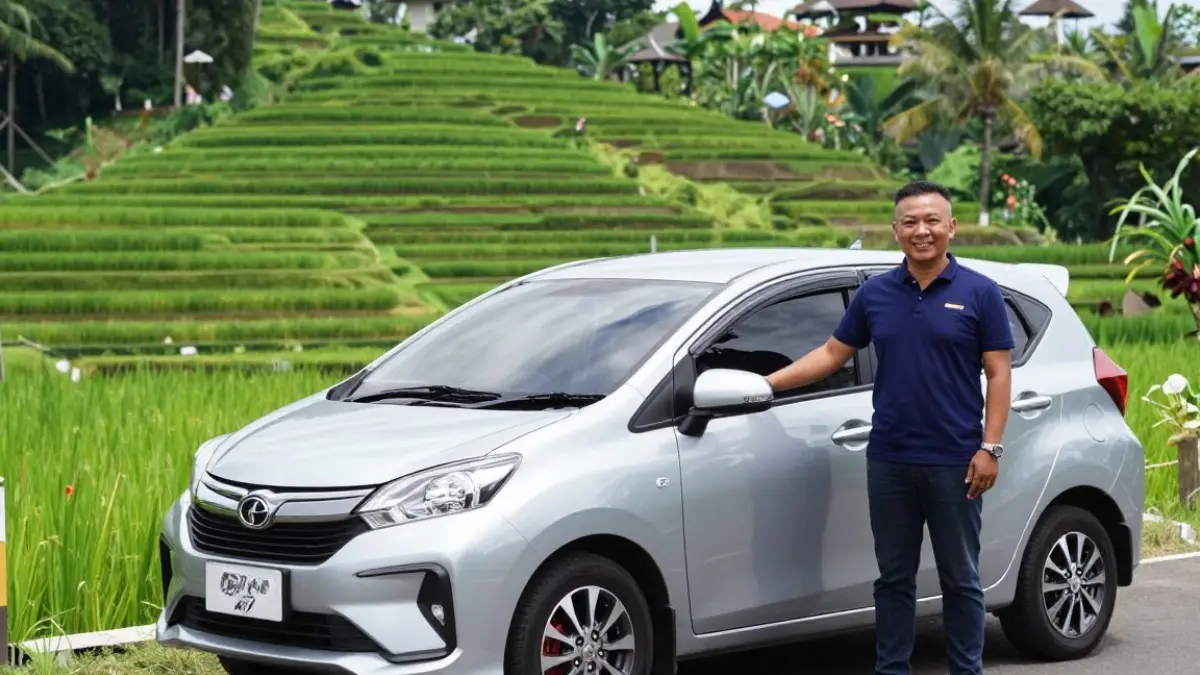
Hiring a private driver for the day costs 500,000-700,000 IDR (8-10 hours). They drive you wherever you want. Wait while you explore. Provide commentary and photo opportunities.
Solo travelers can find this expensive. Consider joining driver tours through hostels where costs split among multiple travelers. Or hire a driver for complex days visiting multiple distant sites.
When Private Drivers Make Sense
- Visiting multiple temples in one day (Besakih, Lempuyang tour)
- Exploring remote waterfalls requiring local knowledge
- Airport pickup/drop-off with luggage
- Day trips to distant areas (north Bali, east coast)
- When you’re sick or exhausted and can’t ride a scooter
Book drivers through accommodation or use recommendations from other travelers. Agree on price, itinerary, and timing before starting. Good drivers become valuable resources – they know best times to visit spots, good restaurants, and current road conditions.
Taxis: Limited But Available
Blue Bird is Bali’s reputable metered taxi company. Drivers use actual meters. Prices are fair. The cars are clean.
Other taxi companies exist but many overcharge tourists. Stick with Blue Bird or use ride-sharing apps instead.
Taxis congregate at airports, shopping malls, and major tourist sites. Hailing them on the street is hit or miss. Calling for pickup works better.
Bemos: Local Public Transport
Bemos are small minivans following set routes. They’re cheap (5,000-20,000 IDR per ride) but confusing for tourists. Routes aren’t marked in English. Schedules are loose.
Locals use bemos for daily commutes. Solo travelers rarely use them except for adventure or extreme budget travel. The time savings from scooters or ride-sharing apps outweigh the minimal cost difference.
Ferries And Boats For Island Hopping
Fast boats connect Bali to nearby islands. Nusa Penida, Nusa Lembongan, Gili Islands, and Lombok are popular destinations.
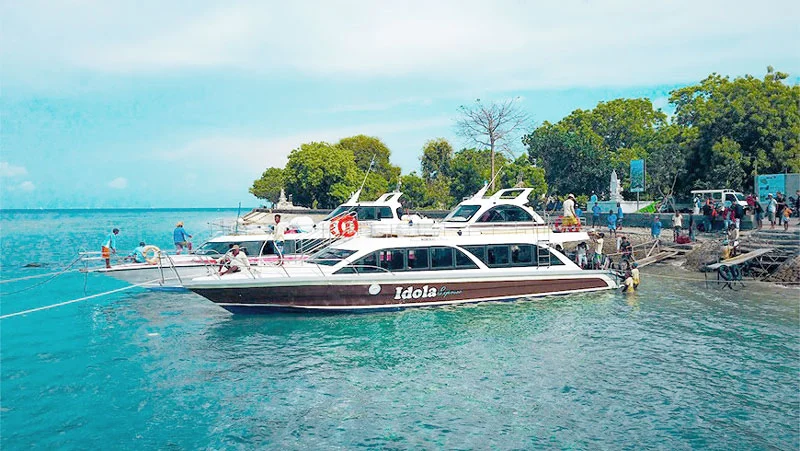
Book through reputable companies: Marlin Fast Boat, Eka Jaya, Gili Getaway, Patagonia Express. Prices range from 150,000-400,000 IDR one way depending on destination and boat type.
Morning departures are calmer. Afternoon seas get choppy. If you’re prone to seasickness, take medication 30 minutes before boarding.
Some operators provide hotel pickup/drop-off in the ticket price. Confirm this when booking. Otherwise, arrange transport to the harbor separately.
Walking In Bali
Walking is practical only in specific areas. Central Ubud is walkable for reaching restaurants and shops. Sanur’s beachfront promenade stretches for kilometers.
Most of Bali isn’t pedestrian-friendly. Sidewalks are narrow, broken, or non-existent. Motorbikes use sidewalks as roads. Street dogs occasionally follow walkers.
Walk for exercise and local exploration. Don’t rely on walking as primary transport between destinations.
Klook.comBali Budget Guide: What Solo Travel Actually Costs
Bali can cost $25 per day or $200 per day. Your budget determines what you experience. But expensive doesn’t always mean better.
Here’s what solo travelers actually spend across different budget levels. Real numbers. No hidden costs.
Daily Budget Breakdown By Travel Style
Solo travelers typically fall into three budget categories. Your choice depends on comfort priorities and financial flexibility.
| Expense Category | Budget Traveler | Mid-Range Traveler | Comfortable Traveler |
| Accommodation | $8-12 (hostel dorm) | $20-35 (private room/guesthouse) | $50-100+ (boutique hotel/villa) |
| Food (3 meals + snacks) | $6-10 (local warungs, street food) | $15-25 (mix of warung and cafes) | $30-60+ (tourist restaurants, beach clubs) |
| Transport | $3-5 (scooter rental split costs) | $5-10 (scooter + occasional Grab) | $15-30 (private drivers, car rentals) |
| Activities/Entrance Fees | $3-7 (temples, beaches, free hikes) | $10-20 (tours, yoga classes, activities) | $25-60+ (diving, guided tours, experiences) |
| Extras (drinks, shopping, etc.) | $2-5 | $10-20 | $20-50+ |
| Total Per Day | $22-39 | $60-110 | $140-300+ |
Most solo travelers spend $40-70 per day. This allows comfortable private rooms, good food variety, and regular activities without constant budget stress.
One-Time Costs And Setup Expenses
Beyond daily expenses, budget for these upfront costs:
Arrival Expenses
- Visa on Arrival: 500,000 IDR ($32) for 30-day extendable visa (not needed for visa-free 30 days)
- Airport transport to accommodation: 100,000-250,000 IDR ($6.50-16)
- Local SIM card: 100,000-150,000 IDR ($6.50-10) with data package
- Initial cash withdrawal (ATM fees): 50,000-100,000 IDR ($3.25-6.50) per transaction
Equipment And Gear
- Scooter helmet (if buying your own): 150,000-300,000 IDR ($10-20)
- Phone mount for scooter: 50,000-100,000 IDR ($3.25-6.50)
- Waterproof bag for beach/waterfalls: 100,000-200,000 IDR ($6.50-13)
- Sarong for temples: 50,000-100,000 IDR ($3.25-6.50) or free rental at some temples
Hidden Costs Solo Travelers Miss
These expenses catch people off guard. Factor them into your budget:
- Single room supplement – private rooms cost nearly same as doubles; no solo discount
- Tourist pricing – some vendors charge tourists 2-3x local prices
- Scooter parking fees – 2,000-5,000 IDR at beaches, restaurants, attractions (adds up)
- Temple entrance fees – visiting multiple temples daily costs 100,000-200,000 IDR
- Laundry services – 20,000-30,000 IDR per kilo (necessary in tropical climate)
- Bottled water – drinking 2-3 liters daily costs 15,000-30,000 IDR
- Scooter fuel – 90,000-120,000 IDR for full tank, lasts 3-5 days of normal riding
- ATM withdrawal fees – international cards charge $5-7 per withdrawal plus 50,000 IDR local fee
Sample 7-Day Budget Breakdown
Here’s what one week in Bali costs for a mid-range solo traveler:
| Day | Location | Accommodation | Food | Transport | Activities | Total |
| 1 | Canggu | $25 | $18 | $7 | $8 (surf lesson) | $58 |
| 2 | Canggu | $25 | $22 | $5 | $12 (Tanah Lot + dinner) | $64 |
| 3 | Ubud | $28 | $17 | $8 | $15 (temples, rice terraces) | $68 |
| 4 | Ubud | $28 | $20 | $6 | $18 (cooking class) | $72 |
| 5 | Uluwatu | $30 | $19 | $7 | $14 (temple + Kecak dance) | $70 |
| 6 | Nusa Penida | $22 | $15 | $25 (boat + driver) | $10 (snorkeling) | $72 |
| 7 | Sanur | $24 | $16 | $8 | $5 (beach day) | $53 |
| 7-Day Total | $457 | |||||
| Average Per Day | $65 | |||||
Add $100-150 for visa, arrival transport, SIM card, and initial setup. Total week budget: $550-600.
Money-Saving Tips For Solo Travelers
Solo travel costs more per person than traveling with others. You can’t split accommodation, drivers, or large meals. But you can minimize extra costs.
Accommodation Savings
- Book directly with guesthouses for better rates than booking platforms
- Stay in outlying areas (Nyuh Kuning instead of central Ubud, Berawa instead of Batu Bolong)
- Negotiate weekly/monthly rates – typically 20-30% off daily prices
- Join hostel group activities to meet potential travel partners for splitting tour costs
- Check if breakfast is included – saves $3-5 daily
Food Savings
- Eat breakfast at accommodation if included, skip if paying extra at cafes
- Lunch at local warungs where full meals cost $1.50-2.50
- Buy fruit and snacks at markets, not tourist minimarts
- Drink free filtered water at restaurants instead of ordering bottled water
- Cook occasionally if accommodation has kitchen facilities
- Order small portions (nasi campur) instead of multiple full dishes
Transport Savings
- Rent scooters monthly (900,000-1,200,000 IDR) rather than daily
- Use Grab/Gojek scooter taxis instead of cars
- Join group tours for distant locations instead of hiring private drivers
- Walk when practical – central Ubud and Sanur promenade are walkable
- Book fast boats to islands directly at harbors instead of through tours
Activity Savings
- Visit temples independently rather than booking guided tours
- Hike to waterfalls yourself using offline maps – most don’t require guides
- Attend free yoga classes at donation-based studios
- Explore free beaches instead of paying beach club entry fees
- Do sunrise hikes and sunset viewpoints (free spectacular experiences)
Managing Money In Bali
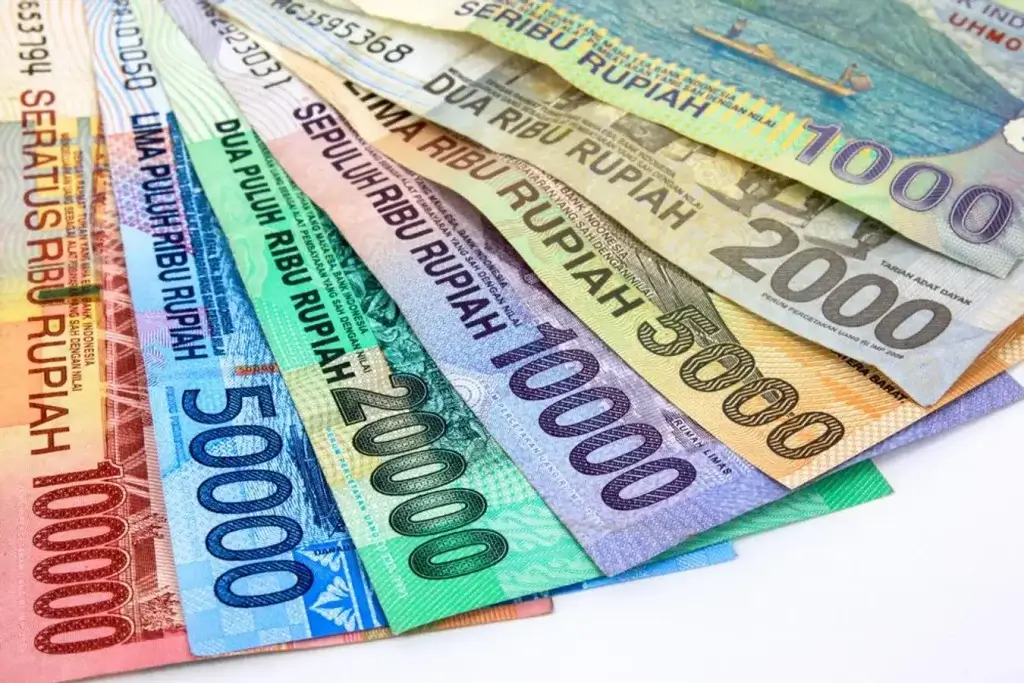
Indonesian Rupiah (IDR) is the local currency. Exchange rate fluctuates around 15,000-16,000 IDR per $1 USD.
ATMs are widely available. Withdrawal limits typically 2,000,000-3,000,000 IDR per transaction. Fees add up:
- Your bank’s international withdrawal fee: $3-7
- Local ATM operator fee: 50,000-100,000 IDR ($3.25-6.50)
- Dynamic currency conversion markup (if you accept DCC): 3-5%
Minimize fees by withdrawing maximum amounts less frequently. Carry enough cash for 3-4 days. Split it between wallet and hidden backup location.
Best ATM Strategy
Use ATMs inside bank branches (CIMB, Mandiri, BCA, BNI). Avoid standalone machines in tourist areas – higher fees and skimming risks.
Always decline dynamic currency conversion. When asked whether to charge in IDR or your home currency, choose IDR. Your bank’s exchange rate beats the ATM’s conversion rate.
Bring a no-foreign-transaction-fee debit card (Charles Schwab, Revolut, Wise). These reimburse ATM fees and offer better exchange rates.
Credit Cards In Bali
Major hotels, upscale restaurants, and tour operators accept credit cards. A 3% surcharge often applies. Small businesses, warungs, and local shops are cash-only.
Carry cash for daily expenses. Use credit cards for large purchases and emergencies only.
How Long Does Money Last?
Solo travelers spending $50-70 daily can comfortably explore Bali for:
- 1 month: $1,500-2,100 budget (extremely comfortable, occasional splurges)
- 2 weeks: $700-1,000 budget (balanced experience, mix of activities)
- 1 week: $350-500 budget (solid week with good food and activities)
Budget travelers on $30-40 daily can stretch money further. Comfortable travelers spending $100+ daily will want larger budgets.
Bali rewards longer stays. Monthly accommodation rates drop significantly. You learn where locals eat. Transport becomes second nature. Extended trips cost less per day than quick visits.
Adventures Off The Beaten Path – Bali Travel Guide
Tourist crowds concentrate in the same spots. Tanah Lot. Tegallalang Rice Terraces. Monkey Forest. These places are popular for good reason. But Bali has better secrets.
Solo travelers have advantages here. You move faster. Make spontaneous decisions. Connect with locals more easily. The following destinations see fraction of mainstream tourist traffic.
North Bali: Mountains And Waterfalls
North Bali feels like a different island. Cooler temperatures. Black sand beaches. Dramatic mountain scenery. Dutch colonial architecture. Most tourists never make the journey.
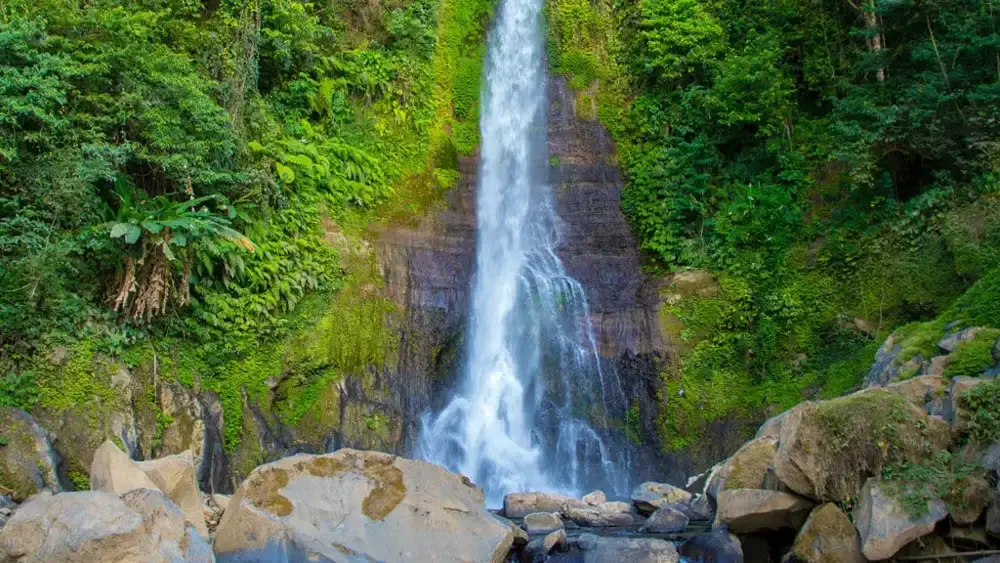
Munduk village sits in the highlands. Coffee plantations. Spice gardens. Three waterfalls within hiking distance. Accommodation costs 30-50% less than south Bali. The area suits solo travelers seeking quiet and nature.
Git Git Waterfall requires a 15-minute walk through jungle. Entry: 20,000 IDR ($1.30). The falls drop 35 meters into a pool. Swimming is possible when water flow is moderate. Arrive before 10 AM to have it to yourself.
Sekumpul Waterfall (mentioned earlier) is spectacular but requires effort. The trek involves 330 steps down, river crossings, and slippery paths. Local guides help navigate for 150,000-200,000 IDR. Worth every rupiah for the solo traveler seeking adventure.
Lovina Beach offers black sand and dolphin watching tours. Skip the crowded dawn boat trips. Instead, rent a kayak and paddle out yourself at sunrise (100,000 IDR). You’ll see dolphins without the motor boat chaos.
Getting To North Bali
The drive from Ubud to Munduk takes 2.5 hours through mountain roads. Scenery is incredible. Roads wind through coffee plantations and terraced fields.
From Canggu, the journey takes 3.5-4 hours. Most solo travelers rent scooters and make the trip over 2-3 days, stopping at viewpoints and waterfalls.
Alternatively, hire a driver for the day (600,000 IDR) to visit multiple north Bali sites in one go. This makes sense if time is limited.
West Bali National Park: Wildlife And Isolation
West Bali National Park covers 190 square kilometers of protected forest, savanna, and marine areas. The park hosts over 160 bird species including the rare Bali Starling.
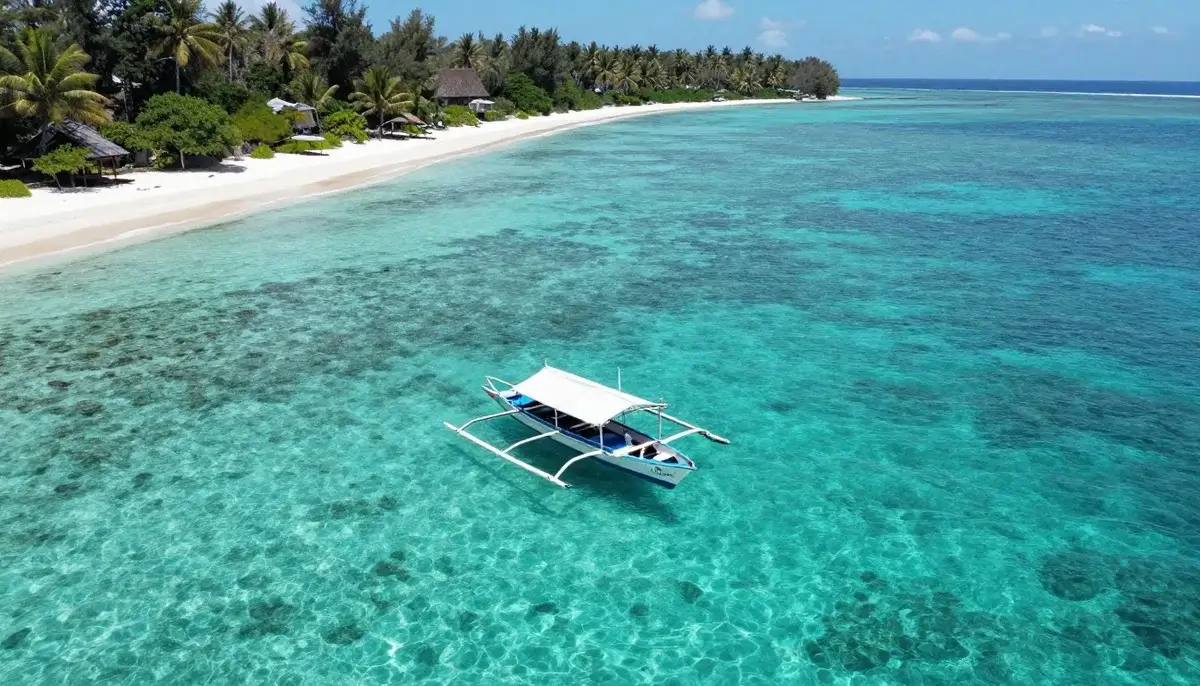
Menjangan Island offers Bali’s best diving and snorkeling. The coral walls drop to 60 meters. Visibility reaches 30+ meters. Marine life includes turtles, reef sharks, and thousands of tropical fish.
Snorkeling day trips from Pemuteran cost 350,000-450,000 IDR including boat, guide, and equipment. Diving packages run 650,000-800,000 IDR for two dives.
Solo travelers can base themselves in Pemuteran village. Quiet beach town. Few tourists. Excellent diving operations. Guesthouses cost 150,000-250,000 IDR per night.
Hiking In The National Park
Park entry requires permits (25,000 IDR) and registered guides (200,000-300,000 IDR for half-day). The park office is in Cekik village.
Trails wind through monsoon forest and savanna. Wildlife spotting includes monkeys, deer, wild boar, and birds. The hiking isn’t strenuous but heat and humidity are intense.
Bring water, sun protection, and closed-toe shoes. Morning hikes offer better wildlife viewing and cooler temperatures.
Sidemen Valley: Rice Terraces Without Crowds
Sidemen Valley offers everything Tegallalang Rice Terraces provides minus the tour buses. Endless green terraces. Traditional villages. Mount Agung backdrop. Almost no tourists.

The valley sits in east Bali, 1.5 hours from Ubud by scooter. Roads are excellent. Traffic is minimal. The route passes through Klungkung and traditional weaving villages.
Accommodation ranges from homestays (100,000-200,000 IDR) to boutique villas (400,000+ IDR). Most places overlook rice terraces. The setting is peaceful.
Activities include rice terrace trekking (free with local guide tips), white water rafting on Telaga Waja River, and visiting traditional weaving workshops in Ikat village.
Why Solo Travelers Love Sidemen
Sidemen moves slowly. No nightlife. Limited restaurants. Just nature, culture, and tranquility. Perfect for solo travelers needing mental recovery from Canggu crowds.
Locals are exceptionally friendly. English is limited but smiles and gestures work. You’ll be invited to ceremonies and family compounds. Real cultural immersion happens here.
Amed’s Hidden Beaches And Dive Sites
Beyond Amed’s main diving areas, hidden beaches stretch along the east coast. These spots require scooters and willingness to explore unmarked roads.
Jemeluk Bay offers excellent snorkeling from shore. Rent gear from beach shacks (50,000 IDR) and swim out to coral gardens. The bay has minimal current and calm water.
Lipah Beach sits 2 kilometers south of Amed center. Black sand. Traditional fishing boats. Shallow reef close to shore. Perfect for solo snorkeling without tour groups.
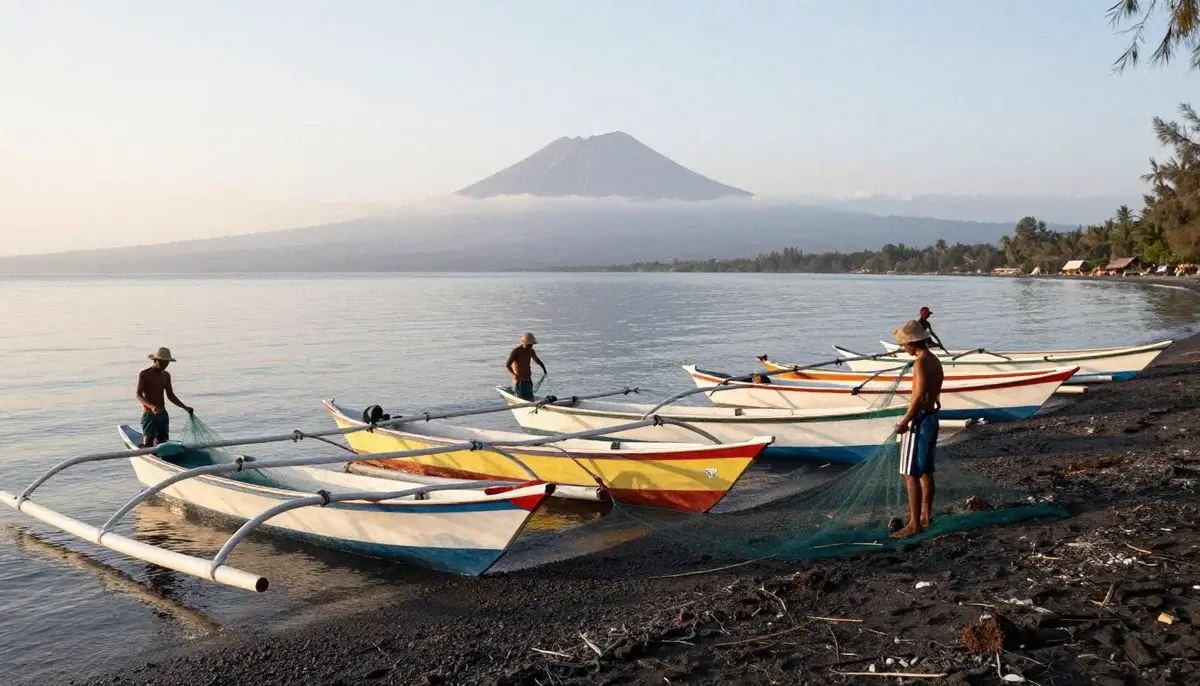
The Japanese Shipwreck dive site in Banyuning Bay suits advanced divers. The wreck sits at 12-45 meters depth. Less famous than the Liberty wreck but equally interesting.
Amed Snorkeling Safety
Solo snorkeling requires caution. Currents can be strong. Depths change quickly. Stay close to shore initially. Ask locals about current conditions before entering water.
Never snorkel alone at completely deserted beaches. Choose spots where at least a few people are visible. Wear brightly colored gear so you’re visible from shore.
Jatiluwih Rice Terraces: UNESCO Alternative
Jatiluwih covers 600 hectares of rice terraces. It’s a UNESCO World Heritage Site but sees far fewer tourists than Tegallalang. The terraces stretch across rolling hills with mountain views.
Entry: 40,000 IDR per person plus 5,000 IDR scooter parking. The site opens at 8 AM. Arrive early for best light and emptiest paths.
A paved road winds through the terraces. You can scooter the entire route or park and walk. Walking lets you explore side trails and interact with farmers.
Small warungs along the route serve cheap food with spectacular views. Nasi goreng with rice terrace panorama costs 25,000 IDR.
Combining Jatiluwih With Other Sites
Jatiluwih sits in central Bali near several other attractions. Create a loop trip: Jatiluwih → Batukaru Temple → Munduk waterfalls. The entire route takes 4-5 hours by scooter.
Batukaru Temple is Bali’s second most important temple after Besakih. It sits on Mount Batukaru slopes. Few tourists visit. The forest setting is mystical. Entry: 40,000 IDR.
Nusa Ceningan And Nusa Lembongan: Quieter Than Nusa Penida
Everyone rushes to Nusa Penida for Instagram spots. Nusa Lembongan and tiny Nusa Ceningan offer similar beauty with better infrastructure and fewer crowds.
The two islands connect via yellow suspension bridge. You can walk or scooter across. Total area is small – you can explore both islands in 2-3 days.
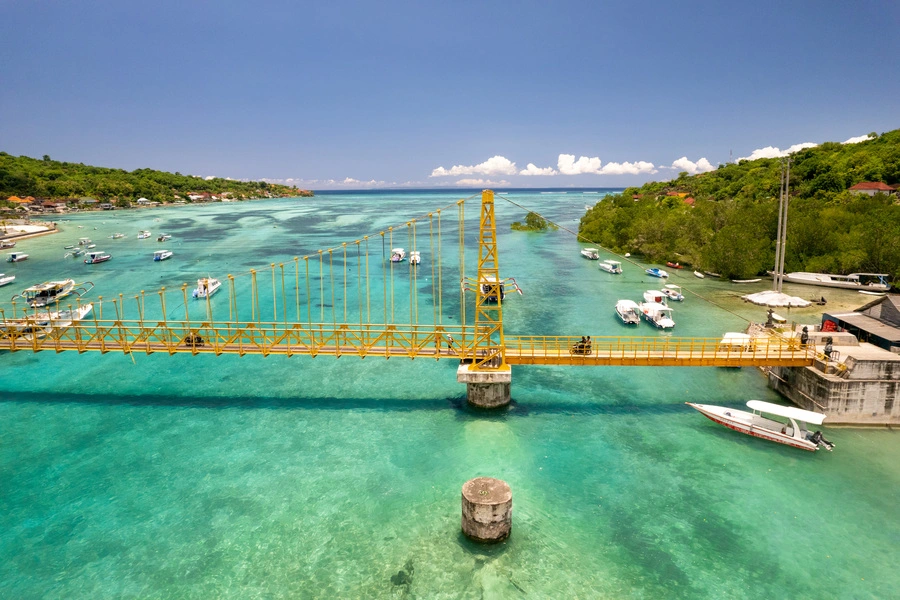
Devil’s Tear on Nusa Lembongan is spectacular at sunset. Waves crash into rocky cliffs creating huge spray. Entry is free. The viewing platform gets crowded but turnover is quick.
Secret Beach (Pantai Segara) on Nusa Ceningan requires descending steep stairs. Crystal clear water. Excellent snorkeling from shore. Basic warung on the beach. Few people know about it.
Blue Lagoon offers cliff jumping from 5, 10, and 13 meters. Not for everyone. If you jump, check water depth first and watch locals to learn technique.
Staying On The Islands
Accommodation on Nusa Lembongan ranges from budget guesthouses (150,000-250,000 IDR) to mid-range hotels (400,000-800,000 IDR). Nusa Ceningan has fewer options but more character.
Fast boats from Sanur take 30 minutes (150,000 IDR one way). Some operators offer package deals including transport and accommodation.
Rent scooters on the island (75,000 IDR per day). Roads are good. Traffic is minimal. Exploring both islands takes half a day.
Bali Barat: Temples, Beaches, And Solitude
The far western part of Bali sees almost no tourists. The journey from south Bali takes 3-4 hours. Few make the effort. That’s exactly why it’s worth visiting.
Medewi Beach is a famous surf break but the village remains quiet. Long left-hand wave breaks over reef. Suitable for intermediate surfers. The black sand beach stretches for kilometers.
Accommodation is basic. A few surf camps and guesthouses charge 150,000-300,000 IDR per night. The restaurants serve simple Indonesian food. It’s the opposite of Canggu’s development.
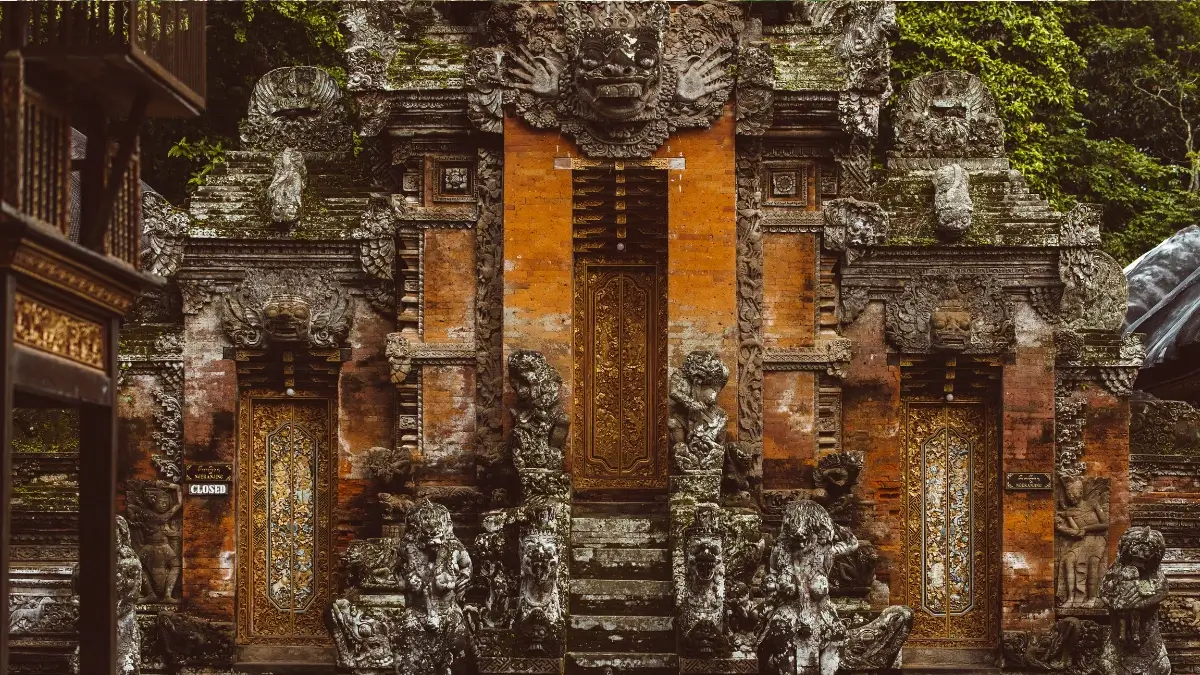
Rambut Siwi Temple sits on a cliff overlooking the ocean. One of Bali’s directional temples. Almost no visitors. Entry: donation requested (20,000 IDR appropriate). The coastal views are stunning.
Making The West Bali Journey
Solo travelers need multiple days to properly explore west Bali. The region works as a loop: Canggu → Medewi → Pemuteran → Lovina → Munduk → back to south Bali.
Scooter the entire route over 4-5 days. Stay in different locations each night. Total distance: approximately 350 kilometers. The scenery changes from beaches to mountains to rice terraces.
Alternatively, focus on either north or west, then return to your base in south Bali. This reduces riding time while still accessing less-visited areas.
Bali Travel Tips And Practical Advice
The practical details matter. When to visit. What to pack. How to stay connected. Cultural rules to follow. These tips save time, money, and awkward situations.
Best Time To Visit Bali For Solo Travelers
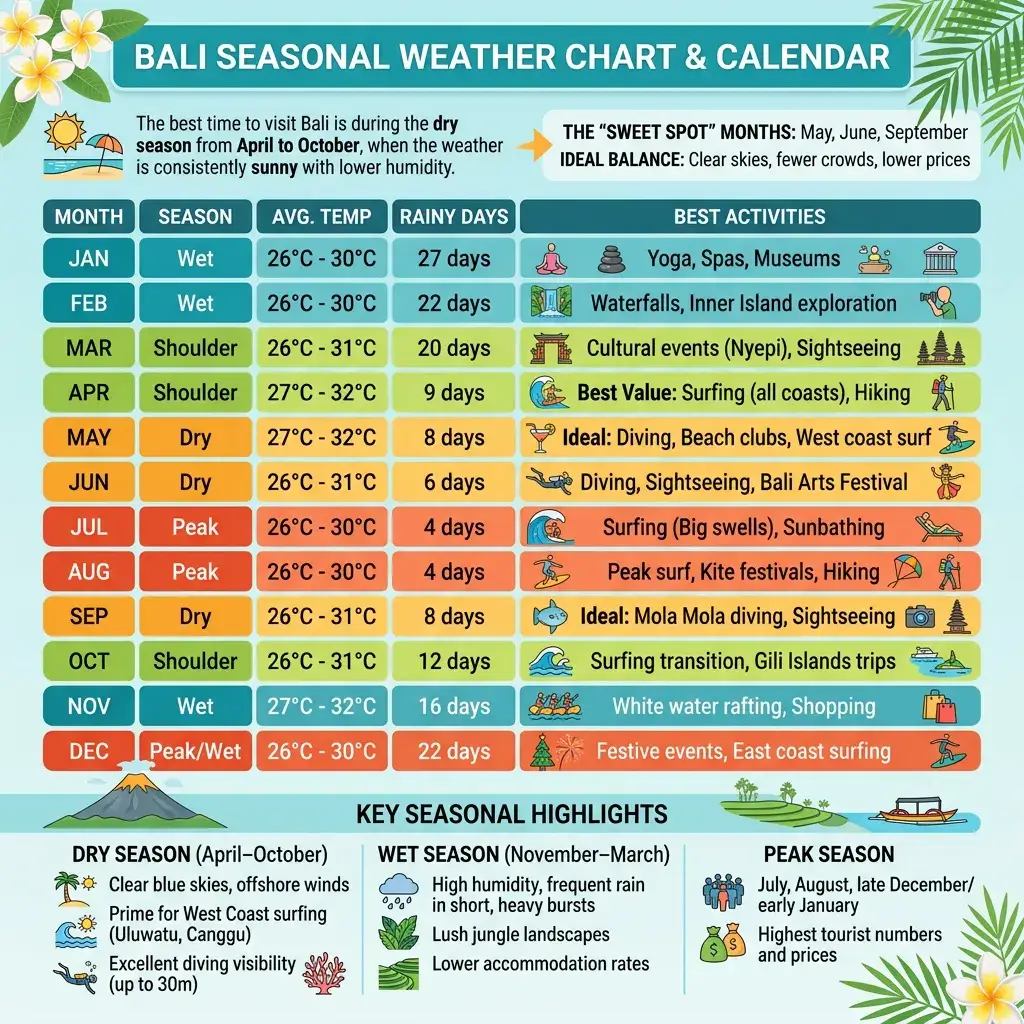
Bali has two seasons. Dry season (April-October) brings sunshine and crowds. Wet season (November-March) means rain and fewer tourists.
The best time for solo travelers is shoulder season: April-May and September-October. Weather is excellent. Crowds are moderate. Prices are lower than peak season.
Month-By-Month Breakdown
| Month | Weather | Crowds | Pros | Cons |
| January-February | Heavy rain, humid | Low | Lowest prices, empty beaches, lush landscapes | Frequent rain limits activities, some roads flood |
| March | Transitional, occasional rain | Low-Medium | Better weather starting, still affordable | Unpredictable rainfall |
| April-May | Sunny, minimal rain | Medium | Excellent weather, manageable crowds, fair prices | Prices rising as peak season approaches |
| June-August | Dry, perfect conditions | Very High | Best weather, most activities available | Maximum prices, crowded everywhere, book ahead |
| September-October | Dry, warm | Medium | Great weather, fewer tourists than summer, good prices | October can see early rains |
| November-December | Increasing rain | High (December holidays) | Green landscapes, November is quiet | December prices spike, rain interrupts plans |
Peak Season Reality
July-August and late December are peak tourist season. Accommodation prices double. Popular restaurants require reservations. Traffic worsens significantly. Beach clubs reach capacity.
Solo travelers can still enjoy peak season but expect to pay more and deal with crowds. Book accommodation at least 2 weeks ahead. Make restaurant reservations. Arrive at attractions early.
Wet Season Advantages
Don’t dismiss wet season completely. Rain typically comes in afternoon downpours, not all-day drizzle. Mornings are often clear. You can schedule activities accordingly.
Benefits include 30-50% lower accommodation prices, empty temples and beaches, vibrant green landscapes, and powerful waterfalls. Pack rain gear and embrace flexibility.
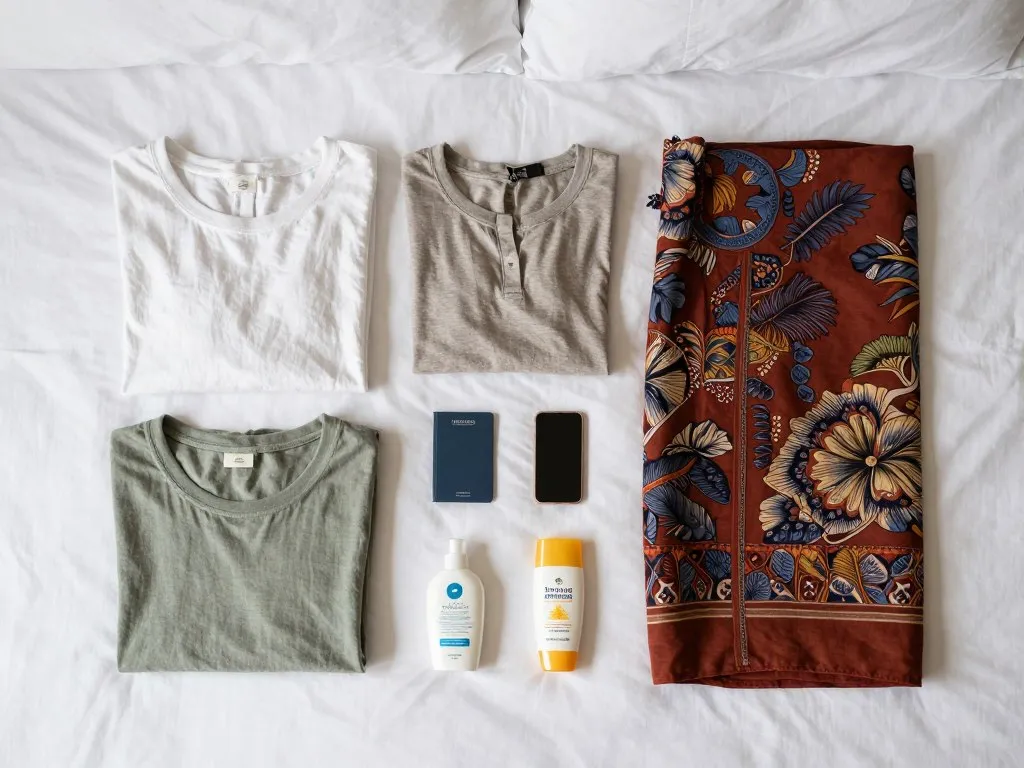
What To Pack For Bali Solo Travel
Solo Travelers need to pack light. Bali has everything you need. Forgot something? Buy it here cheaply. Laundry services are abundant and affordable.
Essential Items
- Lightweight quick-dry clothing – humidity makes thick fabrics unbearable
- Sarong or lightweight scarf – required for temples, useful as beach towel/blanket
- Reef-safe sunscreen (SPF 50+) – local options are limited and expensive
- DEET-based mosquito repellent (30%+ concentration)
- Small daypack for scooter trips and beach days
- Waterproof phone case or dry bag
- International power adapter (European plug type C/F)
- Headlamp or small flashlight – power outages happen, poorly lit paths at night
- Flip-flops for accommodation and basic walking
- Proper shoes for scooter riding and hiking
- Microfiber travel towel – many guesthouses charge for towels
- Basic first aid kit (bandaids, antiseptic, pain relievers, anti-diarrhea medication)
What Not To Pack
- Heavy jeans and thick clothing – you’ll never wear them
- More than 2 pairs of shoes – flip-flops and sneakers cover everything
- Expensive jewelry – risk of loss or theft
- Full-size toiletries – buy locally or bring refillable containers
- Hair dryers and heated tools – voltage differences and humidity make them useless
- Books – read on devices or swap at book exchanges
Tech And Electronics
- Unlocked smartphone for local SIM card
- Power bank (10,000+ mAh) for long scooter days
- Universal travel adapter
- Headphones for flights and coworking spaces
- Camera (optional) – phone cameras are excellent now
- Laptop if working remotely
- Charging cables and backup cables
Staying Connected: Internet And Phone Service
Internet access is excellent in tourist areas. Most cafes, restaurants, and accommodations offer free wifi. Speeds range from adequate to excellent depending on location.
Buy a local SIM card at the airport or any minimart. Telkomsel has the best coverage island-wide. XL and Indosat work well in tourist areas but struggle in rural regions.
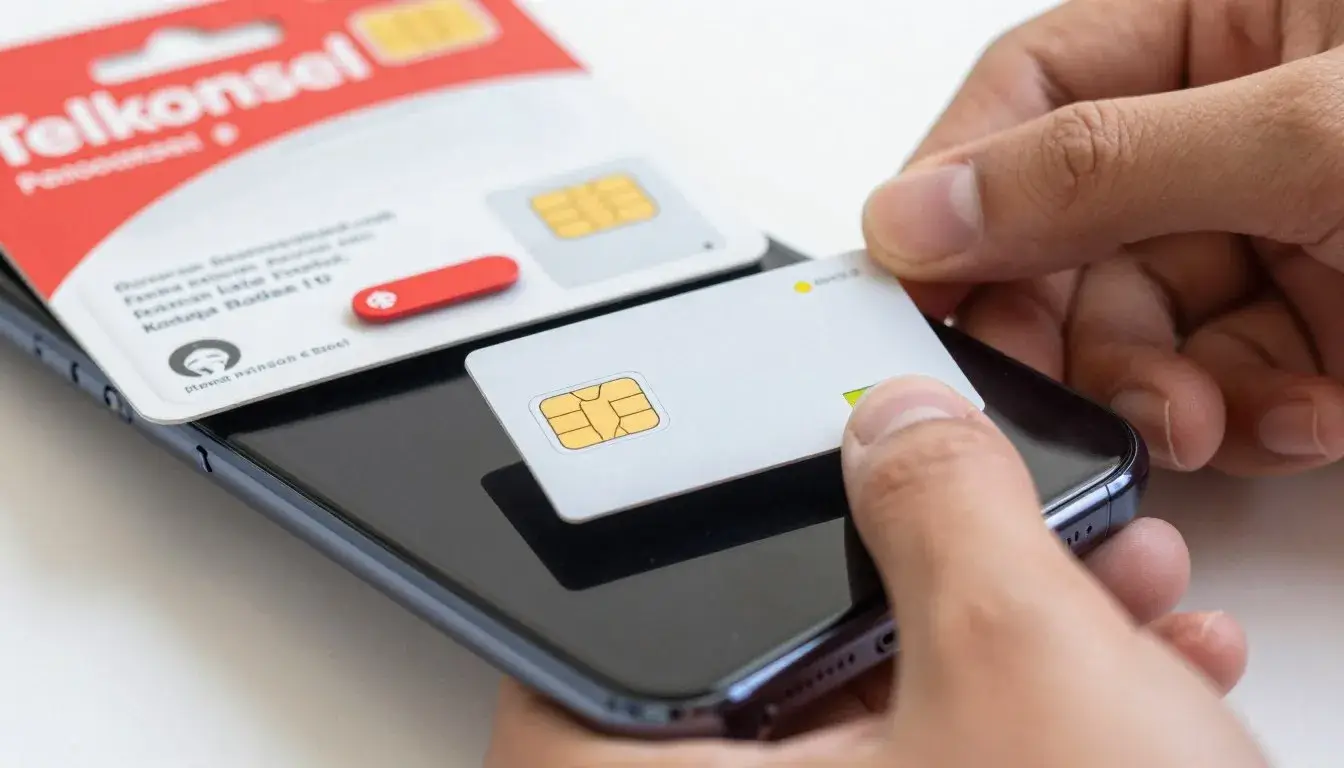
SIM Card Setup
Airport SIM card booths charge premium prices (150,000-200,000 IDR) but provide setup assistance. Minimart SIM cards cost 50,000-100,000 IDR but require self-setup.
Popular data packages:
- 25GB for 30 days: 100,000 IDR ($6.50)
- 50GB for 30 days: 150,000 IDR ($10)
- Unlimited (capped speed after 1-2GB daily): 120,000-180,000 IDR
Bring passport for SIM card registration (required by law). Setup takes 5-10 minutes. Staff help with activation even at minimarts.
Wifi Reliability
Tourist areas have reliable wifi. Canggu and Ubud cafes offer speeds suitable for video calls and uploading content. Guesthouses typically provide adequate wifi for browsing and messaging.
Remote areas like Sidemen and west Bali have slower connections. Download offline maps, entertainment, and work files before leaving tourist centers.
Cultural Etiquette And Respect
Bali is predominantly Hindu in a Muslim-majority country. Understanding and respecting local customs matters.
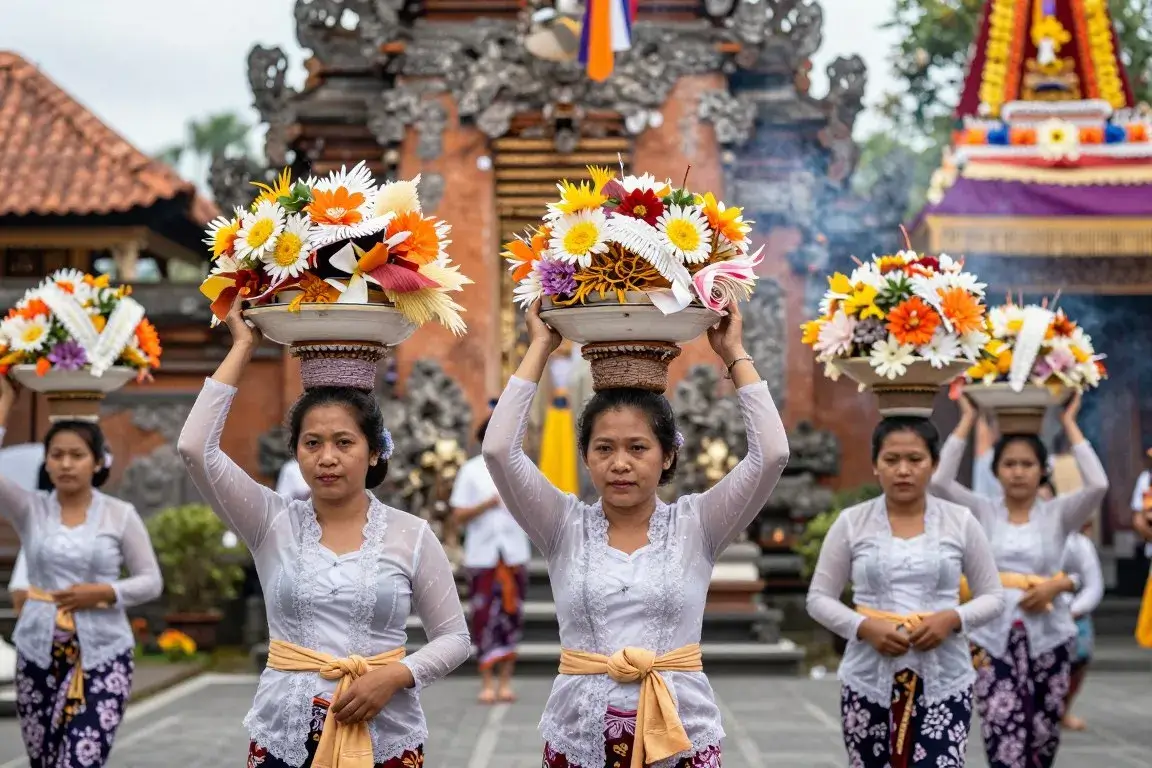
Temple Etiquette
- Wear sarongs and sashes at all temples – rental available at major sites (10,000-20,000 IDR)
- Cover shoulders and knees – no tank tops or short shorts
- Don’t stand higher than priests during ceremonies
- Don’t touch anyone’s head (sacred in Balinese culture)
- Use your right hand for giving, receiving, eating, and touching sacred objects
- Don’t point at people or sacred objects with your feet
- Ask permission before photographing ceremonies or people praying
- Don’t enter temples during menstruation (traditional belief)
General Behavior
- Dress modestly outside tourist beach areas – respect local sensibilities
- Remove shoes before entering homes, temples, and some shops
- Avoid public displays of affection – hand-holding is okay, kissing is frowned upon
- Don’t point with your index finger – use your thumb or open hand
- Lower your voice in sacred areas and residential neighborhoods
- Ask before photographing locals – many appreciate being asked
- Learn basic Indonesian phrases – effort is appreciated
Bargaining And Shopping
Bargaining is expected at markets and with street vendors. Not at established shops with price tags. Start at 50-60% of asking price and negotiate upward.
Do it politely. Smile. Make it playful rather than confrontational. If you can’t agree on a price, walk away. Often the vendor will call you back with a better offer.
Fixed-price establishments (cafes, restaurants, hotels, chain stores) don’t bargain. Trying to negotiate in these places is awkward and inappropriate.
Essential Balinese Phrases
English is widely spoken in tourist areas. Learning basic Indonesian shows respect and helps in local interactions.
Greetings And Basics
Selamat pagi – Good morning
Selamat siang – Good afternoon
Selamat malam – Good evening
Terima kasih – Thank you
Sama-sama – You’re welcome
Maaf – Sorry/Excuse me
Ya – Yes
Tidak – No
Useful Phrases
Berapa harganya? – How much?
Terlalu mahal – Too expensive
Saya tidak mengerti – I don’t understand
Bisa tolong saya? – Can you help me?
Di mana…? – Where is…?
Toilet di mana? – Where is the toilet?
Enak! – Delicious!
Tidak pedas – Not spicy
Emergency And Important
Tolong! – Help!
Saya sakit – I’m sick
Rumah sakit – Hospital
Polisi – Police
Saya tersesat – I’m lost
Bahaya! – Danger!
Jangan! – Don’t!/Stop!
Hati-hati – Be careful
Useful Apps For Solo Travelers In Bali
Download these apps before arriving. They make navigation, communication, and daily life significantly easier.
Essential Apps
- Grab – Ride-sharing for scooter taxis and cars
- Gojek – Alternative ride-sharing, also offers food delivery
- Google Maps – Navigation and offline maps (download Bali before arriving)
- Maps.me – Detailed offline maps including trails and small roads
- Google Translate – Download Indonesian for offline translation
- XE Currency – Real-time currency conversion
- Hostelworld – Last-minute accommodation booking and reviews
- WhatsApp – Local communication (everyone uses it)
Helpful But Optional Apps
- Traveloka – Local booking platform for accommodation and activities
- GoFood/GrabFood – Food delivery (cheaper than eating out)
- Splitwise – Track shared expenses if traveling with others temporarily
- Trail Wallet – Simple travel expense tracking
- Duolingo – Learn basic Indonesian phrases
Visa Requirements And Extensions
Most nationalities can enter Indonesia visa-free for 30 days. This can’t be extended. You must leave and re-enter if you want more time.
Alternatively, purchase a Visa on Arrival (VoA) at the airport for 500,000 IDR ($32). This allows 30 days with option to extend once for another 30 days (total 60 days).
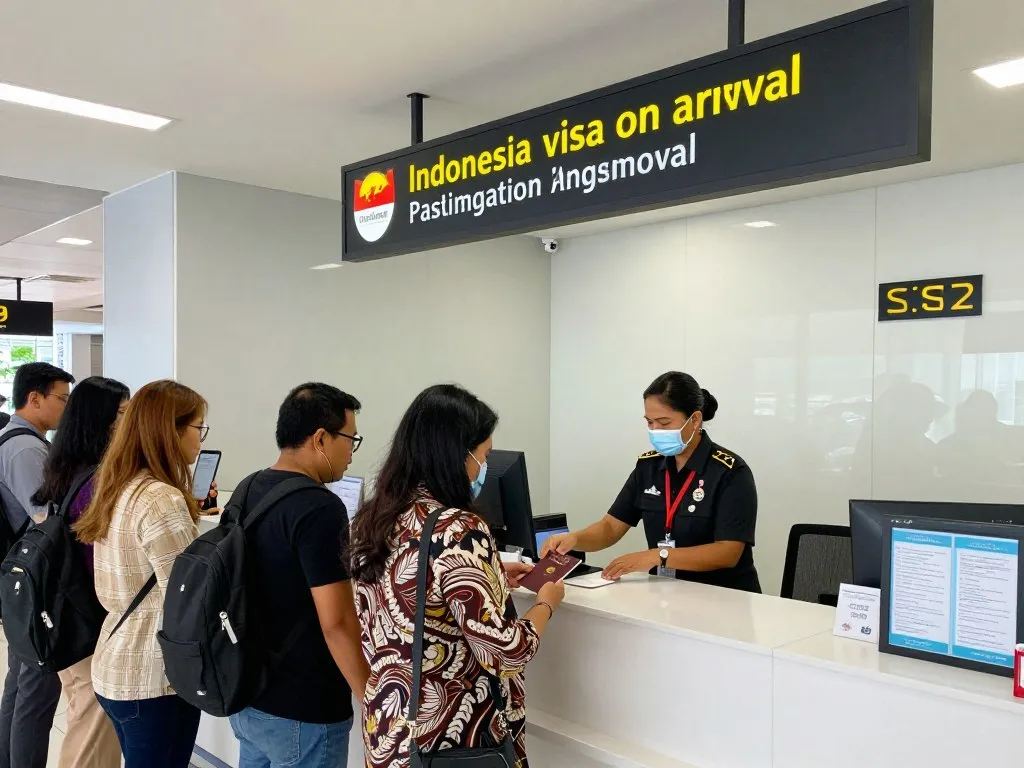
Extending Your Visa
Visa extensions require visiting immigration offices. Process takes 3-7 days. Cost: 500,000 IDR for the extension plus agency fees if using a service.
DIY extension process:
- Visit immigration office 7-10 days before your visa expires
- Submit passport, VoA receipt, accommodation proof, and departure ticket
- Pay extension fee and receive receipt
- Return on specified date (usually 3-4 days later) for biometric data
- Collect passport with extension stamp (another 2-3 days)
Most travelers use visa agents. They charge 750,000-1,000,000 IDR total (including government fees) but handle everything. You only visit immigration once for biometrics.
Long-Term Stays
Digital nomads staying 2-6 months typically do “visa runs.” Exit Indonesia every 60 days and re-enter with a new VoA. Popular exit points: Singapore, Kuala Lumpur, or other Indonesian islands like Lombok.
Indonesia introduced a new Digital Nomad Visa in 2023 allowing 5-year stays but requirements are complex and costs are high ($1,750). Most solo travelers stick with VoA extensions and visa runs.
Health Preparations Before Traveling
No vaccinations are mandatory for Bali. Recommended vaccinations include Hepatitis A, Typhoid, and routine boosters (tetanus, measles). Consult your doctor 4-6 weeks before departure.
Bring prescription medications in original packaging with doctor’s note. Pharmacies in Bali sell many medications over-the-counter but familiar brands might be unavailable.
Travel Insurance Requirements
Buy comprehensive travel insurance covering medical emergencies, evacuation, and scooter accidents. Bali medical care is affordable for minor issues but serious accidents require evacuation to Singapore or Australia ($50,000-100,000+).
Verify your policy covers:
- Emergency medical treatment and hospitalization
- Medical evacuation and repatriation
- Scooter/motorcycle accidents (requires proper license)
- Adventure activities (diving, surfing, hiking)
- Trip cancellation and interruption
- Lost or stolen belongings
Popular travel insurance for solo travelers: SafetyWing, World Nomads, True Traveller. Expect to pay $40-80 per month for comprehensive coverage.
Working Remotely From Bali
Bali is a digital nomad hotspot. Excellent wifi, coworking spaces everywhere, time zone works for many regions. Technically, you need a work visa. Practically, most remote workers enter on tourist visas.

Best Coworking Spaces
- Dojo Bali (Canggu) – 150,000 IDR day pass, 1,200,000 IDR monthly
- Outpost (Ubud, Canggu, Seminyak) – 170,000 IDR day pass, excellent facilities
- BWork (Sanur) – 120,000 IDR day pass, quieter than Canggu options
- Hubud (Ubud) – Bamboo construction, jungle setting, strong community
- Tropical Nomad (Canggu) – Affordable, 850,000 IDR monthly
Most spaces offer day passes, weekly, and monthly memberships. Wifi speeds typically 20-50 Mbps. Power outlets everywhere. Air conditioning. Meeting rooms available.
Time Zone Considerations
Bali operates on WITA (UTC+8). This works well for:
- Australia: 1-3 hours behind depending on state
- Asia: Same or 1-2 hours difference
- Europe: 6-8 hours behind (morning in Bali = afternoon in Europe)
- US East Coast: 12-13 hours behind (evening in Bali = morning in US)
- US West Coast: 15-16 hours behind (challenging for meetings)
Spiritual And Wellness Activities
Bali’s yoga and wellness scene is massive. Ubud hosts hundreds of studios and retreat centers. Canggu has daily classes at every price point.
Drop-in yoga classes cost 100,000-150,000 IDR ($6.50-10). Donation-based classes run on community support (50,000-100,000 IDR suggested). Class packages offer better value: 5 classes for 400,000-500,000 IDR.

Popular Yoga Studios
- Yoga Barn (Ubud) – Multiple daily classes, all styles, rooftop garden setting
- Radiantly Alive (Ubud) – Strong vinyasa focus, excellent teachers
- The Practice (Canggu) – Beautiful space, variety of styles, community vibe
- Samadi Bali (Canggu) – Donation-based classes, welcoming atmosphere
- Serenity Yoga (Sanur) – Quiet beachside location, smaller classes
Solo travelers easily meet others at yoga classes. Studios host social events, workshops, and community dinners. It’s a natural way to connect.
Staying Healthy During Your Trip
Beyond avoiding Bali belly, maintain your health through the trip’s duration.
Hydration And Heat
Tropical heat and humidity dehydrate you quickly. Drink 3-4 liters of water daily. More if exercising or spending time in the sun.
Signs of dehydration: headache, fatigue, dark urine, dizziness. Buy oral rehydration salts (Pocari Sweat powder) at any minimart. They work faster than plain water.
Managing Energy Levels
Bali’s pace and heat can be exhausting. Build rest days into your itinerary. Don’t try to see everything in one week. You’ll burn out.
Listen to your body. Sleep in when needed. Skip activities if you’re tired. The island will still be there tomorrow.
Dealing With Common Ailments
- Bali belly – Rest, hydrate, oral rehydration salts, bland food, Imodium for symptom relief
- Sunburn – Aloe vera gel (sold everywhere), hydrate, avoid more sun exposure
- Mosquito bites – Calamine lotion, antihistamine cream, don’t scratch
- Minor cuts/scrapes – Clean thoroughly (tropical infections develop quickly), antiseptic, keep covered
- Heat exhaustion – Move to shade/AC, cold water, rest, oral rehydration salts
Solo Traveler Loneliness And Mental Health
Solo travel is rewarding but can be lonely. Extended trips sometimes feel isolating even in crowded places.

Combating Loneliness
- Stay in social hostels or guesthouses with common areas
- Join group activities (tours, cooking classes, surf lessons)
- Work from coworking spaces instead of alone in accommodation
- Strike up conversations at cafes and restaurants
- Join online communities (Facebook groups for Bali solo travelers)
- Video call friends and family back home regularly
- Remember why you’re traveling solo – embrace the solitude sometimes
- Book occasional social activities even if you prefer independence
When To Seek Help
If you’re feeling consistently down, anxious, or overwhelmed, reach out. Many travelers experience this. Talk to other travelers. Contact friends/family. Consider therapy apps like BetterHelp that work internationally.
Bali has mental health professionals including English-speaking therapists. Your accommodation can provide recommendations.
Final Practical Tips
- Download offline maps before traveling to remote areas
- Keep photocopies of passport and important documents separate from originals
- Save emergency contact numbers in your phone before needing them
- Tell someone back home your general itinerary and check in regularly
- Trust your instincts – if something feels wrong, remove yourself from the situation
- Be flexible – things rarely go exactly as planned in Bali
- Pack patience – island time is real, things move slowly
- Smile – friendliness opens doors and creates connections
Don’t forget anything – use our travel packing list generator
Download A Complete Solo Traveler Packing List
Get a comprehensive Bali packing checklist organized by category – clothing, tech, documents, health items, and adventure gear. Includes specific recommendations for solo travelers and links to recommended products.
Download Your Free Bali Travel Guide Packing ListYour Solo Adventure Starts Now – Bali Travel Guide!
You’ve got the information. Destinations to explore. Attractions I highly recommend. Safety tips to follow. Budget breakdowns to plan with. Transport options to consider.
Bali rewards solo travelers who show up with open minds and basic preparation. The island has infrastructure for independent travel. Communities that welcome newcomers. Experiences ranging from spiritual to adventurous to purely relaxing.
Start with one area. Ubud for culture. Canggu for social connections. Uluwatu for beaches and surf. Amed for diving and quiet. Get comfortable. Then branch out.
The temples will amaze you. The food will surprise you. The landscapes will leave you speechless. The people will welcome you. The scooter freedom will feel liberating.
Solo travel in Bali isn’t about being alone. It’s about having the freedom to create your own experience. Wake early for sunrise at temples. Stay late at beach clubs. Change plans on a whim. Follow recommendations from people you just met.
You’ll make mistakes. Order food too spicy. Get lost on scooter rides. Overpay for souvenirs. Accidentally offend cultural norms. That’s normal. Every solo traveler goes through it. The island is forgiving.
Pack light. Trust yourself. Stay flexible. The best moments in Bali happen when you stop planning and start experiencing.
Your adventure is waiting. Book that flight. Get your visa sorted. Download the apps. Pack the essentials. Then go explore one of the world’s most solo-traveler-friendly destinations.
Bali is ready for you. The question is: are you ready for Bali?
Want A Custom Itinerary Built Just For You?
Every solo traveler is different. Your budget, interests, travel style, and time available are unique. Let me create a personalized Bali itinerary based on your specific needs – from off-the-beaten-path adventures to practical logistics, everything tailored to your solo journey.
Don’t forget to check out out other solo travel planners. If your interest is Asia I recommend the Solo Travel Guide to Malaysia and the solo travelers guide to Thailand.