Chiang Rai Temples Day Trip from Chiang Mai
Enjoy a relaxing stop at the Mae Kachan Hot Springs to rest and recharge Visit a long-neck Mae Kachan village to experience…
See More Details →Travel Guide Destination Hub
Explore Chiang Mai with curated itineraries, travel tips, and top attractions. Discover temples, markets, nature, and Northern Thai culture for an unforgettable trip.
Use our Chiang Mai travel planners to build your route, compare itinerary ideas and find practical travel tips for your trip.
Browse our latest Chiang Mai itineraries and destination planning guides.

This ultimate 3-day Chiang Mai itinerary covers the city’s best temples, coffee, massages, food, nightlife, and day trips. Discover the old town’s ancient gates and standout temples, try iconic khao soi, explore hidden cocktail bars and night markets, then venture to Mae Kampong or Chiang Dao for waterfalls, tea gardens, elephants, and authentic Northern Thai culture.
View itinerary →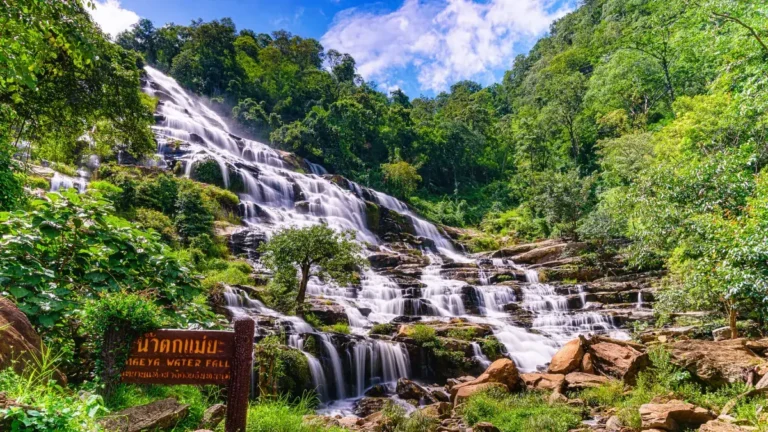
Plan a 14-day luxury self-drive journey through northern Thailand for Loy Krathong, from Chiang Mai and Doi Inthanon to Mae Hong Son, Ban Rak Thai, Pai, Lampang, and Sukhothai. The itinerary blends mountain roads, temples, caves, hot springs, and cultural highlights, with driving tips, seasonal advice, and festival timing included.
View itinerary →
Embark on a solo adventure through Thailand with this 14-day North to South itinerary. Explore vibrant cities, ancient temples, lush jungles, and stunning beaches while enjoying the freedom of traveling alone. This itinerary combines adventure with relaxation, offering a taste of Thailand’s rich culture and diverse landscapes.
View itinerary →Browse our latest articles, hotel guides, food guides and practical travel tips for Chiang Mai.
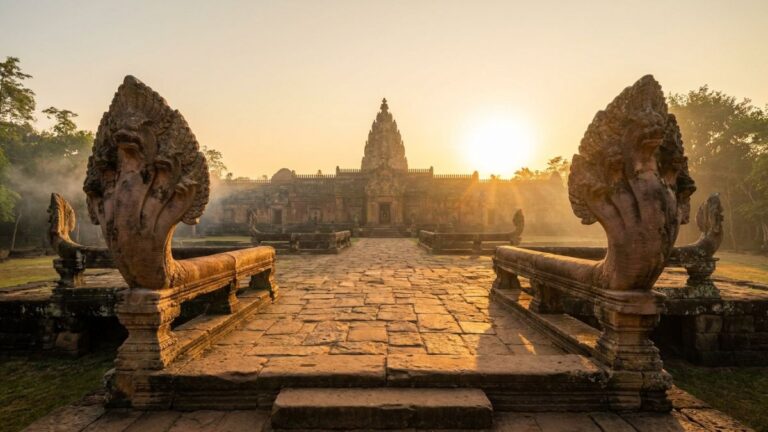
A practical guide to Thailand beyond the usual tourist trail, covering seven under-visited regions for independent travelers, from Isaan’s Khmer temples and Nan’s quiet mountain valleys to the Mae Hong Son Loop, Sangkhlaburi, Um Phang, and the tranquil Trat and Trang islands. Includes visa updates, transport tips, seasonal advice, safety notes, and border considerations for 2026.
Read guide →
Solo travel safety costs in 2026 are more than an afterthought—they’re a real budget line. This guide breaks down what solo travelers actually spend on insurance, safer accommodation, transport, and gear, with region-by-region comparisons across Thailand, Malaysia, Bali, Costa Rica, London, and New York so you can plan confidently and avoid costly surprises.
Read guide →
A data-backed guide to the best destinations for first-time solo travelers, comparing six cities on safety, cost, infrastructure, language, and solo-friendliness. From budget-friendly Chiang Mai and social Lisbon to safe, easy-to-navigate Edinburgh, Iceland, and Kyoto, it helps readers choose the right first solo trip based on their comfort level and travel style.
Read guide →
Your ultimate guide to Wat Phra That Doi Suthep Chiang Mai! Find essential visitor tips, explore the stunning site, and enrich your journey.
Read guide →
Dive into our Chiang Mai must do list for unforgettable experiences and cultural insights that will guide your Northern Thailand adventure.
Read guide →
Thailand solo travel is answering the call to explore the exotic, the golden temples, pristine beaches, and warm hospitality. This Southeast Asian gem offers…
Read guide →Tours & Activities
My second visit to Chiang Mai saw me turn up with a backpack, one night booked in a hostel and a determined attitude to not repeat the tourist loop. Three weeks later, I had achieved it (ish). I was also covered in mosquito bites and understood the word spicy in 3 languages. This is what happened.
Chiang Mai sits in a valley surrounded by mountains. That does matter, I’m not just setting the scene. But when you arrive, you probably don’t notice too much as you’ll be headed to the old city. And that is impressive.
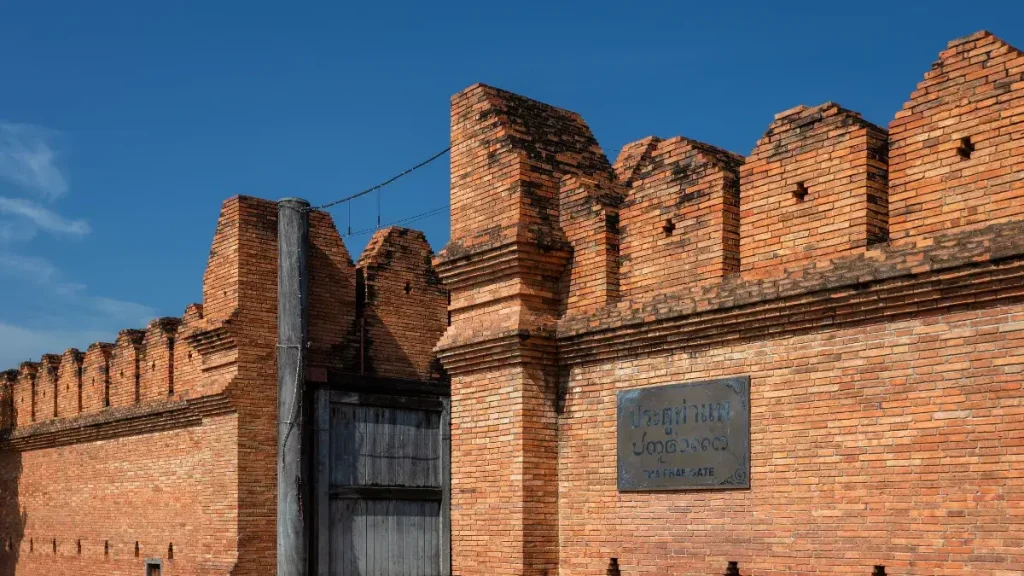
The Old City sits within a square moat and huge walls. Each time I go there I find it hard to leave. But this was a time to remove myself from the inner fort and explore. Being a true explorer, lol, the first night i spent just outside the northeast corner of the moat. It was a place called Nimman, not far from the Chiang Mai University
Transportation saw hire a scooter. In todays money that will cost you around 150-200 baht per day. And, this is where the mountains matter, it opens up all the mountain roads to you. There are very few tuk-tuk driver are willing to take you on.
If you hire a scooter remember you need an International license as well as your countries license. Chiang Mai has many checkpoints and fines run steep if you’re caught without the IDL. The other option is a Grab car, but they too tend to want to stay in town, ands it can get expensive fast.
Wat Phra That Doi Suthep gets the fame, and it earns it. The views over Chiang Mai from that mountain perch justify the hype. But I’d done it my first visit. So I instead opted to hike up the Monks path. It’s a forest trail that starts near Chiang Mai University. It takes around two hours and you’ll end up at the temple’s back entrance.
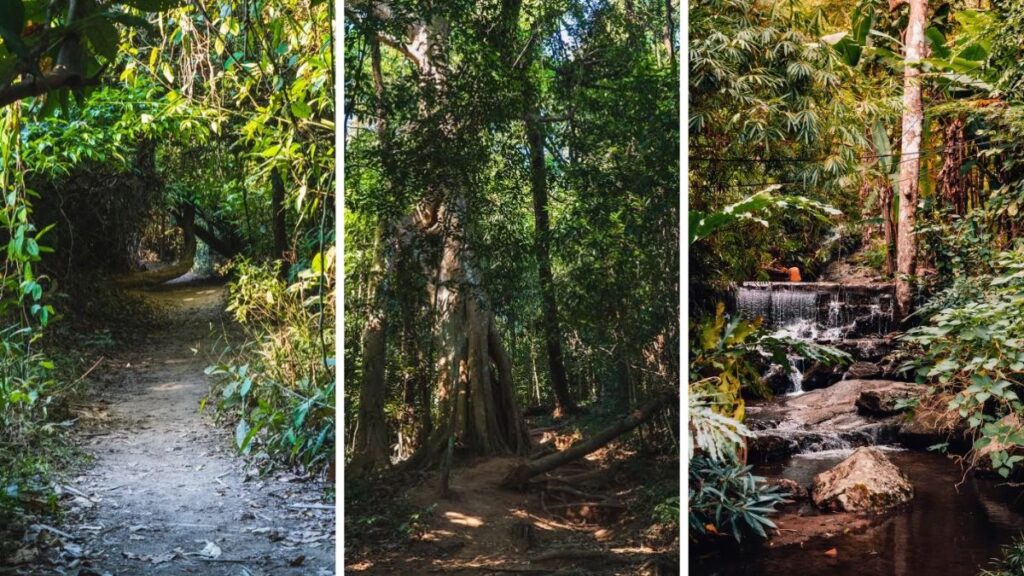
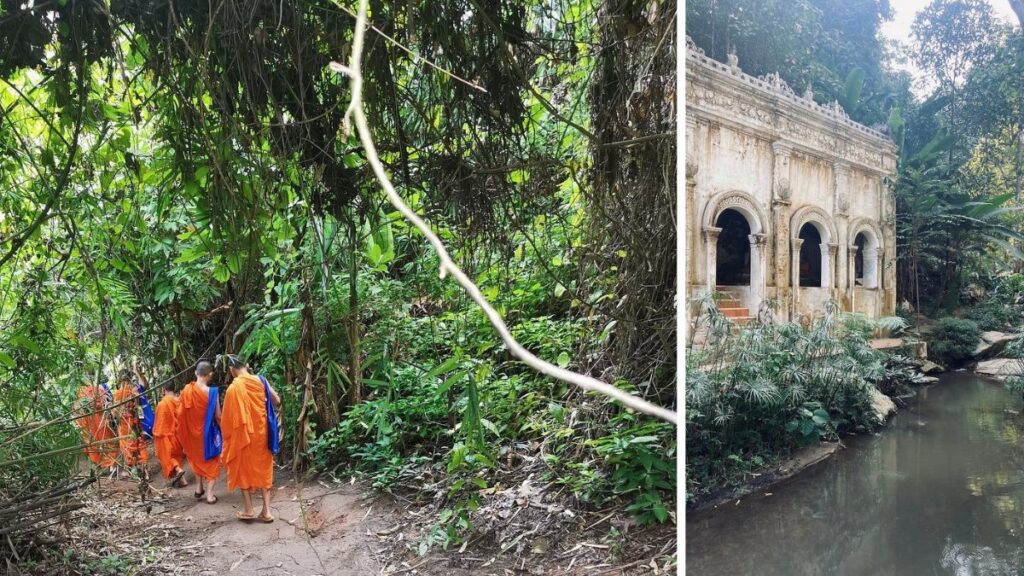
It’s also an interesting walk as it is the path the Monks take everyday. So you’ll encounter the monks. All of them I met wanted to stop and talk (I was quite happy about that as it gets very steep in some sections). I am not a religious person but spending time speaking to monks on a mountain trail to a temple was quite an experience. One that made me feel very peaceful and very content.
The Chiang Mai Night Bazaar deserves ten minutes of your time, max, before you redirect to the Saturday Walking Street on Wua Lai Road or the Sunday version on Ratchadamnoen.
These markets stretch for blocks. And you can find genuine handmade goods from Lanna artisans. But you’ll also find the mass-produced souvenirs. The food stalls are the reason I spent the evening there. You need to barter for the items (nit the food) and I usually start at 50-60% of the asking price.
Now, something most visitors miss entirely: Wat Umong.
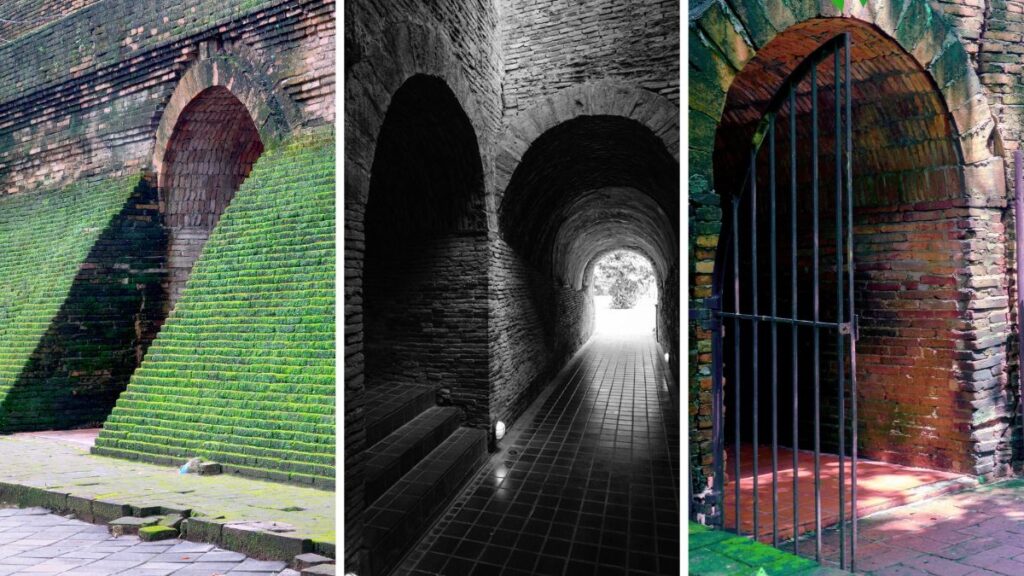
Wat Umong is a 700 year old, 15 acre, temple. Part of its build is a series of connecting brick tunnels in the forest. Monks still live and meditate inside the tunnel system.
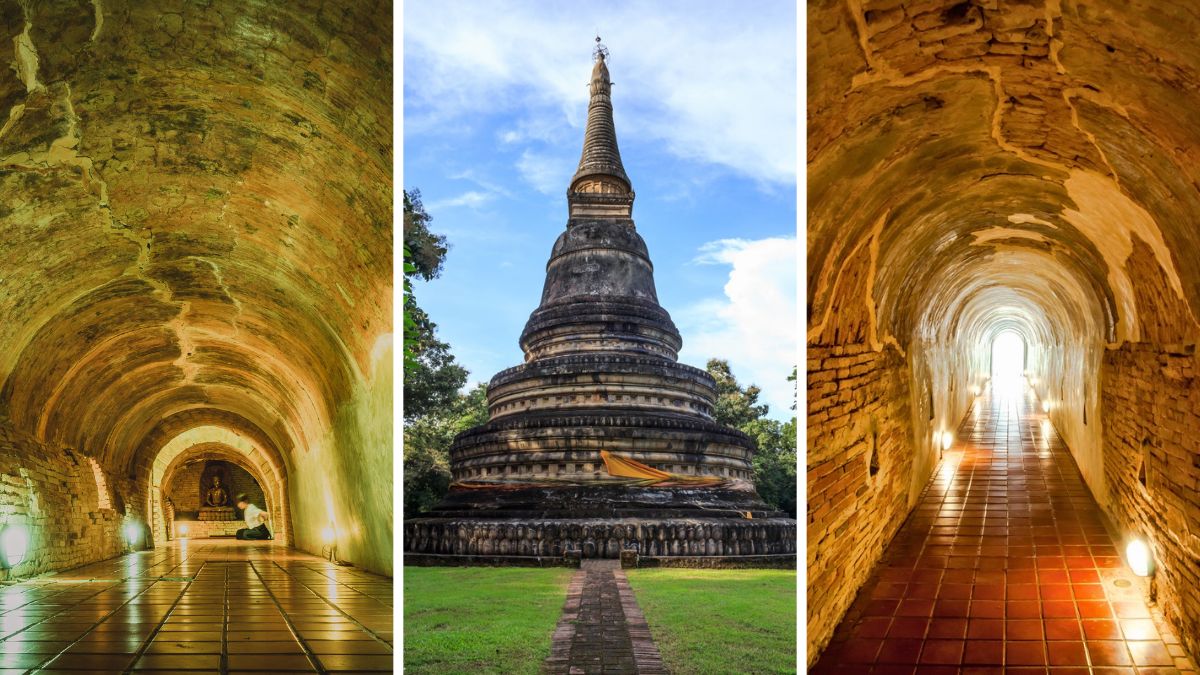
The grounds around it feel more like a nature reserve than a religious site. I spent the afternoon there and I saw around 20 other visitors. Plus the monks.
Most of the visitors were local and listening to teachings being broadcast by speakers in the surrounding tree trees. Its an unusual yet very interesting visit.
Doi Inthanon National Park is the home to Thailand’s highest mountain. Most visitors treat it as a quick photo stop at the summit. But don’t do that. Stay longer. If you explore the park you’ll find incredible waterfalls, hill tribe villages, and hiking trails through a cloud forest.
Wachirathan Waterfall gets crowds. But, the Mae Ya Waterfall, which is another 30-minute drive gets almost nobody. And is far more impressive.
When Trekking in the mountains around Chiang Mai you should also visit the Karen, Lahu, and Hmong communities. These communities have lived here for generations. You do need to book and I recommend finding one of the small local operators. I had a bad experience my first trip.
We booked a Hmong community tour with one of the big groups in the Old City. It was hideous. It felt like I had joined a people zoo tour. We were bused in, then encouraged to photograph the local people, who were clearly not enjoying it. Then frog marched through the shop where we could buy trinkets. And then left.
This time I found a small operator, checked the itinerary, asked about what we would do and see, and made sure i wasn’t in for another similar experience. Booking locally made the world of difference. The guide I went with was a local man, who was part of the community and was proud of what they were doing.
So I decided to book and it was amazing. We spent 3 days all up. i day to trek in. 1 day to trek out. And the middle day was spent working as part of the community. It was genius. I got to see the real village, without it being show and tell.
And the community got free labor for a day, I pulled weeds, watered plants and gave them a constant source of amusement. Think white man in the heat turning more and more pink. Todays prices you can do this 3 day trip for 1,500-2,000 baht.
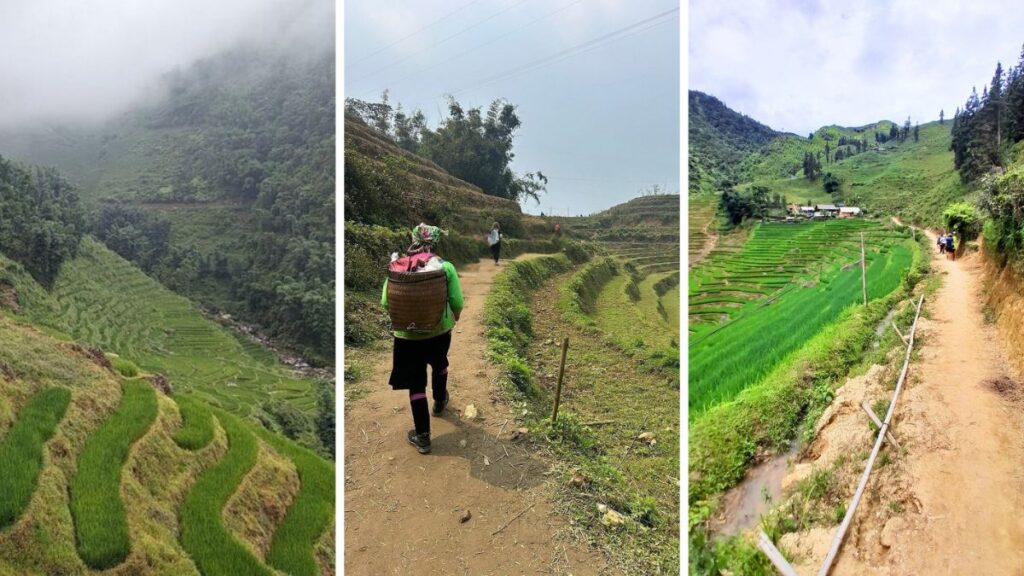
And that includes 2 nights in a homestay, jungle treks, river crossings, and food that will blow your mind. This is where having a local guide who knows the word for spicy was awesome.
I love spice and add lashing of chili on almost anything. But one of these dishes nearly blew my head off. Some of the ladies tried to warn me, and by the time the guide understood what they were saying I had already taken 2 or 3 large bites. Then the chili hit. It was something I will never forget, and i think nor will they!
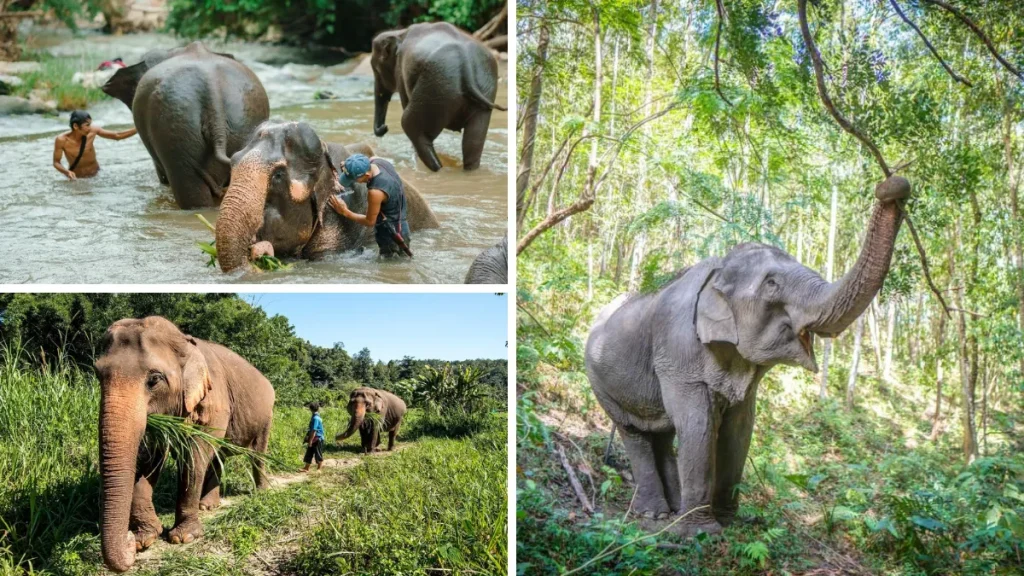
Elephant encounters require research. Don’t be too quick to book as some operators camps still encourage people to ride them. Even worse some still make the elephants perform for crowds. An elephant sitting on its rear legs balancing a ball on its trunk is not cute. It’s not natural. And it is achieved through whipping and hobbling. It causes real harm to the animals.
There are truly ethical sanctuaries. Elephant Nature Park, Kindred Spirit and Big Boys are three I recommend. You can still visit elephants, and walk alongside them. Prices are around 2,500-3,000 baht for the full day. And you know your money is going toward conservation and ethical treatment.
Khao soi defines Chiang Mai. It’s a curry noodle soup topped with crispy fried noodles. You can opt for chicken or beef, and its covered in a coconut and turmeric broth. Skip any restaurant that has an English menu, especially if it also has photos.
Look for side streets and places with plastic stools. My top tip make sure it is full of locals. The best place I have found for Khoa Soi is within the old city, called Khao Soi Khun Yai. The name evidently translates to “Grandma’s Khao Soi”. You can find them at Sri Poom 8 Alley, Tambon Si Phum, Chiang Mai. Don’t let the appearance fool you, this is food you will relish.
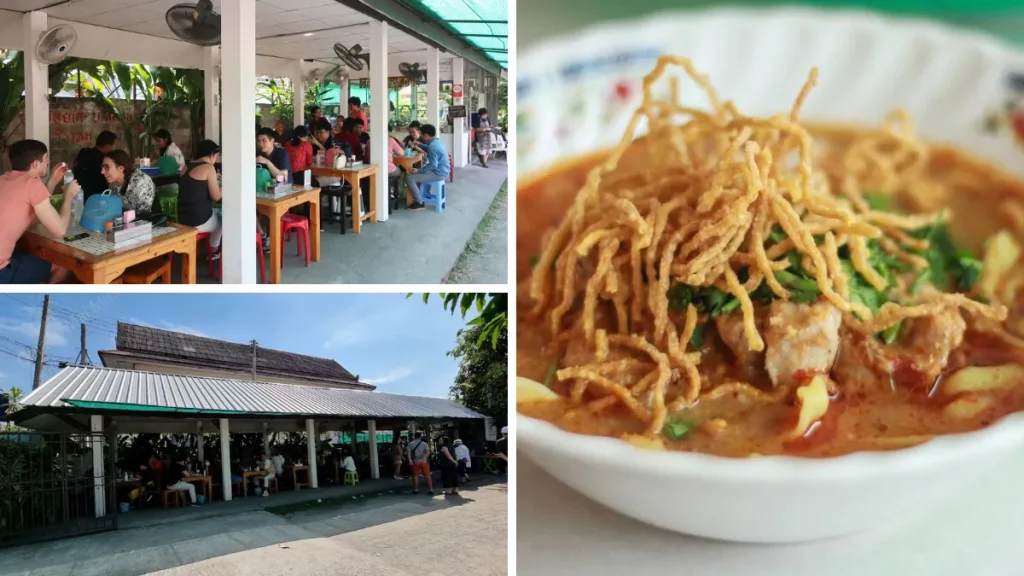
Street food courts outside the tourist zones offer the full spectrum of northern Thai cuisine. You can find Sai Oua (a herb sausage), and Nam Prik Ong (tomato chili dip). You can also find Khao Kan Jin, which I was very much enjoying until someone told me it’s english name – Blood rice with pork.
You’ll pay around 150-200 baht for a full meal. That is about a third of the price you’d pay in the Old City.
Cooking classes are everywhere in Chiang Mai. Look for those that include harvesting or purchasing from local markets. Thai Farm Cooking School is the most recent class i attended.
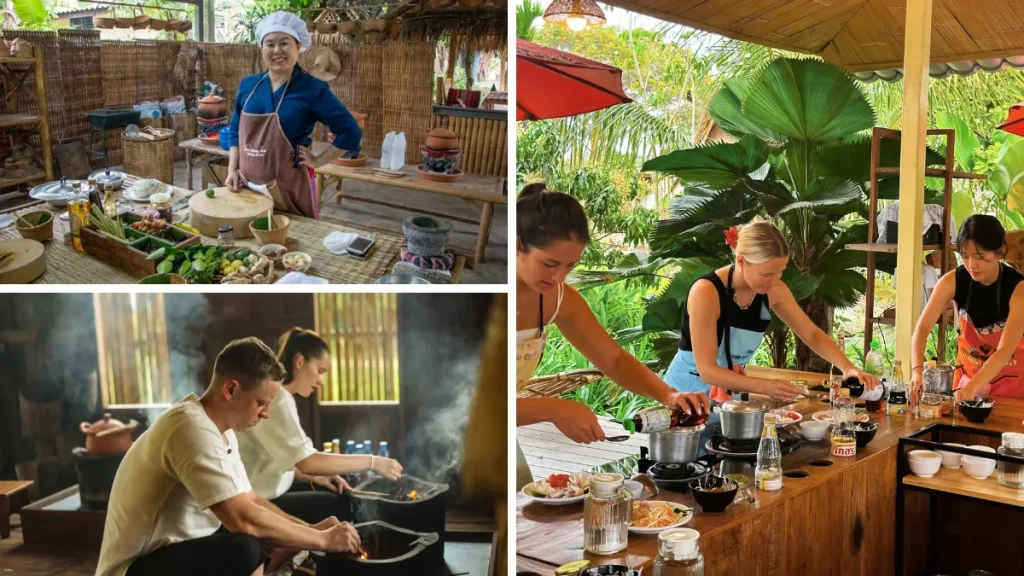
They take you to their farm outside the city and show you the crops. They’ll teach you to identify local herbs and how to harvest the ingredients. Then you’ll cook, enjoy the food and go home with some delicious recipes. You will pay around 1,000-1,500 baht for a half-day. And that will include either lunch or dinner. Both if you opt for a the full day.
Timing your visit changes what you’ll experience.
November through February brings cool, dry weather. It also brings the highest prices and largest crowds.
March and April is the burning season. Farmers clear fields by burning, so air quality drops and masks become standard.
May though October is the rainy season.
While it might sound odd, the rainy season is my personal recommendation. You’ll get warm and humid temperatures with heavy, but brief, afternoon rain. The rain means you also get lush green jungles, full and impressive waterfalls, and pay the lowest prices for accommodation. To be fully transparent you also may get cancelled tours if the rain becomes too heavy. Most operators carry on. But there will be times they can’t.
I went in September and caught the tail end of rainy season. I saw a few flooded streets after rain, but most days were perfect. I also paid half of what it would cost in December. To me the risk of rain is a trade-off I am happy to chance.
Showing tours and activities related to Chiang Mai.
Enjoy a relaxing stop at the Mae Kachan Hot Springs to rest and recharge Visit a long-neck Mae Kachan village to experience…
See More Details →
Learn how to cook Thai and Akha dishes during your holiday in Chiang Mai with our master chef, a native Akha people.…
See More Details →
Our private transfer service ensures a safe, comfortable, quick, and convenient journey between Chiang Mai Airport and your hotel. Why Choose Our…
See More Details →
Be captivated by the incredible sights of Chiang Rai in this day's exploration. Learn the history and top landmarks of one of…
See More Details →
On this tour we take you to Doi Inthanon, also known as the ‘Roof of Thailand’, the highest point of the country…
See More Details →
Skip the stress of finding transportation after your flight. your airport transfer service offers comfortable, air-conditioned vehicles, experienced professional drivers, and direct…
See More Details →
Eat your way through Chiang Mai at night while taking in the sights from the back of a motorbike. This tour starts…
See More Details →
Take a personalized and private trip to the most sacred temple in Chiang Mai and the famous Bua Tong "sticky" waterfall. Tour…
See More Details →
Chiang Mai is well known for its rich culture and beautiful temples. Explore the city's rich heritage on this half-day guided Chiang…
See More Details →
Skip the stress of finding transportation after your flight. your airport transfer service offers comfortable, air-conditioned vehicles, experienced professional drivers, and direct…
See More Details →
Enjoy a seamless transfer from Chiang Mai airport to your centrally located Chiang Mai hotel with this shared vehicle ground transport. An…
See More Details →
The Private Car: Chiang Mai Airport Transfers provides a smooth and comfortable transportation option between Chiang Mai International Airport (CNX) and your…
See More Details →